Driving the 991.1 Turbo S!

if there’s one car that is underrepresented on this blog, it’s no doubt the 911. And the reason is not that I’m part of the strange crowd who have something fundamental against the legend from Zuffenhausen – quite the contrary. I do however have enormous respect for on one hand everything that has already been written about the most legendary of sports cars, and on the other for all the people who no doubt have far more knowledge on the 911 topic than I do.

I therefore welcome every opportunity there is to learn more about the 911, and having had the opportunity to drive quite a few 997’s over the years, until recently I had actually never driven a 991. The opportunity to do so came about as my favourite garage in the Zurich region traded in a 991.1 Turbo S in perfect condition with about 85.000 km on the clock and a price below CHF/EUR 100.000, (which as I noticed is where the market for these currently is). It felt like an opportunity not to be missed. After all, as great as my BMW 540i Touring is, I don’t really plan to drive a station wagon for the rest of my life, and few things beat a top of the range 911 as possible replacement!

Definitely looks better than a 540i Touring…

If I were to replace the 540i though, what I would be looking for is a stylish and fun to drive coupe with enough room for two people but ideally not too big, to take my wife and I the 600 km down to the south of France a few times per year. The BMW does an absolutely fine job here, but it’s unnecessarily big and as said, as stylish as it may be, I no longer need all the space. For what follows, it’s however important to remember that what I would be looking for is more of a GT-car than a track weapon. And from all that I’ve read, it felt like the 991 Turbo S would be close to the perfect proposition here.

This first series of the Porsche 991 was built between 2011 and 2015, with the Turbo S being produced between 2013 and 2015 (production years, that is). It featured the 3.8 litre flat six with twin turbos, putting out 560 hp through all four wheels and a seven-speed PDK box. For a 911 it was rather well-equipped from the factory, with (in most markets) rear-wheel steering and center-lock wheels as standard. Ceramic brakes were a frequent option and the car I drove had them, along with a plethora of other things.

The first thing you notice when you stand in front of a 991 is how much larger it looks than a 997. It is indeed bigger, about 4 cm both in length and width, but the impression is of an even bigger difference. Stepping inside, the difference is even more striking, greatly helped by the 10 cm longer wheelbase as compared to the 997. Two people with reasonable but perhaps not excessive luggage will have enough space for a good vacation, and the whole car feels more mature and more GT-like than the more intimate 997. No doubt that the 991 is the more grown-up car, although I still feel the 997 looks better.
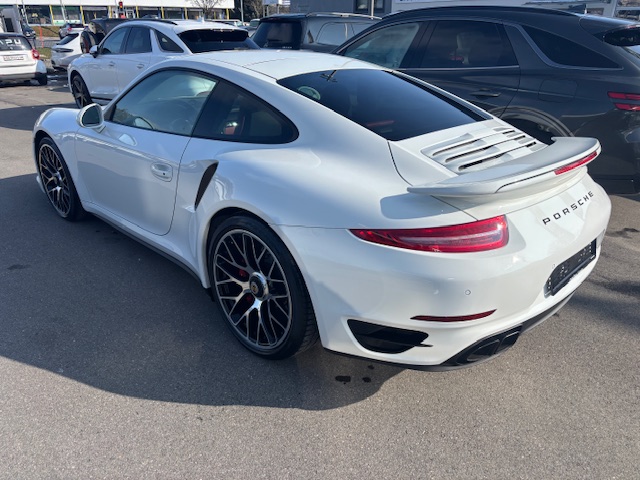
Purposeful rear, beautiful center-lock wheels. It does feel big though!

As the pictures show, the car I drove was white and as you’ll see below, had a read leather interior. And whereas I’m certainly not part of those who follow the Henry Ford motto that you can have any color as long as it’s black, a red interior is perhaps a bit over the top. That said, in the case of this car it was really a combination of red and black that made it rather decent, and I quickly stopped thinking about it. There are cars who are fully red on the inside, including the dashboard, and that to me is then really a bit too much. As for the exterior, white is a color I personally feel suits the 911 quite well.

I familiarized myself with the car as I drove off and let the engine warm up, which really didn’t take long. The logic is the same as in the 997, but the 991’s array of empty buttons on the center console that glare you in the face to remind you of all the options you didn’t spec aren’t particularly nice. Could it be that the quality of materials was just slightly better in the 997? Anyway at low speeds, at least on smooth, Swiss roads, the car is very compliant and not unnecessarily hard. Sports-car like rather than track car.

Such reflections soon gave way to real driving, now that we’d reached a decent temperature and the road opened up. It will be no surprise that the first, second and last impression is that of the flat six, which is simply magnificent. Power is never-ending, the sound is great but to my ears, could be even louder than what the sports exhaust produces, and the engine harmonizes perfectly with the excellent PDK. That said, the turbo lag is more obvious than I was expecting, with a small but still very noticeable hesitation before all the 560 horses wake up.

Clearly more spacious than a 997, and with a black dash, still looks decent in red.

A lot has been said about the 991’s electronic steering as compared to the mechanical 997, which no doubt was one of the best 911’s of all in this regard. For the driving I did in a combination of B-roads and motorway, I can only say that the 991 is great as well, and that you need to be a 911 aficionado or drive the two cars back to back to notice any real difference. And compared to basically any other car, the 991 is miles ahead in terms of precision and road feel. Needless to say that very much goes for the chassis as well, with no real possibility to test it fully on the roads I was driving.

Where it isn’t ahead of the competition however is road noise. This was a surprise given how much more mature the car feels compared to the more rustic 997, but noise-wise theyr’re not far apart, with especially noise from the wheels being very present in the 991, at normal motorway speeds. You would need to raise your voice to communicate with your passenger (or, as in my case, increase the volume of the excellent, optional Burmester sound system), which doesn’t feel very GT-like. Except for that, it’s an excellent motorway cruiser as well, and the ceramic brakes were easy to modulate much like normal discs.

As no one can sit in the back anyway, you have room for a lot of stuff.

When I handed back the keys to the white beauty, it was therefore with mixed feelings. The Turbo S is a fabulous car, and the 991 feels more modern and more mature, albeit not as good-looking, as the 997. It’s however still far more sports car than GT, meaning it’s not the right car for the use I would make of it. But even if I were, I wouldn’t go for the Turbo S. The 991 was also the last 911 that could be had with a naturally aspirated engine, and for normal road use, I would gladly sacrifice 150 hp in favor of a 991 S or GTS, with an even better sound and without turbo lag.

If the Turbo S sounds like your thing, you should be aware of the higher maintenance costs compared to a standard 911 that one of my 911-savvy friends made me aware of. The turbo engine contributes here, as do the center-lock wheels, however only if you’re set on changing wheels yourself, which I doubt (and given how good the center-lock ones look, I’d be happy to take the extra cost!). Also, many cars will be equipped with ceramic brakes, said to be good for a lifetime but costing a fortune to replace, should anything still happen to them.

The 991 is a great car and a far more mature proposition than the 997. It’s however not the perfect GT, and I can’t help feeling that the Turbo S misses the mark. As a daily driver or a back-road companion, a 997 will be even better, as will a 991 S. For track use, you should rather go for a a GT-version. And as a Grand Tourer car for long distances, I think there’s better options out there. We’ll see if I’m right!

The day has dawned for Porsche bargains!

When I bought my Range Rover, that I recently sold, two years ago, I did so at 1/3 of its price as new back in 2015. Unfortunately though, at the time of selling it, it had lost another 20%. It felt like a pretty good deal at the time of buying, and I attributed the additional value loss to mainly Land Rover’s less than stellar reputation, and also the fact that it had a five litre V8 under the hood, which for reasons I don’t need to name, isn’t really the flavor of the day these days.

As I started looking for possible replacements however, it became clear that something had happened to secondary values in general, not just to old Range Rovers. My 2019 BMW 540i with less than 50.000 km on the clock that I finally replaced the Range with cost me CHF 49.000, from a new price of around CHF 135.000 (yep, it’s well equipped). So again, not far from 1/3 of the original value, in spite of this being a newer and more modern car, with a smaller engine, and from a brand with a better reputation.

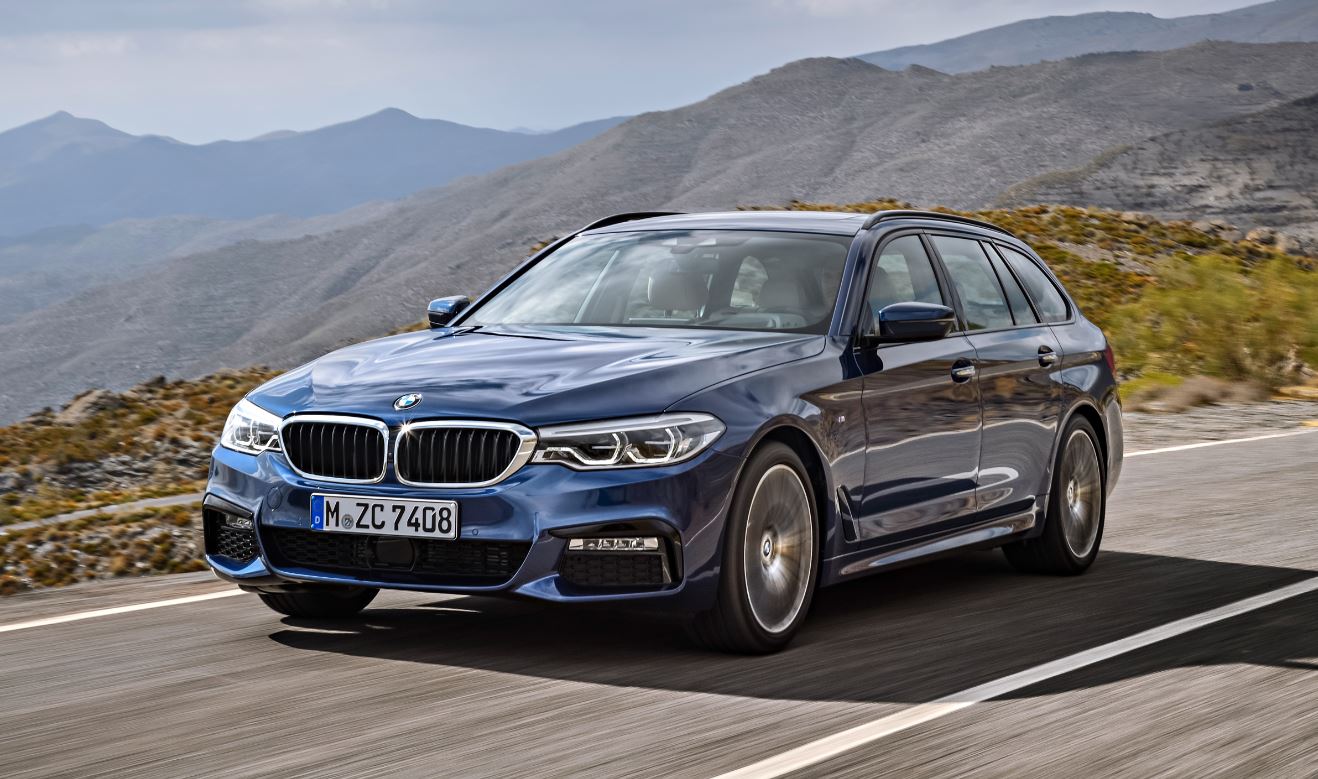
The 540i is in most aspects all most of us will ever need...

The sad truth is once more that in spite of fundamentals and common as well as economic sense, anything that is not fully electric is currently falling faster in price than Germany’s power production. The Covid pandemic was a bit of a hick-up in this regard, as it resulted in delivery issues that took a while to work through and that helped keeping prices of used cars artificially higher, but now that we’ve moved on, the trend is clear to see.

Whatever happens to the car market in general though, there’s a group of brands that are never really affected. Ferraris, Lamborghinis an other supercar exotics seem to be wholly uncorrelated to general trends, and bar some exceptions, that doesn’t seem to have changed, more on which below. And of course, anything with 911 in the name coming from Zuffenhausen can only go one way, right?

…were it not for the attraction of that classic 911 design!

Actually, no. In a way, this is of course not new. You’ve been able to pick up the 996 at bargain prices (and you still can, even though they’ve clearly bottomed out), but that was typically the only 911 that didn’t hold its value really well. What has become clear lately though, is that the 996 was the starting point for that being the case for subsequent models, rather than the exception to the rule.

The 997 succeeded the 996 in two series, of which the second one is preferrable to the first for quality reasons. A good 997 can today be had for EUR 40-50.000, but perhaps somewhat surprisingly, I don’t think that’s the car you should go for. Not when the far better 991 can be had for not much more.

The 991 was built between 2012 and 2019 on an all new platform, only the third one in the 911 history (the 996 being the second). It also had an all new body that was 7 cm longer than its predecessors but above all, it had a new transaxle construction with the rear wheels having been moved backward to improve the weight distribution. The result is better handling and, a fundamentally better car.

More buttons than screens, and complete driver-focus

The base 991 Carrera. came with 350 hp out of the flat six, increased to 400 hp in the stronger Carrera S. Both could be had both as manual and with the double-clutch, seven-speed PDK box. The first series was built until 2016, with the second running thereafter until 2019 having the all new, downsized 3-litre engine used until this day, rather than the original, classic 3.6 litre.

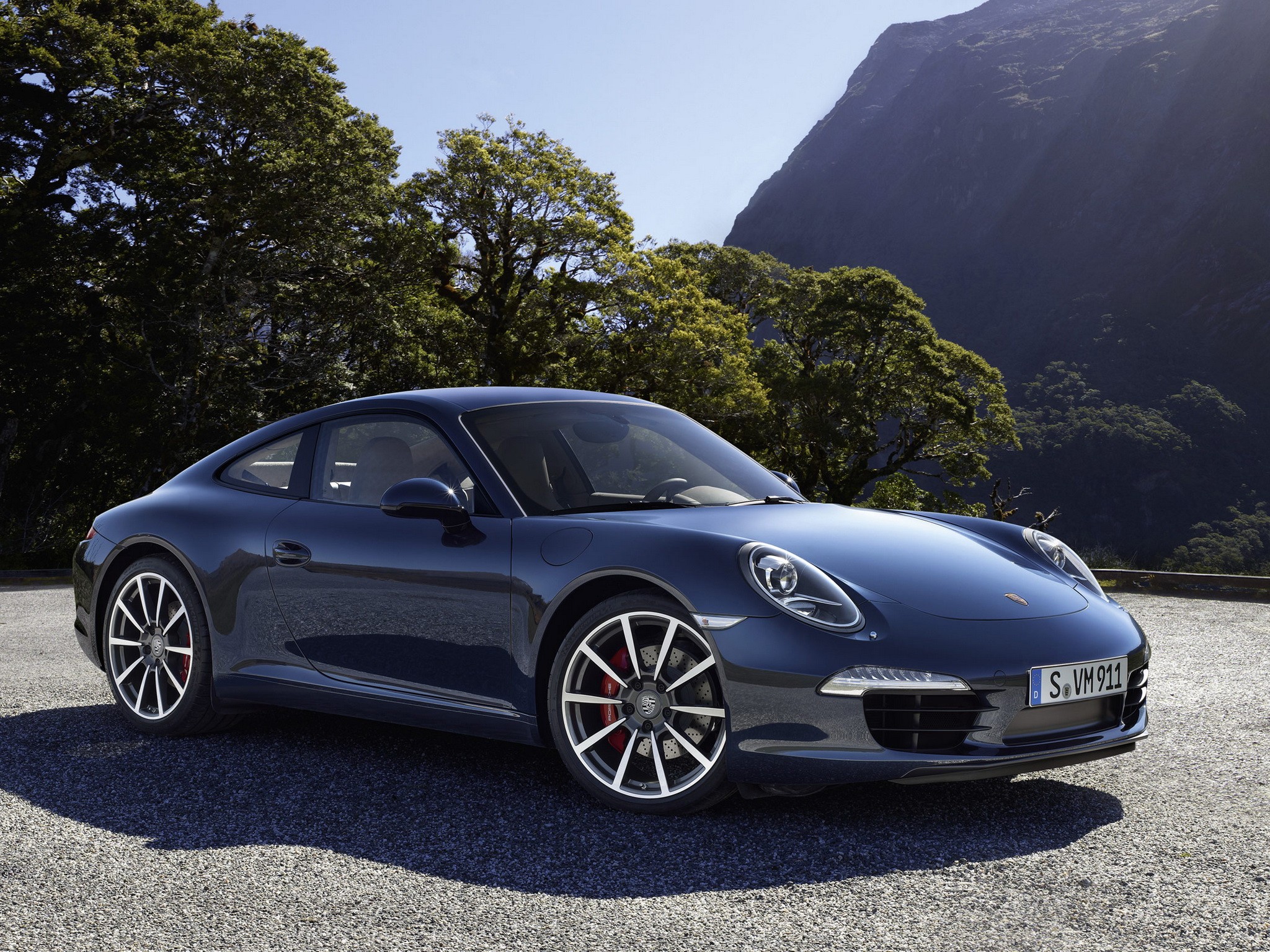
Today, you can find a nice, first series 991 with less than 100.000 km on the clock for around EUR 60.000. Actually, you can even dig out a Carrera S at that price if you search well. This for a modern 911 that mostly cost well above EUR 100.000 as new! Sure, it’s not 1/3 of the new price as my examples above, but it’s around half price and above all, it’s not what we’re used to when it comes to 911’s. Again, a GTS, GT cars or special models will be more expensive. But even a modern, base 911 is a pretty nice proposition, and I would argue a very nice one at this price point!

If most people agree with the above, what comes below will certainly be more contentious. When Porsche introduced the 718 Cayman and Boxster in 2016, as part of the general downsizing trend, they did so with a 2 or 2.5 litre turbocharged four-cylinder, something that was about as appreciated among enthusiasts as the introduction of the water-cooled 996 had been in the 90’s.

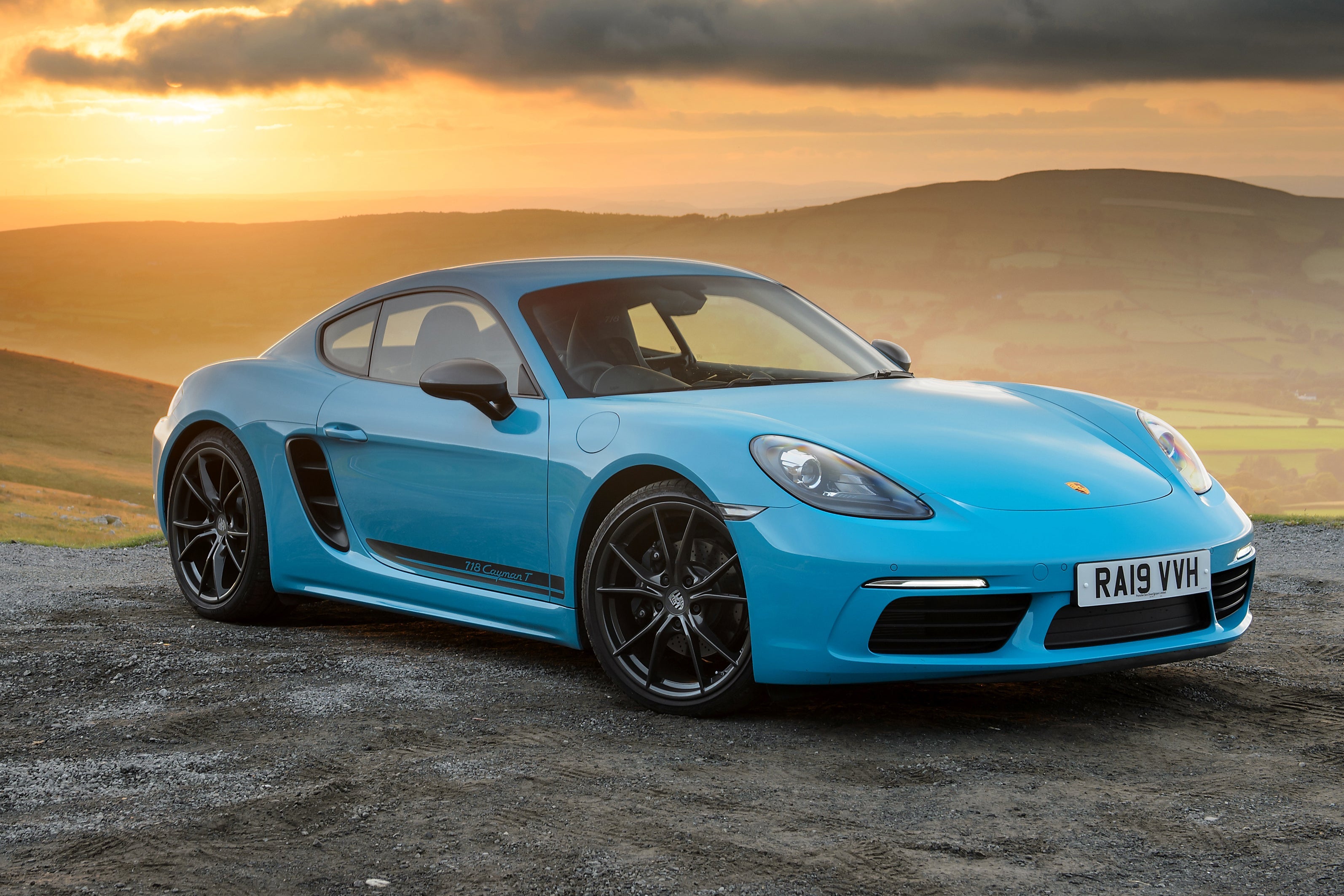
The Cayman is arguably the best-looking, modern Porsche

The four-cylinder wasn’t well received by the motoring press either, pretty unanimously seeing it as lacking character and producing an awful sound. Be that as it may – the engine certainly sounds different and doesn’t have the character of the flat six. But it’s powerful enough, cheaper to run, and for some people, two extra cylinders isn’t what really matters.

If this sounds like you, you’ll be happy to know that the very good-looking Cayman (that I’d personally prefer over the Boxster) can now be had for about EUR 40.000. And just so we’re clear, the 718 Cayman has been built since 2016, so this is a very recent car.

For me, it would have to be a first series 991 though, since a 911 is after all a 911, and I can’t really stomach the four-cylinder option. I would take my time (which will probably continue to work in buyers’ favour!) and find a nice Carrera S, perhaps pushing the envelope somewhat for the right car. And I’d go for the manual if I had the choice, but the PDK is so good so that it wouldn’t be critical.

That’s exactly where a (preferably six-cylinder) engine should sit!

Porsche price stability is thus not what it was, and at least in some, limited cases, this seems to be the case for Italian supercars as well. In a completely different price segment to the above, Ferrari has a bit of an issue around the SF90 Stradale, which unlike other top-of-the-line cars from Maranello isn’t really going anywhere. Literally, since especially in Germany, Ferrari dealers have SF90’s standing around for far too long, and at the time of writing, there’s currently no less than 152 cars for sale on the German market.

The 1000 hp hybrid, built since 2020, cost EUR 450.000 in base price as new, but in reality EUR 50-100.000 more once it hit the streets. Should you want to pick one up today, you’ll have no trouble finding a well-equipped one for less than the base price, probably as low as EUR 400.000 after a bit of negotiation, with insignificant km on the clock.

You’re more likely to see one at the dealer than on the street…

That’s not the way Maranello imagines its top-of-the-line cars to go, but my guess is that it has a lot to do with aficionados preferring Ferraris to come with a (preferrably naturally-aspirated) combustion engine rather than a hybrid, even it if has 1000 hp. If that’s true, given where the world is at, there could well be further disappointments ahead for manufacturers, but more good news for secondary buyers!

Porsche 911 Targa (991) – first pictures!

Boy, does the new 991 Targa look good!!!

The new design is much closer to the original Targa from the 70s, as opposed to the glass-roofed 996 and 997 Targa.

Apparently it will be available only with 4WD (Targa4 and Targa4S models) as it is based on the wide body 4WD Carrera cabriolet.

How the Targa roof can fold automatically is hard to understand, but we will know more this afternoon after Porsche’s press conference in Detroit at 17:45 CET.  

Bilfestival i Kungsträdgården – och lite skvaller om BMW-nyheter

Ett axplock av de bilar som visas är: Audi R8 GT Spyder, Porsche Boxster S, Porsche Cayenne GTS, Porsche 991 Carrera S, Fisker Karma, BMW M6 (i snygg Singapore-grå) och nya 3-serie Touring. Dessutom finns en hel del kul för barn (och vuxna) som bilbanor, radiostyrda bilar och TV-spel.

Jag var där igår fredag och snappade upp (trovärdigt) skvaller om nyheter från BMW:

  • Coupé-versionen av 3-serien kommer att heta 4-serien och släpps nästa år.
  • Nästa M3/M4 får en bensin-V6 med trippelturbo.
  • M6 Gran Coupé kommer! Den perfekte bilen för min familj?! Senare kommer även trippelturbodieseln i 6-serie Gran Coupé (M650d).

Efter att jag varit på området själv, tvingade jag min kära och tålmodiga(!) fru att gå ett varv och frågade henne därefter vilken bill hon skulle ta med sig hem. Svaret kom reptilsnabbt: 991 Carrera S…

Evenemanget pågår idag och imorgon söndag.

För övrigt har jag provkört två intressanta bilar i veckan. Sammanlagt 14 cylindrar och 822 hästar, om än ojämnt fördelade. Återkommer!

Nya Aston Martin Vanquish – smärtsamt vacker, men hänger den med konkurrenterna?

Aston Martin har visat nya Vanquish som ersätter DBS. Bilen är, precis som alla Aston Martin de senaste decenniet, oerhört vacker.

Den bygger på en ny version av VH-plattformen, som använts i alla Aston Martin-modeller de senaste åren. Hur “ny” plattformen verkligen är återstår att se.

På pappret är denna bil långt ifrån det tekniksprång som Ferrari F12berlinetta utgör, och kanske därför positionerar sig Aston mer åt GT-hållet. Frågan är bara om drivlinan håller måttet. V12-motorn har förvisso uppdaterats rejält och ger nu 573 hästar jämfört med föregångarens 517, men det sitter fortfarande en 6-växlad automatlåda (Touchtronic 2 från ZF), som inte kan konkurrera med Ferraris och Porsches dubbelkopplingslådor. När det gäller konkurrenter i lyx- och GT-bilssegmentet så har många, t.ex. Bentley, gått över till ZF:s nyare och utmärkta åttaväxlade automatlådor. Att Aston Martin inte gjort det skulle kunna bero på att de har en s.k. transaxellåda som sitter på bakaxeln, vilket i och för sig är en bra grej för viktfördelningen.

Accelerationen från 0-100 km/h tar 4,1 sekunder, men F12berlinetta gör samma sprint på 3,1 sekunder. Ett värre problem är att t.ex en Porsche Carrera S (991) med PDK-låda och Sport+ gör 0-100 km/h på samma tid som Vanquish och kostar hälften så mycket! Lägger man till Porsches nyligen släppta Powerkit så sjunker tiden för 991:an till 4,0 sekunder. Några andra referenspunkter är Ferrari California på 3,8 sekunder och ferrari FF på 3,7 sekunder. Nu är acceleration inte allt, och den är i vilket fall snabbare än många mer utpräglade GT-bilar, som Bentley Continental GT.

Tack vare bland annat att alla karosspaneler är i kolfiber väger bilen in på 1620 kg, vilket är 70-80 kg mindre än föregångaren DBS, men ändå högre än de 1525 kg som Ferrari F12berlinetta väger in på.

Inredningen verkar dock ha fått en välbehövlig modernisering; satellitnavigering från Garmin och stereo från B&O blir säkert bra. Vanquish rymmer 368 liter bagage, vilket är 60(!) procent mer än i DBS.

Sammanfattningsvis är det svårt att placera in den här bilen i förhållande till konkurrenterna. Kanske är den halvvägs mellan en Bentley Continental och en Ferrari F12berlinetta. Det låter ju bra, men risken är att det varken blir hackat eller malet…