The sand pile is crumbling

If you’ve studied economics like me, the name Hyman Minsky may be familiar. He was an American economist who developed the financial stability theory, basically saying that stability breeds instability. Think of a sand pile: at some point, adding one more grain, although infinitely small in itself, will make the pile crumble. That’s more or less what we’re witnessing right now for the sand pile called “Ev’s for all”, crumbling far quicker than even I had imagined. I wasn’t planning to return to the topic anytime soon but sometimes events force your hand, and there’s just too much that’s happened in the last weeks and months not to take note of, as it is kind of important for the whole car world.

The starting point as I remember it was sometime back in February when two things happened. Mercedes boss Ola Källenius, roughly at the same time as presenting the stupidest EV of them all this side of the Hummber EV, the electric G-class, came out and said that electrification of the whole Mercedes fleet would take longer than expected. That’s of course another way of saying that demand is lacking. Mercedes have pushed the date for the last combustion engine forward from 2030 to 2035, where it most certainly won’t stay.

Time will tell, but this could go down as the symbol of when the tide turned…

Roughly at the same time, the FT ran an article on Lucid Motors, where Lucid boss Peter Rawlinson said that his company cannot rely on “bottomless wealth” from its 60% Saudi owners. In other words, the sheiks in the country of many sand piles are thinking of turning off the tap, if they haven’t done so already. Lucid has close to USD 5bn in the bank but is currently burning USD 1bn per quarter and lost close to USD 3bn in 2023. Given they’re not close to making a profit anytime soon, they will thus need to fundraise again before the end of the year to survive. In the current market, I wish them luck.

Luck is also what Rivian still needs, and this one hurts a bit more since I find it a really innovative company that have brought something new to the market, and have plans for continuing to do so in the future as well. A friend of mine drives the Rivian SUV and is thrilled about the car, its features and gadgets. However given a lack of Rivian car buyers, the company urgently needs to save money and announced in March that production has been paused in their new factory in Georgia and that instead, they will fall back on their old production plant which is cheaper to run. And whilst we’re on SUV’s, if anyone is curious about Fisker, they’re so close to the brink that they can go belly up at any point in time, and contrary to Rivian, the SUV called Ocean they’ve launched is crap in most testers’ view.

A small opening side window in the back is the only attraction of the Ocean. Literally.

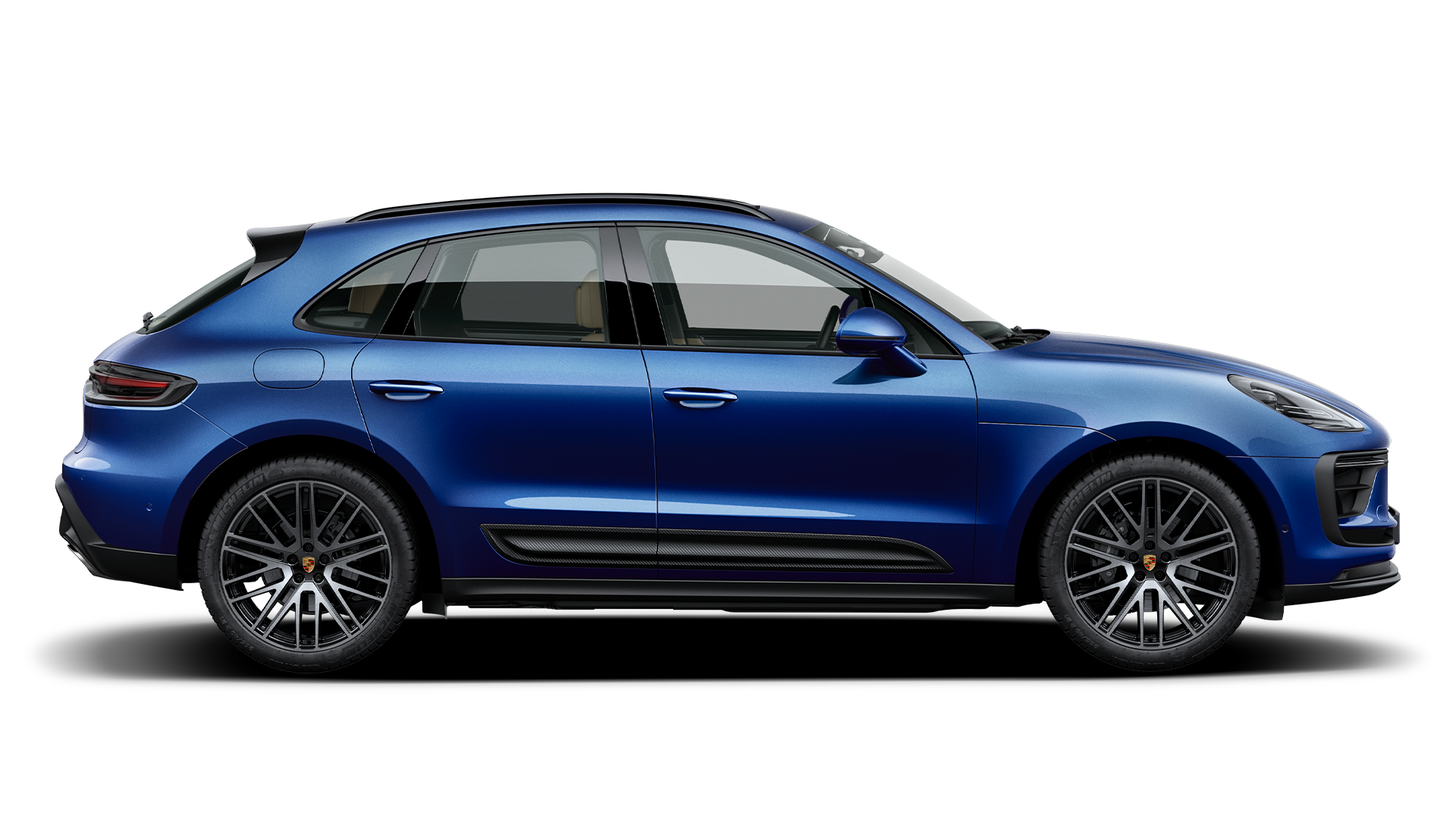
Moving on to the EV wannabes, Porsche is making all kinds of strange sounds around the all-electric new Macan. The idea was that the combustion one would be taken out of production in 2025-2026, and the all new E-Macan, launched as we speak, would then fully replace it. Now, the talk is of not replacing the ICE one until 2030. The issue for Porsche is that the new Macan is built as an EV from the first screw, meaning it’s not made for a combustion engine. Therefore, it’s most probably the old Macan that will be updated such as to live a bit longer. That’s certainly very far from what Porsche, blinded by the general EV trend, originally intended. It’s really terrible when client demand isn’t where you want it to be.

To round it all off, even the king of the hill Tesla has come down the hill, at least a bit. Firstly in stock price, where it’s down about 1/3 this year, making it by far the worst performer of the so called Magnificent Seven. That said, it’s still worth more than twice what Toyota is. Then there’s production numbers, where Tesla not only ships less cars than a year ago, but also produced around 70′ less cars in the first quarter than analysts were counting on. Tesla has also lost around 1/3 of its market share in the all-important Chinese market, falling from 10.5% to around 7% as per the Chinese Passenger Car Association, all due to the intense Chinese competition discussed in earlier posts.
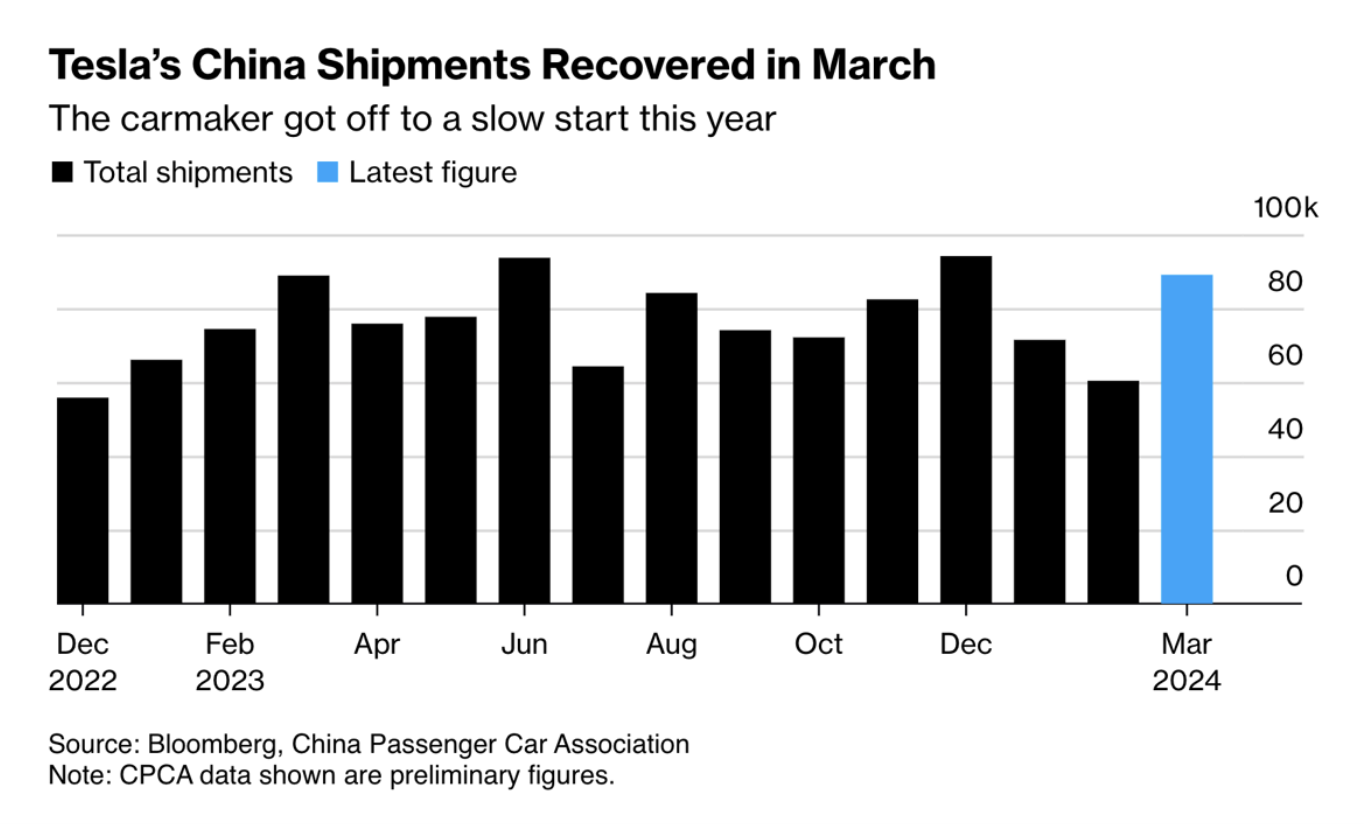
As the headline says, things improved in March, let’s see if it’s the start of a new trend.

You’ll note that all of this has to do with falling client demand, and nothing has to do with the other fundamental EV issues, such as not even being close to having enough metals and related stuff to produce the EV’s our politicians plan for, and that the battery production with all its required input materials is both highly polluting and highly unethical. That comes on top of the waning demand, and as Ineos’ founder Jim Rathcliffe says, you can’t force EV’s down people’s throat – although I’m sure at least some politicians will try.

I yelled at European luxury automakers pathetic efforts to build competitive EV’s a few weeks ago, and also said the cheap part of the market risks being taken over by Chinese EV’s. That’s exactly what’s happening, and in addition, growth has stalled in the developed world for all the reasons we’ve already gone into. A challenging capital raising environment means that many of the new EV brands risk going under, and (especially European) politicians who are still incapable of delivering a charging network commensurate to the growth they want to see have done the rest. I’d say they should take most of the blame.

At the same time, I was surprised earlier this week to see the Biden Administration’s projection for what the US car market will look like in 2050. As can be seen above, EV’s aren’t expected to take over anytime soon, although they are projected to grow quite a lot. Hybrids continue to grow too, which we’ve been discussing here, and what for example Toyota has said all along. Most people drive short distances, and thus splitting a big battery pack in one car into five smaller packs in five cars makes most sense when materials are limited. Anyhow, by 2050, 2/3 of all cars are still expected to be what should be called combustion engine cars, since by then, I’m willing to bet we’ll have other stuff than fossil fuels to power combustion engines with, which also means they may be around for far longer than anticipated.

If you really want an EV, then as I’ve said before, there really is no better alternative than a Tesla, pretty much wherever you live. But if you don’t, be aware you’re part of a growing crowd and that your petrol car will be fine for years to come. As I was finishing this post, I saw the news that the European car safety organization Euro NCAP has come out with new rules, requiring a car’s essential functions to be handled by physical buttons, not over a screen, for a car to get the maximum five safety stars starting in 2026. Trying to sell a car in Europe that has less than five safety stars is all but impossible, so this will obviously cause further pain for many, especially most EV manufacturers. If we keep going at this pace, the future starts looking really bright!
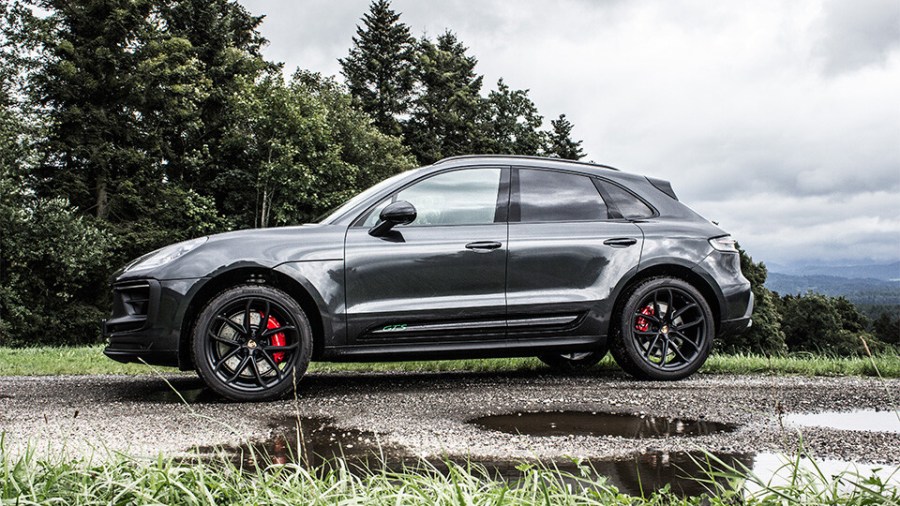
Finally driving the Macan!

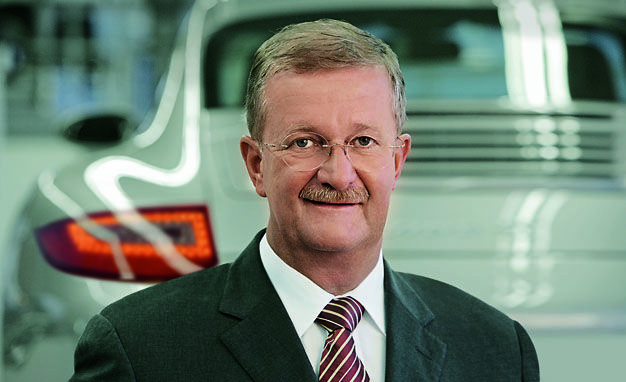
Wendelin Wiedeking is the very German name of one of the most important CEO’s in Porsche’s history. Wiedeking took over the helm in 1993 when Porsche was teetering on the brink of bankruptcy with a stock market value of only EUR 300m, and had a decisive role in turning things around and increasing that to EUR 27bn 15 years later when he left his post. Interestingly he also did so being paid a (relatively) modest base salary with a significant bonus component, directly tied to Porsche’s profitability. Needless to say, this made Wiedeking both a respected and a rich man, and one of the main drivers behind his and Porsche’s success was no doubt reading the market correctly and launching the Cayenne in 2002, as Porsche’s first SUV.

Wiedeking saved Porsche before being forced out in 2017

Until then Porsche had only built sports cars, but Wiedeking and his colleagues had noticed that next to their 911/Boxster, most people also had a family car, which increasingly tended to be an SUV. Wiedeking failed to see why that second car shouldn’t be a Porsche as well and from its launch, the Cayenne quickly became crucial in Porsche’s recovery. Without it, Porsche may have gone the same way as Bentley would have without the Continental GT that we looked at a few weeks ago. And to get to this week’s topic, without the Cayenne there would not have been its smaller brother, the Macan, that I had the opportunity to try out last week, and that today is Porsche’s best selling model!

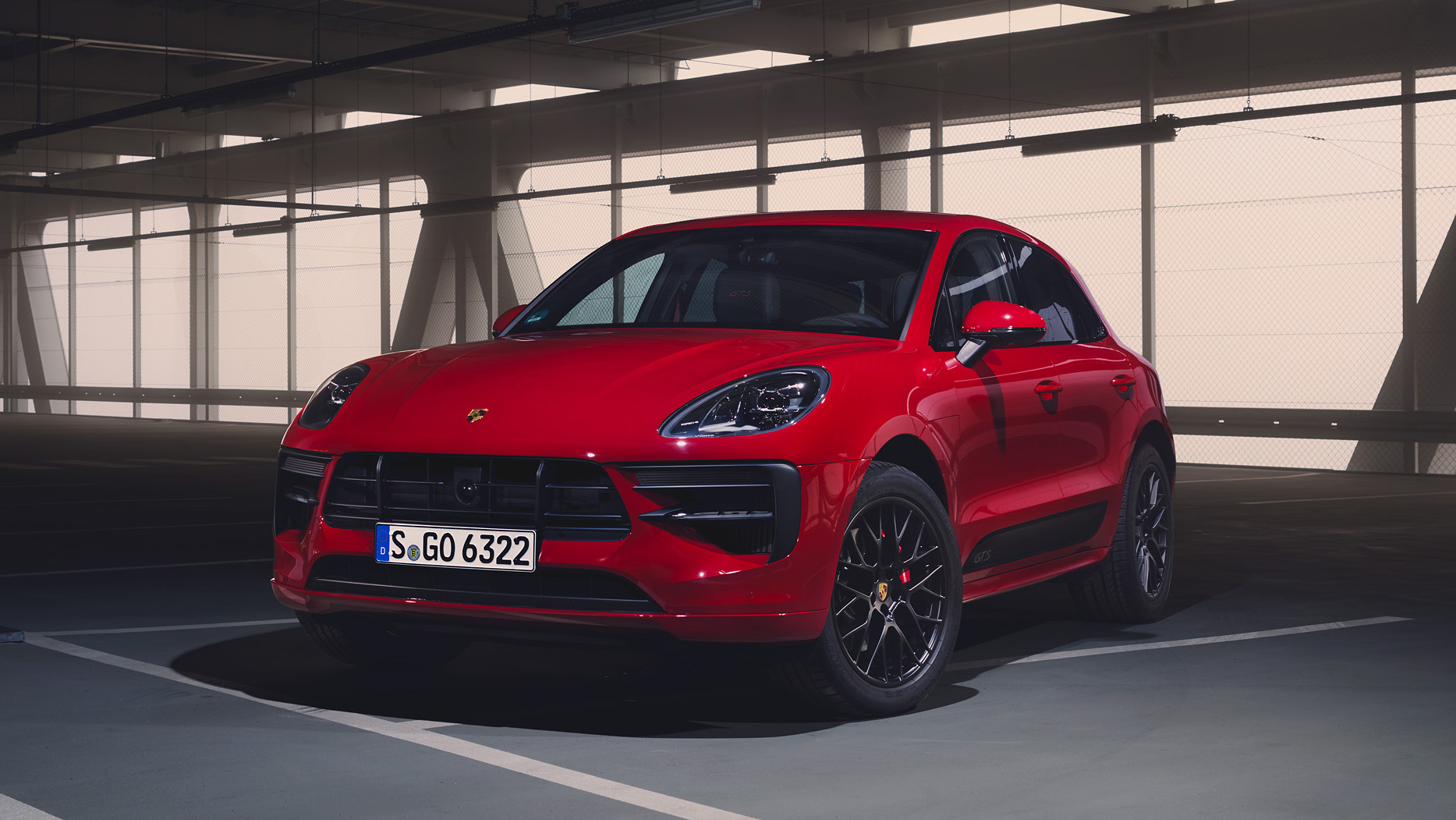
A good-looking car with an almost coupé-like roof line

The Macan was launched in 2014 as part of the trend towards smaller SUV’s, and shares its platform with the Audi Q5. A major facelift first took place in 2018 and then again in 2021 and engines will vary with the series and production years. Essentially though, good first series cars with all engine types are now to be had around EUR 50.000 in most markets, while later series are still more expensive. Even for the first series however, this means that a Macan has held its value better than many other cars in its segment, including the Cayenne. The most visible difference between the first two series is the light bar between the rear lights and the updated infotainment screen, but it’s only the still produced third series that saw a more complete overhaul of both exterior and interior.

I had the opportunity to test drive a Macan Turbo from 2015, i.e. the first series, and a GTS from 2020, i.e. the second series. The two engines are a good combination and the two different cars also illustrate the evolution of the Macan quite nicely. The Turbo in the first series produced 400 hp and the GTS in the second 380 hp, however with only slightly less torque (520 Nm vs 550 for the Turbo). Both are also six-cylinders since I personally still struggle at the idea of a Macan, or any Porsche for that matter, with only four cylinders – not to talk about a diesel… In the current series, the GTS is the top-of-the-range engine with 434 hp, as the Turbo has been discontinued.

The light bar between the rear lights was added in the second series

The cars have far more in common than setting them apart, starting with the excellent driving position. You sit low and tucked in in an excellent seat, in a position which doesn’t resemble that of any other SUV, not even the Cayenne. Those who like the sports car feel and don’t have too many kilos around the waist will like both the position and the seat, and everyone will love how the Macan drives. This is by far the most car-like SUV I have ever driven, with a precise steering with lots of feel, and very little and well controlled body roll. We’re not in 911 territory, but for the type of car, it’s really good.

What’s also very good are the engines. Both are supercharged with one turbo for the Turbo and two for the GTS, and you can’t fault either of them. The GTS develops power almost like a naturally aspirated engine would, but the Turbo is also very well behaved with a barely perceptible turbo lag and the sense that it’s more powerful. The PDK box does an excellent and imperceptible job with both engines, being very quick on kick-downs and otherwise mostly unnoticeable.

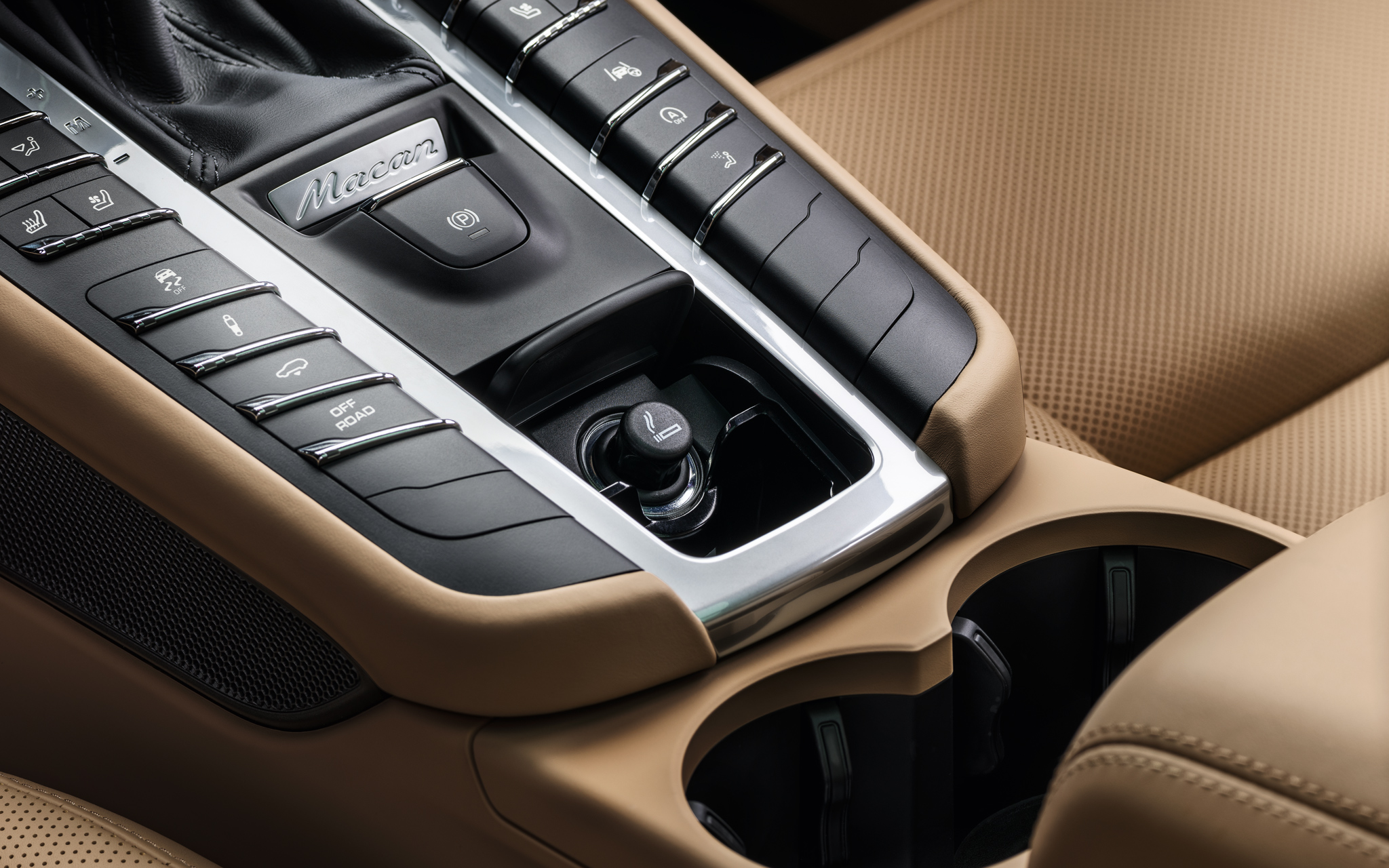
The less options you have, the more black buttons there will be…

Looking round the interior and especially the center console, you notice a very large number of buttons for different functions. The way they’re organized means there will be blank buttons in almost all cars for options that haven’t been selected, which looks a bit cheap. It’s only the current series that changed this into screen-based system, which still isn’t the clearest however. Be careful though, as of all the German automakers, Porsche is the one offering the least as standard equipment, so if you pick up a pre-owned car, make sure the first owner ticked the right boxes!

Interior build quality is otherwise good in both cars, however with lots of relatively cheap looking plastic in the rear, especially in the first series, the second being a bit better. Rear seats are also quite cramped, especially in terms of head room, and behind them, luggage space is on the smaller side, especially in height. This makes the car a non-starter for us given we need to fit a dog cage which there wouldn’t be a chance of doing here. The other argument I have against the car comes back to that excellent resale value, as for a prospective buyer, that means there are quite a few alternatives at the respective price points, depending on your needs and preferences.

In summary, a Macan with the right engine is not only the sportiest, but to my mind probably the best small SUV in the market – and of course it carries the Porsche badge! Even the by now almost 10-year old Macan Turbo I drove felt very solid, and the fact that the difference in looks to later series is small means it’s also aged quite well. It’s a neat car that, if it covers your needs for space, will serve you well, and obviously fit very well alongside the 911 or Boxster you may already have in the garage. If not, perhaps it’s time to get one of those too, to make up the Wiedeking duo?

TEST DRIVE: Porsche Macan – sports car or SUV?

I was fortunate to drive the new Macan at a Porsche event close to Barcelona a couple of weeks ago.

For the purpose of this review, I will mainly compare the Macan with my BMW X3 xDrive35d (MY 2012).

The most important bit first; the Macan feels more agile than my X3, or rather, more agile than any SUV I have driven. Don’t be fooled, the Macan is no sports car, it’s no 911 with four doors, but it is as sporty as a SUV gets.

Before driving the car I had a passanger ride in the back seat of a Macan S Diesel. It felt properly quick, not the least since the driver was driving the car like a complete lunatic… In spite of his efforts, the Macan Turbo in front of us pulled away from us on the straights. The diesel engine had a pretty OK soundtrack, considering it is basically a reworked Audi diesel…

After the scary back seat ride, I drove the Macan Turbo on some mountain roads. Boy is it fast! The engine produces 400 hp with a somewhat muted soundtrack, but it makes nice exhaust noises on upshifts…

The steering is light, which is something I like. On my X3 it feels more weighty, specially in Sport mode, but in a bad, artificial way.

Now to the practical stuff. The interior feels very “premium”; much more luxurious than my X3. The Macans on show had full leather interiors, which added to the premium feeling.

Interior space in the back seat is limited and luggage space is markedly smaller than in the X3. Headroom in the back seat is not plentiful; tall people will hit the roof.

Finally, the most important question: do I want one? The answer is yes, but I wouldn’t sell a kidney to buy it… Let me clarify: if I didn’t own a family car and needed a small, sporty SUV, I would definitely buy a Macan. But is it worth upgrading from my BMW X3 xDrive35d? That’s a tough question. The Macan looks a little better, it feels a little more expensive inside, it is much more agile, but quite less practical than the X3.

If I had a sports car along the X3, as I used to have, I would keep the X3 as a family car. But without a sports car on the side, the family car needs to be sportier. In that context, the Macan would be an excellent all-rounder; it would make everyday driving a little bit more exciting. On the other hand, I am really fond of the new Maserati Ghibli (test drive report coming soon…). Decisions, decisions, decisions…

Geneva Motor Show 2014 – report

Thanks to a last minute reschedule of flights I was able to make it to the Geneva Motor Show this year. I was only able to spend about an hour visiting the Motor Show, so what follows is a short summary with a somewhat limited photo gallery (taken with my iPhone).

Porsche
The Porsche 991 Targa is as beautiful in the flesh as in the pictures and I was lucky enough to see the roof mechanism in action. Amazing…

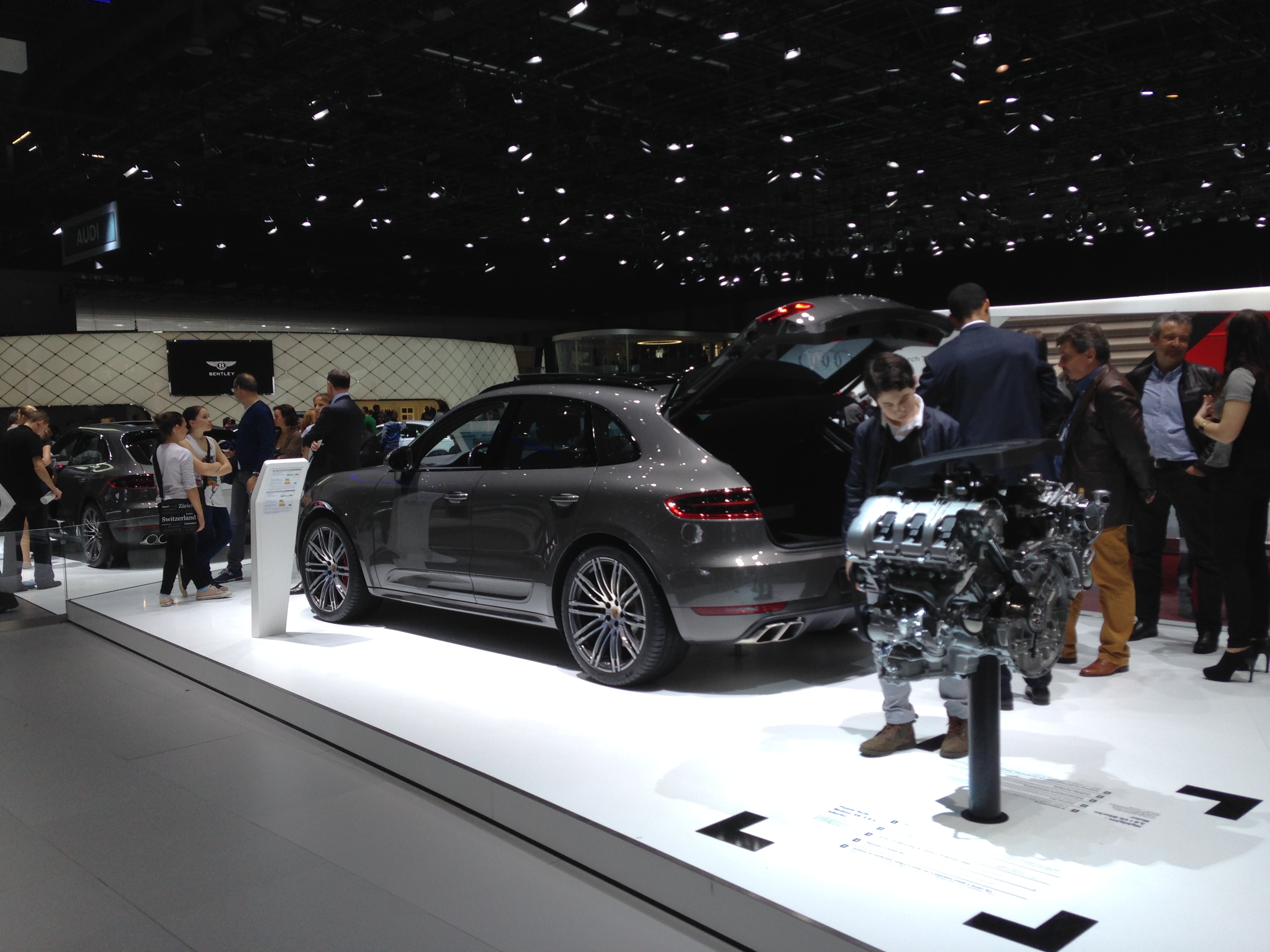
There were a couple of Macans in the stand, but both where in an awful dark brown metallic colour. The car looks good though, better than it’s bigger brother the Cayenne and better than the Audi Q5, with which the Macan partly shares the underlying platform.

IMG_1169

I tried the back seat of the Macan. Nice but marginally less spacious than my current BMW X3. The luggage space is smaller than the X3 as well.

Nice car though; I’m Thinking about selling the X3 and getting the Macan (or the Maserati Ghibli, see below).

BMW
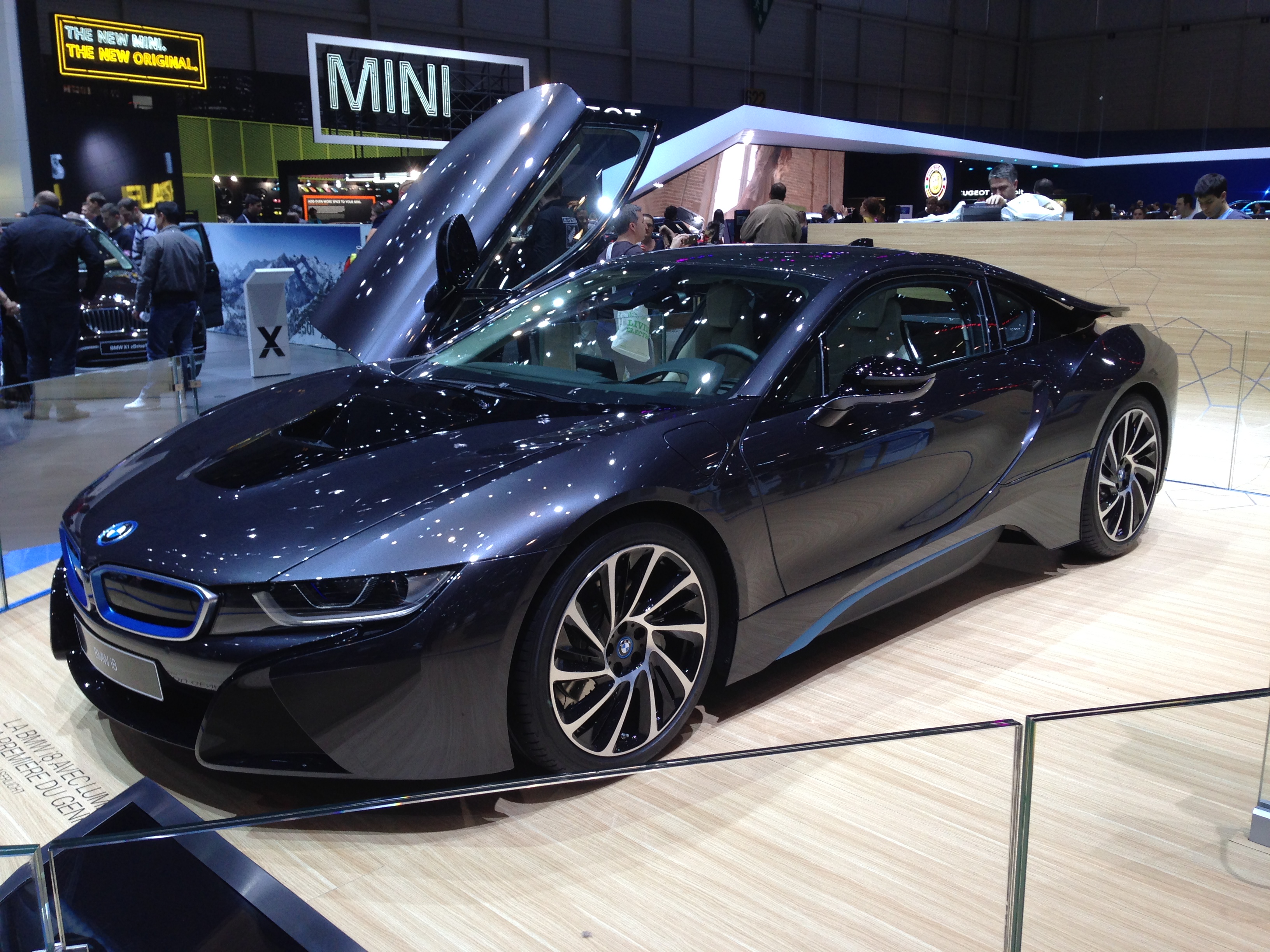
Looking at pictures, I have not been convinced about the styling of BMW’s electric sports car, the i8, but in the flesh it is absolutely stunning. In the dark grey colour exhibited on the stand it was very desirable. Maybe the most desirable sports car in Geneva; I didn’t see that one coming.

IMG_1158

The BMW 4-series Gran Coupé looks really good. I have also posted a large gallery of photos. Looking at this car, I wonder whether they will sell any 3-series Saloon…

IMG_1159

For those who don’t follow BMW:s new, intricate numbering system:

  • The 3-series is build as a 4-door Saloon, a 5-door Touring or a 5-door GT (the latter is a BIG hatchback).
  • The 4-series is essentially the same car, but it is build as a 2-door Coupé, a 2-door Convertible or a 5-door “Gran Coupé”, i.e. an elegant 5-door hatchback with coupé-like roofline (think: Audi A5 Sportback)

Tesla
The Model S is great. I liked it even more than I thought I would. Ergonomics are very good; the big centre touchscreen display is really easy to use. It  feels like “Car 2.0” or like the first iPhone. The future is here today…

It’s electric, it’s pretty, it’s practical (seats 5 or 7, huge boot) and it’s fast. What’s not to like? Maybe the interior doesn’t have the premium feel of the best german competitors…

Please read my fellow blogger’s excellent test drive report of the Tesla.

Ferrari
The new California T looks better than the original California (which I had the privilege to own during two years). I attented the launch of the California T a couple of weeks ago in Modena and will write a separate report on the car and the event. Stay tuned.

Maserati
The Alfieri concept car is very beautiful. Hopefully Maserati’s upcoming sports car (smaller than the GranTurismo), will look similar to this concept. Sorry about the poor picture.

IMG_1166

The Maserati Ghibli is a really nice entrant in the medium/high end saloon market, competing with the upmarket 6-cylinder versions of the BMW 5-series, Mercedes E-Klasse (and CLS) as well as the Audi A6. The blue car on the stand was highly desirable. I’m considering buying one, seriously.

IMG_1164

Jaguar
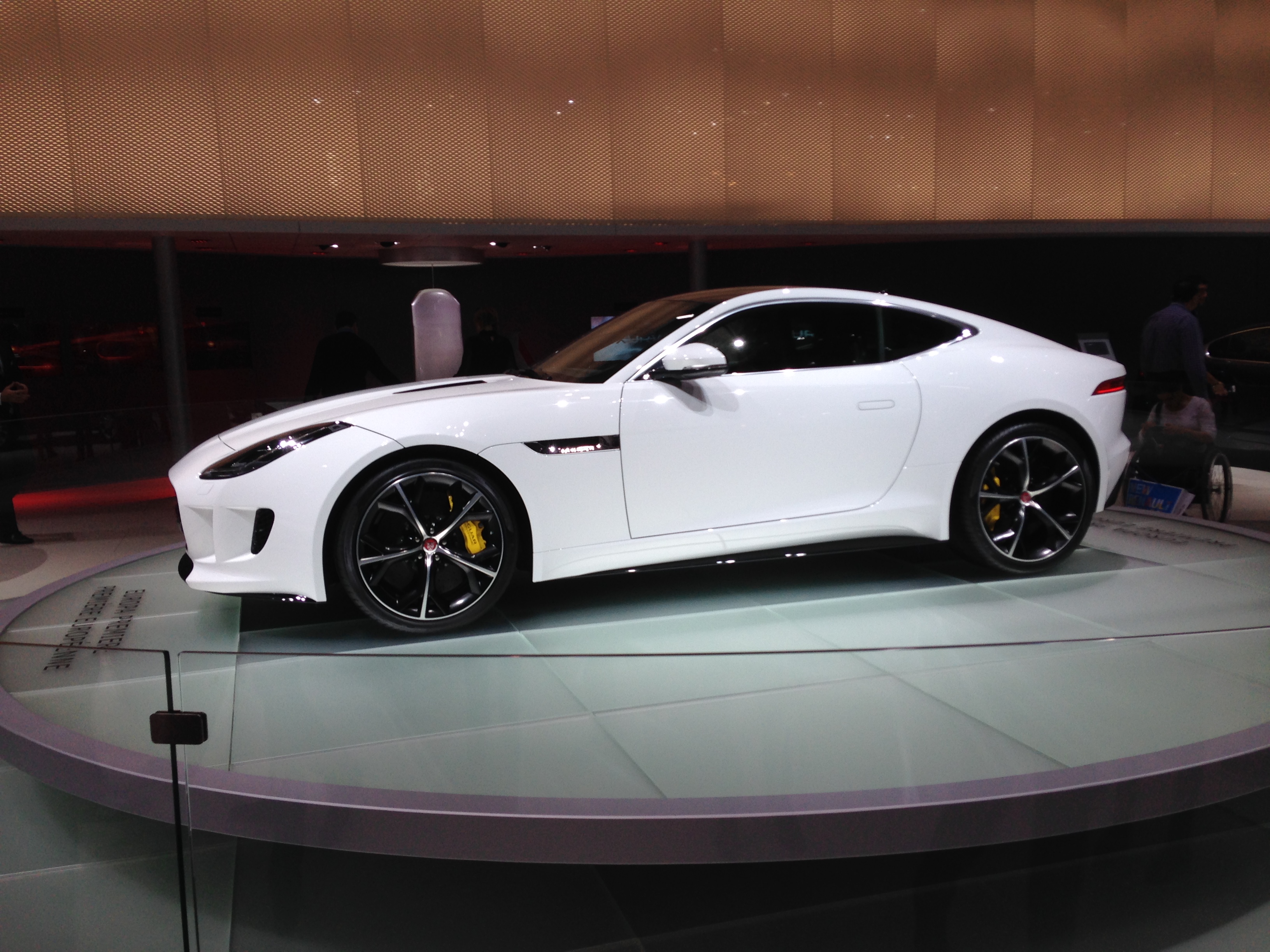
Could they build a car even more beautiful then the F-TYPE Convertible? Yes! The F-TYPE Coupé is absolutely stunning. On looks alone, this car is the Motor Show’s star:

IMG_1161

But the Convertible stills looks very good…

IMG_1163

Alfa Romeo
Alfa showed an open version of the 4C, the 4C Spyder. Nice design, in a Louts Elise kind of way, with added carbon fibre.

Audi
The new TT looks very similar to its predecesor. It’s nice but…yawn…

Lamborghini
The new Huracan is a stunner in the flesh, although a bit extreme for my taste. How did I not manage to take a proper picture?

Mercedes
S-Klasse Coupé
: considering the huge size of the car it is remarkably good looking…

IMG_1156

Short Summary
The BMW i8 and Tesla Model S surprised me, in a very positive way. The F-TYPE Coupé was a stunner.

Geneva Motor Show