The best of both worlds!

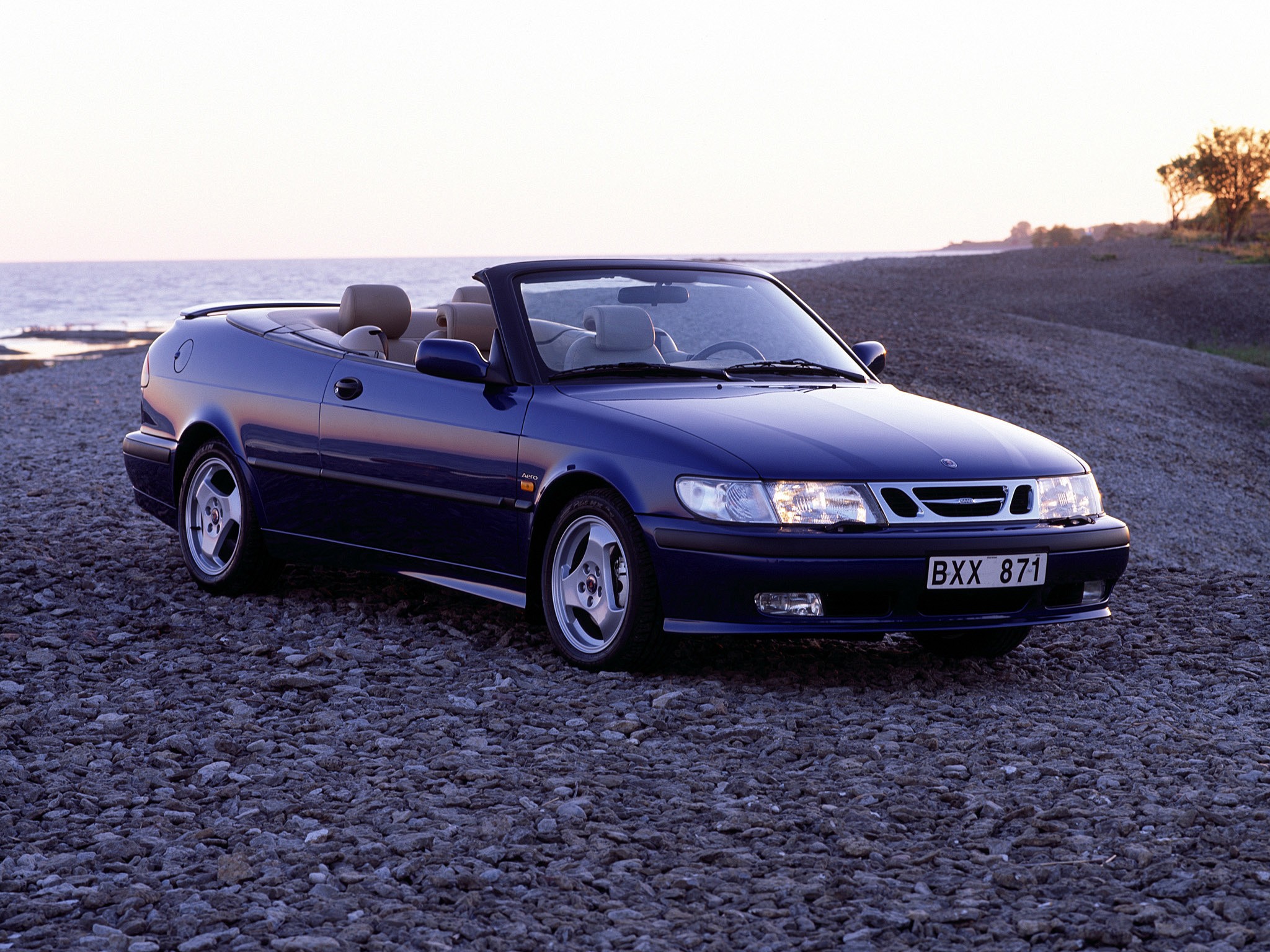
The last time I bought a new car was in 1999. You could also say it was last century, to make it a bit more dramatic. I remember it clearly, firstly because the car in question was a beautiful, dark blue Saab 9-3 Convertible with a beige leather interior, but also since it was only shortly thereafter that my wife became pregnant with our daughter. Judging by comments from friends and family, the normal course of action would have been to say “too bad”, sell the convertible and buy a family station wagon. I didn’t.

Instead, together with my better half, who to her credit fully supported me in this, we set about finding a baby pram that when folded, would be small enough to go into the Saab’s boot, at least with the rooftop up. I seem to remember that the one we ended up with was rather expensive, but if you folded it properly and removed the wheels (of the pram that is, not the car), you could just about squeeze it into the boot.
More practical than you would think!

The point here is not to further investigate the baby pram market. However, when we eventually bought a more traditional family car, it was the first of many to follow on the used car market. My reason for this is the same as for most people: I’ve mostly bought my cars privately and have wanted to avoid the massive depreciation all but a very small number of exotic cars see in the first two to three years. The smell of a new car is certainly great, but to me, it hasn’t been worth 30% or more of the car’s price.

When talking about depreciating car values, in the last years the discussion has mostly been about EV’s and the astronomic depreciation they saw in the first 2-3 years, i.e. from 2019-2020 and onwards. This was certainly an effect of the highly inflated prices many of them were sold at as new. On one hand they were more expensive to produce, but carmakers also knew that many of them would be leased by companies, making price is less of a factor given all the incentives companies in most countries were handed out by the state, i.e. you and I.

Three years later, corresponding to the typical European lease period, many of them hit the used market at the same time as the popularity of EV’s started to crumble. Today, you can easily pick up an early 2020 Taycan for 30% of its price as new. The question is rather if you’re brave enough to do so, given quite a long list of issues those early cars had, and what even in EV terms was quite a poor range.

An early Taycan may be cheap, but it’s a car for the brave (without range anxiety…)

However, although it’s been less discussed, the depreciation of traditional internal combustion cars (ICE’s) hasn’t made anyone happy either. When I sold my Saab convertible in the early 00’s after about two years, I remember losing roughly 30%. That’s far less than what the typical ICE loses today over a similar time period. And given that, now that we’re a few years further down the line, does it still hold true that EV’s depreciate more in the first years than ICE’s? In a very unscientific way, that’s what I’ve spent part of this week looking at.

For this exercise, I’ve taken an EV and an ICE in the same category and from the same brand, produced in 2022-2023, and with less than 50′ km’s on the clock. EV’s have a lot of horsepower, so I made it a condition for the ICE’s to have around 500 hp as well, but steered clear of the M-cars and AMG versions. For the EV’s, I made a theoretical range of at least 400 km a condition, knowing that will in reality be far less. Equipment-wise, I tried to get comparable cars with similar equipment levels.

Looks weren’t part of the criteria – there wouldn’t have been enough EV’s to choose from otherwise…

I looked at this across four categories: SUV’s, four-door sedans, sports coupés and shooting brakes. That also means that I made it a condition that the same brand had both an ICE and an EV in the same category in 2022-2023. I picked the BMW X5 and iX for the SUV category, the MB EQS (sedan) and S580 for the sedans, the Audi e-tron GT and TT RS for the sports coupes, and finally the Porsche Taycan and Panamera for the shooting brakes. And before you tell me shooting brakes isn’t really a category, the reason for including them is that both of them look bloody good! Interestingly, both also sell far better as shooting brakes than as sedans.

Before going into the results, this whole exercise is obviously not more than an indication. The cars aren’t perfectly comparable, as notably the exact equipment may vary. You could obviously compare models from different brands, but that makes it more complicated as brands depreciate differently. And you can certainly argue that an e-tron is not very comparable to a TT, given it’s a proper four-seater. That’s however the best I could think of given the condition of having an ICE and an EV from the same brand. The prices are my estimates of what you would have to pay after a bit of negotiation, and they are from the Swiss market. However, that’s usually a good approximation at least for the rest of Europe.

What the above results show is that all EV’s in the sample from 2022-2023 have indeed lost more value than their ICE counterpart, but that the difference isn’t huge, and smaller than a couple of years earlier. That’s however not because EV’s have become more stable in value, it’s rather the ICE’s that depreciate faster than they used to. What also seems to be true though, is that it’s not only ICE’s that eventually find a floor – as said, you can pick up a 2020 Taycan at 30% of the price as new, but those values seems to have stabilized now, five years later.

The Audi e-tron and BMW iX have certainly not been good to your wallet if you’ve bought them privately, but in both cases, part of the reason is an inflated price as new. That said, the regular BMW X5 is also not a car you would have wanted to buy as new. The Taycan has retained about half its value making it the best EV over the period, and the Panamera is the only car that has held its value significantly better than the others.
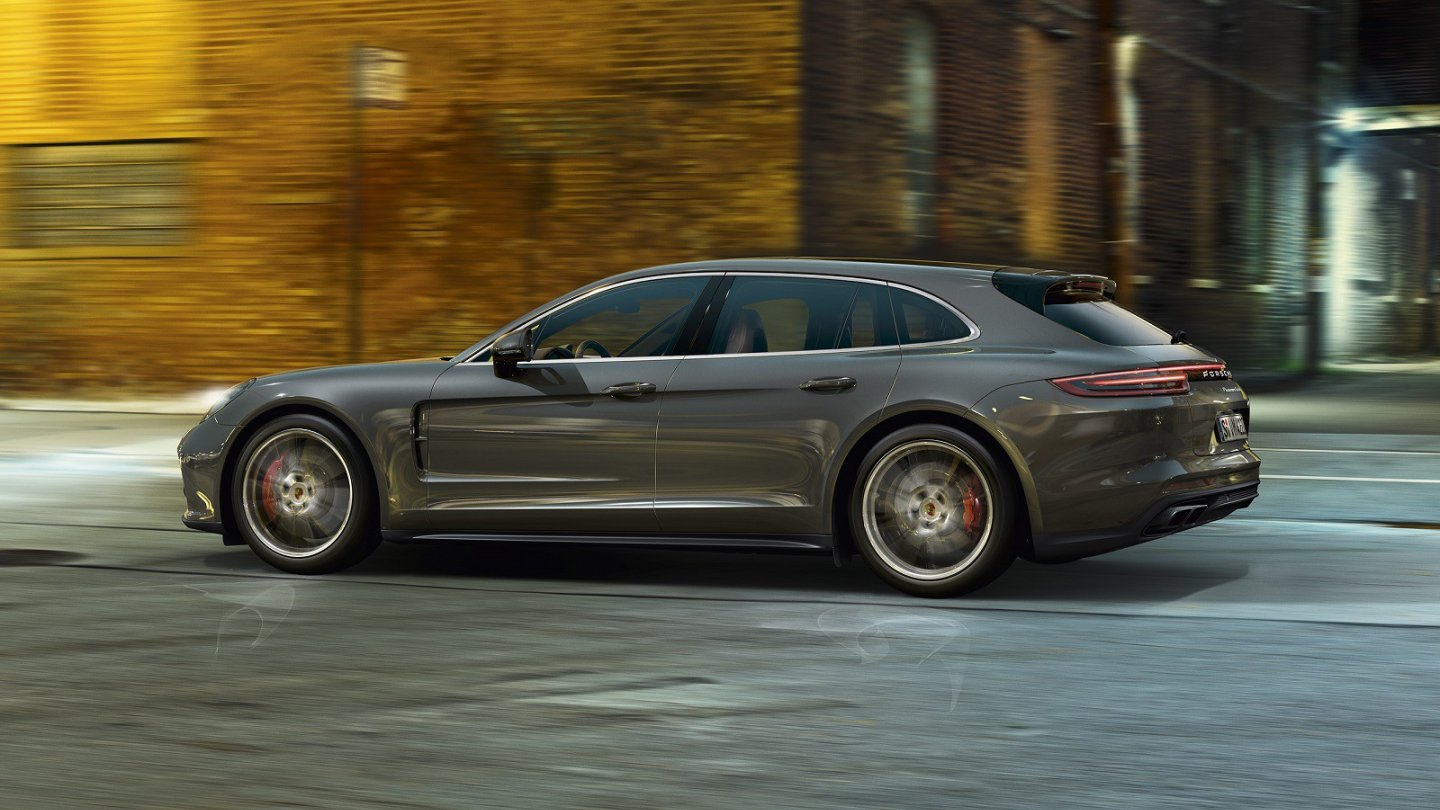
The Panamera Hybrid is arguably a better choice than all the others.

Where does this take us? Well, as little as I wanted to back in the early 00’s, I still wouldn’t buy a new car today, if it’s my money we’re talking about. That’s especially true if it’s an EV, but that said, even EV’s eventually see an end to their depreciation. So if it’s an EV you’re after, I would buy a Taycan or an e-tron, but rather one from 2022-2023 than the first two years. However, if like most, you drive a lot of short distances but don’t want to buy a second car for your longer trips, then I would argue that the best choice is none of the above, but rather a modern hybrid.

Taking the Panamera hybrid from 2022-2023 as example, it has a depreciation that is no different to the ICE version and offers you around 50km of electric range, whilst also lowering your fuel consumption overall. Some other hybrids will have even better electric ranges. The downside is extra weight over a regular ICE, but automakers have become very good at hiding that, especially the one from Zuffenhausen. Finally, if you only drive long distances, then nothing has changed and a 2-3 year old ICE remains the best choice!
The bargain family 911!

If you’re part of the crowd for which Porsche is equal to a 911 and you’ve looked at the 911 market lately (or for that matter at any point during the last 10 years), you’d be forgiven for thinking that unless a 911 is already safely stored in your garage, the train has left the station. But while that is indeed true in the case of classical 911’s up until the 996, it’s slightly less true for later 911’s and very much less true for the other models in the Porsche line-up, which today make up 85% of the company’s production. Today we’ll talk about one of those models, one that doesn’t receive much attention, that was always slightly controversial in terms of its looks, but also one that in its first iteration offers an unbelievable value for money whilst being capable of transporting four adults and their luggage in a way that no other family sedan can. You guessed it – this week is about the Porsche Panamera.

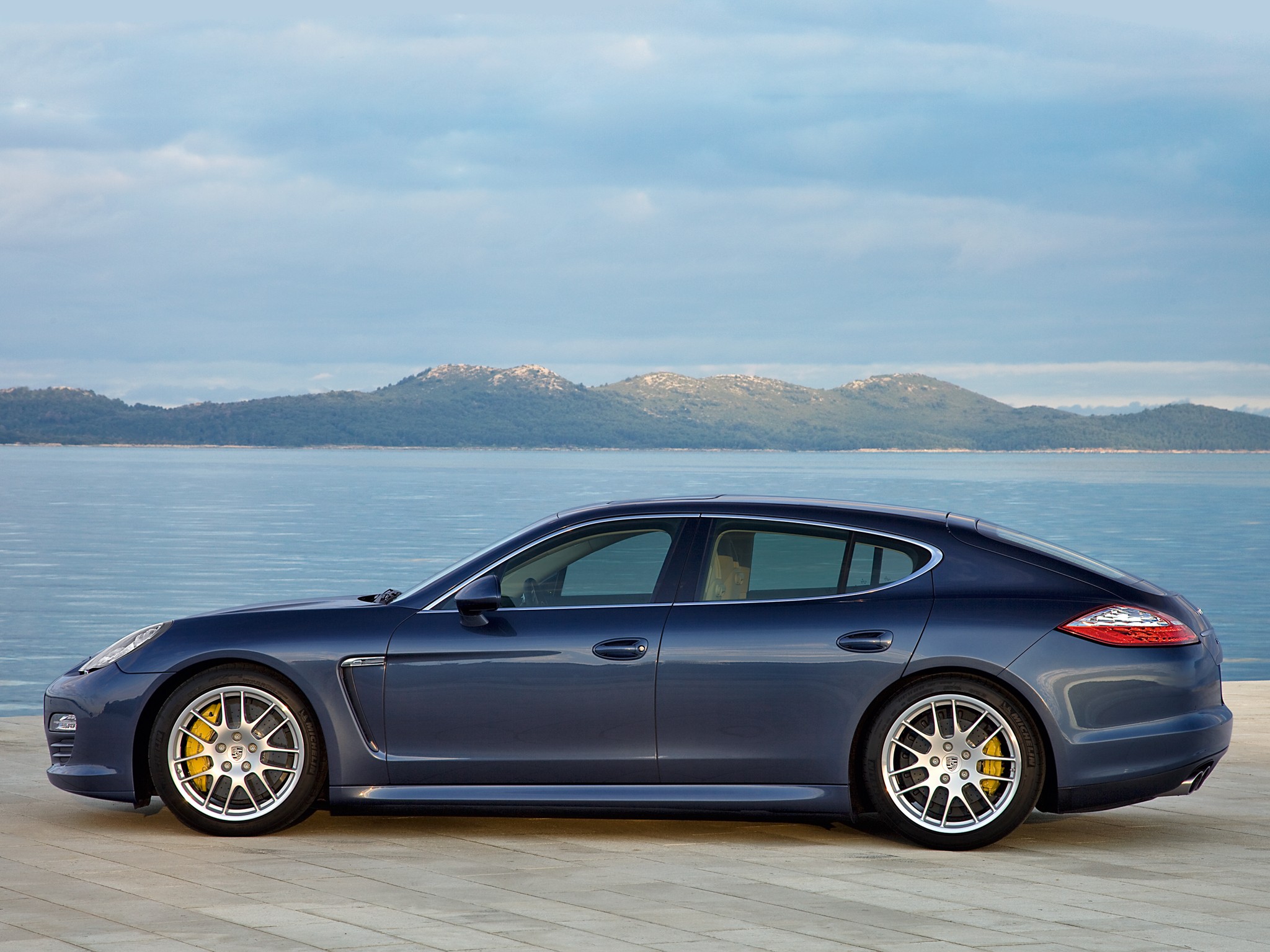
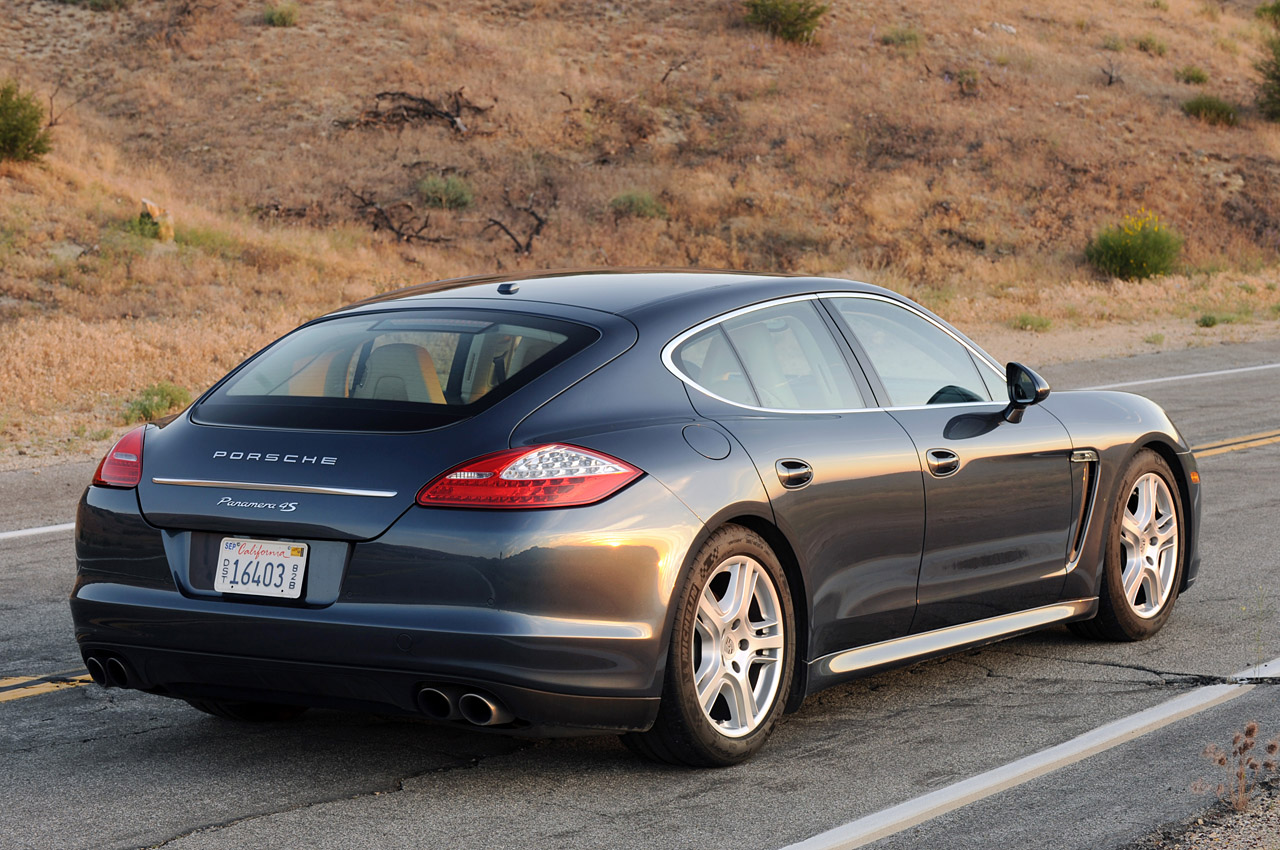
Definitely a Porsche – but good-looking?

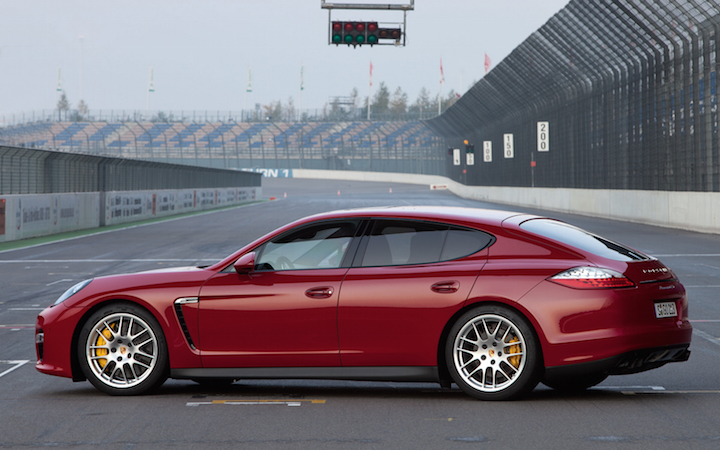
Porsche’s decision to start producing other models than the 911 had been taken many years before the Panamera, notably through the Cayenne in 2002. Wendelin Wiedeking, Porsche’s visionary CEO at the time and until 2009, had recognized that many 911 owners also had an SUV in their garage and wanted to have a share of that market, something he definitely succeeded in given the Cayenne today makes up alomost 1/3 of Porsche’s production. But then again everyone doesn’t want an SUV and Wiedeking also saw room in the market for a sports sedan-coupé, whatever you want to call it, the development of which ran during the 2000’s with the Panamera finally being launched in 2009. Importantly Wiedeking was not only visionary but also tall, and this is where the most criticized aspect of the Panamera – its roofline – comes into play.

It is said that at the beginning of the Panamera project, Wiedeking set as a condition for the car that he, and thereby well-grown adults, should be able to sit comfortably in the backseats (which in the first generation of the car were two separate seats, whereas later versions had the option of a 3-passenger rear bench). This forced the designers to raise the roofline which is what gives the Panamera its strange profile and earned it the nickname “buckle whale” in the home market Germany. Add to that the headlights resembling the Cayenne and some slightly strange-looking backlights, and you get a car that in the eyes of most is not beautiful, but luckily has a large number of other qualities that you experience once inside – which is where you spend your time anyway.

It’s clear to see where rear passengers have their heads!

It’s absolutely true that four adults travel in comfort in a Panamera, even when back passengers are over 180 cm. Contrary to many other coupé-GT’s the Panamera is a hatchback offering around 450 litres of luggage space, in addition to which the back seats can be folded. This is in other words a car that is fully capable of transporting not only people, but also their luggage. And if the exterior is controversial there is not much to say about the interior that is very nicely appointed and offers a true sports car feeling. Actually a 911 feeling, until you look over your shoulder and see the backseats. As so often a dark interior is to be preferred as it usually stands the test of time better – and make the few pieces of plastic that don’t have the real qualitiative look shine less.

“Pre-touchscreen” cars had a lot of buttons, but none more so than the Panamera’s center console!

The best part is of course the drive, which can be described as all the 911 feeling you can possibly get in a family car format. Going back to the Cayenne, it was at the launch said to convey the same 911 feeling in an SUV format, something all of us who have driven one know is not the case, as it can never be in a car riding as high as an SUV does. The Panamera is also a big car (almost five meters long and two meters wide) but it obviously rides much lower. At just under two tons it’s however no light-weight, making the driving experience even more impressive. Again, you won’t find a “family-compatible” car at an even remotedly similar price point (more on that below) that is more fun, precise and enjoyable. Two features that are important in that regard is opting for a car with PDK and if possible also air suspension which clearly enhances the ride quality.

The first generation Panamera was offered as two- or four-wheel drive with six- and eight-cylinder petrol engines and a six-cylinder diesel. There was also a six-cylinder hybrid but we’ll pass on that and the diesel here, as there is no doubt that the eight-cylinder is the engine that was intended for the car – just looking under the hood of a six-cylinder shows you that, as half the space is empty. Also, the only engine that has given rise to mechanical issues through the years is the 300 hp, petrol six-cylinder, so steer clear of it. The 400 hp Panamera S and 4S where offered along with the 500 hp double turbo Panamera Turbo from the start in 2009, and were complemented with the (naturally aspirated), 430 hp GTS and 550 hp Turbo S in 2011. Except for the “basic” 8-cylinder Panamera S, all other versions are four-wheel drive as standard and all except the S also come with a 7-speed PDK. I would go for one of those and basically let you be the judge of how much power you need. The GTS is in my view especially interesting, being a bit more unusual and the strongest of the naturally aspirated V8’s.

Replace these bags with more car-appropriate luggage and you’ll fit even more stuff!

The reason you can be the judge of how much power you need is also that in the second-hand market, where plenty of Panameras are to be found, it doesn’t really make a difference. A budget of EUR 30.-40.000 will get you plenty of great candidates of all configurations, and neither the type of engine nor the equipment level make them differ significantly in price. You don’t even need to go back to the first model year as that budget will also be sufficient for the 2011 GTS and Turbo S with around 100.000 km on the clock. There is for example currently a fully-loaded, 100.000 km Turbo S in Switzerland in fantastic condition, that cost CHF 290.000 as new, for sale for CHF 37.000… 100.000 km is of course no issue for a Porsche V8, as long as the car has been taken care of, preferrably has had one owner and comes with a complete service history. When it comes to options, the more is generally the better but you should probably steer clear of the ceramic brakes that are supposed to hold a lifetime, but often need to be replaced already around 100.000 km or so – at a cost of half the budget given above.

So there we go – a slightly strange-, but also expensive-looking four-seater Porsche, four-wheel drive with ample luggage space that is a true joy to drive, for the same money as a diesel Passat. Come to think of it, it’s also far more enjoyable and much cheaper than a family XC90… Unfortunately the Panamera can do many things really well, but fitting a dog cage isn’t one of them, so I’ll have to pass on this one. If it wasn’t for the dog (stop looking at me like that!), a 2011-2012, well-equipped GTS with standard brakes sounds pretty unbeatable in terms of value for money!

New Porsche Panamera spotted in Weissach

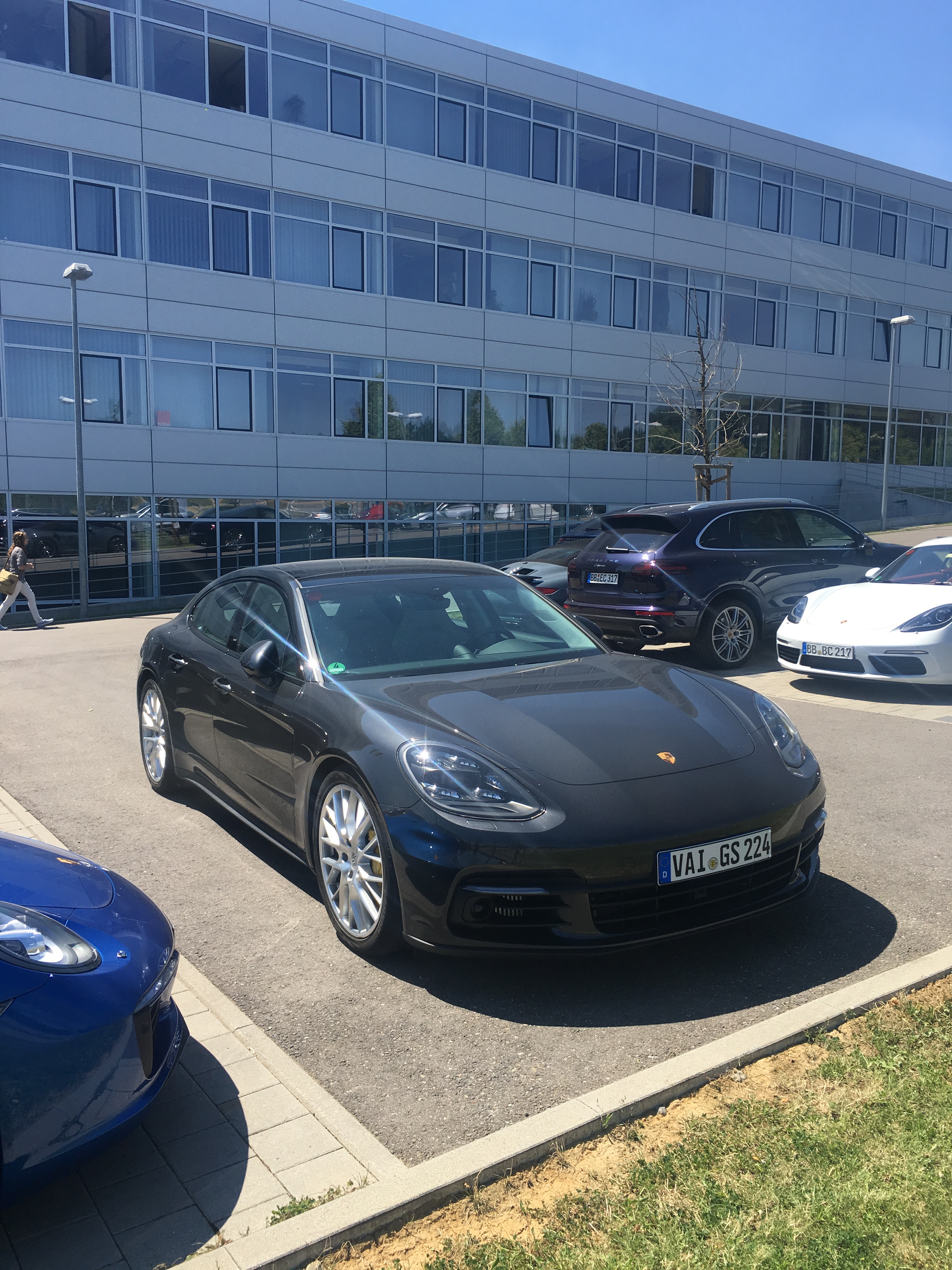
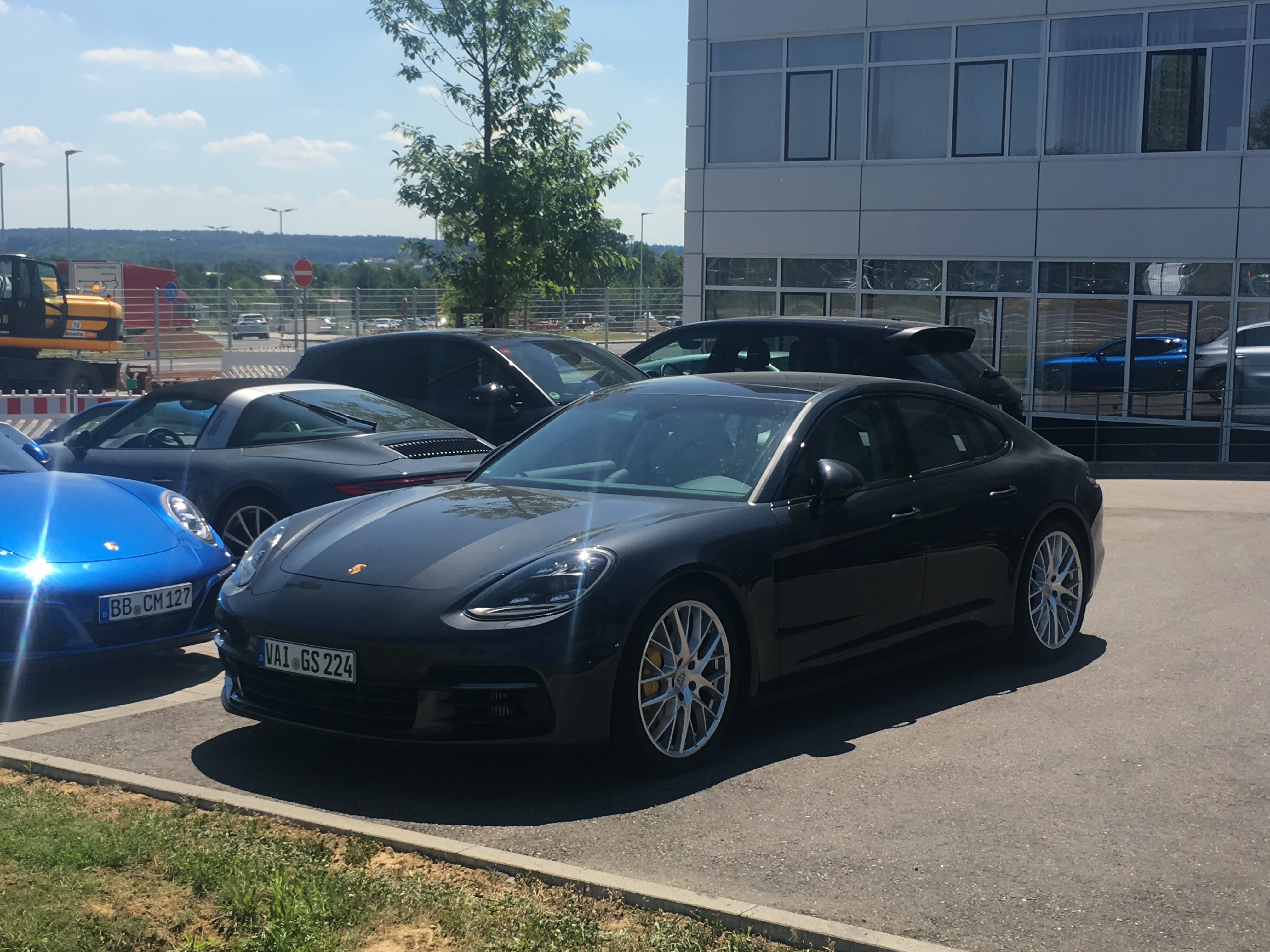
Yesterday I drove past Porsche’s research facility in Weissach. I was able to spot a few of the brand new Panameras. I must say it looks much more better than the old Panamera. My photos don’t do it justice, it is actually really beautiful.

After Weissach, I went to the Porsche Museum in Zuffenhausen. I will post photos from the museum soon. I will keep you posted!

IMG_1429IMG_1430IMG_1431IMG_1434

Porsche updates the Panamera and introduces a plug-in hybrid!

Porsche shows a facelifted Panamera, with a redesigned front and back. The most interesting part is that it is available as a Plug-in hybrid, which is quicker than the old hybrid while being able to cruise on “charged” electricity. The combined power of the V6 and the electrical motors is 416 hp, with a claimed fuel consumption of 3.1(!) l/100 km.

The other big news is that the V8 engine in the Panamera S and 4S is replaced by a new twin-turbo V6 engine with 420 hp.

More info at evo.

Porsche Panamera S E-Hybrid