
When I grew up, I remember my parents speaking of most political leaders with (sometimes great) respect. Churchill was still in vivid memory for many, as was JFK. De Gaulle in France was seen as a true statesman and in general as I remember it, although people didn’t necessarily agree with the political leader of the time, there was a fundamental respect for those leading a country.
Oh how times have changed in this regard. It’s a long debate well beyond this blog to try to define where things went in the wrong direction, but what it’s lead to is no doubt an environment where at least some political leaders deserve far less respect than used to be the case. Then again, the blame on that falls on us since in the end, we’re the ones who somehow, directly or indirectly, elected them…

An example in the category of those not deserving much respect is US Energy Department Secretary Jennifer Granholm, who a few weeks ago stated that she fully supports efforts from the Biden administration to require (among others) the U.S. military to implement an all-electric vehicle fleet by 2030. Granholm says that global events like the war in Ukraine aren’t good for (fossil) energy security, conveniently “forgetting” that the US is pretty much self-sufficient in oil.
The team at Doomberg (an excellent geopolitical newsletter I highly recommend to anyone interested) calculated what it would take to electrify the main US battle tank M1 Abrams, weighing 60 tons. The answer is a battery pack weighing 2/3 of the vehicle itself, i.e. 40 tons, and being roughly the size of the tank itself. I’m sure the US military is thrilled at the prospect, and probably also curious as to how Granholm plans to ensure war zones are well covered with charging stations!

Idiocy is certainly not limited to the US. In Europe the undisputed champion is of course Germany, a country that used to be the backbone of the European economy but that now has transformed to a schoolbook example of failed energy policy. Germany’s Finance and Climate Minister, aka Green Party leader Habeck fully supports the recent decision to turn off the remaining German nuclear plants, while seeing no problem with those in war-torn Ukraine, a country currently being bombed on a daily basis and very much in “nuclear radiation” distance from Germany, continuing to be operational. Nope, I’m not making this up.
Another European privilege is to have a large bunch of politicians in the EU Parliament in Brussels representing the EU member states. They have now – hallelujah! – discovered that there is a risk that neither the lithium, nor certain metals required for the “energy transition” will be available to Europe in the quantities needed over the coming 10 years or so. Well, had they read this blog, for example in early December, they would have saved some time coming to this assessment…

In order to find a remedy to this annoying reality, various prospecting projects will soon start, aiming to find suitable excavation sites for metals and lithium in Europe itself. There are, hmm, a number of problems with that. Just to name two, there is of course the small fact that the quantities you can hope to find in Europe are far from being sufficient. Also, as opposed to the Congo where we do business by closing your eyes bribing everyone and letting children do the dirty job, that doesn’t really work in Europe.
Take Finland as an example. There is apparently cobalt in various places across the beautiful Finnish landscape of lakes and forests. But, surprise surprise, the Finns would like to keep that landscape as it is and not transform it into a giant cobalt mine. Of course there will be similar resistance in other places as well, meaning that any excavation at all, which again will not cover Europe’s future needs, is at least 10-20 years away, well past the deadline Brussels has set itself.
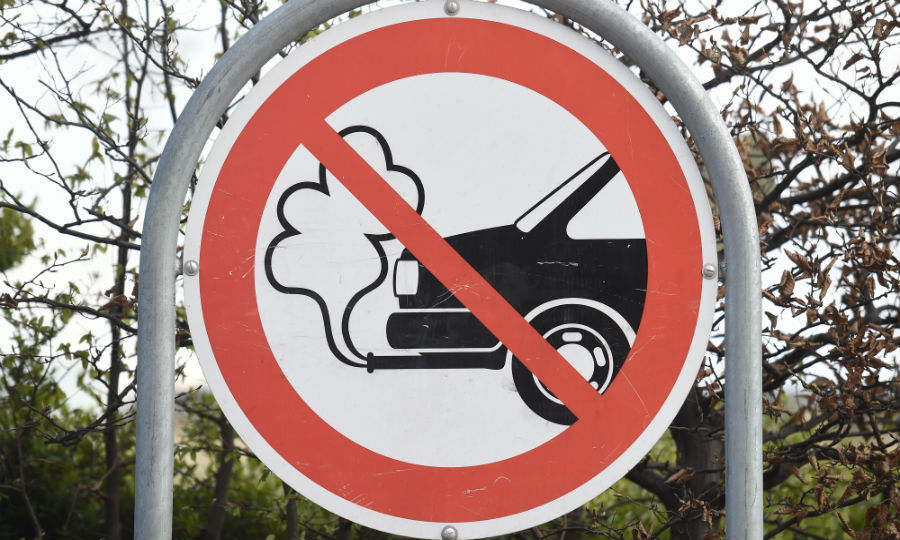
Fortunately though the world hasn’t gone completely crazy just yet, because when you really start to lose hope, a few voices of reason have started to emerge. One was heavy lobbying from French and German automakers, resulting in the ban on selling new combustion engine cars being pushed forward from 2030 to 2035, and then also being changed such as to continue to allow combustion as a technology for cars running on clean fuels (more on that below).
Other sensible voices showing resistance is starting to form have included the CEOs of notably Renault and Stellantis who strongly opposed the planned Euro 7 emission rules for diesel and petrol cars, saying the multi-billion investments these would require of manufacturers would only result in a very marginal reduction of greenhouse gases, hardly being worth it if we’re anyway supposed to go all electric a few years later. Or put differently, there’s about 1198 better ways to spend your money…
They are of course right, although if you agree with me (or even if you don’t, but can count), the truth that I’m sure they’re aware of is that full electrification will not happen any time soon, bar a sudden revolution in battery technology. For those new to the blog, this is something I wrote about notably in the post I’ve linked to above (and again here) from December.

Interestingly, a lot of people are now all of a sudden also talking about synthetic fuels (see my post from two years ago here on the topic), tacitly admitting as much. This has notably become a big debate in the UK, with pressure being put on politicians to start encouraging promising technologies in the field. Since the post on the topic I linked to above, Porsche has increased production of its synthetic fuels, proving that the technology works, although the cost is still prohibitive and viability of this as a solution at scale is still insecure.
The recognition that the future is perhaps not 100% electric is however best seen in EV prices, when in notably the US market, pre-owned combustion cars are increasing in price again whereas used EV’s have started to fall like stones. As I wrote about back in August last year, that used to be the case for some EV’s but not for others, notably not for Tesla.
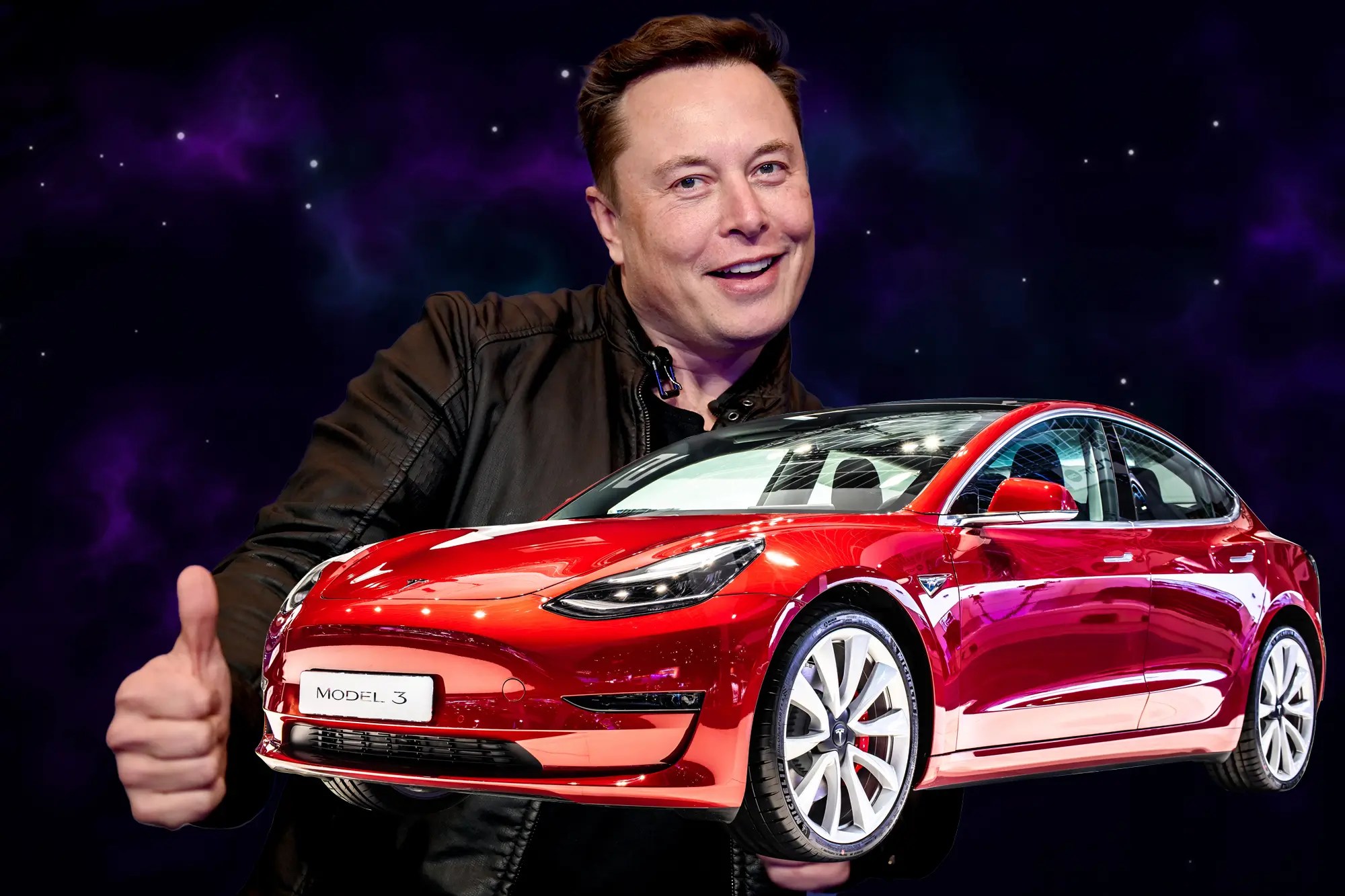
Of course, if like Elon Musk you start cutting the prices of new cars (in itself a good sign itself that things aren’t going that well), that’s hardly beneficial for residual values, but even factoring that in, it’s clear that price falls across all EV’s are heavier than before, and bigger than for (at least some) conventional cars. Could it be that when an increasing number of countries have cut subsidies, or when like here in Switzerland, EV’s will need to pay road tax from next year, and when the electricity price has increased quite dramatically, the whole EV thing isn’t as fun any longer?
We’ll see where all this takes us, but at least the question on what our future car landscape will look like has become a bit less one-dimensional. There’s of course many more issues with the planned electrification that I could have added to those above, making me all the more convinced that the future of new cars is somewhere in the triangle modern hybrids – new battery technology – alternative/synthetic fuels, probably in some combination. But while we figure that out, I can’t help hoping that someone with a sense of humour parks an M1 Abrams tank in Secretary Granholm’s driveway.

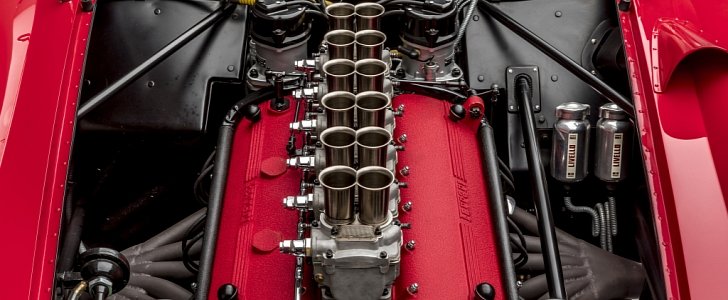

 The Thrill of Driving