Car trips and car memories…

The pandemic does many things to us, and I’m sure I’m not the only one taking more time to reflect on the past (or maybe it’s just age, who knows…). Anyway I was sitting contemplating the other day and quickly realized how many of the old memories are linked to one of the many cars I’ve owned or experienced in various ways. Given you read this blog I dare guess it may be the same for you as well? So in a slightly philosophical way, I thought I’d take you down part of my own memory lane this week.

By the time you read this (and assuming you do so in the week after publication), we’re in Zermatt for a hopefully wonderful skiing week ahead (yes, we are lucky to live in a country where ski stations are still open!). We drove here from Zurich in the family car par excellence, a Polestar-treated XC90 (at least that…) which was packed to the limit as next to our family my daughter’s boyfriend is also here with us. The first time in 20 years or so we had someone else outside of the family as part of a longer trip but obviously a natural – and enjoyable! – evolution. Living in central Europe since our children were small, car trips have been very much part of their life since their youngest years, and we always had issues understanding other families telling us about how their children screamed after 30 minutes in the car and asked when they’d be arriving. For us it was the contrary,..

The only cars you see i car-free Zermatt are the electrical taxis and hotel cars…

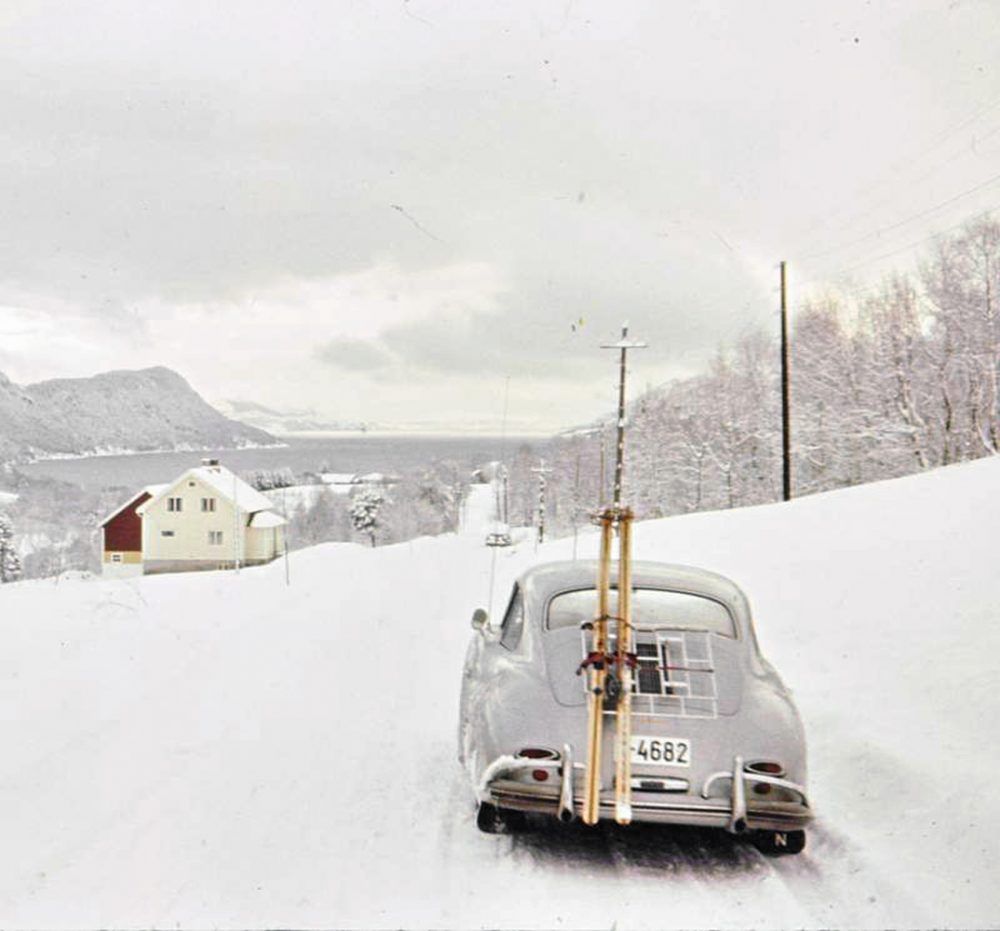
Many of these trips were between Switzerland and my native Sweden where we had a summer house during ten years. Roughly 1600 kms in one direction, usually over two days with the night spent in northern Germany. I remember these trips well, the cities we passed, the route that became familiar through the years, the places we spent the night (nothing better than a real German Schnitzel & Weissbier after a day of Autobahn!) and of course also the feeling, especially at the time the family car was the AMG E63, when the left lane opened up and you could floor it! What I don’t remember is the time no doubt wasted in congestion and heavy traffic – somehow you forget about that, even when it felt hopeless at the time. The most vivid memory was however 7-8 years ago, when my wife and I had decided to fly up to Sweden instead and spare the children the long car trip. Upon announcing this my daughter (who was in her early teens) burst out in tears – for her, the car trip was equal to the start of our vacation, and something she looked forward to. So the flight tickets were cancelled and we were back on the road.


The picture left didn’t happen very often, but I remember that more than the picture right…

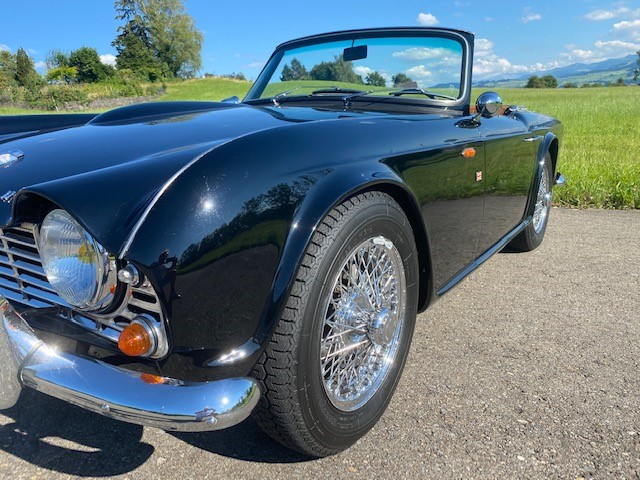
The Triumph TR4 I had during almost ten years was another source of vivid memories. From finding it in Copenhagen early December to driving it from Basle (where it had been shipped to) to Zurich a few weeks later in far from ideal oldtimer weather. Basle is no more than 100km from Zurich but it was still a bit of a shock when after coming home, the oldtimer specialist I went to for a check-through said “it’s a good thing you only drove here from around the corner, because these breaks are nothing but rust…”. After that, as long-time readers of the blog will know I was extremely lucky with the TR4, hardly having a single issue over all the years. The most memorable trip I did was no doubt the one my wife and I took to Lausanne 5-6 years ago. We chose the small roads, over many mountain passes, even running into a real Swiss cow festival. A car memory that definitely sticks, but unfortunately in the end, those trips were too few and far between, reason why I sold the TR4 last year.
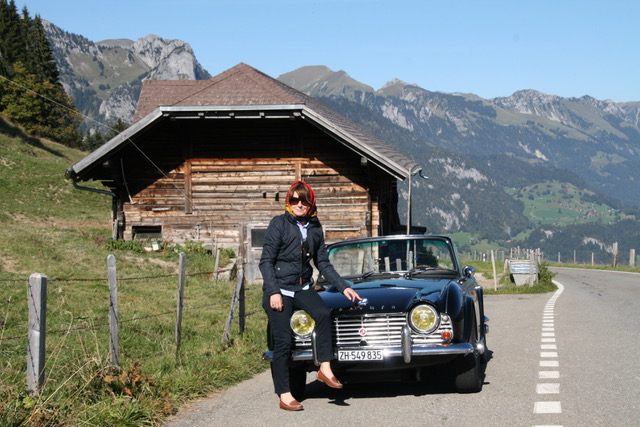
A very memorable trip, but unfortunatley there wasn’t enough of them!

There have been many cars through years but going all the way back to the beginning when I was 18 and got my first car, a -75 Golf, as blue as the ocean, with a beige interior. I bought the already well-used Golf in northern Sweden, drove it the 600km or so to Stockholm, and then all the way from Stockholm to Florence for a summer language course. I still remember arriving to Florence late one evening, with the rain pouring down and a map on my lap to help me find my way in a completely unknown city. It took a while and I had an early practice of Italian ahead of the course when I had to ask for help, but I finally made it. It may be a surprise to younger readers but it was indeed possible to find places before GPS’s, and it had the additional benefit of actually having to speak to people! After the course I drove the car from Florence to Nice, had it there for a year whilst studying at university, and then drove all the way back to Stockholm. By that time my Golf had around 270.000 km on the clock and I hadn’t had a single issue during the 15-20.000 km or so it had been mine. There is truly something special with your first car!

Even more special than your first car is perhaps your first car memory, which for me is linked to the years we lived in Monaco when I was a child. I’ll never forget the weekends we spent skiing in the southern Alps in the winter. Most of the way back would typically be one big traffic jam, and you would always have the tough guys driving past the whole line on the narrow mountain roads, calculating that they would somehow be able to get back in line when someone came in the other direction. It mostly worked, but not always, as proven one time by a Renault 5 Turbo II that passed us and a few hundred meters later had crashed straight into another car. You’re certainly allowed to be nostalgic over old cars, but it’s important to remember that most things were not better before – car deformation zones being one of them!

A great car we’re yet to explore on the blog – but not famous for its deformation zones…

Now the children have grown up and this ski trip is perhaps the last family car vacation we do together. The XC90 is a lease for another couple of years so I’ll guess it’ll stay with us until then, but as you know I replaced the TR4 with my 650 convertible last year, hoping that will be the main transport for my wife and I when the children start their own lives. The Beamer will hopefully become a source of new car memories to treasure in the future and I do look forward to them, just as I know we all look forward to the day we can return to a more normal life than most of us have right now. So hang in there and until that day comes, make sure you cherish your own car memories and stories – and perhaps share them with someone!

What to consider when buying your dream car

When I sold my Triumph TR4 this autumn after ten years and re-invested the money in my deal-of-the-century BMW 650i, quite a few people came to me both questioning my choice, but also asking for tips of things to think about when buying the dream car with a big D. Based on my experience over the years, I therefore decided to put together a few points in this regard that make up this week’s post.

My choice of switching from an oldtimer to a modern car, as mentioned in my previous post that you can read here, was basically a practical consideration based on how little I was using the TR4, that fact that I neither have unlimited space nor an unlimited budget, and a realization that our needs have changed. This is not to say you shouldn’t realize your oldtimer dream, but whether it’s an oldtimer or a modern car you’re dreaming about, there are some basic things to bear in mind.

Age is just a number – or is it?

The car’s age is obviously an indirect function of what your dream car is, but the point here is just to think about the implications the age will have on your ability to use it. To come back to my TR4, the longest trip I did in ten years was with my wife to Lausanne and back, around 600 kms. It was a great trip without any issues, but when we came back home I wasn’t really longing to go any further and I left the car standing for 3 weeks.  If you’re more hardcore or more passionate this will sound ridiculous, but at least for some of us it’s relevant and something you should consider before deciding.

…when life was more hardcore than today…

Other aspects of old vs newer include some of the things we are so used to in modern cars that we don’t even think about them. Take for example the isolation of the convertible top – there is a very big difference between a 50-year old car and a new one in this regard. Connectivity is another one of those things – if you love connecting your phone, remember that Bluetooth is a recent invention. And remember that speaker systems have evolved. Unless you want to listen to the engine all the time, make sure you’re happy with the sound, because drilling holes in the door panels of your new companion is perhaps not what you dream about.

The art of lobbying

The dream car your mind is set on is not necessarily the dream of your partner or other family members, and this is where some convincing and lobbying comes into play. Believe me, that’s a far better way to go than to start by buying the car and putting your partner before a fait accompli. I’ve tried and it’s nothing I would recommend.  I’ll never forget the day we returned from holidays and whilst I brought in the luggage, my wife listened to the answering machine where a car dealer I had just made a deal with but not yet told her about called to confirm it. Somehow, I hadn’t found the right moment… She eventually came around, but I won’t try that again. Your family doesn’t need to be as enthusiastic as you, but it’s good if they’re in on the project and don’t hate your dream car – you risk becoming very lonely otherwise. Furthermore, if it’s a two-seater, that obviously means any children have to stay home. If it’s a convertible, it won’t necessarily be very comfortable in the back seat with the hood off. And so on.

The thrill of maintaining

All cars break down. To a certain extent this can be avoided by going through all the checks at the time of buying, but stuff happens. It probably happens more with oldtimers than with modern cars, but there’s more stuff that can break in modern cars, so all things considered, it may well come out the same. Also, if you believe like I did that oldtimer mechanics are good-hearted guys in it for the passion and not for the money, think again…

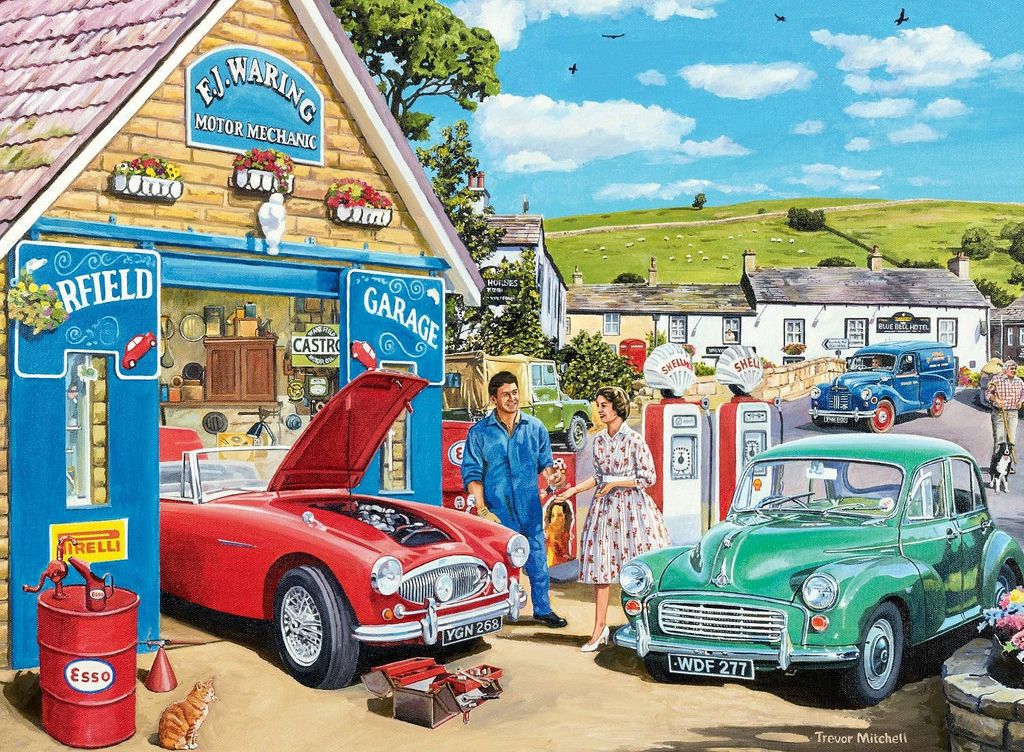
Many oldtimer garages still look the same, but prices have gone up…

Whether old or new, there is obviously a cost associated with your dream vehicle, and that cost will depend heavily on both the car’s age, its condition and its complexity. Looking at oldtimers, my TR4 was a relatively safe bet given it was a no-frills car with a four-cylinder engine originating from a tractor (it sounded great but revving wasn’t its thing…). A 12-cylinder E-type or an Aston Martin V8 are a completely different story, as friends of mine have experienced over the last years. I’ve now replaced my TR4 with a modern, 8-cylinder double-turbo 650i and when the guarantee expires, I’m potentially up for much heftier bills than with the TR4, but I like to think that at least I’m aware of it. You should be so as well, and you should set a projected budget aside. If you’re insecure, speak to a specialized garage or a car club who will be able to guide you. Please remember this. I know a frightening number of intelligent people who somehow managed to forget all about it until the day the bill is delivered…

Is depreciaton a friend or foe?

With the exception of a small number of collectible cars that gain in value from day one, as a rule of thumb nothing depreciates as quickly and heavily as luxury cars and as a general rule, the more they cost as new, the more they will loose. After a period of typically 6-10 years, values then stabilize at a fraction of the initial price, and this is when it gets interesting. Allow me to take my 650i as an example. 6 years ago when it was new it cost CHF 175’ with options. 50.000 kms later I paid CHF 36’. That’s a nice little depreciation of 80% or if you prefer, 2.8 CHF per km. Even if Elon gets his way, the whole world turns electric in five years and my resale value goes to zero, I’ll never be close to that depreciation. Also, and this was important to me, a great advantage of buying a heavily depreciated luxury car is that it was built at the time to cost CHF 175’, not CHF 36’ or anything in between. That shows in every single detail, and it’s a very nice feeling.

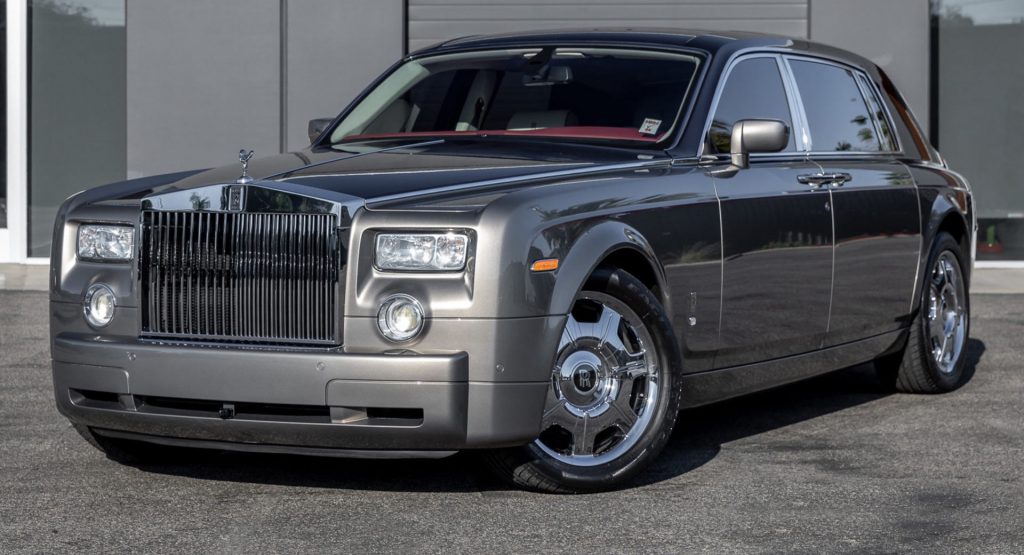
If this is you’re thing, depreciation runs in the 100.000’s the first years…

That’s one side of the coin, but there is of course also a reason for the heavy depreciation, and that’s the maintenance cost. Having said that, I’m a very strong believer in the market being very far from perfect in this regard, meaning that if you do your research, you can to a certain extent “beat” it. As a rule of thumb, never ever be in a hurry. There are of course situations where it’s warranted to act quickly but generally, there will always be good cars around. Take your time, do your checks, look into the history, speak to experts, call the car club etc. The more you know, the more likely you are to buy the right car, and the better prepared you’ll be.

When I set eyes on a 6-series, it was these type of considerations that led me to opt for the updated 450 hp V8 rather than the pre-2013 408 hp version. The extra power was nice but above all, a bit of research showed that the previous engine had a history of engine failures that can become very expensive. This was not at all reflected in market prices however. I knew which options were important to me, and also that I wanted a fully serviced one-owner car. When that car in the right colour scheme then appeared back in August, I was able to act quickly. Of course things can still happen and I certainly don’t want to sound like a know-it-all in this regard, but I’d like to think that knowledge and some experience have at least lowered the risk.

NEVER go for “almost” right

Finally, perhaps the most important point of all. Coming back to the point of not being in a hurry, never – ever – go for the car that almost has it all. If you want a manual 996, don’t buy the Tiptronic thinking you’ll get used to it, wait for the right one to come around – it will. Don’t buy a blue car if you want a black because it’s almost as nice and after all it was cheaper. You risk thinking about it every time you walk up to the car. If you dream of the 8-cylinder, don’t by the 6-cylinder version. And so on. If you’re realizing a childhood dream, you want reality to be as close to that dream as possible an “almost” won’t cut it. When the right car comes along, you’ll be glad you waited!

So there we go. Not by any means a complete guide, but hopefully a few points that can help guide you in your quest for the dream car! Good luck!

Classic cars as investments

In the last ten years, interest rates in the developed world have been close to nil across the board, and you need to look no further for an explanation to why various kinds of real assets have seen steep increases in price. Cars are definitely part of that group, although it’s unfortunately not the family Volvo that has become a good investment, but rather classic cars and selected sports cars.

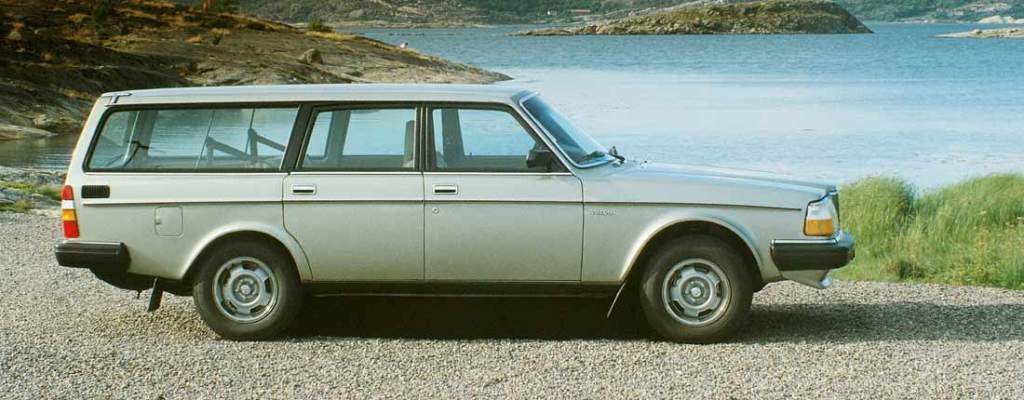
Irrespective of the statement above, the Volvo 240 has actually started to appreciate in value…

If you read this blog, chances are you also read other car blogs or follow some car Youtube channels (perhaps even one or several on my favourite list that you can see here). You don’t need to look far to find someone that describes a classic car such as the Jaguar XJ-S that I wrote about last week (see here) as “a good investment” or something that will “most definitely increase in value”. Personally my stomach turns at such unsubstantiated, general statements, but let’s look into whether there’s any truth to them.

In 2015 we launched the new sub-section “The Thrill of Owning” on this blog. We did so seeing the price evolution many enthusiast cars were starting to take, and I wrote about some cars I believed (without guarantee!) would increase in value over the coming years, adding an economic upside to the ownership experience. The first 5 cars I picked were the Lancia Delta Evo, the Honda NSX, the BMW Z4M, the Porsche 996 and the Ferrari 550. Looking back now five years later, it’s clear that had you bought an NSX, a Delta or a 550 in 2015 that you would sell today, you would get substantially more than you initially paid – the first two have basically doubled in price. For the Z4 and the 996, the evolution has been less steep but still in the right direction. Buying and selling is one thing though. Owning is another that should not be forgotten.

An Evo has basically doubled in value in five years, but is far from cheap to own.

Since close to ten years I’m the owner of a Triumph TR4 from 1965, a car that has brought me great joy and that I’ve been extremely lucky with. It hasn’t left me standing a single time and has generally been close to as problem free as a classic car can be. Nevertheless, and even if I haven’t driven thousands of kilometres per year, it still needs regular servicing and old parts will wear out and need replacing. Also, not to forget on a classic car is that the engine will typically need more adjustments than a modern one. In ten years I have thus had it thoroughly serviced and revised three times, redone the breaks once, and replaced more regular wear and tear parts such as the battery, tires etc. in between. A rough estimate is that the car has cost me around EUR 12-13.000 in servicing and parts costs over my years of ownership. To that should be added tax, registration, garage etc., but given how different those costs are depending on your circumstances and country, we’ll leave them aside for this exercise. You shouldn’t though, when you budget your ownership!

My TR4 is living proof that not all English cars fall to pieces!

Had I instead bought that Delta Evo in 2015 my costs would most probably not have been lower, as the Deltas are known as cars needing lots of love an attention. That said, the economic upside would definitely have been higher. On a higher level for the 550 as well, at least with the right car. The bullet-proof NSX may have been cheaper to own, had I been lucky. But again, all this will depend on the particular car you buy, its history, condition – and luck. This is why a statement such as something “definitely increasing in value” is quite simply not true. Firstly, it’s very difficult to say which models will increase in value (although if you know your stuff, I agree you can have a pretty good idea). Secondly, it’s all about the condition of the individual car.

Has my Triumph been a good investment? Price-wise it’s worth around CHF 10.000 (30%) more today than I bought it for, thus covering a fair part of my running costs. In my particular case living in Switzerland where owning and running an oldtimer is cheap, I’ve nevertheless had to rent a garage for the ten years I’ve had it and I’ve certainly not covered the costs for that. It should also be noted that a TR4 is quite a basic oldtimer, with an extremely robust, 4-cylinder engine. Friends of mine who own E-Types, Aston Martin V8’s and other, more advanced cars, will give you a number considerably higher than mine, even though most of them are more capable in a garage than I am and thus do a lot themselves.

The original V8 Vantage – a beauty when it works, a nightmare when it doesn’t…

That’s the economic side of it. On the emotional side, there is no doubt that it’s been a good investment and has brought me much joy and great memories. And that is really the point of all this. Don’t buy a classic car purely as an investment, but also as something to love, drive and enjoy! There will never be any guarantee that an XJS or any other car will be worth more 5 years from now and if you buy the wrong car, you will most certainly not make any money. Arguably it will also reduce the pleasure of ownership, but if this is the car you’ve been dreaming of since you were young, believe me, you will forgive a lot!

Unlike a painting, a car is made for driving. Be thorough in your checks, but also buy with your heart in the sense of loving what you buy, enjoying it, and not to be forgotten, knowing that you will be able to use whatever your dream car is on a regular basis. Good luck!

I hope you like this blog – please help us keep it interesting by subscribing!