Driving the Speed Demon!

My music-producing son and I don’t agree on everything in music, but on many things we luckily do. I struggle with some of his modern stuff, and he definitely does so with some of what I like from past decades. We do however find common ground quite frequently, which from my generation includes for example Fleetwood Mac, Tom Petty and Genesis. And also on Michael Jackson (MJ) being the best pop singer of all times (and Quincy Jones definitely the most legendary producer!).

In 1989, said MJ wrote a song called Speed Demon, which relates perfectly to this week’s post. Googling will tell you the song is about driving fast, but if you dig a bit deeper, you’ll learn that more specifically, it’s about MJ himself driving so fast on his way to the studio that he got a ticket. Those two things, driving fast and getting not one, but most probably lots of tickets, is something you definitely should plan for if you go anywhere near the Bentley Continental GT Speed in the top of the line, 6-litre, W12 version.

“My” Continental against a suitable background…

“Here we go again” some of you may think, he’s on about a Bentley again. You would have a point since I wrote about the Conti in 2023 and it’s also been mentioned in various other posts. However that’s never been in the top Speed version and until recently, I didn’t realize what a difference that would make. The opportunity to find out practically jumped at me when scrolling through interesting car ads, something I suspect I’m not the only one on this blog having as a favorite pass time…

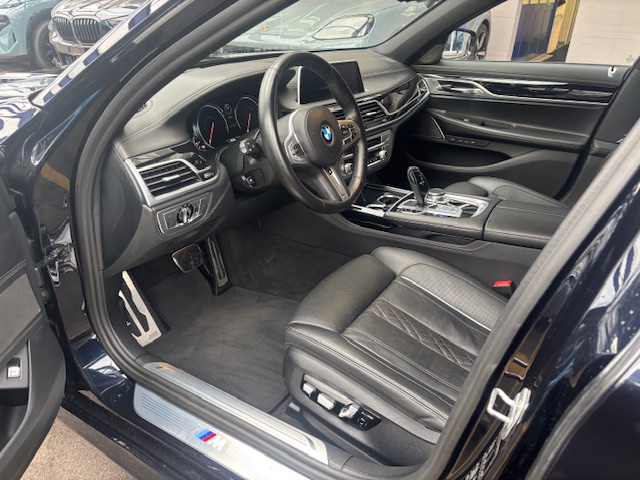
The car in question was a 2014 Speed in the W12 version in dark blue with a blue-brown leather interior, fully serviced and with one owner since new. With 110.000 km on the clock, the ask was CHF 57.000 (about USD 65′ / EUR 60′), from a new price of around CHF 250.000. 2014 means second generation which is good, and the seller’s garage was of a type you could imagine doing business with, which isn’t always the case when it comes to old Bentleys (then again, those cars tend to have had far more than one owner…).

In the quest for the perfect transport for my better half of me to southern France, I thought I may just have found it, and after a quick call, I met up with what turned out to be Zurich’s nicest car salesman. He had previously spent a few years as a salesman at Schmoll, the leading garage for Rolls Royce and Bentley in Zurich, before setting up his own business. Next to “my” Continental, his showroom had a nice collection of further Bentleys and a few Rolls Royces, along with a few supercars and some more ordinary stuff.

I’ve always liked the Continental’s shape, especially in the 3/4 angle

The Conti was stunning. A deep metallic blue which, bar a few small stone chip marks on the front, was in beautiful condition. The dark blue-brown interior may have sounded strange on paper but turned out to be the perfect combination. Classy is very much the word. The salesman told me the car came from one owner with a full service history from two Bentley garages in Switzerland. No less than 11 stamps in total, one per year. “It’s a Bentley” he said with a smile when I questioned whether this wasn’t overdoing it a bit?

That perfectly colored interior turned out to be perfect in all other aspects as well, and looked like it had left the factory yesterday. It was a reminder of what I’ve been on about before, namely that leather doesn’t equal leather, and no car this side of a Rolls makes that clearer than a Bentley. Combined with the metal knobs, chrome and wood details, the thick carpet and the leather lining, this was an exquisite place to be. It also included the obligatory Naim premium sound system, as the regular one is really nowhere near worthy a car that was CHF 250.000 as new.

We took the Conti for a spin and I asked the salesman to come with me. I had no intention of doing anything foolish with this impressive piece of kit, and he was a nice guy with far more knowledge about the car than me, so I was keen to talk a bit longer to him. Leaving the garage we made it to the highway in a few minutes, the right environment for this big GT. Driving down the half circle access ramp, it struck me that there was practically no rolling at all and throughout the half hour drive, I was stunned at how well-balanced, direct and light the Conti felt to drive. Clearly the Speed’s stiffer suspension setup and the 22-inch wheels helps a lot.

You see the real quality of an interior after 110.000 km…

Nice as they look, those wheels do however contribute to more road noise than you would expect. A few minutes on a Swiss highway, typically better surfaced than highways in surrounding countries, made clear that the Bentley was not quieter than my modest Beamer, and louder than my previous Range Rover. You certainly don’t need to shout to your passenger, but it’s also not as silent as you may, and probably should expect.

And then the engine was at temperature, and everything I’ve written so far went out the window.

I didn’t floor it but rather pushed the pedal about half way. The thrust that followed is something only a 12-cylinder can produce. There’s a guttural roar building in strength as you’re pushed towards the seat, much like in a big airplane accelerating down the runway. Where a V12 from Maranello or Sant’Agata will give you a Pavarotti pitch, the Bentley rumbles in an impressive bass. Power feels limitless and endless, and while this moment felt like it had just begun, we were already north of any type of legal speed, which can quickly become quite costly in Switzerland.

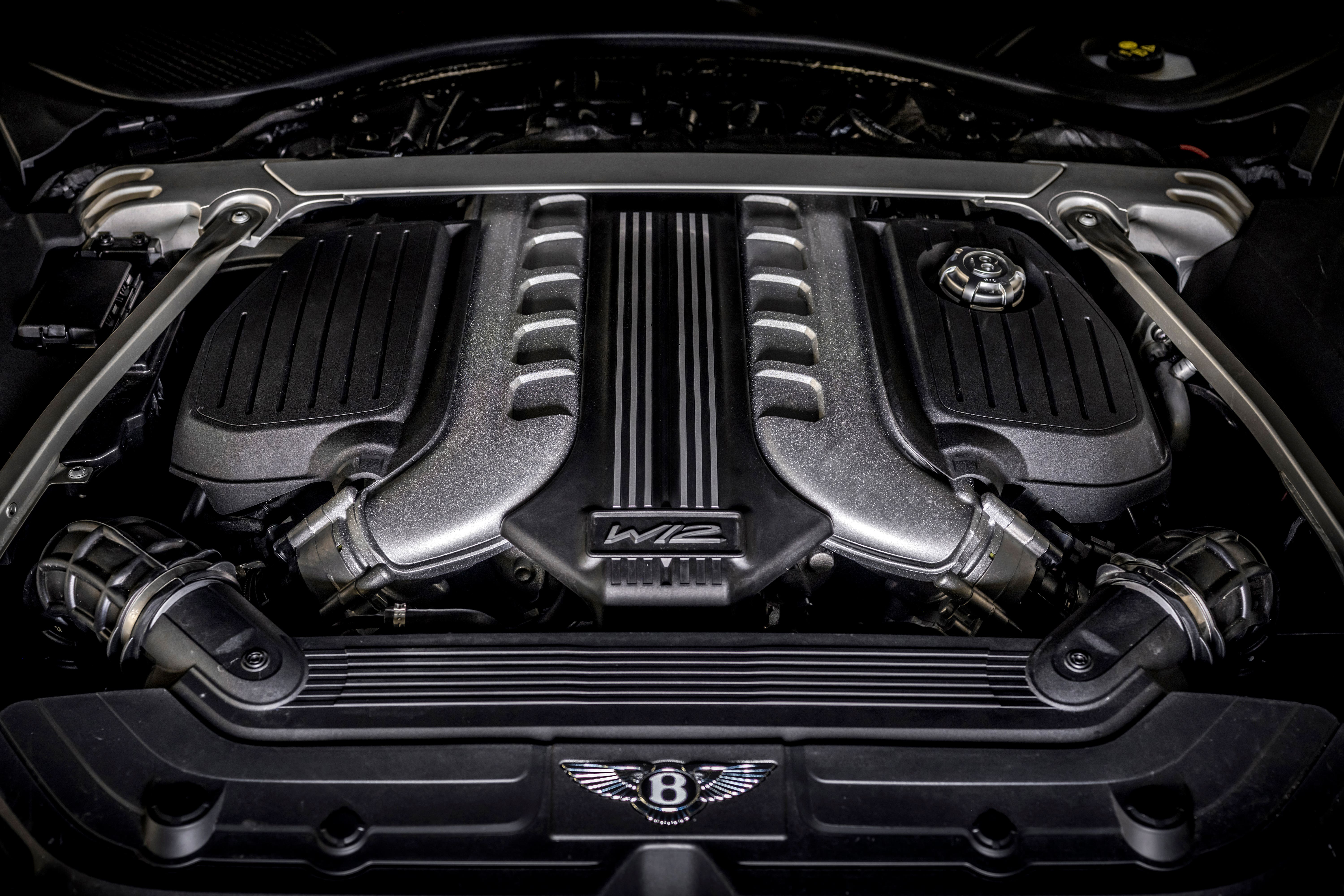
What an engine! In numbers, the twin-turbo, 6-litre W12 puts out 625 hp and 800 Nm of torque, taking the 2.4 ton Conti to 100 km/h in four seconds and further on to a top speed of 330 km/h. All that is however completely irrelevant. I couldn’t care less if the sprint to 100 km/h took three or five seconds – it’s that feeling of propulsion in combination with a sublime interior that makes it a close to unique experience. You expect a Ferrari to kick your butt, but not this opulent, 2.5 ton creation.

If you could ever only have one engine, this would be my choice!

After making sure a couple of times that what I had just experienced was indeed real, we settled to a legal pace and started talking about the car. The first thing the salesman said was that he found it incomprehensible that Bentley didn’t manage to build dead-angle side mirrors until much later. I hadn’t noticed, but he was indeed right – this CHF 250.000 Speed didn’t have it. Nor did it have a head-up display which I find a pretty useful invention, and although the interior was magnificent, it was also quite dark and could have done with a glass sunroof. The roof could have been optioned by the owner, but not the head-up display. Here again, Bentley was far behind many others, including it’s mother company Audi, which is a bit strange.

Coming back to those 11 service stamps, the salesman was clear on one service per year really being what you should plan for, if you want to keep your Bentley happy. The service is not more than around CHF 1.000 CHF he said, but they will always find something that should be done whilst you’re at it. So it’s better to budget about 2.500 per service. Right. And then there’s the 22 inch tires, which given that power of that engine will need replacing at least every other year. And neither the insurance, nor the road tax look very kindly on an old, heavy and complicated Bentley with a giant engine.

To lighten up the discussion a bit, I mentioned that I assumed 15 litres per 100 km was what you need to budget. No way, said the salesman, if you use this car properly, you’ll be north of 20 litres. Even with a 90 litre tank, that means no more than 400 km’s of range, basically like a modern EV – although quicker to fill up. I did the numbers in my head and realized that it would easily cost me CHF 8.000-10.000 per year to run this wonderful machine, and that’s before any major issues.

Head- and backlights are the best way to differentiate the first and second series

In terms of those potential issues, the W12 is known to be pretty bullet-proof and the 110.000 km are certainly no problem if the car has been properly serviced and cared for, which was clearly the case here. The second generation Continental is generally quite good quality-wise, with most issues coming from the air suspension and the many meters of rubber hoses that run throughout the car. If one of those lets loose, good luck in finding it. In some cases, it will mean removing the engine, which will then double the budget mentioned above.

There is a cheaper way to enjoy a Continental and that’s to go for the smaller V8 engine, preferably in S form. That’s certainly a great engine that has a reputation for making the Conti more light-footed. V8 Contis are however far more expensive to purchase, and although the V8 is no doubt adequate, it doesn’t have the magic of the W12. As I started to realize, it’s actually the engine that is more or less the magic of the whole car. The rest of the package is very nice, but not as outstanding as it was in 2014, and not necessarily better than for example an S-class Coupé.

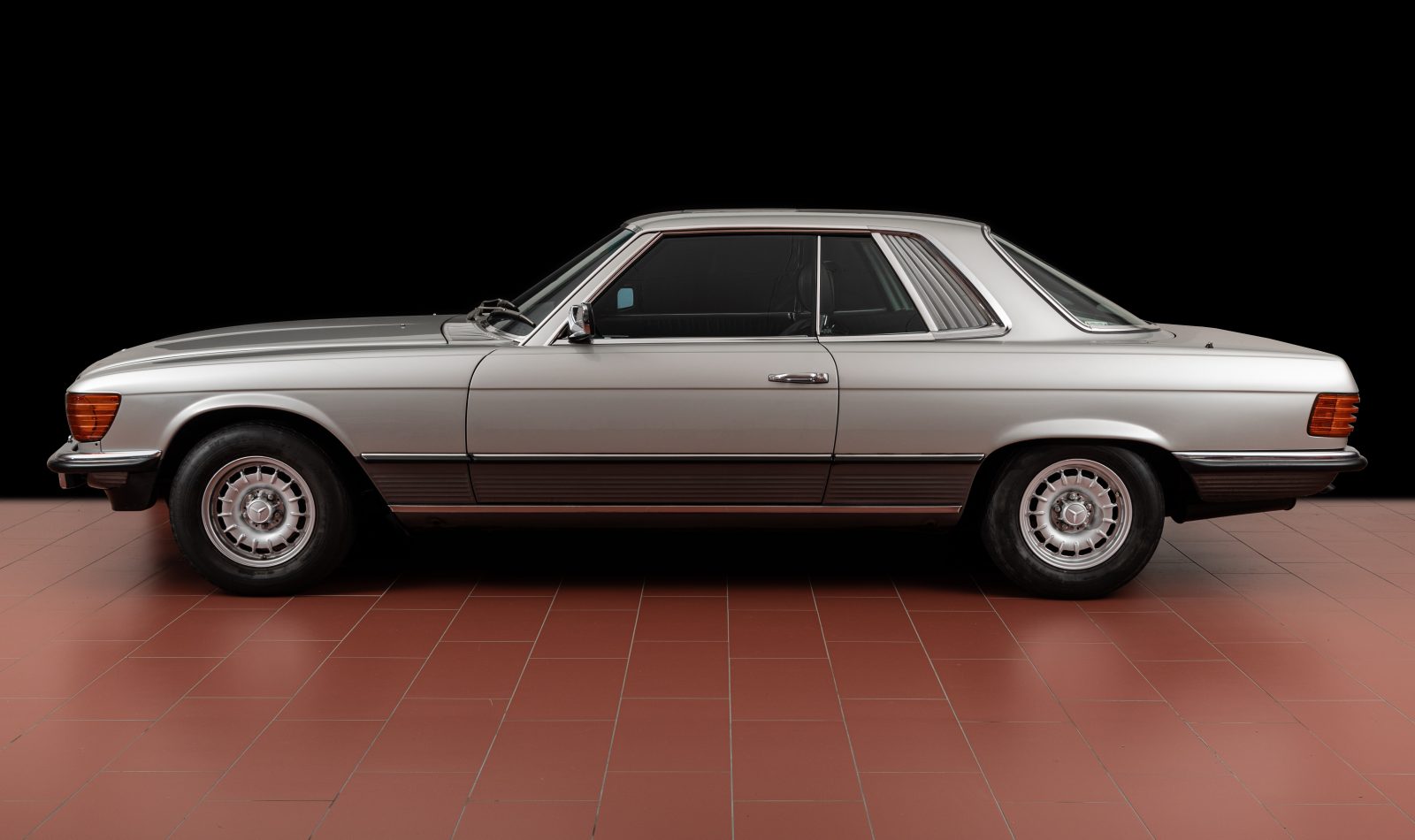
Perhaps not an alternative to the Bentley folks, but certainly to most other people….

I have no problem spending money on cars (ask my wife about that…) but in the case of the Conti, the breakdown doesn’t add up. To make the running costs somewhat defensible, the car would really need to be perfect in every aspect, and the Conti clearly isn’t. Unfotunately, neither will it ever become a classic, given how many were produced. In Bentley’s eyes there is of course no competition to the winged logo from Crewe, but in reality there is, even if they don’t have a wonderful W12 up front. For me, the Conti is a flawed proposition – too complicated and expensive as a daily, and not a classic contender given how many were built.

You may see this differently and then I can only congratulate you on being less of a plebian than me. My salesman, who was a bit too nice and honest for his own good, was certainly right when he said he had always felt that if you go for a car, you should go for the top version. So if you go for a Conti, only do so for the W12 Speed, and only if you have the budget to care for it properly. Make sure it’s been serviced properly and don’t try to save a buck if you’re offered an insurance – take as much and as long as you can get. Perhaps get a brighter interior and a sunroof to lighten things up a bit.

Only do this if you’re not the kind of person who will lay awake at night thinking of everything that could go wrong. Nor the type who doesn’t like the local petrol station, because you’ll be seeing a lot of it. And whether you’re on the way to a music studio or not, be careful with those speeding tickets – the Conti Speed won’t help you out there either. As for me, I may have to revisit that S-class Coupé…

The timeless land shark from Zuffenhausen!

Very few people would object to the statement that the Porsche 911 is the most successful sports car of all time – and they would be wrong. That said, and in spite of that, it’s also a car that Porsche tried to kill off at least 911 times before it earned the unshakable position it has today. It started all the way back in the mid-70’s, when the newly developed 928 was supposed to replace the already then ageing 911.

As we all know, replacing the 911 didn’t work then, it hasn’t worked since, and it’s improbable to work in the foreseeable future. Today we’re glad that Porsche failed and be that as it may, the 928 became a great complement to the 911 when it was launched, as the GT car it really is. Fast forward to today, and it remains a great car and something you could still call a bargain, especially in comparison to classsic 911’s.

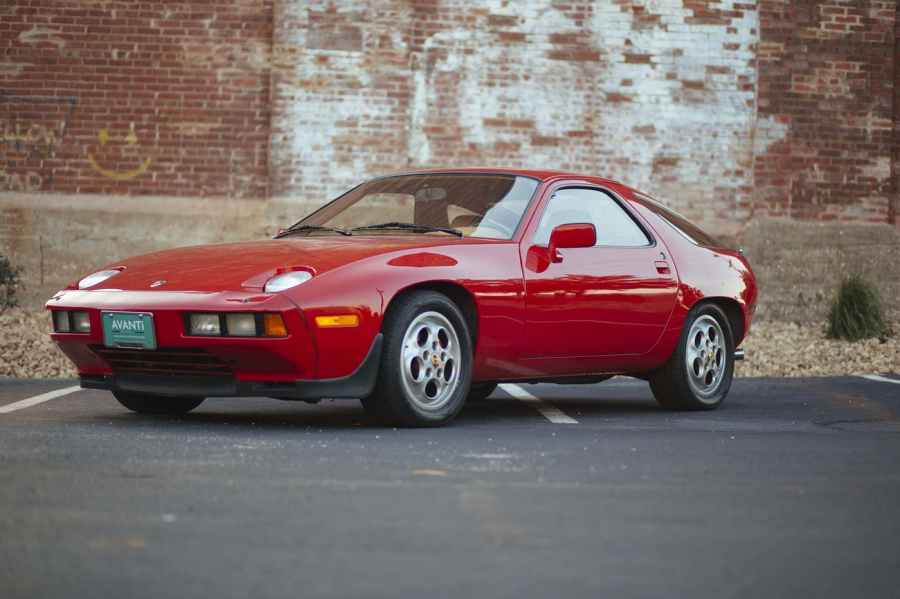
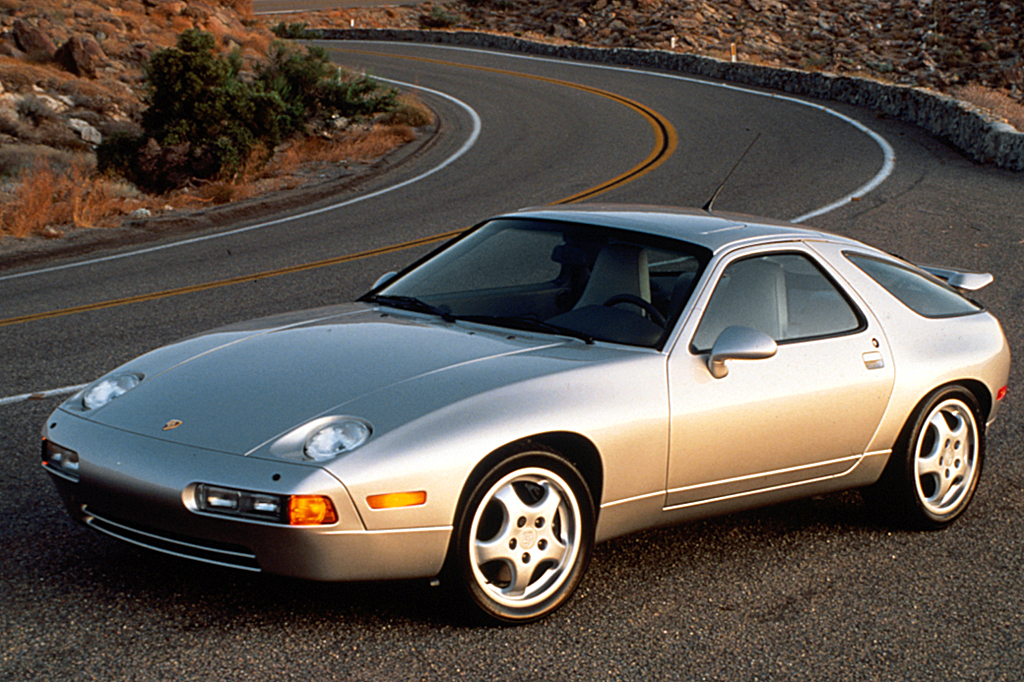
The general 928 shape remained largely unchanged from 1977 (as here) until the end in 1995

Design is a matter of personal taste, but unless you’re heavily into psychedelics, you’ll probably agree that the 70’s weren’t a happy period. The world was mostly brown and orange and cars generally looked like they’d been drawn with a ruler by someone loving 90-degree angles. When it was launched in 1977, the 928 was therefore a true revolution design-wise. The long hood and the “reversed” pop-up headlights earned it the nickname “land shark” in some countries, and the rounded rear with integrated shock absorbers doesn’t look dated to this day. To my mind, the 928 is probably the 70’s car desugb that has best stood the test of time. This was also proven by the production which ran for almost 20 years until 1995, with most of the design remaining pretty much unchanged until the end.

Coming back to where we started, it’s however difficult to see how Porsche actually thought that fans of the air-cooled, rear-engined 911 would ever consider the 928 as a replacement. Firstly it was obviously a larger car, even if it’s better described as a 2+2 seater than a real four-seater. Secondly it has quite a large boot, meaning the engine is up front. Thirdly, that engine was a newly developed, water-cooled V8 rather than a legendary, air-cooled six-cylinder. This led to the 928 being heavier, much more at home on the Autobahn than on curvy mountain roads. To this day, it remains a true motorway cruiser that sat nicely alongside a 911 at the time, although it never saw its success its smaller brother did.

The “phone dial” wheels are sought after today – here on a 928S, distinguishable by the rear spoiler

There was no getting around the 928 being a heavier car than the 911, but Porsche were very focused on doing what they could to keep its weight down. The doors, front aisles and hood are thus all made out of aluminium, and the front and rear bumpers were in composite material around a metal core. The original, 4.5 litre V8 with 240 hp was at the time the second most powerful engine from Zuffenhausen, losing out only to the 911 Turbo, and the 928 was thus well motorized from the beginning, helping offset the additional weight. It was available with either a 5-speed manual or a 3-speed automatic from Mercedes (later a 4-speed) from the start, mounted on the rear axle and thus contributing to the excellent balance.

The 928 was generally an advanced construction with notably double wishbone suspension all around and Porsche’s so called “Weissach axle” in the back of which I’ll spare you the technicalities but which can be described as a system for greater stability and less oversteer. That system was certainly never fitted to the 911’s of the time, and even 911 fans would probably agree that the 928 was in many areas far ahead of not only the 911, but of most other cars from the same period as well.

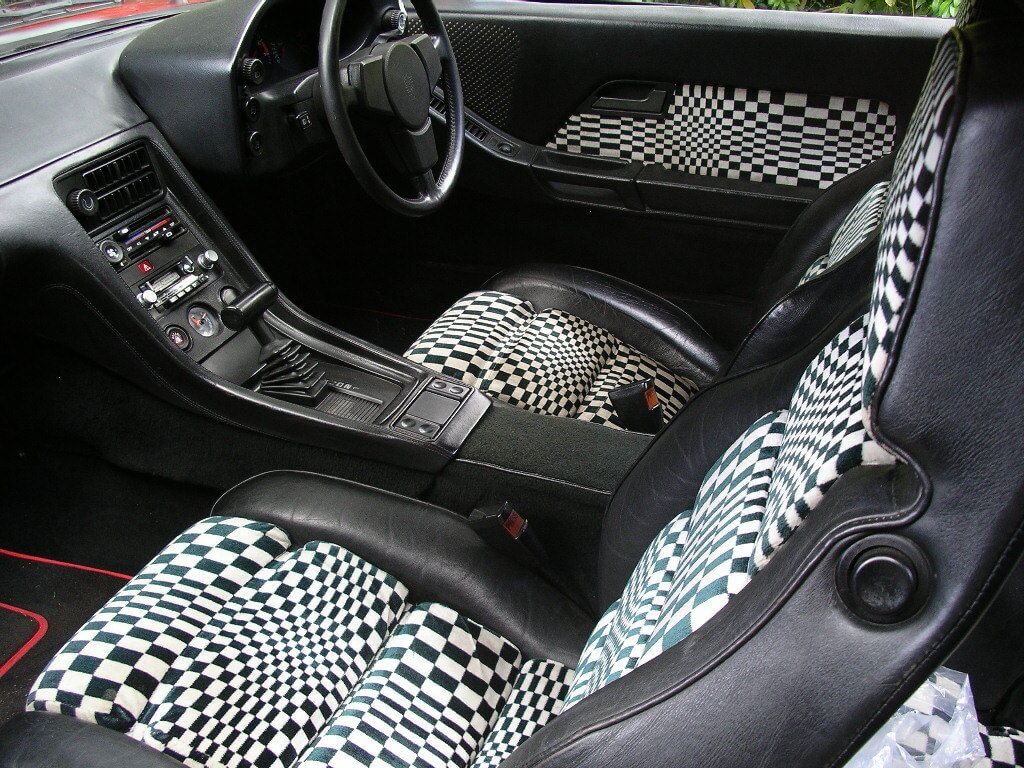
…as is the psychedelic, pepita square interior offered on the first series!

The first series was built between 1977-1982, with the 300 hp 928S launched as a more powerful version in 1980, and a couple of years later becoming the only available version. The S managed the sprint to 100 km/h in 6.6 seconds, a very respectable time in the early 80’s. It was also the car Porsche ran for 24 hours non-stop on the Nardo track in Italy, achieving an average speed of 250 km/h! Think of that a minute – we’re talking 24 hours with the pedal to the metal at top speed, back in the fully mechanical age! Porsche kept improving the S interior and equipment with notably ABS breaking, before it was replaced by the face-lifted 928 S4 in 1987.

The 928 S4 had a face-lifted body, best visible in the rear through new lights and a standard-fitted wing. Engine-wise it went form two to four valves and an output of 320 hp. The 0-100 km/h time was now sub-six seconds with a top speed of 270 km/h. The even sportier GT was introduced in 1989, adding another 10hp and only being available as a five-speed manual. Both versions were replaced by the 350 hp GTS in 1992, produced until 1995 and actually Porsche’s last GT car until the Panamera 15 years later. Over its full lifetime, a bit more than 62.000 928’s were built. Not a huge but still quite a large number, and in that sense it’s surprising how few of them you see on the roads today.

The rear part of the S4 shows where the Panamera inspiration came from!

Unless you’re not a die-hard, nothing-but-911 kind of person, a 928 will deliver the true Porsche feeling from behind the wheel. The engine is like a solid companion at all speeds, especially in combination with the manual box. The suspension is superb given the car’s age, but It’s clear from the first meters you drive that although smaller than modern cars and in spite of all the Porsche attributes, this is a true GT that is most at home on long distances with two (or 2+2) passengers and surprisingly, quite a lot of their luggage. On such trips, it will also surprise on the upside not only by its comfort, but also its lack of wind noise, one of the advantages of the soap-like design.

When writing about classics, I usually add a sentence along the lines of “make sure you check the history and the condition”. Never ever has that sentence been more true than if you consider a 928. As mentioned, the car is a complex construction. Parts have always been expensive and haven’t become less so today, only in some cases harder to find. The engine and gearbox are of course the most critical parts and inspecting the car from underneath before the purhcase is mandatory. If you’re unsure about what to look for, get a specialist to help you or take it to a Porsche garage. Trust me on this but also know that even if you go through all the checks, you shouldn’t buy a 928 with your last money, but rather keep a reserve for things that may come up.

As in late 944’s, the 928 interior has stood the test of time surprisingly well

So which one? Well, no surprise that a manual is preferrable, but the automatic is actually not as bad as you may think, so potentially try it if the rest of the car is good. Do get a four-peed automatic though. Design-wise it’s a matter of taste between the first and second generation, but be aware that the two-valve engine is easier (and thereby cheaper) to service than the four-valve from the S4 onwards. If that doesn’t scare you, the 928 GT of which only around 2000 were built is especially interesting. Otherwise, the 300 hp second series is also a good choice. Please don’t go for the Strosek or Gemballa 80’s versions with massive plastic wings, but rather try to find a car that is as original as possible. For the first series, both the phone dial wheels and the pepita interior you can see higher up are sought after today.

A good first series 928 will set you back around EUR 25-35.000, probably around 50% more than 10 years ago (but you’ve hopefully gotten richer in those 10 years as well!), however not much more than a few years ago, as values seem to have stabilized. The second series will typically cost around EUR 10.000 more with the GT and GTS potentially even more for low-mileage cars. High kilometres need not be a problem though, if the car has a solid and well documented history – but only then.

In terms of value for money, this means that you still get one of the best GT’s ever built for less than half of a classic 911, and no more than a third of what a power-wise more comparable 911 Turbo from the same period would cost. That my friends not only makes this a bargain among Porsche classics, it does so among classic GT cars in general as well!

Yes, design is personal, but no one can really fault the 928, can they?

The V10 is dead – long live the V10!

To borrow from John Cleese in the legendary Monty Python scene from the animal shop with the dead parrot, the V10 is no more. It has ceased to be and gone to meet its maker, and for all those of us who felt it was something truly special, that’s obviously very sad news. That said, there’s a bit of a delay in this post given production of the last V10 engine took place in late 2024, but if you haven’t gone into mourning yet or perhaps hadn’t realized it, the time has definitely come to do so. Let’s therefore look back into what made the V10 so special, the most prominent street cars that featured it, and, should you decide to help preserve the V10 for coming generations, which cars you should consider!

The V-shaped, 10-cylinder engine has been around far longer than many people think. Its roots go back to the 1940’s, but its history in street cars is far shorter, starting in the early 90’s. In the era when naturally aspirated engines were still the way to go, the V10 became a good alternative for when a V12 was too big and heavy, but a V8 wasn’t powerful enough. It produced more power than a V8 and often also ran smoother with less vibrations. And whereas it was less powerful than a V12, it typically had more torque, and was obviously also smaller and lighter. And then there was of course the sound that many still consider unequalled. I won’t even try to describe it in words, but let’s just say that if you’ve heard a V10 in higher rev’s, you’re not likely to forget it!

The V10 era was arguably the best sounding in modern F1 racing!

V10’s were also the main engine used in F1 during two decades. They appeared in the late 80’s after FIA’s ban on turbo engines, when manufacturers during a couple of years used everything from V8’s to V12’s (imagine that today…), Notably thanks to its greater efficiency and lower weight, the V10 then became the F1 engine of choice in the late 90’s and the first half of the 00’s, when all cars ran V10’s in what’s probably the best sounding period of F1 history. The fun ended when FIA made the small, 2.4 litre V8’s mandatory in the mid-00’s, making V10’s became a thing of the past.

In terms of street cars, surprisingly few brands have featured them in their line-up. The first was Chrysler in the 10-cylinder Viper. In the true American spirit of there being no substitute for cubic inches, the V10 was developed from the Chrysler V8 to which two extra cylinders and an aluminum block from Lamborghini were added. The initial version displaced no less than eight liters, putting out 400 hp, which in subsequent versions would increase to 8.3 liters at most, and over 500 hp.

The gigantic Viper V10 looks good, and sounds even better!

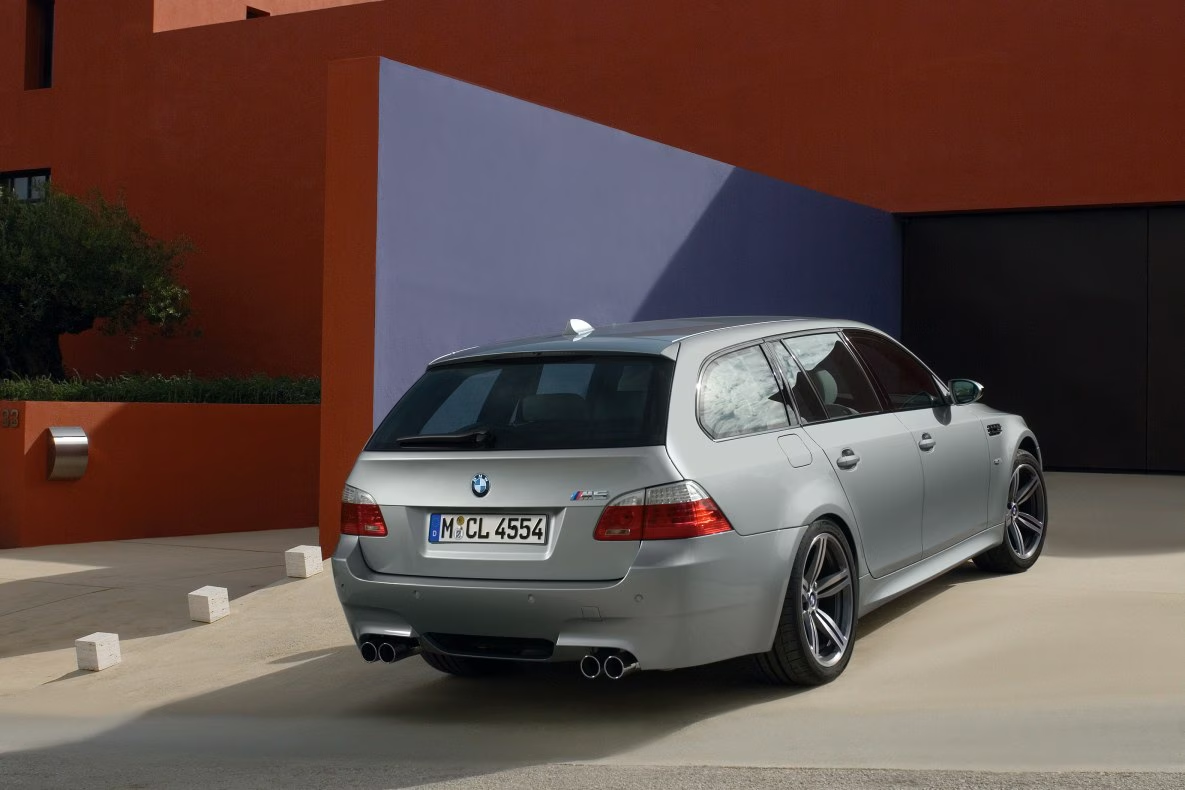
BMW also built a V10 engine, however only one, which was featured in the E60 5-series and the E63 6-series from the (Chris) Bangle-era between 2000-2005. At 507 hp, the 5-litre engine was the most powerful, naturally-aspirated engine BMW has ever built, and also one of the most high-revving V10’s ever produced. Importantly it also featured in the 5-series station wagon called E61, the only M-wagon ever built until the current M3 and M5 Touring, and perhaps the most collectible of the three models today.

The brand family that made the V10 most famous is however Audi-Lamborghini. Audi bought the Italian brand from Sant’Agata in 1998, and when the Gallardo was presented five years later, it was with the same base V10 engine that would be featured in the Audi R8 a few years later, from 2009 onwards. It displaced 5 litres in the Gallardo and 5.2 litres in the R8, but with a similar power output at around 520 hp in both. To round it all off, both cars were also available with a manual gearbox. And whereas the R8 later also came with a V8 option, the Gallardo was ever only available with the V10, as was its later replacement, the Huracan. The special version Huracan STJ, presented in 2024, would be the last production car to feature the V10, in its final form delivering all of 640 hp.

The Lamborghini Huracan STJ – a worthy end to an era!

Whatever you think about our coming electrification or lack thereof, the probability of the V10 making a comback is slim, to say the least. So if you want to add an example of this wonderful engine to your garage, you’ll have to look at pre-owned cars. Should you? The answer is a resounding yes, as long as you know what you’re doing. BMW’s V10 wasn’t directly derived, but borrowed heavily from the early 00’s F1 engine the company ran, meaning it’s at heart a race engine and needs to be serviced accordingly. That may be obvious if you buy an R8 or a Huracan. Somewhat unfortunately however, as you’re able to buy both the V10 M5 and (especially) M6 for below EUR 50.000, all buyers don’t realize that. Just as little as previous owners may have.

Therefore, buying a more recent and certainly more expensive R8 or Huracan is probably a safer bet, but as always, if you do your homework properly, nothing fundamental speaks against a BMW V10 either, or a Gallardo for that matter. Personally, I would park an early Gallardo in my garage and make sure it’s a manual. It may have been Lambo’s first mass-produced car, but it was certainly also the best. Now ask yourself when you last saw one? Exactly. Especially in manual form, the Gallardo is certainly a coming classic, with a design language that is as much early 00’s as it gets.

The E61 M5 Touring – one cool family car!

That said, you can’t really fault anyone buying an R8 or a Huracan either – far from it. And the guy that packs his family and luggage into an M5 Touring with a V10 up front before heading south for the summer vacation will obviously always be a hero. The V10 options may thus be few, but they’re all great, so there’s clearly hope that this wonderful engine will live on for many years to come!

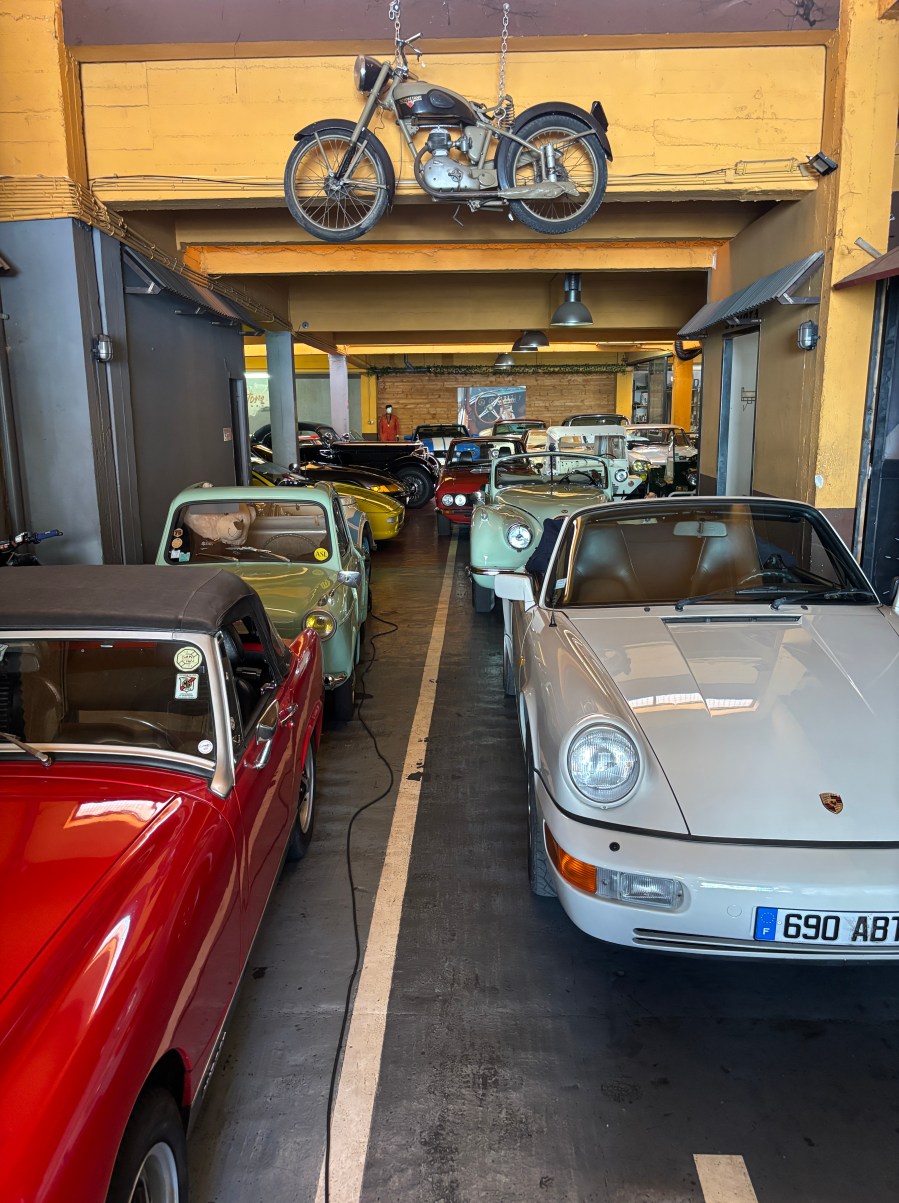
Mon Dieu what a collection!

I’m currently enjoying a bit of vacation in the south of France, and the other day we went into Nice to explore the area around the port. A lot has happened in the city in the last 10 years, transforming it from a place that at least in some areas was quite rough in my youth, to the delightful city it’s become today.

A lot of the improvements have come with a new tramline system that provide an excellent alternative to car driving in the city itself. And with less people driving, some lanes have been converted to bike lanes, trees have been planted, and it all looks much nicer than before. It proves the point that as long as there are good alternatives, most of us are happy not to drive around in city centers – but the alternatives need to be in place first, which is a point a lot of politicians seem to struggle with.

The tram line running all the way to the airport to the west of the city starts in the port area in the easternmost part. This is maybe the part of Nice that has seen most improvements over the last years, and it was while exploring the streets on the east side of the port that we stumbled upon a small alley with a garage at the end. And the garage had a few interesting cars up front, making it worthy of a closer look.

A Daytona convertible next to an F355 – and this was just the beginning…

What we came upon and that I had no idea of, was a garge called Motors Corner, boasting a showroom iof over 1000 sqm, with what must be Nice’s largest collection of interesting automobiles. It must also be the most space efficient car collection anywhere, and should they need to move out a car in the back part of the garage for some reason, that would probably take a working day!

Motors Corner specialize in all parts of motoring, from sales and restoration to concierge services, and the collection also reflects the varying nature of the business. Most cars are for sale, others are being renovated, and the company also has an off-market collection that is not exposed at the garage but that boasts some real jewels like the Ferraris F40 and F50, a Bugatti Chiron La Noire, and a McLaren Senna, among many others.

Many cars are on foreign plates, and this is no doubt a European business

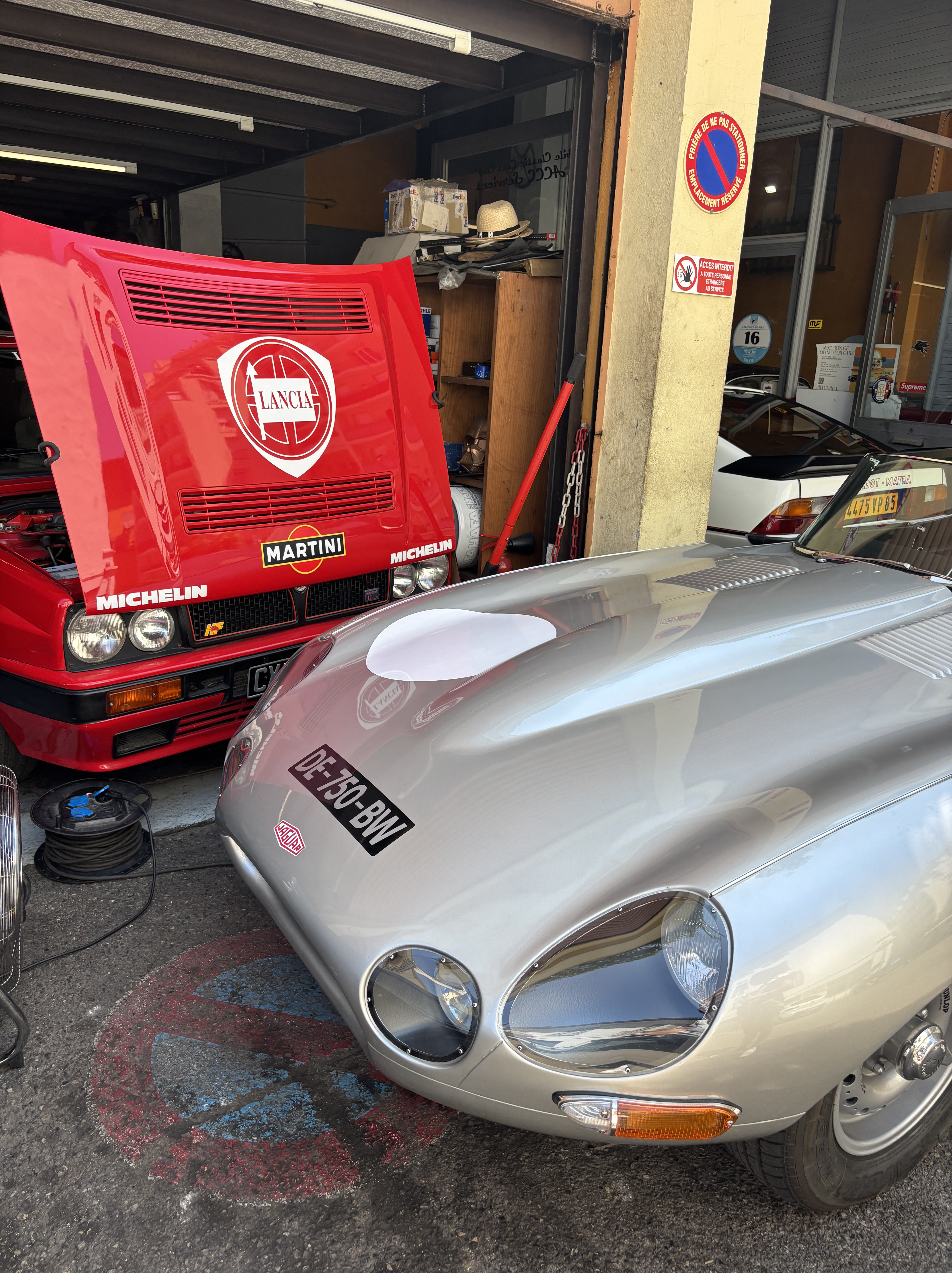
The highlights in the showroom itself included two beautifully restored 911 S’s from the early 70’s, a Ferrari Daytona Convertible (top picture, can’t promise it was genuine though…), a beautiful Mercedes 540 above, a bunch of other Ferrari’s to die for, including a 250 GT Lusso. Just next to the entrance is the workshop where a Lancia Delta Integrale was being worked on, which at least by the stickers had been around on quite a few races! Next to it stood an E-type Lightweight. And I could go on…

An E-type lightweight, a Lancia Delta… and a 3-seater Matra in the background!

The pictures don’t tell the full story and the exhibition is not easy to take in given how cramped it is, but if you’re in Nice, it’s definitely worth stopping by! Until then, you’ll find all the cars for sale (a large part of the collection in the garage) on motors-corner.com, as I’ve discovered since, a site you can spend a lot of time on while sitting in the sun sipping your rosé!

Driving the 991.1 Turbo S!

if there’s one car that is underrepresented on this blog, it’s no doubt the 911. And the reason is not that I’m part of the strange crowd who have something fundamental against the legend from Zuffenhausen – quite the contrary. I do however have enormous respect for on one hand everything that has already been written about the most legendary of sports cars, and on the other for all the people who no doubt have far more knowledge on the 911 topic than I do.

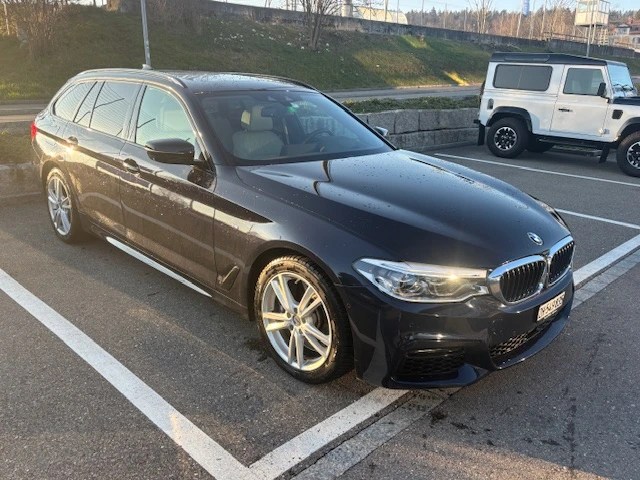
I therefore welcome every opportunity there is to learn more about the 911, and having had the opportunity to drive quite a few 997’s over the years, until recently I had actually never driven a 991. The opportunity to do so came about as my favourite garage in the Zurich region traded in a 991.1 Turbo S in perfect condition with about 85.000 km on the clock and a price below CHF/EUR 100.000, (which as I noticed is where the market for these currently is). It felt like an opportunity not to be missed. After all, as great as my BMW 540i Touring is, I don’t really plan to drive a station wagon for the rest of my life, and few things beat a top of the range 911 as possible replacement!

Definitely looks better than a 540i Touring…

If I were to replace the 540i though, what I would be looking for is a stylish and fun to drive coupe with enough room for two people but ideally not too big, to take my wife and I the 600 km down to the south of France a few times per year. The BMW does an absolutely fine job here, but it’s unnecessarily big and as said, as stylish as it may be, I no longer need all the space. For what follows, it’s however important to remember that what I would be looking for is more of a GT-car than a track weapon. And from all that I’ve read, it felt like the 991 Turbo S would be close to the perfect proposition here.

This first series of the Porsche 991 was built between 2011 and 2015, with the Turbo S being produced between 2013 and 2015 (production years, that is). It featured the 3.8 litre flat six with twin turbos, putting out 560 hp through all four wheels and a seven-speed PDK box. For a 911 it was rather well-equipped from the factory, with (in most markets) rear-wheel steering and center-lock wheels as standard. Ceramic brakes were a frequent option and the car I drove had them, along with a plethora of other things.

The first thing you notice when you stand in front of a 991 is how much larger it looks than a 997. It is indeed bigger, about 4 cm both in length and width, but the impression is of an even bigger difference. Stepping inside, the difference is even more striking, greatly helped by the 10 cm longer wheelbase as compared to the 997. Two people with reasonable but perhaps not excessive luggage will have enough space for a good vacation, and the whole car feels more mature and more GT-like than the more intimate 997. No doubt that the 991 is the more grown-up car, although I still feel the 997 looks better.

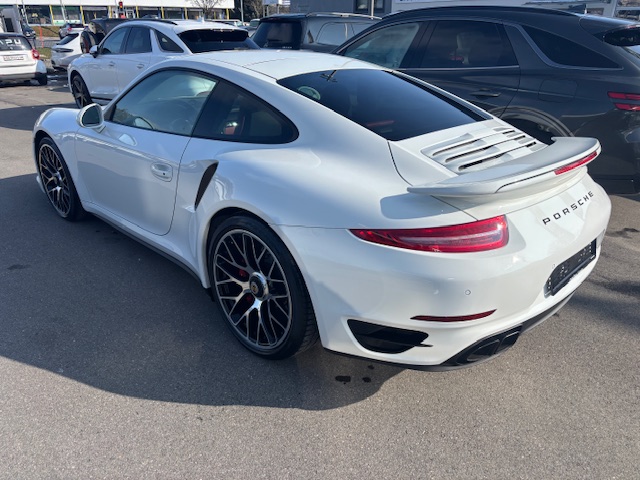
Purposeful rear, beautiful center-lock wheels. It does feel big though!

As the pictures show, the car I drove was white and as you’ll see below, had a read leather interior. And whereas I’m certainly not part of those who follow the Henry Ford motto that you can have any color as long as it’s black, a red interior is perhaps a bit over the top. That said, in the case of this car it was really a combination of red and black that made it rather decent, and I quickly stopped thinking about it. There are cars who are fully red on the inside, including the dashboard, and that to me is then really a bit too much. As for the exterior, white is a color I personally feel suits the 911 quite well.

I familiarized myself with the car as I drove off and let the engine warm up, which really didn’t take long. The logic is the same as in the 997, but the 991’s array of empty buttons on the center console that glare you in the face to remind you of all the options you didn’t spec aren’t particularly nice. Could it be that the quality of materials was just slightly better in the 997? Anyway at low speeds, at least on smooth, Swiss roads, the car is very compliant and not unnecessarily hard. Sports-car like rather than track car.

Such reflections soon gave way to real driving, now that we’d reached a decent temperature and the road opened up. It will be no surprise that the first, second and last impression is that of the flat six, which is simply magnificent. Power is never-ending, the sound is great but to my ears, could be even louder than what the sports exhaust produces, and the engine harmonizes perfectly with the excellent PDK. That said, the turbo lag is more obvious than I was expecting, with a small but still very noticeable hesitation before all the 560 horses wake up.

Clearly more spacious than a 997, and with a black dash, still looks decent in red.

A lot has been said about the 991’s electronic steering as compared to the mechanical 997, which no doubt was one of the best 911’s of all in this regard. For the driving I did in a combination of B-roads and motorway, I can only say that the 991 is great as well, and that you need to be a 911 aficionado or drive the two cars back to back to notice any real difference. And compared to basically any other car, the 991 is miles ahead in terms of precision and road feel. Needless to say that very much goes for the chassis as well, with no real possibility to test it to the full on the roads I was driving.

Where it isn’t ahead of the competition however is road noise. This was a surprise given how much more mature the car feels compared to the more rustic 997, but noise-wise theyr’re not far apart, with especially noise from the wheels being very present in the 991, at normal motorway speeds. You would need to raise your voice to communicate with your passenger (or, as in my case, increase the volume of the excellent, optional Burmester sound system), which doesn’t feel very GT-like. Except for that, it’s an excellent motorway cruiser as well, and the ceramic brakes were easy to modulate much like normal discs.

As no one can sit in the back anyway, you have room for a lot of stuff.

When I handed back the keys to the white beauty, it was therefore with mixed feelings. The Turbo S is a fabulous car, and the 991 feels more modern and more mature, albeit not as good-looking, as the 997. It’s however still far more sports car than GT, meaning it’s not the right car for the use I would make of it. But even if I were, I wouldn’t go for the Turbo S. The 991 was also the last 911 that could be had with a naturally aspirated engine, and for normal road use, I would gladly sacrifice 150 hp in favor of a 991 S or GTS, with an even better sound and without turbo lag.

If the Turbo S sounds like your thing, you should be aware of the higher maintenance costs compared to a standard 911 that one of my 911-savvy friends made me aware of. The turbo engine contributes here, as do the center-lock wheels, however only if you’re set on changing wheels yourself, which I doubt (and given how good the center-lock ones look, I’d be happy to take the extra cost!). Also, many cars will be equipped with ceramic brakes, said to be good for a lifetime but costing a fortune to replace, should anything still happen to them.

The 991 is a great car and a far more mature proposition than the 997. It’s however not the perfect GT, and I can’t help feeling that the Turbo S misses the mark. As a daily driver or a back-road companion, a 997 will be even better, as will a 991 S. For track use, you should rather go for a a GT-version. And as a Grand Tourer car for long distances, I think there’s better options out there. We’ll see if I’m right!

Driving the world’s best GT!

In 1992, Mercedes launched a car internally known as the C140, the first big coupe from the brand officially referred to as the S-class coupe. Obviously Mercedes had been building luxury coupes since the 50’s that were often seen as the two-door version of the S-class at the time, but the name S-class coupe had never been used before.

The C140 was based on the W140 S-class that was a bulky, heavy-looking thing, never considered particularly beautiful. It quickly became popular in the former eastern block, notably in Russia, which only a couple of years earlier had lifted the Soviet curtain for good. In the short time since, Russia had transformed to the wild East, and as I could see myself, living in Moscow in 1992-1993, the preferred mode of transportation for the Nouveaux Riches was the C140, alternatively the fully grown W140. Tasteful is neither a word you would associate with those times, nor with the W140/C140, and as much as it was loved in the East, as little it was considered beautiful in the West.

Big, imposing, but lacking in elegance – the first S-class coupe C140 from the early 90’s

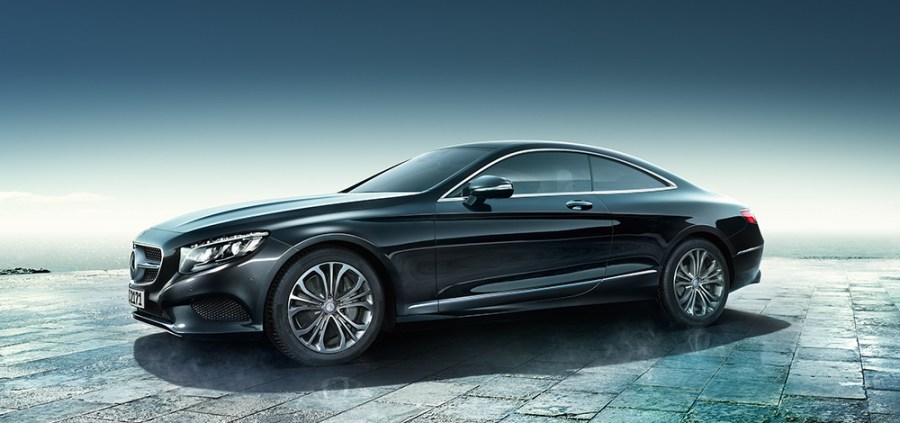
Fast forward to 1999 and the C140 was replaced by the better-looking CL-coupe (C215), which would live on until 2008. The S-class coupe name was thus dropped again in favour of CL, which means “Coupe Leicht (light)”, where the “light” part must be one of the biggest misnomers in history. After the CL, it would take six long years before the next S-class coupe called C217 was launched, and in terms of design, Mercedes has come a very long way from the bulky C140. Most people would agree that in terms of GT’s, the C217 is one of the most beautiful cars around.

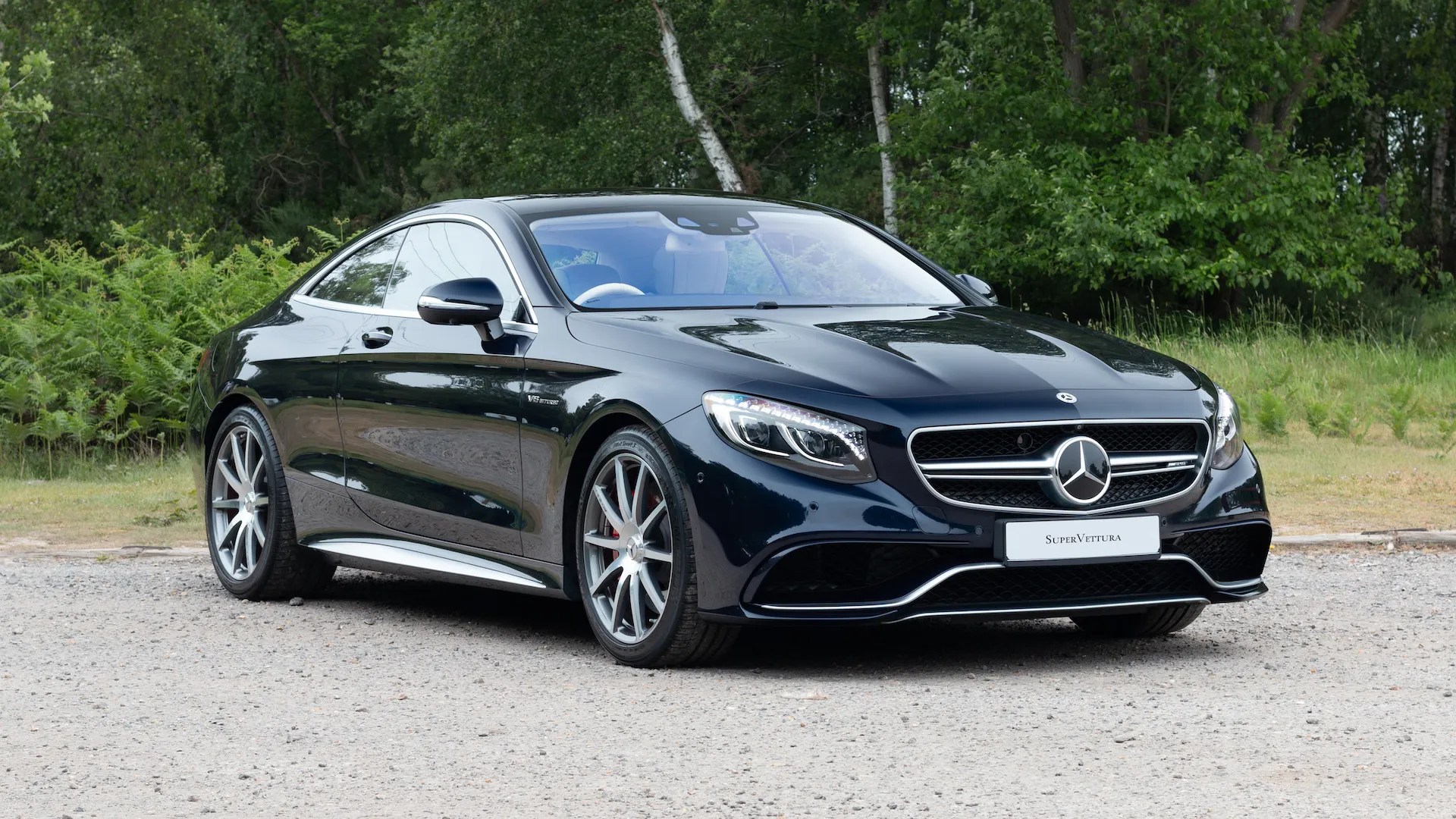
Last week I had the opportunity to try out an S560 Coupe from 2018, a jaw dropping exercise that made me confident enough to state that the C217 is most probably not only good-looking, but actually the best GT in the world, if you define in line with ChatGPT: “a GT car is a type of high-performance luxury sports car designed for long-distance driving at high speeds while maintaining comfort and practicality”. I can’t imagine a single car that fits the bill better than the big Merc!

The S560 Coupe from 2018 I had the opportunity to test – needs bigger wheels!

In C217 terms there’s before and after 2018, knowing the car was discontinued in 2020. The 2018 facelift didn’t change the looks much, but it gave the car a far more modern infotainment system with notably integrated Apple CarPlay and Android Auto, as well as a 9-gear auto box on most models. In terms of engines, both pre- and post-facelift cars had a six-cylinder engine with 333 resp. 367 hp as entry model in most markets. You should disregard both. As ChatGPT correctly states, a GT should be a “high-performance” car, and given the C217’s weight of around two tons, none of them fit the bill.

Luckily most buyers agreed, and those buying any kind of S-class new usually also have the money to do things properly. And doing it properly in this case means a V8, of which there were two pre-facelift: a 4.7 litre V8 twin turbo with 455 hp in the S500, and the well-known and quite wonderful 5.5 litre V8 twin turbo in the S63 AMG coupe with 585 hp. Post facelift, the S500 became the S560 and got the new 4-litre, twin turbo V8 with 469 hp, and the updated S63 had a developed version of that same engine with 612 hp. To round it off, both cars were also available with a V12, which was thirstier and made the car even heavier, so not making it faster. You can safely ignore those as well.

One of the finest interiors around

The S560 I had the pleasure of trying set the tone from the moment I opened the very large door and notice it’s both frameless and has double-glazing. I slid into what must be not only one of the most comfortable, but also one of the biggest car seats ever built, and with a discrete tone, the seatbelt butler brought the seatbelt forward. Looking around the cabin with its fantastic materials and beautiful wood applications, it struck me that this must be one of the most beautiful car interiors ever built. Plastic? Aber nein! The S coupe is leather and wood only, wherever you look.

Looking around is also helped by the absence of a b-pillar, a Mercedes tradition that gives the car a uniquely elegant line with the windows down. The back seats are less opulent than the front but they will carry two adults in full comfort with enough head- and legroom, which is a big difference to most other large GT’s such as the Bentley Conti GT or the Aston Martin DB 11, two of this car’s natural competitors (although both are more expensive at similar build years to the Merc).

Post-facelift the rear lights are OLED, and look really cool!

Turning the key (sorry, pushing the button) produces a somewhat surprising growl – mein Gott, ze engine zounds schporty! After having signaled it’s alive, the V8 quiets down quickly as you roll away. The steering is very light, and you quickly notice that you have a lot of car with a considerable width around you. Picking up speed, you see the needle moving, but you don’t hear anything. This must be the quietest car I’ve ever been in. Luckily the motorway ramp left enough room for me to floor it and after a slight hesitation, the V8 was back in full force, pushing the car forward more like an airplane engine than a sports car, but again with a surprisingly nice tone. The needle was at 150 kph in no time and this being Switzerland, I had to lift off. Any outside noise was still largely absent.

Having settled down for a while in the fantastic chair and turned up the volume of the absurdly good Burmester 3D sound system this car was equipped with, I left the motorway and chose a country road back. With little traffic around, I put the car in sport and started pushing a bit. To my great surprise, the car tightened up quite a bit and felt far more light-footed than I expected, and the V8 became far more present. Of course it’s no sports car, but the big Benz proved to be far more agile than you would expect. The gear changes are still so perfect that you don’t notice them, and the steering was now a touch heavier, but still didn’t communicate much of what was happening on the road. I guess in this segment, it’s not supposed to. It also became clear to me that no one needs the S63 version of this car. This is not an AMG car, it’s not supposed to be driven like one, and the “standard” V8 has enough power.

Always get a car with the AMG package though – it adds a necessary, sporty touch!

Returning the S-class coupe to its rightful owner, I felt humbled by a sense of having just experienced automobile perfection in the GT sense of the world. An S-coupe from this generation is Mercedes at its finest, before things started going south with King Plastic making as a necessary consequence of the EV trend and required weight savings everywhere. An S-class coupe of this generation must truly be one of the finest automobiles ever built. A Conti GT or a DB11 may be more exotic (at least the latter), but in terms of sheer quality, they’re not on this level. I’d bet that even the number of dead cows used in the interior is higher in an S-coupe than in a Conti. That probably deserves to be checked though…

The good news is of course that if a big GT is what you need (and who doesn’t?), you should know that no other car type other than EV’s loose value quicker. That means that you can pick up a S560, i.e. a facelifted car, that cost more than EUR 200′ as new, from around EUR 80-90′, with 70-80.000 kms on the counter, which means that the car is just about run in. If you don’t need the infotainment upgrade, a pre-facelift car will give you largely the same experience for 15-20.000 less, but be aware that some first generation cars are RWD rather than AWD, and have a seven- rather than a nine-speed box, which in my experience is less smooth, and also slightly less economical.

Should you prefer your S-class coupe as convertible, no problem. But you loose the beautiful silhouette…

Then again, if you focus on the economy, this is quite obviously not the car for you, but I’d still claim that a C217 coupe on average will be far less costly and far more reliable than most of its competitors. Consumption-wise I know from personal experience that those engines are good for 11-12 litres per 100 km if driven legally, which given the size of the thing is impressive, but of course parts and maintenance will be on the expensive side. As always, buy wisely from trusted dealers and with enough history to make you confident – and always buy the best car you can afford.

If you disregard the S-class coupe as an old man’s car, you most probably haven’t driven one. I would suggest you do, because if you find it in the right color combination (which isn’t the one I drove) and with at least 20″ wheels (which mine didn’t have) it just looks beautiful, especially with those side-windows down. So if you’ve reached the age when the kids have moved out and you’re looking for something to move your partner and you in in style across longer distances in southern direction at brisk speed, and have no ambitions for track days, at least not with this car, I don’t think there’s a better car around. Did I just describe myself there? Jawohl Herr Doktor!

Ford Capri – what’s your attitude to life?

Back in April of 2022 (almost three years ago, time does really fly!), I did a piece on the Opel Manta, a European sports coupé from the 60’s that has a huge following in Germany and notably also served as inspiration for a movie by the same name. At the time, I remember thinking that for the story of German sports coupes from the 60’s and 70’s to be complete, I would need to add another car to the mix as well, namely the Ford Capri. After all, if you ask true Capri fans, they’ll tell you not only that it was Europe’s first pony car, but also that explaining its history is difficult, since it goes into your attitude to life. As if that wasn’t a good place to start?

The success of the Ford Capri is difficult to overstate, as between 1969 and 1986, more than two million cars were built. But the Capri story doesn’t start there. As readers of a slightly older vintage may remember, Ford already had a car called the Capri under its American Lincoln brand. And Ford in the UK had also developed a 2+2 coupé called the Capri, based on the Ford Consul. None of those were however the “real” Capri. Instead, the story of the first European pony car really starts in the US in 1964, with the success of a certain Ford Mustang.

A Mk1 Capri, as so often, the purest design-wise compared to later versions.

Shortly thereafter, Ford in Germany and in the UK (regrouped to Ford Europe), seeing the enormous success the Mustang had had in the US, put some 200m Deutschmarks (DM) on the table and started developing the Capri coupe, with the Ford Cortina as basis. A big part of the success was in the design; not only was the US-inspired Capri with its long hood and short rear end pleasant to look at in a pony car kind of way, but it was also quite roomy, offering enough space for four and (at least some) of their luggage. As we all know everything was smaller back in the day, including both people and their luggage, and the fact that quite a few family fathers could thus opt for a flashy Capri rather than a more boring car, lay the ground for the sales numbers early on.

Between 1969 and 1986, the two million Capris that were sold would come in three series. The Mk1 actually represented half of the whole production, selling in more than 1.1 million units until 1974. The cheapest version was positioned very much on price, with a base version being squeezed in just at 6.995 DM, and marketed as a true sports car for under 7.000 DM. You should put a big question mark around the sports car thing however, given the car had a 1.3 litre four-pot delivering no more than around 50 hp and needing not 10, not 20, but all of 24 seconds to reach 100 km/h.

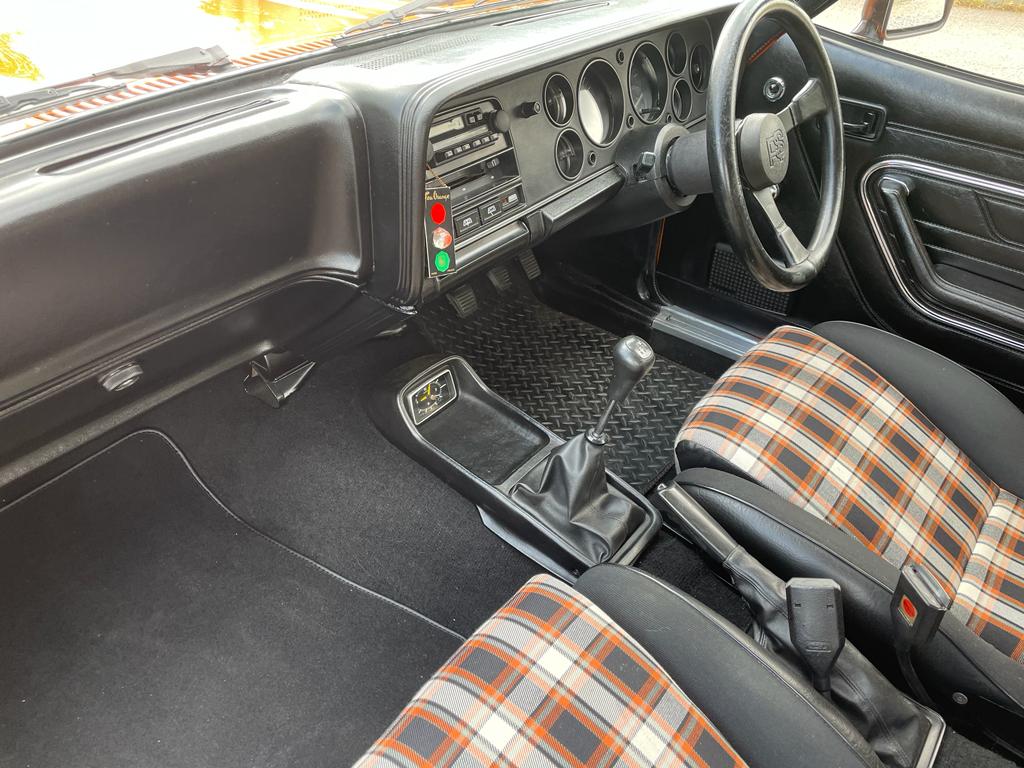
The interior of a Mk2 car – at least it looks quicker than 24 seconds to 100 km/h!

At the other end of the spectrum for the German-built cars (which constituted a clear majority) were however also a 2-litre and a 2.3 litre V6 (later 2.6 litre), delivering 90 and 125 hp. Two optional sport packages called GT and R added various sporty design touches, but in the first series, it was only the V6 cars that had the most important of them all: the bulge in the hood! With sales numbers starting to drop in 1974, it was time for a revised Mk 2 version, which was however not much more than a cosmetic update of the Mk1, with most mechanical parts remaining unchanged.

Correctly identifying many buyers as not that sporty, Ford softened the suspension on the MK2 and a revised rear end improved the practicality with a larger rear window and boot cover. Something far more debatable and typically not ageing very well was the vinyl roof many cars came with. The MK2 premiered in 1974 in the middle of the first oil crisis, which became clear when you look at the sales numbers of the 3-litre V6 that was now available as the top engine: only 188 cars with that engine were sold the first year in all of Germany!

There’s tuned cars of all generations. Unless you know the tuner, stay clear of them!

The third series, which for some reason was officially referred to as Mk2 ’78, was again mostly a cosmetic exercise, trying to make the Capri 80’s chic. Under the body, the early 70’s technology was however still very present, including the rigid rear axle with leaf springs. By the end of production in 1986, that made the Capri the last car in Germany to be built with such an antiquated suspension, hardly something to write home about. The fact that the top version was now quite luxurious and available with an automatic transmission and a 2.8-litre V6 putting out 160 hp was then more so!

If you have some space left in your garage and a strong urge to fill it with a Capri, you’ll be happy to learn that contrary to its bigger brother, the Mustang, the European pony car can be had for not much money at all. If you except the sleepy 1.3 litre engine, good cars can be had for around EUR 25.000. The later series are more difficult to find, but actually less expensive. In between, you’ll find a lot of tuned cars, both optically and mechanically, that you will want to steer very clear of. I’d go for the first series with the biggest engine possible, thus combining purity with power. That’s the best attitude to life I can think of!

Rapid(e) mind mess-up!

If you’re anything like me (and given you read this blog, I guess there’s a fair chance you are), you’ll be familiar with the situation: you see a car that causes a severe, possessive reflex of the “I have to have it!” type, and rather than defining your needs beforehand as any normal person would when looking to buy a car (to the extent that was your intention, which in these situations, it usually isn’t), you instead try to define your needs ex-post to suit the object of desire.

This is what happened to me (again…) a couple of weeks ago, and it’s all the fault of the classic car dealer called Emil Frey Classics that I mentioned in my post on the wonderful MB 500 SLC that they had in the showroom back in August. That car caused a similar reflex but not on the same level, and they luckily sold the MB before I had time to do something completely irrational.

Just for memory and as a short background, the Swiss car import market is dominated by a few privately-owned, large importing groups that split the brands between. Emily Frey is the largest of these, and the family behind it and other similar groups regularly rank among the richest in the country (which in the case of Switzerland is saying a lot…). Emil Frey’s “Classics” division handles the exotic cars they trade in from some of their many wealthy customers, and they expose the best of these in a beautiful showroom about 200 metres from where I spend my working day – the definition of professional hazard!

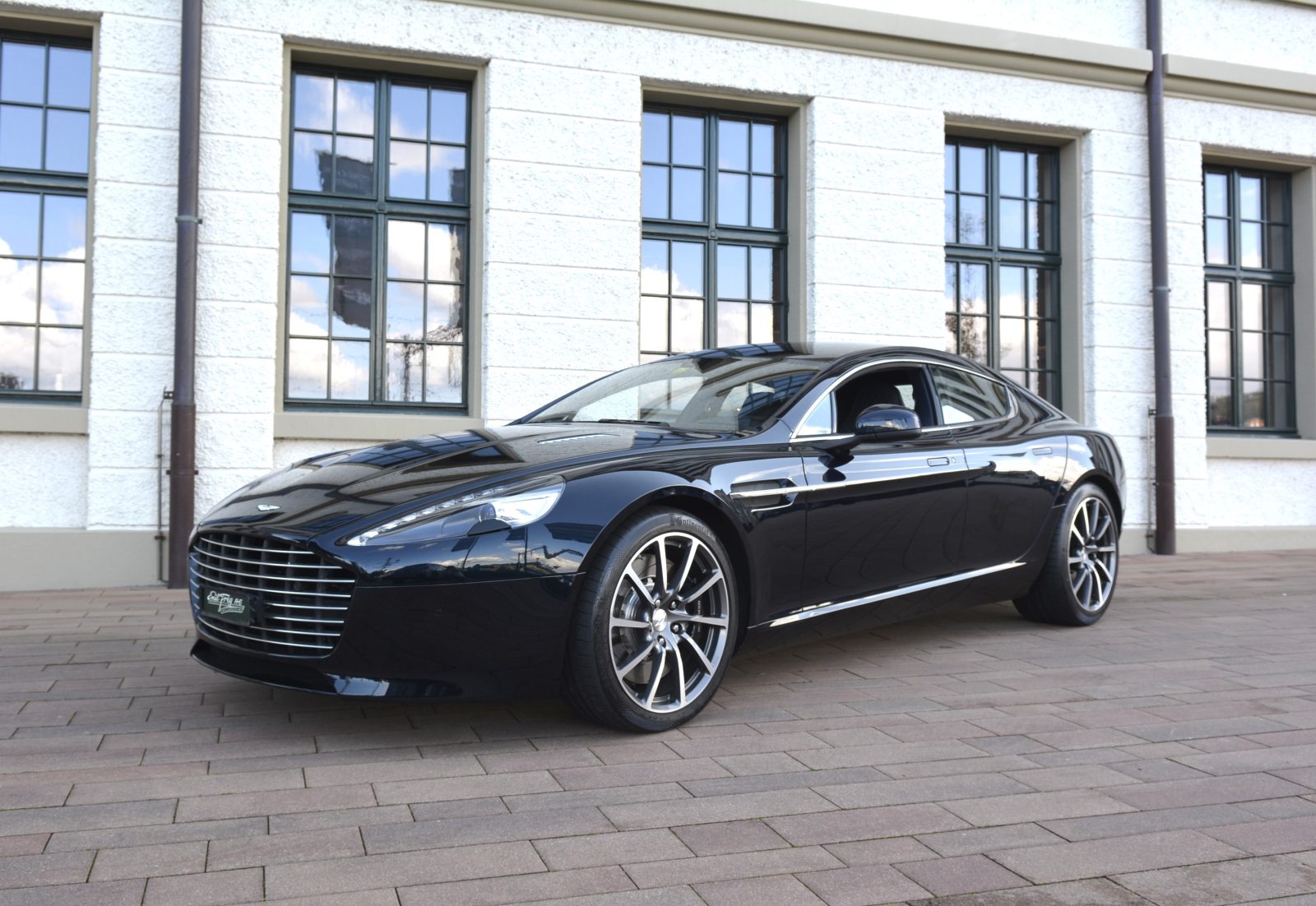
“My” Rapide, in the deepest blue metallic I’ve ever seen…

As you may have guessed, the car that’s messed up my mind in the last couple of weeks is arguably the most beautiful four-door sedan on the planet – the Aston Martin Rapide, here in the shape of 2017 Rapide S in the deepest dark blue metallic I’ve seen, with a black leather interior, driven no more than 13.000 kms since new, and traded in from a client’s Aston Martin collection – the poor guy had apparently run out of space. Needless to say, the car was in mint condition.

I’ve always found the Rapide to be a beautiful but intriguing car, and a rare one at that. Over the full 10 years of production no more than 10.000 cars were built, meaning roughly 1.000 per year (but as it was, far more in the first few years and very few from 2017 and onwards), so you don’t see many of them. And you may actually miss it even when doing so, since seen from the front or even from 1/4, you risk taking it for just a regular DB9. It’s only from the side and back that you note that it’s significantly longer.

Indeed, the Rapide is built on the same platform as the DB9 and the V12 Vanquish, but here extended by 30 cm such as to enable two back seats. These are real, separate seats making the Rapide a comfortable four-seater, provided your back passengers aren’t bigger than around 175 cm (5’9″). And should there only be two of you traveling, the two rear backrests can be folded, thereby creating a very sizeable luggage space, given the Rapide is actually not a sedan, but a very stylish hatchback.

An additional 30 cm from the b-pillar backwards make the DB9 a four-seater

First shown as a concept car in 2006, the first series was actually not built in the UK but rather at Magna Steyr in Austria (most famous for building the G-wagon), with final assembly in Gaydon, and with the full production moved there in 2012. In the year after, the second series Rapide S premiered, with power boosted to 558 hp from the initial 470 hp and with other updates, of which the vastly bigger grill is the most obvious one. From 2014 the S also got an eight-speed auto box, replacing the original six-speed. Finally, the Rapide AMR was sold in the last years from 2018 to 2020, limited at 210 cars, and with the engine beefed up to 600 hp and various visual items to underline its sportiness.

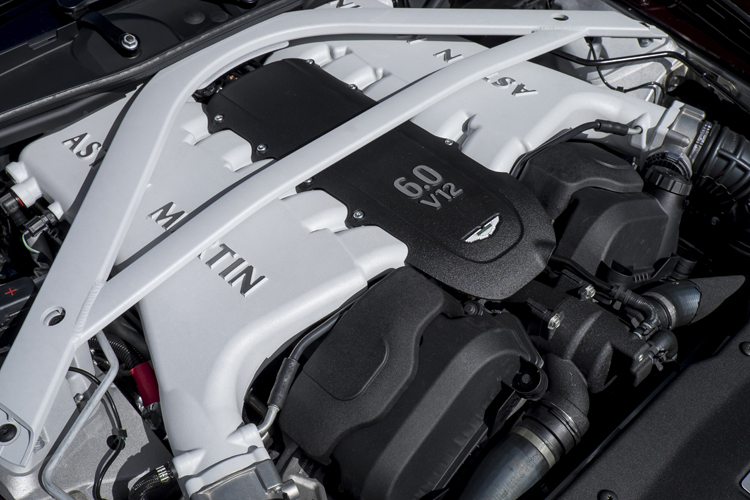
Of course a lot of the Rapide’s thrill is in the engine, that wonderful, 5.9-litre naturally aspirated V12, that for some reason says 6.0 litre on the engine block when you open the hood. It’s a well-known engine across the Aston range and considered very reliable if you treat it right. In the Rapide, it provides the jet engine kind of acceleration – not explosive or high-pitched, more of a relentless push, with a satisfying growl. It’s also the type of non-supercharged, non-hybrid engine that we will never see being built again, whatever happens to the car world going forward.

It may say 6 litres on it, but in truth, it’s 5.9… Wonderful nonetheless!

Coming back to the Rapide S I was drooling over, it was as said a 2017 car which is good, as in the Rapide world, the newer, the better (or as the salesman said, in the first series, there were quite a few Mondays in the week on the final assembly line in Gaydon…). Stepping into it, and thereby opening the “swan door” that opens outward but at an upward angle, you find yourself sitting just as low as in a DB9, with what feels like an immense hood in front of you. The cabin is pretty much identical to a DB9 as well, with beautiful materials, leather from more cows than you care to think about, and a really nice and solid feel to everything.

We went for a drive, but it wasn’t one that in any way tested the car’s capabilities. The feeling of driving a big car however disappears quite quickly, and the accompanying, soft growl from the exhaust is very satisfying indeed. Those that have had the chance to drive the Rapide on track however talk about it as very agile and playful for its size, far more so than the Panamera or Mercedes-Benz CLS it’s usually compared to (and both of which it obviously also outclasses in looks).

Old school? Yes, if infotainment screens is you’re idea of fun. Timeless is the word!

As we came back, my mind was working in overdrive to create a case for this car. Of course there’s quite a long list of negatives that you can think of and that go from, well, the whole package really, from the V12 engine to the electrical system, where if anything goes wrong, the downside is potentially limitless. Running costs are also on the high side, to put it mildly. That said, it’s far cheaper to run than the only competitor I see, namely the Ferrari FF / GTC 4, where the FF price-wise is comparable, and it’s not like it lacks positives either: the sheer beauty, the rarity, the relative practicality which is really all a couple needs when the kids have moved out, and of course that V12 which beats most of what’s out there.

If, having read this, you feel like me, do note that parking a Rapide in your garage is very much a case of buying the best one you can afford. There are super cheap first series cars out there that are tempting, but not where you want to go. Rather, aim for the second series (the S version), and do so from 2015 such as to benefit from the 8-speed box which helps lower the fuel consumption from something really indecent to half acceptable. Maintenance is really critical, but if done correctly, the Rapide is fundamentally a solid car.

Speculation is no more than that, but I wouldn’t be too surprised if the Rapide price-wise stabilizes at this point, for the above mentioned reasons and because there are so few around. As for me, I tried to find other directions for my lunch walks last week, such as not to pass in front of that shop window, where the very friendly salesman will wave to me every time. Luckily I’m traveling next week, and hopefully someone else will have had time to buy it before I get back…

Street finds – the Peugeot 205 Rallye!

Finding a true French legend from the 80’s has become increasingly difficult, mostly as they were never the most solid cars around – more on that later. Still, given I spend as much time as possible in southern France these days, the place to find one should logically be on a narrow street in Nice. But of course, according to the law that things never happen as you expect them to, that’s not what happened. The below beauty was parked centrally in Zurich, very close to my office. And what a car it was!

The Peugeot 205 GTI is, next to the VW Golf GTI, the most iconic hot hatch from the 80’s, and the only one that can really compete with the latter in terms of brilliance, and these days, price. It’s almost four years ago that we looked at it, and to me, it’s at the top of my list of hot hatches of any period, were I to get one one day (which I most probably won’t, since it isn’t really my thing, also not for down here in France for which it’s both far too nice).

A 205 Rallye looking as new as when it was delivered, 30 years ago!

Describing a hot hatch from more than 30 years ago as luxurious is perhaps pushing it, but there’s no doubt the GTI was the fancier car when compared to its sibling, the 205 Rallye pictured here – the real hard core version in the 205 line-up! It was created as a cheaper and simpler alternative to the more expensive and mechanically more complex GTI, although calling its grand daddy mechanically complicated today is almost laughable.

The Rallye was derived from the base version of the 205, whereby the volume of its original 1.1 litre four-pot was increased to 1.3 litres and about 105 hp. Given that still wasn’t much to brag about, the engineers at Peugeot-Talbot Sport resorted to the cheapest way possible to reduce the car’s weight, namely to remove sound-deafening and other isolation material not deemed strictly necessary. Tada – the trick was done and the Rallye now weighed in at a very modest 800 kg (794 to be exact). it didn’t improve the comfort of course, but rapidly made the car popular among the many aspiring young rally drivers France has always been blessed with!

A perfectly restored example in every detail

The Rallye also inherited the front suspension and ventilated disc breaks from the 1.6 GTI, keeping the same drum brakes in the rear. The interior (except then for the removed isolation) is also reminiscent of its bigger brother, but the exterior is cleaner, especially in white as they car I saw, and with those wonderful, 80’s-like white wheels (these were however not original, those were also white, however in steel). There was really no doubt that the car I saw had been restored, as it was really in perfect condition, including on the inside.

The Rallye had a far shorter life than the GTI, being produced only between 1988 and 1992, and only sold in a handful of countries in central Europe. Peugeot had initially planned for 5.000 cars but in the end, no less than 30.000 would be built. The Rallye was thus a success, also since it was a car that was really rewarding when you drove it hard. Unfortunately, that together with the quite thin body parts, have contributed to few cars remaining today. As you may remember (or just have read) from my story of the 205 from four years ago, that particular car was written off following a collision that was certainly not nothing, but also not something that would really trouble a car today.

The interior isn’t identical, but close to the 205 GTI

That makes the Rallye even rarer today than the 205 GTI, but price-wise, they fetch around the same money, which is about EUR 25-30.000 for the best cars (and that’s by the way almost twice the money compared to four years ago). The real issue is however finding one – including in France, where even the GTI is not only rare, but today fetches the same price as in other countries, something that wasn’t the case for quite a long time.

I bet this driver doesn’t think about the money though, driving his 205 Rallye, but rather the purest form of driving pleasure, miles from the 1.5 ton hot hatches built today. I just hope he keeps it on the road and avoids close contact with other cars – both for himself and the car!

The unique MB 500 SLC!

Last year in September I moved into a new office space in Zurich, nicely located in the center, close to the sea. It’s surrounded by mostly residential buildings, cafes, restaurants, and a few car dealerships. A perfect surrounding for someone appreciating coffee, cars and good food you might say (after all that’s why I chose the office) but as I’ve come to discover, it’s a more dangerous environment than you would think. Not because of street crime (this is Zurich after all…), nor the cinnamon buns of the local coffee shop. As you’ve guessed, it’s the car dealerships that are the problem.

You see, next to Mercedes and Audi’s small city outlets, more to think of as showrooms, there’s also a dealer specializing in the top-end classic car market. It’s called Emil Frey Classics and belongs to one of Switzerland’s largest car importers by the same name. Funnily enough, it’s in this direction my feet regularly take me, and by now the nice sales guys inside have definitely put me in the category of middle-aged men dreaming of “something above their means”. Which, in the case of the Aston Martin DB2/4 and the Mercedes-Benz 300 SL Gullwing they currently have on display, is very true.

Last week however, a new car was added to the collection and hadn’t it been because it was parked on the street whilst they were re-shuffling the showroom, I may well have missed it. After all, it looked like a nice, but quite regular Mercedes-Benz SLC. However, looking at the fact sheet behind the wind shield (since nothing else would betray it), I saw that it was the ultra-rare 500 SLC, the top version of the SLC series that was only ever sold in Europe, and only built 1143 times in 1980-1981. That, together with the story the seller told me, made for an interesting lunch break!

A wonderful C107 500 SLC a bit too close to my office for comfort…

Before we go into this specific SLC however, let’s just note that the 107 range comprised the very well-known, beautiful (R107) SL convertible (anyone else remembers the bright red one Bobby Ewing drove in “Dallas”?), and the less popular, and according to some, less beautiful (C107) SL Coupé, or SLC. What made both cars so special was the build quality and the fact that in spite of being the sports cars of the range, they would offer a ride as comfortable as the far larger MB’s of the time. That was definitely also one of the reasons why the roadster was built longer than any other MB, for all of 19 years between 1971 to 1989.

The SLC coupé was shown to the world in 1971 in Paris and would be sold for 10 years until 1981. It was built on the roadster R107 platform that had been extended by no less than 36cm, such as to offer four real seats. That does however make it somewhat unique among S-class coupés, which have otherwise always been based on the S-class chassis. The front end of the SLC up to the A-pillar is identical to the roadster, but the cabin is longer, as is best seen from the side, where the side windows end with the legendary curtains. The extension was done in a way such as to avoid a B-pillar, giving the car an elegant, unbroken glass line.

The legendary side curtains and the dome-like rear window (picture Emily Frey Classics)

In terms of overall elegance however, not everyone agrees on the SLC being beautiful, and few MB models have been as widely discussed over the years. The curtains, the long wheelbase and the dome-like rear window are all items that didn’t really go down well with enthusiasts, and it’s not until quite recently that the mood has changed somewhat. In terms of looks, the SLC may lose to its ultra-elegant roadster sibling, but it’s still a beautiful car with great practicality and a mor relaxed ride thanks to the longer wheelbase. In other words, a true S-class coupé as you should imagine it!

In terms of engines, the range started with a 185 hp six-cylinder in the 280 SLC, but most coupés came with the eight-cylinder models called 350, 380 or 450 SLC, with the engine being the good old Mercedes cast iron V8 with 218-230 hp, depending on version. In 1978, MB then introduced the aluminium 5-litre engine that was significant in several ways, as it was built in preparation for the successor of the SLC, the SEC coupé. Power output was higher at 240 hp, and importantly, it was coupled to a four-speed automatic, far better than the 3-speed of earlier or simpler versions.

The 5-litre engine has more than sufficient power for the relatively light SLC (picture Emily Frey Classics)

The late 70’s and early 80’s was the time of different emission regulations between Europe and the US. Don’t ask me why, but this led to the 5-litre, which was only sold in the SLC in the two final years 1980-1981, being called 450 SLC 5.0 in the US, and 500 SLC in Europe. As said, only 1147 cars of the European version were ever built, and it was one of these I stumbled upon. These were complemented by around 1.600 of the US version.

As can be seen from the pictures, the particular car I saw looks if not new, then very close to it, as explained by the fact that the previous owner, one of only two, had invested around CHF/USD 80.000 in maintenance and renovation over the last years. But it was all the more remarkable since he hadn’t only invested in the car but also driven it, so that the it has a mileage since new of no less than 260.000 km! If ever proof was needed that there was a time when literally nothing could break a Mercedes, then it was standing right in front of me!

An extremely well preserved and partly restored car in an optimal colour scheme…

That’s not completely true however, at least not talking about the 5-litre engine. It wasn’t only that aluminium was now used rather than cast iron, it was also that plastic had made inroads in car production, and in the rather fragile type so popular in the 70’s, had proven not to be very reliable and prone to cracking. Part of the 80.000 had thus gone into replacing the brittle plastic slide rails of the engine and some other parts. Further money had gone into the gearbox, transmission, suspension etc. You name it, it had all been done, and the car oozed of quality.

The short ride we took didn’t reveal all the facets of the car, but enough to realize that this was a very healthy machine indeed. As tends to be the case with older cars, you sit slightly higher with excellent visibility given the large window areas, and in the case of the SLC, with a big wheel in your hands, that you need to turn more than on a modern car. The engine is present somewhere in the background and won’t be stressed by anything at normal speeds. For its age, the suspension was fine, and the automatic switched as good as a 40-year old box can. Nowhere did the car feel like it had been driven all of 260.000 km!

…with a blue leather interior in a comparable, perfect condition! (pictures Emily Frey Classics)

The dealer wants CHF 60.000 for the 500 SLC, which when knowing how it drives and what’s been invested, together with how rare this version is, sounds reasonable. The issue though, is that any other SLC with another engine and less km’s, but in equally good shape, can be had for half. Also, given how rare the 500 is, it’s difficult to know what the fair value is. Looking into it a bit, it seems these a couple of these have traded very selectively at auctions at more than 100.000, then at other times, reserves haven’t been met.

Although a truly beautiful car with a great story and a great ride, the 500 SLC doesn’t really make my heart beat faster, more than seeing a great classic car in general does. If it’s your thing though, you should know that what’s probably the best car on the market is currently for sale in Zurich. And as part of my googling, I also discovered that whereas the dealer wants 59.000, the owner himself has advertised the car privately as well, at a price of 52.000, thus 8.000 lower. That’s a number that although not a bargain, sounds rather reasonable!

Porsche 968 – more than a different number?

Back in the day (here defined as when it was assumed we could drive our cars without 17 cameras in every angle), Porsche was a sports car company with a far larger focus on the 911 than today. SUV’s and other, strange four-door creations were still far from the drawing board, but the company was actively trying not only to diversify away from the 911, but more or less to kill it off. I’ve written about this several times, notably in my posts on the Porsche 928 and 944 respectively, four years ago.

As part of that strategy, it was precisely the Porsche 944, launched in 1982, that was to help where until then, the 928 had failed, and it definitely had a lot going for it. It looked modern in a well-designed and quite practical body, including the pop-up headlights that were mandatory in the 80’s. Especially in later years as it evolved, it was also able to shake off most of the Audi vibes its lesser predecessor, the 924, had given it, at least in the eyes of some. For the purists, that was of course not good enough, as it only had a four-cylinder engine that wasn’t even air-cooled.

Although more modern than the 911, the 944 never won the enthusiasts’ hearts

In spite of that, the 944 continued to evolve with a second series, called S2, launched in 1989, which brought both more power and a far nicer interior. Also, during the S2’s short lifetime of only three years, production was finally moved from the Audi plant in Neckarsulm, Germany, to the Porsche plant in Zuffenhausen near Stuttgart. All that didn’t really help though, as when S2 was discontinued in 1991, it still hadn’t been as successful as Porsche had hoped. And by now, its basic design started to look dated, especially the front and back which went back more than 15 years to the original 924 from the mid-70’s.

Porsche decided to give it one more shot in a Mark III version, internally called the 944 S3. In the eleventh hour, the decision was however taken to change the car more than what had been originally planned, so that when it was launched, Porsche felt it deserved a completely new name – the 968. The exact logic behind the numbers isn’t fully clear, more than Porsche wanting to de-emphasize the connection to the 944, while reinforcing the similarities with the 928 and thereby perhaps also create a positive vibe around the latter.

As always in those days, Porsche supported the launch with some great advertising!

Was this a lot of marketing talk, or was the 968 different enough to motivate the new name? Actually, if you look a bit closer as we’ll do below, I would claim it was. The 968 brought updates in several areas that taken together made it a far more modern car. Prospective buyers obviously felt differently and the 968 was never more of a commercial success than the 944 S2 had been. Fast forward 30 years however and it’s become quite an interesting proposition, as we’ll see.

To start with the exterior, there’s no doubt the 968 took after its bigger sibling, the 928. The pop-up headlights were round and the front spoiler looked the same as on the flagship. The rear was completely re-designed and given completely red rear lights, considered highly modern at the time. The interior was however left pretty much alone as since the S2 revamp, it was fully modern and actually an interior that has stood the test of time really well.

Everything you’ll ever need to drive a car!

The bigger changes were however in the drivetrain, where firstly, thanks to the transaxle construction with the gearbox in the back, the weight distribution pas practically 50/50 (this had obviously been a feature of the 924 and 944 as well). Also, that gearbox was now a new six-speed, replacing the five-speed box of the 944. There was also an automatic option, that we won’t go into more than that. The basis of the engine was not the 944 Turbo but rather the “normal” S2 engine, here as a 3-liter inline four-cylinder with about 240 hp. It was the first Porsche engine to feature Variocam, a system for variable valve timing, improving both performance and efficiency.

This made the 968 less powerful than both the 911 and its predecessor, the 944 Turbo, which in its last iteration had 250 hp, but also less prone to failure than the latter. And in the early 90’s, 6.5 seconds to 100 km/h was still a respectable time. Above all though, the 968 conveys a true Porsche feel of the time in terms of how it drives, less powerful but more predictable than a 911, and much more light-footed and sporty than a 928. Unsurprisingly the 944 Turbo has more low-rev torque, whilst the 968 as naturally aspirated, has a broader performance range and enjoys being revved.

The 3-litre four-cylinder, the biggest in the market at the time, is a brilliant engine!

To prove how good the engine really was, Porsche took it to the Nardo circuit in Italy in the spring of 1992, and drove it flat out for 24 hours. Including fueling stops, the 968 covered a distance of 5566 km, equivalent to an average speed of 232 km/h. Try doing that with an EV!

There’s thus no doubt that the last evolution of the 944 was a pretty big and important one, something I was reminded of when seeing a 968 on the street the other day, and being struck by how good and relatively modern it looked. I did what I’m sure you all do, i.e. checked how much they are these days. To my surprise, it turns out that a nice 968 can easily be yours for around EUR 30.000, with the convertible costing 40-50% more. Somewhat surprisingly, the 944 Turbo is in the same price range as the 968 convertible. As a small comparison, the cheapest 911 of the same age will cost you three times that, and whereas a 928 will be yours for maybe EUR 50.000, it will be much costlier to run than a 968. As will a 911 for that matter, which is also far less practical.

If you have room in your garage and if you still feel confident driving a car without cameras and emergency braking, then you know what to do. And don’t wait too long, as 968’s, of which less than 13.000 were built between 1991 and 1995, are starting to become really rare. The 968 is definitely a real Porsche, and it’s no doubt the best version of the 944 series. It’s both modern and practical enough to be used more than on an occasional Sunday, and all this for a price that is lower than that of a Chinese EV. That makes it really difficult to say no to!

M88 – 3x magic!

Remember Rod Stewart? I know he’s one of those artists you need to check whether he’s died since you last heard of him, but given I just did, I can confirm he’s still alive, and by the looks of it, still kicking. Back in the 80’s, Rod did a song called “Some guys have all the luck”. Given he’s known not only as a Scotsman with a smoky voice but also as a great womanizer, it’s pretty clear what “all the luck” was referring to. This week however, we’ll talk about another guy who really has all the luck – in car terms.

Still alive

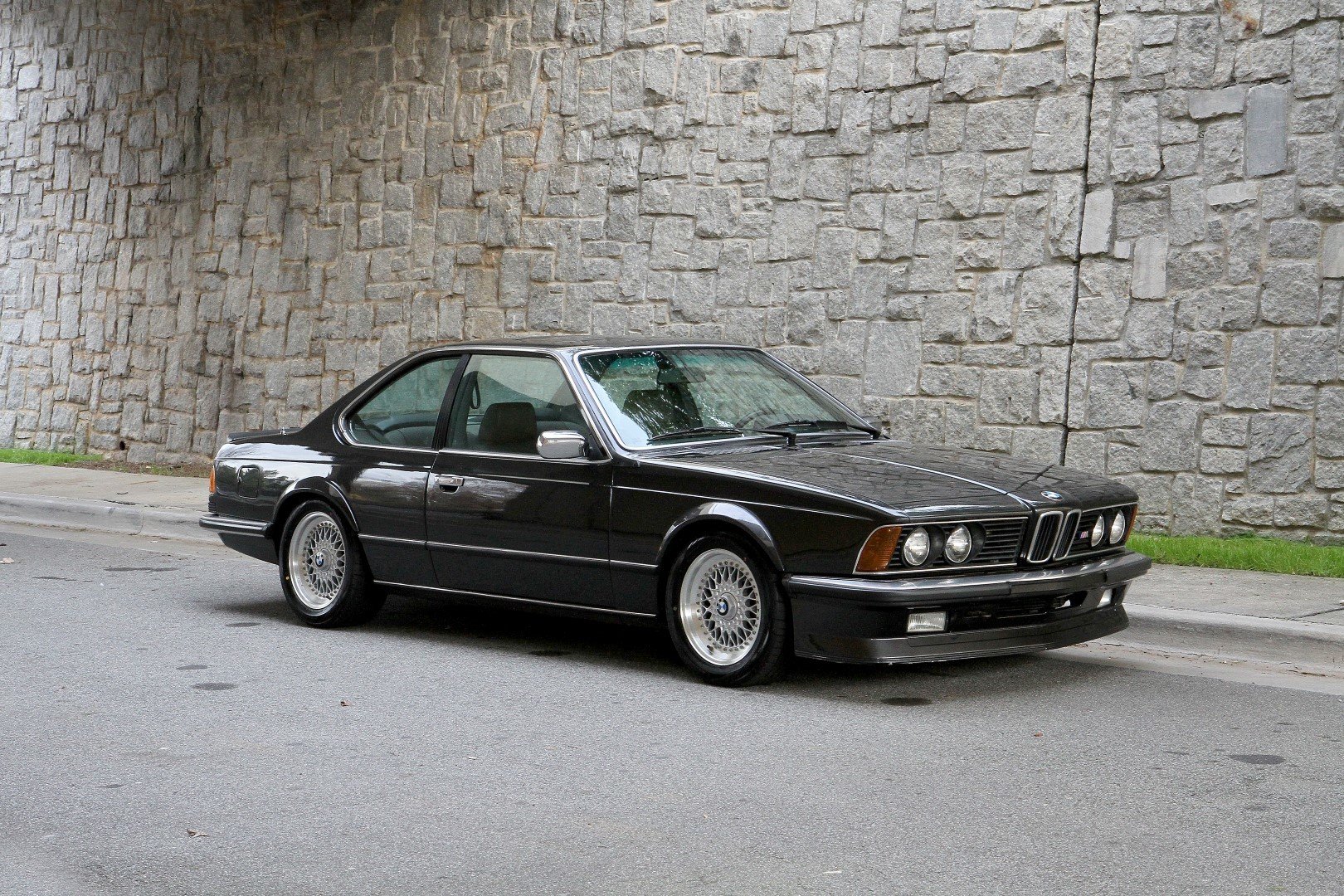
It all started during an innocent catch-up lunch with an old friend from university back in Sweden, before we both moved to Switzerland many years ago. I know he’s interested in cars, so naturally, that’s the turn the discussion took after we’d updated each other on jobs, travels and families. It turned out my friend had just bought himself the nowadays quite rare BMW M635 Csi, one of my all time favorites and a car I wrote about back in 2020. My friend went through the purchase that was a bit our of the ordinary, but will stay between him and me, and then said, kind of matter-of-fact like, that it was nice to finally complete his line-up of three cars with the same engine.

The first of BMW’s large coupés – the M635 Csi

My brain was working intensely while my jaw was seeking the ground, as my friend (who by now was rapidly taking on a heroic status) told me he’s also the owner of an M5 of the first, E28 generation, and even more incredibly, of an original M1. The M5 is up in Sweden, but the M1 is a car he regularly drives down here in Zurich. And of course, these three wonderful cars are all powered by one of the greatest engines of all time – the so called M88. a suitably legendary engine for one hell of a car line-up!

The M88 engine was first featured in the M1, after the prototype cars had been tested also with a four-cylinder, turbo engine. The straight, 3.5 litre six cylinder with the so called DOHC dual overhead camshaft and four valves per cylinder produced around 280 hp with fuel injection, and around 330 Nm of torque at a relatively low 4500 rpm.

The M1 was a sensation when it was shown to the world in 1978

The power was enough to take the light and aerodynamic M1 to 100 km/h in around six seconds, a spectacular time in the late 70’s. Combined with a top speed of around 260 km/h, this made the M1 the fastest standard German sports car when it was launched in 1978, a crown it held onto until its end of production in 1983, when Porsche updated the 911 Turbo.

The M5 (E28) was launched in 1985, two years after the M1 had been discontinued. The four-door sedan was hand-built and powered by the third version of the M88 engine, referred to as M88.3, with around 10 hp more than in the M1 in the non-catalyzed, European version. The M5 was however a car BMW intended for the US market, where the catalytic converter reduced the power somewhat. It would only be produced for three years until 1987.

Oh how discrete power sedans were back in the 80’s!

The M635 Csi had seen the light a year earlier than the M5, in 1984. Contrary to the latter, it was built by BMW itself and not the separate M division, officially called BMW Motorsport. It rode 10 mm lower than the standard 635i and also had reinforced brakes, a lower front spoiler and two side mirrors – as standard! As its M brothers, the gearbox was of course a manual, 5-speed dogleg box from Getrag.

So there we go, three absolute legends of the automobile world, all powered by the same legendary engine – and all in my school friend’s garages. As it turned out, this was far from the ordinary catch-up lunch! Looking at it a bit closer though made it clear just how extraordinary his small collection is. Rarest of the three is the M1, of which only 453 were built. The M5 was made in 2241 units, but more than half of these were sold to the US. At 5855 units, the M635 Csi was the mass-produced car of the three.

An amazing power unit!

As long-term readers know by now, Switzerland is a rich country and one that is full of car enthusiasts, so that you usually see all kinds of car legends in quite high numbers. When it comes to this trio however, not a single one of either car is for sale at the moment on the regular sites, not even an M635 Csi. Checking Classic Driver turns up three M1’s currently for sale, starting at around half a million USD. The M5 is slightly more common and will set you back around USD 100′. The M635 Csi is the cheap one of the bunch, with good cars starting at around USD 60′.

It’s in other words quite a good pension fund for his older days my friend has collected. But knowing him, I know that’s also not the reason he got them, and I know he drives and enjoy all three cars. Good for him! And in terms of having all the luck, I guess you can be lucky in other things than cars – as well. I’ll settle for that for now…

The world’s rarest, luxury SUV!

In my last post, I discussed the ultra-rare MVS Venturi, one of many attempts from typically small manufacturers, this time in France, to challenge the traditional sports car monopoly of the big ones, one of them obviously being Ferrari. The same week, a good friend in London mentioned a car from a similar period that I had never heard of, which doesn’t happen very often. Surprisingly, this wasn’t another small sports car manufacturer, but rather one of the first luxury SUV’s from Ferrari’s home country Italy. So in this current thread of ultra rare cars most of us have never seen, meet the Rayton-Fissore Magnum!

Of course Italy has much more of a sports car than an SUV tradition, with the latter being quite a recent phenomenon through cars like the Alfa Romeo Stelvio, Lamborghini Urus and Ferrari Puros…. oh sorry, that’s of course anything but an SUV. And then there was of course the one that counts like the first, the monstrous Lambo LM002, built between 1986 and 1993. However, the LM002 was actually one year too late to count as the first, as that honor goes to the Rayton-Fissore. It takes another prize as well, which is that of completely failing as a brand, in spite of having a car that time-wise came right at the point when SUV’s started to become popular, and not being without attraction points, as we shall see.

The LM002 was not the first, but still the biggest Italian SUV!

The brand had its roots in the small coach-building family Fissore, and it was established by a niece in the family together with her husband in 1976. As far as I’ve been able to determine, the Magnum was the only car ever to appear under the Rayton-Fissore brand, and it was originally intended as a military vehicle, built on a chassis from the Italian truck manufacturer Iveco who also supplied the differential and the brakes. Not very glamorous perhaps, but as a small manufacturer Rayton had to buy in most parts, from the drive train to the interior, from other brands. The first cars were certainly not luxurious, especially as they were powered by the slow and unrefined diesels of the time.

80’s looks that weren’t to everyone’s taste. It’s bigger than you think!

Rayton however had bigger plans for the Magnum, and whereas in Europe, the Magnum was available with a variety of engines, from diesels to the same V6 that was used in the Alfa Romeo GTV6, things were different in the US. For the top version that Rayton entered the US market with, they had bought the 5-litre V8 from Ford which also powered the Mustang at the time, and slapped a supercharger on it. Not very Italian perhaps, but tried and tested!

The Rayton was thus sold both in the US and in Europe, but the only version ever intended for the other side of the pond was the top luxury V8 version. And whereas the chassis may have come from Iveco, the interior certainly didn’t. The V8 Magnum was an ocean of leather, wood, and for the time, high-end interior equipment. You see a lot of similarities to the Maserati Biturbos from the same period, Maserati also being part of the Fiat family. That’s the family where Rayton found other parts such as switches and parts as well, making for a bit of a contrast with the luxury of the rest. But there is no doubt that no brand, not even Range Rover, had an SUV with an interior as luxurious as the Rayton at the time!

A surprisingly nice place to be, making you forget the exterior looks!

The Magnum was designed by Tom Tjaarda, one of the leading designers at the time with cars like for example the Saab 900 and the De Tomaso Pantera under his belt. He created what looks very much like an 80’s design, however with front and backlights that quite obviously came from some other car and don’t really fit the body. Neither did the minuscule side mirrors, for that matter. What he succeeded in was however the famous lady’s shoe design, i.e. a car that was larger on the inside than it looks. The Magnum was all of two metres wide – not remarkable today, but very much so in the 80’s. This made for a very roomy cabin, with notably room for three grown adults in the rear.

Note the not very fitting rear lights and minuscule mirrors.

Rayton entered the US market in 1989 and had then renamed the car the Laforza. Rather incredibly, they would build it until 2003, i.e. for close to 20 years, by which time Rayton had gone through at least two restructurings, engines during a period had come from BMW, and the final assembly had at times been handled by Pininfarina. In 20 years however they never managed to crack into neither the US, nor the European market, in spite of the SUV segment gaining in popularity.

One reason was certainly the looks, that weren’t to everyone’s taste. Another was probably the fact that a car from an unknown brand with a relatively basic Ford V8 cost as much as a Range Rover, but had turn signal sticks from Fiat (not that Range Rover was a wonder of quality at the time, but at least it had brand recognition). Then there was the weight: at more than 2.3 tons, the Magnum/Laforza was very heavy for the time, no doubt also because of those truck parts from Iveco. The combination of weight and a truck chassis both made the Laforza quite slow and also gave it a relatively harsh ride, not really in tune with the luxury profile Rayton wanted the SUV to have.

A couple of facelifts improved the looks of later, Laforza versions somewhat

In spite of a very long production time therefore, the best estimates for how many Rayton’s were built talk about a few hundred Magnums and less than a thousand Laforzas, most of them sold in the US. How many have survived until today is also unclear, but there’s a US owners’ club that estimate there are still around 50 cars in the US. I’ve never seen one live, neither there nor in Europe, and doubt I ever will. There’s also not a single one currently for sale, at least in Europe. Whether it’s worth looking for one is of course up to you, but there is a bit of a trend currently in early SUV’s becoming more popular. If that’s your thing, the Rayton is no doubt the most exotic of them all!

Sports Car Maker!

Have you ever dreamt of creating your own sports car? I can’t say it’s something I think of on a regular basis, but when I was younger, I remember sitting with pen and paper, trying to draw a spectacular shape on a piece of paper. Given my extremely limited drawing skills I failed every time, however, when I was at it and thought about what I would call my future brand, at no time did I have the idea of naming it “sports car maker”.

Some people did though, and today we’ll look at a car that I’d honestly be surprised if any of those reading this has ever seen live. I certainly don’t mean to sound condescending, but a French brand from the 80’s building less than 1000 cars during its lifetime is not what you see on every corner. I hadn’t either until I all of a sudden did so, last week, at a red light in Nice. If you haven’t guessed it yet, I’m talking about the MVS Venturi, later only referred to as Venturi, a French creation from the late 80’s from a brand called MVS, Manufacture de Véhicules Sportifs, French for, you guessed it, sports car maker.

The Venturi story starts in 1984 when the French engineer Claude Poiraud meets the designer Gérard Godfroy. The latter had worked at Peugeot, notably on the 205, and was also responsible for other design masterpieces like, well, the Citroën Visa. More relevant perhaps was the fact that Poiraud had worked at Alpine, the only real sports car maker in France at the time, where he had led the development of the A110, that I wrote about almost four years back.

The Citroën Visa – perhaps not the best design reference…

The two decided to put some fresh air in the French sports car scene by starting a new company called Ventury, a name that was supposed to lead thoughts to “aventure” (adventure in French), and the Venturi wind effect, coming from air flow analysis. By writing it with an “y” at the end, they apparently also felt they made the name more European. Be that as it may, but a first mock-up was produced and shown at the Paris auto salon in 1984. It was met with instant success and people reportedly didn’t believe it was French, given they hadn’t exactly been spoiled with sports cars up until then – and as it turned out, wouldn’t be so going forward either…

From here on things accelerated for the company, and the first production cars were introduced in 1987. The “y” had then been dropped for some unclear reason, with the first car called the Venturi Coupé. it was equipped with the well-known V6 engine from the collaboration between Peugeot, Renault and Volvo, referred to as the PRV V6, mid-mounted with a power output of 210 hp. It wasn’t the sportiest engine around, but with a body built in glass fibre, the Venturi didn’t weigh more than 1300 kg.

That the Venturi is Ferrari-inspired is an understatement…

In 1989 power was increased to 260 hp from the same engine, in a version suitably named Venturi Coupé 260. The last cars in that series would be referred to as Atlantique, as would the last road version of the last Venturi, the 300. You will have guessed it had a power output of 300 hp, however now from a newer Peugeot-Citroën, six-cylinder engine, and Atlantique referred to a sportier and lighter interior, contributing to a weight saving of around 165 kg, making a light car even lighter.

Given all these looked pretty much the same from the outside, which is pretty much like a Ferrari F355 without the Testarossa-like wind intakes, I can’t say which version I saw, and naturally I didnt’ get my phone up in time before the light turned green. The Venturi looks very stylish though, in an 80’s supercar kind of way. At just over four metres in length it’s a small and low car, and next to the F355, other natural references are the Honda NSX and also the Lotus Esprit. i would say it’s less spectacular than both those, but also has a more classical design.

The few who have driven a Venturi talk about a slightly chunky gearbox but a very nice and precise hydraulic steering. The car may look like a Ferrari but the engine has precious little in common with Maranello, with a red line already around 6.000 rpm, and a sound that’s only exciting if you’re an EV driver. Venturi compensated that with a very nice, and leather-rich interior, far more luxurious and well appointed than most cars of the time.

A nicer place to be than many other 90’s cars!

During the 90’s, Venturi went through several ownership changes and with that, more business strategies than you can count. There were notably plans to build a family car that were never realized, high ambitions for making Venturi a racing brand, and notably no less than seven Venturis participating in the Le Mans race in 1993. In the end Venturi ran out of money, and having been saved by a Thai group when it was first placed in liquidation in 1995, the subsequent Asian crisis meant that the lights went out for good in the Venturi factory in 2000. It also meant that of the 44 Venturi 300 Atlantique that had been ordered by then, only 13 were ever delivered. Those that have survived certainly belong to a lucky bunch of people!

All in all, no more than 641 Venturis would be built in total. Such a small series obviously means they’re very rare 30 years later. There’s not a single one for sale in France, neither in Germany, but there are two in Switzerland, a first series at around USD 40.000, which is the red car on the photo above, and an Atlantique of the 260 series, seen below. That’s by the way the first car of that series, in other words the first Atlantique ever built, making the price of around USD 60.000 very reasonable. Unfortunately though, it’s also a bit of a renovation object…

If you’re up for renovating the first Venturi Atlantique, let me know…

If you’ve always dreamt of a Venturi, Switzerland thus seems to be a good place to start. And in terms of spare parts, it’s actually not as bad as you may first think, given that as a small brand, Venturi had to buy what they could from other brands. The PRV engine will not be a problem, neither will many of the switches or side mirrors, coming from Citroën, or the rear lights from Ford… The list goes on. Not much to fear in other words, and if your highest dream is a car you can be certain of not seeing on your neighbour’s drive, it’s hard to find a better option than a Venturi!

Street finds – the BMW 3.0S!

The snow had fallen overnight and it was the coldest morning so far in 2024, as I spotted it standing there in all its modesty, just next to my office. The BMW 3.0S was in tune with nature, not only for the color, but also since somewhat unexpectedly, it was on winter tires! Compared to BMW’s latest luxury sedan, the i7 that I had seen earlier the same day, you can’t help but admire the modesty of designs back in the day.

Truly in mint condition, with modern winter tires!

As always when seeing a car from an older generation, the first thought (or actually the second, after how modest its design was) is how small it is compared to today’s cars. After all, this was the predecessor to the first 7-series and already set to compete with notably the S-class, and yet it wasn’t bigger. That said the 3.0 always led a discrete life, very much in the shadow of that younger, more beautiful sibling everyone prefers…

Street finds are rare in winter and stumbling upon a BMW 3.0 was certainly not what I expected on the way to work last week. BMW’s then luxury sedan was launched in 1968 after several years when the brand had lacked a larger car, and going through a period that had been very economically challenging.

A few years earlier they had however launched the mid-sized BMW 1500 which had become a success, so ever so slowly, the finances were improving. The 3.0 was launched to re-establish BMW as a luxury maker for those with a thicker wallet and was a clear break, also in production technique, with its closest predecessor the 501, built since the early 50’s and discontinued in 1964.

From a 3/4 view, it actually looks pretty much like a 70’s E-class…

It’s completely unthinkable these days that the luxury line of a brand wouldn’t have a name (even if in some cases, you would wish they didn’t…), but the 3.0 was always called just that. Internally it was however known as the E3 and was the first BMW to have the E designation. Why, given that, it wasn’t called the E1, I can’t tell you.

The fact that the grill is black and the rear lights larger tells you that this is a second series 3.0, produced after 1971, however before 1974, when the six-cylinder engine was increased to 3.3 litres. At the time it was the top of the line engine, and its core would live on until the 90’s.

Back in the early 70’s however, far more potent engines were also in development, including a 5-litre V12. Four 3.0’s were actually built with a V12 engine, just around the time of the first oil crisis, which quickly put stop to any further developments in that direction. I wonder if one of those is still around, and exactly how nose-heavy it is to drive…

Cooler and more beautiful – especially without US bumpers

So what about the beautiful sibling? I’m of course referring to the 3.0 CS, internally called E9, the beautiful coupé that was built by Karmann in parallel to the 3.0. Far more of these are still around today and they’ve really taken off in price, contrary to any 3.0 you may find, which will likely still be sub-30.000, or about 1/3 of a good CS. That probably tells you that a coupé was more of a Sunday car, already back in the day…

I’ve actually seen this particular 3.0 another couple of times since I first spotted it, so it clearly belongs to someone living in the neighborhood. I hope to meet the owner one day, not only to congratulate him/her on the perfect condition of the car, especially since it’s clearly driven all year around, but also to learn more about its history, because I’m sure there’s a nice one to tell. If I do, the story will be continued!

The Bavarian sports shoe!

As we start off 2024, I want to update you on a change that you will soon notice on the blog, namely that I will no longer keep up the weekly posting frequency. My rather hectic work life is one reason for this change, but another is also a certain pressure to come up with interesting content and write about it on a weekly basis, as the time from one Sunday to the next can be awfully short sometimes!

My priority has always been, and will continue to be, to bring you well thought-through, quality content written in a way I’m comfortable with, and on that I will never compromise. From now on however, that means posting less frequently, and in the meantime, give you time to look through the several hundred posts written so far, that you can find on the blog. I hope you’ll enjoy the reading!

____

With that out of the way, for the first post of the year we’ll go to Bavaria and look at a car that I believe is well on its way to become a modern classic. Design-wise, it stands out compared to basically everything, in what many would say is a cool and certainly a quirky way. It’s so rare that you probably haven’t seen one in quite some time, and it also brings a number of traditional qualities associated both with the thrill of driving and BMW! It became the first “test” car I drove this year, and boy was it a good start!

The Z3 was BMW’s first model series exclusively built in the US

I’m of course talking about the BMW Z3 Coupé, a car on which opinions have been divided since its launch in 1998. The coupé was part of the Z3 family, with the Z3 convertible as its older and more popular sibling. The convertible was launched three years earlier, in 1995, as a more luxurious alternative to the Mazda Miata that had shown the potential for modern, two-seat roadsters in the years before.

The Z3 convertible may well have been a neat little two-seater, but it was far from a rigid one, which is what tends to happen when you cut the roof off the car, as many convertible owners will know. It was notably for this reason that a bunch of engineers down in Bavaria got together in their free time and started to develop a coupé concept to complement it.

The shooting break shape that resulted wasn’t met by acclamation by management but was half-heartedly given the go ahead, and the fact that BMW never really stood behind it certainly explains the low production numbers and why it’s so rare today. What it did achieve however was certainly to make the wobbly Z3 convertible more rigid – actually 2.6 times more, making it one of the stiffest cars on the market at the time!

Is it a shooting brake? No, it’s a sports shoe!

All Z3 coupés were rear-wheel drive and equipped with six-cylinder engines under the long, front hood. The base version initially had BMW’s 2.8 litre straight six putting out 192 hp, which was increased to 3 litres and 231 hp in 2000, in connection with the only smalle face-lift during the short production run of the car. The M Coupé had the E36 and E46 M3 engines, as we’ll see below.

Herein also lies the reason why BMW didn’t support the new coupé whole-heartedly. Especially the M version sat a bit too close in the line-up to the shining star, the M3, with which it was also price-wise on par. This was also the reason why for a bit of a step-motherly treatment of the Coupé in some instances, for example never getting the six-speed manual box from the E46 M3, having to settle for the simpler, five-speed box.

The base model’s straight six engine was shared across all coupés produced both for the US and Europe. In the M Coupé however, the US version up until 2000 had the S52 engine from E36 M3, whereas the European version had the so called S50 engine. The benefit was more power (315 hp vs 240 hp in the US version), the downside a more complicated build requiring more maintenance and adjustments. From 2000, all M Coupés shared the 320 hp strong straight-six from the E46 M3, an engine that also requires a fair bit of maintenance, notably with individual valve adjustments.

The E46 M3 engine from 2000 onwards is amazing – but needs a lot of TLC!

The Z3 series was BMW’s first car line completely built in the US, correctly judged as the main market for the convertible. However, the coupé didn’t see much success there either. Apart from BMW’s positioning issues in the model range and the divisive design, competition was of course harsh at the price-point, both since you could get an M3 for the same money, and also since that money would also buy you quite a lot of car from other brands. In the end, only some 17700 coupés were built in total across the three versions 2.8i, 3.0i, and M Coupé, to be compared to the more than 170.000 BMW sold of the convertible, i.e. 10 times as many.

As I neared the 3.0 litre coupé I drove earlier this week, I couldn’t remember when I had last seen one. I’m in the camp of those who have always liked the “sports shoe” design, also since it looks like nothing else on the road. That it also has some benefits becomes clear as soon as you open the glass tailgate and find a surprisingly large luggage area, and also on the inside, which ample space for two. The car in question was a 2000 model with the 3.0 litre straight-six, a manual box and around 110′ km on the clock. It was in good, if not mint condition.

Two other things become noticeable before you turn the key. Firstly, the Coupé is quite a small car, only four metres long, and only weighing around 1400 kg, around 150 kg less than the E36 M3. Secondly, everything in the inside of course comes from the 3-series. Except for the colors that is. Thankfully, “my” car had a unicolor beige leather interior, but quite a few cars have bi-colored creations mostly in red-black or blue-black, which must have been seen as cool 25 years back – at least in Germany.

The German idea of sportiness. There are unicolor interiors as well…

The drive that followed quickly put a smile on my face. The 231 hp from the 3-litre six are plenty for the small car, and boy is that engine a peach! So well-sounding, smooth at every speed, and very happy to rev far beyond what you should do on summer tires in January rain at 4 degrees… The balance is exquisite, no doubt helped by the rear-wheel drive, and you can basically drive the car like a hot hatch, should you want to.

The chassis is definitely stiff enough, and there we no squeeks anywhere in the car. The manual gearbox could be tighter and the steering more direct, then again, this is a 25-year old car. That said, a 911 from the time is definitely more precise (but also more expensive). In summary, the Z3 Coupé is a car you fell at home in very quickly, that is a joy to drive on a daily basis, and that is both comfortable and practical enough for longer trips for two.

The reasons I see this as a pretty sure bet for a coming classic is of course all of the above. The Z3 Coupé is rare, has a design that stands out, a great engine, rear-wheel drive, and although the non-M Coupés could be had with an auto box, most are manual, and they are the ones you should go for. ideally in combination with the optional, glass sunroof, that help lighten up the cabin.

The car I drove earlier this week sat slightly lower, as many do.

Price-wise, a good regular Z3 Coupé will still be yours for EUR 25.30.000, whereas you pay roughly twice that for the M Coupé, meaning it’s already trading in classic car territory. Interestingly, that means that the M Coupé still costs roughly the same as an E36 or E46 M3. It is however not only lighter, but also far more rare, and at least for two, also more practical. To me, it’s also way cooler.

It wouldn’t be my choice however, because that would be the version I drove, i.e. the 3-litre coupé. Power is plentiful, the design is roughly the same, and there’s really no reason to pay double for the M Coupé, also in view of higher maintenance. But at EUR 25-30.000 for a 3-litre Z3 Coupé, you really can’t go wrong. A good sports shoe is always useful, and this one is arguably the coolest one around!

FF = Forza Ferrari!

One of the funny things with writing a blog on a weekly basis is that you’re sometimes not sure if you’ve covered a car or not. So when I went by a Ferrari dealer close to my home last week and saw a beautiful FF, I was quite certain I had already written about it, given I have fond memories of it from previously, and it is, after all, one of the most capable cars ever built – but was pleasantly surprised to discover that wasn’t the case!

All the more reason then for doing so this week, for a bunch of good rasons: firstly, it’s my all-time favourite among Ferrari GT’s. Secondly, it has a 12-cylinder, naturally aspirated engine of a kind we’ll never see again. And thirdly, whilst still pretty much a bargain, FF’s seemed to have reached a bottom and may slowly be on their way upwards in price, making it quite a rare opportunity from Maranello, given it’s one of the most complete cars Ferrari ever built!

Pininfarina’s design language is the same as notably for the 458

Big GT cars with four seats and a big 12-cylinder engine up front (although typically behind the front axle) have a long tradition at Ferrari, although the four seats have usually more been of the 2+2 kind, such as in the 612 Scaglietti that the FF succeeded when it was launched in 2011. Although there’s no way to compete with that name, the FF itself is definitely a more interesting proposition, and not only in terms of backseats.

People tend to have opinions of the negative kind of the wonderful, Pininfarina-designed FF looks, especially from the 3/4 rear angle. Well, anyone not appreciating the sublime shooting brake shape urgently needs a (new) pair of glasses, in my completely objective opinion. But be that as it may, the advantages the shape brings both in rear and booth space are quite astonishing.

The two back seats are of adult size and set slightly higher than the front seats, meaning they feel less cramped. In addition, the luggage space behind them is impressive, and should only two of you travel, the FF is as spacious as a hatchback. But that’s where the similarities end…

You can fit a lot in here and if you’re four, it’s not too bad either

Before we get to the main course, i.e. one of the most wonderful engine ever built, let’s look at another FF perk, namely its first four-wheel drive system. You see, not only is the FF Ferrari’s first-ever 4WD car, but it is so thanks to one of the most advanced systems in the market – for good and bad.

When the decision was taken that the FF should drive on all four wheels, Ferrari wasn’t happy with the compromises a traditional 4WD system would give, notably in additional weight moving the weight distribution upwards. Instead, they went ahead and developed their own system in the shape of a simplified, second two-speed gearbox (plus reverse) that sits behind the engine, allowing the latter to be positioned as low in the car as in any other Ferrari.

The system is called 4RM and can in a simplified way be described as the two gears having two clutches that constantly slip, thus meaning the system doesn’t need a differential. It’s only active in gears 1-4, and never with more than around 20% of the car’s 650 Nm of torque. The FF remains fundamentally rear-wheel drive, but thanks to the so called PTU (Power Transfer Unit) which transfers power to the front wheels independently when required, the front wheels can complement the rear ones.

This is not the road to Verbier, but the FF will definitely take you there!

There’s no doubt it’s a highly advanced system from a technological point of view, and one of its advantages is the weight saving, given it’s around 50% lighter than other 4WD systems. Unfortunately it’s not all rosy though, as we’ll see later.

So what about that engine? Well, it really is everything you could ever ask for. As a naturally aspirated, 12-cylinder, 6.3 litre piece, it was the biggest engine in the world when the FF was launched, and putting out around 660 hp, it ensures that even at close around 1900 kg, the FF is seriously fast at 3.7 seconds to 100 km/h and a top speed of around 330 km/h. I don’t need to tell you how well the engine sounds, and it’s paired to a seven-speed, DSG box from Gertrag that does an excellent job.

One of the best engines ever built!

So with all this said, who is the typical FF-buyer? Some Youtuber suggested it’s someone who would otherwise consider an Audi RS6, which I personally think is utter b’shit. I would rather think of three types: the supercar driver with need for more room, the parent with small children and an understanding other half, or the parent with grown-up children, thus only looking at transporting himself and his partner. If it weren’t for the dog cage, I would fit perfectly into that third category…

If you feel like this describes you, there are a few things you should consider before parking a 6.3 litres V12 in your garage. The first is that the FF is a big car. At almost five metres long and two metres wide, it’s only marginally smaller than a Range Rover, meaning it’s not a car for narrow streets or congested cities, but rather for long stretches of motorway travelling. That also means you will manage a few more km before re-fueling, which is something you’ll be doing a lot of, in spite of a 90-litre tank. It all depends on your driving, but 1.7-2 litres per 100 km is what you’re likely to see.

Intsead of worrying about fuel costs, enjoy the wonderful interior!

And then there’s the PTU issue. As ingenious as the construction may be, it quickly became a major issue for Ferrari, since the PTU would leak in a large number of cases. At first Ferrari would replace it under warranty, then at cost, meaning more than EUR 25.000, but after that, specialist companies have come up who can renovate the box without replacing it, cutting the cost to EUR 8-10.000. So before buying an FF, make sure the PTU has been replaced or renovated, and otherwise negotiate the price heavily!

Next to that however, the FF rather has less issues than other supercars. It’s quite simply a great and very capable proposition, with the added advantage that it looks to have bottomed out, price-wise. Even if it was built during five years between 2011-2016, only some 2300 cars were produced in total, which is certainly one factor in keeping prices steady. The fact that most PTU’s have been fixed is another, as is of course one of the last true engines out there!

The glass roof adds a lot of airiness especially to the back seats

Most FF’s sold as new for EUR 350.000-400.000, depending on equipment, and most can today be had for EUR 100.000 (early cars with around 90.000-100.000 km on the clock) to 150.000, meaning less than half of their value as new. You will typically see higher mileages than for other Feraris, as FF’s tend to be used, which is a good thing! The condition, the PTU and the equipment are more important than the year of production, but if you have the choice, go for a newer car such as to avoid some small issues early cars may have. On that equipment list, the glass roof is a great option if you will regularly carry people in the back, but it’s one that will push up the price.

I could go on, but I think you got it by now. The FF is a car which as a package we will never see again. It’s far sportier than a Bentley Continental GT, and it it’s not only prettier, but also far roomier than the Aston Martin Rapide, which isn’t four-wheel drive. What’s more, it’s successor, the GTC4, is basically a face-lifted version of the same car, for which you’ll still pay around EUR 50-70.000 more, which there really isn’t any reason to do. Thus, if you have the passion and the money (including a budget for things that shouldn’t, but could go wrong), at least this blogger can’t think of a better option. FF is officially short for Ferrari Four, referring to both wheels and seats. I’ll take it to mean Forza Ferrari!

V for Valkyrie!

It was in the spring of 2019, almost five years and one pandemic ago, that I travelled to Geneva to attend the annual Autosalon, of which I did the only video featured on this blog – so far. Maybe it’s me but I found it quite funny to watch again today. Five years is not a long time in car development, but as you’ll see for yourself, a few things have happened since.

Charging a battery to 80% in under five minutes as Piëch Design promised hasn’t happened, and the company seems to have wholly disappeared. Side mirrors replaced by cameras as was then featured on the Audi e-tron hasn’t become a success either, at least not yet, but the car we’ll talk about today has them, along with a lot of other fancy stuff.

The Aston Martin Valkyrie is thus now out on the streets for real, which arguably is more important than mass adoption of side cameras, given it’s pretty much the greatest supercar out there.

Purposeful is an understatement…

The Valkyrie is featured in the video from 2019 as well, but took longer than anticipated to reach the market, as was the case for so many at the onset of the pandemic. As I had the opportunity to chat with someone knowing far more about it than me recently, it became clear that it’s such a fascinating car that its story needs to be told!

Aston likes names beginning with “V”, and Valkyrie is taken from the Nordic mythology. When the first cars were finally delivered in 2021, it became clear just how much of the development had really happened with Red Bull and F1 technology. The Nordic Gods would certainly have been impressed!

The street car weighs around a ton, which is impressive but still around 250 kg more than the track version. What is not carbon is 3D-printed plastic, of which Aston is apparently very proud. An extreme illustration of weight-saving is the paint, which including all sub-layers weighs 3.5 kgs for the whole car, and is so thinly layered that you can see the carbon structure under it. Wrapping your Valkyrie is thus very highly recommended, since repairing scratched carbon is not a cheap past time.

Wind channels all over, including on the roof to cool the enormous engine

The F1 heritage is visible in the design of the whole car. There’s a lot of wind tunnel testing that has helped shape it, not just in terms of aerodynamics. The shape also produces close to two tons of downforce and an elaborate way air-cooling the (mid-mounted) engine, just like an F1 car does. The front suspension also comes straight from F1.

The 6.5 litre V12 engine is a true monster, reinforced by an electric engine that in a Kers-like way produces an additional 150 hp for short boosts, to be added to the V12’s paltry 1015 hp. The total under acceleration is thus 1165 hp, which the downforce helps the rear wheels get onto the road. Even more incredibly, this huge V12 revs to 9.000 rpm!

When it does so, it’s loud as hell. The interior sound has been measured to 107 dB, which is louder than standing next to a chain saw. Since that’s an activity that isn’t recommended, the Valkyrie comes with two noise-blocking headsets, just like in a helicopter. These are connected to the seatbelts, and also allow the passenger and driver to chat.

The doors are said to be as light as paper, the headlights see through corners…

Given however that driving a car with a headset is not allowed in most countries, Aston could only get an exception granted by making sure that the sound of emergency vehicles in every country the Valkyrie can be sold in, can be heard through the headset. Pretty cool if you ask me.

Almost as cool is the windscreen, which is more curved than on any other car. Curving glass to that degree is not easy, so Aston turned to NASA, who have developed the front screen along the same lines as for space rockets. You don’t want to know what replacing one would cost, but you could buy a few Chinese EV’s for the same money.

Other technology highlights include the side mirrors mentioned above, the headlights that like a submarine periscope can see around corners, and of course the titanium wheels that cannot be repaired should you scratch them, and of which the new price for all four is apparently EUR 120.000. And I almost forgot, the fire extinguisher button is located in the center of the inner roof. Given it’s red, a number of clients have apparently mistaken it for the starter button…

Clean and minimalist, getting in reqjuires removing your shoes

Speaking of the inside, it’s follows a very minimalist design. There’s not a single button or switch outside of the steering wheel, and the center screen is of a modest size. That said, the street car still has modern comfort features such as AC. The cabin is for two, but it’s an advantage if they like each other, since saying the cabin is cramped is an understatement.

Like in a true race car, you sit with your feet higher up than your bottom – in other words, a lying position. To get in, you need to remove the steering wheel and place your feet on the seat, meaning you should preferably take off your shoes. But once you’re in, you probably won’t be able to put them on again. Go figure…

As new, the Valkyrie costs around GBP 3m, and of course you have to apply to get one. The delivery time is around two years, and just to get on the list of potential buyers takes you a down payment of GBP 500.000. Should you then be approved, you will have to do a second down payment of GBP 750.000 within seven days.

This is of course Aston trying to make sure that whoever buys the car isn’t some car of trader or dealer. As is common practicen in the supercar world these days, the lucky owners are also subject to a minimum owning period of 18 months. That said, the street value of a Valkyrie is today around EUR 4m, and it will certainly not be less in 18 months from now!

The Valkyrie is an incredible car and no doubt the closest you can get to a street-legal F1 car. Unless you have regular access to a race track, it’s unclear what you would use it for, and it’s unfortunately safe to assume that most Valkyries will spend their time in a garage before switching owners for much more than the original price a couple of years from now. But for the lucky ones who will actually drive it, what an experience!

Dreaming of the 250 GT TdF…

This week is for dreaming. After all, with all the sh* currently going on in the world, I’m quite confident that I’m not the only one feeling a need to flee reality a few minutes. Doing just that, If someone says Tour de France, or TdF in short to you, you most probably think of the world’s most famous road cycle race. Or even dream about it, depending on your disposition to cycling.

As so many other middle-aged men, I’m a road cyclist refusing to realize I’m getting old, and I certainly dream regularly about some of the legendary ascents in the Tour de France such as the Tourmalet, the Col de la Madelaine or the legendary Mont Ventoux, and climbing these at some kind of speed resembling what the pros do. Which of course is never going to happen.

If we go back in time though, there was another TdF as well, namely a car race carrying the same name, which with breaks for various wars ran more or less regularly from 1899 to 1986. As so many other things, the race was especially popular when it resumed after the second world war in the 1950’s. And in the second half of the 50’s, no other brand dominated the race like Ferrari.

The 250 GT LWB Competizione, nr 15 of 17 in the third series

So much in fact, that Ferrari chose to call the new, successful 250 GT Berlinetta the “TdF”. And if ever there was a representative of an era when car design was not bothered with safety constraints and aerodynamics but quite simply by designing strikingly beautiful cars, the TdF is certainly an excellent representative of it, and thereby a perfect dream car!

The TdF dominated the race every year between 1956 and 1959, and until it was succeeded by the short wheelbase 250 GT Berlinetta (same name, but with its introduction the original car was from then called LWB), it was built in four different, distinct series.

And yet, no more than 72 cars were built all in all, of which nine in “Competizione” race configuration. The car pictured above is one of those and was nr 15 of 17 in the third series. As you’ll note, the design was quite different to the earlier car from 1956, pictured below.

An early 250 GT from 1956

What all the TdF’s had in common however, was the beautiful, lightweight coachwork, designed by Pininfarina, and subsequently built in aluminium by Scaglietti. Actually the first body was designed by Scaglietti, as were apparently also some later ones. Things were a bit less organized in the old days.

Anyway, sticking with Pininfarina’s design, I don’t think it requires much in words – just look at it, whether it’s the two cars above, the second of which by the way won the Best of Show“-Trophy at the Villa d’Este Concours d’Elegance in 2021.

On the mechanical side, the V12 (what else?) was developed and improved across the different series, but is said to have produced around 260 hp. It was coupled to Ferrari’s “Competizione” gearbox with a limited slip differential, and mechanically the car was seen as far ahead of its time and was therefore also an important milestone for Ferrari.

This later, SWB 250 GT could become yours!

It goes without saying that the 250 GT, be it as LWB or SWB, is today among the most treasured and pricey classic cars out there. The car shown at the top was up for sale at Sotheby’s in Monaco five years ago an estimated at EUR 6-8m. And if you read this on the day it’s published, be aware that tomorrow Monday, 13 November 2023, the red 1962 250 GT SWB shown above is going up at Sotheby’s in Monaco, this time estimated to fetch USD 60m. Inflation anyone?

Like many other classic Ferraris, the 250 GT is thus best enjoyed as a dream – but what a dream! Of course things weren’t better in the 50’s than today, but coming out of a World War, optimism was slowly returning, and creativity was high. The 250 GT is a great illustration of that and thereby also of what we would need a bit more of today!

The day has dawned for Porsche bargains!

When I bought my Range Rover, that I recently sold, two years ago, I did so at 1/3 of its price as new back in 2015. Unfortunately though, at the time of selling it, it had lost another 20%. It felt like a pretty good deal at the time of buying, and I attributed the additional value loss to mainly Land Rover’s less than stellar reputation, and also the fact that it had a five litre V8 under the hood, which for reasons I don’t need to name, isn’t really the flavor of the day these days.

As I started looking for possible replacements however, it became clear that something had happened to secondary values in general, not just to old Range Rovers. My 2019 BMW 540i with less than 50.000 km on the clock that I finally replaced the Range with cost me CHF 49.000, from a new price of around CHF 135.000 (yep, it’s well equipped). So again, not far from 1/3 of the original value, in spite of this being a newer and more modern car, with a smaller engine, and from a brand with a better reputation.

The 540i is in most aspects all most of us will ever need...

The sad truth is once more that in spite of fundamentals and common as well as economic sense, anything that is not fully electric is currently falling faster in price than Germany’s power production. The Covid pandemic was a bit of a hick-up in this regard, as it resulted in delivery issues that took a while to work through and that helped keeping prices of used cars artificially higher, but now that we’ve moved on, the trend is clear to see.

Whatever happens to the car market in general though, there’s a group of brands that are never really affected. Ferraris, Lamborghinis an other supercar exotics seem to be wholly uncorrelated to general trends, and bar some exceptions, that doesn’t seem to have changed, more on which below. And of course, anything with 911 in the name coming from Zuffenhausen can only go one way, right?

…were it not for the attraction of that classic 911 design!

Actually, no. In a way, this is of course not new. You’ve been able to pick up the 996 at bargain prices (and you still can, even though they’ve clearly bottomed out), but that was typically the only 911 that didn’t hold its value really well. What has become clear lately though, is that the 996 was the starting point for that being the case for subsequent models, rather than the exception to the rule.

The 997 succeeded the 996 in two series, of which the second one is preferrable to the first for quality reasons. A good 997 can today be had for EUR 40-50.000, but perhaps somewhat surprisingly, I don’t think that’s the car you should go for. Not when the far better 991 can be had for not much more.

The 991 was built between 2012 and 2019 on an all new platform, only the third one in the 911 history (the 996 being the second). It also had an all new body that was 7 cm longer than its predecessors but above all, it had a new transaxle construction with the rear wheels having been moved backward to improve the weight distribution. The result is better handling and, a fundamentally better car.

More buttons than screens, and complete driver-focus

The base 991 Carrera. came with 350 hp out of the flat six, increased to 400 hp in the stronger Carrera S. Both could be had both as manual and with the double-clutch, seven-speed PDK box. The first series was built until 2016, with the second running thereafter until 2019 having the all new, downsized 3-litre engine used until this day, rather than the original, classic 3.6 litre.

Today, you can find a nice, first series 991 with less than 100.000 km on the clock for around EUR 60.000. Actually, you can even dig out a Carrera S at that price if you search well. This for a modern 911 that mostly cost well above EUR 100.000 as new! Sure, it’s not 1/3 of the new price as my examples above, but it’s around half price and above all, it’s not what we’re used to when it comes to 911’s. Again, a GTS, GT cars or special models will be more expensive. But even a modern, base 911 is a pretty nice proposition, and I would argue a very nice one at this price point!

If most people agree with the above, what comes below will certainly be more contentious. When Porsche introduced the 718 Cayman and Boxster in 2016, as part of the general downsizing trend, they did so with a 2 or 2.5 litre turbocharged four-cylinder, something that was about as appreciated among enthusiasts as the introduction of the water-cooled 996 had been in the 90’s.

The Cayman is arguably the best-looking, modern Porsche

The four-cylinder wasn’t well received by the motoring press either, pretty unanimously seeing it as lacking character and producing an awful sound. Be that as it may – the engine certainly sounds different and doesn’t have the character of the flat six. But it’s powerful enough, cheaper to run, and for some people, two extra cylinders isn’t what really matters.

If this sounds like you, you’ll be happy to know that the very good-looking Cayman (that I’d personally prefer over the Boxster) can now be had for about EUR 40.000. And just so we’re clear, the 718 Cayman has been built since 2016, so this is a very recent car.

For me, it would have to be a first series 991 though, since a 911 is after all a 911, and I can’t really stomach the four-cylinder option. I would take my time (which will probably continue to work in buyers’ favour!) and find a nice Carrera S, perhaps pushing the envelope somewhat for the right car. And I’d go for the manual if I had the choice, but the PDK is so good so that it wouldn’t be critical.

That’s exactly where a (preferably six-cylinder) engine should sit!

Porsche price stability is thus not what it was, and at least in some, limited cases, this seems to be the case for Italian supercars as well. In a completely different price segment to the above, Ferrari has a bit of an issue around the SF90 Stradale, which unlike other top-of-the-line cars from Maranello isn’t really going anywhere. Literally, since especially in Germany, Ferrari dealers have SF90’s standing around for far too long, and at the time of writing, there’s currently no less than 152 cars for sale on the German market.

The 1000 hp hybrid, built since 2020, cost EUR 450.000 in base price as new, but in reality EUR 50-100.000 more once it hit the streets. Should you want to pick one up today, you’ll have no trouble finding a well-equipped one for less than the base price, probably as low as EUR 400.000 after a bit of negotiation, with insignificant km on the clock.

You’re more likely to see one at the dealer than on the street…

That’s not the way Maranello imagines its top-of-the-line cars to go, but my guess is that it has a lot to do with aficionados preferring Ferraris to come with a (preferrably naturally-aspirated) combustion engine rather than a hybrid, even it if has 1000 hp. If that’s true, given where the world is at, there could well be further disappointments ahead for manufacturers, but more good news for secondary buyers!