The Ferrari-kicker from the land of the rising sun

1989. A year when the authors of this blog got their driving licenses, Milli Vanilli topped the charts (without singing, as we learned later) and Don Johnson drove his (fake) Ferrari 365 GTB/4 (Daytona) in the last season of Miami Vice. In the real world Porsche and Ferrari dominated the sportscar scene, Porsche obviously with the still air cooled 911, Ferrari with the brand new 348, successor to the classical 328. Honda was a brand among many building family cars, although these were among the most reliable in the world. But even though they had the small go-cart like CRX in the line-up, it was not a brand anyone associated with supercars.

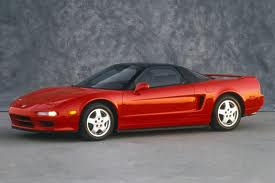
And then, out of nowhere, came the Honda NSX (Acura NSX in the US). A car with precisely the 348 as explicit target, but with in comparison unbeatable everyday usability. A car that from every angle looked absolutely stunning. admittedly with some inspiration from the same 348. And a car that Ayrton Senna at the zenith of his career had actively helped develop, along with a small team of Honda’s most senior engineers and car-builders. Finally a car that became a showcase for Honda’s technical developments at the time.
imagesG4W43SV2Sports-Modulo-Honda-NSX-2[1]

Development and Design

Development on the NSX – New Sportscar eXperimental – had started already in 1984 but as it became clear that the Ferrari 348 would succeed the 328 at the same time as the NSX would launch, the initial ideas of a small, 2 litre V6 engine were abandoned in favour of a more powerful mid-mounted 3 litre engine. The car’s design was fully Japanese, with the bodywork and especially the cabin being inspired by the F16 fighter plane, with the objective of giving the driver a similar visibility as in an F16 from inside. Whether that is true I unfortunately cannot tell you, as my experience of fighter planes is slightly limited, but it was a shame that Honda did not take more inspiration of the F16 or for that matter the 348 to build a slightly more exciting interior, which as it was turned out a bit too close to those Honda family sedans.

The NSX was a showcase of new technologies. Firstly the aluminium monocoque body that saved some 200 kg weight over a standard body. To that came aluminium suspension, electrical power steering and Honda’s VTEC technology, allowing the engine to rev up to 8000 rpm’s with a gorgeous sound. The engine produced 270 bhp until 1997 and 290 thereafter, little by today’s standards but very competitive at the time.

imgresAnd then came Senna, who was very involved in the chassis settings of the car, testing it extensively on various racetracks both in Europe and Asia, and who himself owned three NSXs – at the same time.

Versions

The NSX was produced with very few modifications for a very impressive 15 years, from 1990 until 2005. In total around 18.000 cars were built. Outside of Japan there was only one engine version, available with a 4-gear automatic transmission (the US was an important market after all) or a 5-gear manual (6-gear on later models). In 1995 a targa version was introduced, becoming the only version sold in the US whilst it was available alongside the coupé in Europe. In 2002, the pop-up headlamps were replaced with conventional xenon headlamps.
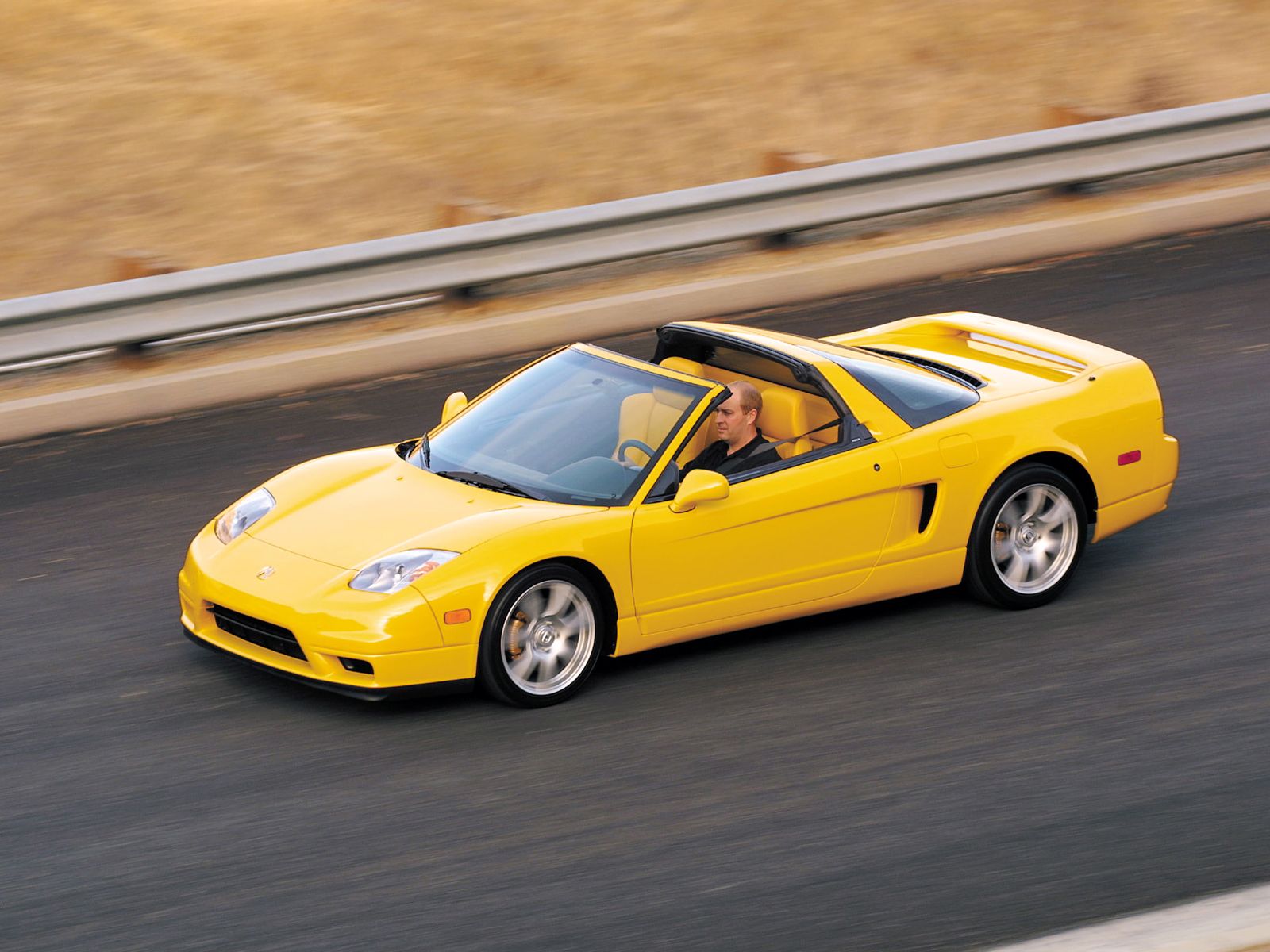
2003 Acura NSX.
2003 Acura NSX.

In Japan the NSX was available in a number of more powerful and lighter versions, but given these cars were never exported and are all left-hand drive, but for a few that were privately imported to the UK, they never made it to Europe.

Driving

Unfortunately I have not (yet!) had the opportunity to drive an NSX. But sitting in one as I did not long ago is quite an experience. The seats are superb, the sitting position is low, visibility is indeed what you could imagine from a plane, and steering wheel and gearshift, although as said looking a bit boring, are perfectly positioned. Apart from those short observations we unfortunately have to rely on external test drives and with very few exceptions, all of these, both then and now, were very positive. The NSX handles like a true supercar from the time, with excellent balance and a chassis and suspension rigid enough to enable very good track times (thank Senna for that!). At its limit the mid-mounted engine cam apparently lead to sudden oversteer, but you would really need a race track to notice.

NSX InteriorUnfortunately a slightly boring interior, compared to the rest!

Owning

The NSX is a Honda, which is really not bad when it comes to owning one. Servicing is marginally more expensive than for a standard Honda but cost-wise has nothing to do with anything from Maranello. Insurance is quite cheap as well, and reliability is superb. But above all, Honda made a point of making a car that was as good as the 348 but easy enough to be used as an everyday car and as per reports, that is precisely the case. In other words a perfectly sensible choice as second car (or third, or fourth…)!

Which one?

Tthe first problem you run into when deciding on an NSX is to find one. The offer is very limited indeed, and finding a later version (after 1995-1996) is practically impossible. Currently there are around 10 cars available in Germany and about as many in Switzerland. In Sweden there is right now only one car on the market.

Clearly you will want to go for the manual version, as a 4-gear automatic can never do the car justice. In terms of colour, chances are you will have to settle on red or possibly black, anything else is very hard to find. There is currently no targa model on the market in the countries mentioned, but even if you find one it is not necessarily the version to go for, as the targa construction added weight to the nimble NSX and also reduced the much-praised chassis rigidity. Finally, apart from a Momo steering wheel that some cars have fitted along with larger wheels (which do the car justice!), don’t go for a transformed one with body kit or gullwing doors, those are neither good for resale value, nor for your image.

If you find the right car, the odds are that its owner has treated it well and remedied the very few shortcomings of the original construction, but if not these are anyway not costly (they notably include electrical windows getting very slow with age, and some engine bearings).

Interestingly, although steadily rising, NSX prices have not really taken off yet. You can find a good car for around 40′ EUR / 40′ CHF with less than 100.000 kms, a price that given the scarcity of cars can be expected to remain very steady if not increase over coming years.

So what more could you ask for? A supercar from the swinging 80’s, designed after an F16, developed by Ayrton Senna, free of problems and marginally more expensive than an Accord to service? Sign me up!

acura-nsx-honda-acura-honda-2652623-480x320[1]

The greatest Porsche bargain of all times!

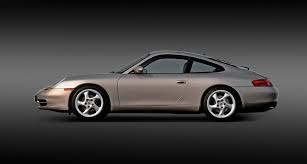
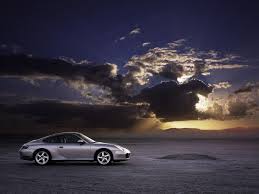
imagesOur new heading The Thrill of Owning is about cars that are not only a thrill to drive, either because they are very good value, or because their future value can be expected to hold up very well, alternatively even rise. One car that firmly ranges in the first of those categories is the Porsche 996, produced between 1997 and 2006 as the successor of the fabulous 993. Looking at the classifieds in different countries today, early rear-wheel drive 996 Carreras with less than 100.000 kms on the clock can be had for around 20.000 CHF/EUR. As anyone who has driven a 996 knows, that is a true steal and there is clear reason to believe they will never be cheaper!

History

Most readers of this blog will be familiar with the 996 so we’ll keep it short. The new model was the 993’s successor but and in many aspects a new car – larger, roomier, more comfortable and far more practical than the old one. It was also Porsche’s first water-cooled, six-cylinder boxer engine, something that didn’t go down well with the 911 purists. For slightly more flexible owners, it did present several advantages (notably that of cheaper servicing) but more importantly, it was something that had become necessary as certain technological developments and new emission regulations were not compatible with the air-cooled boxer.

images

The other thing that didn’t go down well with the purists were the headlights. The Boxster had been launched one year earlier and some cost-saving genius in the marketing department came up with the not-so brilliant idea of fitting headlights in the same layout as on the Boxster to the 996. This is something that has haunted the car ever since and is today given as the main reason for the poor secondary value. We agree – the headlights are not pretty and especially on the Mk1 version until 2002 they are downright ugly. But we are talking about a pair of headlights, and as long as they light up the road in front of you when you are driving, that is about as much thought as you should given them.

Versions

imgresimages

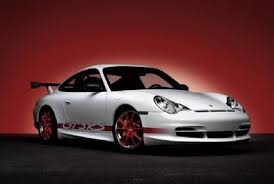
The 996 was available as coupé (Carrera) and convertible in 2- and 4-wheel drive versions. Standard output was 300 hp (320 hp from 2002). The four-wheel drive Turbo (above right) was launched in -00 with 420 hp, increasing to 450 hp in the Turbo S from -05, as coupé or a very fast hair dryer. Further versions included the more hardcore, rear-wheel drive GT3 (above left) and subsequent GT 2 with up to 483 hp.

Owning

images

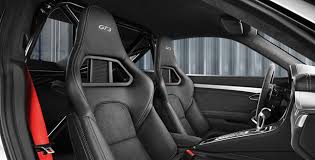
As some of you know, my fellow blogger Sven is a 911 aficionado, having owned both a Mk2 996 Carrera (with performance kit, as he is keen to point out…) and a Mk1  GT3 Clubsport (pictured right). He loved them both and praises the practicality of the “standard” 996 that he used as an everyday car. This is not something that is recommended with the hardcore driving machine GT3 CS, of it is becoming increasingly difficult to find a low-mileage one in good condition.

Which one to get?

The real bargains are the low-mileage Mk1 996’s, that even well-equipped will be yours from around 18-20′ CHF/EUR with less than 100′ kms. Many 911 drivers praise the 2-wheel drive version as a bit more agile than the 4-wheel drive, so if you have money to spare, rather put it on a cabrio if that is your thing, or on a Mk2 version, which both start at around 25′ CHF/EUR. Whether to go for the 6-gear manual or tiptronic is a matter of taste but the manual difficult to fault.

Looking at Turbos and GT3’s, they both start at around 45-50′ CHF/EUR, again for sub-100′ kms cars, and come roughly at the same price even if the cars are radically different – whereas the Turbo is comparable to the standard 996 in practicality, the GT3, standard or CS, is a pure driving machine. In terms of future value the GT3 is probably the way to go, especially the GT3 CS (if you can find one, that is…).

images

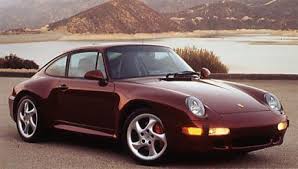
To put these prices somewhat in perspective, a comparable 993 (i.e. the previous, last air-cooled version, pictured left) in standard version costs about 3 times more than a standard 996, starting at 60′ CHF/EUR. The 993 is a fabulous car, but it is not 3 times better than a 996.

images

Whether the early 996’s will also start to see their value raise is difficult to say, notably given the quite large number of cars produced. But there is clearly reason to believe they will never be cheaper than today. In terms of driving and value for money, you could argue it is one of the best deals on the market, and one that is very hard to resist!

Lancia Rally Heaven

As a small addition to my recent Thrill of Owning post on the Lancia Delta Integrale where I briefly mentioned Lancia’s rally tradition, I feel I have to share this 16-minute video with you as it basically sums that up, featuring a very lucky Chris Harris (motor journalist and a hot contender for the title “the guy with the best job in the world”) on the passenger seat with Markku Alén, Juha Kankkunen and Paolo Andreucci behind the wheels. If you have the least bit of petrol in your blood, this risks compromising your work afternoon quite heavily…

Next to the driving and the sounds, these rally legends’ not-so-legendary English is also highly entertaining, as is Paolo Andreucci’s intensive tongue work whilst driving the Lancia 037, the brand’s last rear-wheel drive rally car that clinched the world title in 1983.

Enjoy – and Happy Easter!

The Thrill of Owning presents: Lancia Delta HF Integrale

Welcome to the Thrill of Owning, the new heading on our blog that at regular intervals (ideally once a month, but please don’t hold us too strictly to it…) will present cars that are not only a thrill to drive but also somewhat of a thrill to own, in the sense that their value has not yet shot through the rough and will not be halved in the coming years. Rather we try to present cars that have yet to take off and in the best of cases, may start to gain in value over time. The main reason for considering them should however be the same reason as reading this blog – that they are a thrill to drive!

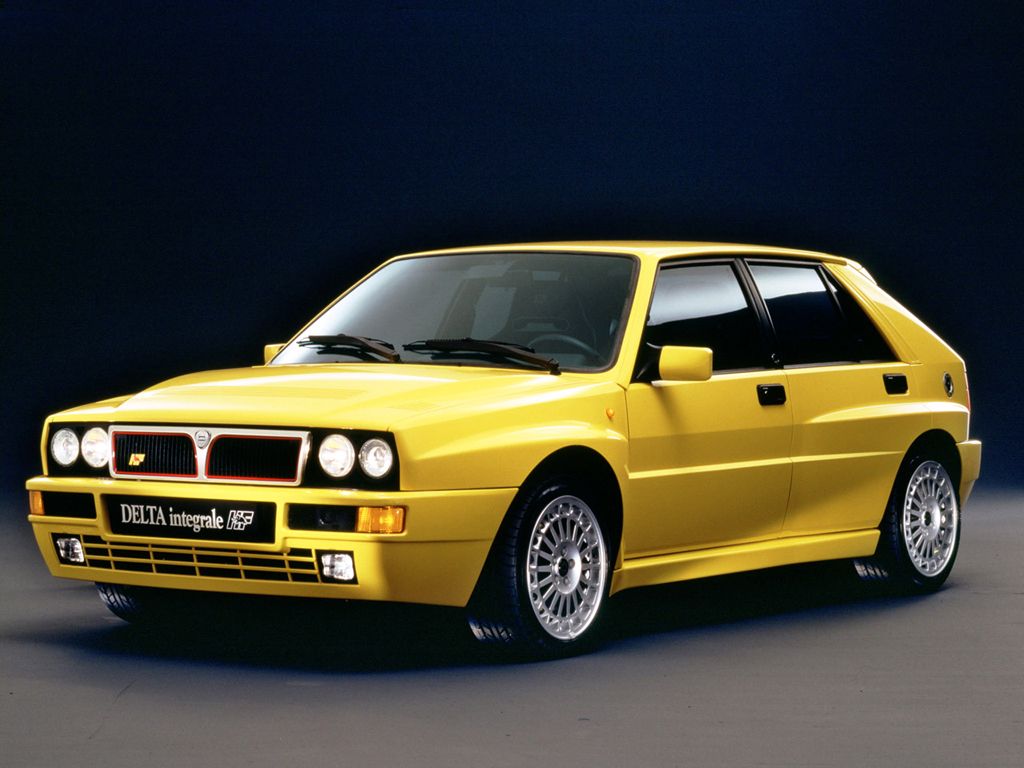
Obviously you need to kick of a new section in style, and we do so with a car that no one with the slightest motoring interest born in the late 60’s or 70’s can have missed: the legendary Lancia Delta Integrale. Not because it’s pretty. Not because it, magically, has better build quality than any other Italian car from the 80’s. No – quite simply for the reason best expressed by Evo, the bible of this blog: driving-wise, it’s “one of the finest cars ever built”. And as if that was not enough, the last versions of the Integrale were even called just that – EVO (short for Evoluzione).

images

History
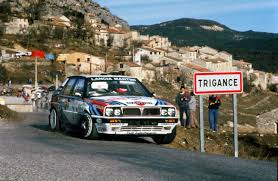
The Integrale dates back to the family hatchback Lancia Delta, launched in 1979. Lancia had been established on the rally scene since the 50’s and was at the time racing the legendary Stratos (that is one car that price-wise has already shot through the roof!) and Beta. The launch of the Audi Quattro in -81 however changed the rules of the game, demonstrating the enormous advantages of four-wheel drive. Both the Stratos and Beta were rear-wheel drive cars, as was the 037, which was based on components of the other two but still managed to clinch the world title in 1983. That was however an exception as it had become clear that Lancia needed a 4wd car to remain competitive on the rally scene. The solution was brought by the Delta that Abarth helped fit a 4-wheel drive system on. The Integrale had thus been launched and it went straight on to win the world championship the first year it took part in 1987, and then continued doing so the five following years until 1992, mostly with Juha Kankkunen behind the wheel.

images-1
Not your typical rally car…

The body of the Delta Integrale started getting fatter already in 1988 to accommodate 4-wheel drive, larger wheels and more advanced suspension components than on the original Delta, and it grew even further in 1991 with the launch of the EVO-series. Production stopped in January 1994 and still today, with six consecutive world rally titles between 1987 and 1992, it is the most successful rally car in history.

Engine – chassis – body
All Integrales share the same 4-cylinder, 1995 cm3 turbo engine that in street versions produced between 185 and 215 hp depending on turbo pressure, with a classical, 80s ketchup-bottle like delay in power delivery. Torque for all cars was slightly above 300 Nm. All versions were 4-wheel drive with a 47/53 front/rear split, contributing to their incredible balance.

lancia__delta_hf_integrale_evo_2__1994_3_lgw
A well-filled engine room – the stabilizing bar only came with the late Evo models

When you stand in front of an Integrale it becomes clear how small it is, compared to modern cars – only 3.90 metres long. At the same time it’s probably the most practical rally car that was ever built, with four doors and a very decent boot. Driving it softly you may even be able to fool your better half into thinking you have bought a normal hatchback, although you may struggle to explain why you went for a not-so-pretty 80’s model… The chassis and suspension saw a constant evolution over the cars lifetime and chassis-wise it is clear that the Evo models are the most advanced. All Integrales are however very well balanced and will cover all the daily needs of middle-aged men with rally memories from their youth.

delta-hf-integrale-evo-2-2
3.90 metres of pure driving pleasure!

The first Integrale in 1987 was 8v, and that engine was produced until 1991 although the 16v was launched already in 1989. This was linked to the introduction of catalyzers at this time, which the 16v version didn’t receive until 1993. The 16v engine is slightly more powerful, developing between 200 and 215 hp depending on year of production, whereas the 8v produced 177 – 185 hp. Torque was however roughly the same in all versions.

On looks, the two Evo versions (Evo 1 (1991-1992 and Evo 2 (1993-1994) are as good a tribute to the 80’s as you will find, and if you are less into the large shoulders and rolled-up sleeves, you may prefer the earlier Integrale versions.

images-3maxresdefault        A rally and a civil Evo on the roads they are made for!

To drive
A few years back I had the opportunity to drive a 16v Integrale Evo 1, unfortunately not for as long as I would have liked to. It was not clear to me at the time what classic this car was about to become, but to this day I remember how incredibly well-balanced it felt and how the power delivery was vastly different from other high-pressure turbo cars I had then experienced (including my father’s Saab 900 Turbo 16v Aero, where you could easily loose the rear of in third gear if there was a bit of gravel on the road)… This was a car that really made you fell like Juha Kankkunen in those fabulous Recaro seats and with one of the most direct stearings I have experienced. As for the rest, in terms of build quality it was pretty much the same feeling as in an 80’s Fiat, but what did I care?

773659637088397123
Fabulous Recaro seats, and an equally fabulous Momo steering wheel!

Which one?
Given the large similarities between the models (even though the Evos 1 and 2 were more technically advanced, especially suspension-wise), the critical point is really to find a good – and original – one. This is at heart a rally car and many have been driven as such, so the challenge is to find one with low mileage, in good shape and ideally with an engine that has not been modified or if so, then only by someone who knows what he’s doing.

The best part is yet to come: even a very good Integrale or Evo will not ruin you, neither in price, nor in maintenance given its relative simplicity. Expect to pay between 20.000 – 30.000 EUR for a good to top Integrale and slightly more for an Evo. The offer is clearly limited, but there are quite a few cars in Germany in decent condition and around half a dozen in Switzerland. An insider’s tip can also be to try and find a car re-imported from Japan, for the simple reason that they have mostly been driven carefully (and by the way, all Integrales were left-hand drive). In terms of equipment there really wasn’t much on the list and that will certainly not be the main concern in buying this car. Some Integrales are fitted with leather (Recaro) seats as an option to the alcantara ones, but the latter are actually to prefer, giving better grip. The optional air condition can be nice if it still cools, but otherwise opening the window is a perfectly good option – it won’t really affect the noise level…

The German Auto Bild Klassik price catalogue, that we use as benchmark for this section, has the Integrales in the same price ranges given above. Price evolution has so far been limited but the trend is clearly pointing upwards. There is good reason to think it will continue to do so, but the biggest smile will be put on your face by driving one of these babies and remember was it was like when the driver, not the ESP, was actually in charge!

For further Integrale impressions I recommend the following clips, featuring first Juha Kankkunen gives driving lessons on an Integrale in 1992 (imagine the crowed standing as close to the cars today!), and then Evo founder Harry Metcalfe showing and driving his fabulous Integrale Evo II.

Have you owned or driven an Integrale? Have you thought about getting one? Do please let us know over the comments field!

The Thrill of Driving launches the Thrill of Owning!

As a reader of this blog it’s probably safe to assume that much like Sven and me, you are something of a petrolhead. Should that indeed be the case, chances are also that you have discovered that this common hobby of ours is oh so fun, but can also be oh so costly after running costs and especially depreciation haven taken their toll. But does that have to be?

With the introduction of our new section The Thrill of Owning, we wish to present a selection of fun to drive cars that may cost money to run, but should be quite safe in terms of depreciation – or even showing some nice appreciation over the coming years.

Now anyone who has seen a car auction the last years in our world of zero interest and hype for real assets knows that certain automobiles have reached truly mind-boggling levels. These are not the type of cars this section will be dedicated to.  Fortunately however, there are lot of beautifully fun cars out there that can still be yours for reasonable money, quite often to be found in the young timer decades of the 80’s and 90’s. And even though we believe these will hold their value well over the coming years, there is absolutely no guarantee they will make you rich – other than in driving experience!

Our ambition is to present around one car per month, including some history, why we believe it fits this section, a couple of objects from the classifieds and in as many cases as possible, a recent test drive to support it. We hope these posts can lead to interesting discussions as well as stories of previous experiences, so stay tuned!