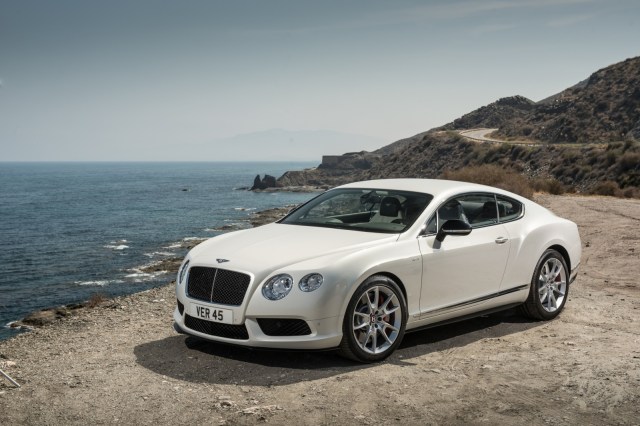
Brand new Bentley Bentayga shines in Zurich

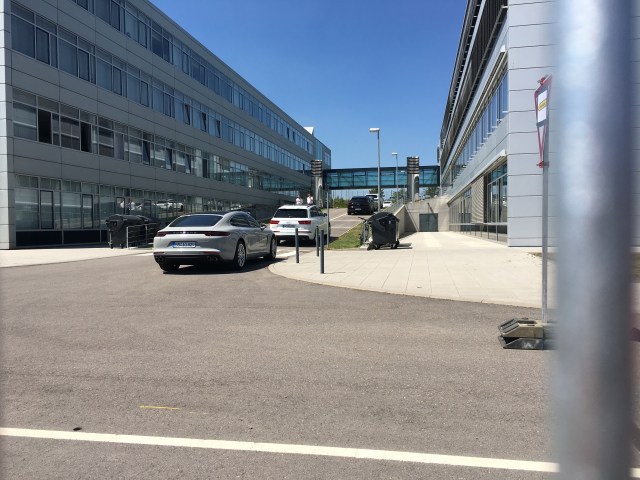
This afternoon I saw the first “live” Bentley Bentayga in downtown Zurich. At prices from EUR 250.000 and upwards (with no upper limit…), the Bentayga is no doubt the world’s most exclusive, powerful (W12, 608hp) and probably also most comfortable SUV. Let’s say that whether it is also the prettiest is up for debate. The front is very… imposing, the rear has a clear resemblance to the new Mini Clubman. Sorry Bentley! But for the selected few, I’m sure it will be a ride, although not necessarily a drive, to enjoy!


Morgan Threewheeler – when less is more

Yesterday I went to buy a second-hand lawnmower in the countryside near Zurich. Not much excitement in that you will think and indeed, neither did I, until I made it to the address, followed the seller Markus to the barn where he had stored the mower, and discovered next to it a shining black Morgan Threewheeler, one of the most original and exotic cars of these last years. Markus was obviously very happy to find a soulmate and happily spent the next hour with yours truly, talking about cars in general and Threewheelers in particular, and then to round it off took me for a short ride in this strange creation, something that was a truly unique experience!

Threewheeler 1

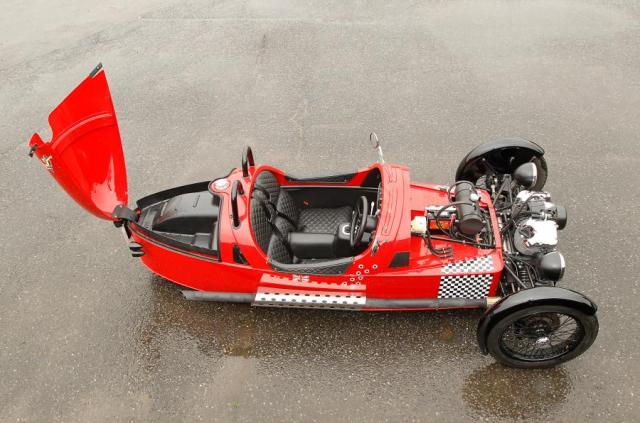
Morgan started producing the modern Threewheeler five years ago, in 2011. The car bears some resemblance to the original Threwheeler that was in production for more than 40 years until 1952. Hand-built around a wooden frame and weighing only 525 kgs, as the name suggests the car stands on three large and narrow wheels, and another (of many) peculiar features is that the engine, a two-cylinder Harley Davidson delivering 82 hp, is placed at the front of the car, fully exposed. 82 hp from two cylinders may not sound like much, but as I was soon to discover, in this car it is! If however you want even more power, it is apparently quite easy to trim it up towards 135 hp. Behind the engine, under the bonnet, you will find the oil tank and the battery, and behind the seats, the tank sits next to it the tiniest of luggage spaces that will accommodate a rain jacket, which is pretty good since the car has absolutely no roof and the only cover supplied is a tonneau.

Threewheeler 2
You are looking at the full boot space in the back, next to the tank…

The seating position is extremely low and narrow, as is space around the pedals, so you’d better be friends with your passenger beforehand, and the passenger had better not be a wrestler. If you try you will easily be able to touch the ground with your outer arm, an exercise that should only be tried out from the passenger side as the exhaust pipe runs alongside the chassis on the driver’s side. The pedals can be adjusted in length, which the seats can’t, but you can only do so with tools and it is a reasonably complicated exercise. Markus has replaced the original steering wheel with a smaller one, as the original wheel does not really leave enough space for a man of average length…

Before we squeeze in next to each other, Markus pushes the start button upon which the most wonderful, blurring sound flows from the exhaust. For obvious reasons it is more reminiscent of a Harley than a car, and the Threewheeler is actually registered as a motorbike in Switzerland, although you are allowed to drive it on a car permit as well. I squeezed in on the passenger seat next to my new best friend, rubbing shoulders with him as we took off among Swiss hills.

Threewheeler interior
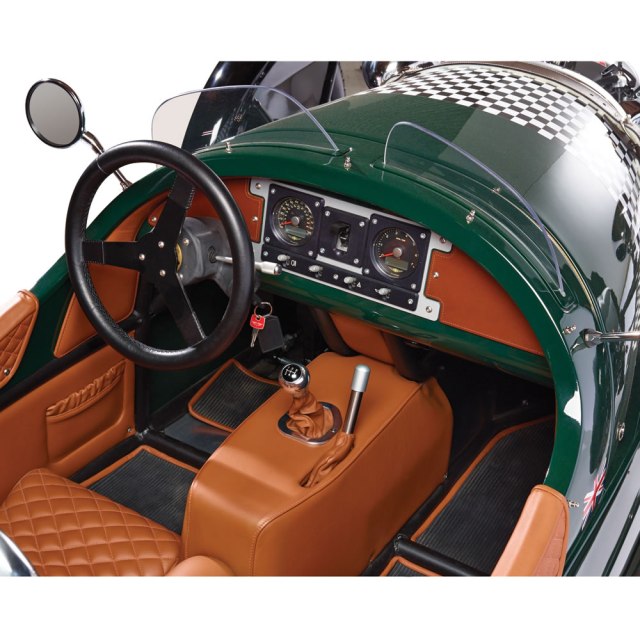
A beautiful, but narrow interior, with the handbrake right next to the gear lever. 


The standard Threewheeler does 0-100 in 6 seconds and the last thing you will wish for (at least as a passenger) is more power, since the extremely low seating position gives a very intense impression of speed – and everything else happening around you. The sound is gorgeous, there is an extreme feeling of lightness about the whole car, which actually feels like something of a hybrid between a bike and a car, obviously due to the size of the wheels and the single rear wheel. Especially quickly driven corners are quite hairy and speaking of corners, the short hand brake sits just next to the gear change. When I ask Markus about this he says it comes from rally sport so that you can hang out the rear around corners. Apparently he has a few friends doing this on alpine roads but says he is to old for it. “But they’re also quite crazy” he adds, something I find quite easy to believe from my squeezed passenger seat.

Markus bought his Threewheeler second-hand a year ago and says build quality has been so-so. As he has discovered, his car, although being a 2013 make, consists of parts both from 2011 and 2012, and he has had some pretty bad – and costly – mechanical failures. Each car is truly individual as tuning and trimming possibilities are limitless, and some mechanical details need to be modified if you do not want the car to break down straight away. But Markus says he wouldn’t hesitate buying it again and again and again, as he has never drive anything like it, neither car nor bike – of which a few were also parked in the same barn.

Threewheeler attention
You will never go unnoticed, irrespective the level of personalizaiton…

There is nothing practical about the Threewheeler, it is a pure toy best enjoyed alone on dry roads near a mountain somewhere. It will set you back around 40.000 EUR and it may be a pretty good investment, as quantities produced are small (no reliable number can’t be found but according to Markus around 30 have been sold in Switzerland, and this is a country where there are a lot of expensive toys with little practicality…). But above all, it is a unique driving experience and most probably a buy you will never regret!


Porsche 911 4s – striving for perfection

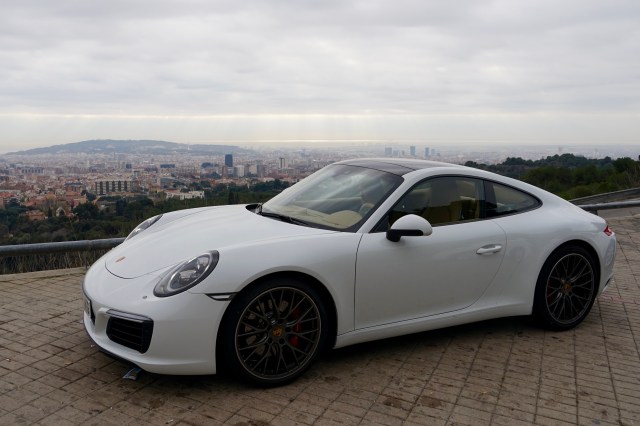
I recently had the opportunity of spending a full Sunday morning on Swiss country roads with as only companion a Porsche 911 4S from 2015, and I can definitely remember worse Sunday mornings. The truth is that I struggle more to remember better ones… There are a lot of Porsche aficionados among the readers of this blog with far greater experience of the Zuffenhausen greats than I do (first and foremost obviously my fellow blogger Sven), but to those of you not yet familiar with the latest 911 I’d thought I’d share a few impressions.

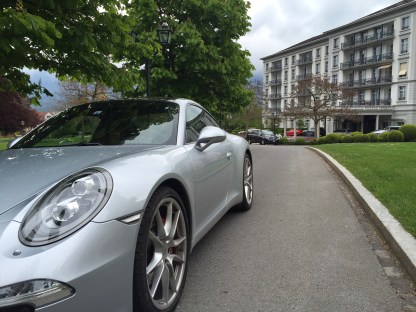
“My” car was911 4S a silver-coloured coupé with black interior, a panoramic roof and the PDK gearbox. The power output was the usual 420 hp, bringing the car to 100 km/h in around 4 seconds. Obviously nowadays the boxer-six is turbo-charged even in the version without “turbo” in the name, and sure, the character of the engine is different to a naturally-aspirated six. If you look for it you will feel when the turbo(s) kick in, however power delivery remains very smooth and given the clear advantages in torque, now up to a max of 500 Nm, at least I fail to see any disadvantages with the new engine generation. That also has to do with the three buttons on the center console.

In Comfort mode, the 911 is the perfect long-haul companion, transporting two people and their luggage in utter comfort an sounding so civilized that you could trick quite a few people as to what it is really capable of. That all changes in Sport mode as the tone becomes much rawer, the suspension firms up and the fantastic gearbox hangs on to each gear longer. Had this been my car, this is probably the mode I would leave it in for everyday use. The last option is Sport Plus which, if Porsche had been slightly less serious and a bit more Tesla-like, could have been renamed something like AHBL, All Hell Breaks Loose. The mode certainly works best on track but let’s just say the sound is tremendous, the suspension is….firm and the gearbox hangs to each gear that together with the sound seem to tell you “come on, is that all you have”? Given the car was still on winter tires and the outside temperature was five degrees on a humid country road, it felt safest to answer that question by “yes, today it actually is”, but there is no doubt in my mind that with a set of sport or track tires and an appropriate piece of tarmac, this is a very potent car. So even sound-wise the new engine delivers a very convincing case.

Do I want one? Oh yes. Would this be my choice? Not certain. Although the four-wheel drive version is obviously more versatile, I remember a very inspiring drive a couple of years ago in a two-wheel drive car, so I would clearly want to try that out before deciding as it least as I remember it, it felt even more playful. In terms of power it would also be interesting to try the more potent turbo version (which would then again be four-wheel drive) – that is, if money was no issue. But sure, if someone threw a 911 4S on me, I would not mind. Actually not at all…


Filippo Pignatti – CEO of The Classic Car Fund

I meet up with Filippo Pignatti in a former Porsche dealership on the outskirts of Zurich that he, together with two other petrol heads, has transformed into a spectacular car IMG_1720showroom with exactly the right pit lane smell, featuring a selection of the cars in The Classic Car Fund (TCCF). This is also the HQ of the TCCF and where Filippo has his office. Italian and from Modena (where else?) by birth, he is a true European nowadays based in Switzerland where next to running a family office business he set up the TCCF five years ago, driven both by a passion for cars and for uncorrelated assets.

As Filippo tells me over an excellent espresso in the pit bar that is one part of the showroom, and as most readers of this blog know, well selected classic cars have provided better returns to investors over the last decade than most traditional and alternative assetIMG_1719 classes, including things such as art, wines and gold. This is partly driven by the falling interest rates since the financial crisis, but also by baby boomers becoming solvent and realizing their childhood dreams and emerging market buyers that were not there a decade ago. “The Chinese have so far only been able to own classic cars abroad,” Filippo explains, “but that is about to change and that will create even greater demand in the future”.
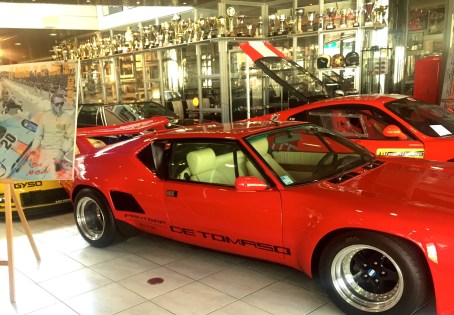
The philosophy of the The Classic Car Fund is simple; buy well-selected cars at attractive prices following a thorough evaluation by an independent expert, and sell them later at a profit. The fund is not focused on any specific make or production year, but the emphasis is clearly on sports cars from various periods, especially Italian and quite a few of them from Filippo’s home city Modena. Holding periods vary vastly but the fund does not fall in love with its investments. Some cars have enabled the fund to realize a healthy double-digit profit in as little as three months, others will remain in the fund for up to a few years.

foto 7
An MG K3 Magnette 1933, owned by the fund for 19 months and then sold at a net profit of 25.3%

As always it is easy to be clever with hindsight and arguably you could have bought most Ferraris from the 90’s and earlier in these last years and realized a good profit. But it’s not just about finding the right model. “It has to be the right car”, Filippo explains, citing factors such as early production years, small, limited series, or, slightly surprisingly, famous previous owners. This last point explains two satellite positions in the fund’s current portfolio, a Maserati Quattroporte once owned by Elton John, and a fully-loaded and personalized Range Rover Sport initially ordered by David Beckham. “Obviously buying a famous person’s car brings an additional risk”, says Filippo and hints at the person’s reputation. “Should it come out tomorrow that David Beckham was doped through his whole career, that would not necessarily be good for the value of the fund”. Luckily though, the risks of that happening seem relatively small.

Next to selecting the right cars, the additional challenges of a car fund are the same as with a private car collection, most notably that you need a place to store them that is not only dry and warm but that also allows for regular exercising to avoid the cars being damaged from being immobilized. The TCCF stores its cars in various locations in IMG_1722Switzerland and Italy, and employs mechanics to keep them in shape. Two additional features of the fund further strengthens the link with private collections: subscriptions are permitted in kind, meaning that you can buy into the fund through a car or a car collection, following an evaluation by an independent expert. Ownership passes to the fund but the original owner receives a buyback guarantee at the same price up to two years from the point of purchase. Also, and perhaps of more interest for most, against a small fee, fund investors may borrow and drive the cars in the fund over a day or a weekend. Filippo smiles and says “take the Testarossa in the showroom down to St. Moritz over a weekend. If anyone asks you can truthfully say it’s your car, as it is part of the fund you are an owner of”.

20150310_151240_resized1
A beautiful Fiat Touring Aerodinamica 1939, owned by the Fund for 7 months and then sold for a net profit of 8.3%
IMG_1716
Filippo Pignatti, CEO and fund manager of The Classic Car Fund

In Filippo’s eyes, the tangible nature of the assets in the fund as one of its best guarantees of future value. “If something goes bad or the market turns completely, we can always sell the cars, making sure you do at least get part of your investment back”. He is also the firstto say that this is not something for the core of your portfolio but rather a satellite position. In terms of the current market he does not see any dramatic changes but some signs that it is becoming more selective, meaning greater expertise and competence will be required going forward. He also sees a breaking point relating to the electronic age: “the Testarossa, or Culo largo (large ass) as we call it in Italian, is a mechanical car. the LaFerrari is very complex electronically, which does not necessarily bode well for future values as it gets increasingly old and fragile”.

The Classic Car Fund has been running since 2012 and has provided investors with net returns of 7% on average p.a. after fees without any negative years (as per April, 2016). It shows no correlation to traditional assets and could thus be an interesting addition to a diversified investment portfolio. At its core though, it is really about the passion for cars. Before we shake hands and part, Filippo concludes with some very sensible words. “I always tell people that if you buy a classical car, do so because it is a car you like and that you like driving. After all, that is really what these cars are for”.

For further information on The Classic Car Fund you are welcome to contact me over the blog.

A morning in AMG heaven

For various reasons I had to go and see the Mercedes dealership yesterday where  a year and a half ago I bought our family car, an MB GL 350. The dealer is also what is called an AMG Performance Center, meaning you see more AMG of all kinds than regular MB models. This time he had something up the sleeve for me. There were a couple of cars he felt I should try out. I follow his advice, and boy was I happy that I did!

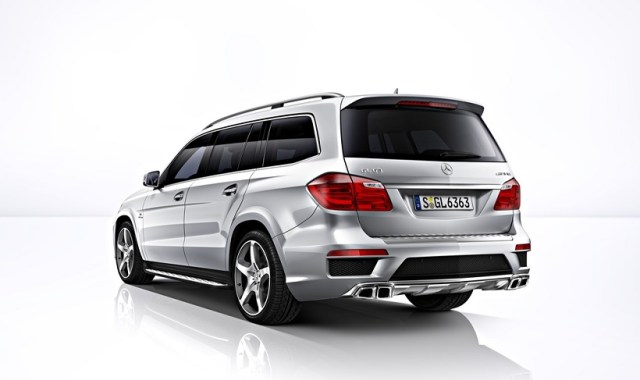
I was first handed the keys to the slightly surreal creature called GL (as from this year GLS) 63 AMG. The boys from Affalterbach never put their hands on the first generation GL, but they did so with the second, starting in 2013. The GL 63 has the same 5.5 litre, double turbo V8 engine as other 63 models, which in the GL develops 557 hp. Now as a reminder, the GL is 5.12 metres long and weighs 2.6 tons, so to make this work in any practical way they have worked quite heavily on (most) other parts as well. Notably the AMG version as standard features MB’s Active Curve System, basically aiming to remove the laws of physics.

2015_Mercedes_GL63_AMG_Rear_2

Put your foot on the break and press the button and you will be greeted with a somewhat subdued but still gorgeous V8 sound of the type we don’t get to hear that often anymore. And when you put the AMG Speedshift in Drive, all hell breaks lose. The beast does 0-100 in 4.5 seconds whilst at the same time, to borrow an expression from Julia Roberts in Pretty Woman “corners like it’s on rails”. It is completely surreal how AMG have succeeded in masking the weight and the size of this machine and transform it to a completely different car. 760 Nm of torque seem to be available at whatever speed and in whatever gear, and acceleration is endless.

Coming back after a test drive including both mountain roads and motorway, I suspect my face featured more of a surprised than a smiling expression, but that was about to change. The dealer now handed me the keys to a sparkling, diamond-white E 63 AMG S Estate featuring lots of goodies, including the AMG Driver’s Package meaning the 250 km/h limitation goes out the window. The S version also means a boost of another 30 hp, so the same V8 engine now produces 585 hp and 800 Nm of torque (and tests conducted on these cars typically indicate a higher power output than that). Without being small, the car still weights more than half a ton less than the GL.

cool1-223

Where the GL exhaust sound at start-up was somewhat subdued, this is nothing but spectacular. The engine blubbers and blows in a way that will put a giant smile on anyone but the heartless and the Greens, and from that point on, that smile will never leave your face. Again, it’s what AMG succeeds at doing in masking the weight that is most impressive. I used to have the same car with a 292 hp V6 and an AMG chassis. That was a great car but it was never a sports car, rather at all times feeling extremely solid – and heavy. This is like driving a completely different car. It feels light, the steering is precise, the breaks have a solid bite and you can literally throw it around corners in a way I would maybe not have done had the dealer been sitting next to me. And then the engine… The reduced weight means a 0-100 time of around 3.5 seconds and an acceleration and torque quite simply blow your mind away, in any gear, at any speed, on any road.

Conclusion? AMG are great guys, but that we already knew. Still, the GL 63 to me is a flawed proposition. At the same time as it is amazing how you can move this thing around, its sheer size means it is not made for it. As I told the dealer, if I could choose between my car with all the AMG goodies and a diesel engine that produces maybe 100 hp more than the current one, that to me would be a better suited engine to this car than the petrol version.

The E 63 S is a completely different story. I know a new E class is on the way, that the AMG Speedshift is not as quick as for example BMW’s double clutch, and that Comand is not the best GPS system on the market. Thing is, I couldn’t care less – and neither will you, because the moment you press that button and floor the pedal, all that goes far, far away. If there was ever one, perfect car, this quite objectively has to be it. Driving pleasure like a track car combined with space for all the family and four-wheel drive to take you to the mountains on the weekends – what could you possibly want more?!? I feel negotiations are about to start….

Mercedes-Benz SLS AMG GT Roadster; (BR 197); Paris 2012

If ever there was a God, he is sitting right below here!

Top Gear Trailer!

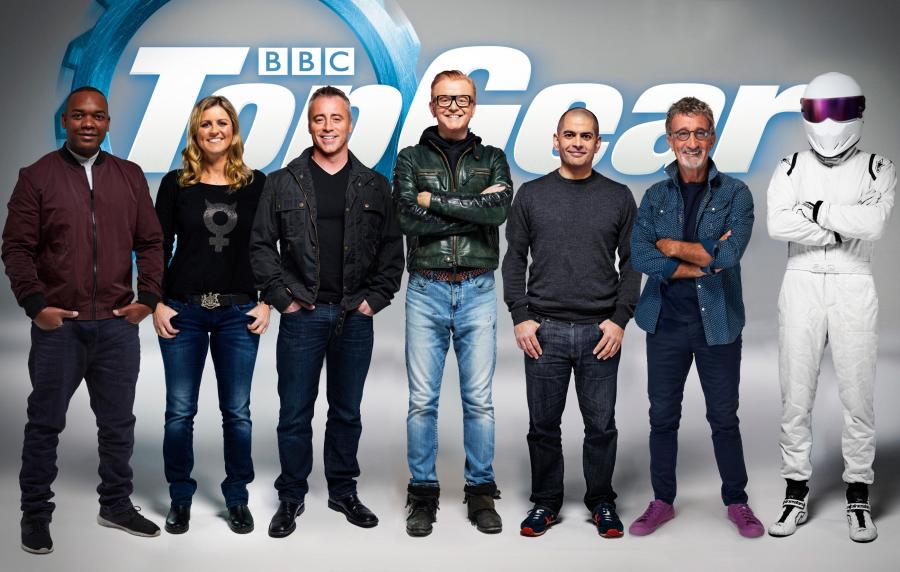
Top Gear has just released the first trailer for the new Top Gear series, starring Chris Evans, Chris Harris, Sabine Schmitz and Matt LeBlanc, among others.

Not sure about whether it will be as good as the old Top Gear with Clarkson, Hammond and May, but I guess we need to give them the benefit of the doubt. Being a fan of Chris Harris I am somewhat hopeful.

It will premier on the BBC in May.

This year’s coolest convertible?

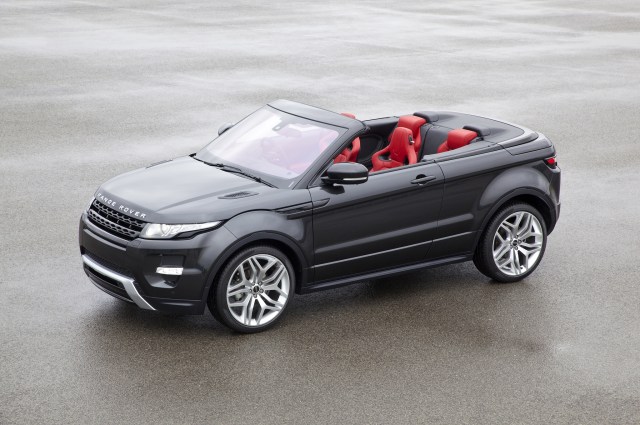
I almost spilled my coffee yesterday sitting behind the wheel on my way into town when I spotted a car I was not even aware of, the newly-launched Range Rover Evoque Convertible! Except for the hard-core Defender and G-Wagen convertibles, Land Rover have thus the first modern SUV convertible and are a clear contestant for the title coolest convertible in 2016! Range-Rover-Evoque-Convertible-Concept

A short visit to supercar heaven!

Tokyo is a city of many sites and wonders, but for us petrol heads, all of these are outclassed by an attraction most normal people aren’t even aware of, namely Bingo Sports, the supercar dealership that is often referred to as maybe the best in the world.

IMG_1588

Started 11 years ago and with two showrooms in Tokyo and Nagoya, Bingo specializes in highly exclusive new and historical supercars and is the official representative in Japan for Pagani. As the very friendly salesman told me, the company sells about as many cars each year outside of Japan as in the country and is specialized on finding supercars worldwide on client request. The current stock of about 40 cars split between Tokyo and Nagoya is one of the most exclusive selections you can find anywhere, easily beating a number of car museums! Given this it is amazing how you can just walk into the showroom and how welcome you feel – but then again, this is Tokyo.

The showroom line-up during my visit included;

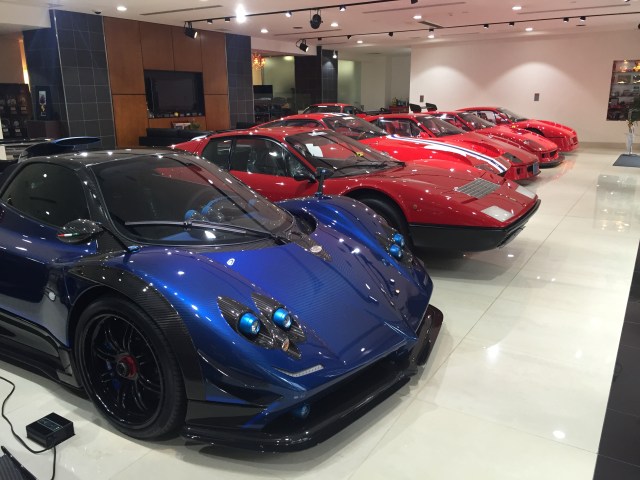
The amazing Pagani Zonda Revolucion, the 800 hp ultimate version of the Zonda released in 2013 and that in 2015 set a new record time for road legal cars on the Nordschleife of an incredible 6.30 mins. Standing in front of this magnificent creation, you first notice the incredible carbon-titanium monocoque thanks to which the car weighs in at only around 1200 kgs. Walking behind it, it is then surprising to see how long the car is, at least half a meter longer than the regular Zonda standing next to it, which in comparison looks almost ordinary. Rarely has standing next to a car been so impressive.

IMG_1588

To the right of the “normal” Zonda pictured above is a Ferrari 365BB, of which only 387 were built in 1973, and then one of the showroom’s two Ferrari 365 GTB/4 “Daytona” in Competizione finish. As if that was not enough, the following three cars are among of the most exotic historical Ferraris you can imagine: the Ferrari F40, the last of only twenty F40 LMs that were ever built and finally a 288 GT Evoluzione, a 600 hp group B race car of which only five were built between 1984 and 1986, and the car that was the F40’s predecessor.

IMG_1589

All these, as well as Bingo’s other cars, redefine the notion of “mint” condition – they all look completely new (and to be fair, none of them have been extensively driven). As for the prices, it is as the saying was for Rolls Royce back in the days: if you need to ask, you cannot afford it. But looking is free, so if ever you are in Tokyo, whatever you do, don’t miss Bingo! More info can be found here.


The clean cars of Tokyo

This week finds me in Tokyo, a city where you can see many interesting things but dirty cars is not one of them. As a Japanese friend explained to me on my last visit, any Japanese man with self-respect washes his car when he comes home – every day.

Yesterday it rained, and a couple of hours after the rain stops, these four policemen could be seen polishing their cars by hand before the next call to duty (which, given the low level of criminality in Japan could arguably be after the next rainy day)…

Polisbilar

TEST DRIVE: The new 911 Carrera S – ruined by the turbo engine?

On Christmas Eve (!), during a couple of hours, I test drove the brand new turbocharged Porsche 911 Carrera S, i.e. the 2nd iteration of the current 991 generation.

The main change, compared to the 1st generation 991, is the all new 3.0-liter twin-turbo engine. Adding turbos to the standard Carrera and Carrera S models is the biggest change in the history of the 911, since the controversial (at the time) introduction of water cooling in the late 90s.

DSC05101

How is the new turbocharged engine?

Let’s get straight to the point, does the turbocharged engine transform the car? If so, how? Does it ruin the character of the car? How does it sound? Continue reading “TEST DRIVE: The new 911 Carrera S – ruined by the turbo engine?”

What’s on in Geneva this year

The Geneva auto show, or Salon de l’Automobile as it is officially called, opened its doors on Thursday this week. As usual the exhibition is a mixture of practical & crazy, ecological & not-so, large brands & small outfits. There are no true revelations in the line-up this year, but below is a small pick of some of the sportier new cars presented. As always, best is to go see for yourself, the Salon is open until 13 March and details can be found on http://www.salon-auto.ch.

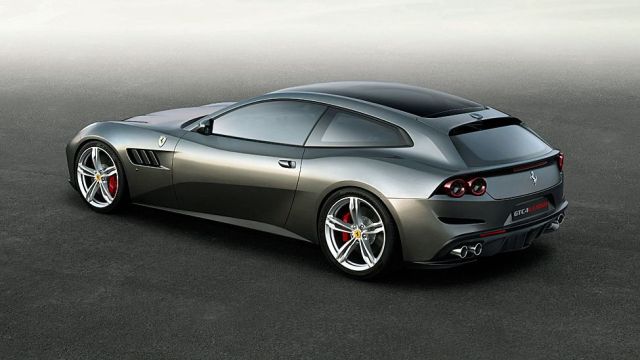
Ferrari GTC4 Lusso

Ferrari introduces the successor to its “family estate” FF, the GTC4 Lusso. The V12 has been boosted to 690 hp vs 660 in the FF and for the first time in a Ferrari introduces four-wheel steering. The bodywork has been slightly face-lifted, as have the electronics and the infotainment system.

ferrari-gtc4-lusso

Porsche 718 Boxster S

Porsche introduces its new entry car, the 718, replacing the old Boxster, meaning it’s bye-bye to the old charismatic 6-cylinder and hello to a new 4-cylinder turbo engine producing 350 hp and 420 Nm. The chassis has been improved, as has the assistance system PSM that now has a Sport mode – and can still be turned off…

ba7e5f3f-9408-4c52-8b39-6895eaf59be2_teaser_original_720x1_5

Lamborghini Centenario

Celebrating the 100th birthday of Lamborghini’s founder Ferruccio Lamborghini, the Centenario is one of the superstars of this year’s Salon. 20 coupés and 20 convertibles will be produced, meaning 40 lucky owners will be able to enjoy 770 hp out of the sublime V12, bringing the car to 100 in 2.4 seconds.

lamborghini-Veneno-Roadster

Jaguar F-PACE – the prettiest SUV in town?

Unfortunately I was not able to make it to the F-PACE launch event in Barcelona last week. But, fortunately, the Jaguar dealer around the corner from my office has a Jaguar F-PACE in the showroom.

I must say that the F-PACE is a very beautiful car, from the outside as well as from the inside.

It is slightly bigger (5 cm) than our Porsche Macan, but still smaller than big SUV:s. Rear seat space and boot space is marginally bigger than in the Macan.

The F-PACE is a very desirable car, and with the 340hp or 380hp supercharged petrol V6 (same as in the F-TYPE) it should be rather quick. The only problem is that for that kind of money I think I’d rather upgrade to a Macan GTS…

Versió 2

The Thrill of…. what?

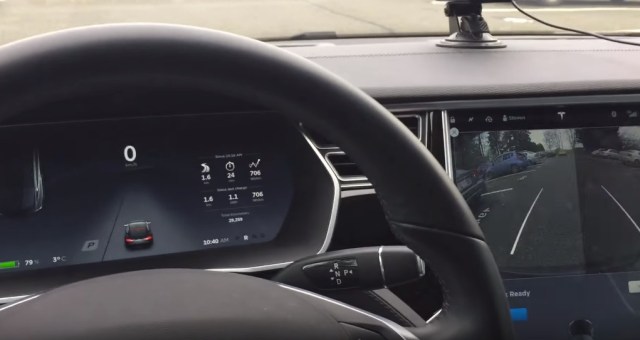
This morning I got a mail from Tesla claiming they haven’t seen me for a while and that a lot has happened since my last visit, and to illustrate that they included this video under the heading “Going to work stress-free”:

Surely like many others, my initial reaction when watching it was “wow, this is really cool!”. But then, thinking about it again, is this really where we want to go? Sitting behind the wheel with tipping the indicator being the only action required? Where is the thrill in that? Sure, you can turn off the thing and take the wheel yourself, but I fear the day solutions like this become technically possible and reliable, big brother will see to it that your days of proper driving will quickly be over.

Better therefore to enjoy it while it lasts – and to do that, Tesla provides an excellent solution with the Ludicrous Mode of the P90D – now that’s a thrill!

The Thrill of Owning – improve your Karma!

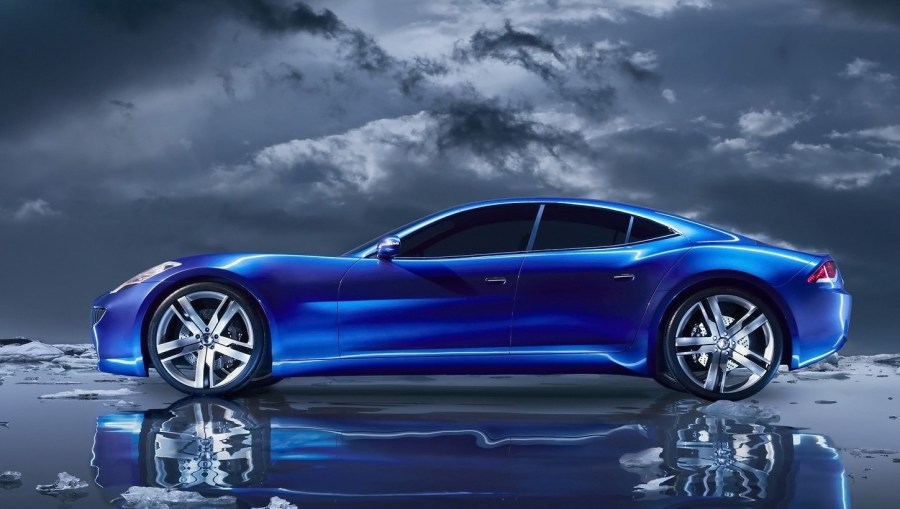
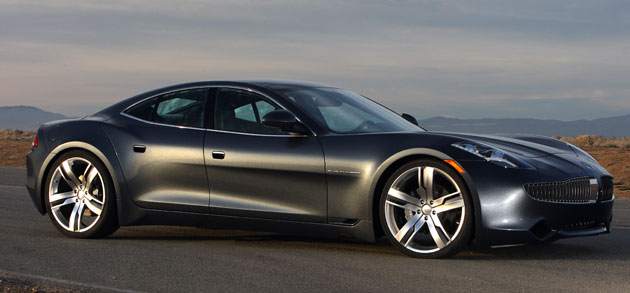
You know all those times when you have seen the early designs of a car that looks spectacular, but when it makes it into production some time later, somehow the engineers have managed to remove every ounce of excitement the designers had imagined, making it look nothing like the picture above? There are exceptions of course. I remember the first time I saw an Aston Martin DB9 some 10 years ago, that looked pretty much like it came straight off the designer’s table. Shortly thereafter I learnt that the DB9 had partly been designed by a Dane named Henrik Fisker. A few years later the same Fisker, who had previously been at BMW designing the Z8, left Aston Martin. He went on to work on the early design of other car beauties such as the Artega and Tesla Model S, and then in 2007 together with a German partner founded Fisker Automobile, the company that two years later presented the Fisker Karma – a car often referred to as one of the most beautiful automobiles ever and a testimony to what cars could look like if all car brands hat designers running the show!

karma-desert-630

The Karma is a spectacular so-called plug-in hybrid, launched in 2011 and produced at the Valmet factory in Finland. It is powered by two 150 kW-engines producing a total of 408 hp, with the energy being delivered through a 175 kW generator, in turn powered by a 4-cylinder petrol engine. This means that the car has a range in fully electrical mode of 80 kms (Stealth Mode in Fisker-language), or over 400 kms in combined mode. The latter allows for a top speed of 200 km/h and a 0-100 km/h time of under 6 seconds.
imgresThe engines are however only half the story with a Karma. Apart from its sheer beauty the whole car is a high-tech construction. The 5-metre long and 2-metre wide aluminium body’s roof integrates a 120 kW solar panel that in sunny conditions helps extend the electrical range, alternatively can be used as park heating.  The interior has carpets made of recycled PET bottles, and all leather and wood used in the beautiful finished cabin has been recycled. As you Karma interiorwould suspect however, much like the Tesla, at 2.5 tons there is nothing high-tech about the car’s weight. But at least, again like the Tesla, the batteries are positioned low, hereby improving the car’s stability and handling.

The Karma generally received positive reviews and the press praised its driveability, quality of suspension and actually even quality of design. After some quality issues had been remedied after the first 500 cars, it was mostly the infotainment system that received more critical notes.

Unfortunately,  in spite of a convincing success concept, Fisker quickly learnt that building cars is not a cheap venture and that maybe, just maybe, those boring engineers may have their justification. The company quickly ran into financial difficulties and production was suspended late 2012, with Fisker going on to file for bankruptcy in 2013. At that point only around 1800 cars had been delivered in North America and Europe, at a new price of 110′-140′ EUR depending on version and trim. Most of these stayed in the US and only a few hundred made it to Europe. Today the new price has more than halved, and a low-km Karma in its top EcoChic trim can be had for around 50′ CHF/EUR. Most cars are in fact still covered by the warranty (through the general importer from the time in each market), and many European countries will subsidy their fixed costs thanks to the low emissions!

So there you go. A design that very rarely makes it into production and arguably one of the most beautiful cars in modern times, and one that will in the future be regarded as one of the pioneers of the electrical car era, for less than half the new price.  It is not a car for those shy of attention but for all others, it should prove a convincing case both driving- and investment wise!

The Swedish speakers among you can learn even more on the Karma and how it is to drive from my fellow blogger Sven’s post back in 2012, by clicking here.


A laud to the mechanical 12-cylinder

I had the pleasure of having a drink, Friday night, with Pierre, an elderly gentleman as crazy about classic cars as myself, but with a far longer pedigree both in ownership and understanding the mechanics than I will ever achieve. His brand has always been Jaguar, and his garage notably includes a 12-cylinder E-type coupé. We came to talk about the (to some, surprising) robustness of the engine, and it was then that it struck me: at a time when emission levels are being tightened and even Porsches and Ferraris have become turbo-powered, it is pretty clear that we will never see a new 12-cylinder engine being developed. And that, my friends, is sad news.

1987-BMW-750i-engine
A revolution at the time!

The first 12-cylinder I experienced (as a passenger at the time) was that of a BMW 750 from the late 80’s. It developed 300 bhp, then an astonishing number, but it was not the power itself but rather the smoothness of the engine that was so impressive. In that regard, nothing can really compete with a 12-cylinder.

So it’s sad we won’t see any new ones – but it’s great you can still get your hands on one without being ruined!

1990_Jaguar_XJ_S_White_Richard_W_001
How to fill an engine rome: XJ-S from pre-1990, when a cover hood was added to the middle part. 

Onone hand you have late 7-series and S-class models that you can oftentimes pick up fully loaded at something like an 80% discount to their new price with less than 100.000 kms on the clock. Surely exciting, but my heart beats more for a classical, mechanical 12-cylinder, such as the eye-watering ones from Maranello, or indeed those from the house of Jaguar. And whereas the former have sky-rocketed in prices, the ones from Coventry are still reasonable. Less so in the E-type, more so in the still very cheap XJ-S models, as coupé or convertible. Both can today be picked up in excellent condition for EUR 20-25.000, meaning they have most probably seen the bottom in terms of prices.

Will a Jaguar 12-cylinder ruin you? Not necessarily, according to my friend Pierre. The engine is quite robust and in some aspects less sensitive than the smaller 6-cylinder. It was also produced during a long time so by the time it made it into the XJ-S, it had already seen a number of revisions. My suggestion would be to find a car with full history, have it checked, and making sure you turn to a specialist the day something happens. If you have that in place, you can’t really go wrong!

Unknown
The coupé line is purer than the convertible
images
Still looks like a million dollars but costs far less!


Aston Martin Works – as good as it gets

aa70212

Over the last years the restoration of classic cars and supply of original car parts have become a small but increasingly important business for leading brands such as Porsche, Mercedes-Benz and of course Aston Martin. Under the name Aston Martin Works, the specialized units provides all services connected to its classical models. The beauty and quality of the work is amazing, as illustrated under the following link. Clearly, it doesn’t come cheap – a reliable source/friend told me last week that the asking price of the beautifully restored dark blue DB6 Mk 2 that can be viewed on the site is a very respectful GBP 460.000. The same car would have yielded about a third of that value no more than 5-6 years ago…

www.astonmartinworks


A De Tomaso Pantera in November

It is not every weekday morning that you see a beautiful De Tomaso Pantera parked at the train station, and the fact that it is late November obviously made the experience all the more remarkable!

IMG_1203

The Pantera was always an exotic car. Launched in 1971 and produced all the way through 1992 with an increasing number of spoilers added over the years, the cars were built in Italy but never had their own engines. The nicest examples with the still unspoiled original design from the mid-70’s such as this one had a Ford 5.8 litre V8 developing 265 hp, but both power trains and output varied over the years.

All in all, 7200 Panteras were produced until 2001, before de Tomaso ceased to exist as a brand in 2004. It is not a car you will find under our Thrill of Owning section since values have already taken off – roughly doubling over the last five years to more than EUR 100.000 for a good car today – but it will always remain a thrill in automobile history!

The Thrill of Owning: BMW Z4M – the forgotten one

BMW’s Z-range has always stood for roadsters, from the legendary Z1 with its unconventional doors that disappeared vertically into the bodywork, to the beautiful Z8. In between quite a few numbers are missing, but obviously we all know the Z3 and Z4 series that exist in a number of shapes and forms. Today we’ll look at the latter of those, the Z4 in its most potent BMW M-version.

Unknown images

The first generation of the Z4 was launched in 2002 in the US and was designed by the then highly praised and later not so praised Chris Bangle. The car made it to Europe in 2003 and the M-version of the roadster followed when the Z4 was subject to a first facelift in 2006. The Z4M Coupé was launched in the same year. Both M-versions were only produced until late 2008, so roughly during around two and a half years, and all of them were built in Germany. All in all, only slightly more than 5000 Z4 M Roadsters and around 4200 Z4 M Coupés were built.

060303002.3Both the Z4 coupé and roadster were fitted with the same engine as the M3 (E46), i.e. a wonderful 3.2 litre straight six delivering 343 bhp in the Z4, allowing for a 0-100 time of below 5 seconds and a 250 km/h limited top speed (the limit could as an option be lifted, then allowing for a top speed of 275 km/h). That is a lot of speed so the brakes had better be good – and they were, as the Z4M inherited the same breaks as those fitted on the E46 M3 CSL. Unlike other Z4’s the M’s were only available with a 6-speed manual transmission. The M-cars were distinguishable from the less powerful Z4’s mainly through there 4 exhaust pipes and differently shaped engine hub.

Unknown-1The Z4M, given its power output was clearly positioned as a competitor to the 911 (997) rather than the Boxster. This is also the car it was most frequently compared to, comparisons it typically lost. Not because the Z4 was a bad car, rather because the 911 is an even better one… But precisely for that reason, the Z4 was sometimes praised for providing a bit more excitement than the 911. It was seen as a bit rawer around the edges, demanding more of its driver. And the fact that it was fitted with one of the greatest straight-six engines ever built allowed not only for great music but also for very similar speed.

Today the Z4M’s are rare figures, both as coupé and roadsters, but in spite of that prices have not yet started to climb, which is obviously the reason for this post. the Z4M ticks a lot of the right boxes: short production time, few cars built, great engine and design, and reasonable running costs. It is thus not a wild guess that prices may start to climb going forward as they have already done for example on the E46 M3 CSL (a lot!) and even the “normal” E46 MS. As we speak, nice cars with less than 100′ kms can be had for 25-30′ EUR, not much more than the less powerful, but much more ordinary Z4 3.0 version, and far less than any comparable 997. It is really a lot of bang for the buck in terms of driving pleasure!

So finally, should it be a coupé or a roadster? Both are two-seaters so it is really about individual taste. The coupé is arguably the more practical version and the better track car, providing more torsional stiffness. the roadster will compensate for that by unlimited access to the wonderful tones of the engine. Then again, the coupé looks better from behind, which is the end of the car most other drivers will see…

images-1

How to lose €4.6m on a Veyron…

You have not found and will not find any reporting on our blog on the VW scandal, quite simply because it has precious little to do with the thrill of driving. The Bugatti Veyron on the other hand has a lot to do with thrill behind the wheel, and I therefore felt this small anecdote that appeared in the FT this week was worth passing on.

As you know the Veyron was built in a small series and with a hefty price tag of around EUR 2.3m. According to auto analysts at Bernstein Associates, in spite of that VW managed to lose a staggering EUR 4.6m on each Veyron sold. It thereby ranks on par with the Phaeton, another loss-making car within VW (however no numbers are public here) that will not have a successor, as well as what seems like a generally quite lofty expense policy at the company, including notably 6 corporate jets. It may well be that that money could have been needed before the last lawsuit in present scandal has been settled…

bugatti-veyron-2011-bugatti-veyron-164-super-sport-review-car-and-driver-photo-370402-s-429x262

Veyron 16.4 Super Sport, €2.3m to -€4.6m in 2.3 seconds…