Driving the Speed Demon!

My music-producing son and I don’t agree on everything in music, but on many things we luckily do. I struggle with some of his modern stuff, and he definitely does so with some of what I like from past decades. We do however find common ground quite frequently, which from my generation includes for example Fleetwood Mac, Tom Petty and Genesis. And also on Michael Jackson (MJ) being the best pop singer of all times (and Quincy Jones definitely the most legendary producer!).

In 1989, said MJ wrote a song called Speed Demon, which relates perfectly to this week’s post. Googling will tell you the song is about driving fast, but if you dig a bit deeper, you’ll learn that more specifically, it’s about MJ himself driving so fast on his way to the studio that he got a ticket. Those two things, driving fast and getting not one, but most probably lots of tickets, is something you definitely should plan for if you go anywhere near the Bentley Continental GT Speed in the top of the line, 6-litre, W12 version.

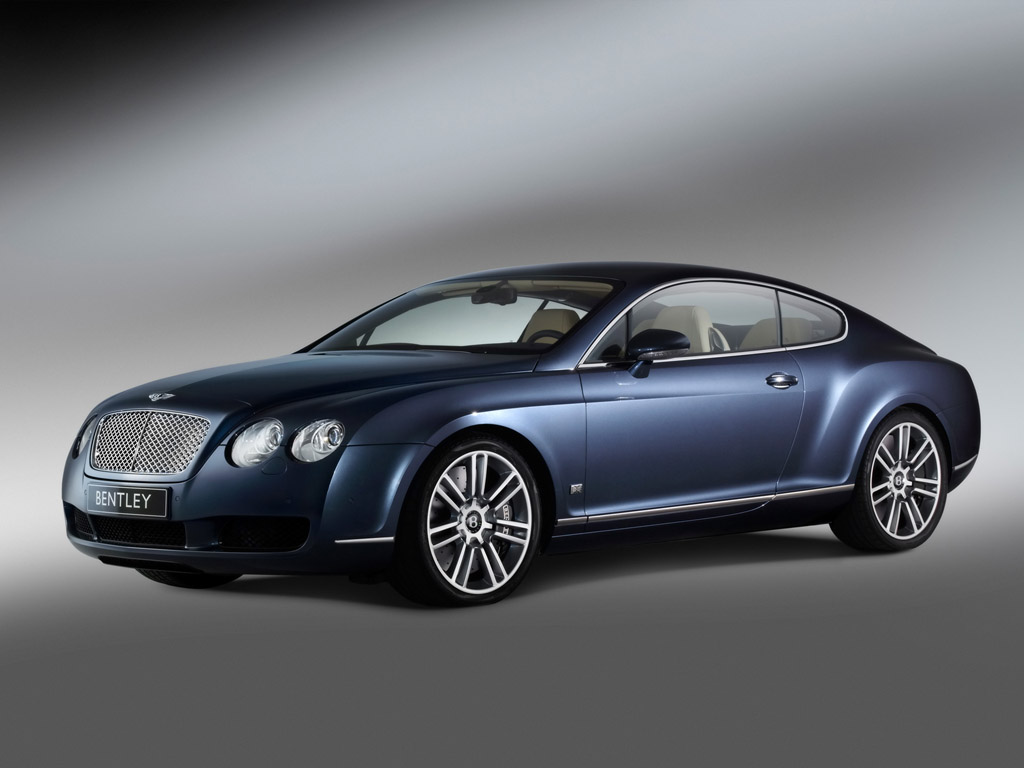
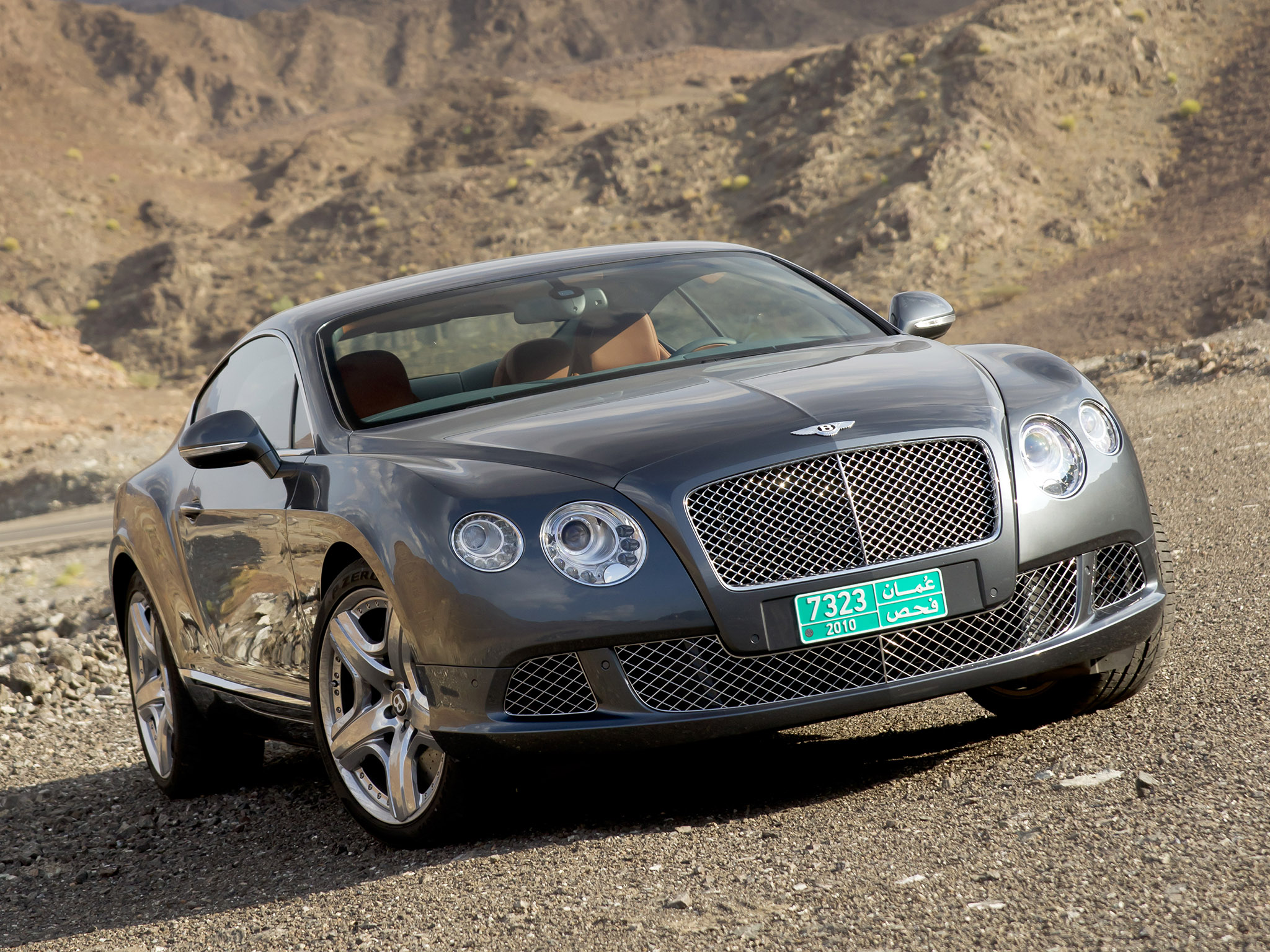
“My” Continental against a suitable background…

“Here we go again” some of you may think, he’s on about a Bentley again. You would have a point since I wrote about the Conti in 2023 and it’s also been mentioned in various other posts. However that’s never been in the top Speed version and until recently, I didn’t realize what a difference that would make. The opportunity to find out practically jumped at me when scrolling through interesting car ads, something I suspect I’m not the only one on this blog having as a favorite pass time…

The car in question was a 2014 Speed in the W12 version in dark blue with a blue-brown leather interior, fully serviced and with one owner since new. With 110.000 km on the clock, the ask was CHF 57.000 (about USD 65′ / EUR 60′), from a new price of around CHF 250.000. 2014 means second generation which is good, and the seller’s garage was of a type you could imagine doing business with, which isn’t always the case when it comes to old Bentleys (then again, those cars tend to have had far more than one owner…).

In the quest for the perfect transport for my better half of me to southern France, I thought I may just have found it, and after a quick call, I met up with what turned out to be Zurich’s nicest car salesman. He had previously spent a few years as a salesman at Schmoll, the leading garage for Rolls Royce and Bentley in Zurich, before setting up his own business. Next to “my” Continental, his showroom had a nice collection of further Bentleys and a few Rolls Royces, along with a few supercars and some more ordinary stuff.

I’ve always liked the Continental’s shape, especially in the 3/4 angle

The Conti was stunning. A deep metallic blue which, bar a few small stone chip marks on the front, was in beautiful condition. The dark blue-brown interior may have sounded strange on paper but turned out to be the perfect combination. Classy is very much the word. The salesman told me the car came from one owner with a full service history from two Bentley garages in Switzerland. No less than 11 stamps in total, one per year. “It’s a Bentley” he said with a smile when I questioned whether this wasn’t overdoing it a bit?

That perfectly colored interior turned out to be perfect in all other aspects as well, and looked like it had left the factory yesterday. It was a reminder of what I’ve been on about before, namely that leather doesn’t equal leather, and no car this side of a Rolls makes that clearer than a Bentley. Combined with the metal knobs, chrome and wood details, the thick carpet and the leather lining, this was an exquisite place to be. It also included the obligatory Naim premium sound system, as the regular one is really nowhere near worthy a car that was CHF 250.000 as new.

We took the Conti for a spin and I asked the salesman to come with me. I had no intention of doing anything foolish with this impressive piece of kit, and he was a nice guy with far more knowledge about the car than me, so I was keen to talk a bit longer to him. Leaving the garage we made it to the highway in a few minutes, the right environment for this big GT. Driving down the half circle access ramp, it struck me that there was practically no rolling at all and throughout the half hour drive, I was stunned at how well-balanced, direct and light the Conti felt to drive. Clearly the Speed’s stiffer suspension setup and the 22-inch wheels helps a lot.

You see the real quality of an interior after 110.000 km…

Nice as they look, those wheels do however contribute to more road noise than you would expect. A few minutes on a Swiss highway, typically better surfaced than highways in surrounding countries, made clear that the Bentley was not quieter than my modest Beamer, and louder than my previous Range Rover. You certainly don’t need to shout to your passenger, but it’s also not as silent as you may, and probably should expect.

And then the engine was at temperature, and everything I’ve written so far went out the window.

I didn’t floor it but rather pushed the pedal about half way. The thrust that followed is something only a 12-cylinder can produce. There’s a guttural roar building in strength as you’re pushed towards the seat, much like in a big airplane accelerating down the runway. Where a V12 from Maranello or Sant’Agata will give you a Pavarotti pitch, the Bentley rumbles in an impressive bass. Power feels limitless and endless, and while this moment felt like it had just begun, we were already north of any type of legal speed, which can quickly become quite costly in Switzerland.

What an engine! In numbers, the twin-turbo, 6-litre W12 puts out 625 hp and 800 Nm of torque, taking the 2.4 ton Conti to 100 km/h in four seconds and further on to a top speed of 330 km/h. All that is however completely irrelevant. I couldn’t care less if the sprint to 100 km/h took three or five seconds – it’s that feeling of propulsion in combination with a sublime interior that makes it a close to unique experience. You expect a Ferrari to kick your butt, but not this opulent, 2.5 ton creation.
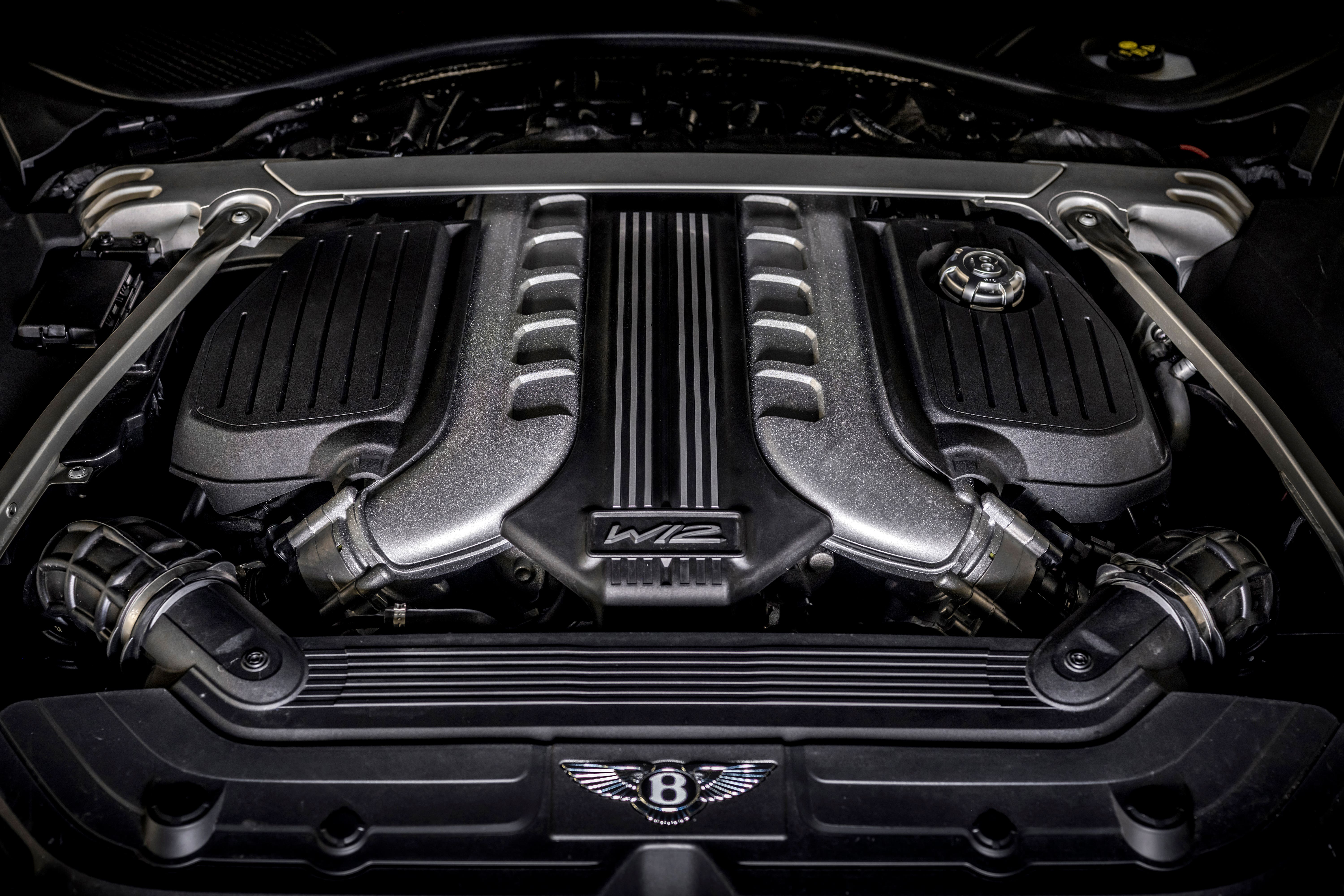
If you could ever only have one engine, this would be my choice!

After making sure a couple of times that what I had just experienced was indeed real, we settled to a legal pace and started talking about the car. The first thing the salesman said was that he found it incomprehensible that Bentley didn’t manage to build dead-angle side mirrors until much later. I hadn’t noticed, but he was indeed right – this CHF 250.000 Speed didn’t have it. Nor did it have a head-up display which I find a pretty useful invention, and although the interior was magnificent, it was also quite dark and could have done with a glass sunroof. The roof could have been optioned by the owner, but not the head-up display. Here again, Bentley was far behind many others, including it’s mother company Audi, which is a bit strange.

Coming back to those 11 service stamps, the salesman was clear on one service per year really being what you should plan for, if you want to keep your Bentley happy. The service is not more than around CHF 1.000 CHF he said, but they will always find something that should be done whilst you’re at it. So it’s better to budget about 2.500 per service. Right. And then there’s the 22 inch tires, which given that power of that engine will need replacing at least every other year. And neither the insurance, nor the road tax look very kindly on an old, heavy and complicated Bentley with a giant engine.

To lighten up the discussion a bit, I mentioned that I assumed 15 litres per 100 km was what you need to budget. No way, said the salesman, if you use this car properly, you’ll be north of 20 litres. Even with a 90 litre tank, that means no more than 400 km’s of range, basically like a modern EV – although quicker to fill up. I did the numbers in my head and realized that it would easily cost me CHF 8.000-10.000 per year to run this wonderful machine, and that’s before any major issues.

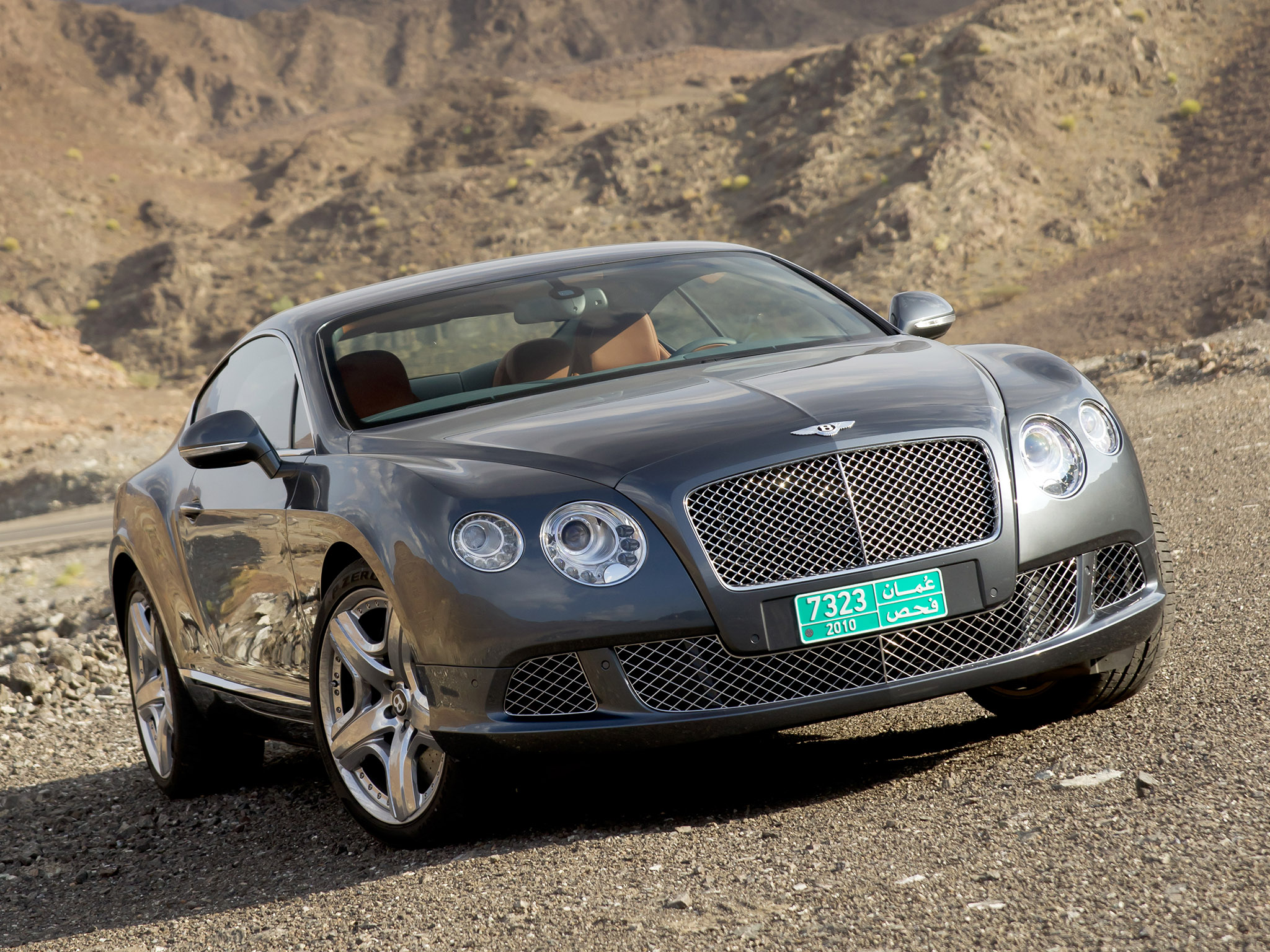
Head- and backlights are the best way to differentiate the first and second series

In terms of those potential issues, the W12 is known to be pretty bullet-proof and the 110.000 km are certainly no problem if the car has been properly serviced and cared for, which was clearly the case here. The second generation Continental is generally quite good quality-wise, with most issues coming from the air suspension and the many meters of rubber hoses that run throughout the car. If one of those lets loose, good luck in finding it. In some cases, it will mean removing the engine, which will then double the budget mentioned above.

There is a cheaper way to enjoy a Continental and that’s to go for the smaller V8 engine, preferably in S form. That’s certainly a great engine that has a reputation for making the Conti more light-footed. V8 Contis are however far more expensive to purchase, and although the V8 is no doubt adequate, it doesn’t have the magic of the W12. As I started to realize, it’s actually the engine that is more or less the magic of the whole car. The rest of the package is very nice, but not as outstanding as it was in 2014, and not necessarily better than for example an S-class Coupé.

Perhaps not an alternative to the Bentley folks, but certainly to most other people….

I have no problem spending money on cars (ask my wife about that…) but in the case of the Conti, the breakdown doesn’t add up. To make the running costs somewhat defensible, the car would really need to be perfect in every aspect, and the Conti clearly isn’t. Unfotunately, neither will it ever become a classic, given how many were produced. In Bentley’s eyes there is of course no competition to the winged logo from Crewe, but in reality there is, even if they don’t have a wonderful W12 up front. For me, the Conti is a flawed proposition – too complicated and expensive as a daily, and not a classic contender given how many were built.

You may see this differently and then I can only congratulate you on being less of a plebian than me. My salesman, who was a bit too nice and honest for his own good, was certainly right when he said he had always felt that if you go for a car, you should go for the top version. So if you go for a Conti, only do so for the W12 Speed, and only if you have the budget to care for it properly. Make sure it’s been serviced properly and don’t try to save a buck if you’re offered an insurance – take as much and as long as you can get. Perhaps get a brighter interior and a sunroof to lighten things up a bit.

Only do this if you’re not the kind of person who will lay awake at night thinking of everything that could go wrong. Nor the type who doesn’t like the local petrol station, because you’ll be seeing a lot of it. And whether you’re on the way to a music studio or not, be careful with those speeding tickets – the Conti Speed won’t help you out there either. As for me, I may have to revisit that S-class Coupé…

Bentley Continental GT – now or never!

When I bought my 2015 Range Rover a couple of years ago (for which I’m sad to say, I’m not even close to finding a satisfactory replacement, but thanks to those of you who have helped me trying!), there were a lot of people telling me how it was no doubt the beginning of the end, provided long assessments of everything that would break and how the car would drive me in financial ruin. Of course most of these had never actually owned a Range but of course they knew anyway, especially since the car had around 100.000 km on the clock.

As mentioned previously, there were a number of factors that made me confident with the purchase, most importantly the selling garage’s excellent reputation, the fact that they were willing to extend a two-year full warranty, and that I knew that the car had mostly been used for longer distances. Cars are made for driving, not being parked in a garage, so in many instances a car with more km’s can be preferable to one with less. To that came the fact that the car was extremely well maintained and that the Land Rover V8 is not only a very solid engine that is just about run in at 100.000 km’s, but also quite an economical one. I’m currently averaging at around 12l / 100 km, roughly 8l less than what the self-proclaimed experts told me would be the case. This is of course mostly long distance, but that’s what I bought the car for.

Best car I ever had – and it hasn’t ruined me in any way!

Of course I could still have had issues and no, Land Rover certainly doesn’t have the best reputation for reliability. Maybe I’ve just been lucky, just like I was 10 years ago when I owned an Alfa 166 a few years without a single issue. The fact of the matter is however that now, two years after I bought the Range, I’ve forgotten where I put the warranty papers as not a single thing has gone wrong. The lesson there is certainly not that I’m never wrong, but rather that here as well as in other areas, you shouldn’t believe everything you hear, but rather do your own research and form your own opinion.

Against that background, let’s look at a similar case to my Range but one that no doubt will cause severe cardiac issues for every naysayer. Because if the Range would drive one to financial ruin, this machine would probably do so with the rest of your family and neighbors as well. It’s a car that was actually suggested as replacement to me as alternative to the Range, but that unfortunately doesn’t really fit the bill. Because in terms of bang for the buck, there can’t be much that beats an early version of the by now classic Bentley Continental GT.

The first series launched in 2003 – slightly heavy, but an elegant design

11 years ago, in the early days of this blog when it was still in Swedish, my co-blogger Sven drove a Continental GT after its first face-lift (more on that below), and provided a rather sober assessment of the car not being for him (he’s a fan of Maranello machines) and also not really being worth the money as new. That I won’t argue with, but now 11 years have passed since the face-lift and 20 since the new Continental GT was premiered, so that second point has certainly changed. This makes it worth revisiting the case, also since I had the opportunity to drive an early Continental GT last week.

For memory, Volkswagen bought Bentley in 1998 and five years later, launched the Continental GT as the first Bentley ever to be produced not by hand by elderly men in coats up in Crewe, but rather by modern production techniques to a budget. Those last words are important as they certainly contributed to putting quite a few Audi parts in the car as part of the process, which made the true enthusiasts reject the Continental right away as some kind of pimped Audi not worthy of the brand.

The permanent 4WD ensures as much fun on snow as on road!

I think a more sober assessment makes it pretty clear that without the VW take-over and the launch of the Continental GT, the Bentley brand would be long gone. Instead there are today 4000 car builders working in Crewe, compared to around 1500 at the time of the take-over. It’s also worth noting that with every new series of the Continental, it has become less and less Audi – at least in the visible parts. Here we’ll focus on the two first series, i.e. not including the current one launched in 2018, as these cars are still quite pricey.

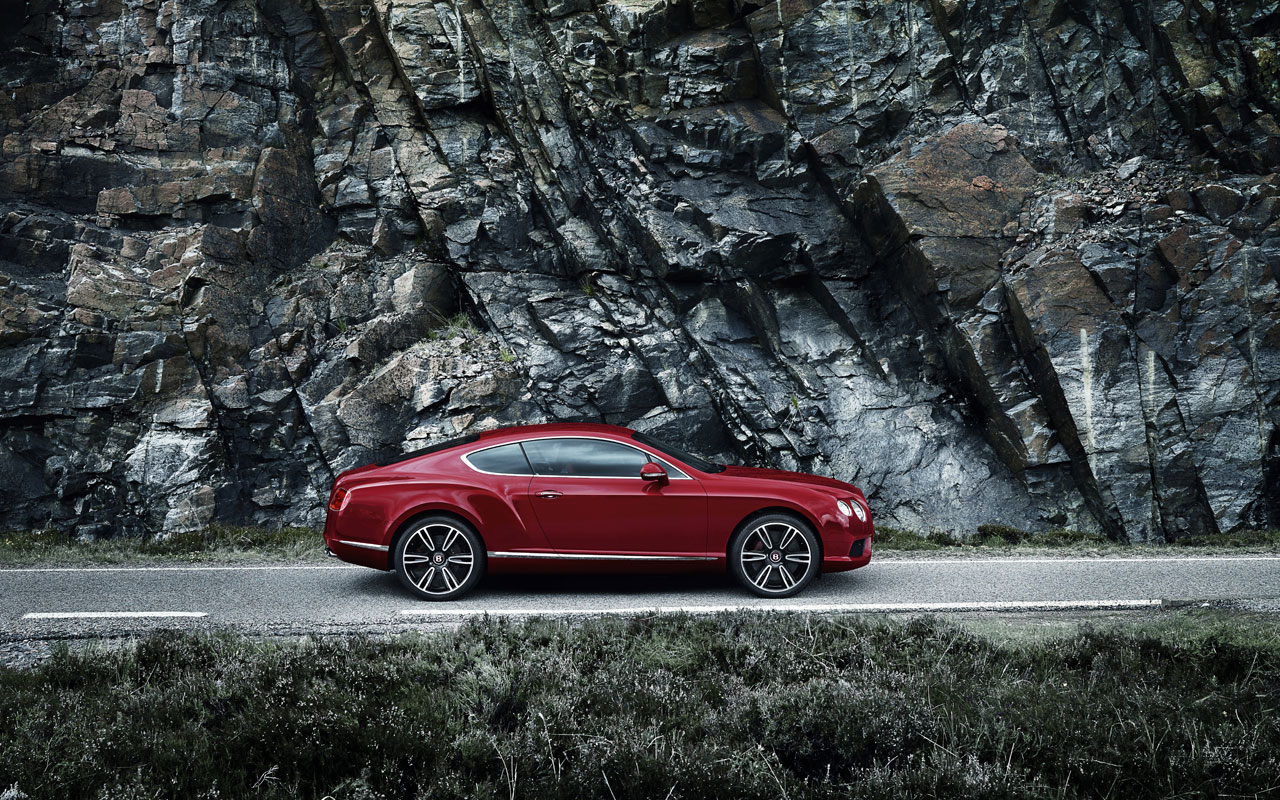
To me, the Contintental has always been a good-looking and timeless creation. Seen from the side it’s a testament to many classic Bentleys, and the front is just about aggressive enough. Its least good angle is certainly the rear which lacks a bit of finesse, something that didn’t really change until the current series. The first version was produced until 2011 and was only available with the W12 engine that VW had previously featured in the Phaeton (another car that can be had for not much these days but that contrary to the Bentley, there is no reason to get…). It put out 560 hp with much, but not all the refinement of a more traditional V12.

Yes, there are some Audi switches, but this is still a beautiful interior!

All cars had four-wheel drive and were also available as convertible, and the Speed that appeared in 2007 along with the Supersports from 2009 deserve a special mention. The former saw power increased to 608 hp and rode lower on larger wheels, the latter had performance pushed even further to 630 hp, which along with a 110 kg weight reduction made it the fastest Bentley ever at the time, with a top speed of 330 km/h.

The Series II, launched in 2012, introduced the double-turbo, four-liter V8 as alternative to the W12. At 500 hp it was less powerful but the car was also lighter and still capable of a top speed of over 300 km/h. Cosmetic changes on the outside were limited but the inside showed an improved cabin less reminiscent of Ingolstadt. Above all though, the ride, handling and steering were clearly improved over the first version. As with the first series, various special editions including Speed and Supersports were launched through the years.

The Supersports is a bit more bad boy, notably sitting lower on bigger wheels

I drove a W12 from 2008 this week and driving-wise, I can only concur with what my friend Sven observed 11 years ago, which basically boils down to the fact that you can’t hide 2.3 tons. That means the Continental in all versions, possibly with the exception of the Supersports, is far more a GT than a true sports car. That’s however something it does very well. Comfort is opulent, the ride is sublime, isolation from the outer world almost total.

Of course anything in terms of infotainment feels very old, but you don’t really think about it and if you do, there are after-market options for most things. Leather and wood however both age pretty well, and that’s what dominates the interior. This is a car that will transport two in utter comfort on longer journeys, be it in summer or winter, and that will allow you to stretch your legs on more or less frequent fuel stops, depending on which engine you opt for…

The rear is the least flattering angle of the first two series

An early, well-maintained first series Continental GT with decent mileage will today be yours from EUR 25-30.000 in Europe, a second series is around twice that, whether with the V8 or the W12. For the first series, that means around 10-20% of the car’s price as new. Of course a Continental in any version, but especially as W12, will never be a cheap car to run, and buying one should always come with a budget for running costs and unforseen repairs. If you buy a first series and set EUR 10-20.000 aside for unforseen repairs however, you will sleep well at night knowing you’ll be able to cover most things that can come up.

The main reason that a Continental GT is an easier purchase than with the Ferraris and Porsches we love, is that most of these have previously been owned by elderly people with money who don’t know what a track day is, read the manual from the first to the last page, never rev the car beyond 2000 rpm and follow the service intervals meticulously. And it that wasn’t enough, I would also think that the fact that Audi bought Bentley five years before the Continental was launched bodes pretty well. This certainly made the modern Continental more reliable than its predecessor, that cost EUR 120.000 more as new, 12 years earlier!

The original Continental was big, heavy, handbuilt and expensive!

Cars like the Continental and engines like the W12, or even the double-turbo V8, belong to the past as we all know, and will never be built again. It’s very difficult to know which way the car world will evolve in the coming years but at this price point, if you’re into big, opulent GT cars, then a Continental of the first or second series is a wonderful proposition. It may come at a bargain price but will always look like a million bucks, but if you do your research carefully, chances are it doesn’t require you to be a millionaire. All in all, that’s not a bad proposition, and this is clearly a case of now or never!

The best of 2020!

A few weeks ago, “Time” magazine dubbed 2020 the worst year ever. Given wars, natural catastrophies and other things that hit some of us every now and then this may be a bit exagerrated, but most of us are no doubt happy to leave 2020 behind, hoping for a 2021 where notably vaccines will help us revert to a more normal life!

For the blog it’s been an exciting year and thanks to you, dear reader, a very positive one. We have never before had so many readers and in the digital age it sure is nice to see people who share our passion for cars but also for the written word! Therefore, let me first express a sincere thank you to all of you! In this last post of the year I wanted to provide a recap on the content you have most appreciated on our different topics of sports cars, classic cars, other cars, F1 and what you could refer to as “other news” from the car industry. I’ll obviously provide links to the posts referred to in case you’ve missed them, or want to catch up on them again.

Sports cars

This is the largest category in terms of reader interest, and the post that by a margin caught most of your attention in this section was the one titled “The best Ferrari is a Maserati” that I actually published last year but that saw continued interest this year. I talked about the merits of the Maserati 3200 GT and the tremendous value for money it provides when compared to Ferraris of the same type, especially the 3200 GT’s powered by the naturally aspirated Ferrari V8! Luckily values haven’t really gone up since so there is still a bargain to be had.

The 3200 GT is still going strong it seems!

Next to that lovely Maserati, you also found the post on the most interesting sports car launches in 2021 of interest. More than any other this post made clear that the trend is indeed electric, even in the supercar segment, and that traditional supercars like the new Maserati MC20 are becoming few and far between. Given most engine sounds are more or less artificial anyway these days, why can’t they make an electric car sound like a naturally aspirated V12?

Classic cars

In the classic car segment, it was nice to see that the topic of classic cars as investments caught your attention. As most real assets classic cars have seen steep increases in value during the last decade and the days when you could find something that was really out of value are gone. That doesn’t mean you shouldn’t consider a classic car and it actually cuts to the core of that post, namely that you should do so because you love the car and love driving it, rather than for financial reasons.

Financially a homerun – but how many get to be driven?

In terms of specific classics it was not much of a surprise to see that how much 911 you get for a budget set at EUR 100.000 was of interest, and although that budget buys you less today than ten years ago, it still gets you a lot of Porsche. Even though values have increased, there is still few cars give you as much driving pleasure, combined with if not increasing, then at least very stable future values! I was perhaps a bit more surprised to see that the Jaguar XJ-S had as much attention as the 911 and perhaps it’s a very different car, but no less interesting!

The 911 remains a very popular retiree!

Other cars – or future classics

In this slightly diverse category that includes the cars that are not yet classics but maybe will become so one day, or that are simply interesting from some other perspective (usually irresistible value for money…) you especially liked two posts: the one on the BMW F12/F13 (i.e. the 640/650) and the one on the Bentley Continental GT. As some of you know, a bit later in the year I sold my old Triumph and bought a 650 Convertible for the proceeds (more about that here), so I’m with you all the way on that one!

Before deciding on the 650 there were a large number of cars on the list of potential candidates. The Bentley Continental GT was somewhere on there as well and in many ways it’s an irresistible package, but it wasn’t for me. It doesn’t change the fact that I’ll always be envious of those of you who go ahead with what could be the bargain of your life!

A lot of car (incl in kgs!) for the buck

F1

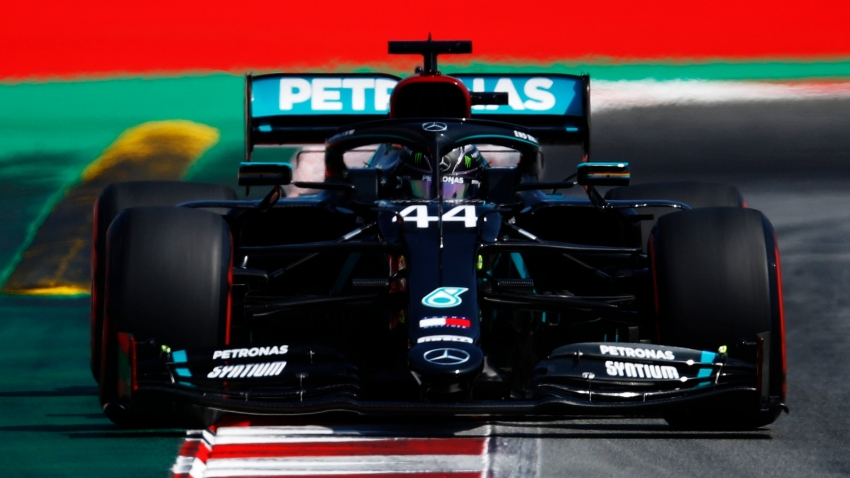
The F1 season was indeed a strange one, but also a record one for Lewis who clinched his seventh title. Thanks for your interest in the posts where I’ve also tried to provide a bit of insight into what happens when the track lights go out. Next year will definitely be an interesting one with more teams competing for race wins, great driver line-ups and if we’re lucky, perhaps also with spectators on the stands!

He did it again – for the 7th time!

Other news

Looking at news around the car industry, many of you were intersted in my favourite car Youtubers, and I hope you’ve also enjoyed some of them. If I was to re-do that list today it would look a bit different, but that only highlights the richness of what’s out there. You also liked the story around Aston Martin and its new boss Tobias Moers who brings both long experience but also an ownership share of AMG, hopefully a combination that will be sufficient to secure Aston’s future.

Ultimately, this is what it’s about…

Also judging by numbers, if there’s something you would like me to hear less about, that’s electric cars, be it Tesla (that’s been featured a number of times) or general input around EV’s. That’s absolutely fine, we’ll try to keep the focus in 2021 on engines with cylinders, powered by petrol!

With that, again a big thank you for your support during this year and if you haven’t done so yet, then do indeed follow the blog (top right corner)!

A Happy New Year 2021!

The gentleman’s GT

Two weeks ago I wrote about Lotus, based on my friend Erik’s experience (if you missed it, you can read it here). Today we’ll look closer at a car that weighs more than any two Lotuses in combination and is thus very from the lightweight motto, but on the other hand offers one of the best combinations of power and comfort that can be had in the world, and where very nice pre-owned cars can today be had for less than a family hatchback: the Bentley Continental GT.

Before going into the history and details, let that sink in a bit. We’re talking about a Bentley, one of those brands with a special magic to the name. Not as exclusive, but also not as old-fashion as a Rolls. Not as extravagant (by a few miles) as a Lambo or a Ferrari. A Bentley is, and has always been, the gentleman’s sports car, and a car where a combination of power and comfort has always taken centre stage. Given the bargain prices the first generation of Continental GT’s are today trading at, let’s look a bit closer at whether that makes it something for which you should find space in your garage sooner rather than later.

The Continental GT saw the light of day in 2004 and was the first car to be developed under VW’s ownership of Bentley. Evil tongues would claim it’s an Audi or even a VW Phaeton on steroids, given these are cars with which the Crewe-built GT shared essential parts like the chassis, the 6-speed gearbox, the air suspension and the engine, although in the Continental, two turbos bring the power to 560 hp in the base version. To me that would be missing the point though. In our modern era, brands such as Bentley can’t survive without some reliance on larger brands, and these to my mind do not take anything away from the attractiveness of the package – if anything they add to it, given higher reliability than older Bentleys used to offer. Another feature the Continental GT shares with its VW siblings is the standard four-wheel drive that on one hand helps get the power onto the tarmac, but also make the car more than just a summer GT – should you want it to.

The double-turbo W12 was the only engine option for the first generation of the Continental GT, built until 2011, that we’ll focus on here. In 2007 a 35 kg lighter Speed version was however added and a couple of years later Bentley brought a Supersports version with 630 hp and as much as 120 kgs less weight, achieved notably by removing the back seats. And of course, from 2006 on there was a convertible version alongside the GT. The second generation, built from 2011, saw a decent face-lift and added the “budget” 4-litre V8 version to the line-up. Finally the heavily reworked third generation came out last year, but that’s another story.

The first generation Continental GT is an impressive car, and one that has aged very gracefully. As so often, the lines of the coupé are more harmonious than those of the convertible, and you needn’t do more than open the door to realize that this is something truly special. The interior oozes of a British gentleman’s club, you’ll look in vain for plastic parts (except, admittedly, for some rather cheap looking buttons on the centre console around the antiquated satnav, and on the steering wheel), every piece that looks like metal is just that, and the number of cows that had to leave the green pastures to be reborn as a Continental GT interior would make even meat-lovers blush. Bentley has always offered a multitude of interior colour combinations, and these are finished to the last detail. If the interior is, say tan, then every little piece of it will be finished in tan – including the seat belts and their holders.

The engine comes to life in a very different way than other cars of comparable power output, that is to say very discreetly. The steering is very light, and although improving a bit at speed, this is not a car where you really feel the road, which is also to say that the air suspension is sublime, as is the general noise level. If not earlier, it’s clear by now why this is a car weighing in at around 2400 kgs. Having said that, the GT handles better than could be expected and lets you forget some of that weight. Power is plentiful in any gear, the engine has a very pleasant bass tone when it’s pushed, something the car doesn’t mind, although not inviting it either. The 90-litre tank will mean you’ll have to stretch your legs and refill every 500 kms, something safety experts will tell you you should do anyway – arguably though, those experts have never travelled in a Continental GT.

It’s easy to see why the Continental GT looks like an interesting option. Next to the comfort and surprisingly good driving experience, the massive depreciation to something like 1/5 of the price as new, combined with the fact that the first owner quite often was an older gentleman not really into track days, clearly speak for the GT. The fact that the car is built around a VW and Audi engine and chassis is also rather positive, although it doesn’t mean that you can take it to your local VW repair shop – they wouldn’t know what to do with it. That brings us to the only real downside with the car, being the massive servicing costs. I won’t go into any detail but assuming they’re on Ferrari level is a good start.

Some owners’ illimited budgets means good bargains can be had on “exotic” colours…

When I was a little boy back in… well, a while ago, I remember my father telling me there was no official power output number for Rolls-Royces more than to say it was sufficient. Another similar tall tale is around the cost and maintenance of RR’s and Bentleys, saying that if you need to ask, you can’t afford it. If you can afford it though, a nice pre-owned Continental GT should make you a very happy person. Maintenance history (and budget!) is key, elderly pre-owners are to be preferred, and the somewhat more powerful and more focused GT Speed is slightly better than the ordinary GT. You’ll be able to find both from 2008-2009 for around EUR 40.000-50.000, adding EUR 5.000-10.000 should you prefer a convertible. The fact that early ’04 and ’05 cars don’t trade much lower indicates prices are bottoming out. Given more than 66.000 GT’s have been built so far (more than any Bentley in history), this is not to say prices will start to rise tomorrow, but I also remember learning something else in my youth, and that was not to wait until tomorrow to enjoy something that can be enjoyed today. In the context of the Continental GT, that feels like very good advice!

We hope you like this blog – please help us keep it interesting by subscribing!

The Thrill of Owning… a 12-cylinder GT coupé!

A few months ago I wrote a short laud to the mechanical twelve-cylinder, which much like one of those friendly, vegetarian dinosaurs is heading towards rapid extinction.

Having given the matter some thought during the long and mostly sunny summer (isn’t that what summer is for?) and done some quick market research, it struck me that the damage is probably even greater; beyond not only the mechanical 12-cylinder but most probably any modern 8- or 12-cylinder engine that won’t pass modern emission standards (and that cannot be cheated with as easy as a VW diesel engine), it is a whole car segment that risks dying; that of the elegant, powerful, luxurious and highly desireable GT coupé. This is a car type that was never associated with strollers, Ikea furniture or skiboxes, but rather with leather bags for two, sunshine and magnificent drives in company of a lovely lady along the Grand Corniche in southern France. And importantly, unlike the flashy convertible, the true coupé is always be understated. If that is not a type of car worth preserving, then I don’t know what is!

Bentley-Continental-GT-V8-S-coupe
When the road is the goal…

The German magazine “Auto, Motor & Sport” a few years ago did a survey among readers on whether GT coupés fit the description in the above paragraph, or are rather meaningless, ugly and unpractical. Luckily 91% seem to love GT’s, which is some consolation. I would also think this is an interest helped by… a slightly maturing age. Sure, an Elise is a true driver’s car, but it’s also one that leaks water, kills your spine and lacks any form of practicality. Not so the GT, which will transport you in utter comfort anywhere you want, always in sublime comfort and with sufficient room for your weekend bags, and without messing up the little hair you have left. The kind of thing you start appreciating after a certain age!

The really great thing, and the reason for this post, is the fact that many of those true GT coupés with large engines have seen massive depreciation in spite of often having quite low mileage and a perfect ownership and servicing history. This is probably because those who had the money to buy them as new were, you guessed it, a bit older, and typically haven’t driven them that much. So if they were beyond your means as new, they are not any longer, in spite of not being more than 7-10 years old.

You could obviously define this segment in many different ways, but to stick to the theme of 12-cylinders and illustrate the point, I have chosen three fantastic coupés that cost somewhere around EUR 200′-250′ when they were new and have today dropped to EUR 40′-50′ with 50.000 – 100.000 kms on the clock, thus offering an extreme value for money. Whether they will depreciate further time will tell (but as we all know, when the offer is reduced, the price tends to go up…), but already at today’s prices, it is difficult to find better – and more stylish! – bang for your buck.

  • Bentley Continental GT: the car that made Bentley a mass brand (at least if you live in Zurich) was launched in 2004 and features the same VW W12 engine as the top version of the VW Phaeton at the time. In the Continental it develops a healthy 560 Hp and 650 Nm of torque, and has the additional benefit of being four-wheel drive. Contintentals are today in amply supply from EUR 40.000 for 1-2-owner cars.

2013_bentley_continental_gt_speed_71_1920x1080

  • Aston Martin DB9: launched in the same year as the Bentley, the utterly beautiful DB9 (which was co-designed by Henrik Fisker) has a 12-cylinder engine producing 457 hp, so less than the Continental, but then at 1800 kg the car also weights half a ton less. They can today be bought for around EUR 50.000, often with less than 50.000 kms on the clock.

Aston-Martin-db9-61-1024x576

  • Mercedes-Benz CL 600 and CL 65 AMG: the C216 CL-series was produced from 2006 to 2010, and both the 600 and the Überhammer CL 65 AMG, one of the most potent machines ever built by the guys in Affalterbach, was launched the first year and feature the same V12 engine which in the AMG version develops 612 hp, 100 hp more than the 600. At 1000 Nm, the torque of the AMG car is almost absurd, and just for the fun of it, the CL 65 does not have four-wheel drive, so that’s 500 Nm of torque per rear wheel… Still, this is a coupé on the S-class chassis, so comfort and refinement are sublime in both versions. Both the CL 600 and CL 65 AMG are a bit more difficult to find, but prices today start at around EUR 50.000, for both, again with less than 100.000 kms on the clock. If you are going to be unreasonable, why not be so all the way and go for the AMG version…

mercedes-benz-cl-65-amg-04

The enormous depreciation these and other GT’s have seen have the additional benefit of leaving you just enough money to afford running them – and especially for the CL 65 AMG, for buying a few sets of rear wheels per year… The purchase price may be comparable to a new Opel, the running costs are certainly not. But then again, grooming your image was never for free!

PROVKÖRNING: Bentley Continental GT V8 – mer jakt än sport

Jag provkörde en Bentley Continental GT med V8:an på 507 hästar. Bilen är imponerande; den är bekväm, tyst och komfortabel.

Tack vare effekten och vridet i dubbelturbo-V8:an så är bilen hyggligt snabb, men farten känns inte. Jag förstod inte hur fort det gick innan jag tittade på hastighetsmätaren. Ljudet är dämpat men ändå gurglande kraftfullt; vid acceleration så låter det som att dra på för fullt i en yacht (därav “jakt”i rubriken till inlägget…).

Pressar man bilen med små slalomrörelser så styr den in hyggligt bra. I lite tvärare kurvor så understyr den dock när den pressas; det går inte att maskera 2,3 (!) tons vikt, även om Bentleyn gör det så bra som det nu går. Att kliva tillbaka från Continental GT till min California är en stor kontrast; det kändes nästan som att kliva från en Porsche Cayenne Turbo till en 911 GT3:a…

Leendet infinner sig inte riktigt, såsom det gör i sportbilar som Californian eller Porsche 911/Boxster S.  Men Bentleyn är förstås en annan typ av bil. Dessvärre är det ingen bil som passar mig. Har inte analyserat exakt vilka konkurrenterna är men jag skulle mycket hellre ha en Maserati GranTurismo Sport, som är väsentligt billigare eller en Aston Martin Rapide som är både sportigare och snyggare. Eller varför inte en annan, fantastisk bil som också har en dubbel-turbo-V8 och som jag provkörde i veckan! Rapport kommer snart, men ni kan säkert gissa vilken bil det är.

Bentleyn har dock en fin inredening. Det är några Audi-detaljer, men mycket färre än i den ursprungliga versionen av Continental. Jag provade att sitta “bakom mig själv” i baksätet och det var bra med utrymme. Däremot är bagageutrymmet (358 l) inget vidare.

Continental GT känns lite som en Audi S8 med två dörrar, vilket den också är… Köper man en S8 i stället, så spar man en dryg halvmiljon, får en bil som är 0,6 sekunder snabbare till hundra (4,2 vs, 4,8) och som har mycket bättre utrymmen. Audin har dessutom faktiskt en inredning som håller Bentley-klass. Då blir det svårt att motivera priset på Bentleyn, om man inte tycker väldigt mycket om känslan/varumärket.

Så till det slutliga lackmus-testet; vill jag ta med mig bilen hem? Dessvärre är svaret på den frågan: nej.