12 things that will (maybe) happen in 2025!

The year 2024 is pretty much done and boy has it been an eventful one! Conflicts and wars are not the topic of this blog, but just looking at the car world, few of us would have thought so much would happen during the coming 12 months when we sipped our New Year’s champagne a year ago. Perhaps most notably, at the time it very much seemed we were set on pushing on with the electrification phantasy and that as a consequence, large-volume combustion engines were very much a thing of the past.

Well, just as little as Max Verstappen won his fourth world championship title without any opposition, that didn’t happen. What did happen though, is that the threat to Western automakers from China became very real, and will certainly continue to be so in 2025 – tariffs or not. What else can we expect? Well, taking the first letter of the coming 12 months and finding a word starting with the same letter on a car related topic, here’s what I think. If the past is any indication it won’t be much more than a somewhat qualified guess, meaning 2025 will be another year full of surprises!

That’s far more hood than any EV will ever need…

January: it wasn’t long ago that Jaguar announced its complete rebranding with a marketing campaign that made everyone in the car world and lots of people outside of it shake their heads. I wrote about it back in November, in a post you can read here, and basically argued that if Jaguar was a healthy company to start with, it wasn’t a branding campaign that would break it. The problem is of course that it isn’t. A week after the post, Jaguar presented the first concept car for its all electric future, which surprised everyone again, given it’s most prominent feature was a long hood, which of course you don’t need for an EV. Anyway, the new line-up is set to hit the market in 2026. I’ll stick my neck out and say that won’t happen, and that Jaguar may not be around 12 months from now.

February: Just as everyone was writing off the large combustion engine as a concept, Ferrari presented the 12 Cilindri, its splendid new GT featuring a derivative of the 812 Superfast’s naturally aspirated, 6.5 litre V12, here putting out more than 800 hp, without any turbo-chargers or hybrid solution. Long live Maranello and contrary to what was the common belief a year ago, I still believe the rumors around the V8 and V12’s imminent death are largely overdone!

This is what a naturally aspirated V12 still looks like!

March: the new F1 season kicks off in Australia on March 16 2025, and Max Verstappen will of course have his mind set on his fifth world championship driving title. Will he succeed? That’s of course impossible to say but the competition looks fiercer than in many years with Norris and Piastri at McLaren, Leclerc and eight-time world champion Lews Hamilton at Ferrari, and Russell (more than Leeson) at Mercedes. I’ll stick my neck out (again) and say that this becomes a bit too much for Max, and that Lando Norris and McLaren will be world champions in 2025.

April: the month of April is often characterized by what we call April weather, meaning quick changes between sun and rain – a bit like a modern hybrid switches quickly between electricity and petrol or diesel. And whereas new sales of EV’s continue to be dismal, growing by only 8% in Europe in the first half of 2024, according to stats from The Economist, hybrid sales grew by over 50% over the same period. That’s of course what I’ve long argued on this blog, i.e. that if we don’t want everyone to park two cars in their garage, then a hybrid is a much wiser solution than an EV for most people. That’s therefore a trend I very much expect to continue!

May: think how much richer the car world has become through the various media channels we now have at our disposal! There’s of course the private Youtubers as well as the more official Youtube channels of leading car magazines such as Evo, but lately, I’ve even discovered some really nerdy car podcasts that are highly enjoyable – none more so than Chris Harris’ The Car Podcast. Together with some of his blokes, Chris will hear answer some life-critical questions, such as which car to buy for a budget of 30.000 if you want it to work both as a family car and on track. Essential stuff with a healthy touch of British humour!

Podcast of the year!

June: I really don’t set out to pick on Japan, but somehow it seems I still do every year, quite simply because we don’t see anything exciting coming out of the land of the rising sun anymore. Sure, Toyota are doing really well by sticking to their hybrid technology, but what about the others? I heard an interview with ex-Nissan CEO Carlos Ghosn the other week, talking about how insignificant Nissan has become, but you could say the same about Honda. Or Mazda. They all lose market share, and nothing exciting is on the horizon. Will that change in 2025? Don’t think so.

July: what I’m pretty certain won’t change neither in 2025, nor in the years therafter, is the steering wheel. We won’t convert to joysticks, yolks or anything else. And with the exception of Tesla, all other car brands will retain the good old stick as turn signal, quite simply because it’s vastly better than two buttons on the wheel. And we all know Tesla knows so as well, but hey, anything’s good for cutting a few dollars…

August: Renault did really well when they decided to resurrect the classic Alpine brand, and the A110 coupé has received a lot of praise as one of the most fun cars to drive out there. Unfortunately, the market for two-seaters with practically no luggage space is limited, even at the A110’s quite modest price point, so it was obvious that Renault would need to do more if they wanted to keep the Alpine brand. And of course, they couldn’t resist doing so by promising to launch a range of EV’s over the coming years. Given ambitions for sold cars are modest, they may well make it.
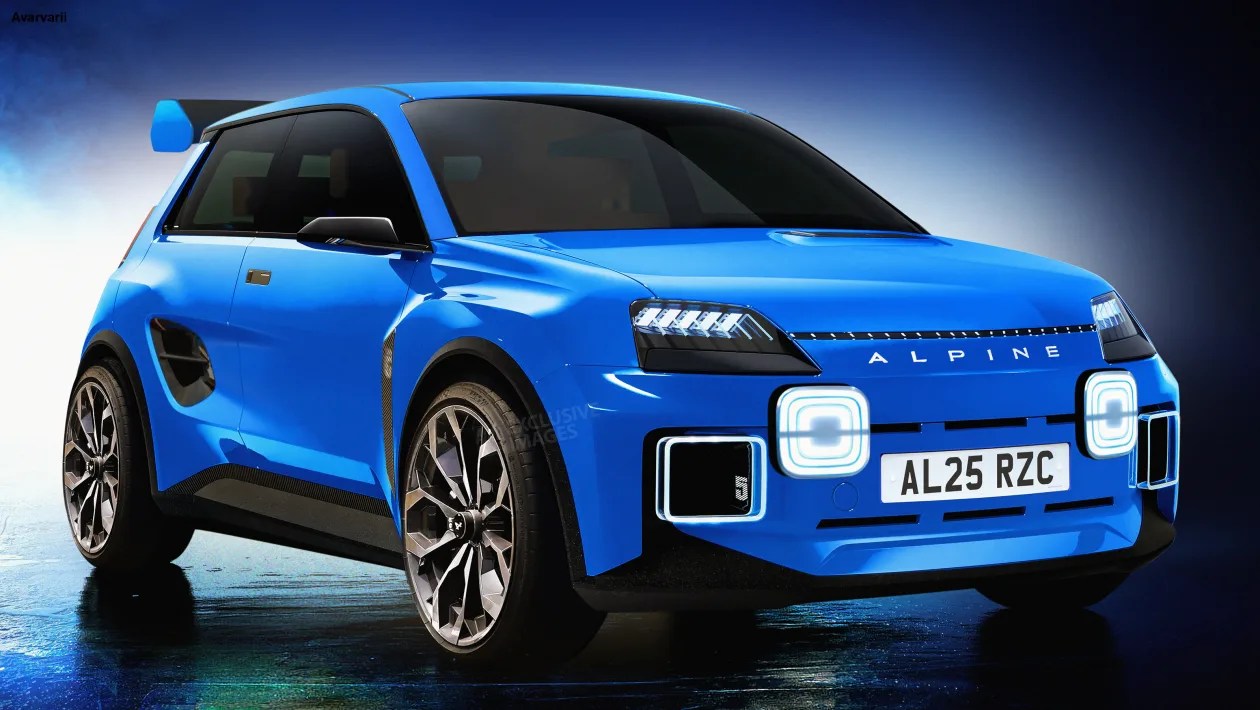
We went from the A110 to this – that’s not progress

September: next year will mark the 15-year anniversary of the Swedish brand Saab’s disappearance, which many of us regret to this day. But actually, the traditional Saabs most of us regret are far older than that. I saw a first-gen Saab 900 Aero the other day, and it was my 22-year old son, not me, who said “that’s a cool car”. It is, and a practical one at that. I know, because my father had one, and my wife and I also had a wonderful 9-3 convertible around 20 years ago. Unfortunately the engineers at Saab were always better than the marketing people, which is what ultimately led to the brand’s demise. Saab will certainly not be reborn in 2025!

October: with the general insecurity surrounding the car world, it’s not fully clear what will happen to our dear oldltimers. I don’t doubt for a second that the real fanatics dream of the day when these polluting, terrible old things will all be forbidden, but I think that will remain a dream. Oldtimers are often owned by people with large wallets who tend to be large taxpayers as well, that the state doesn’t want to rub the wrong way. Oldtimers will be with us for many years to come, and I expect their secondary values to continue their upward path!

Buying an E-type as an oldtimer may be a particularly good idea!

November: Nio is one of the new Chinese EV brands we may have to get used to, and it’s about as remarkable as any of the others, i.e. not at all. Were it not for the fact that it has one more trick up its sleeve than the others, as next to charging it normally, it’s also been built for a so called battery swap. That means driving to a battery swapping station where in five minutes, your whole battery pack is swapped against a new one. What a brilliant idea! Now we don’t only need to build traditional charging stations around Europe, but also plenty of battery swapping stations, where in addition, a number of fully charged battery packages need to be kept. And this only for Nio, since as of now, no other brand is equipped with this technology. Seriously – who comes up with these ideas? This one will not be long-lived, and thank God for that.

December: to round it off, dodici means 12 in Italian, and I can’t really get over the Ferrari 12 cilindri, and the fact that they really did it – they built another coupé with a naturally aspirated V12. And then some journalists took it to a track and told us it was more a GT than a true track car, as if someone really cares. The point is that it exists, and that Ferrari went against everything they were told, for the love of the car. And for that, we love them dearly!

Grazie Ferrari!

Street finds – the Peugeot 205 Rallye!

Finding a true French legend from the 80’s has become increasingly difficult, mostly as they were never the most solid cars around – more on that later. Still, given I spend as much time as possible in southern France these days, the place to find one should logically be on a narrow street in Nice. But of course, according to the law that things never happen as you expect them to, that’s not what happened. The below beauty was parked centrally in Zurich, very close to my office. And what a car it was!

The Peugeot 205 GTI is, next to the VW Golf GTI, the most iconic hot hatch from the 80’s, and the only one that can really compete with the latter in terms of brilliance, and these days, price. It’s almost four years ago that we looked at it, and to me, it’s at the top of my list of hot hatches of any period, were I to get one one day (which I most probably won’t, since it isn’t really my thing, also not for down here in France for which it’s both far too nice).

A 205 Rallye looking as new as when it was delivered, 30 years ago!

Describing a hot hatch from more than 30 years ago as luxurious is perhaps pushing it, but there’s no doubt the GTI was the fancier car when compared to its sibling, the 205 Rallye pictured here – the real hard core version in the 205 line-up! It was created as a cheaper and simpler alternative to the more expensive and mechanically more complex GTI, although calling its grand daddy mechanically complicated today is almost laughable.

The Rallye was derived from the base version of the 205, whereby the volume of its original 1.1 litre four-pot was increased to 1.3 litres and about 105 hp. Given that still wasn’t much to brag about, the engineers at Peugeot-Talbot Sport resorted to the cheapest way possible to reduce the car’s weight, namely to remove sound-deafening and other isolation material not deemed strictly necessary. Tada – the trick was done and the Rallye now weighed in at a very modest 800 kg (794 to be exact). it didn’t improve the comfort of course, but rapidly made the car popular among the many aspiring young rally drivers France has always been blessed with!

A perfectly restored example in every detail

The Rallye also inherited the front suspension and ventilated disc breaks from the 1.6 GTI, keeping the same drum brakes in the rear. The interior (except then for the removed isolation) is also reminiscent of its bigger brother, but the exterior is cleaner, especially in white as they car I saw, and with those wonderful, 80’s-like white wheels (these were however not original, those were also white, however in steel). There was really no doubt that the car I saw had been restored, as it was really in perfect condition, including on the inside.

The Rallye had a far shorter life than the GTI, being produced only between 1988 and 1992, and only sold in a handful of countries in central Europe. Peugeot had initially planned for 5.000 cars but in the end, no less than 30.000 would be built. The Rallye was thus a success, also since it was a car that was really rewarding when you drove it hard. Unfortunately, that together with the quite thin body parts, have contributed to few cars remaining today. As you may remember (or just have read) from my story of the 205 from four years ago, that particular car was written off following a collision that was certainly not nothing, but also not something that would really trouble a car today.

The interior isn’t identical, but close to the 205 GTI

That makes the Rallye even rarer today than the 205 GTI, but price-wise, they fetch around the same money, which is about EUR 25-30.000 for the best cars (and that’s by the way almost twice the money compared to four years ago). The real issue is however finding one – including in France, where even the GTI is not only rare, but today fetches the same price as in other countries, something that wasn’t the case for quite a long time.

I bet this driver doesn’t think about the money though, driving his 205 Rallye, but rather the purest form of driving pleasure, miles from the 1.5 ton hot hatches built today. I just hope he keeps it on the road and avoids close contact with other cars – both for himself and the car!

Monaco – between superyachts and Cullinans!

Every year in late June, the European fund management industry congregates in Monaco on the French Riviera for a conference called the Fund Forum. It’s an event that offers the typical conference mix of speakers and panels, various exhibitors and service providers, and if you look really closely among the 1500 participants that attend over two days, even an investor here and there. if you’re not sure who they are, just look for the poor guy who’s constantly encircled by other people…

There’s of course a lot of conferences like Fund Forum happening in the financial industry throughout the year, but there’s only this one taking place in Monaco in the early summer, thus allowing people to book a business trip to the south of France, party on for two days and then pretty much go on holiday. I haven’t attended the Fund Forum for many years but did so this year, notably to check if things were still the same. After two days of exceedingly hard work, I can safely report they are!

The casino – and its parking – are well-known

As most of you know, Monaco is located on the French Riviera but is its own country, a so called Principality with Prince Albert as the hereditary head of state. Most known for its casino and F1 GP, Monaco sprawls over a rocky, coastal formation and is the second smallest country in the world, only bigger than the Vatican. The fact that around 37.000 people squeeze in on two square kms however also makes it the world’s most densely populated country – and one of the richest.

Monaco has neither income nor fortune tax, which together with more policemen and video cameras per capita than anywhere else in the world has also made it one of the most secure places to live in, and hereby a favourite playground for the ultra rich. This has in turn lead to some of the world’s highest property prices. Thinking of a three-bedroom penthouse with a large terrace and a nice sea view? That’ll be between EUR 15-25m, thank you very much. Then again, prices have known only one direction for longer than anyone can remember, and they will most likely continue to do so.

Monaco’s port is even more crowded than its streets

Of course, the rich and beautiful who live in Monaco tend not to spend all of their hard owned dollars on real estate, but keep some to get a decent boat and a nice car stable as well. What we common people think of as boats does however have little connection to what goes on in Monaco, and if there was a ranking of the most crowded ports in the world, Monaco would certainly be high on that list as well. And then, there’s of course the cars – and boy are they worth your while!

I wrote a while ago about the demise of traditional car shows, no longer being as grand as they used to be. If you’re looking for an alternative, let me suggest walking around a day or two in Monaco. It’s practically impossible to do so without having taken in a larger number of supercars than anywhere else, some of which you’ve seen before and some you didn’t know existed. And next to that, there’s of course a number of more or less tasteful ultra luxury sedans and SUV’s as well.

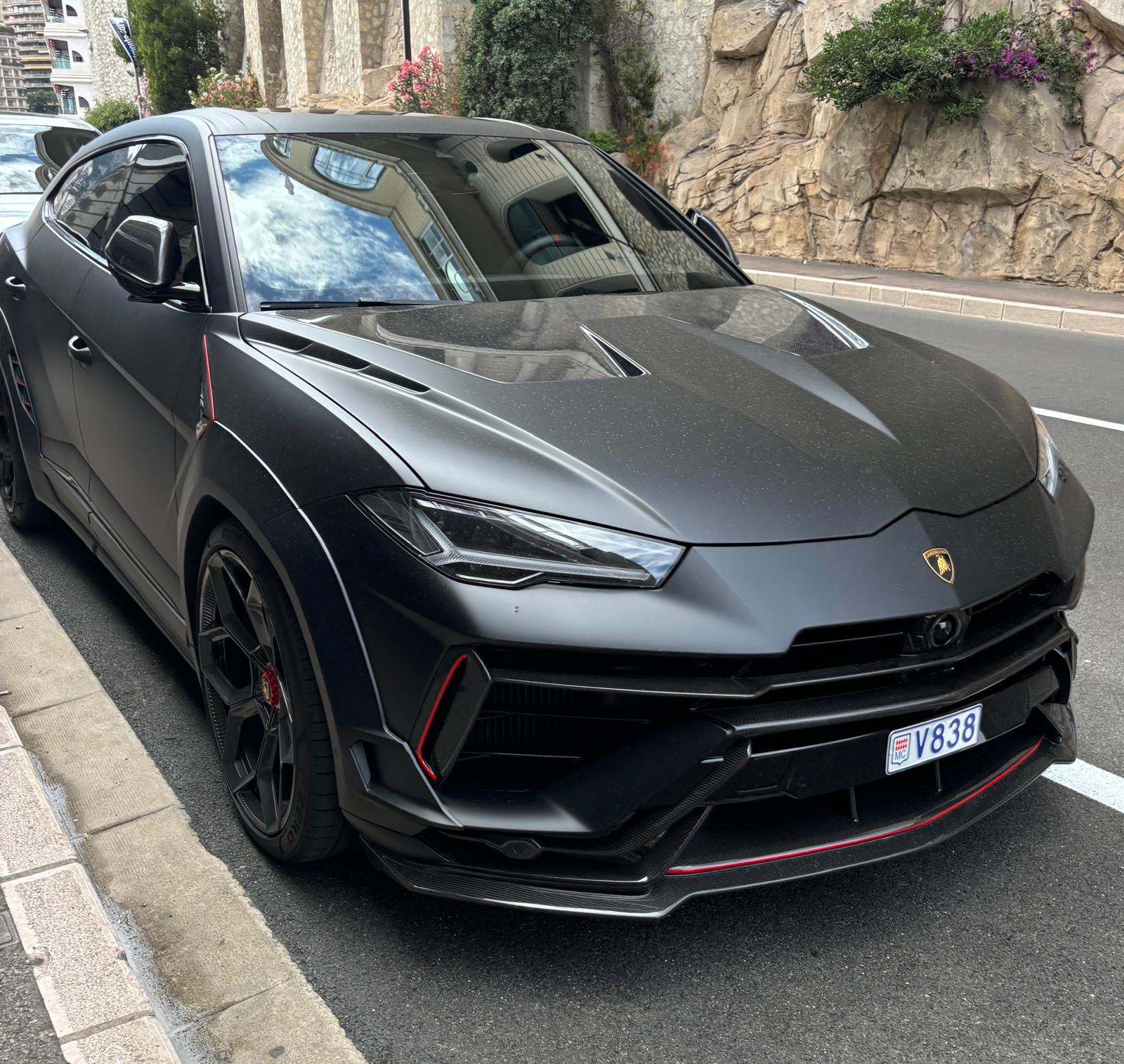
You really thought tuning your Urus would make you stand out? Think again….

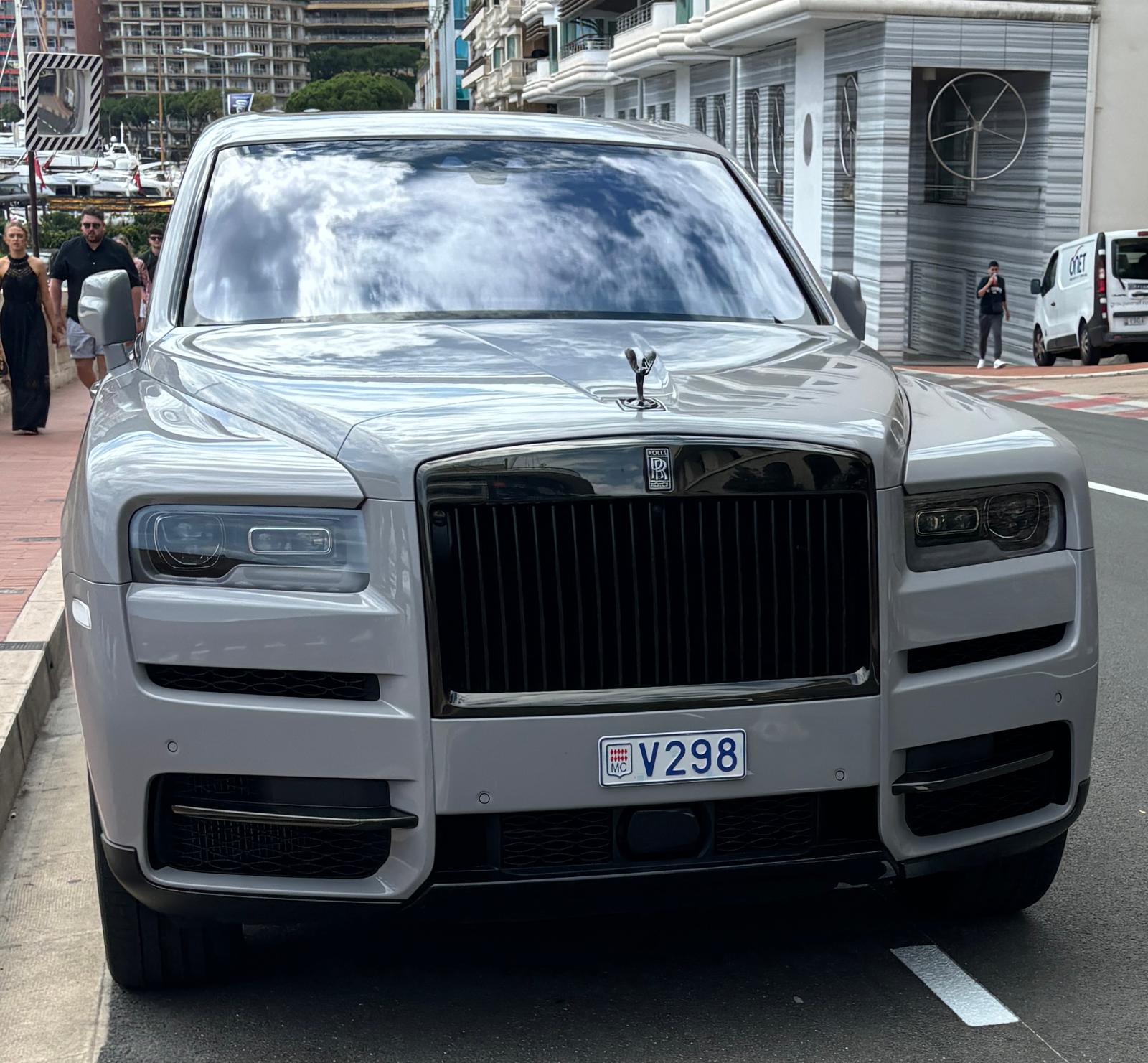
As a good friend at the conference (and also reader of this blog, good man!) pointed out to me, what makes this so hilarious is that, as you’ve guessed given its limited size, Monaco is small, very small. It’s therefore really difficult to think of something less fitting on its streets than the huge (and still as ugly) Rolls Royce Cullinan, of which you see more than any other SUV. Of course the climate in Monaco is also a very pleasant one, with temperatures rarely going under 10 degrees C in winter, so the whole point of a four-wheel drive SUV is difficult to see.

That’s of course unless you leave Monaco as theoretically, you could go skiing in the southern Alps in less than two hours in winter. I’m sure some of the Cullinan or Urus people do, but I also know many don’t, as when you’ve spent too much time in Monaco, the world outside its borders starts feeling very dangerous indeed. And so whether it’s luxury SUV’s or supercars, many of them spend their days in a garage or on distances rarely exceeding two kilometres and at speeds of no more than 50 km/h, between the restaurants, private clubs and (botox) bars. Mostly not driven by the owner, but rather the private driver.

The Monegasque Volvo XC90 – only uglier

If you’re in the south of France, make sure to make Monaco part of your list to visit. Enjoy a drink on the terrace of the Café the Paris with a perfect view of the greatest car park in the world, in front of the hotel by the same name on the other side of the square. Stroll down to the beach and pass by the Ferrari, Rolls and McLaren dealers, showcasing both new and old beauties. And if you’re lucky enough to be in the market for a supercar, definitely consider getting one in Monaco, as the odds are that it’s been used very sparsely in its previous life!

My favourite Youtubers revisited!

A bit more than 3 1/2 years ago, I did a post on my five favourite car Youtubers that saw a lot of interest. Youtube has obviously developed quite a bit in the last three years, with the offer getting ever larger, be it on cars or anything else, but sticking to automobiles, I thought an update on what is worth watching today could be of interest – as well as checking where some of those highlighted three years ago are today!

Starting with the latter, Shmee is as active and irritating as he ever was. His following has grown to over 2.5 million, and his car stable has grown by much more, in millions of pounds… Some of his latest adventures include taking possession of a Koenigsegg Jesko, driving around in a McLaren 750S Spider, and taking a tour to Germany in his new Ferrari Purosangue. Doing so he made a big thing of getting a nail in one of his tires. I strongly doubt anyone felt sorry for him.

Shmee with the big man himself, Christian von Koenigsegg

Doug DeMuro has also made it rather big, in various aspects. Firstly his channel is now up to almost five million subscribers, which is noticeable as Doug hasn’t really changed his approach since he started in 2013, which in Youtube terms is an eternity. Even more importantly though, Doug founded his online auction business Cars and Bids in 2019 and sold it last year to the Chernin Group, netting a very healthy USD 37m. And of course, he also bought a white Lamborghini Countach, which in my book is about as cool as it gets.

Doug has made it kind of big – and an 80’s Countach is a good proof of it!

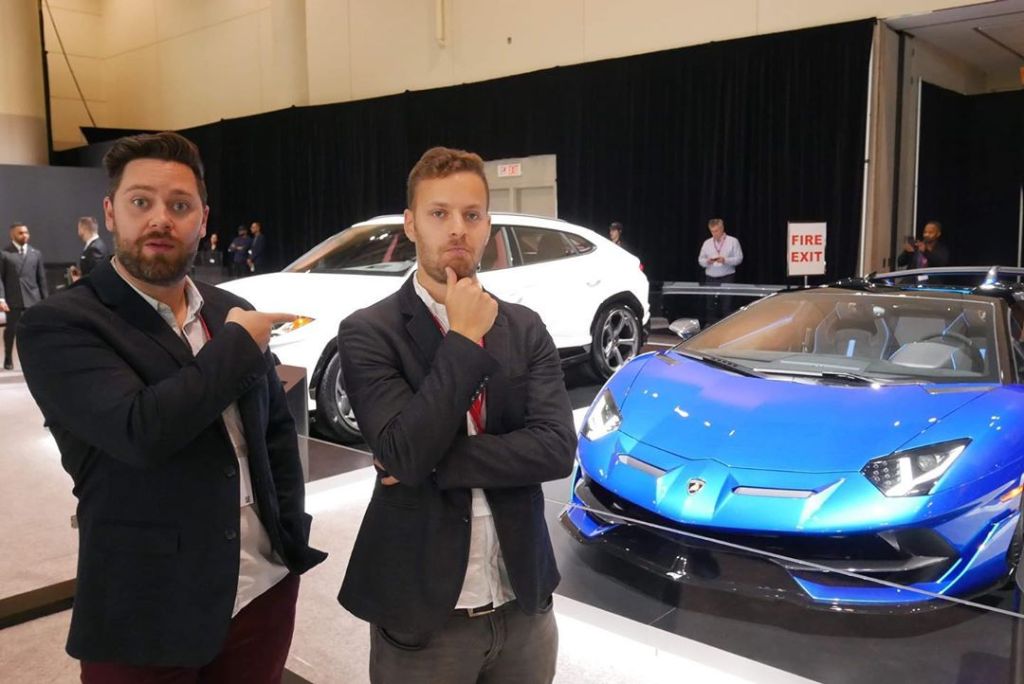
The other guys I mentioned 3 1/2 years ago are still there, but the only one I feel has really evolved is Throttle House by the Canadian-British duo Thomas and James. Sure, they’ve grown in subscribers, but also in format and types of videos, and these days also get invited to various launches, so they also travel beyond Canada, even to Europe last year, where they completely killed the new MB E63, which is nice to see (that they travel to Europe that is, not necessarily that they killed off the Merc…).

Next to Throttle House, I also want to mention Marques Brownlee (MKBHD), a well-known Youtuber making the others look like midgets with his more than 18 million subscribers. Marques is actually most well-known as a tech guy, doing lots of tech reviews, with a special affinity for Apple. That has however also led him to cars, starting with EV’s, but now also broadening out beyond that. What’s very likeable with Marques is his modest and very down to earth-style, in stark contrast to the two first guys mentioned in this post.

When the time came to get a sports car, Marques knew where to go…

Marques is the guy who drove a Tesla Model S Plaid with the carbon kit and ceramic brakes that you can’t even get in Europe, but then still went for a 911 Turbo S when the time had come for him to get a new daily driver. If anything, that proves he knows what he’s doing!

Finally, good old Harry Metcalfe and Harry’s Garage also gets the tremendous honour of being included on this list. Harry is the founder of the UK car magazine Evo that is dear to this blog and from which we’ve taken our tagline. Harry these days lives on his farm (for which, by the way, he has a separate channel, if farm life is your thing) with a huge barn where he keeps his respectable car collection, and regularly tests other automobiles. It’s low-key, down-to-earth, and in a factual way that I personally really like.

Actually I like Harry even more than usual this week, since his latest video on his new RR Sport Diesel (yes!!) is very much in line with my latest post from a couple of weeks ago. In it, Harry adds another couple of points to the long list of EV problems, notably that of battery degradation depending on climate and charging.

Another Countach – but a good old Diesel as daily driver

Just to give you an example, a Nissan Leaf, what you would think of as the type of small, more efficient car an EV should be, if driven in a warm climate such as California and charged to a large extent on fast chargers, as anyone not having a charger at home would do, loses 50% if its battery capacity in a few years. Harry also quotes Toyota’s CEO Akio Toyoda, who last week said he doesn’t see more than 1/3 of the global car fleet being battery-powered in the future. Could it be that a few voices of reason are starting to appear, ever so slowly?

Anyway, do watch Harry, Marques and the Throttle House guys, since if you read this blog, chances are you’ll like them. And if you feel I’ve missed someone that I should be aware of, please don’t hesitate saying so in the comments!

Street finds – the BMW 3.0S!

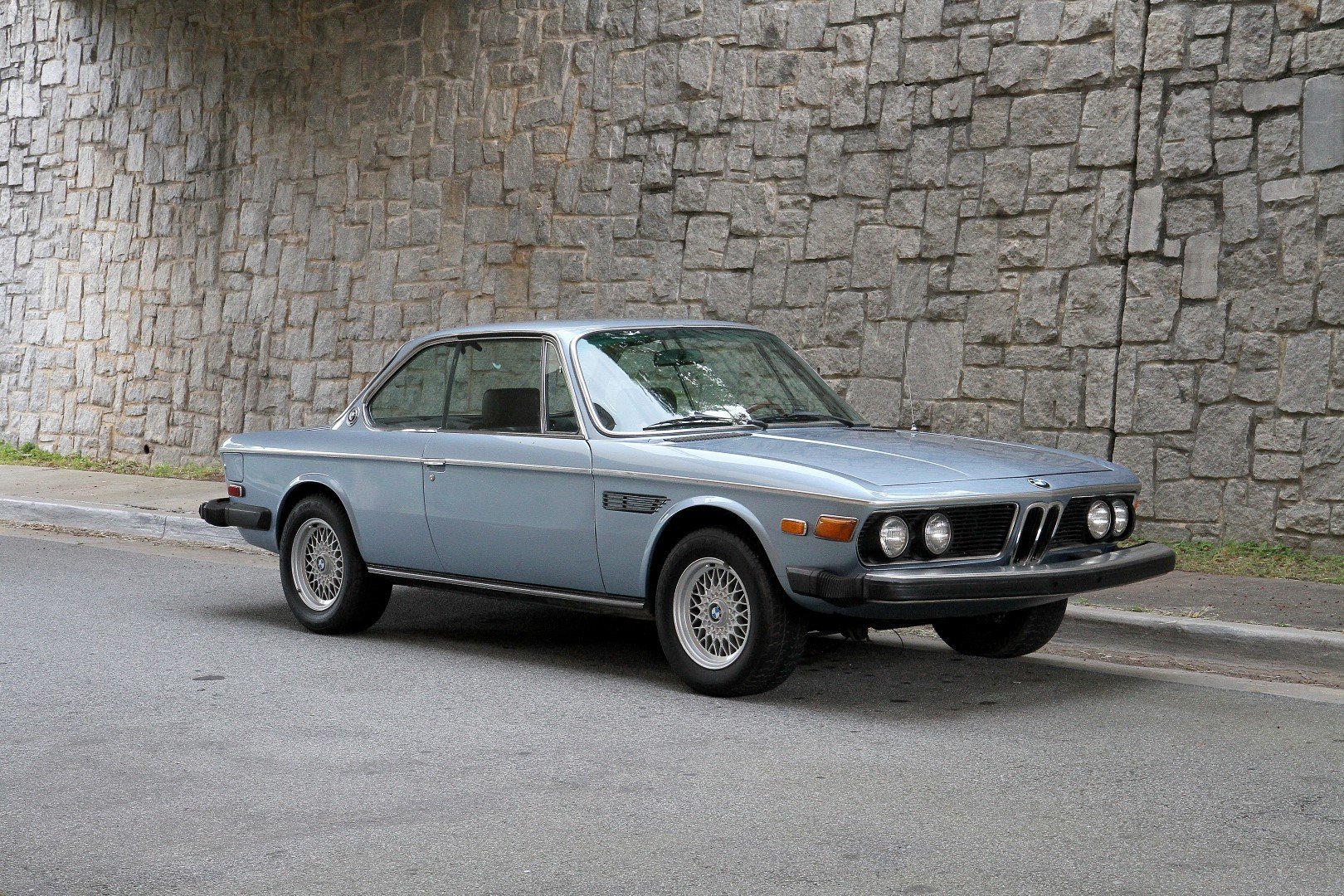
The snow had fallen overnight and it was the coldest morning so far in 2024, as I spotted it standing there in all its modesty, just next to my office. The BMW 3.0S was in tune with nature, not only for the color, but also since somewhat unexpectedly, it was on winter tires! Compared to BMW’s latest luxury sedan, the i7 that I had seen earlier the same day, you can’t help but admire the modesty of designs back in the day.

Truly in mint condition, with modern winter tires!

As always when seeing a car from an older generation, the first thought (or actually the second, after how modest its design was) is how small it is compared to today’s cars. After all, this was the predecessor to the first 7-series and already set to compete with notably the S-class, and yet it wasn’t bigger. That said the 3.0 always led a discrete life, very much in the shadow of that younger, more beautiful sibling everyone prefers…

Street finds are rare in winter and stumbling upon a BMW 3.0 was certainly not what I expected on the way to work last week. BMW’s then luxury sedan was launched in 1968 after several years when the brand had lacked a larger car, and going through a period that had been very economically challenging.

A few years earlier they had however launched the mid-sized BMW 1500 which had become a success, so ever so slowly, the finances were improving. The 3.0 was launched to re-establish BMW as a luxury maker for those with a thicker wallet and was a clear break, also in production technique, with its closest predecessor the 501, built since the early 50’s and discontinued in 1964.

From a 3/4 view, it actually looks pretty much like a 70’s E-class…

It’s completely unthinkable these days that the luxury line of a brand wouldn’t have a name (even if in some cases, you would wish they didn’t…), but the 3.0 was always called just that. Internally it was however known as the E3 and was the first BMW to have the E designation. Why, given that, it wasn’t called the E1, I can’t tell you.

The fact that the grill is black and the rear lights larger tells you that this is a second series 3.0, produced after 1971, however before 1974, when the six-cylinder engine was increased to 3.3 litres. At the time it was the top of the line engine, and its core would live on until the 90’s.

Back in the early 70’s however, far more potent engines were also in development, including a 5-litre V12. Four 3.0’s were actually built with a V12 engine, just around the time of the first oil crisis, which quickly put stop to any further developments in that direction. I wonder if one of those is still around, and exactly how nose-heavy it is to drive…

Cooler and more beautiful – especially without US bumpers

So what about the beautiful sibling? I’m of course referring to the 3.0 CS, internally called E9, the beautiful coupé that was built by Karmann in parallel to the 3.0. Far more of these are still around today and they’ve really taken off in price, contrary to any 3.0 you may find, which will likely still be sub-30.000, or about 1/3 of a good CS. That probably tells you that a coupé was more of a Sunday car, already back in the day…

I’ve actually seen this particular 3.0 another couple of times since I first spotted it, so it clearly belongs to someone living in the neighborhood. I hope to meet the owner one day, not only to congratulate him/her on the perfect condition of the car, especially since it’s clearly driven all year around, but also to learn more about its history, because I’m sure there’s a nice one to tell. If I do, the story will be continued!

Zombie infotainment screens…

Infotainment – a word that didn’t exist in our vocabulary as recently as 20 years ago, but that today stands for all the wonderful things our modern cars can do that have nothing to do with the driving itself. My first experience with an early infotainment system was in an Alfa Romeo 166 I was the happy owner of for a few years, a wonderful car with an equally wonderful, Italian six-cylinder engine, but with a far less wonderful infotainment system, the screen of which was situated so low on the centre console that the gear lever was in the way. At the time it felt very modern, although the navigation it provided was best used as a general indication.

Wonderful car, not so wonderful infotainment…

Things have indeed evolved which is of course a good thing, even if the current trend of increasingly giant screens is a bit of a strange one. It definitely has a connection with the general EV trend since it seems to be a given that any electric car should have as few physical buttons as possible and instead a more or less gigantic screen. Strangely however, even if the quality notably of navigation is far better these days than when I drove that Alfa 166, the first question in connection with these systems seems to be whether the Android Auto or Apple CarPlay connection is wireless or not, as everyone seems to agree that except for Tesla, all other systems are still inferior to Google Maps.

Be that as it may, this means that there is a whole generation of cars which are by now 10-20 years old and have infotainment systems we today consider useless to the point of using our phones instead. Usually you need to have your screen turned on for the USB phone connection to work, but I’ve heard several people say that the low screen resolution makes the whole car feel old and that they prefer leaving the system turned off and driving in silence, alternatively use a bluetooth adapter (a very good idea) or drive with headphones (a very bad idea).

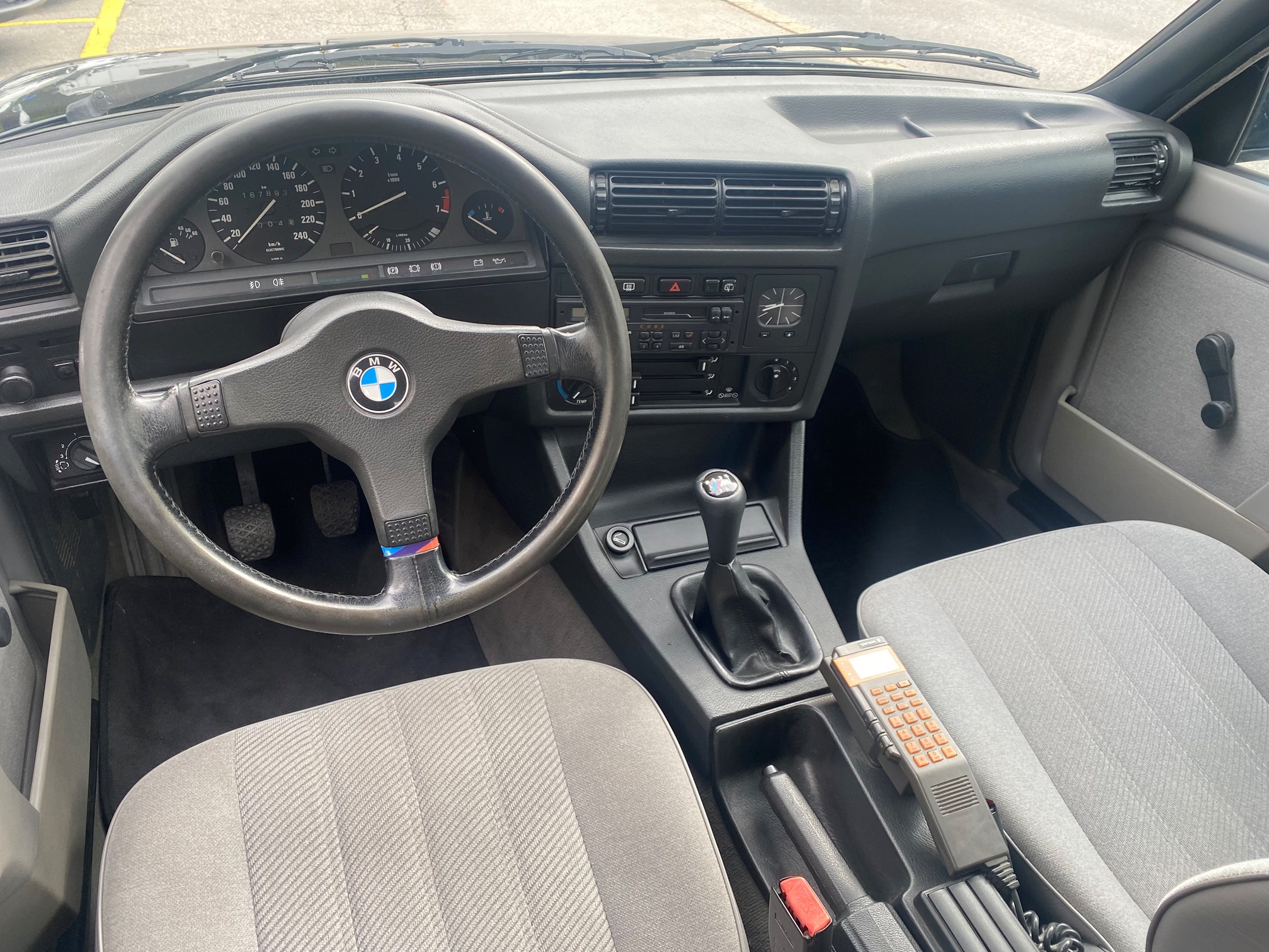
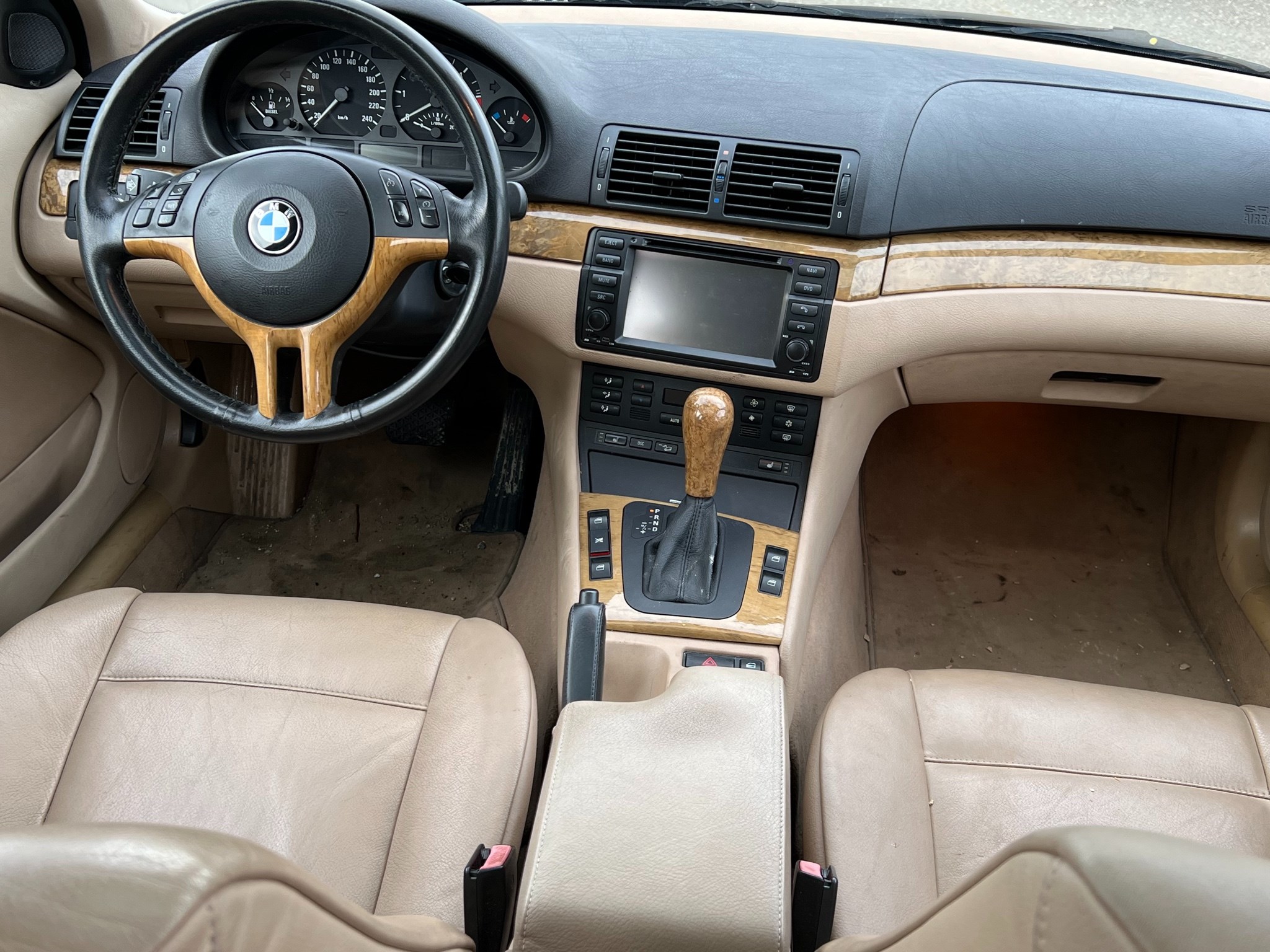
I came to think of this a couple of weeks ago when I saw an old BMW 325i from the late 80’s, a wonderful car inside and out and with a dashboard in the style of old BMW’s: clean and driver-focused, with no infotainment screen to be seen. Contrast this with a 3-series from 15 years later, and now there’s a black square in the middle of the dash that isn’t of much use. Of course this wasn’t the case just with BMW. It was even worse notably in Audis from the same time where the screen was placed even higher, making it difficult to miss. Volvo had an innovative idea on the first generation of the XC90 of the screen slowly rising from within the dashboard when in use, meaning at least you didn’t have to look at it when it was turned off. It’s a shame more manufacturers didn’t follow that example!

If you have a car form this period and from a larger brand, there’s a chance of finding an aftermarket solution that integrates into the dash and offers a fully modern system. There are also solutions that are basically mounted in front of the old screen, looking more or less good depending on the car. If you’re thinking of this for any type of collector’s car, then definitely go for the external solution as rebuilding the dash for example on a 15-year old Ferrari will otherwise reduce its value. If on the other hand you’re thinking of buying an older car, you may want to go for the pre-infotainment generation instead. There are plenty of bluetooth connectors available, even those cassette-based, letting you connect your phone to most older cars’ pre-infotainment stereoes. That in turn lets you look out over a clean dash with no black square whatsoever, and actually enjoy the driving itself!

Which one would you pick??

It’s obviously summer time, and here in Switzerland right in the middle of the really hot temperatures down in Spain and Italy and the really cold temperatures up north in parts of Scandinavia, we’re enjoying perfect summer weather. This is obviously the kind of conditions you imagine when you decide to spend a significant amount of money on a car in the categories sports/hypercar or luxury convertible, so the time to enjoy them has definitely come – and if it’s a convertible, so has the time for shielding your head from the sun during those long, nice drives.

It’s not just in the summer that Zurich is a rolling car exhibition, but clearly the number of beautiful automobiles is higher in July than in November and they tend to be cleaner as well, thereby lending themselves better to the game I thought we’d play this week. It’s one I’m sure we all played as kids and that just maybe some of us still play as grown-ups. I’m of course talking about variations of the excellent mind game “which one would I pick?”! It was when walking through the city the other week that I photographed the following four cars within an area of 200 meters, and thought they lent themselves very well to this exercise. Also, the results could be a good way of getting to know our readers a bit better through your preferences, so please therefore put your replies in the reply section below!

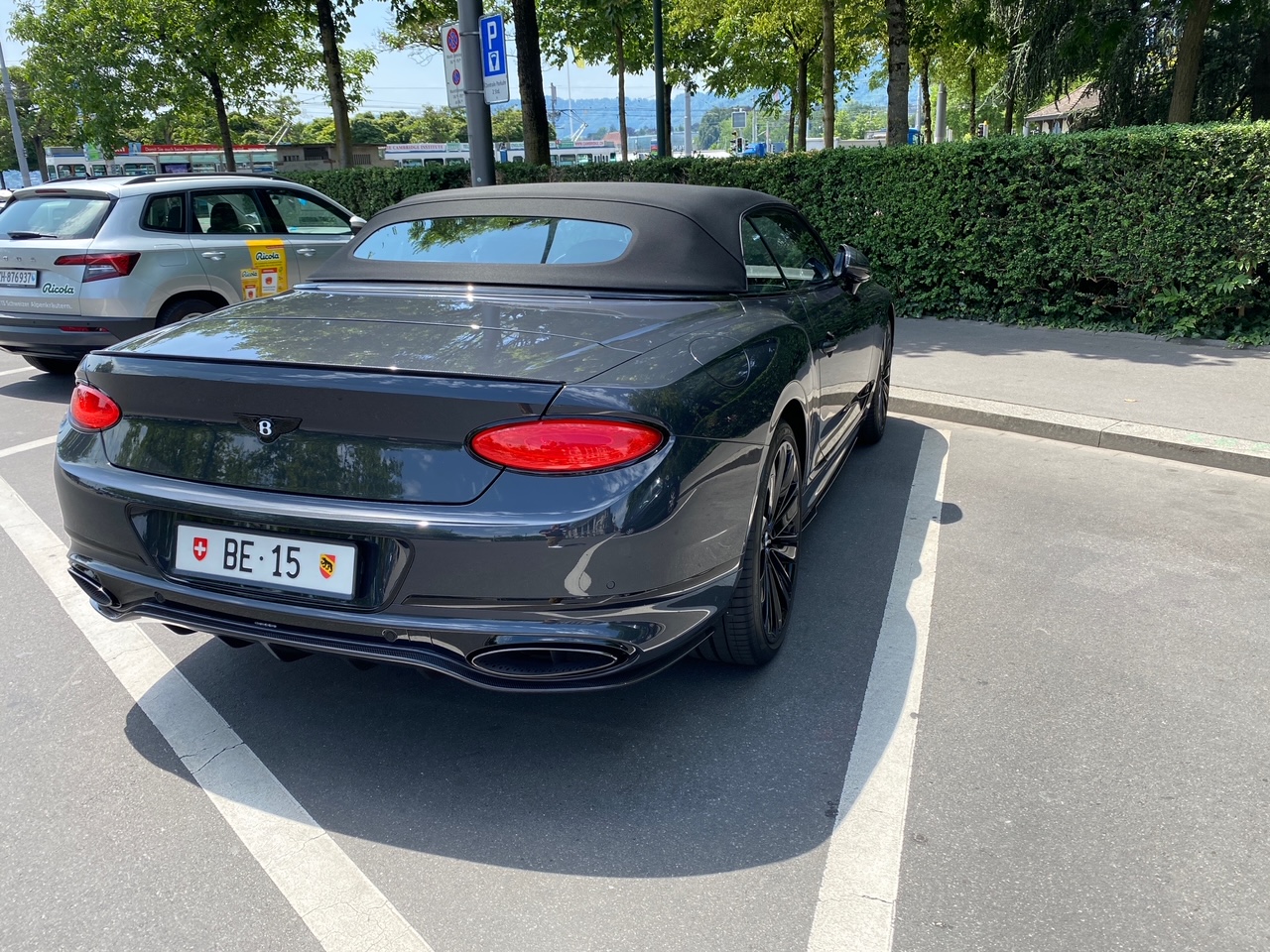
The Continental Convertible – elegant, timeless, discrete, or too old school and boring?

We start with the most common car of these four, namely the latest version of the very popular Bentley Continental GT Convertible, or GTC. I personally think the most recent facelift has given it a much more modern and sporty look, perhaps especially from the back as pictured here. This is the four-litre V8 version with 550 hp, enough to get the quite heavy Continental up to illegal speeds in very little time. The happy owner has also chosen to spend some money on his very own license plate – you may remember the post on the Swiss system for auctioning number plates that you’ll otherwise find here. Anyway, the GTC is a beautiful car here in a discrete, elegant colour, and very much not in your face.

If you read the Bentley caption and take the opposite of every word, you’re there!

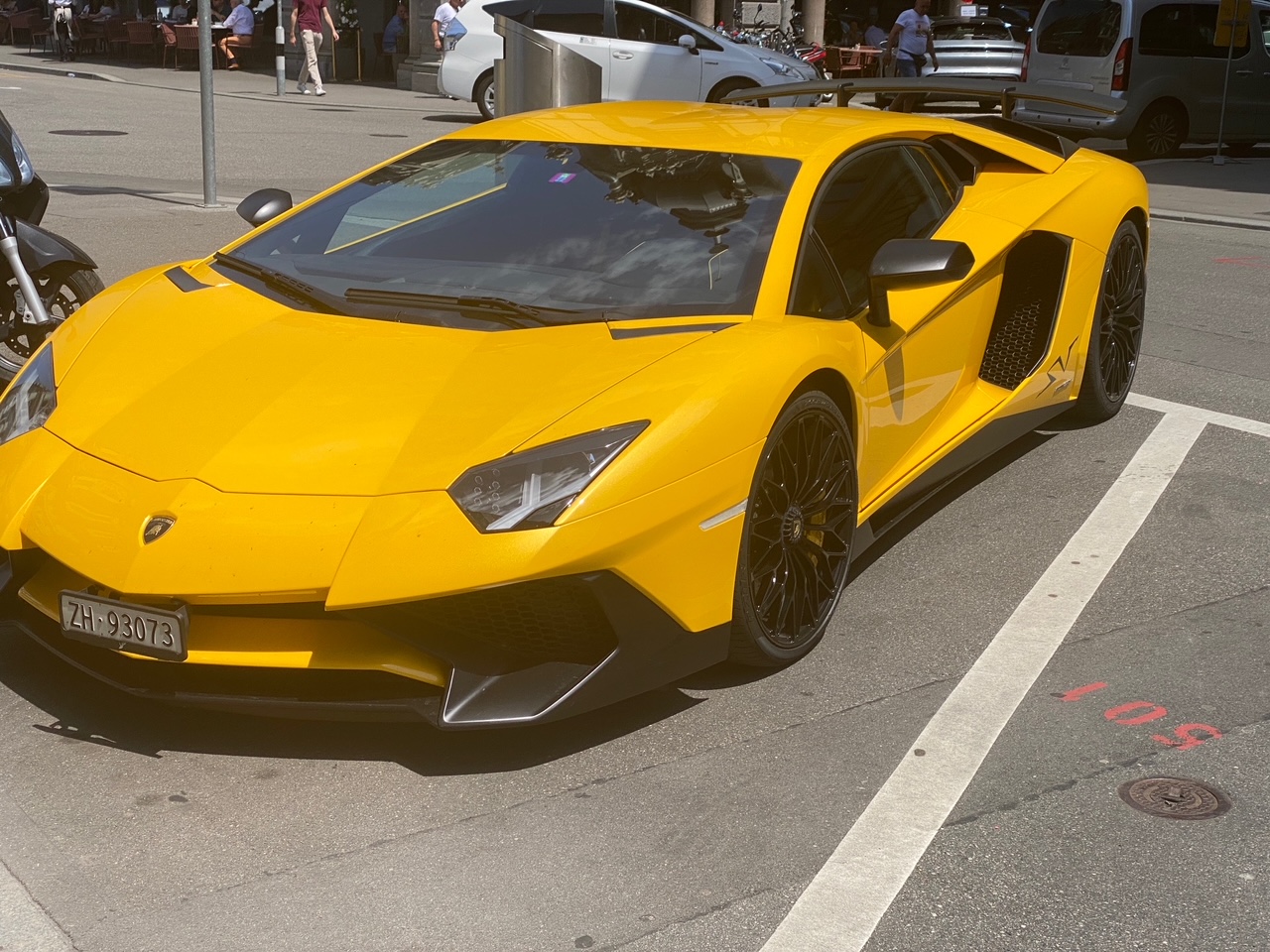
We move on to something that is the complete opposite – a very yellow Lamborghini Aventador SV, meaning Super Veloce, or super fast. That it is indeed, being powered by a 740 hp V12 that will bring you to 200 km/h in 10 seconds flat and also around the Nürburgring in (just under) seven minutes. As it does so, it will leave no one in any doubt of where it comes from and that there’s a bit V12 powering it. You can certainly debate how ideal it is as a city or shopping car but there’s definitely space enough for some of the small, expensive gift boxes you find in the many jeweller shops close to where it was parked. Whether it’s yellow or not really doesn’t matter – an Aventador will never pass unnoticed!

The wooden hood cover is very nice, but perhaps not with this seat colour?

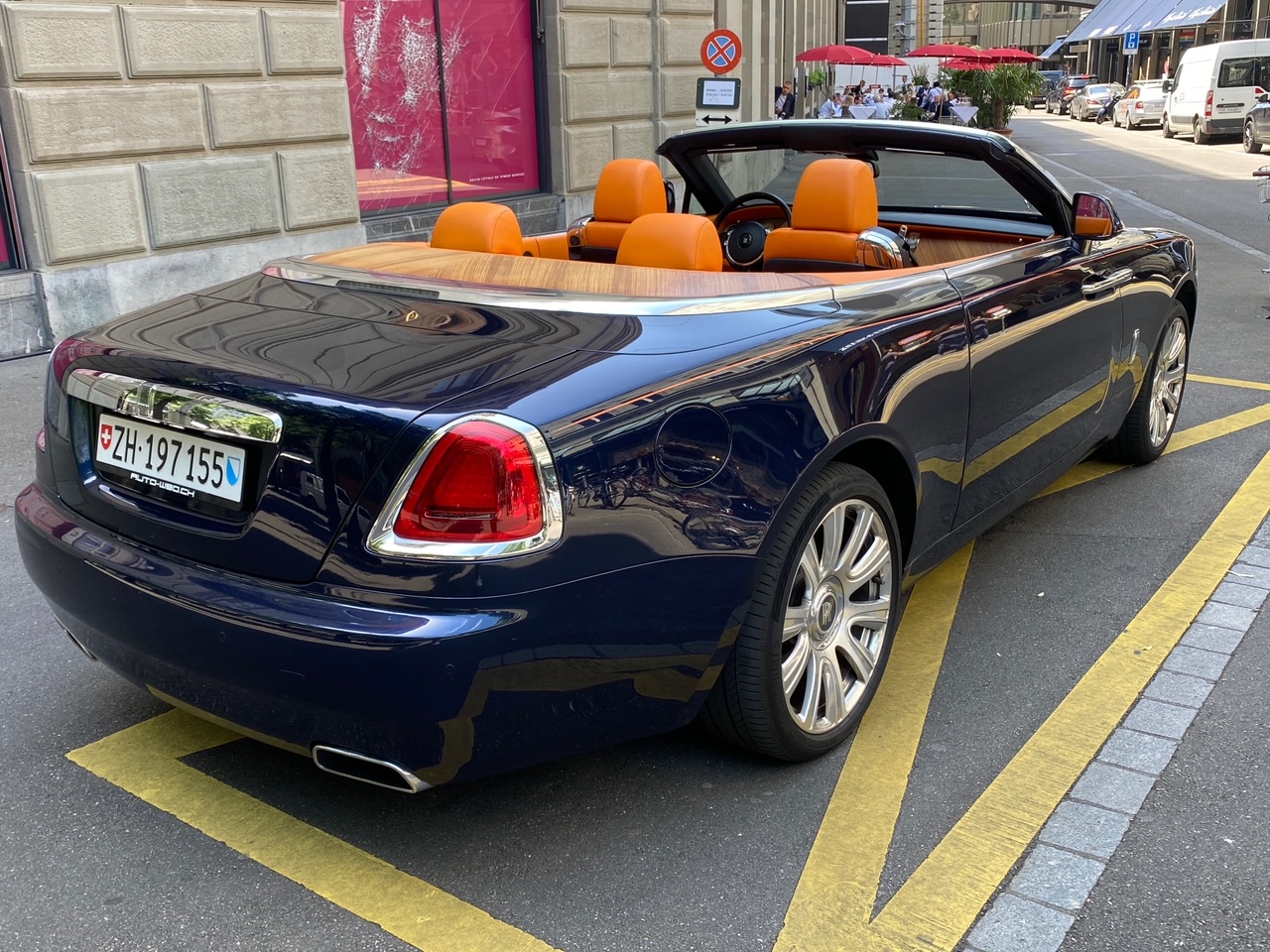
If the Bentley is too common and the Lambo too flashy, then what about a Rolls-Royce Dawn? After all, when it was launched in 2015 the brand referred to it as “the sexiest Rolls-Royce every built”! That was however not enough for CEO Torsten Müller-Ötvös who also described sitting in it as “the most luxurious place to be on earth”. Be that as it may, the Dawn is no doubt a beautiful automobile creating just enough theatre with its rear-hinged doors, but its weight of 2800 kgs (!) means the 6.6 litre, 570 hp V12 needs to work hard. It’s thus probably better suited for downtown Zurich than the Aventador, even though the owner’s choice of parking space could turn out to be expensive. Then again, in this league, who cares…

Looking at it, RR boss Müller-Ötvös may just be wrong about that luxurious place…

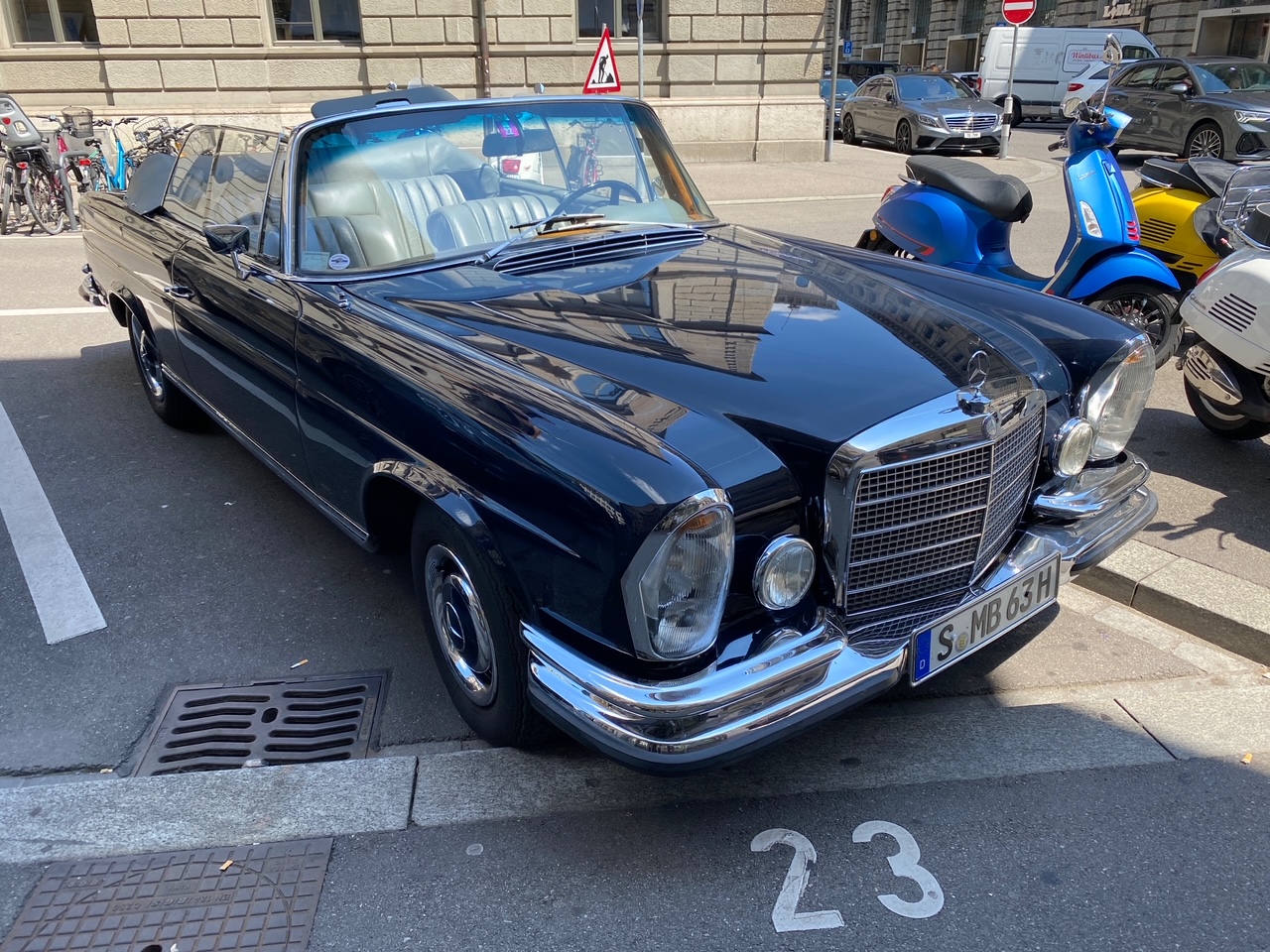
The final pick is perhaps the best representative of a time long before engines had many hundred horsepower, and prestige was instead defined by opulent design and plush materials. This beautiful Mercedes-Benz 280 SE 3.5 V8 Cabriolet (long name for a legendary car!) that we’ll come back to on the blog as it’s worth a post of its own, was built in the late 60’s – early 70’s 1232 times. The 230 hp, 3.5 litre V8 had its work cut out with the quite heavy car, but this was of course never meant to be a Nürburgring racer so power was quite sufficient at the time, as it remains today.

Those are the candidates, which one would you pick? I’ll obviously tell you which one my choice would be, and it probably comes at no surprise that I would go for the beautiful Merc. I certainly wouldn’t mind the others either but as said, if you need to pick one, that’s my choice. Please put yours in the comments or, if you happen to be the very fortunate owner of any of these masterpieces, perhaps a photo of it!

Street finds – the SUV duel!

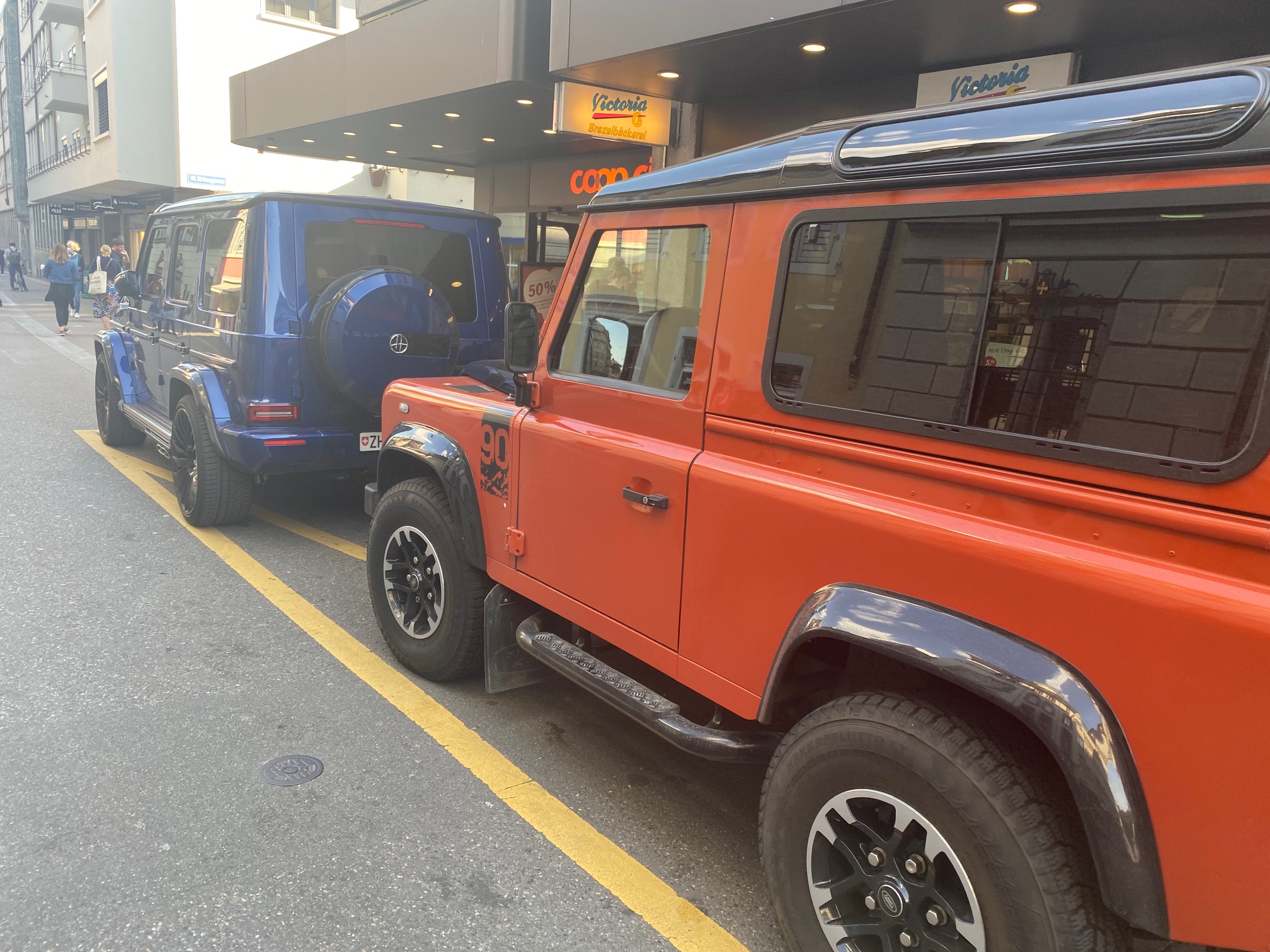
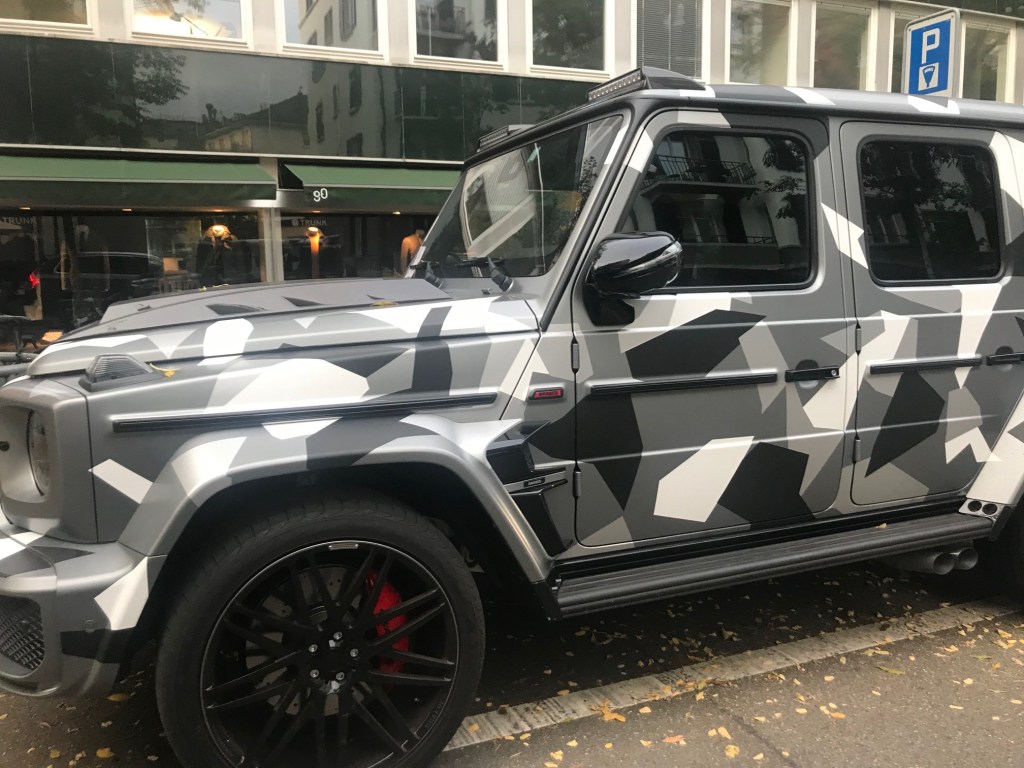
It’s no secret that a lot of money has never been a guarantee of good taste (rather the contrary in many cases), and it’s something I came to think about earlier this week when I saw this pair parked close to my office. Both SUV’s of course, and both among the cars with the longest production time of any car model, even if this is of course the upated G-wagon. Both also among the most capable cars there are when the road ends, although as usual, none of these and especially the G will ever see anything but tarmac. The pair was however also optically interesting, as the G wagon is a Hofele version, equipped with an interior the same colour as the Defender’s paint – orange. That paint, officially under the name Phoenix orange, came as part of the Defender 90 Adventure Edition in the last year of production in 2016. So in other words, both these cars are special editions.

Two special legends!

Starting with the Defender, it has an appeal like few other cars. I can’t help smile whenever I see one, and even though I think Land Rover has done a great job with the new version, there’s really nothing like the original Defender, especially in the 90 (short) version. As cool as it is on the outside, as uncomfortable, squeezed and old it is on the inside. The door will be in constant contact with your left leg and unless you open the window, forget about resting your arm on it. The turning circle is… bad, as is the suspension, the wind noises are terrible, and the 122 hp aren’t anything to write home about. And yet, sitting up there, you feel like perhaps not the king of the world, but still pretty darn good. And again, should the road ever end, the Defender is the best friend you can have.

Then there’s the G63 Hofele. Don’t recognize the name? It was new to me as well when, by coincidence, I drove by their Zurich branch a while ago. Going in to check it out, I learnt that Hofele is a German company specialized in tuning of various Mercedes models, but especially the G-wagon. Tuning here means completely redone interiors, new wheels and things like rear-hinged doors and other stuff some people are willing to pay lots of money for. The emphasis is however on the interior which is transformed into an orgy of leather and alcantara, all to the precise wishes of the owner. I sat in one when I stopped by Hofele and I’ve truly never seen anything like it. In this precise case the owner seems to be a true fan of bright colours, as not only did he choose the not-to-everybody’s-liking brilliant blue as exterior colour (I would guess that at least 80-90% of G’s sold are black or dark grey, with the rest being white, silver or dark green, but not blue…), he combined it with the most orange interior ever seen in any car.

The inside is VERY orange…

Except for being the most classical SUV’s and most capable offroad cars you can find, and both being special editions, these two really have nothing more in common. The Defender is as rustical as it gets, the G an ocean of luxury, especially in the Hofele edition. It has about five times as many horsepower as the Defender (even though you can only enjoy them in a straight line, since the driving systems will prevent the laws of nature as soon as the road starts to twist…), at least five times better build quality and as they stand here, it’s also at least five times the price. Late 90’s version of the original Defender change hands for EUR 60-70′, while Hofele adds around EUR 200′ to the original G63 price, meaning a total price tag of around EUR 400-450′. I honestly don’t know which one is the most absurd.

If orange isn’t your thing, they’ll do any other colour you want.

Let’s however play with the idea that some generous soul would give you one of these two, on the only condition that you had to drive it over the coming years? What a no-brainer – of course you’d take the G63 right? Yeah – it’s just that the exterior colour is a bit… And then of course, everytime you’d open the door, you would be confronted with an orange orgy that you may just get a bit tired of pretty quickly. And you’d really have to be immune to everyone else’s looks, because whereas I’ve never seen anyone frown at the sight of a classic Defender, there are lots of people out there who have rather negative thoughts about SUV’s in general and very flashy G-wagons in particular.

I’d like to think I’d go for the Defender. Somehow I’ve always wanted one, and after I find the dream house in the Alps or the old castle in Tuscany, it’s definitely the second thing I would buy. And if I ever wanted to sell it, as proven by its current price, there’s really no car that keeps its residual value as well as a Defender. Under normal conditions, that would be true for the G-wagon as well. In this colour combination however, I think the first owner is in for a pretty hefty loss should he wish to sell his orange paradise. Then again, the residual value was probably not a concern of his in the first place…

Roughly how I imagine myself in a few years…

When the number plate costs more than the car

This week we’ll talk about number plates. Not very exciting you tell me, but just wait. In most countries and for most of us, getting a number on your car is a pure formality. For some and in some countries, it’s possible to get your personalized number plate at low or even no cost. And then there’s Switzerland. Here, number plates are personal and follow you rather than the car. This is not unique in itself. What is however, is the way you get a personalized number – and how much it costs. You see, Swiss car owners’ willingness to pay a small fortune for a specific car number puts millions in the local cantons’ deep pockets – every year.

A canton is a Swiss region, comparable to a US or German state. Being a federation, Switzerland is split into 26 of them, with Zurich being not the largest, but with around 1.5m inhabitants the most populous. Registration plates indicate which canton the car comes from with two letters (“ZH” for Zurich, “GE” for Geneva etc.), and then any number between one and six digits. Given number plates are personal you will have guessed that those which have been in circulation long have few digits. This is of course also the case in smaller cantons. In Zurich on the other hand we will soon see the first seven-digit registration plate. That will of course be the number “ZH 1 000 000”, which you could imagine someone being willing to pay a few bucks for. That’s what the cantons have realized as well, in the case of Zurich as long as 30 years ago.

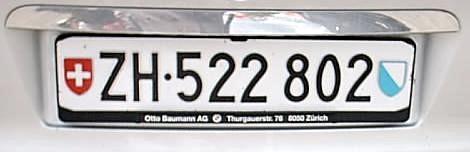
A normal Zurich number plate

Cantons therefore regularly organize auctions for especially interesting number plates. Using Zurich as example, it’s here done on a weekly basis. Numbers which are auctioned are either interesting numbers that have been handed in because someone has died or otherwise stopped driving, but also numbers that have been picked out of the regular series. Anyone can register and take part in the auctions, but no information is given out beforehand on the numbers that will be auctioned, and all auction proceeds flow into the canton’s budget. In the case of Zurich as a large canton, this is the not so trivial amount of around CHF 4m (USD 4m) each year.

Against this background and in a country with a lot of money, it’s easy to imagine that a certain craziness has developed around this. You see, in Zurich having two (very rare), three or four digits in your number plate signals prestige, around some logic of old money. And then it’s of course true that having a number such as the one on the picture below is quite cool. It’s just that most of us would probably put the value of this at a few hundred bucks. Not in Zurich.

This plate cost the owner at least CHF 50.000 – in other words, much more than the car is worth…

Three years ago in 2018, the number plate “ZH 987” was auctioned away for CHF 150.000. Yep, you read that right. Before that, the record had been set by “ZH 1000” at CHF 130.000 back in 1998. These are obviously records, but every week the canton of Zurich auctions around 30 number plates where as a rule of thumb, not so spectacular four-digit plates fetch around CHF 8.000 and three-digit ones around CHF 20.000. It can be much more however, with for example “ZH 1313” being auctioned for a solid CHF 75.000. Even an average, five-digit plate will cost you around CHF 4.000. When “ZH 1 000 000” comes out, it’s by the way expected to set a new record.

The full craziness of the above doesn’t become apparent until you realize that there’s no secondary market once you have paid for your dream plate. It’s a sunk cost which therefore also doesn’t need to be declared as wealth in your tax filing, as there is no way of selling the number on (it is in some cantons, but not in Zurich). This is probably a very good thing as you could easily imagine this going completely bonkers if that was the case, but what it means is therefore that whoever paid CHF 150.000 for number plate “ZH 987” will never see that money again. Basically, he or she made a hefty lump sum tax payment and got a number plate in return.

Some cantons such as the mountainous Graubünden allow personalization as well

I can produce a very long list of desirable cars for a budget of CHF 150.000, as I’m sure you can as well. Actually I could do the same for CHF 20.000 and thinking about it, my son’s newly bought Lupo GTI didn’t cost much more than CHF 4.000. All these scenarios feel vastly superior to large, lump sum tax payments yielding a specific number plate as only payback. Then again what do I know – I’m the type of person who still struggles to remember my own number plate, although I’ve now had it for 19 years. Obviously, that’s not the case for everyone…

Street finds: the A112 Abarth!

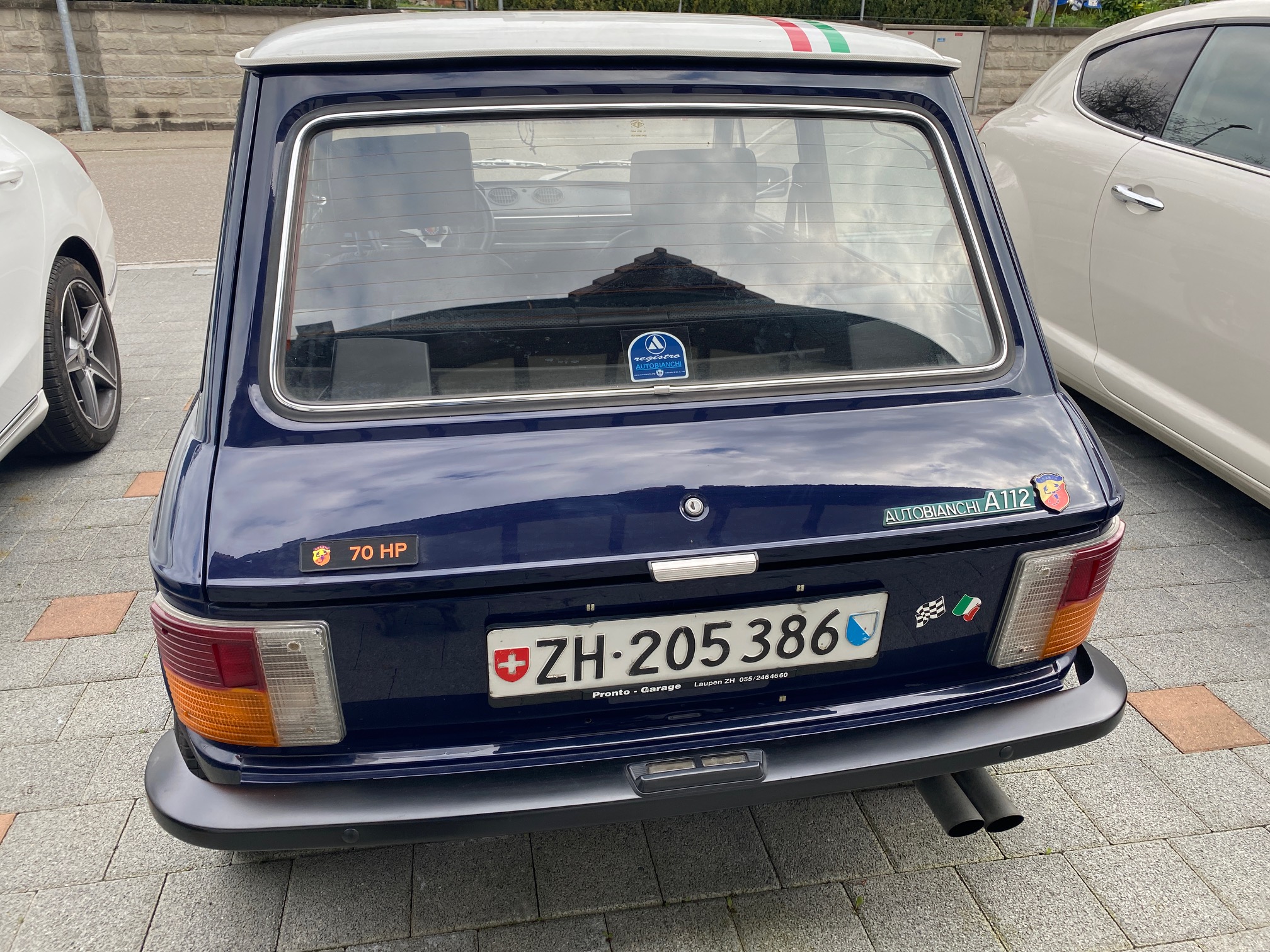
The morning dog walks in our sleepy village outside of Zurich usually don’t bring much in car excitement, and after a premature summer left Switzerland after Good Friday and had changed into a rather grey and chilly morning on Saturday, I wasn’t expecting much of anything. But then there it was, the car which from afar looked like a Mini, but on closer scrutiny was the today very rare A112, and as I was to discover, even a perfectly kept / restored 70 hp Abarth! Some of you will know the A112 as an Autobianchi, an Italian brand from the 70-80’s. Today these lovely small cars have become unusual, especially in one of the early 70’s series as this one was. Back in the day however, (when 70 hp in a small car was still something worth bragging about), the A112 was a frequent sight on the roads especially in southern Europe, and Autobianchi was on the technical forefront of motor engineering, at least in the small car segment. So a bit unplanned as street finds tend to be, this week we’ll have a closer look at the racy A112 Abarth!

The very cool 70 hp Abarth I saw on the streets, with stripes and a white roof!

Autobianchi had its roots in Bianchi, an Italian manufacturer of bicycles (cycle enthusiasts will know it very well!) and motorcycles founded in 1886. 20 years later Bianchi started producing cars as well, but that was met with a moderate success and by the 50’s, the firm was close to bankruptcy. To try to save what could be saved, together with Fiat and Pirelli, the car business was separated into Autobianchi, initially co-owned by the three companies but taken over by Fiat in 1968. Fiat’s idea with Autobianchi was to position it as a more exclusive version of the “regular” Fiats and a brand under which technical innovations could be tested without risking Fiat’s reputation. The most notable of these included the relatively new concept of combining front-wheel drive with Fiat’s first transverse engine. Autobianchi’s first models had names such as Primula and Giardinera, more reminiscent of gardening than anything on four wheels, but then in the 60’s first the A111 and subsequently the A112 were introduced. The latter would be built during 17 years until 1985 in a total of 1.2 million cars, making it by far the most successful car in Autobianchi’s history.

With a total length of 323 cm, the A112 was based on a shortened Fiat 128 chassis. Marcello Gandini, the man behind cars such as the Lamborghini Miura, Countach and Diablo, was given the task to design the car, but it’s quite obvious that he took less inspiration from what he had done for Lamborghini and more from another car that had already illustrated how successful the small, front-wheel drive concept could be: the Mini. The A112’s original engine was the 0.9 litre four-cylinder from the Fiat 850 initially producing 42 hp, later increased to 48 hp. Already in 1971 however, the Torino-based car engineer Carlo Abarth, founder of the company of the same name, saw the potential in the small and light A112 and came up with a 107 hp prototype. This was considered far too much fun by Fiat, and also too expensive to put into production, and power was therefore reduced to 58 hp in the first Abarth versions, and then from 1975 increased to 70 hp. This was notably achieved thanks to a sports exhaust, bringing the additional benefit of a wonderful sound! Combined with the fact that the A112 Abarth was the first A112 version with a five-speed gearbox, it quickly became a favourite among drivers with ambition, of which according to the buying statistics, as many as 35% were women.

The double pipes ensure a great sound to this day!

That takes us back to my morning discovery as what I had in front of me was indeed a 70 hp Abarth version from the mid-late 70’s. Having studied it a bit I’m pretty certain this was the third series of the car, meaning it was built between 1975-1977. 70 hp isn’t much these days, then again the car only weighs around 700 kg, almost half of a modern, small car. The nice, 70’s bucket seats looked perfect, as did he rest of the interior (sorry for the reflections int he picture). The Abarth drive is said to be sporty with a typical front-wheel understeering tendency, but notably the short wheelbase meant that the A112 could also switch to oversteering, making the whole thing slightly adventurous. In Italy there was a rally class champinoship for the A112 in the late 70’s – early 80’s, and more recently, fans of Gran Turismo will also know that it’s a car featured in the game. Undoubtedly, the fact that the cars were driven quite hard has had quite a severe effect on the numbers that remain today!

Brilliant Abarth steering wheel, wonderful bucket seats, long wooden stickshift – what more do you need!

So what happened to Autobianchi? well, given Fiat also owned Lancia with a similar brand positioning, over time it became increasingly difficult to separate the two brands. The A112 was replaced by the Y10 in 1986, which was to become Autobianchi last model and was actually sold under the Lancia brand in some markets outside of Italy. Fiat officially discontinued Autobianchi in 1995, it has never had a rebirth since, and probably never will. That doesn’t change anything to the fact that the Abarth 70 hp is a really cool small city car of a kind that isn’t built anymore, and that provides lots of fun (including the sound!) until this day. Nice ones are around EUR 10′, perfect ones as the one I saw proabably around EUR 15′. Try to find another modern supercar with bucket seats, plenty of Abarth badges or a 70’s double exhaust pipe for that money!

Car trips and car memories…

The pandemic does many things to us, and I’m sure I’m not the only one taking more time to reflect on the past (or maybe it’s just age, who knows…). Anyway I was sitting contemplating the other day and quickly realized how many of the old memories are linked to one of the many cars I’ve owned or experienced in various ways. Given you read this blog I dare guess it may be the same for you as well? So in a slightly philosophical way, I thought I’d take you down part of my own memory lane this week.

By the time you read this (and assuming you do so in the week after publication), we’re in Zermatt for a hopefully wonderful skiing week ahead (yes, we are lucky to live in a country where ski stations are still open!). We drove here from Zurich in the family car par excellence, a Polestar-treated XC90 (at least that…) which was packed to the limit as next to our family my daughter’s boyfriend is also here with us. The first time in 20 years or so we had someone else outside of the family as part of a longer trip but obviously a natural – and enjoyable! – evolution. Living in central Europe since our children were small, car trips have been very much part of their life since their youngest years, and we always had issues understanding other families telling us about how their children screamed after 30 minutes in the car and asked when they’d be arriving. For us it was the contrary,..

The only cars you see i car-free Zermatt are the electrical taxis and hotel cars…

Many of these trips were between Switzerland and my native Sweden where we had a summer house during ten years. Roughly 1600 kms in one direction, usually over two days with the night spent in northern Germany. I remember these trips well, the cities we passed, the route that became familiar through the years, the places we spent the night (nothing better than a real German Schnitzel & Weissbier after a day of Autobahn!) and of course also the feeling, especially at the time the family car was the AMG E63, when the left lane opened up and you could floor it! What I don’t remember is the time no doubt wasted in congestion and heavy traffic – somehow you forget about that, even when it felt hopeless at the time. The most vivid memory was however 7-8 years ago, when my wife and I had decided to fly up to Sweden instead and spare the children the long car trip. Upon announcing this my daughter (who was in her early teens) burst out in tears – for her, the car trip was equal to the start of our vacation, and something she looked forward to. So the flight tickets were cancelled and we were back on the road.

The picture left didn’t happen very often, but I remember that more than the picture right…

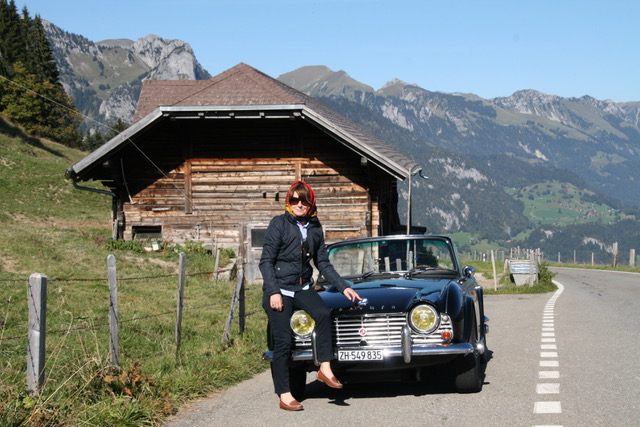
The Triumph TR4 I had during almost ten years was another source of vivid memories. From finding it in Copenhagen early December to driving it from Basle (where it had been shipped to) to Zurich a few weeks later in far from ideal oldtimer weather. Basle is no more than 100km from Zurich but it was still a bit of a shock when after coming home, the oldtimer specialist I went to for a check-through said “it’s a good thing you only drove here from around the corner, because these breaks are nothing but rust…”. After that, as long-time readers of the blog will know I was extremely lucky with the TR4, hardly having a single issue over all the years. The most memorable trip I did was no doubt the one my wife and I took to Lausanne 5-6 years ago. We chose the small roads, over many mountain passes, even running into a real Swiss cow festival. A car memory that definitely sticks, but unfortunately in the end, those trips were too few and far between, reason why I sold the TR4 last year.

A very memorable trip, but unfortunatley there wasn’t enough of them!

There have been many cars through years but going all the way back to the beginning when I was 18 and got my first car, a -75 Golf, as blue as the ocean, with a beige interior. I bought the already well-used Golf in northern Sweden, drove it the 600km or so to Stockholm, and then all the way from Stockholm to Florence for a summer language course. I still remember arriving to Florence late one evening, with the rain pouring down and a map on my lap to help me find my way in a completely unknown city. It took a while and I had an early practice of Italian ahead of the course when I had to ask for help, but I finally made it. It may be a surprise to younger readers but it was indeed possible to find places before GPS’s, and it had the additional benefit of actually having to speak to people! After the course I drove the car from Florence to Nice, had it there for a year whilst studying at university, and then drove all the way back to Stockholm. By that time my Golf had around 270.000 km on the clock and I hadn’t had a single issue during the 15-20.000 km or so it had been mine. There is truly something special with your first car!

Even more special than your first car is perhaps your first car memory, which for me is linked to the years we lived in Monaco when I was a child. I’ll never forget the weekends we spent skiing in the southern Alps in the winter. Most of the way back would typically be one big traffic jam, and you would always have the tough guys driving past the whole line on the narrow mountain roads, calculating that they would somehow be able to get back in line when someone came in the other direction. It mostly worked, but not always, as proven one time by a Renault 5 Turbo II that passed us and a few hundred meters later had crashed straight into another car. You’re certainly allowed to be nostalgic over old cars, but it’s important to remember that most things were not better before – car deformation zones being one of them!

A great car we’re yet to explore on the blog – but not famous for its deformation zones…

Now the children have grown up and this ski trip is perhaps the last family car vacation we do together. The XC90 is a lease for another couple of years so I’ll guess it’ll stay with us until then, but as you know I replaced the TR4 with my 650 convertible last year, hoping that will be the main transport for my wife and I when the children start their own lives. The Beamer will hopefully become a source of new car memories to treasure in the future and I do look forward to them, just as I know we all look forward to the day we can return to a more normal life than most of us have right now. So hang in there and until that day comes, make sure you cherish your own car memories and stories – and perhaps share them with someone!

Supercars and superblondes!

This week I thought we’d dream a bit about some truly dream-like cars. Cars that will not hit the road in the form they’re presented, where pictures speak louder than words, and where inspiration for the post comes from non less than Supercar Blondie. For those not familiar with her, her real name is Alex Hirschi, she’s originally from Australia but today lives in Dubai where she’s made a living as a vlogger on supercars, You may want to follow her on @supercarblondie or through Youtube. Anyway Blondie recently posted a top 5 of these kinds of dream cars that you can see by clicking here:

https://www.facebook.com/watch/?v=224429845838863

I decided to take a closer look at them, so in the order defined by Supercar Blondie, and with more pictures than words, here we go!

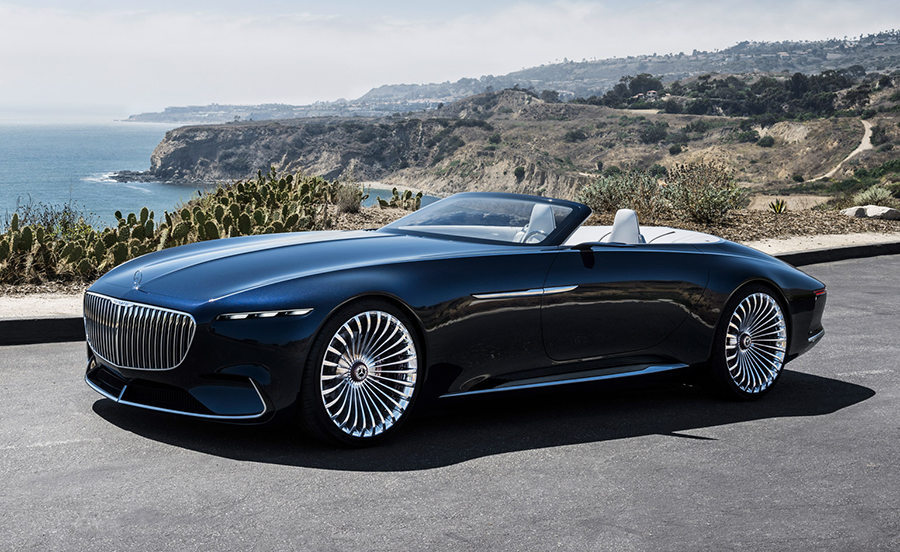
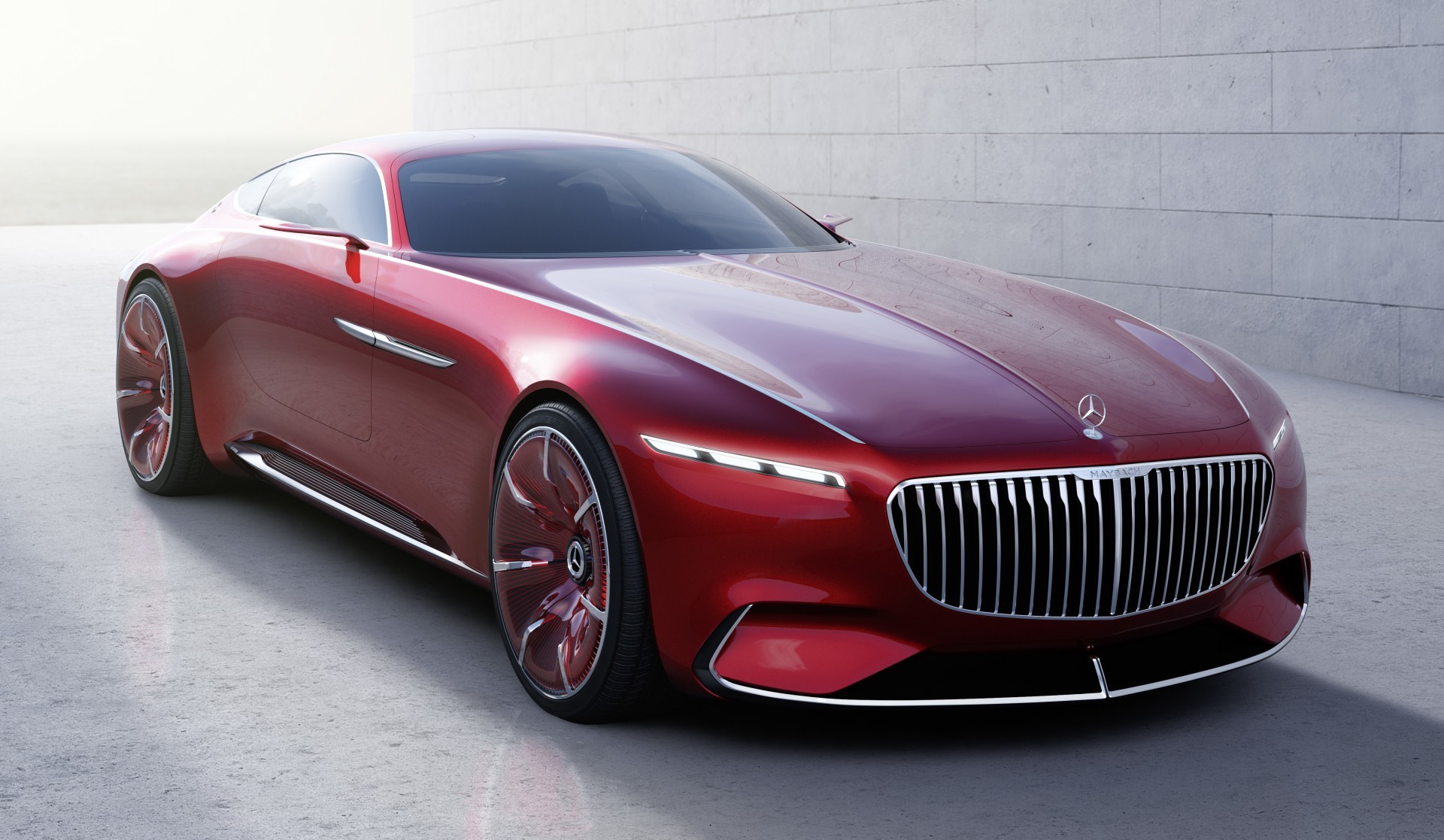
5. Mercedes-Maybach Project 6

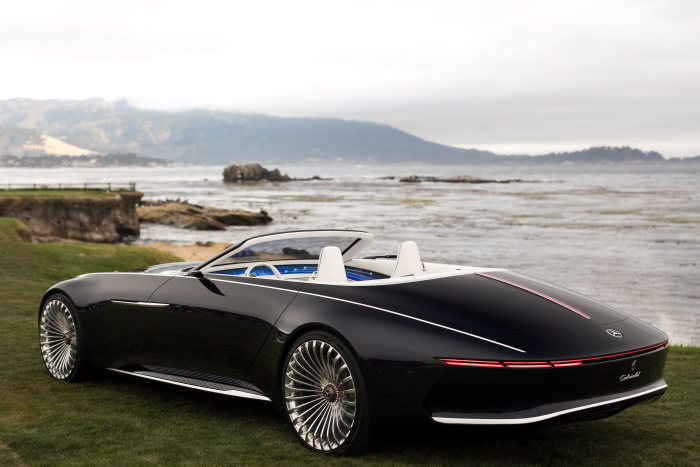
Originally presented in Pebble Beach in 2016 as a coupé and a year later in Monterey as a convertible, the Project 6 is a 6-metre long retro-design by excellence, powered by a 750 hp all electrical engine capable of charging up to 350 kW, meaning 100 km in around five minutes. This 2+2 coupé and convertible are in the words of the chief design officer Gorden Wagener both “hot & cool”, and you could add to that both modern and retro, the former on the interior, the latter on the exterior. However you want to call it, it’s a beautiful automobile!

4. GT by Citroën

No mistake – this is really a Citroën and actually a concept that was presented back in 2008, but that doesn’t look a day old. As is the case with the Lambo further down it was developed for a computer game, in this case Gran Turismo 5. It’s a mid-engined, two-seater coupé that in the game used a hydrogen, fuel cell engine, but that in real life in the prototype built has the V8 from the Mk II Ford GT (that I covered a few weeks ago, see here if you missed it). That explains the sound in Supercar Blondie’s video above. It was rumoured back in 2009 that Citroën would built six of these for road usage, it’s however unclear if that ever happened.

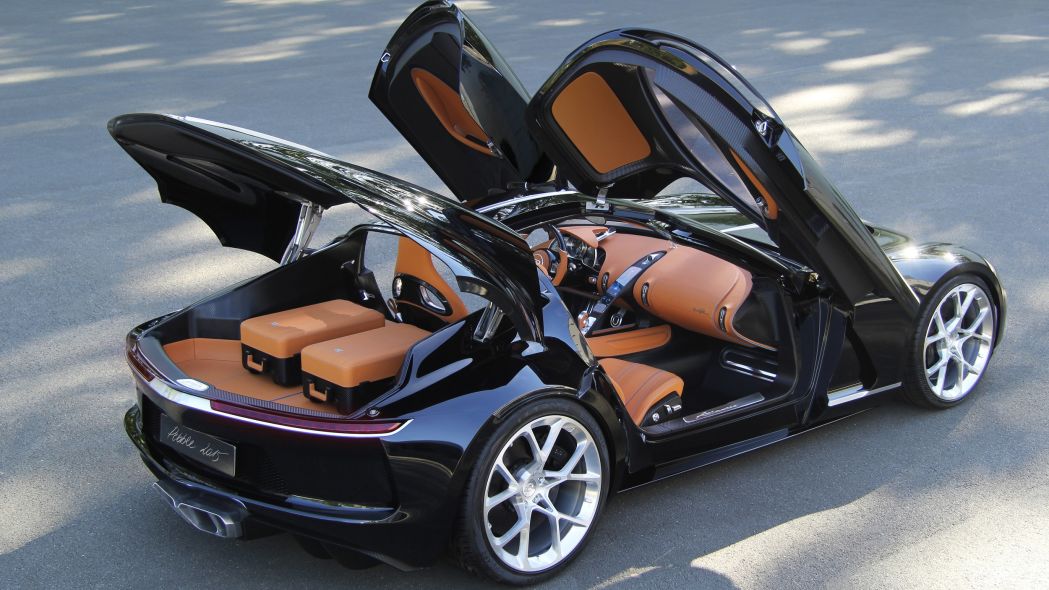
3. Bugatti Atlantic

Carrying the name of a true legend (the Bugatti Type 57 Atlantic), the Atlantic is the car that was never built. It was supposed to complement the Bugatti line-up back in 2015 but a lack of resources within VW meant that it never got that far. That’s really a shame, because it’s difficult to imagine a more beautiful car. The retro elements are in perfect balance with the more modern parts, it’s easy to see that the true life version is even nicer than the pictures, and both the doors and the booth are a real party trick, as illustrated in the video… I want one!!

2. Mercedes-Benz Vision AVTR

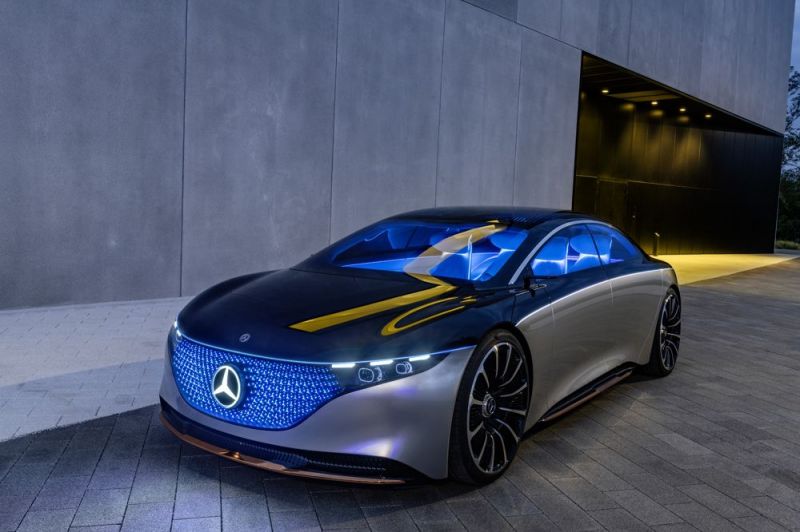
A bit more text here since the AVTR is a very interesting creation that will not hit the roads in the current form, but elements of which will hopefully do so in other Mercedes models over the coming years. In short, the AVTR (meaning Advanced Vehicle Transformation) is Mercedes’s vision for the future. The shape of the car was developed together with the team behind Avatar and to start there, the rear features a full panel of solar panels that will generate enough energy to handle so called secondary functions in the car, enabling the 110 kW batteries to be used fully for range maximization, of up to 700 km. The fact that each wheel is independent means the car can drive sideways up to 30%, as shown in the video.

The battery pack is extremely interesting since it’s based on a new organic battery technology with a high-tension, compact battery on the basis of graphene. Organic means the battery doesn’t need the rare metals that are one of the main issues of today’s batteries, as highlighted in my post a few weeks ago (see here). This also means that the battery is recyclable to 100%.

Finally the interior is a chapter in itself. There is no longer a steering wheel but rather a central pad that recognizes you when you put your hand on it, and that moves as you move your hand. The windscreen becomes an augmented reality screen, and the seats are made in a new kind of bio-degradable Dinamica material. I would guess the material from the seats will hit production quicker than the steering pad…

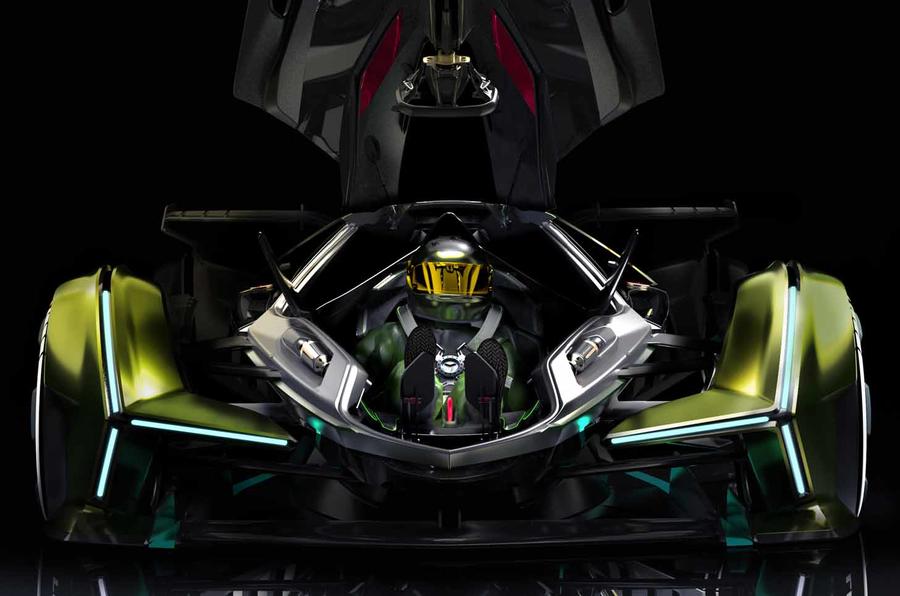
1. Lamborghini Vision GT

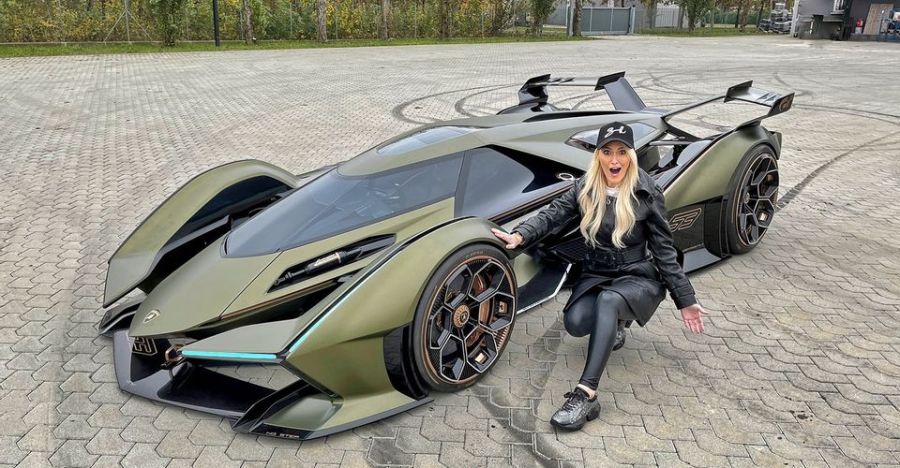
Perhaps the most spectacular car of all five mentioned here is the Vision GT. Next to the Citroën it’s also the other car that was developed for a video game, in this case Gran Turismo 2019 for PS4. Lambo then built a single unit of the car, which even by Sant’ Agata standards has to be described as design-wise rather extreme! The single-seater is super low with wings and a massive diffusor at the back, wheels and brake pads are gold plated, and the combination of the same Lamborghini V12 as in the Siàn, and a small electrical engine gives a total power output of 804 hp. I thought I had seen it all when I saw Lambo’s Sesto Elemento but this thing is in a league of its own, although it will most probably never hit production. Our star of the week Supercar Blondie made a nice video of the car that tells the story much better than I can and that you’ll find here! https://youtu.be/_SB7h2kB6Eg

12 things to expect – or not – in 2021

So here we are, in the new year 2021, and no doubt all of us hope it will be a more positive one than 2020! In the car world there will certainly be lots going on, notably in terms of new sportscar launches, a few of which I highlighted in an earlier post you can read here. With a highly interesting 2021 line-up in F1 (see my latest post on that here for more details), there will hopefully be no lack of excitement there either!

To start off the year in style, I’ve compiled a list of things that can be expected – or not – in 2021. 12 to be more exact, each one corresponding to the first letter of the 12 months. This is not a prediction that they will happen in that particular month, or indeed that they will happen at all, so don’t take it too seriously!

January – as in jolly bloody happy that the new year has begun and with hopes that it will be an easier one than the last one, and that all of us get the opportunity to take our very personal dream roadtrips!
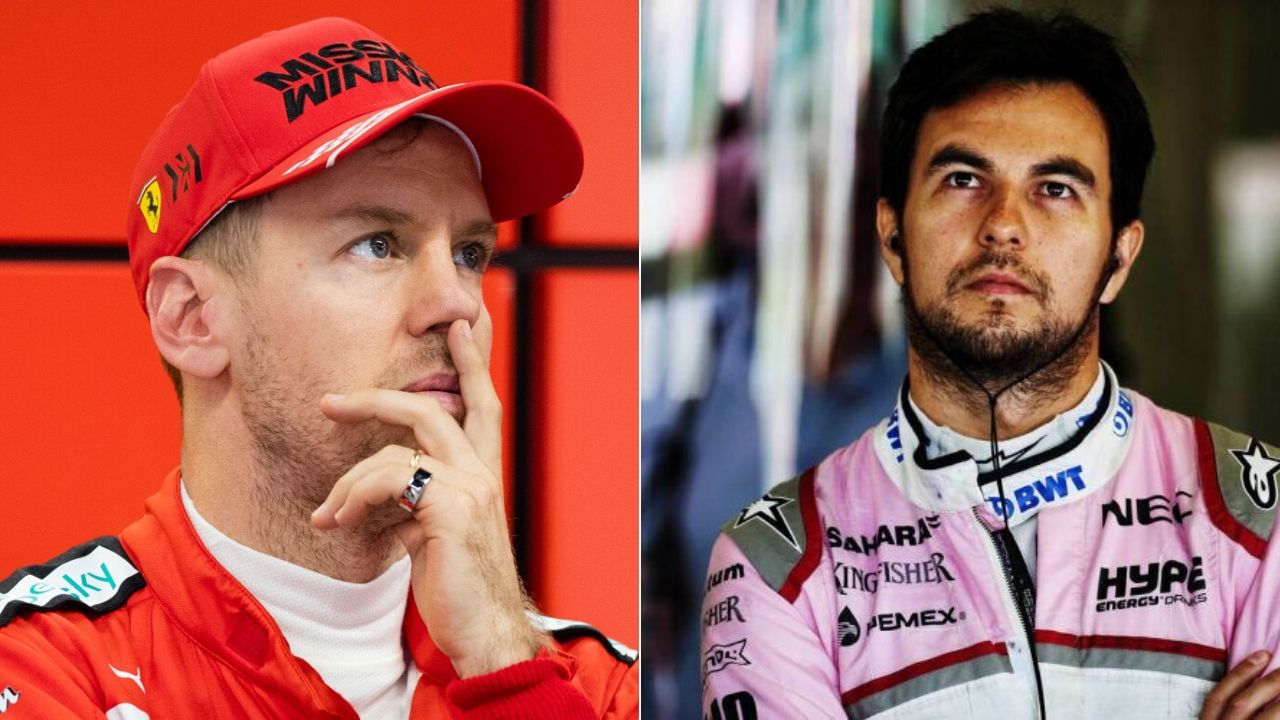
February – as in F1, and a new season that looks very exciting although it won’t start until March. Following Red Bull’s decision mid-December to replace Alex Albon with Sergio Perez, I would claim that 1) the three top teams (assuming here Ferrari finds its way again) have very competitive line-ups and that 2) the teams just behind have at least one top driver. For memory, assuming Lewis Hamilton does finally sign up for the new year, Mercedes will have him and Valtteri, Red Bull will have Max Verstappen and Sergio Perez, and Ferrari obviously Charles Leclerc and Carlos Sainz Jr. And then right behind, McLaren has Daniel Ricciardo, Renault has the returning Fernando Alonso, and Racing Point (Aston Martin from next year) Seb Vettel, really hoping he can return to form. Let the races begin!

They will both be wearing different colors next year!

March – as in motor engines, and most probably the continued growth of electric cars. The question is how far and how fast? On the bright side, in Germany in 2020 when the market as a whole was down 22% in new sales, electric and hybrid cars grew their market share more than four times, and experts now speak of 2020 as the year of the electric breakthrough. On the less positive side, looking for example at the Ionity charging network across Europe, it’s still many miles away from what Tesla offers, meaning European EV’s (not hybrids) are still mostly charged at home and thereby reserved for shorter trips. All in all, even though I was negative on Tesla in Europe a while ago (see here), there’s no doubt electric cars as such will continue to grow, the question is how much and how fast.

No cylinders here…

April – as in autonomous driving, which arguably doesn’t add to the thrill of driving but does add to the safety – although as some incidents notably with Tesla have helped us realize, staying awake and looking at the road ahead is still to be recommended. That’s anyway what you still need to do in many countries, even touching the wheel from time to time, as technology once again is far ahead of legislation. Don’t expect that gap to close in 2021.

Not to be recommended – yet

May – as in Maserati MC20 and all the other great sports cars coming to market, some of which I mentioned in the post referenced above. This is a segment where electricity is setting in big time, with the MC20 as one of few exceptions. You have to wonder how long we will still have alternatives, to electric power, especially of the 8- and 12 cylinder kind!

It may be one of the last of its kind

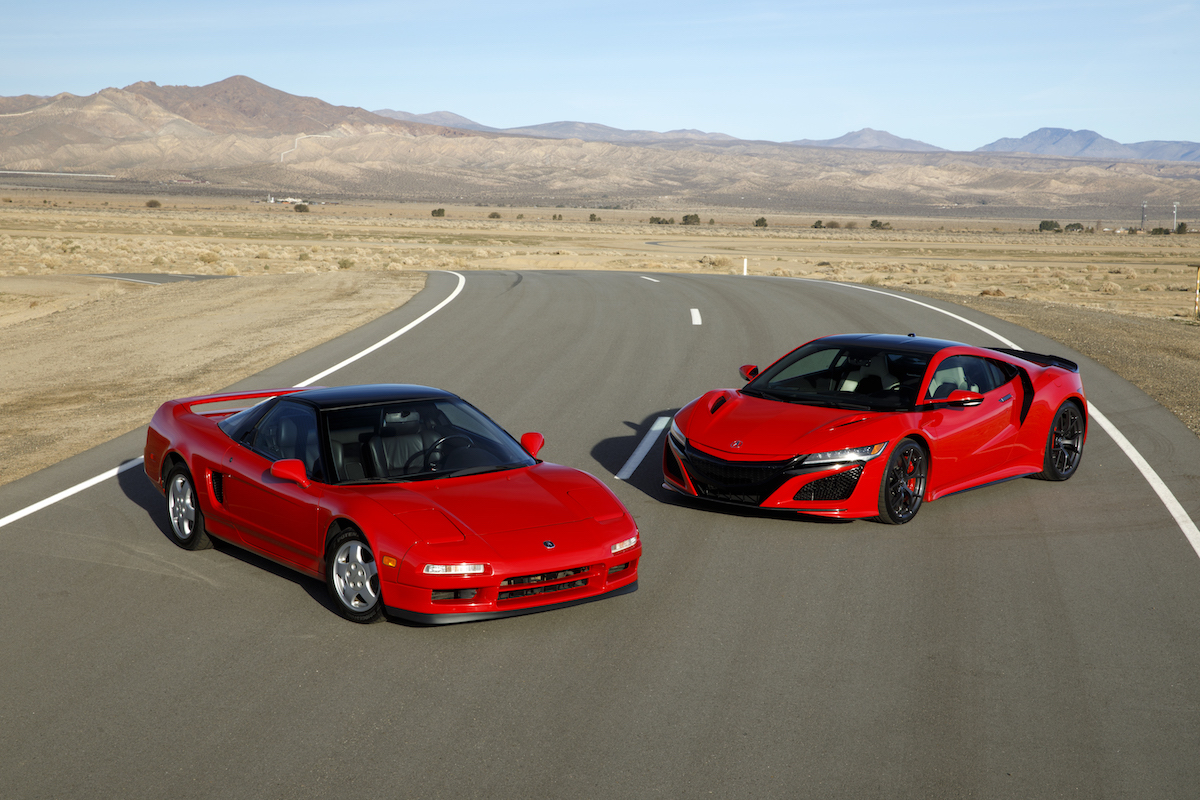
June – as in Japanese automakers and the question whether I’m the only one feeling that it’s time for them to hit us with something a bit more interesting than what’s been the case in the last years? This is the country that used to give us cool Skylines, supercar beauties like the NSX and more recently the Nürburgring record setting Nissan GT-R. That’s 10 years ago now, and this year, Nissan launched a new GT-R that looks exactly like the old one. And as for the NSX’s replacement, firstly it was delayed for an eternity and when it then came, it didn’t blow anyone out of his seat. Not much else has happened except a few more wings on the latest Type R hot hatch, that may be excellent but that just by its looks scares away any sane person over 30. C’mon Japan, give us something to drool about again!

I’ll have the one on the left please

July – as in jailtime, which is what you will spend in some countries if you’re caught speeding heavily. This isn’t new, but what is, and what’s currently being implemented in a number of countries, is measuring your speed over a distance. That’s a real bummer that takes the fun away quickly – and makes it expensive. In Italy where they use a system called Tutor, they at least have the decency of telling you in advance, which is obviously what you do if you’re more interested in lowering speeds and less in filling the state reserves. That will surely not be the case everywhere…

This is a bad sign

August – as in Aston Martin, where ex AMG-boss Tobias Moers will by August have been behind the wheel for a year. Moers has ambitious plans and a solid financial base, notably from chairman and 17% owner Lawrence Stroll, and also a solid collaboration with Mercedes-Benz which own a further 20% in the company. Moers wishes to see a more engineering-led Aston going forward and has in a rare interview also said that he wishes Aston to work more with the Mercedes engineers in Germany, and derive more engines from AMG. We all wish them viel Glück!

A lot of Aston’s future is riding on the DBX

September – as in solid state, and generally what I believe will be required to really give electric mobility the final push it needs, i.e. a significant advance in battery technology. As opposed to lithium, solid state batteries use solid electrodes and electrolyte, and other materials are mostly ceramics. They’re already used in for example pacemakers, they are extremely long-lived, and they’re much quicker to charge than lithium batteries. So where’s the catch? Well, they aren’t cheap… Prices will of couse drop going forward (although probably not as early as 2021), and this is perhaps the big leap electric cars are waiting for.

It’s always blue when it’s about EV’s…

October – as in obesity, something most of the so beloved SUV’s suffer from. And more generally, even a normal sedan is several hundred kilos heavier today than it was just 15-20 years ago. Arguably a lot of this is linked to much improved safety, but we’ve reached a stage where trimming the weight is less important as you can just mask it by increasing the turbo pressure such as to take out more power. Will we see a change to the “more weight therefore more power” equation soon, and a return to something like the Lotus concept that I explored through my friend Erik back in October (see here)? It would definitely be benefitting consumption! And by the way, since the post, Erik has gone off and bought himself an Elise that I’ll hopefully be exploring this spring.

November – as in Nikola, the biggest corporate scandal in 2020 after Wirecard. For those of you who’ve missed it, Nikola is a producer of electric trucks in the US, founded by Trevor Milton and built on a lease model with very nice cash proceeds – on paper. Because as it emerged, everything was on paper, including the trucks themselves that don’t exist yet. Unfortunately investors – including a small company called General Motors – forgot to do their due diligence around Milton and his background, which would have revealed a history of smaller or larger corporate scandals, generous spending of company proceeds etc. The company is still listed but unless you’re a distressed investor, stay away, and also, whether you’re buying a stock or a car, always do your own research and don’t trust anyone – including GM…

Never believe a truck salesman…

December – as darn, there goes another year! What will have changed? Will Japan have presented a supercar project? Will Aston be back on solid footing? Will Lewis have claimed his 8th title, and will more automakers have seen the Lotus logic of more for less? But even more important than all this, will we finally be rid of this bloody virus? We’ll know in 12 months!

My top 5 car Youtubers!

With the ever-increasing offer of digital media, the written word is certainly challenged today. We’re therefore grateful that you still read this blog and if you do, chances that you follow a few car-focused Youtube channels is obviously quite high. Today I want to bring you my top 5 in this large universe – some you may be familiar with, but perhaps some can bring new inspiration. The list is by no means exhaustive and there’s certainly a lot of other good stuff out there – your suggestions are more than welcome!

The listing below goes in some kind of fame-based order and I’ve chosen to focus on non-professional car enthusiasts who have developed their channel from scratch, built a following and today in some cases made it something they can live off. If you’re toying with the idea, be aware though it takes a lot of work, time, patience and luck. An additional difficulty is of course that a car vlogger (without his own car collection like Shmee) will only win followers if he drives exciting cars, but he’ll only get access to those cars if he has a large following… Let’s just say I will keep my daytime job for now and stick to writing this blog! So here we go (clicking the title will take you to the Youtube channel):

Shmee150 – Tim Burton

Having made good money selling an electronics web store, the London-based Tim aka Shmee we all love to hate started vlogging ten years ago and has over the last decade in parallel built himself an impressive car collection. Updates around these are at the center of his films and Shmee also has a great network of friends especially in Germany, who also have highly interesting garages. The focus is clearly on super cars which he sometimes also takes to the Nürburgring and other exciting places. Yes, it is definitely irritating that this school boy looking guy with the high pitch voice has more money than you, but a lot of people have learnt to live with it and Shmee today has over 2 million followers.

Doug de Muro

Everyone knows Doug and no one is indifferent to him. This California-based, ex-Porsche mechanic writes columns for various car sites and started filming car tests in 2016 which are today followed by more than 3.5 million people. No one can compete with Doug’s focus on a car’s ”quirks and features”, partially making you forget that the actual driving in his 25-minute videos is down to a few minutes and doesn’t give much away in terms of the actual driving experience. Doug has also developed an index, ranking cars in various weekend and practicality categories. His preference is certainly for super cars but these have become quite diluted with a bit of everything – not all of it exciting.

The Straight Pipes – Yuri & Jakub

Two Canadian guys who put the focus on driving mostly on roads in Ontario, including their favourite cliché corner that filters well-behaved cars from less well-behaved ones. Jakub is a big fan of launch controls, Yuri is the interior entertainment specialist. Unlike Doug de Muro who went into the Covid lockdown with a large reserve of videos, Yuri and Jakub had to resort to virtual tests for a few months. They are however back for real now and enjoy around a million followers. The guys test a bit of everything, from family to sports cars, typically in the top versions.

Throttle House – Thomas & James

Canadian Thomas started the channel in 2016 that English-born James, today living in Canada, later joined. Throttle House today has around 700.000 followers with focus on exciting sports cars where driving both on roads and tracks is at the center of the films. There are a bit too many bad jokes based on English-Canadian language differences, but it’s nice with a blog with a pure driving focus.

Jayemm On Cars – James

Lotus-loving Englishman James is a car-loving photographer who is a member of the Clarkson & Co Drive Tribe. He started making films 5-6 years ago but has struggled with the challenge mentioned initially, access to attractive cars needed to get a nice following. Today he’s reached 100.000 followers, making it a bit easy, and his driver-based videos filmed on the English countryside are entertaining, since he knows his stuff. The focus is on sports rather than supercars, including gems from the 80’s and 90’s.

I hope you’ll enjoy some of the above-mentioned, and do please post your suggestions in the comments!

The German Autobahn – mythical, or a myth?

A driver’s dream – but an increasingly rare sight.

You thought the Nazis came up with the idea for the German Autobahn system, and that it’s still today a paradise of free speed? Sorry, but the first of those claims is a myth, and the second is partly true at best.

Construction of the first German motorways was actually initiated in the 20’s under the Weimar Republic, but it progressed slowly, meaning that the first stretch between Cologne and Bonn was not inaugurated until 1932. When the Nazis came to power the year after, they swiftly re-classified this first stretch to a Landstrasse (country road), such as to be able to argue that they built the first Autobahn.

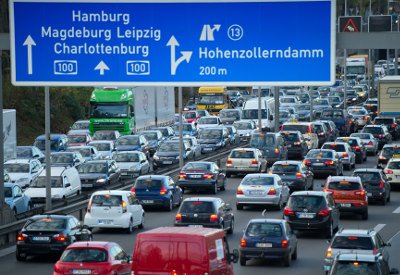
As for the free speed, this is little news to those who regularly travel to Europe, but I recently found some interesting official stats. According to these around 30% of German motorways have a permanent speed limit, especially around large cities and in the Ruhr area. Adding temporary limits and above all roadworks, of which there are a lot at any time of year, this number rises to around 50%. If you then add all the regular congestion, traffic jams and sheer number of cars in this heavily motorized country of 80 million, you find yourself at a much higher percentage.

No free speed today…

The unlimited German Autobahns are thus not a myth, but if you really want to enjoy them, you’d better do so late at night or early in the morning on an empty stretch somewhere deep in Bavaria. And preferably do so in the coming two years, since it has been decided to introduce a German motorway fee for foreign cars from 2021!

When your regular SUV isn’t enough

The production of the Land Rover Defender ceased in 2016 after more than 2 million units produced since 1948. Late last year, the Mercedes G-Wagon was replaced by a completely new car, that however to 98% looks exactly like its predecessor. What these two cars have in common, next to not being produced anymore, is that in spite of their looks and capabilities, 9 out of 10 of them never saw a tougher terrain than the shopping mile in cities like Zurich, Milan or Munich.

There are however those who made heavier use of their G-Wagon, or simply felt a need to float even higher above the common mortals. It was for those that Mercedes developed the G500 4×4, that became the crowning of the G-Wagon career. Powered by the same AMG V8 biturbo as the G63, it was arguably more stable at high speed than the original G, the road behaviour of which was somewhat similar to a cruise ship, with a comparable turning circle. The credibility of the 4×4 is however somewhat compromised by the many carbon parts, basically all the black parts in the pictures, that no sensible person would like to damage or even scratch. So perhaps the best place for the 4×4 is the same as for the regular G or the Defender: on a shopping mile in a European city.

We didn’t post this under The Thrill of Owning heading, but this is a car that could be yours for around EUR 200.000, and that should arguably hold its value quite well, as all G-Wagons do, especially with the new model now out…

Mercedes_g-klasse_hoch2_4.jpg

The dream garage

Last Saturday was as so often great for some Zurich car spotting and the mental game “my dream garage”, as illustrated by the below pictures.

I find these two a close call given the Bentley offers the topless option and I’m still not fully convinced by the DB11’s looks. The Continental does have a timelessness to it and ages rather well!

Bentley II

Bentley I

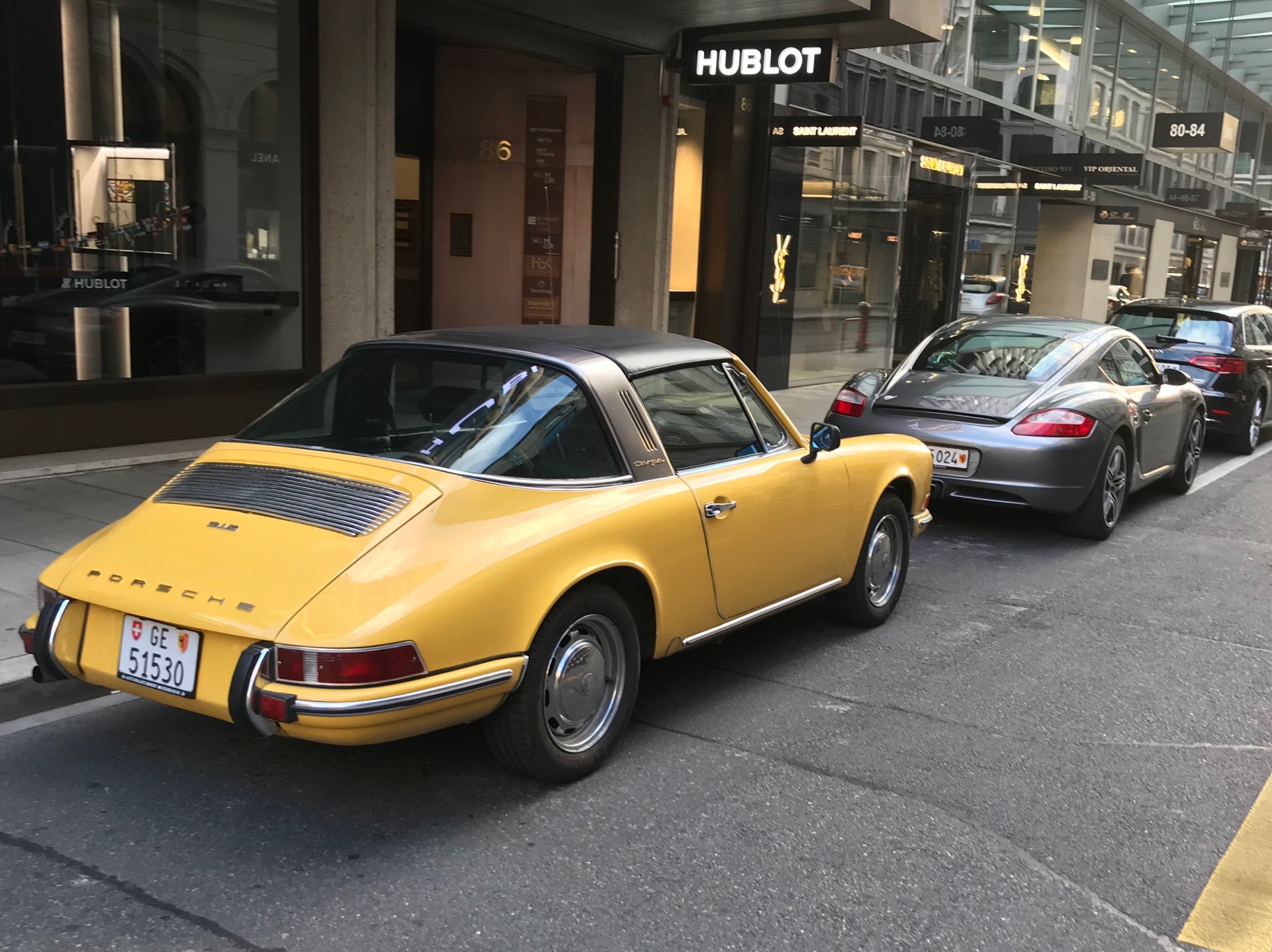
The below, this time from Geneva last week, is a no-brainer, at least for a lover of classic cars like myself, especially in that lovely 70’s yellow!

Porsches


The hard guys!

Many of us oldtimer drivers have a tendency only to take our jewels for a spin when the sun is shining and temperatures are mild, completely forgetting that it actually rained when the cars were built as well. This time of year our beloved cars are mostly sleeping in a garage somewhere, with batteries disconnected. It is only the hard guys that drive in any weather, but even among the hard ones, only the REALLY hard ones would even think about taking the 356 for a spin on a rainy December day with temperatures around 6 degrees. The only thing missing is the ski rack! Dear owner, I did not get to meet you but I salute you!

We use the occasion to wish all our readers a Merry Christmas and a Happy New Year, with plenty of great cars and great drives!

Porsche