Practicality or Prestige – the 10% car

Back in the late summer of what is now last year, I made a highly unscientific study on secondary values, or the lack thereof, comparing electrical vehicles (EV’s) to internal combustion engines (ICE’s). The conclusion was that all types of cars lose massive amounts of money in the first 2-3 years, with EV’s still losing more than ICE’s on average. There is however one segment of ICE’s that lose value quicker than anything else – the full-size, four-door, luxury sedan.

Big sedans have been unloved for quite a few years, in an inverse relationship to the increasing popularity of SUV’s. You could certainly study the causes at length and draw various conclusions, starting somewhere a few thousand years ago when we still lived in caves. What I mean is that a very small share of the driving population in the Western world has any kind of need for the terrain capabilities of an SUV. They do however prefer the high position, the feeling (and actual) security it gives its passengers, and in many cases, no doubt also the looks and the impression a big SUV conveys to the plebians.

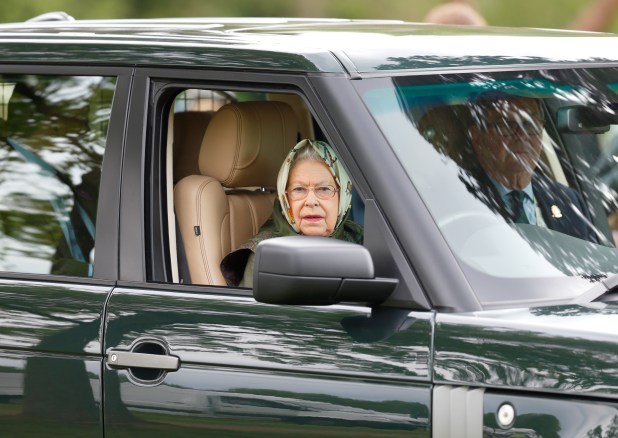
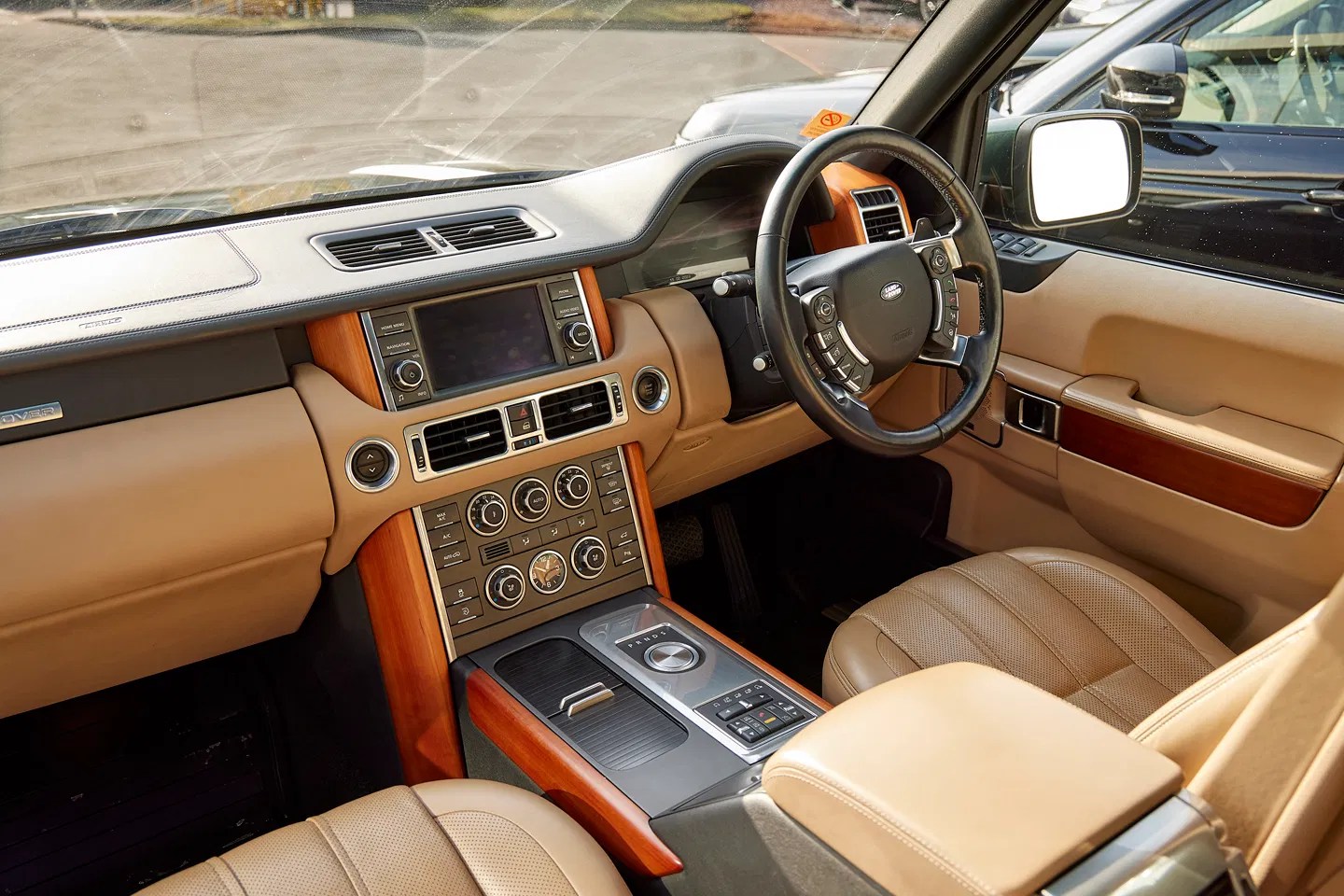
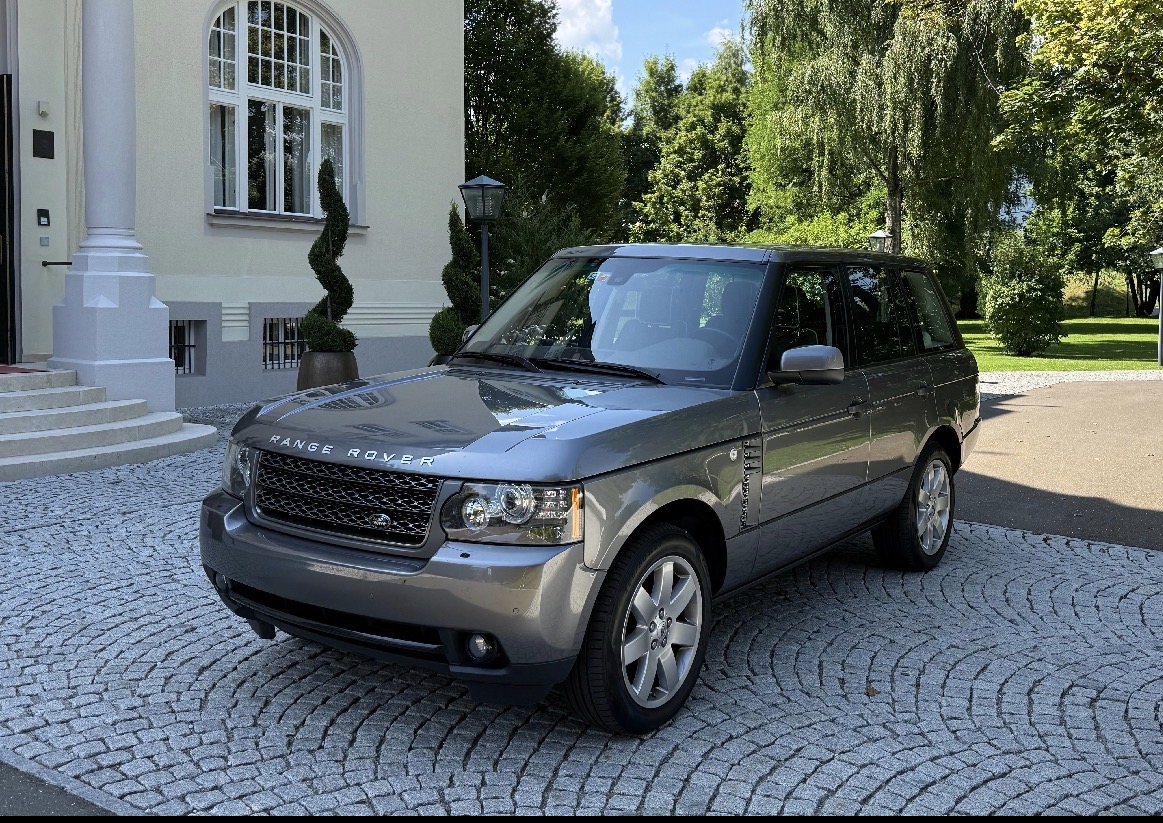
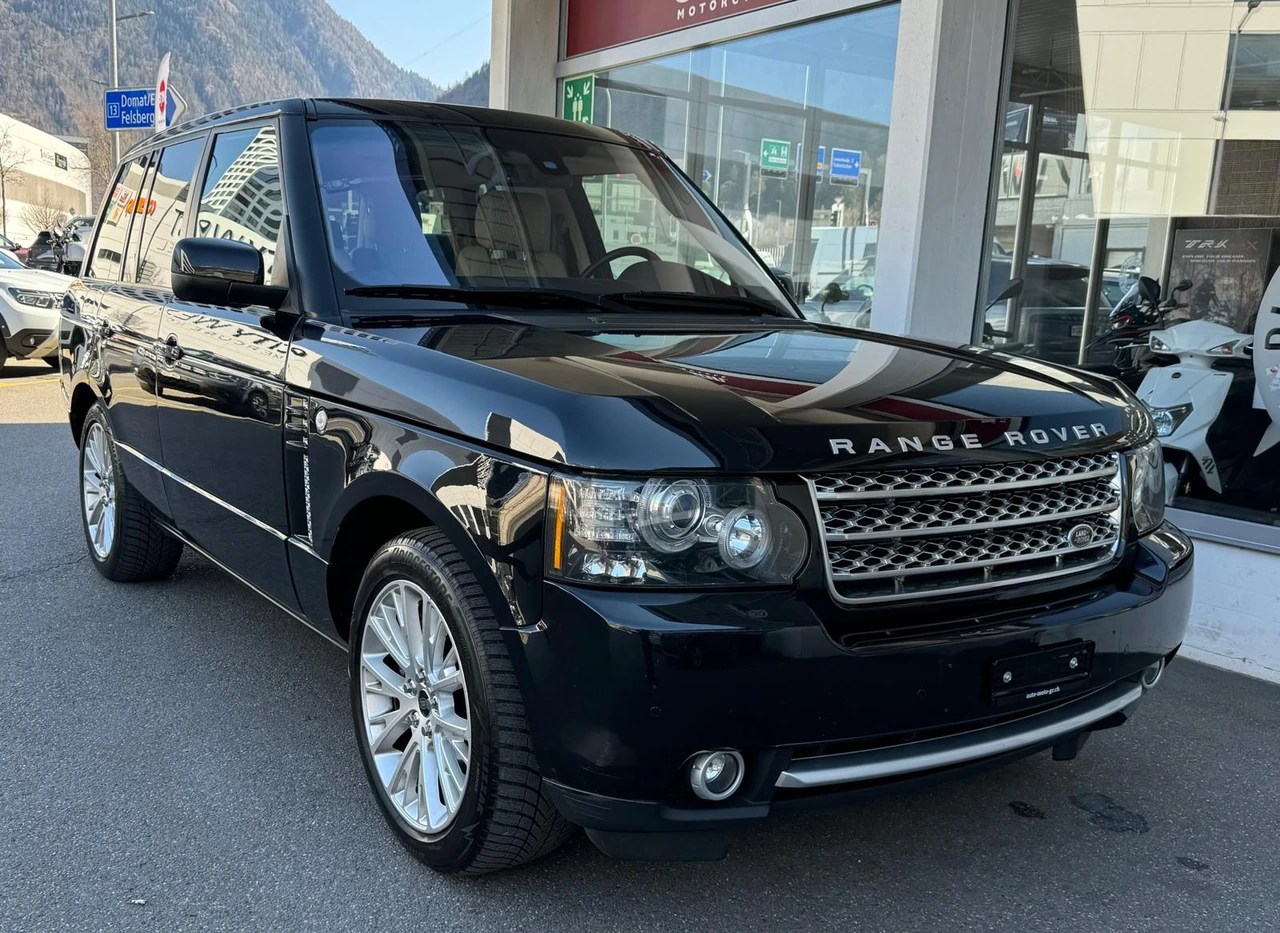
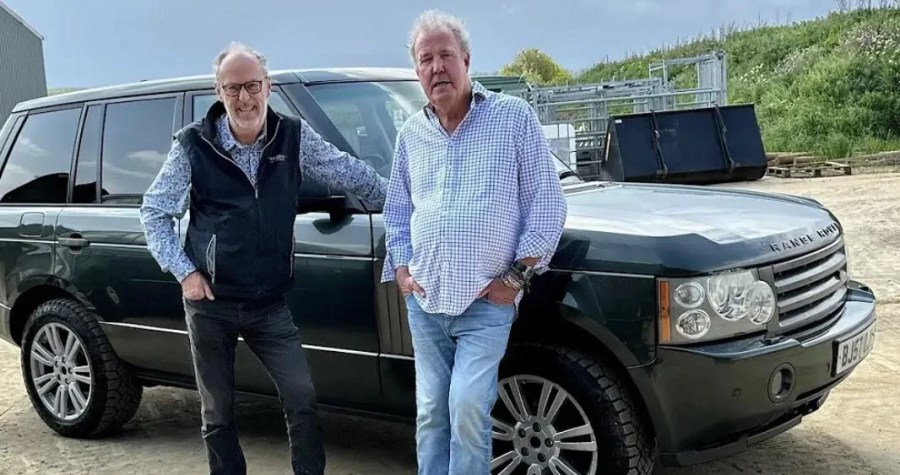
The thing is though, that before we “invented” the modern SUV, those feelings, especially the one of having made it, were conveyed by luxury sedans, and as long as you don’t spend your times on terrain routes in a wood somewhere, that’s clearly the better car type, feelings and instincts put aside. Likewise, from a practicality and traveling perspective, a modern station wagon is also a better choice than an SUV, but again, doesn’t convey the same superiority feelings as an SUV. Who ever claimed humans were rational? Certainly not me – including in this regard, given my old Range that I sold a couple of years ago and still regret to this day.

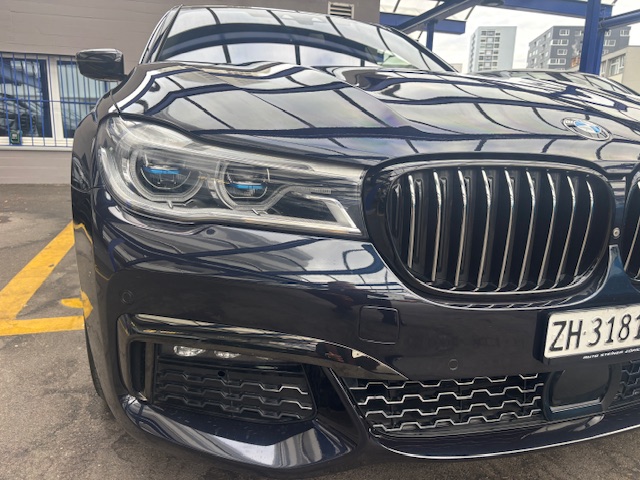
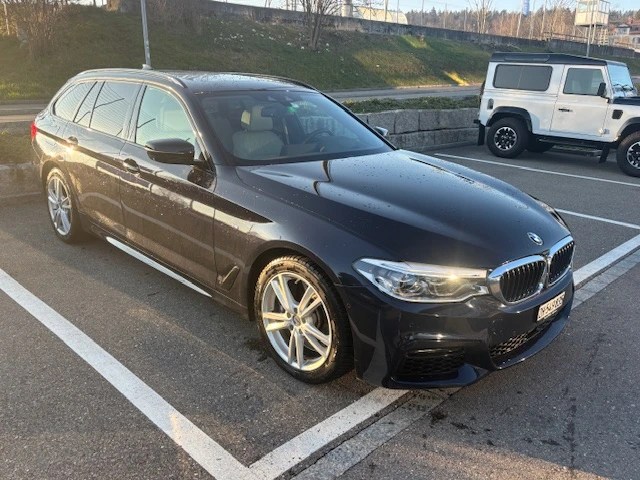
“My” 740d with the M Sport package and thereby a black grille, optically making it smaller.

Speaking of station wagons, shortly after I had bought my 540i Touring, I remember a BMW aficionado telling me that I had made a good choice, since in his words, the 5-series these days is 90% of what a 7-series is. So putting all of this together and perhaps even assuming that given their dismal secondary values, big sedans maybe set for a comeback, I figured it was time to have a closer look at least at one of them, namely said BMW 7-series, and to test the 90% theory for real.

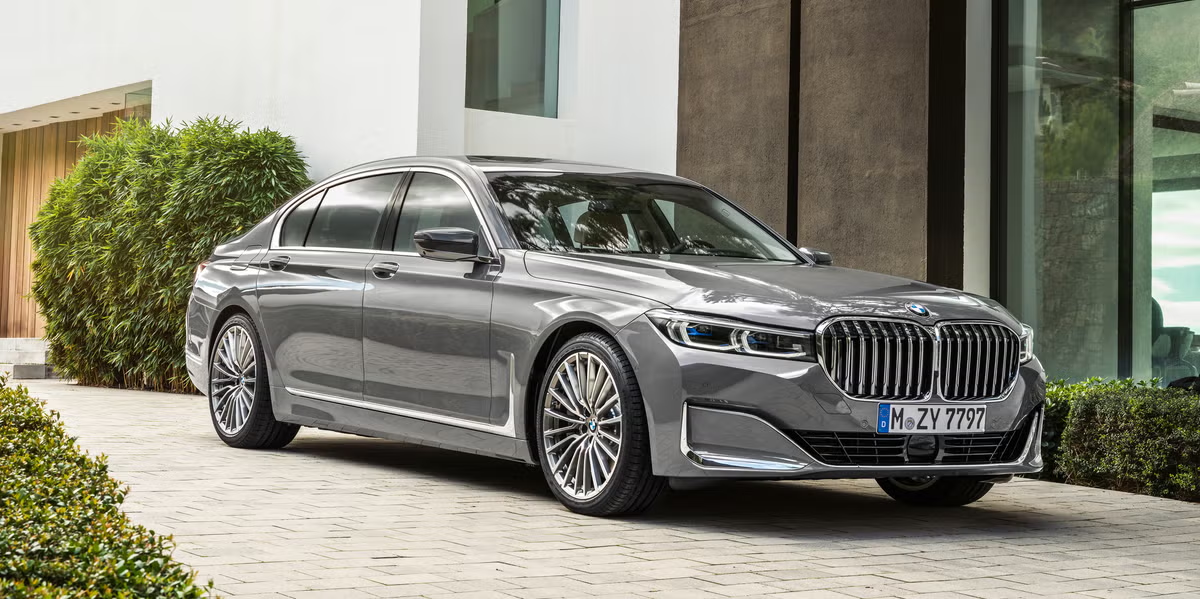
My choice fell on a 2021, G11 7-series, built from 2015 to 2022 with a significant facelift in 2018 that gave it cooler rear lights and a bigger grille. There was a lot of talk about that grille at the time, since it is indeed on the bigger side, but all that was quickly forgotten when BMW presented the current 7-series in 2023 with a grille the size of a barn. It’s of course a matter of taste but I find the post-2018 model the nicest of the bunch, also corresponding to the same technology level as my 5-series.

It’s also of similar size to my 5-series station wagon, at least in the standard version. Many 7-series are sold as “L” for Large or Long, extending them by roughly 30cm to about 5.4 metres, quite a lot for European roads and also quite unnecessary unless you transport dignitaries in the back seat more or less regularly, which I don’t. The standard version therefore makes most sense, and given I was more interested in the car type than the engine, I opted for one for sale close by. As it turned out, it was a 740d, meaning a three-liter, straight six-cylinder diesel engine with 340 hp and 700 Nm of torque.

Nothing for the timid, but one hell of a presence in chrome, especially in the “L” format!

It seems the engine type was secondary not only to me but also to secondary values, since petrol and diesel trade at similar money, even between smaller and larger engines. Naturally the top of the line, V12 M760i still commands a higher price, however not in percentage compared to its price as new. For the whole range therefore, it means that cars like the one I looked at, being 3-4 years old and with 40-70.000 kms on the clock (55.000 kms in my case), can be had for less than a third of their value as new. It’s difficult not to consider that a bargain! At least in Switzerland, that means that you also have another 30-60.000 kms of free service to look forward to, as new cars sold here from BMW (but also from Audi, Merc and others) come with free service up until 100.000 kms.

If the engine type doesn’t show price-wise in the pre-owned market, it definitely does so when you push the startebutton. I hadn’t driven a diesel for quite a while but on idle, there is still no question the engine burns oil. That said, once you’re at speed, you don’t hear anything from the engine (as you shouldn’t), the 8-speed ZF box harmonizing perfectly and imperceptibly with it. The engine is smooth as silk and the torque is immense, with an acceleration from 70 km/h to illegal speeds leaving very little to wish for. And with that, the 740d will consume about 6.5-7l / 100km on long trips (around 34-36 MPG), which is truly impressive given the power at hand and the 2.2 tons the thing weighs in at.

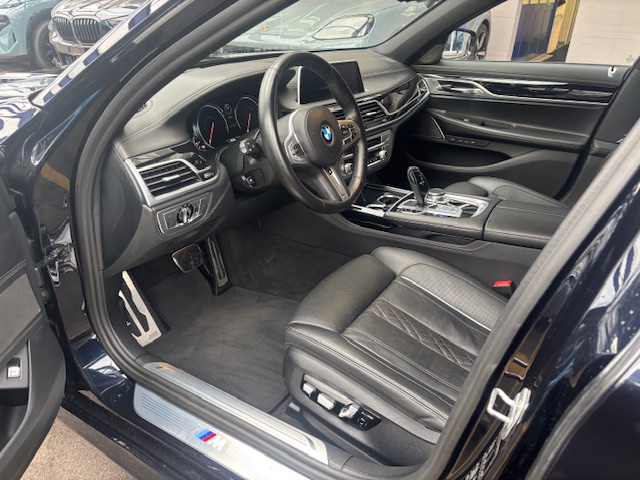
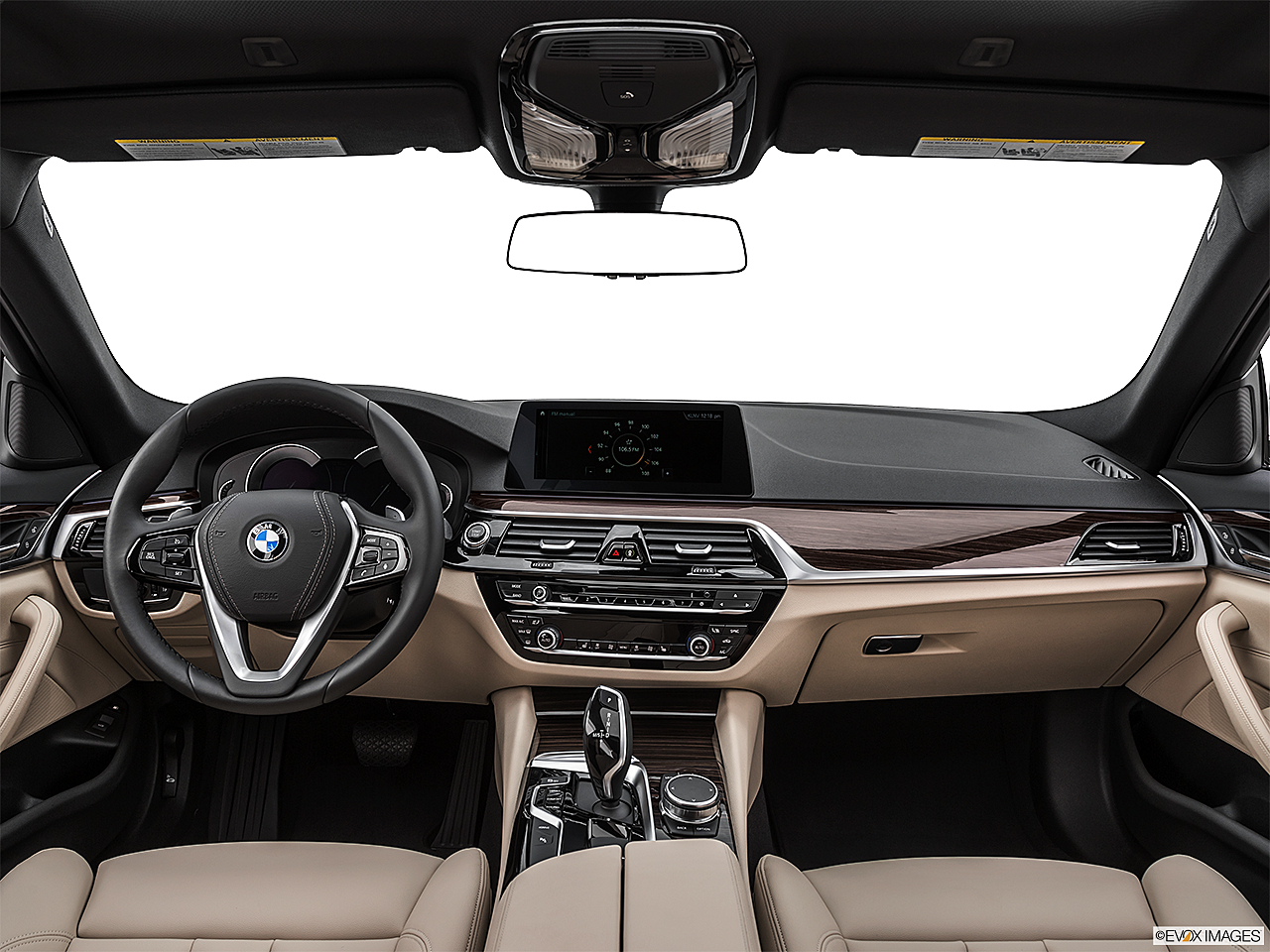
For obvious reasons, coming from a 540i of the same generation, the car felt very familiar, with some subtle and a few more obvious differences. On the subtle side, there’s a bit more leather here and there, and some switches feel of higher quality. On the whole though, it doesn’t convey the same luxury feel as an S-class does. The car is also slightly quieter than a 5-series, and surprisingly enough, pretty much as good, essentially meaning light-footed, to drive. The big beamer shrinks around you and doesn’t feel big at all, and the steering, which I find a highlight in my 5-series, works just as well here. Comfort mode is softer though, with a corresponding light steer feel, meaning Sport mode would be my standard setting.

An interior I’m familiar with, with fantastic seats. High quality, but not on S-class level.

The clearer differences are essentially three: firstly the seats, which are oh so plush and comfortable. The leather is of very high quality and the whole seat makes you relax before you reach the first traffic light. The same goes for the backseat I might add, given the car type. Secondly, the 7-series has air suspension, and although the standard springs aren’t bad, there is a clear difference to floating on air cushions. Lastly, the Harman Kardon system in the 7-series adds a few loudspeakers compared to the 5-series system and sounds better. The big brother can also be had with a Bowers & Wilkins high-end system which I would definitely go for, having never experienced a bad-sounding system from B&W.

if you do a lot of long-distance motorway driving, it’s difficult to imagine a better companion for doing so than a 7-series (or I’m sure, a Merc S-class or an Audi A8 for that matter, although the 7-series is more of a driver’s car compared to the other two, especially the S-class, and I personally find it best-looking of the bunch). And although I’m not a diesel fan, the perspective of doing so at 6.5l / 100 km with a 78 liter tank means you wouldn’t see much of the pump either, which is certainly a plus.

With all that said however, the BMW guy was right in terms of the 540i being 90% of a 7-series. The interior is about 90% as good, as are the seats. The sound level is around there as well, as is the suspension and the sound system. What remains, given their similar size, is then the body itself. And even if the 7-series has a huge boot and a ski trap, a station wagon will always win in practicality. Where it looses however is in the prestige department, where a luxury sedan will always beat a station wagon.

It’s a great car, but it will never win any prestige prices…

To me, that makes the 7-series a 10% car, which doesn’t sound very flattering. The question is really whether to value practicality or prestige higher. Seen on its own, the big Beamer is a fantastic travel companion that you’ll actually enjoy driving on roads which are not highways as well, whilst enjoying the sublime comfort only a true luxury, air-sprung limo gives you. And at current prices, it’s definitely a bargain.

Whether you prefer it to an SUV is a personal choice, but there’s no doubt it’s the better car type of the two for the type of driving and travelling most people do. And should you be in the market for a 5-series sedan (other than the M5…), you should definitely give the 7-series a try before deciding. I would claim it gives far more bang for your buck than the little extra it will cost you. The envious looks that come along with it are then for free!

Driving the Speed Demon!

My music-producing son and I don’t agree on everything in music, but on many things we luckily do. I struggle with some of his modern stuff, and he definitely does so with some of what I like from past decades. We do however find common ground quite frequently, which from my generation includes for example Fleetwood Mac, Tom Petty and Genesis. And also on Michael Jackson (MJ) being the best pop singer of all times (and Quincy Jones definitely the most legendary producer!).

In 1989, said MJ wrote a song called Speed Demon, which relates perfectly to this week’s post. Googling will tell you the song is about driving fast, but if you dig a bit deeper, you’ll learn that more specifically, it’s about MJ himself driving so fast on his way to the studio that he got a ticket. Those two things, driving fast and getting not one, but most probably lots of tickets, is something you definitely should plan for if you go anywhere near the Bentley Continental GT Speed in the top of the line, 6-litre, W12 version.

“My” Continental against a suitable background…

“Here we go again” some of you may think, he’s on about a Bentley again. You would have a point since I wrote about the Conti in 2023 and it’s also been mentioned in various other posts. However that’s never been in the top Speed version and until recently, I didn’t realize what a difference that would make. The opportunity to find out practically jumped at me when scrolling through interesting car ads, something I suspect I’m not the only one on this blog having as a favorite pass time…

The car in question was a 2014 Speed in the W12 version in dark blue with a blue-brown leather interior, fully serviced and with one owner since new. With 110.000 km on the clock, the ask was CHF 57.000 (about USD 65′ / EUR 60′), from a new price of around CHF 250.000. 2014 means second generation which is good, and the seller’s garage was of a type you could imagine doing business with, which isn’t always the case when it comes to old Bentleys (then again, those cars tend to have had far more than one owner…).

In the quest for the perfect transport for my better half of me to southern France, I thought I may just have found it, and after a quick call, I met up with what turned out to be Zurich’s nicest car salesman. He had previously spent a few years as a salesman at Schmoll, the leading garage for Rolls Royce and Bentley in Zurich, before setting up his own business. Next to “my” Continental, his showroom had a nice collection of further Bentleys and a few Rolls Royces, along with a few supercars and some more ordinary stuff.

I’ve always liked the Continental’s shape, especially in the 3/4 angle

The Conti was stunning. A deep metallic blue which, bar a few small stone chip marks on the front, was in beautiful condition. The dark blue-brown interior may have sounded strange on paper but turned out to be the perfect combination. Classy is very much the word. The salesman told me the car came from one owner with a full service history from two Bentley garages in Switzerland. No less than 11 stamps in total, one per year. “It’s a Bentley” he said with a smile when I questioned whether this wasn’t overdoing it a bit?

That perfectly colored interior turned out to be perfect in all other aspects as well, and looked like it had left the factory yesterday. It was a reminder of what I’ve been on about before, namely that leather doesn’t equal leather, and no car this side of a Rolls makes that clearer than a Bentley. Combined with the metal knobs, chrome and wood details, the thick carpet and the leather lining, this was an exquisite place to be. It also included the obligatory Naim premium sound system, as the regular one is really nowhere near worthy a car that was CHF 250.000 as new.

We took the Conti for a spin and I asked the salesman to come with me. I had no intention of doing anything foolish with this impressive piece of kit, and he was a nice guy with far more knowledge about the car than me, so I was keen to talk a bit longer to him. Leaving the garage we made it to the highway in a few minutes, the right environment for this big GT. Driving down the half circle access ramp, it struck me that there was practically no rolling at all and throughout the half hour drive, I was stunned at how well-balanced, direct and light the Conti felt to drive. Clearly the Speed’s stiffer suspension setup and the 22-inch wheels helps a lot.

You see the real quality of an interior after 110.000 km…

Nice as they look, those wheels do however contribute to more road noise than you would expect. A few minutes on a Swiss highway, typically better surfaced than highways in surrounding countries, made clear that the Bentley was not quieter than my modest Beamer, and louder than my previous Range Rover. You certainly don’t need to shout to your passenger, but it’s also not as silent as you may, and probably should expect.

And then the engine was at temperature, and everything I’ve written so far went out the window.

I didn’t floor it but rather pushed the pedal about half way. The thrust that followed is something only a 12-cylinder can produce. There’s a guttural roar building in strength as you’re pushed towards the seat, much like in a big airplane accelerating down the runway. Where a V12 from Maranello or Sant’Agata will give you a Pavarotti pitch, the Bentley rumbles in an impressive bass. Power feels limitless and endless, and while this moment felt like it had just begun, we were already north of any type of legal speed, which can quickly become quite costly in Switzerland.

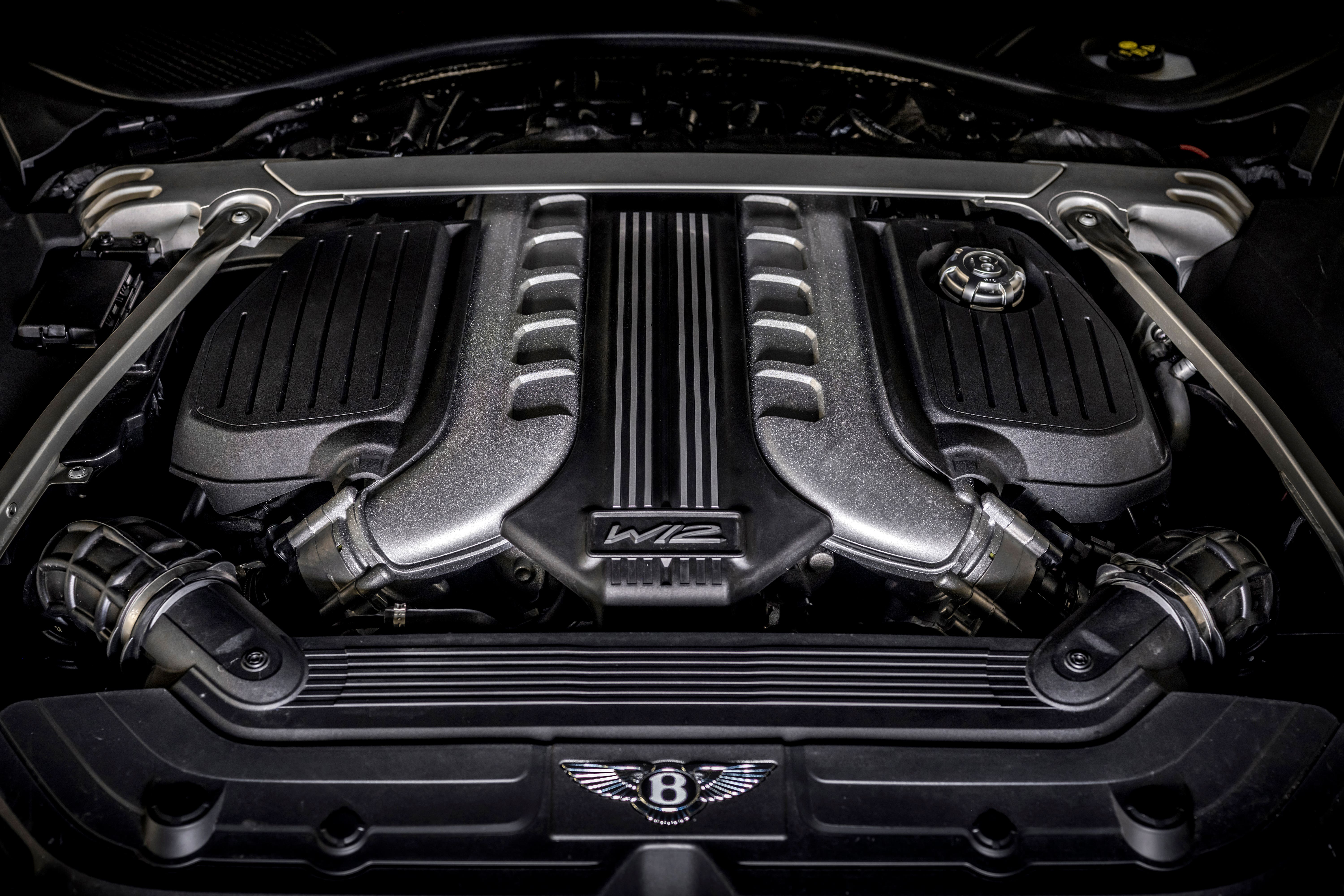
What an engine! In numbers, the twin-turbo, 6-litre W12 puts out 625 hp and 800 Nm of torque, taking the 2.4 ton Conti to 100 km/h in four seconds and further on to a top speed of 330 km/h. All that is however completely irrelevant. I couldn’t care less if the sprint to 100 km/h took three or five seconds – it’s that feeling of propulsion in combination with a sublime interior that makes it a close to unique experience. You expect a Ferrari to kick your butt, but not this opulent, 2.5 ton creation.

If you could ever only have one engine, this would be my choice!

After making sure a couple of times that what I had just experienced was indeed real, we settled to a legal pace and started talking about the car. The first thing the salesman said was that he found it incomprehensible that Bentley didn’t manage to build dead-angle side mirrors until much later. I hadn’t noticed, but he was indeed right – this CHF 250.000 Speed didn’t have it. Nor did it have a head-up display which I find a pretty useful invention, and although the interior was magnificent, it was also quite dark and could have done with a glass sunroof. The roof could have been optioned by the owner, but not the head-up display. Here again, Bentley was far behind many others, including its mother company Audi, which is a bit strange.

Coming back to those 11 service stamps, the salesman was clear on one service per year really being what you should plan for, if you want to keep your Bentley happy. The service is not more than around CHF 1.000 he said, but they will always find something that should be done whilst you’re at it. So it’s better to budget about 2.500 per service. Right. And then there’s the 22 inch tires, which given that power of that engine will need replacing at least every other year. And neither the insurance, nor the road tax look very kindly on an old, heavy and complicated Bentley with a giant engine.

To lighten up the discussion a bit, I mentioned that I assumed 15 litres per 100 km was what you need to budget. No way, said the salesman, if you use this car properly, you’ll be north of 20 litres. Even with a 90 litre tank, that means no more than 400 km’s of range, basically like a modern EV – although quicker to fill up. I did the numbers in my head and realized that it would easily cost me CHF 8.000-10.000 per year to run this wonderful machine, and that’s before any major issues.

Head- and backlights are the best way to differentiate the first and second series

In terms of those potential issues, the W12 is known to be pretty bullet-proof and the 110.000 km are certainly no problem if the car has been properly serviced and cared for, which was clearly the case here. The second generation Continental is generally quite good quality-wise, with most issues coming from the air suspension and the many meters of rubber hoses that run throughout the car. If one of those lets loose, good luck in finding it. In some cases, it will mean removing the engine, which will then double the budget mentioned above.

There is a cheaper way to enjoy a Continental and that’s to go for the smaller V8 engine, preferably in S form. That’s certainly a great engine that has a reputation for making the Conti more light-footed. V8 Contis are however far more expensive to purchase, and although the V8 is no doubt adequate, it doesn’t have the magic of the W12. As I started to realize, it’s actually the engine that is more or less the magic of the whole car. The rest of the package is very nice, but not as outstanding as it was in 2014, and not necessarily better than for example an S-class Coupé.

Perhaps not an alternative to the Bentley folks, but certainly to most other people….

I have no problem spending money on cars (ask my wife about that…) but in the case of the Conti, the breakdown doesn’t add up. To make the running costs somewhat defensible, the car would really need to be perfect in every aspect, and the Conti clearly isn’t. Unfotunately, neither will it ever become a classic, given how many were produced. In Bentley’s eyes there is of course no competition to the winged logo from Crewe, but in reality there is, even if they don’t have a wonderful W12 up front. For me, the Conti is a flawed proposition – too complicated and expensive as a daily, and not a classic contender given how many were built.

You may see this differently and then I can only congratulate you on being less of a plebian than me. My salesman, who was a bit too nice and honest for his own good, was certainly right when he said he had always felt that if you go for a car, you should go for the top version. So if you go for a Conti, only do so for the W12 Speed, and only if you have the budget to care for it properly. Make sure it’s been serviced properly and don’t try to save a buck if you’re offered an insurance – take as much and as long as you can get. Perhaps get a brighter interior and a sunroof to lighten things up a bit.

Only do this if you’re not the kind of person who will lay awake at night thinking of everything that could go wrong. Nor the type who doesn’t like the local petrol station, because you’ll be seeing a lot of it. And whether you’re on the way to a music studio or not, be careful with those speeding tickets – the Conti Speed won’t help you out there either. As for me, I may have to revisit that S-class Coupé…

Driving the 991.1 Turbo S!

if there’s one car that is underrepresented on this blog, it’s no doubt the 911. And the reason is not that I’m part of the strange crowd who have something fundamental against the legend from Zuffenhausen – quite the contrary. I do however have enormous respect for on one hand everything that has already been written about the most legendary of sports cars, and on the other for all the people who no doubt have far more knowledge on the 911 topic than I do.

I therefore welcome every opportunity there is to learn more about the 911, and having had the opportunity to drive quite a few 997’s over the years, until recently I had actually never driven a 991. The opportunity to do so came about as my favourite garage in the Zurich region traded in a 991.1 Turbo S in perfect condition with about 85.000 km on the clock and a price below CHF/EUR 100.000, (which as I noticed is where the market for these currently is). It felt like an opportunity not to be missed. After all, as great as my BMW 540i Touring is, I don’t really plan to drive a station wagon for the rest of my life, and few things beat a top of the range 911 as possible replacement!

Definitely looks better than a 540i Touring…

If I were to replace the 540i though, what I would be looking for is a stylish and fun to drive coupe with enough room for two people but ideally not too big, to take my wife and I the 600 km down to the south of France a few times per year. The BMW does an absolutely fine job here, but it’s unnecessarily big and as said, as stylish as it may be, I no longer need all the space. For what follows, it’s however important to remember that what I would be looking for is more of a GT-car than a track weapon. And from all that I’ve read, it felt like the 991 Turbo S would be close to the perfect proposition here.

This first series of the Porsche 991 was built between 2011 and 2015, with the Turbo S being produced between 2013 and 2015 (production years, that is). It featured the 3.8 litre flat six with twin turbos, putting out 560 hp through all four wheels and a seven-speed PDK box. For a 911 it was rather well-equipped from the factory, with (in most markets) rear-wheel steering and center-lock wheels as standard. Ceramic brakes were a frequent option and the car I drove had them, along with a plethora of other things.

The first thing you notice when you stand in front of a 991 is how much larger it looks than a 997. It is indeed bigger, about 4 cm both in length and width, but the impression is of an even bigger difference. Stepping inside, the difference is even more striking, greatly helped by the 10 cm longer wheelbase as compared to the 997. Two people with reasonable but perhaps not excessive luggage will have enough space for a good vacation, and the whole car feels more mature and more GT-like than the more intimate 997. No doubt that the 991 is the more grown-up car, although I still feel the 997 looks better.

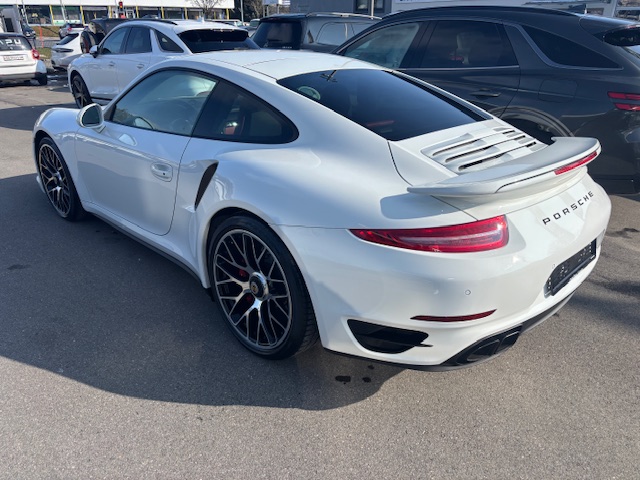
Purposeful rear, beautiful center-lock wheels. It does feel big though!

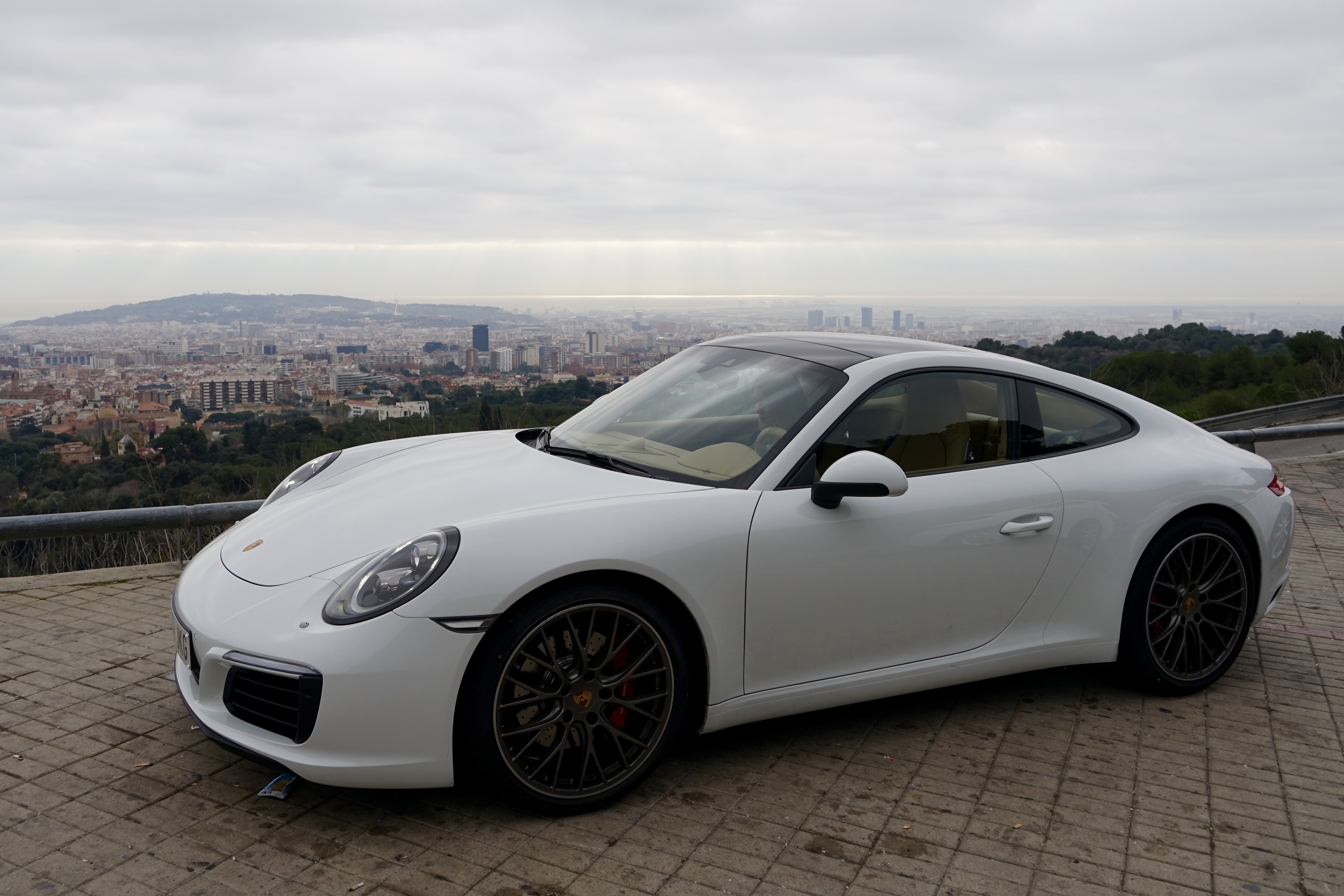
As the pictures show, the car I drove was white and as you’ll see below, had a read leather interior. And whereas I’m certainly not part of those who follow the Henry Ford motto that you can have any color as long as it’s black, a red interior is perhaps a bit over the top. That said, in the case of this car it was really a combination of red and black that made it rather decent, and I quickly stopped thinking about it. There are cars who are fully red on the inside, including the dashboard, and that to me is then really a bit too much. As for the exterior, white is a color I personally feel suits the 911 quite well.

I familiarized myself with the car as I drove off and let the engine warm up, which really didn’t take long. The logic is the same as in the 997, but the 991’s array of empty buttons on the center console that glare you in the face to remind you of all the options you didn’t spec aren’t particularly nice. Could it be that the quality of materials was just slightly better in the 997? Anyway at low speeds, at least on smooth, Swiss roads, the car is very compliant and not unnecessarily hard. Sports-car like rather than track car.

Such reflections soon gave way to real driving, now that we’d reached a decent temperature and the road opened up. It will be no surprise that the first, second and last impression is that of the flat six, which is simply magnificent. Power is never-ending, the sound is great but to my ears, could be even louder than what the sports exhaust produces, and the engine harmonizes perfectly with the excellent PDK. That said, the turbo lag is more obvious than I was expecting, with a small but still very noticeable hesitation before all the 560 horses wake up.

Clearly more spacious than a 997, and with a black dash, still looks decent in red.

A lot has been said about the 991’s electronic steering as compared to the mechanical 997, which no doubt was one of the best 911’s of all in this regard. For the driving I did in a combination of B-roads and motorway, I can only say that the 991 is great as well, and that you need to be a 911 aficionado or drive the two cars back to back to notice any real difference. And compared to basically any other car, the 991 is miles ahead in terms of precision and road feel. Needless to say that very much goes for the chassis as well, with no real possibility to test it fully on the roads I was driving.

Where it isn’t ahead of the competition however is road noise. This was a surprise given how much more mature the car feels compared to the more rustic 997, but noise-wise theyr’re not far apart, with especially noise from the wheels being very present in the 991, at normal motorway speeds. You would need to raise your voice to communicate with your passenger (or, as in my case, increase the volume of the excellent, optional Burmester sound system), which doesn’t feel very GT-like. Except for that, it’s an excellent motorway cruiser as well, and the ceramic brakes were easy to modulate much like normal discs.

As no one can sit in the back anyway, you have room for a lot of stuff.

When I handed back the keys to the white beauty, it was therefore with mixed feelings. The Turbo S is a fabulous car, and the 991 feels more modern and more mature, albeit not as good-looking, as the 997. It’s however still far more sports car than GT, meaning it’s not the right car for the use I would make of it. But even if I were, I wouldn’t go for the Turbo S. The 991 was also the last 911 that could be had with a naturally aspirated engine, and for normal road use, I would gladly sacrifice 150 hp in favor of a 991 S or GTS, with an even better sound and without turbo lag.

If the Turbo S sounds like your thing, you should be aware of the higher maintenance costs compared to a standard 911 that one of my 911-savvy friends made me aware of. The turbo engine contributes here, as do the center-lock wheels, however only if you’re set on changing wheels yourself, which I doubt (and given how good the center-lock ones look, I’d be happy to take the extra cost!). Also, many cars will be equipped with ceramic brakes, said to be good for a lifetime but costing a fortune to replace, should anything still happen to them.

The 991 is a great car and a far more mature proposition than the 997. It’s however not the perfect GT, and I can’t help feeling that the Turbo S misses the mark. As a daily driver or a back-road companion, a 997 will be even better, as will a 991 S. For track use, you should rather go for a a GT-version. And as a Grand Tourer car for long distances, I think there’s better options out there. We’ll see if I’m right!

Driving the world’s best GT!

In 1992, Mercedes launched a car internally known as the C140, the first big coupe from the brand officially referred to as the S-class coupe. Obviously Mercedes had been building luxury coupes since the 50’s that were often seen as the two-door version of the S-class at the time, but the name S-class coupe had never been used before.

The C140 was based on the W140 S-class that was a bulky, heavy-looking thing, never considered particularly beautiful. It quickly became popular in the former eastern block, notably in Russia, which only a couple of years earlier had lifted the Soviet curtain for good. In the short time since, Russia had transformed to the wild East, and as I could see myself, living in Moscow in 1992-1993, the preferred mode of transportation for the Nouveaux Riches was the C140, alternatively the fully grown W140. Tasteful is neither a word you would associate with those times, nor with the W140/C140, and as much as it was loved in the East, as little it was considered beautiful in the West.

Big, imposing, but lacking in elegance – the first S-class coupe C140 from the early 90’s

Fast forward to 1999 and the C140 was replaced by the better-looking CL-coupe (C215), which would live on until 2008. The S-class coupe name was thus dropped again in favour of CL, which means “Coupe Leicht (light)”, where the “light” part must be one of the biggest misnomers in history. After the CL, it would take six long years before the next S-class coupe called C217 was launched, and in terms of design, Mercedes has come a very long way from the bulky C140. Most people would agree that in terms of GT’s, the C217 is one of the most beautiful cars around.

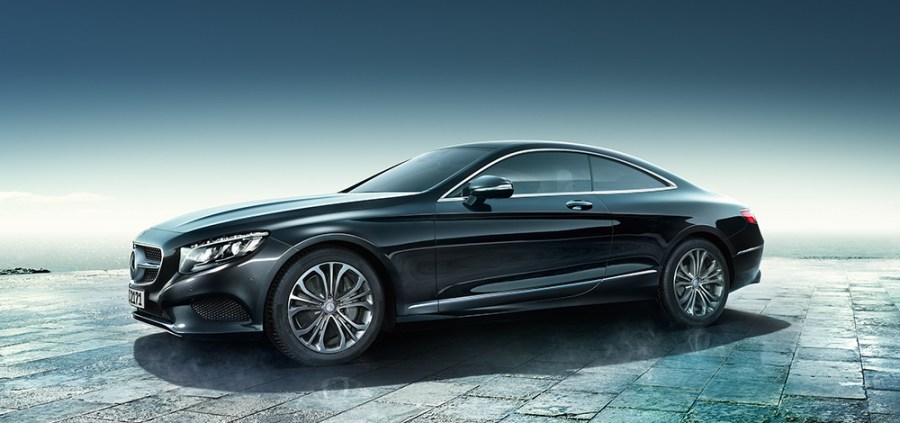
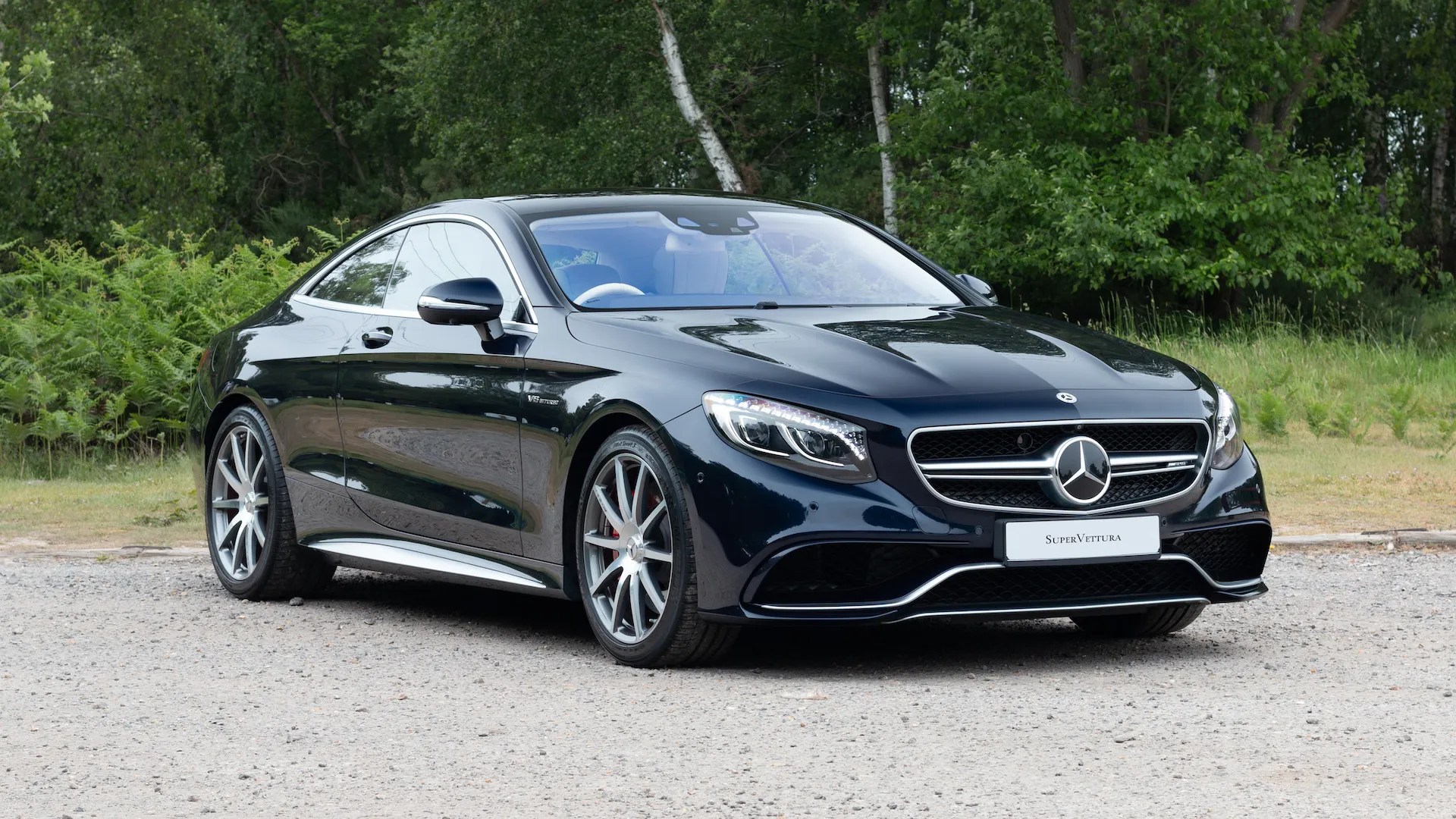
Last week I had the opportunity to try out an S560 Coupe from 2018, a jaw dropping exercise that made me confident enough to state that the C217 is most probably not only good-looking, but actually the best GT in the world, if you define in line with ChatGPT: “a GT car is a type of high-performance luxury sports car designed for long-distance driving at high speeds while maintaining comfort and practicality”. I can’t imagine a single car that fits the bill better than the big Merc!

The S560 Coupe from 2018 I had the opportunity to test – needs bigger wheels!

In C217 terms there’s before and after 2018, knowing the car was discontinued in 2020. The 2018 facelift didn’t change the looks much, but it gave the car a far more modern infotainment system with notably integrated Apple CarPlay and Android Auto, as well as a 9-gear auto box on most models. In terms of engines, both pre- and post-facelift cars had a six-cylinder engine with 333 resp. 367 hp as entry model in most markets. You should disregard both. As ChatGPT correctly states, a GT should be a “high-performance” car, and given the C217’s weight of around two tons, none of them fit the bill.

Luckily most buyers agreed, and those buying any kind of S-class new usually also have the money to do things properly. And doing it properly in this case means a V8, of which there were two pre-facelift: a 4.7 litre V8 twin turbo with 455 hp in the S500, and the well-known and quite wonderful 5.5 litre V8 twin turbo in the S63 AMG coupe with 585 hp. Post facelift, the S500 became the S560 and got the new 4-litre, twin turbo V8 with 469 hp, and the updated S63 had a developed version of that same engine with 612 hp. To round it off, both cars were also available with a V12, which was thirstier and made the car even heavier, so not making it faster. You can safely ignore those as well.

One of the finest interiors around

The S560 I had the pleasure of trying set the tone from the moment I opened the very large door and notice it’s both frameless and has double-glazing. I slid into what must be not only one of the most comfortable, but also one of the biggest car seats ever built, and with a discrete tone, the seatbelt butler brought the seatbelt forward. Looking around the cabin with its fantastic materials and beautiful wood applications, it struck me that this must be one of the most beautiful car interiors ever built. Plastic? Aber nein! The S coupe is leather and wood only, wherever you look.

Looking around is also helped by the absence of a b-pillar, a Mercedes tradition that gives the car a uniquely elegant line with the windows down. The back seats are less opulent than the front but they will carry two adults in full comfort with enough head- and legroom, which is a big difference to most other large GT’s such as the Bentley Conti GT or the Aston Martin DB 11, two of this car’s natural competitors (although both are more expensive at similar build years to the Merc).

Post-facelift the rear lights are OLED, and look really cool!

Turning the key (sorry, pushing the button) produces a somewhat surprising growl – mein Gott, ze engine zounds schporty! After having signaled it’s alive, the V8 quiets down quickly as you roll away. The steering is very light, and you quickly notice that you have a lot of car with a considerable width around you. Picking up speed, you see the needle moving, but you don’t hear anything. This must be the quietest car I’ve ever been in. Luckily the motorway ramp left enough room for me to floor it and after a slight hesitation, the V8 was back in full force, pushing the car forward more like an airplane engine than a sports car, but again with a surprisingly nice tone. The needle was at 150 kph in no time and this being Switzerland, I had to lift off. Any outside noise was still largely absent.

Having settled down for a while in the fantastic chair and turned up the volume of the absurdly good Burmester 3D sound system this car was equipped with, I left the motorway and chose a country road back. With little traffic around, I put the car in sport and started pushing a bit. To my great surprise, the car tightened up quite a bit and felt far more light-footed than I expected, and the V8 became far more present. Of course it’s no sports car, but the big Benz proved to be far more agile than you would expect. The gear changes are still so perfect that you don’t notice them, and the steering was now a touch heavier, but still didn’t communicate much of what was happening on the road. I guess in this segment, it’s not supposed to. It also became clear to me that no one needs the S63 version of this car. This is not an AMG car, it’s not supposed to be driven like one, and the “standard” V8 has enough power.

Always get a car with the AMG package though – it adds a necessary, sporty touch!

Returning the S-class coupe to its rightful owner, I felt humbled by a sense of having just experienced automobile perfection in the GT sense of the world. An S-coupe from this generation is Mercedes at its finest, before things started going south with King Plastic making as a necessary consequence of the EV trend and required weight savings everywhere. An S-class coupe of this generation must truly be one of the finest automobiles ever built. A Conti GT or a DB11 may be more exotic (at least the latter), but in terms of sheer quality, they’re not on this level. I’d bet that even the number of dead cows used in the interior is higher in an S-coupe than in a Conti. That probably deserves to be checked though…

The good news is of course that if a big GT is what you need (and who doesn’t?), you should know that no other car type other than EV’s loose value quicker. That means that you can pick up a S560, i.e. a facelifted car, that cost more than EUR 200′ as new, from around EUR 80-90′, with 70-80.000 kms on the counter, which means that the car is just about run in. If you don’t need the infotainment upgrade, a pre-facelift car will give you largely the same experience for 15-20.000 less, but be aware that some first generation cars are RWD rather than AWD, and have a seven- rather than a nine-speed box, which in my experience is less smooth, and also slightly less economical.

Should you prefer your S-class coupe as convertible, no problem. But you loose the beautiful silhouette…

Then again, if you focus on the economy, this is quite obviously not the car for you, but I’d still claim that a C217 coupe on average will be far less costly and far more reliable than most of its competitors. Consumption-wise I know from personal experience that those engines are good for 11-12 litres per 100 km if driven legally, which given the size of the thing is impressive, but of course parts and maintenance will be on the expensive side. As always, buy wisely from trusted dealers and with enough history to make you confident – and always buy the best car you can afford.

If you disregard the S-class coupe as an old man’s car, you most probably haven’t driven one. I would suggest you do, because if you find it in the right color combination (which isn’t the one I drove) and with at least 20″ wheels (which mine didn’t have) it just looks beautiful, especially with those side-windows down. So if you’ve reached the age when the kids have moved out and you’re looking for something to move your partner and you in in style across longer distances in southern direction at brisk speed, and have no ambitions for track days, at least not with this car, I don’t think there’s a better car around. Did I just describe myself there? Jawohl Herr Doktor!

The lord has moved out, a Bavarian has moved in!

Big change in the family garage a couple of weeks ago as my beloved Range Rover moved out and a Bavarian station wagon moved in. I could tell you a thing or two about selling Ranges (or for that matter, any other car as a private seller in Europe these days) along the lines of people having no shame in offering half the asking price, or giving you all sorts of arguments why they shouldn’t buy it, making you wonder why they contacted you in the first place. I’ll spare you the details…

In the end a guy who had previously owned a bunch of Range Rovers got in touch. He ran an independent garage and new all there was to know about them. The week before, his wife had told him to please get rid of the – in her words – awful Audi Q8 he had bought and buy her another Range Rover instead. He was definitely my kind of guy, and evidently had a great taste in women! On a more serious note, I was actually happy to sell the car to someone who had previous experience and mechanical knowledge, should something unexpected occur shortly after the sale.

Apparently not a car to get for your wife…

The Range thus left the family garage and for the first time in many years, I was in the market for a car without trading in another one. That was obviously a situation difficult to handle for a car guy, so a certain frenzy broke out to narrow down the short list I had been preparing over the previous weeks, and which had come together following a bunch of criteria based on the new family situation, with fewer to no children in the car and hence less need for space, and also the limited space available in small, neat villages in southern France, where we will be spending more time going forward. That said, it had to be large enough for the (quite small) dog cage and the (quite large) amount of luggage my better half likes to bring.

Built for 2CV’s, not for Range Rovers…

I was initially quite agnostic between getting a diesel and a petrol. As discussed notably when I drove the Volvo V60 Polestar, for our kind of driving, a diesel would by far be the most efficient choice, but I’ve always struggled with the character of diesels. A test drive of the new Audi A6 in diesel format made clear that notably that slight hesitation whenever you put the pedal down is still there, as is an improved, but still not great engine sound.

That drive made two things clear: I wanted a petrol, ideally a six-cylinder, and not the new A6. Sure, it’s a nice car, but it’s quite big, relatively uninspiring to drive (the RS6 certainly being the exception), and also with a complete absence of switches and buttons in favor of screens. As you know this isn’t my thing, just as little as the surprisingly large amount of plastic in the interior is. The screens are not intuitive, unnecessarily complicated on some fronts, and full of very visible, greasy fingerprints after like five minutes. I won’t go into the arguments around this again, but it was clear to me that I wanted a car that was slightly smaller, still has a traditional A/C setup, along with some other functions, and a bit less plastic.

You’ve seen it many times, it remains a good-looking station wagon

In the end, my choice fell on a BMW 540i X-drive from 2019 with 45.000 km on the meter, in mint condition and at roughly 1/3 of the price as new. The three-liter petrol produces 340 hp (and can easily be tuned to more), and obviously features in a number of BMW’s. It is no doubt one of the best six-cylinderes ever built, smooth as silk and barely noticeable unless you want it to be, when it produces a decent but still somewhat aggressive sound. For the long motorway stretches that dominate our driving the power is clearly sufficient, that said, I’d be curious to see how much difference one of the chip-tuned versions does.

In terms of equipment, I knew I wanted the M-Sports package, giving you not just sportier looks but more importantly, the sporty driving modes and settings. Next to that the Harmann Kardon sound system was important to me (there is a B&O system that is even better, but it’s close to impossible to come by). As for other things the more the better of course, and the car is basically fully loaded. Some stuff I’ll most probably never use, some has surprised me in actually being quite useful, like the gesture controls that didn’t have much faith in. The shortcut buttons BMW offers and that can be used for different functions are also genius.

A pretty perfect mix of new and old if you ask me

The car has only been with us a couple of weeks but we’ve had time for a longer stint south, and it’s so far all positive. If you travelled in style in the Range, this is obviously a different experience as you’re driving much more actively, but the BMW is a true pleasure to drive and feels very nimble with notably great steering, and a very well isolated cabin. The suspension may be traditional but is excellent and the engine as mentioned is fantastic, doing so far around 9 l/100km. Finally the size of the car is perfect for our needs. So far so good, and I’d be surprised if it doesn’t continue.

In Switzerland, a 2019 model will have free service until 100.000 km or 2029 (whichever comes first), meaning running it is almost free of service costs. As a new car, it comes with a 5-year full warranty, meaning there’s one year left. As mentioned, the car is really in mint condition, and all this once again seriously makes me wonder who would be 2/3 more to get these wheels as new. Then again I’m happy there is, because otherwise I wouldn’t have had a nice Bavarian parked in the garage.

Do I miss the Range Rover? Honestly not really, it’s nice to have a car that you’re really driving again, and a station wagon is in many ways more practical than an SUV. There’s one thing though, which is the feeling of driving something special that you got with the Range and that the BMW doesn’t really give you, being a more “ordinary” car. You felt royal travelling in the Range, and it was a pleasure doing so during two years!

Finally driving the Macan!

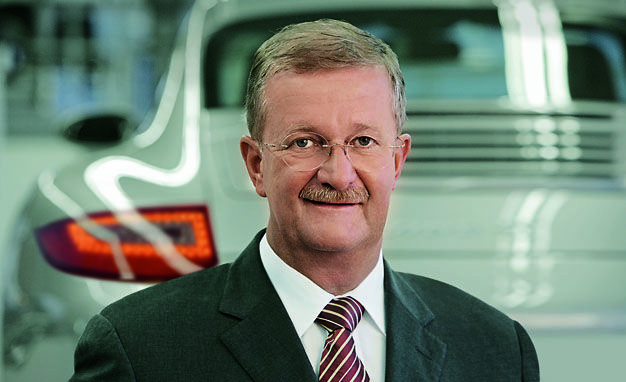
Wendelin Wiedeking is the very German name of one of the most important CEO’s in Porsche’s history. Wiedeking took over the helm in 1993 when Porsche was teetering on the brink of bankruptcy with a stock market value of only EUR 300m, and had a decisive role in turning things around and increasing that to EUR 27bn 15 years later when he left his post. Interestingly he also did so being paid a (relatively) modest base salary with a significant bonus component, directly tied to Porsche’s profitability. Needless to say, this made Wiedeking both a respected and a rich man, and one of the main drivers behind his and Porsche’s success was no doubt reading the market correctly and launching the Cayenne in 2002, as Porsche’s first SUV.

Wiedeking saved Porsche before being forced out in 2017

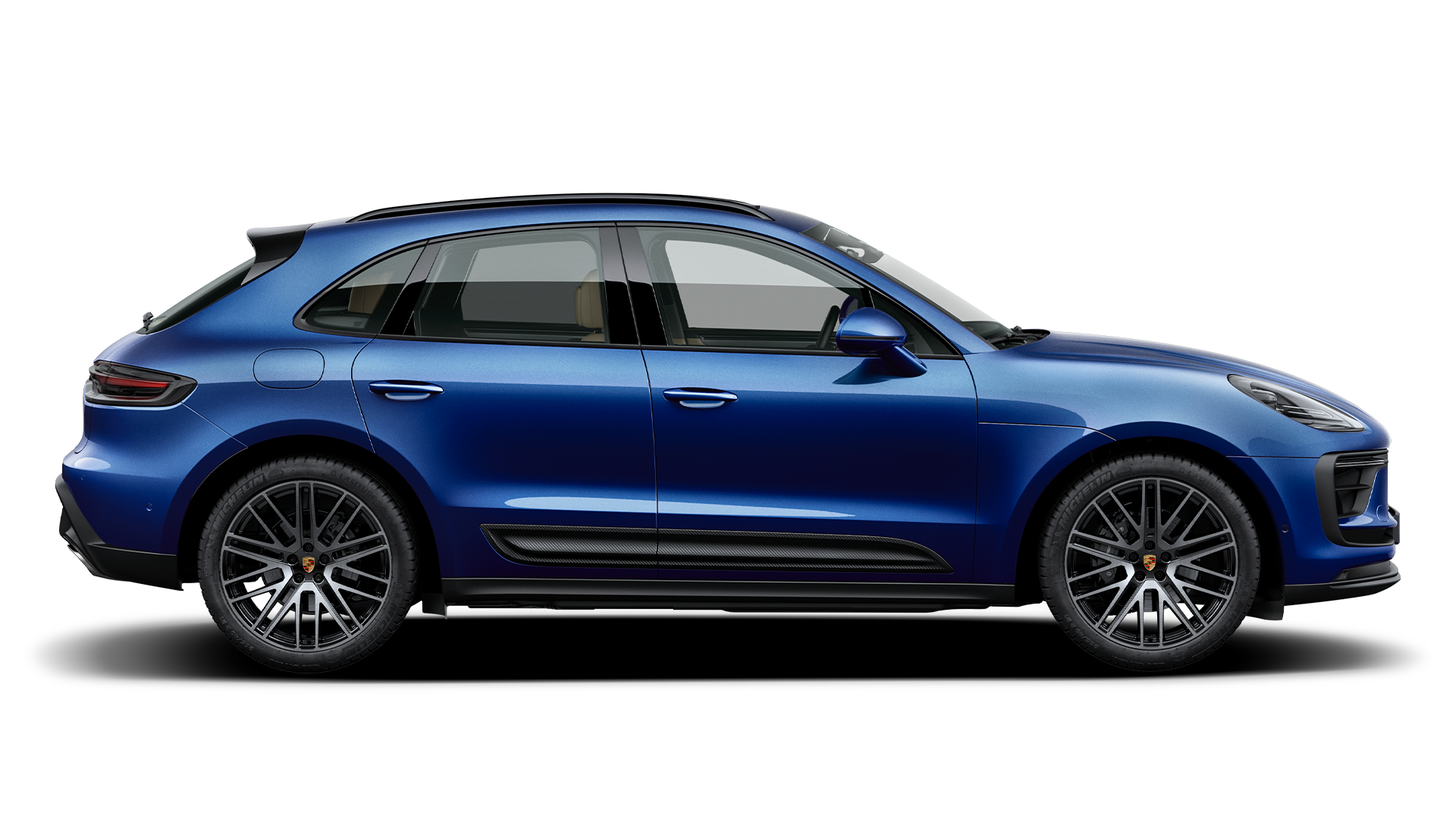
Until then Porsche had only built sports cars, but Wiedeking and his colleagues had noticed that next to their 911/Boxster, most people also had a family car, which increasingly tended to be an SUV. Wiedeking failed to see why that second car shouldn’t be a Porsche as well and from its launch, the Cayenne quickly became crucial in Porsche’s recovery. Without it, Porsche may have gone the same way as Bentley would have without the Continental GT that we looked at a few weeks ago. And to get to this week’s topic, without the Cayenne there would not have been its smaller brother, the Macan, that I had the opportunity to try out last week, and that today is Porsche’s best selling model!

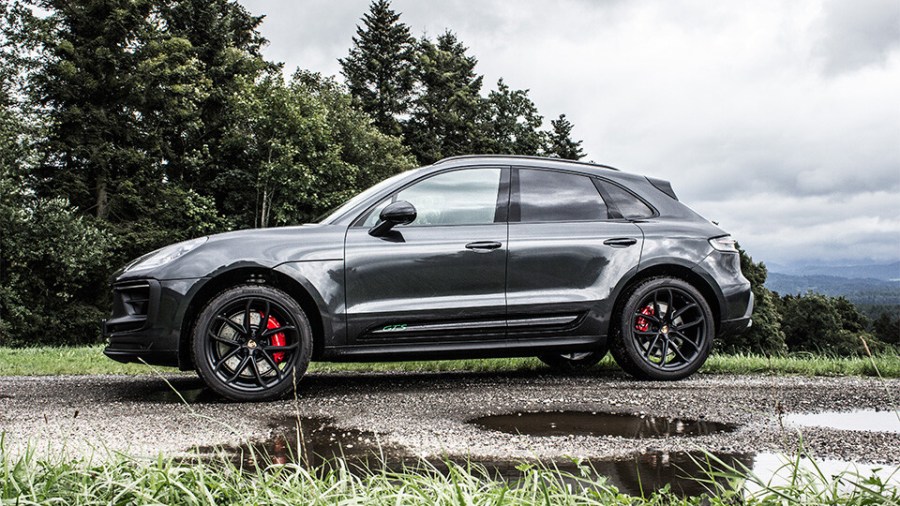
A good-looking car with an almost coupé-like roof line

The Macan was launched in 2014 as part of the trend towards smaller SUV’s, and shares its platform with the Audi Q5. A major facelift first took place in 2018 and then again in 2021 and engines will vary with the series and production years. Essentially though, good first series cars with all engine types are now to be had around EUR 50.000 in most markets, while later series are still more expensive. Even for the first series however, this means that a Macan has held its value better than many other cars in its segment, including the Cayenne. The most visible difference between the first two series is the light bar between the rear lights and the updated infotainment screen, but it’s only the still produced third series that saw a more complete overhaul of both exterior and interior.

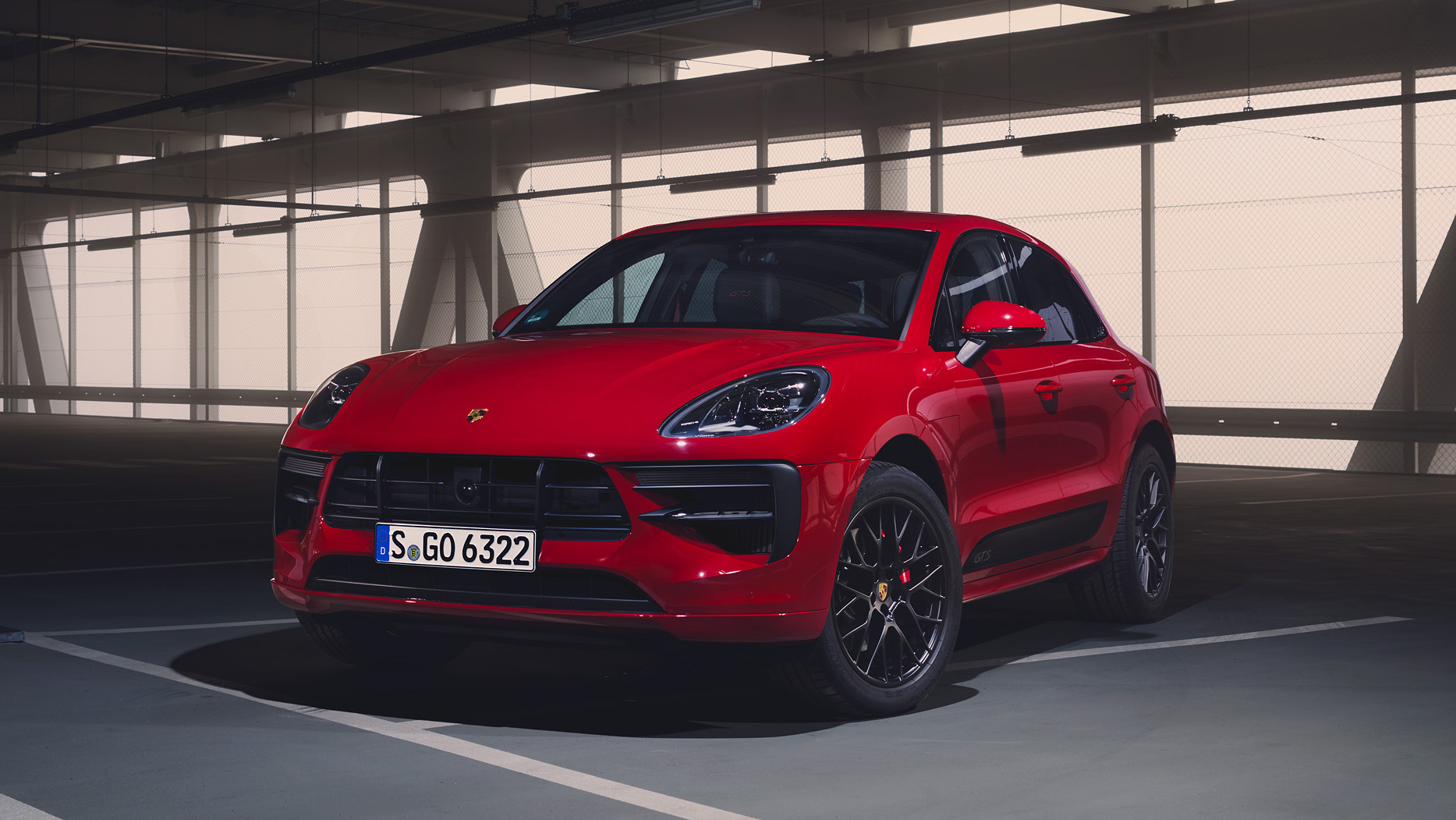
I had the opportunity to test drive a Macan Turbo from 2015, i.e. the first series, and a GTS from 2020, i.e. the second series. The two engines are a good combination and the two different cars also illustrate the evolution of the Macan quite nicely. The Turbo in the first series produced 400 hp and the GTS in the second 380 hp, however with only slightly less torque (520 Nm vs 550 for the Turbo). Both are also six-cylinders since I personally still struggle at the idea of a Macan, or any Porsche for that matter, with only four cylinders – not to talk about a diesel… In the current series, the GTS is the top-of-the-range engine with 434 hp, as the Turbo has been discontinued.

The light bar between the rear lights was added in the second series

The cars have far more in common than setting them apart, starting with the excellent driving position. You sit low and tucked in in an excellent seat, in a position which doesn’t resemble that of any other SUV, not even the Cayenne. Those who like the sports car feel and don’t have too many kilos around the waist will like both the position and the seat, and everyone will love how the Macan drives. This is by far the most car-like SUV I have ever driven, with a precise steering with lots of feel, and very little and well controlled body roll. We’re not in 911 territory, but for the type of car, it’s really good.

What’s also very good are the engines. Both are supercharged with one turbo for the Turbo and two for the GTS, and you can’t fault either of them. The GTS develops power almost like a naturally aspirated engine would, but the Turbo is also very well behaved with a barely perceptible turbo lag and the sense that it’s more powerful. The PDK box does an excellent and imperceptible job with both engines, being very quick on kick-downs and otherwise mostly unnoticeable.

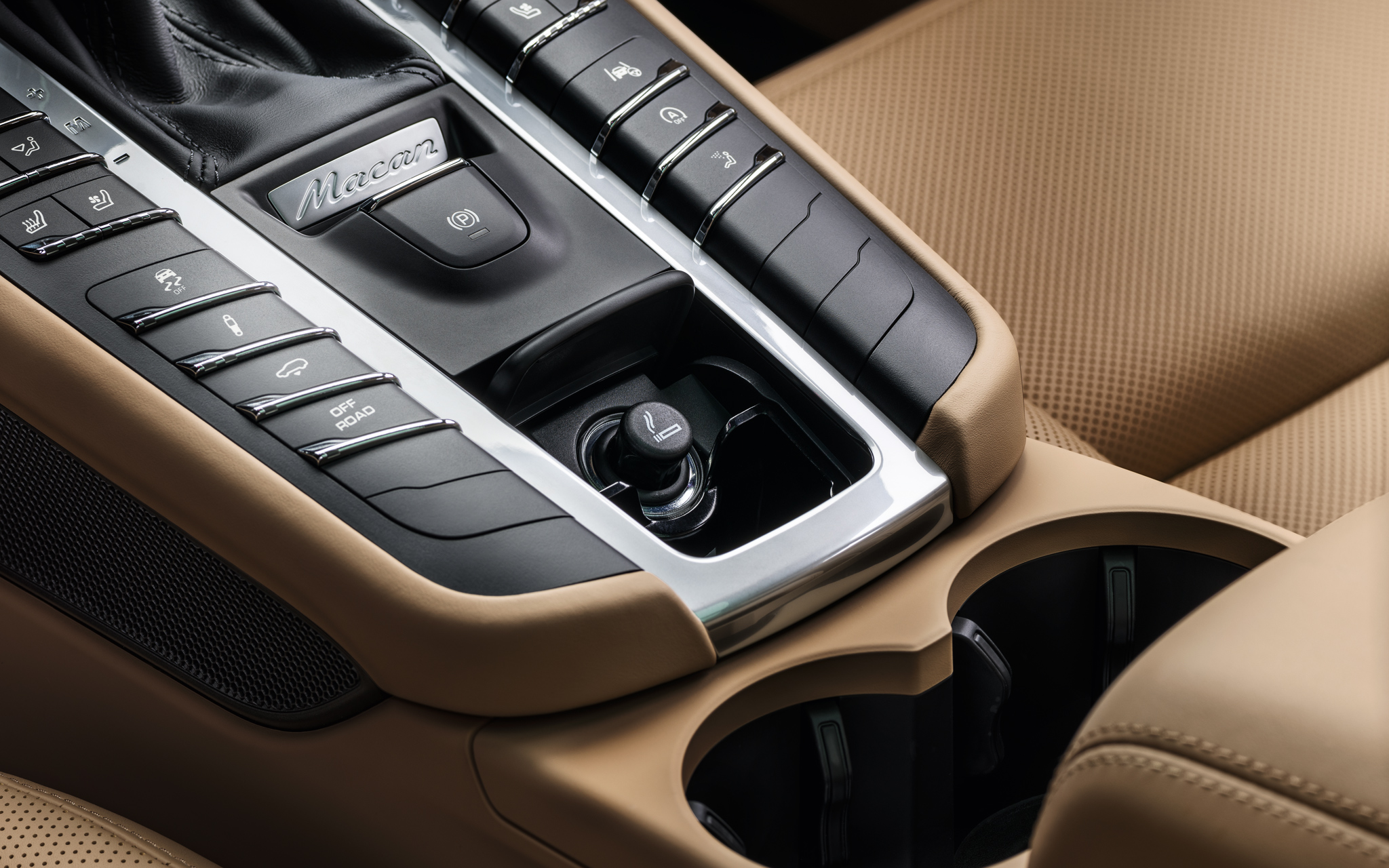
The less options you have, the more black buttons there will be…

Looking round the interior and especially the center console, you notice a very large number of buttons for different functions. The way they’re organized means there will be blank buttons in almost all cars for options that haven’t been selected, which looks a bit cheap. It’s only the current series that changed this into screen-based system, which still isn’t the clearest however. Be careful though, as of all the German automakers, Porsche is the one offering the least as standard equipment, so if you pick up a pre-owned car, make sure the first owner ticked the right boxes!

Interior build quality is otherwise good in both cars, however with lots of relatively cheap looking plastic in the rear, especially in the first series, the second being a bit better. Rear seats are also quite cramped, especially in terms of head room, and behind them, luggage space is on the smaller side, especially in height. This makes the car a non-starter for us given we need to fit a dog cage which there wouldn’t be a chance of doing here. The other argument I have against the car comes back to that excellent resale value, as for a prospective buyer, that means there are quite a few alternatives at the respective price points, depending on your needs and preferences.

In summary, a Macan with the right engine is not only the sportiest, but to my mind probably the best small SUV in the market – and of course it carries the Porsche badge! Even the by now almost 10-year old Macan Turbo I drove felt very solid, and the fact that the difference in looks to later series is small means it’s also aged quite well. It’s a neat car that, if it covers your needs for space, will serve you well, and obviously fit very well alongside the 911 or Boxster you may already have in the garage. If not, perhaps it’s time to get one of those too, to make up the Wiedeking duo?

The Audi (B8) RS4 – naturally-aspirated legend!

When Ferrari introduced the new Purosangue that I wrote about back in December, many of us were pleasantly surprised to hear that it would be powered by something as exotic these days as a naturally aspirated V12, in this case putting out no less than 725 hp. Supercharged engines are obviously what you mostly see in our time, so Ferrari sticking to the tradition, especially with a 12-cylinder, is great! What’s also pretty great and far cheaper than a new Purosangue are some of the classic naturally aspirated engines from not too long ago, especially those with 8 or 10 cylinders. Audi is then a name that quickly springs to mind and this week, we’ll look at what’s become as much of a bargain as rare in terms of power trains – the B8 Audi RS4!

As practical as a Purosangue, and much cheaper!

The tradition of Audi power wagons starts with the RS2, built by Porsche after they were done with the MB E500 they were commissioned to build for Mercedes and that you can read about here (but that was never available as station wagon). The RS2 was based on the Audi 80 and although it looked a bit more muscular, the fascination came from it retaining the basic family station wagon looks whilst driving like, and having the power of a sports car. Up until then, that had never really been the case. What it didn’t have however was a V8, but rather a 2.2 litre turbo five-cylinder engine putting out 315 hp. The RS2 was only built during three years from 1994 to 1996 and has already become a true legend, priced as such.

When the RS2 was replaced by the RS4 in 1999, the engine had grown by one cylinder, 0.5 litre and 65 hp (to 380 hp), but it wasn’t until the second generation of the RS4 in 2005 that the V8 party got going. The original six-cylinder was then replaced by a 4.2 litre, naturally aspirated V8 putting out 420 hp, and the car was available as sedan, station wagon and convertible. More importantly, the B7 generation as it’s called was only available with a manual six-speed gearbox… At a 40-60 front-back drive train split, it also had a more rear-biased quattro system and also not to forget, it was the first RS4 with the lovely, double oval exhaust pipes! Thinking of where we are today, it’s difficult to imagine a more appealing cocktail than this, however ideally in sedan or station wagon form as the convertible suffered a bit rigidity-wise.

A normal (B8) A4 until above the bumper, all RS4 below!

The V8 lived on to the B8 generation built between 2012-2015, but other body forms than the station wagon didn’t, so the wagon was the only shape the new RS4 was available in. Power had now increased to 450 hp at an almost incredible 8250 rpm, but the manual box was gone, replaced by Audi’s equally excellent (but less fun) 7-speed DSG box. A new differential allowed for as much of 70% going to the front wheels and up to 85% to the back wheels, boosting the entertainment factor. It’s also worth remembering that both the B7 and B8 were light cars by today’s standard, with the former at around 1750 kg and the latter at 1850 kg. The B8 was to be the last V8-powered RS4 and was replaced by the current version which has gone back to a turbo-powered six-cylinder engine.

I hadn’t driven a B8 for a long time until a couple of days ago when I had the pleasure of doing so here in Zurich. The car in question had a pretty amazing history It was sold by the same garage that now had it for sale, to the only owner it ever had. He apparently has a number of cars so that he never used the RS4 in the winter, which given its talents is rather strange. Actually he didn’t use it much at all, as he only put 31.000 km on it since new, but still had it serviced every year in the very same garage. Built in 2014, the car looked absolutely new. Of course, after three weeks of sunshine it had to rain this very day, and I almost got the impression it was the first time the car saw water coming from the sky and not the (manual) car wash…

Beautiful Dayton grey color and black pack. Not a big fan of the wheels.

Starting from the outside, the B8 is a pretty, purposeful and muscular car with the larger body really setting it apart. It’s best from the front and side, with the back being a bit too much normal A4, except of course for the double exhaust and the diffusor in between. As you get in, the first impression is that of quite a tight car. It gives an incredibly solid impression with some nice carbon inlays in the RS4, but a bit less plastic wouldn’t hurt, even if the grey stuff is of excellent quality. As we pulled out of the city in comfort mode, the car very much behaved like any family wagon, albeit one with very precise steering and suspension on the firm side even in this mode. Putting it into Dynamic (together with Individual and Auto the other options, and the most sporty one) changes everything. There’s an immediate change of tone in the exhaust, the suspension firms up and the steering becomes sports car-like direct. As we reached the outskirts of the city the engine was warm, and I was finally able to start pushing it a bit. What an absolute pleasure it was!

The engine is absolutely incredible. Power delivery is immediate and the revs keep rising as long as you hold your foot down, as the tone changes from a deep grumble to more of a singing bariton. The power delivery is naturally aspirated-smooth and the amount of power feels perfect for the car. It’s also noticeable how much tighter the smaller RS4 feels compared to its bigger brother or an E63. The road was really wet and I was on 20-inch Michelin Pilot Sports with an increasingly nervous garage guy next to me so we were nowhere near the edge, but at no point did I feel nervous – the car was glued to the road, the steering made it extremely precise to handle, and the engine kept singing. Motor journalists like to call the RS series and especially the B8 boring and maybe it is on a track. But a station wagon is made for transporting people and stuff whilst still procuring driving pleasure to the person behind the wheel, not for track use, and this is a car that excels at precisely that. Downsides? Some road-noise is one, not helped by the 20-inch wheels. And the size of the manual shift paddles is another – did they run out of metal in Ingolstadt?

Solid, purposeful, but slightly joyless

A well-preserved RS4 of the B8 generation with up to 70-80′ km on the clock will be yours for around EUR 40-50′, which at about 1/3 of its price as new, slightly more than a few years ago, but still an absolute bargain. It’s also a car that can be expected to hold its value very well given it’s one of the last naturally-aspirated V8’s out there. If you really insist on changing gears manually then the B7 is worth considering, but for everyday use I would go with the B8 as it still feels like a modern car. There’s a few options you should think about doing so. Firstly color-wise, the Nogaro blue is the rarest and the most sought-after, but it’s very blue indeed. As a more discrete alternative, the Daytona grey is my favorite. Then, “my” car had both the sports exhaust and the dynamic chassis and you should definitely go for both. You should also make sure it has the B&O sound system, as Audi’s more basic system is awful (most cars have it, but mine didn’t). Finally the panoramic roof is nice and helps lighting things up a bit. Audi’s quality may be top-notch, but you can’t call the interior design overly joyful…

Even though they come from the same naturally-aspirated tradition, it goes without saying that no one considering a Purosangue will be in the market for a used B8 RS4. But if driving pleasure is a priority, a power station wagon will always be a better choice than any SUV. Among these, a V8-powered RS4 is an increasingly rare car and currently one of the best deals to be had. Find one with the right equipment, service and owner history and you will not be disappointed!

Driving the craziest four wheels out there!

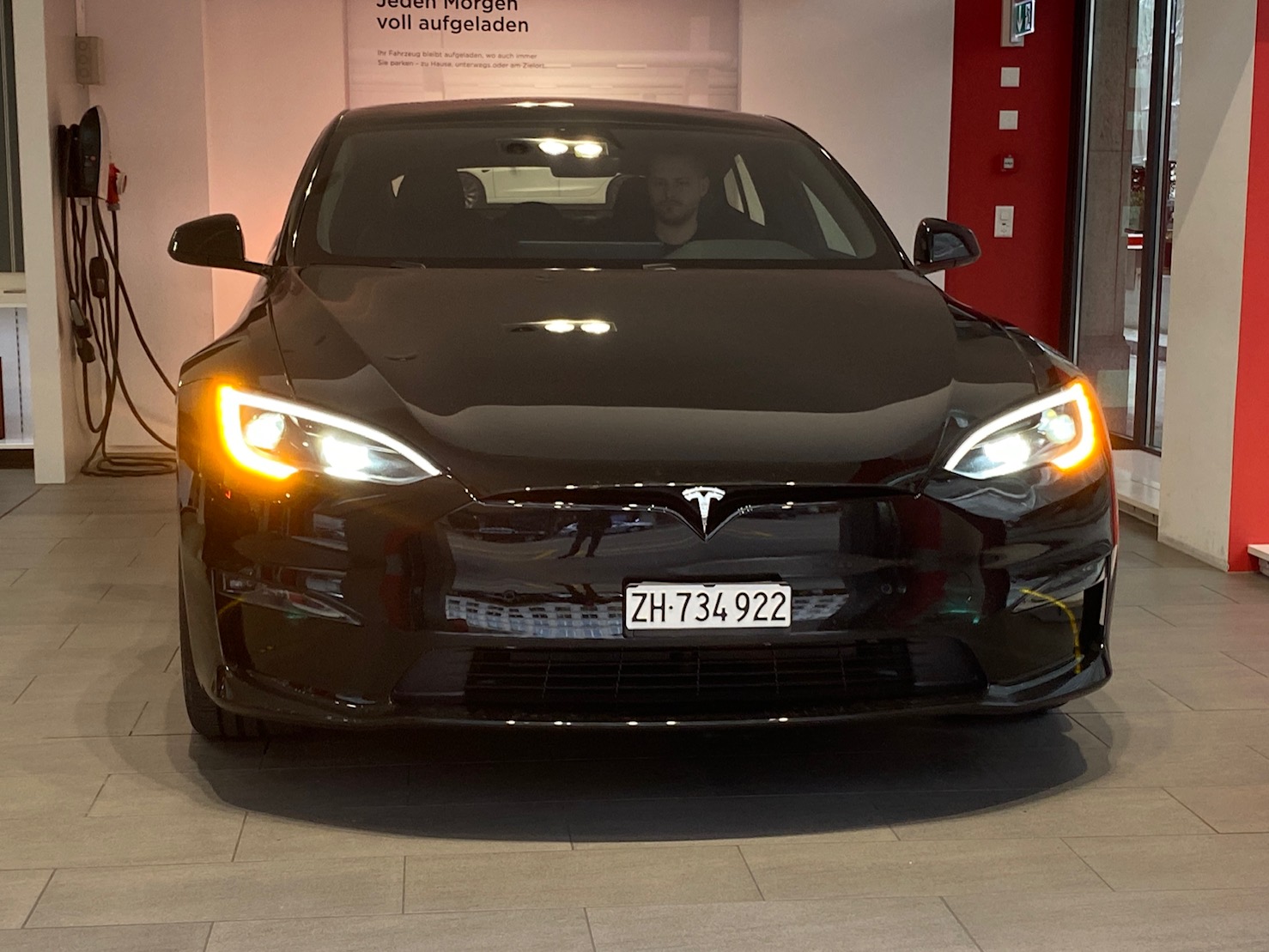
Shortly before Christmas I published my much read “nail in the e-coffin” post, setting out why I’m convinced EV’s are not the only way mobility will develop going forward. At the same time, I made clear that I have no problem with EV’s as a concept, as long as their owners come down form their high horses and stop pretending they’re saving the world. As I said then, this settles the background debate for me (if I didn’t manage to convince you until now, you’ve probably stopped reading anyway). That doesn’t change the fact that EV’s are part of the car world now, and no brand has made more of an impact in this regard than Tesla. Earlier this week it so happened that I had the opportunity to drive the most impactful Tesla of them all – the Model S Plaid. I didn’t know it then, but life was about to enter another dimension…

Slightly more aggressive headlights, otherwise an unchanged look

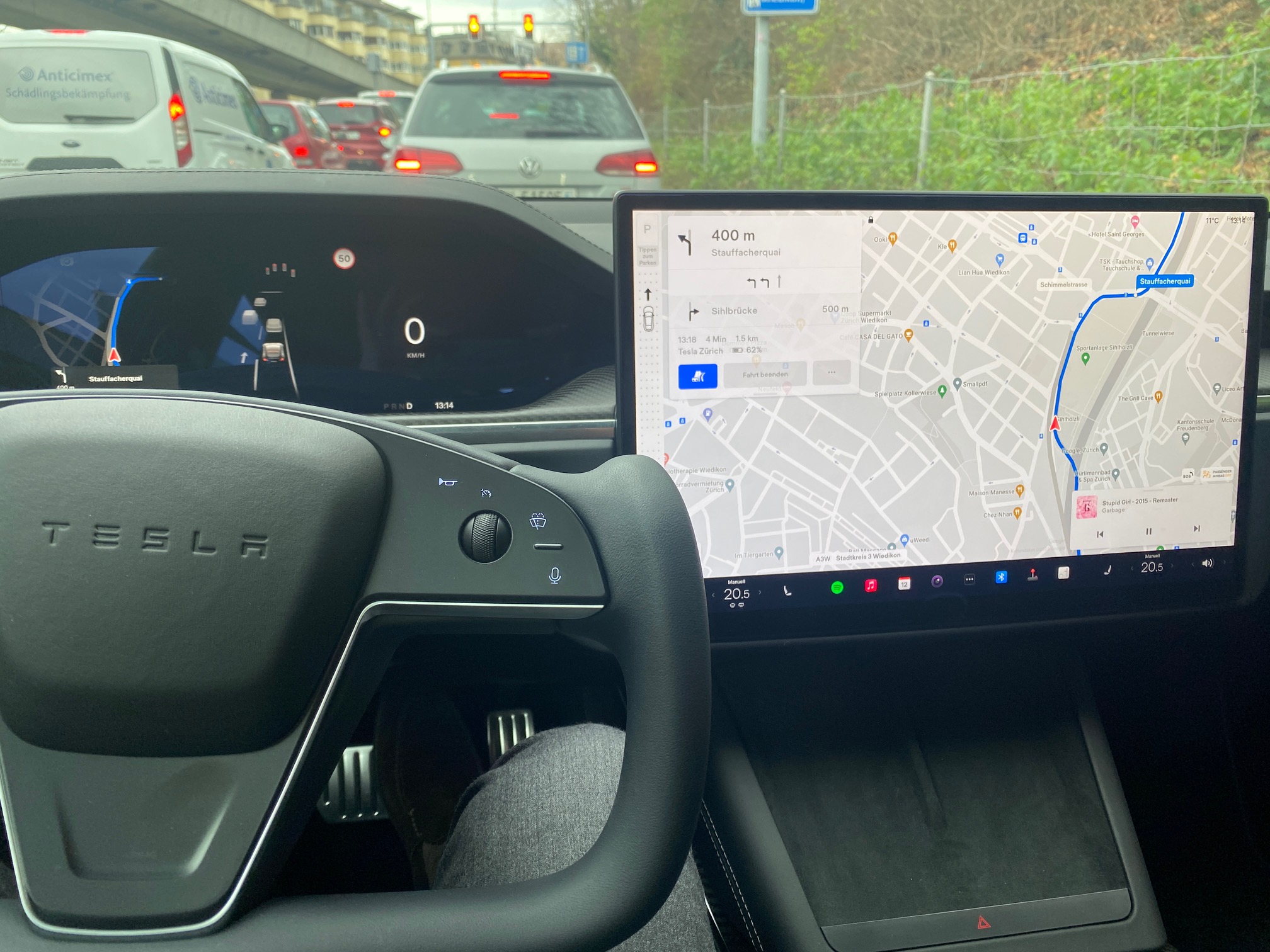
I’ve driven the Model S before but it’s quite a few years ago, so it was nice to see that what was at the time a pretty low-quality cabin now with the introduction of what you could call the second series has been significantly upgraded. The overall layout is still the same but the materials are nicer. It’s no luxury car, but it’s certainly not worse than other EV’s around the same price point (Audi E-tron being an example) The screen is now horizontal across all models, and this Plaid was also equipped with the yolk in place of a steering wheel. This is apparently something that varies by market but at least here in Switzerland, you can choose between a normal steering wheel and the yolk both on the normal S and the Plaid. More on the yolk later, but a clear benefit is that it opens up your vision of the instruments and towards the front of the car.

I chatted about charging, batteries and the new sound system (which is not as good as other high end systems, whatever Tesla says) with a very nice salesman who also showed me some parts of the system. This is of course where any Tesla shines and you have to give it to them, what they do on the tech side is still pretty far ahead of everyone else. An example would be how in other cars, you’re still lucky to find someone offering wireless Apple Car Play, when in a Tesla you don’t need it at all as you have direct access to your Spotify account. Or how I was thinking that it was crap that there was no memory buttons on the electric seats, only to be reminded that you can set up to 10 profiles in the system under which all your seat, mirror and steering wheel adjustments are saved. I may have doubts on our EV future, but such developments will hopefully be part of it more broadly.

A horn button that small is dangerous – screen is not always intuitive but offers far more functions than a normal car

The sales guy then spontaneously offered me to take the car for a ride straight away, which I did. Alone. I followed his recommendation for a route that included both city, motorway and a nice, curvy road over a lower mountain pass, all within 30 minutes of the city (Switzerland is a mountainous country…). I was reminded of two things straight away from previous drives in the Model S, namely to treat the accelerator with some caution (especially in this version…) and also that the recuperation is very strong and as I understand it, no longer adjustable. That really isn’t a problem at all though. It takes you a few minutes to get used to it but not more, and after that you basically drive the car with one foot. I really don’t understand car journalists and vloggers who have a problem with this, however it probably means that you need to actively think of using the breaks from time to time, or your discs risk rusting.

Another very special thing is of course the yolk. I’d like to think that you get used to it and in most situations, meaning everything except roundabouts and sharp turns, you can basically treat it like a wheel. In those situations though, unless you want to cross your arms you’ll need to move your hands without an obvious place to put them. You also need to be careful such as not to hit the small buttons on both sides of the wheel for notably indicators, horn etc. And when you do need the horn, you usually don’t have time to search for a small fiddly button rather than just smash the center of the steering wheel. It is indeed pretty cool not to have the steering wheel blocking your view forward but on balance, the disadvantages with the yolk outweigh the benefits.

Materials are now far better than a few years ago, hopefully that goes for the quality as well

The ride is good, as it’s always been with the Model S. I’ve never driven, but ridden in a new Model Y which is a terrible experience, with a suspension that is much to hard. The S is far better, clearly on par with normal cars. Handling is excellent, the car feels planted and neutral. It’s too heavy to dance around the corner but it’s very neutral in its behavior. The steering is precise and can be set with different levels of resistance, but none of them will communicate much of what happens below the car. It’s a different experience driving on a curvy road as you’re not using the break and it takes some getting used to, but I don’t doubt you would get used to it. In summary, I guess you could call it a somewhat synthetic experience. It’s different, but it’s not bad.
And then there’s of course the acceleration. Which is completely freakin’ bonkers. I’ve driven many fast cars, none of which come even close, and I strongly doubt anything does this side of a dragster or a fighter plane. It’s not only about the sheer power though, there’s also the EV immediacy, i.e. the power being delivered without any delay at any point. You hit the pedal (no, you don’t floor it in this car on a public road unless you’re tired of life) and in return you’re pushed back against your seat at the same time as your knuckles whiten. It’s completely and utterly crazy. It’s also completely unusable in anything except a straight line or a drag race. Trust me, I know how to drive on a curvy road and at no point was it possible to use anywhere near the full power of the Plaid.

The S is still the best looking car in the Tesla line-up – if you ask me

The new “normal” Model S does the sprint to 100 km/h in 3.2 seconds and has a longer range than the Plaid which is one second quicker to 100 km/h. Except for a carbon fibre spoiler lip on the trunk and the Plaid logo (which looks like the symbol of some religious sect) the cars are identical, and the normal S is 20-30% cheaper. The Plaid is of course nothing more than a prestige object but given that, Tesla should perhaps have worked a bit more on the styling to set it apart? Even putting that aside though, there’s really no reason to go for anything more than a normal Model S, especially since there’s quite a few reports of the brakes overheating quite quickly when the 1000 hp Plaid is driven with some ambition…

For a petrol head deciding to take the – big – step of switching to an EV, at around 100′ CHF in this country, the Model S is probably the best EV you can buy. It’s also the best car in the Tesla range. The Models Y and 3 are both simpler and cheaper in ride and materials, and even though the Model X has had the same interior updates, I’ve never met an X owner who hasn’t had problems with his gull wing doors. The Model S is however not only that, for me it also beats EV’s at a similar price point (think Audi E-tron, Mercedes EQE etc.). It’s better in areas such as range, infotainment and charging infrastructure, and is now also on par in terms of materials. All the others are far less powerful though, meaning they’re less fun. That last part is what makes it worth a consideration for anyone interested in more than the sheer transport from A to B. This petrol head is however not there yet!

The wolf in sheep’s clothing…

Hot hatches is not something I write often about, quite simply because I’m less passionate about the segment than others such as supercars and intersting oldtimers. I will however be the first to admit that there is something very appealing with the concept of a small car with low weight and lots of driving fun, and I have at least touched on some classic hot hatches in past posts, such as the Peugeot 205 GTI and recently the oh so lovely A112 Abarth.

A problem with the hot hatch segment is however that it’s (also) become expensive: new ones easily cost as much as a mid-sized car, and the classics such as the Golf GTI Mk1, Peugeot 205 GTI, Renault Clio Williams (not to talk about the Turbo 2!) have today gone stratospheric. There are some exceptions though, and in my opinion, none more so than one of the smallest hot hatches on the market. Maybe it’s because of the size, or because it looks sweet rather than dangerous. Whatever the reason, I can’t think of a single car today that offers as much driving pleasure per your unit of money than the forgotten, underrated and undervalued VW Lupo GTI. Doesn’t ring any bells? Don’t worry, you’re not the only one, and that’s why we’ll look closer at it this week!

A sympathetic face, largely forgotten – undeservedly!

The reason I came to think of the Lupo is the current search for a car for my son, who (if all goes well) will pass his driving license in ten days. He’s inherited the car sickness gene from me and has therefore been on the lookout for an affordable while still fun car, with four seats, a decent amount of hp but not too many such as not to scare his mother, and at the same time with low consumption and being cheap in insurance. Affordable in this case is around CHF 5-6.000 (about as much in EUR/USD) but given his level of mechanical knowledge is lower than a Lotus Esprit, there’s also a strong wish for the car not to be something Esprit-like but rather quite solid. The task looked difficult for a while with not many more candidates springing to mind than a Mini, which is arguably an excellent choice but also something you see on every corner, which in this case doesn’t count as a positive. But then it struck me – the Lupo GTI actually fits the bill perfectly!

The Lupo (Italian for “wolf”, which is in turn the first half of the name of the town VW comes from, Wolfsburg) came about as a result of “size inflation”. The Golf, traditionally the small car in the VW line-up, was getting bigger and bigger and all of a sudden there was room for a smaller car below it. Launched in 1998 and built until 2005, the Lupo filled that gap, and whilst most of the almost 500.000 Lupos built were quite boring small cars selling rather on fuel economy (the Lupo 3l TDI consumed just that, 3 litres, on 100 km), around 6400 of these were the GTI model. That’s not a big number, and although most of them are still on the road today, it also explains why the supply is thin – there’s currently four for sale in Switzerland, and around 15 in all of Germany.

Leather was one of few options available

True to the philosophy shared by the Mini that a car should ideally have a wheel in each corner, the Lupo is a boxy little thing with practically no overhangs, bringing the advantage that you can actually seat four adults on far less than 4 metres (3.52 metres to be exact) and also a bag or two, as long as they’re not too big. The GTI sits 20 mm lower than the regular Lupo and looks the part with 15-inch wheels, xenon lights and some decent skirts and spoilers all around, complemented by the lovely, centrally-mounted dual exhaust pipes! The interior is typical VW, however with the (also typical) VW GTI feel, with nice touches such as sport seats, a leater shifter and chrome rings in the gauge cluster which together bring a bit of exclusivity to the otherwise solid but dull interior. It’s not fun, but it’s solid and quite nice. Most GTIs sold were in silver and black, which are also the colours that fit the car best. Importantly, try to find one from 2002 onwards, as those have a six- rather than five-speed gearbox.

Quite a lovely sound from those double pipes!

Turning the ignition brings a lovely sound from those double pipes, which accompanies you all the way up to the 7000 rpm limit. That’s good since chances are you’ll spend some time up there, given the 1.7 litre engine needs revs. As long as you do rev it, power is however plentiful as the car weighs in at only 975 kg. The rest of the drive is also pure joy, with the Lupo offering as much gokart feel as you can get in a normal car. The driving experience has been compared to the GTI Mk1 and the 205 GTI which is obviously a huge compliment, but I woudl say the Lupo is actually a more modern drive than both of them, and more precise in most areas. Once again, it’s a great testament to the advantages of the light-weight philosphy!

As noted above there aren’t many Lupos around and many of those that are have also been modified, which doesn’t have to be negative as long as it stays decent and well-done. Lowered suspension combined with bigger wheels is probably the most common modification, and obviously you then need to make sure that the suspension leaves enough room for the wheels and provides at least a minimum of comfort. Engine tuning is less common, but there are a couple of cars in Germany where they’ve managed to squeeze the 300hp+ Audi S3 engine into a Lupo GTI. Having driven the standard car, that sounds like a truly terrifying experience! The high mileage you see on many cars is obviously a testament to the quality and shouldn’t put you off as long as the car’s been serviced regularly. Another testament to the quality is no doubt that of the around 1500 GTI’s sold in Germany, around 2/3 are still on the road 20 years later.

That’s not going to work very well…

So where did we end up? Well, we managed to find a silver GTI from 2002 with around 160.000 kms on the clock, owned by a VW mechanic, in almost perfect condition. It’s been lowered a further 2 cm from standard with new suspension and combined with the almost new 16-inch wheels looks absolutely terrific. The driving experience is amazing and to my great surprise, the seller was happy to negotiate the CHF 6.300 asking price without me saying anything, as the car has been on sale for a while without success. He was therefore also happy to reserve it for us until my son’s test. If you ask me, the weak demand will soon be a thing of the past, as it’s difficult to imagine a more fun, more solid and more practical car for the city and short trips than the Lupo GTI. As for my son, he is now more motivated than ever to pass that driving test – as if that was ever needed…

The striking 205 GTI!

If last week was all about the technological future of our cars, this week we’ll make a trip back in time and explore less of the thrill of technology, and more of the thrill of driving in its purest sense. We’ll do so by looking a bit closer at an absolute legend among hot hatches: the Peugeot 205 GTI.

A brilliant design that has aged really well!

Back in 1990-1991, when the 205 was still riding high although it had already been on the market for seven years, a good friend of mine had parents kind enough to offer him a brand new 205 1.9 GTI when he got his driver’s license. I remember when he showed it to me the first time, it was black and shiny with those lovely 15″ rims and the half-leather interior, and man was I jealous. Not that there was anything wrong with my parents, but the blue Golf from -75 they got me didn’t really do the trick in comparison.

As it turned out though, the Golf lived far longer than the 205. You see, my friend was in love with a beautiful girl, who also had just got her license, and kind as he was (and still is), lent her the car over a weekend. If memory serves me right, she didn’t drive more than a few hundred meters before crashing it so completely that it never came back. Luckily nothing happened to her, but the two of them broke off shortly thereafter, unclear why…

Except teaching us to be careful with whom we lend our beloved cars to, the story also highlights another fact which contributed to the 205’s early demise in the above case, namely that it’s a light car with correspondingly thin and light parts. It weighed in at less than 900 kgs and as I’ve written about previously on this blog, a low weight is the best recipe for good handling and speed – but not a good one if you plan to crash.

The 15″ wheels were large at the time and reserved for the 1.9 GTI

Anyway let’s go back to the beginning, which for the 205 means the year 1983 when the GTI started off in parallel to the regular 205, initially with a 1.6 litre engine developing first 105 and later 115 hp. In 1986 the engine size was increased to 1.9 litres with more torque and between 120-130 hp depending on version. The debate still goes on among enthusiasts as to which version was the best, some claiming the 1.6 is more playful whilst others talk of more speed and torque in the 1.9 litre. I’ve only driven the 1.9 and I’ll just note that the extra power means 1.5 seconds less to a 100 (at 7.6 seconds), quite beneficial since the car is still as playful as you would expect an 80’s hot hatch to be.

The 205 was an instant success in France, and the GTI version was a success pretty much all over Europe. In France its main competitor was the Renault 5 which didn’t have the poise of the 205, and internationally it was the Golf GTI Mk2, which was somewhat roomier and probably the better car, but which design-wise was a step back as compared to both the 205 and the Golf GTI Mk1. The 205 was a stunner in comparison and if you ask me it remains so today. It’s also striking how much cleaner the design is, compared to the the complicated and overburdened forms hatches tend to come in today.

It didn’t hurt the success of the 205 GTI, that lasted for 10 years, that a car by the same name but with few parts in common was very successful both in Group B and the Paris-Dakar rally. The 205 T16 / T16 Evo 2 was a mid-engine super car with up to 500 hp, competing with the Lancia Delta Evo and the Audi Sport Quattro, that I wrote about not long ago (click here if you missed it). The 200 homologation cars have mostly gone the same way as my friend’s car and finding one today is very hard and very expensive.

Looks roughly like a 205 and shoots flames out the back – that’s good marketing!

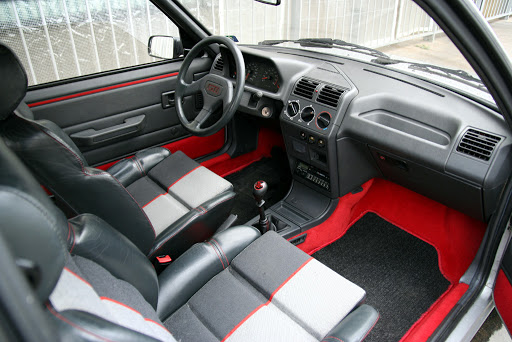
That the “normal” 205 is a real feather-weight becomes clear as soon as you open the (extremely light) door, sit down and look at the likewise very thin and basic plastic dashboard. Not much here to distinguish the GTI from a regular 205, but the comfy, good-looking seats along with the red carpeting remove any doubts as to which version you’re in, and both look sensational. Visibility is tremendous even by 80’s standards and the car is roomier than you think, both in front and back.

Taking it for a short drive, the first thing you note is how much the body moves and how soft the suspension is compared to modern hot hatches. This doesn’t mean it doesn’t stick to the road – it very much does so, but this was how hatches were built at the time and the longer suspension travel means that it’s actually overall more comfortable than a modern hatch. Naturally a new 206 GTI, Civic Type R or any other modern hot hatch is faster, but the 205 still provides a level of speed and fun which is right up there, especially since speed itself is relative and tends to be rather limited in most places you would use a hatch today. The car is playful, both steering and gearbox are fully ok, and the four pot has just the level and type of sound you wish for. It actually felt exactly as fun as it did 30 years ago, before disaster hit the car I drove at the time in the form of a pretty girl.

The dashboard could be any 205 but the seats and colors make the difference!

Finding a 205 GTI isn’t difficult, finding one in good condition a bit more so. Firstly most cars have really been used, and who wouldn’t? This means that many will have 150.000-200.000 kms on the clock which isn’t the end of the world as long as they have been maintained well. A good car will today cost you at least EUR 15.000, a perfect one with much less kms considerably more. Running costs won’t be much to worry about and the downside risk is very limited, as especially well kept cars get increasingly rare.

So why would you? Well, except for the looks and sweet memories from younger days, which in themselves are great arguments, there are other pretty rational reasons for looking at a 205 if a hot hatch is your thing. Assuming you will use it as most people, meaning on short city drives and spells of country roads rather than for long motorway trips, then things such as sound isolation and lack of top end power become much less important and having a small practical but very cool car with great visibility more so! You don’t need giant, Type R-styled wings in the city and you don’t need park assistance systems to park a 205 as long as you can still turn your neck. And whereas a modern hot hatch costs you three times as much to buy, the pleasure you’ll derive by taking the slightly longer way home along that twisty country road won’t be much different!

3 x Lotus in 1 week!

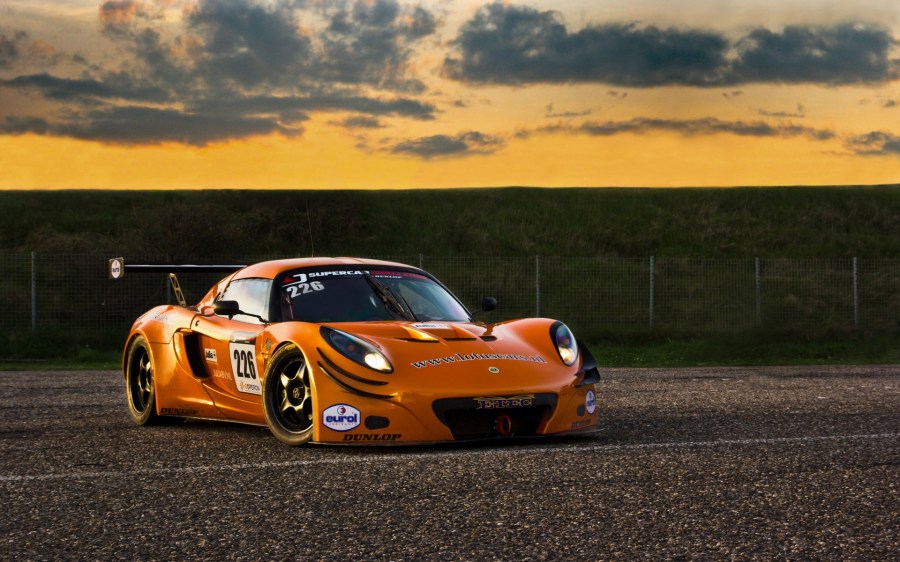
This week will be all about Colin Chapman’s lovely, lightweight cars from Hethel and his motto “adding power makes you faster on the straights. Subtracting weight makes you faster everywhere”. We are of course talking about Lotus and more precisely about a nice selection of one Elise and two Exiges. You see, writing interesting pieces on this blog every week isn’t always easy, and finding time for great test drives even less. The blessing then comes in the form of other petrol head friends who are kind enough to share their experiences!

This week I’d therefore like to thank my friend Erik, a fellow Swede and car enthusiast who currently studies here in Zurich, and who over the previous two weekends had the pleasure of driving two different Exiges and an Elise. Before going into his very interesting experience though, a few words on the two models for those less familiar with the Lotus line-up.

One happy Swede!

The Lotus Elise saw the light of day in 1995 and has since been built in three series: the S1 until 2000, the S2 until 2010 and the S3 ever since. An untrained eye would be forgiven for not immediately seeing the difference between them, although the S1 is a bit more frog-like than the others. The Elise has always been about a maximum of driving pleasure for a minimum of weight, and things normal in other cars like carpets, A/C etc. are not standard in the Elise world. It’s notably famous for its aluminium chassis, weighing only around 65 kgs! With engines delivering between 136-220 hp (Cup and other special versions being more powerful) and a total car weight of only 800-1000 kgs depending on version, power output has never been an issue, although the engine character can still be, as we’ll see further below.

The Elise S2

The Lotus Exige was developed with the Elise as basis, originally as a race car but unlike the Elise as a hatchback. It was intended to be a more mature car than the Elise and other differences include a sportier body with wider fenders and track, allowing for larger wheels, and larger front and rear spoilers. Launched in 2000, the S1 was only built during two years and the story of the Exige really starts with the S2 in 2004, built with the same 192 hp Toyota engine as the Elise as basis. The S3, where deliveries were delayed a couple of years and only started in 2013 after Lotus had survived yet another financial crisis, was a heavily modified car with a new chassis and importantly, a 3.5 litre, V6 compressor engine developing 350 hp. As with the Elise, the Exige was also built as Lotus’s own “Cup” and other more powerful versions.

The Exige S2

Coming back to my friend Erik’s experience, the first car he got to test was an Exige S2 from 2005 with the 192 hp, 1.8 litre Toyota engine. Being young and agile he got into the car without too much difficulty, something that shouldn’t be underestimated for the somewhat elder among us. Once inside though, there is enough room for both young and old. The unassisted steering is surprisingly light at low speed and the radio is better left turned off, given the sound is nowhere near where it should be – it’s far better to listen to the engine instead! With the soft roof off, my friend took off towards some nice alpine roads, earning some sympathetic looks from cyclists on the way (which I can tell you isn’t always the case!), a good testament to the friendly design of the little car.

This is of course the kind of roads the car is made for, and the description of it as a go-cart on steroids nails it pretty well. The chassis is extremely well balanced, the steering, gradually heavier as the speed increases, is among the most precise in the industry, and the grip, even without any form of electronical helps, is tremendous. The gearbox is less precise than it could be, something that has often been commented on, and although 192 hp for a ton of car sounds plentiful on paper, the engine does require a lot of revs to come into its full right around the 6.000 mark, which is of course a bit limiting in daily usage.

The definition of a minimalistic interior!

In terms of quality, the Toyota-built engine is however the least of your worries. The fact that the car is quite loud and that you hear squeaks an scrambling from various parts is so to say part of the package, as is the limited comfort. The passenger seat can’t be moved at all, the driver seat to a limited extent. The cabin is obviously reduced to a minimum, true to the lightweight philosophy, so if you’re looking for anything but a driver-focused experience, look elsewhere.

Second in line in my friend’s Lotus weekend was the car he would later describe as hands down the most fun car he’s ever driven – an Exige 350 Sport (S3) from 2016. The difference to the 11 years older S2 Exige was in his words striking. As noted above, the S3 was heavily re-worked and is a much more refined car, the scrambling parts are gone, thereby leaving more room for the wonderful engine sound. There is a constant mix of gurgling, pops and bangs going on from the rear part of the car, enough to put a big smile on any petrol head’s face.

An even happier Swede!

The S3 Exige is around 200 kgs heavier than the S2 and also rides on wider tires, both contributing to the (still unassisted) steering being very heavy at low speeds. It’s also very communicative, as motor journalists love to put it. “Feeling” the road is obviously an important feature of any true sports car, but one should be aware that this also means feeling every single imperfection of the road every time you take it out, and also experiencing the occasional sideways jump, as a tire catches a track in the road (I should probably add here that roads are pretty good in Switzerland…).

The 350 hp the compressor engine puts out gives the S3 a phenomenal acceleration. This is combined with very confidence-inspiring breaks, much more so than on the older car. The gearbox is still not the best on the market but it does excel in the way it looks – very similar to a Pagani Huayra or Spyker c8!

Finally a week later when his adrenaline had returned to normal levels, Erik also drove an Elise SC RGB from 2011. RGB stands for Roger Becker, a phenomenal chassis engineer that spent 44 years of his life working for Lotus before retiring in 2010. When he did, Lotus developed special editions of both the Elise and Exige with Roger’s choice of options as a tribute. The RGB Elise has the 1.8 litre engine, however with the S3 front. The car in question had additionally been worked on a bit such as to put out an extra 20 hp, bringing it to a total of 240 hp.

As you may suspect, Erik’s experience of the Elise falls between the two Exiges. The car is much more responsive than the older Exige without compressor, although not as manoeuvreable at lower speeds. The driving experience is very similar to the later Exige, however with a fair amount of squeaks and scrambling, so quality-wise more on the level of the older Exige.

The Elise Roger Becker Edition

If I allow myself to summarize Erik’s experiences with my own an those of other friends, it’s clear that any Lotus (and I would include the Evora in that, although Lotus fans tend to see it as a GT car) is among the purest and best driving experiences you will find, and a great proof that from a driving perspective, low weight is more important than high power. At the same time, the lightweight concept makes it quite a raw experience that only comes fully into its own right on a race track and country or mountain roads, provided you know there are no cameras around. The Exige is more mature than the Elise and arguably the better car, although an Elise with the right engine is of course highly enjoyable and the difference shouldn’t be overstated (again, if you’re looking for comfort, look elsewhere). The 192 hp of the base engine may be enough on paper, but the high revs it requires means the compressor engines are a much better proposition. Finally, quality: it is what it is, and as Lotus owners know, its mostly not a problem free experience. That being said, the list of things that can break is shorter than in most other cars, the engine is usually not one of them, and servicing costs as well as tax treatment in most countries are quite low.

If an Elise or an Exige sounds like the thing for you, as you would suspect the price points of the above cars differ quite a lot. A 10-year old basic, 192 hp S2 Exige is yours for around EUR 30-35.000, whereas the a 10 years younger, S3 350 hp version will set you back from EUR 50.000 and upwards. There are few RGB Elises around, but otherwise a 10-year old basic S2 192 hp one will cost you around EUR 20.000 and you’ll need to add around 10.000 for the more powerful ones. In other words these cars hold their value really well, which combined with low ownership costs make them a more attractive proposition than most other great “driver’s” cars.

For a company that has had more lives than a cat, it’s nice to see that Lotus’s future now looks to be somewhat secured. Next to the bonkers, GBP 1.7m, 2.000 hp electrical Evija, Lotus has an ambitious agenda of new cars in different segments over the coming years, with notably an all new model for 2021. Fingers crossed that they get there, because from a pure driving experience perspective, the world would be a much poorer place without Lotus!

The £1.7m, 2000 hp, all electric Evija

We hope you like this blog – please help us keep it interesting by subscribing!

Alpine A110 – enjoy it while it lasts!

I had the privilege to spend part of my childhood in the late 70’s and early 80’s in Monaco. I had caught the car virus already back then, although the 8-9-year version of myself was mostly interested in counting car antennas (these were the days where cars would regularly have 3-4 antennas, and the really cool guys would have a 2-meter, roof-mounted one, making it look like they were receiving from the moon…).

Monaco is obviously embedded in France, and France is obviously very French, also when it comes to cars. In this period there were two French sports cars that easily (at least according to the French) held up with the competition from both Germany and Italy. The first was the Renault 5 Turbo / Turbo 2 nicknamed “the steel mouse”, basically a Renault 5 with a wider body and the engine moved back to sit where the back seats used to be, and developing anything between 160-300 hp depending on version and year. Few of these are left today and when they change hands, it’s at stratospheric prices.

Très cool! Antenna on the smaller side though…

The other came from the small French manufacturer Alpine, established in 1955 and mostly known for the A110, built during the 60’s to the mid-70’s. Alpine had always had a close relationship with Renault who took over the company in 1973 and after the A110, sold its successor the A310 (later A610) until 1995 when the Alpine name disappeared.

Très – ugly, from the front as well as from most other angles.

In 2017 Renault then re-launched Alpine with the new A110, a small, light sports car clearly reminiscent of the original from the 60’s, and in many ways inspired by Lotus (Lotus Exige bodies were even used during the development process). The A110 received a warm reception especially from the motor press since it was a car that finally went against the logic of ever-increasing power in ever-heavier sports cars. The car magazine Evo (the tagline of which this blog uses as its name) even elected it runner-up in its Evo Car of the Year in 2018. In addition, a small engine with low emissions in a light body made the car cheap to own, which is very important in France but increasingly also in other European countries.

I obviously no longer live in Monaco but our family typically returns to the south of France every year (typically doesn’t include this year by current looks…) and we stay close to a large Renault dealer with a separate Alpine showroom. I visited it last summer, got a personalized demonstration of the car as well as a test drive in the adjacent back country that was really an experience.

Firstly I love the looks, that for me strike the right balance between old and new and are quite unique. Secondly you sit really low with the car wrapped around you. Thirdly, it’s a great drive. The mid-mounted, turbo-charged, 250 hp four-pot (now also available in a 295 hp, “S” version) delivers more than enough power to the rear wheels for the 1.100 kgs it weighs. The engine is in great harmony with the 7-speed DSG box and handling is sharp with a notable absence of body roll. It’s also very well made and doesn’t need to be thrown around a corner to be enjoyable. As Renault has shown previously, all the way from that R5 Turbo to modern incarnations of the Mégane, it knows how to develop great drives, and the A110 is a testament to that. At a starting price of around EUR 55.000, I would also claim that it’s quite competitive, being far cheaper than any new Lotus (and in comfort and finish, only the Evora could compete) or Porsche Cayman (that is however more than 500 kgs heavier), the two most obvious competitors.

The interior doesn’t disappoint either!

Apparently though, not a lot of people agree with me on that last point – because very few Alpines are being sold – and this is even before the whole Covid thing. A total production of around 7.000 so far of what was always going to be a niche car doesn’t sound too bad, but sales in large markets are in free fall and in December, the daily production was cut from 15 cars to 7. As noted in my post on Daniel Ricciardo’s switch to McLaren a few weeks ago (that you can read here), Renault’s finances are also in bad shape, with 15.000 employees currently being cut as part of an EUR 2bn savings plan.

The Alpine is a great sports car at a good price, and although the brand may be less-known than Porsche or Lotus, the reputation and tradition should appeal to at least some of the mid-aged sports car enthusiasts that are the target group. The problem is rather to be found on the distribution side. Given Alpine is not in line neither with the rest of Renault’s line-up nor with its clients, the cars are sold over separate dealers that are few and far between (11 in Germany, 2 in Switzerland, 3 in Austria and not more than 20 in the home market France, that has more than 3.700 Renault dealers). Taken together, that 6-month old Cayman that can be serviced around the corner, that is certainly the safer option and that definitely carries the more prestigious brand, all of a sudden sounds quite attractive…

If it wasn’t for those Germans…

A mother company in severe financial straits with the French state as 15% owner does not bode well neither for Renault in F1, nor for niche projects like the Alpine. If sales don’t pick up, which is highly doubtful given what’s happened, I wouldn’t be surprised if for the second time in its life, Alpine is laid to rest. That may be sad for Alpine but not necessarily for A110 owners, who can still enjoy a great car that will never be seen on every corner and that can be expected to hold its value really well!

Driving the E63 – putting things back in order

In a post from a couple of weeks ago, I was quite critical of the latest MB E-class. As mentioned then, I had the opportunity to drive a couple of E-classes lately, including the latest E63 – and luckily, driving it pretty much lets you forget any worries you may have about its looks, materials or luggage space!

Having owned the previous E63 estate for the last three years (non S-version meaning around 560 hp), it’s of course even more interesting to compare it to the new version. And although the new one I drove was the new S-version with 612 hp, the difference in power is barely noticeable, at least on normal roads. There is a difference in sound though, and that’s not to the new car’s advantage. The deep V8 bass has lost some of that depth in the new, 1.5 litre smaller engine, and where the old car made sure no one failed to notice what you were driving at the turn of the key, the new one in comfort mode (and, I should add, without the optional the sports exhaust) is actually quite discreet.

The optional bucket seats – not fitted in the car I tried, and not advisable as an option according to the sales guy, at least not for daily use.

In terms of driving experience, lets just say that what was always a very good package difficult to fault for its precision, has become even better and more precise. This goes for everything. There is surprisingly even less body roll than in the old car, in view of the cars size and weight. The steering is even more precise than before, and the biggest difference is perhaps the gear changes. I never fully understood the complaints around the old speedshift box – sure, it was slower than many double-clutch boxes, but in my view never so that it was disturbing. The new box however reclaims the lost ground, being on another level. The options in terms of individualizing the set-up are plentiful but the pre-programmed modes leave little to be wished for, at least in normal use. The air suspension is impressive in its capability to cope with everything that comes in its way. Most importantly though, the car still feels playful, ready to shake its behind if you’re up – and prepared – for it.

The proper way to enjoy the E63

So trying to combine the general impressions of the E-class with the very complete package in terms of driving the E63 offers, where does this leave us? To my mind, there is still nothing that rivals the E63 Estate in the combination of supercar and family estate (the RS6 may come close, but it offers far less boot space for those of us who depend on it, and it’s also not as playful as the Merc). In its estate version, the E63 still offers all the advantages of what is still the best family estate on the market, which at a movement of your right foot will leave most other cars, including a fair amount of super cars, behind. On the road that is – and basically assuming you live in Germany and have family members enjoying speed as much as you do. For obvious reasons, the E63 will never be a very good track car.

In this resides the E63s ultimate conflict, as I’ve come to realize during three years of ownership, but more on that in a later post. In the meantime, if you’re in the market for a fast family estate, then to my mind nothing beats the E63, but I would await the face lift next year, that will notably bring the new MBUX infotainment system.

TEST DRIVE: BMW M5 – OMG!

I test drove an BMW M5 a long while back (I have a backlog of overdue updates for this blog…).

It started in a very dramatic way. Before handing over the wheel to me, the salesman did a loooong drift on the off-ramp of the motorway. He kept the car sideways for the entire 270 degree turn with the rear tires totally lit up… After these heroics, it was my turn to drive the car.

Engine

There is no other way to start this review, but to comment on the engine. With 560hp it is the most powerful car I have driven. The acceleration is brutal on the motorway and overtaking, on secondary roads, is a breeze. If you are really looking for it, you can feel a little turbo lag at low revs, but it is barely noticeable.

The sound of the engine is fabulous. It has a system that enhances the sound (Active Sound Design, ASD) which is rather controversial among car enthusiasts. But, to my ears, it sounds lovely and much better than the Bentley Continental GT V8 (see my review here, in Swedish).

How is it on the twisty stuff?

The weight, 1945 kg, is rather high, but some of the competing cars weigh more: 1995 kg for the outgoing Panamera GTS, or 2070 kg for the new Panamera Turbo. The Mercedes-Benz E63 AMG also weights more. The car masks it weight very well though, and it turns in sharply, which is a trait I have come to like a lot.

Interior

I really like the possibility to customise the different settings for the drivetrain, dampers, etc, separately, something I miss in my Macan. You can save two different sets of settings, which can be selected directly with their respective buttons (M1 and M2) on the steering wheel. It is very convenient to be able to change the character of the car with the press of a button on the steering wheel, instead of down on the centre console. Ferrari does this with the Manettino on the steering wheel; Aston Martin has buttons on the steering wheel as well. This is something I missed in the Porsches, which have not received a similar system until the recently released 991 mk2 (read my review here).

The head-up display is also very useful. In M-mode it shows speed, gear and a graphical representation of the rev counter and a shift light indicator.

Final words

As an everyday car the M5 is an enticing proposition. You could drive it daily as you would drive a 520d, the only drawback being tyre noise (you can read my review of the 520d here, in Swedish).

Would I like to own one? Yes for sure, but I am not sure it is an entirely practical proposition as a family car for us. We need to take the car to the mountains to go skiing, and a massively powerful, turbocharged, rear wheel drive car, might not be the best option. The next M5, which will be based on the new 5-series (that was introduced a couple of weeks ago) will have the option of 4WD, which adds a lot of practicality.

GROUP TEST: Driving the Boxster GTS, Cayman GTS and 911 Carrera back to back!

Last year I was at a Porsche event and had the opportunity to drive the Boxster GTS, Cayman GTS and 911 Carrera back to back.  The cars were evenly matched regarding power en weight. The Boxster GTS has 330 hp, the Cayman GTOS 340hp and the standard Carrera  350bp. The Carrera is slightly (25kg) heavier than the other two, offsetting the small advantage in power.

There were a couple of surprises.

Firstly, the Cayman GTS is much more hardcore than the Boxster GTS. This is partly due to the fact that the Cayman GTS we drove had the optional sports suspension; 20mm lower with no adjustable dampers. The Boxster GTS, on the other hand, was on standard adjustable dampers (PASM) and felt much more rounded and easy to exploit. The Cayman GTS (exactly the same car that I drove for my review here), is better suited for track work, though.

Secondly, the 911 Carrera felt slower than the two GTS cars, but not necessarily because it was slower, but because it was masking its speed. Looking at the speedo you realise that you are going much quicker than you think in the Carrera. On the other hand, with the Boxster and Cayman you feel like you are going faster, which adds to the fun.

Final words

The 911 is the practical proposition; it has back seats and it is very comfortable, in a GT way. The Cayman GTS, with the option of the extra sporty suspension, is probably more suited to track work and felt nervous on the Catalan mountain roads we drove. For me, on this roads, the Boxster GTS was the pick of the day.

IMG_2353

Porsche 911 4s – striving for perfection

I recently had the opportunity of spending a full Sunday morning on Swiss country roads with as only companion a Porsche 911 4S from 2015, and I can definitely remember worse Sunday mornings. The truth is that I struggle more to remember better ones… There are a lot of Porsche aficionados among the readers of this blog with far greater experience of the Zuffenhausen greats than I do (first and foremost obviously my fellow blogger Sven), but to those of you not yet familiar with the latest 911 I’d thought I’d share a few impressions.

“My” car was911 4S a silver-coloured coupé with black interior, a panoramic roof and the PDK gearbox. The power output was the usual 420 hp, bringing the car to 100 km/h in around 4 seconds. Obviously nowadays the boxer-six is turbo-charged even in the version without “turbo” in the name, and sure, the character of the engine is different to a naturally-aspirated six. If you look for it you will feel when the turbo(s) kick in, however power delivery remains very smooth and given the clear advantages in torque, now up to a max of 500 Nm, at least I fail to see any disadvantages with the new engine generation. That also has to do with the three buttons on the center console.
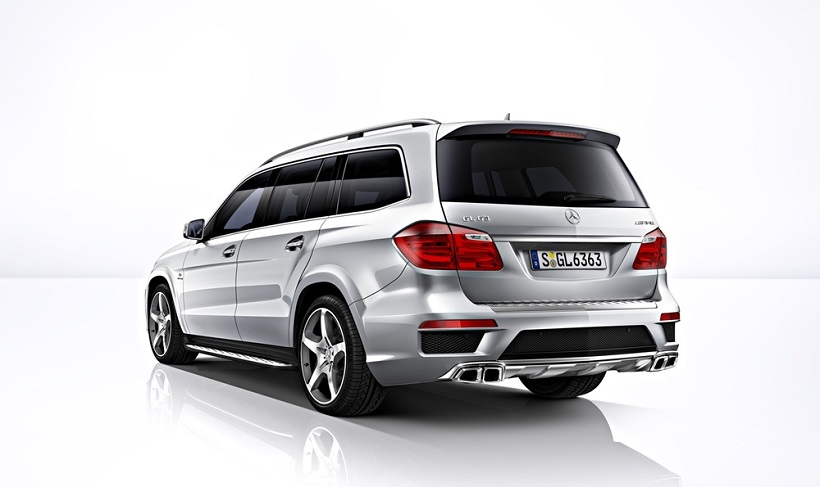
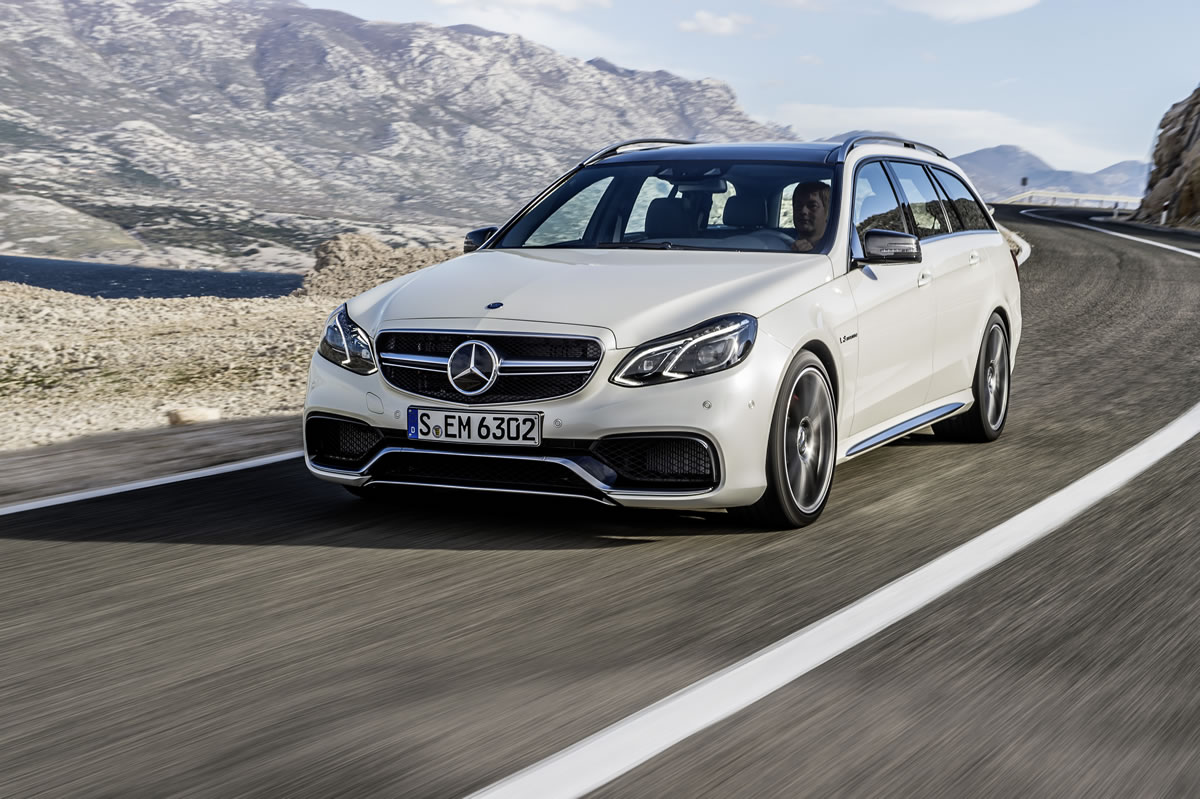
In Comfort mode, the 911 is the perfect long-haul companion, transporting two people and their luggage in utter comfort an sounding so civilized that you could trick quite a few people as to what it is really capable of. That all changes in Sport mode as the tone becomes much rawer, the suspension firms up and the fantastic gearbox hangs on to each gear longer. Had this been my car, this is probably the mode I would leave it in for everyday use. The last option is Sport Plus which, if Porsche had been slightly less serious and a bit more Tesla-like, could have been renamed something like AHBL, All Hell Breaks Loose. The mode certainly works best on track but let’s just say the sound is tremendous, the suspension is….firm and the gearbox hangs to each gear that together with the sound seem to tell you “come on, is that all you have”? Given the car was still on winter tires and the outside temperature was five degrees on a humid country road, it felt safest to answer that question by “yes, today it actually is”, but there is no doubt in my mind that with a set of sport or track tires and an appropriate piece of tarmac, this is a very potent car. So even sound-wise the new engine delivers a very convincing case.

Do I want one? Oh yes. Would this be my choice? Not certain. Although the four-wheel drive version is obviously more versatile, I remember a very inspiring drive a couple of years ago in a two-wheel drive car, so I would clearly want to try that out before deciding as it least as I remember it, it felt even more playful. In terms of power it would also be interesting to try the more potent turbo version (which would then again be four-wheel drive) – that is, if money was no issue. But sure, if someone threw a 911 4S on me, I would not mind. Actually not at all…


A morning in AMG heaven

For various reasons I had to go and see the Mercedes dealership yesterday where  a year and a half ago I bought our family car, an MB GL 350. The dealer is also what is called an AMG Performance Center, meaning you see more AMG of all kinds than regular MB models. This time he had something up the sleeve for me. There were a couple of cars he felt I should try out. I follow his advice, and boy was I happy that I did!

I was first handed the keys to the slightly surreal creature called GL (as from this year GLS) 63 AMG. The boys from Affalterbach never put their hands on the first generation GL, but they did so with the second, starting in 2013. The GL 63 has the same 5.5 litre, double turbo V8 engine as other 63 models, which in the GL develops 557 hp. Now as a reminder, the GL is 5.12 metres long and weighs 2.6 tons, so to make this work in any practical way they have worked quite heavily on (most) other parts as well. Notably the AMG version as standard features MB’s Active Curve System, basically aiming to remove the laws of physics.

2015_Mercedes_GL63_AMG_Rear_2

Put your foot on the break and press the button and you will be greeted with a somewhat subdued but still gorgeous V8 sound of the type we don’t get to hear that often anymore. And when you put the AMG Speedshift in Drive, all hell breaks lose. The beast does 0-100 in 4.5 seconds whilst at the same time, to borrow an expression from Julia Roberts in Pretty Woman “corners like it’s on rails”. It is completely surreal how AMG have succeeded in masking the weight and the size of this machine and transform it to a completely different car. 760 Nm of torque seem to be available at whatever speed and in whatever gear, and acceleration is endless.

Coming back after a test drive including both mountain roads and motorway, I suspect my face featured more of a surprised than a smiling expression, but that was about to change. The dealer now handed me the keys to a sparkling, diamond-white E 63 AMG S Estate featuring lots of goodies, including the AMG Driver’s Package meaning the 250 km/h limitation goes out the window. The S version also means a boost of another 30 hp, so the same V8 engine now produces 585 hp and 800 Nm of torque (and tests conducted on these cars typically indicate a higher power output than that). Without being small, the car still weights more than half a ton less than the GL.

cool1-223

Where the GL exhaust sound at start-up was somewhat subdued, this is nothing but spectacular. The engine blubbers and blows in a way that will put a giant smile on anyone but the heartless and the Greens, and from that point on, that smile will never leave your face. Again, it’s what AMG succeeds at doing in masking the weight that is most impressive. I used to have the same car with a 292 hp V6 and an AMG chassis. That was a great car but it was never a sports car, rather at all times feeling extremely solid – and heavy. This is like driving a completely different car. It feels light, the steering is precise, the breaks have a solid bite and you can literally throw it around corners in a way I would maybe not have done had the dealer been sitting next to me. And then the engine… The reduced weight means a 0-100 time of around 3.5 seconds and an acceleration and torque quite simply blow your mind away, in any gear, at any speed, on any road.

Conclusion? AMG are great guys, but that we already knew. Still, the GL 63 to me is a flawed proposition. At the same time as it is amazing how you can move this thing around, its sheer size means it is not made for it. As I told the dealer, if I could choose between my car with all the AMG goodies and a diesel engine that produces maybe 100 hp more than the current one, that to me would be a better suited engine to this car than the petrol version.

The E 63 S is a completely different story. I know a new E class is on the way, that the AMG Speedshift is not as quick as for example BMW’s double clutch, and that Comand is not the best GPS system on the market. Thing is, I couldn’t care less – and neither will you, because the moment you press that button and floor the pedal, all that goes far, far away. If there was ever one, perfect car, this quite objectively has to be it. Driving pleasure like a track car combined with space for all the family and four-wheel drive to take you to the mountains on the weekends – what could you possibly want more?!? I feel negotiations are about to start….

Mercedes-Benz SLS AMG GT Roadster; (BR 197); Paris 2012

If ever there was a God, he is sitting right below here!

TEST DRIVE: The new 911 Carrera S – ruined by the turbo engine?

On Christmas Eve (!), during a couple of hours, I test drove the brand new turbocharged Porsche 911 Carrera S, i.e. the 2nd iteration of the current 991 generation.

The main change, compared to the 1st generation 991, is the all new 3.0-liter twin-turbo engine. Adding turbos to the standard Carrera and Carrera S models is the biggest change in the history of the 911, since the controversial (at the time) introduction of water cooling in the late 90s.

DSC05101

How is the new turbocharged engine?

Let’s get straight to the point, does the turbocharged engine transform the car? If so, how? Does it ruin the character of the car? How does it sound? Continue reading “TEST DRIVE: The new 911 Carrera S – ruined by the turbo engine?”

Mercedes-Benz GL 350 – the thrill of…..riding

Those of you who read my last post during the Christmas break know I decided to change family cars just before the holiday season (if anyone against all odds had better things to do and missed this historical piece of literature, you can find it here). The decision not to upgrade my old w212 E-Class to the new, face-lifted E400 was primarily driven by a feeling that it would be same same but not too different, which for the money involved didn’t feel very rewarding. Another slight concern was the character of the new engine, which with its double-turbo setup invites to a slightly too racy driving style for a family car (well, depending on the driver I guess….). Finally, the need for space in a family with two children and two dogs who regularly travel through Europe haven’t changed. So what to do?

images Unknown

A revolution looks different…

Given my by now ten years satisfaction with various cars of the Stuttgart brand, the most natural was to first think of alternatives within the MB range. And actually the search never went much further. When you build a house, you rather build a room too much than one too little. Using the same waterproof logic, I opted for the top of the range in size terms that they build in Stuttg, sorry, Alabama – the Mercedes Benz GL 350.

2014_Mercedes-Benz_GL550_1073633

It should be said right away that the GL 350 doesn’t really fit on this blog given it is obviously quite far from the notion of thrill of driving. But it is very close to perfection in another thrill – that of riding. The comfort of everything in this 5.12-metre car, from the chairs and noise level to the chassis and air suspension is simply fabulous, especially considering the 2.4 ton weight and the amount of people and luggage the giant luggage compartment will swallow. The 3-litre diesel engine producing 258 bhp but more importantly 620 Nm from very low revs fits the car perfectly, as does the 7G automatic that has been criticized in other models for being slow (no need for more speedy gear changes in the GL). When tested by a Swedish car magazine, the conclusion was that a ride in the GL never becomes stressful, which is actually a good way of summing it up. It does however become an enjoyable travel experience very quickly!

Picking up the GL just before the Christmas break, our virgin ride took us from Zurich to Sweden’s west coast, a drive of 1600 km that we did in 15 hours and in ultimate comfort and with a diesel consumption that rarely exceeded 10 l / 100 kms. In the many we have done this exercise, never has a drive been more comfortable! And should you need to transport your friends, cousins or step parents somewhere, having those third row seats that by pushing a button flip out of the floor is really quite handy.

2013-Mercedes-Benz-GL-63-AMG-MEDIUM-Interior

A very comfortable space to spend many hours!

So all well in the end? Well yes, so far I am more than happy with my decision. The thrill of driving will in future be fulfilled by my TR4, a job it does very well, the thrill of riding will be perfectly satisfied by the GL. There was though that small thing the salesman mentioned to me when picking up the car: that there is a very good tuning solution from Brabus that ups the performance and especially the torque to over 700 Nm. It is not very expensive and if you talk nicely to your MB garage, they will also look between their fingers in terms of not letting it affect the guarantee (tuning the engine otherwise typically means you lose your guarantee coverage). Not that you strictly need it, but as we all know (and especially those of us who have taken a test drive in a Tesla), torque is kind of addictive… Should I go down that route, the experiences of it will of course be posted on the blog. In the meantime, if you need (a lot!) of luggage space and look for a highly practical and sublimely comfortable travel companion, look no further!

Test drive MB E400 4Matic Station Wagon

In 2010 I bought my current E350 Break (W212) from an MB dealership in Lucerne, Switzerland, specialized in importing so called “Direktionsfahreuge” (i.e. cars used to ship around more or less important VIP’s on German Autobahns), directly from the MB factory in Stuttgart, and then selling them for very competitive prices in Switzerland. My car, an E350 4-matic Station Wagon, was basically as fully equipped as a car can get and I bought it six months old with around 20.000 kms on the meter, in mint condition and fully guaranteed at almost half the price. That’s the kind of car deals I like and the MB has well deserved the star on its bonnet, taking us around Europe for four years and 90.000 kms without a single problem – by far the best car I have ever owned. As the clock recently passed 110.000 kms however, the thought that it was perhaps time for a change has haunted me since the beginning of December – and as you probably know as a reader of this blog, once that feeling sets in, you won’t get rid of it until something new stands in your garage…

2013-E-Class-Wagon-Mercedes Benz -AMG-Exterior-front-side-view-black

You were, and you still are, a really great car!

As a strong believer in the saying that you should not change a winning team, and given neither an Audi A6 nor a BMW 5-series are real-life options when you regularly ship around two children, two dogs and a wife who, given her small size, carries around amazing amounts of luggage, the first choice was obviously to have a look at the “new” E-class, i.e. the face-lifted model presented last year with minor visible cosmetic changes but more than 1100 parts updated on the inside. The corresponding petrol version is now called the E400 and like in many other cases, says absolutely nothing about the engine, in this case a 3-litre V6 double-turbo petrol engine (if the boring number combinations have no meaning anyway, why not get rid of them completely?).

“My” test car came in a very trendy pearl white, a colour that looks spectacular on this car as long as you opt for the glass panorama roof (which is black) and the 19-inch AMG wheels. If you don’t, you buy yourself a very expensive station wagon looking like a delivery car. Obviously, having driven the old model for the last four years, most things on the inside fell familiar, although MB has made another step forward in build quality – the car feels very premium indeed in everything from the (optional) Arctico-trimmed dashboard, the analogue watch, the (optional) Nappa leather and the (optional) alcantara inner roof. And as that tells you, there is no change in the policy around the (very long) options’ list…

2014-mercedes-benz-e63-amg-s-wagon-0

If you go for white, then big wheels and a panoramic roof should be high on the list!

Much has been said about especially BMW’s advances in infotainment systems, and it is true that MB is not up to the standard set by especially BMW and to a lesser extent Audi in terms of the size of the screen or the number of functions on offer. I would however argue that you should be clear on what is important to you. If it’s the size o the screen, then definitely go for Munich or Ingolstadt. If you need to call someone whilst in Germany to ask where the nearest movie theatre is, then BMW’s (optional, subscription-based) concierge service is the one to go for. If on the other hand you order a built-in navigation system for the sake of navigating, being able to store your music on a +/- 20 GB large hard disk and connecting your phone and stream music via bluetooth, then be aware that all systems nowadays have web-based navigation and are quite comparable.

Replacing a 3.5 litre six-cylinder engine producing 272 bhp without turbo with a 3-litre, six-cylinder engine producing 61 bhp more thanks to a double turbo system obviously changes the driving experience quite a bit. The turbo trend that has caught most manufacturers is driven on one hand by emission rules, as it allows cars to meet the absurd EU emission criteria better than a large engine would, on the other hand by tax rules in many European countries that tend to penalize engine size rather than power output, something that with today’s technology doesn’t make much sense either. The E400 thus feels much more lively than the old car with typical turbo torque available from low revs but without any delay in power delivery. Considering it is a 5-metre family station wagon weighing close to 2 tons, its sub-7 seconds time to 100 km/h is very respectable, as does the torque available over a much larger span than a diesel engine.

The multiple changes to the chassis on the updated model have also done small wonders to the car’s perceived agility. My old car was always stable, always reliable and always safe. Throwing it around corners on alpine roads as Switzerland invites you to was clearly doable and the car played along, but doing so it didn’t feel very enthusiastic or responsive. Here, the new E-class is completely different. It feels about half a ton lighter (it isn’t) and is much more dynamic in the way it handles and responds. The engine’s torque makes it feel like a perfect fit, and the 7G gearbox, whilst not able to compete with double-clutch systems, is still clearly up to the job as you hardly notice it working.The steering feels more agile too, without the exaggeration produced by some of today’s electronic systems.

In sum the E-class remains a very, very capable family station wagon and the facelift has done a lot of good to an already very good car. If you don’t insist on buying brand new, around 90.000 CHF (or a similar amount in most European countries) will get you a well equipped, six-month old demo car, that provided you get the right options can be warmly recommended. Should you wish to order new, you will end up somewhere between 110.000-120.000 CHF. A brand new model is due for late 2016, but that is still a long time and many miles away… Should you get the diesel instead? Not really. The torque the E400 provides feels every bit as good as in the E350 (diesel), is more accessible and still achieves 8-9 litres per 100 kms. It also makes the car much more fun to drive.

So did I buy one? Actually… no. Having driven the old model for four years, in spite of all the changes, it still felt a bit too much to the same car for a lot of money in between. In the end I went for a completely different concept, more on that later…