Spring has been slow, cold and wet this year, which is actually the way it is most years if you live in Switzerland. Of course, at least if you’re me, you forget about it being the case over the winter, so I still manage to get as disappointed every year in April when the rain keeps on falling. Last week therefore brought a nice change for the better, also motivating the lucky owner of this magnificent Rolls-Royce Corniche Convertible to bring it out of the garage where it’s no doubt been sleeping through winter, and allowing me to capture the first street find of 2023!
A beautiful Mk III Corniche, as can notably be seen on the bumpers
How do I know it’s slept in the dry over the winter? Well, even though it’s clearly been renovated, and this to an extremely high standard, there is no doubt that this was a car lucky enough to have a meticulous owner who would never leave her outside during the cold season. I’m almost sure the owner has a Range Rover to take him through the dark months, as the two of them would really form an almost ideal pair. Of course, he could have a Cullinan as well, but surely no one with enough taste to renovate a Corniche Cabriolet would buy a Cullinan?
When it was launched in 1971, the Corniche was very appropriately named after the magnificent Haute Corniche, a curvy road stretching from Nice to Monaco on the French Riviera. The automobile (surely you can’t call anything as magnificent simply a car?) became a real long-runner for Rolls Royce. When it was presented, the company had gone over to be owned by the British state, following some not very successful deals involving its flight division. And yet when you see the Corniche, you would never believe it’s been created by anything other than a company awash with cash, such as the opulence it offers its owner. It would be built for all of 24 years until 1995, something today’s car builders can only dream of.
This dark blue beauty with its (no doubt new) cognac hood and interior is a Mk III, meaning it was built sometime between 1989 and 1993. That means it has the updated interior, as can be seen notably on the center console, but still the 3-speed automatic gearbox (a fourth speed would come with the fourth series), and about 200 hp from its 6.75 litre V8. Of course this was the period when Rolls wouldn’t divulge the exact power output, rather referring to it as “sufficient”. It certainly was for the way you’re supposed to drive a Corniche, but by modern standards, 200 hp for a car that weighed close to 2500 kg really isn’t much to write home about.
It should really be the ocean you see ahead!
However Rolls was of course right. You don’t need more power when driving a Corniche, and certainly not the convertible version. It’s a car that fits best along the road it was named after, arriving in Monaco as the sun sets over the Mediterranean in time for a an early supper at the Café de Paris before trying your luck at the Casino. It’s perhaps the ultimate symbol of British blue-bloodedness but above all, to me it’s one of the most beautiful cars ever built. Given the money this owner has invested to keep it in a shape very close to new, I hope we have a sunny and long summer to look forward to!
I spent a few weeks in Singapore some years ago and notably had the opportunity to catch up with a local reader of this very blog, as crazy about cars as I am. He was kind enough to take me to one of the leading, local supercar dealers on what felt like the outskirts of the city, and what he had on offer was very impressive indeed.
The issue is however that if you think speed limits are tough in Europe, that’s nothing compared to Singapore. In addition, the number of cars in the small country is regulated, so before buying a car, you need to buy a license giving you the right to buy one. The number of licenses is of course limited and the price for one varies a bit but was around $100.000 in 2022, and that’s before you’ve spent a dime on the car itself.
It’s not far from Marina Bay to Malaysia…
That said, if you have the money to buy a supercar, spending another 100 grand on a license may not a big deal. The remaining question is however where then to drive the car like it’s supposed to be driven. As it turned out, the supercar crowd in Singapore had a plan for that as well. As a member of the local Ferrari club told me, for their club outings they drive across the border to Malaysia and rent the Sepang F1 circuit for one day. That’s what I call a track day!
Of course, track days is something we have in Europe and the US as well, although in a slightly less dramatic setting. These days however, the car you take to a track day is typically a racing-oriented street car, such as for example a 911 GT2-GT3. Looking back, it used to be the other way around….
One of, if not the, most legendary car in the world – the 250 GTO
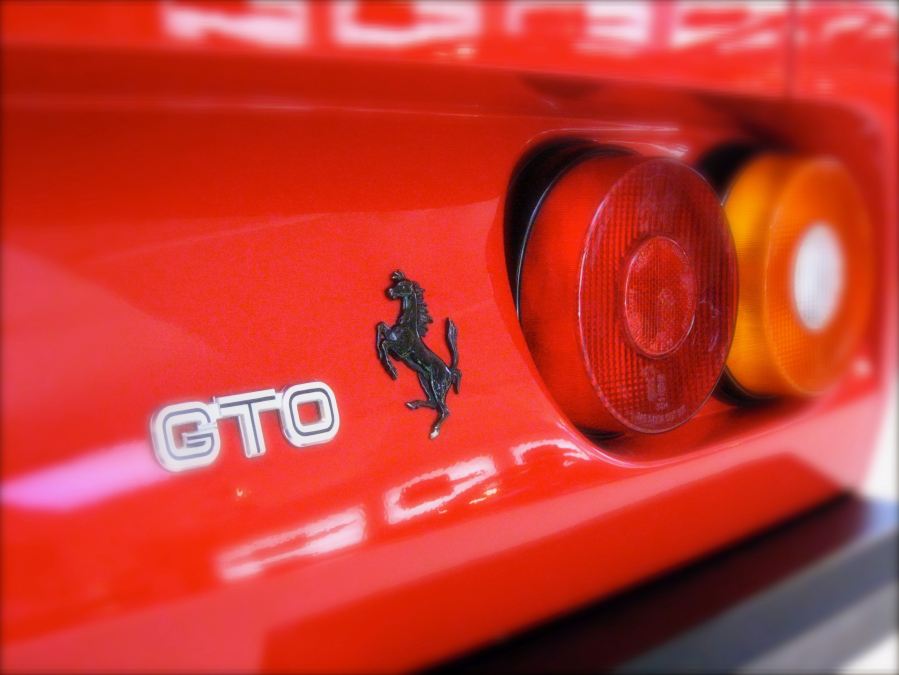
To come back to the heading of this post, the three letters GTO have a direct connection to what we today associate with track days. They stand for Grand Turismo Omologato (homologated), meaning the cars a manufacturer had to build for road use for a race version of the same car to be approved. When hearing GTO many of you will directly think of the most expensive and perhaps the most legendary car in the world, the Ferrari 250 GTO, of which 36 cars were homologated for road use.
It’s often referred to as the last true road racing car since after it, safety regulations would put a stop to such extreme machines being used on public roads. In other words, this wasn’t a street car you could race on weekends, but rather a race car you could drive on public roads. Or as Shelby Myers, a car specialist at RM Sotheby’s put it: “this was the last car that you could park in your garage, drive to the track, win the race, and then drive home.”
Racing on Sunday, commuting on Monday…
All 36 Ferrari 250 GTO’s were built between 1962 and 1964, and none of them were identical. They were a development of the 250 GT-series with the center piece being the 3 litre, 300 hp strong V12 with six Weber carburetors and a five-speed gearbox (increased to 4 litres and 390 hp on the three cars built in 1964). The development of the car was led by the legendary Giotto Bizzarrini (read more on him here and here), although he left Ferrari before the GTO was launched.
The cars were built by Scaglietti and Enzo himself apparently selected who was allowed to buy them. With a top speed around 270 km/h, the GTO won the GT World Championships in 1962-1964 and various other races such as Le Mans, Targa Florio (see here) and the 1000 km race at Spa Francorchamps. In total, it accumulated more than 300 race wins under its belt.
At $70m, the price record for this GTO still stands
The GTO is often considered the last great front-engine GT car built by Ferrari. That’s not the only thing it’s been called though. Other descriptions include the most beautiful Ferrari ever built, a true living legend, and rightfully, the most expensive car in the world, It’s perhaps no surprise that buying one takes a big wallet, but just how big is illustrated by the fact that in 2014, a GTO was sold for $38m and in 2018, the current record was set at $70m. The car in question was the 1964 Tour de France winner which thereby became the most expensive vehicle ever sold. Its price as new in today’s money would have been around USD 150′, so in other words, a pretty solid investment return!
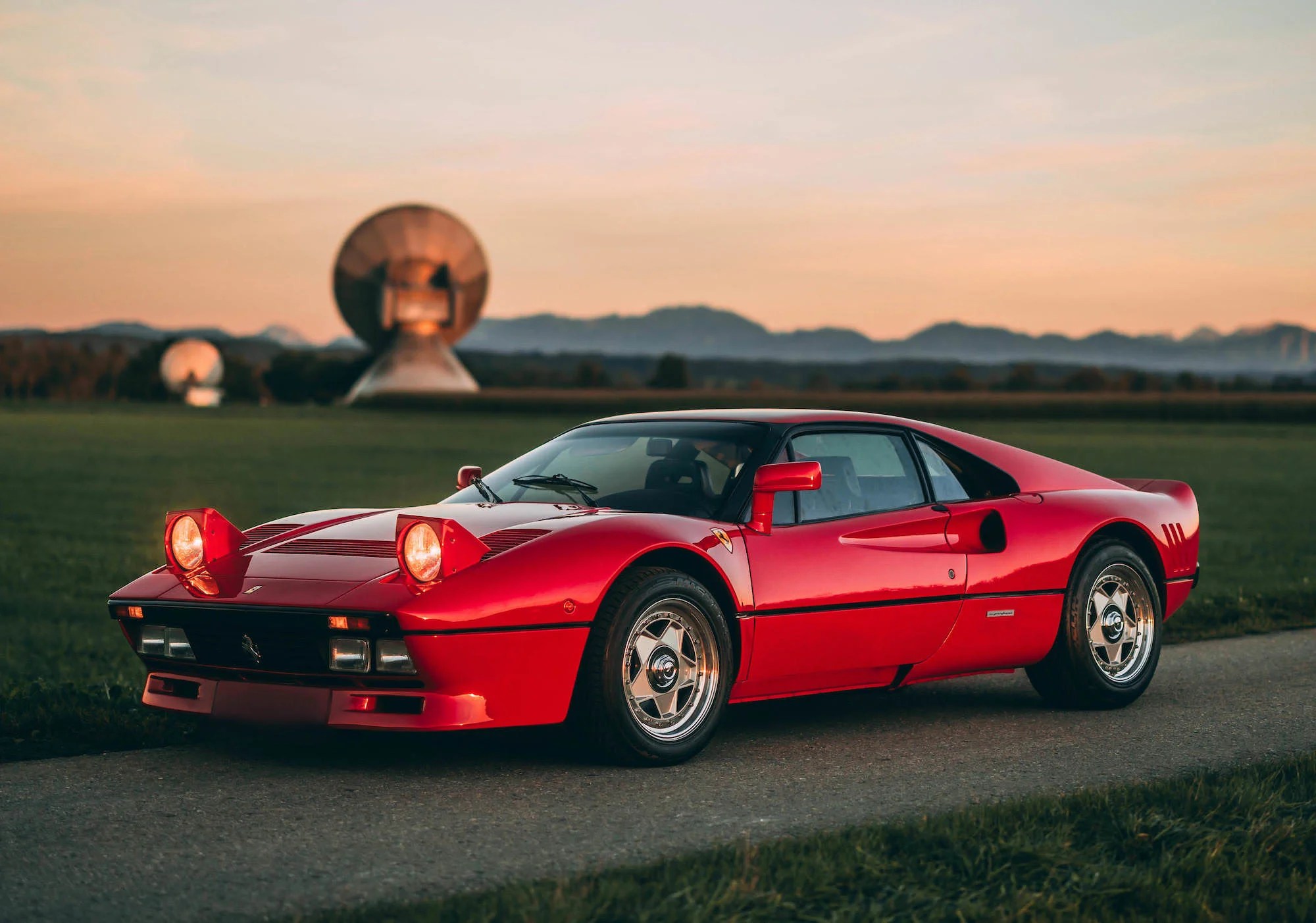
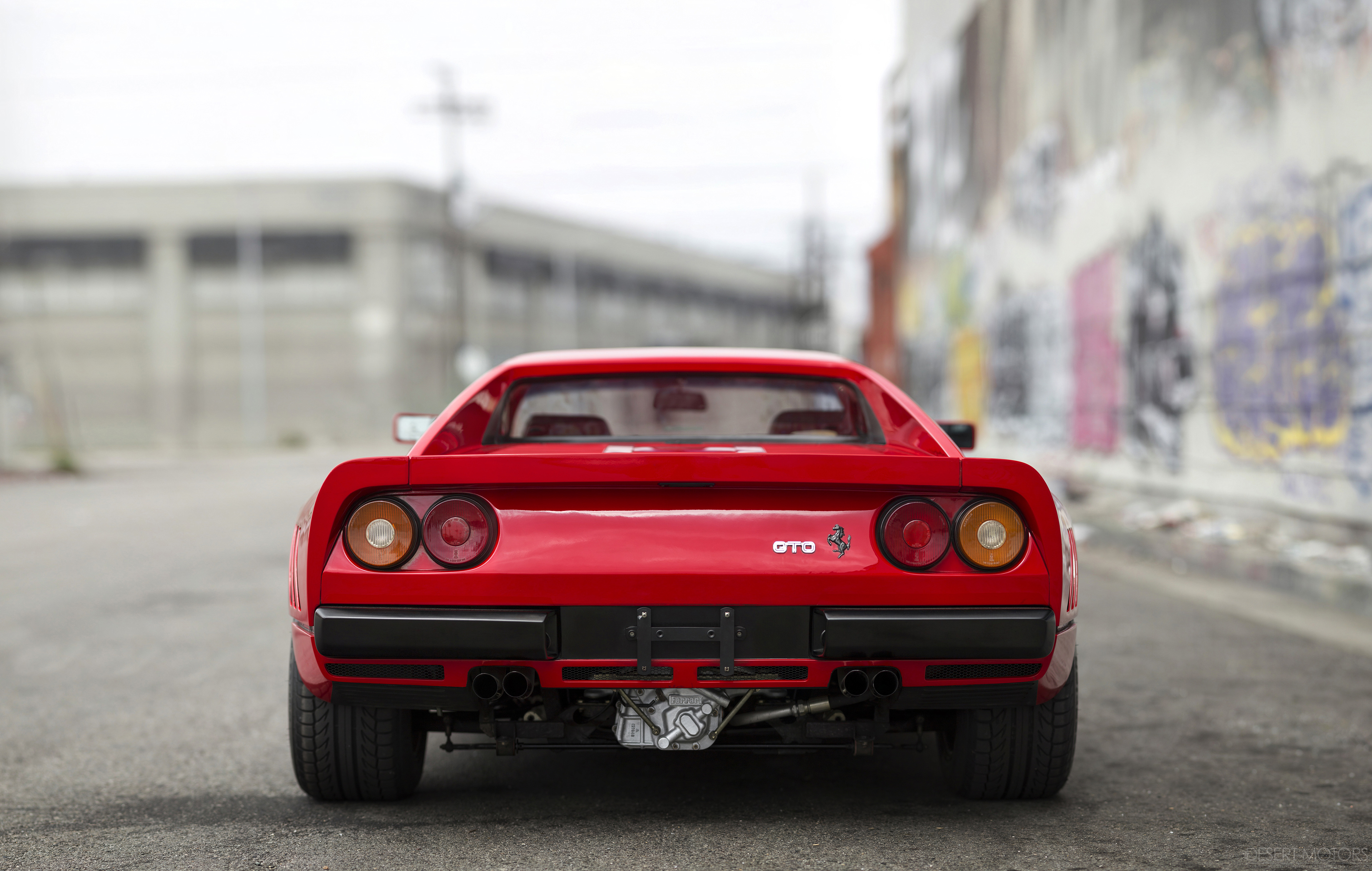
The 250 may thus have been the last true GT car, but it was not the last GTO. Fast forward to 1984, when Ferrari introduced the 288 GTO at the Geneva Auto Salon. The car cost around $300.000 at the time, for which you could have got no less than for example three MB 500 SL’s, and it sold out before the Salon was over. If you find a 288 GTO today you can add a zero to that number, which still makes it a bargain compared to the 250 GTO. It may be far less legendary but not less important – rather the contrary.
The 288 GTO set Ferrari’s hyper car strategy for the future!
The 288 GTO (later called only GTO) was launched in period where Ferrari’s line-up with the 308, 328, Mondial and 412 was not the best it had ever been, and the company wasn’t doing very well financially. The new 512 was indeed an extravagant sports car in Enzo Ferrari’s taste, but he wanted something more. Or was it maybe the changes in the Group B rally regulation that motivated the GTO?
We’ll never know for sure, but what we do know is that the racing version of the GTO never happened. Instead, Ferrari reluctantly agreed to increase the street car production from 200 to 274 cars (yo have to think that some of their most faithful owners were pretty influential people already then…). And hereby, without knowing it, Ferrari had also found the formula for hyper car success that’s taken them all the way to today.
For the untrained eye, a GTO could be mistaken for a regular 308. If you look closer though, you see that it’s a bit longer (110 mm to be exact) different headlights. It’s a beautiful car in a more dynamic way than the original 250 GTO was, and looking at it today, it has an 80’s cool factor about it. The longitudinal, double-turbo 2.9 litre V8 put out 400 hp and given the car only weighed 1300 kg, that was enough for a 300 km/h top speed. The GTO hereby became the fastest Ferrari ever, and one of the fastest cars of its time.
As for Ferrari’s future strategy, the attention the GTO got helped lay the foundation for what would become a very successful formula for hyper cars from Maranello: no more than 500 built, technologically at the top, and buyers carefully selected. The F40 followed the same logic as did the F50, the Enzo, and later the LaFerrari.
As a side benefit the increase in value would follow almost automatically. Apparently the group of owners who were selected and thus own all the cars listed above is larger than you think, and they’re no doubt thankful to the 288 GTO for being not only a great car, but also for making what followed possible!
For most of us including yours truly, the Thrill of Driving (ToD) apart from being the name of this blog, refers to exactly that, i.e. the wonderful feeling you get from driving, say a manual 911 Turbo up a twisty mountain road, for example here in Switzerland. Then again, what really constitutes the thrill varies, also as we get older. Some people will think of it as maximum straightline speed, as in a Tesla Plaid. For others it’s hearing the screaming sound of a 12-cylinder from Sant’Agata. And then again for some, it’s more about the Thrill of Being Seen than the driving itself. And whereas a Lamborghini works pretty well also for this purpose, there used to be a brand out there that was only about turning a maximum number of heads. This week we’ll look at the almost forgotten creations from Excalibur, the craziest thing to ever come out of Milwaukee!
Brooks Stevens was an American industrial designer, specialized in cars and bikes, who worked at Studebaker where he had been commissioned by CEO Sherwood Egbert (yep, really) to design a spectacular car to put on the company’s exhibition stand at the NY motor show in 1964. He came up with the idea of creating a car with modern running gear, but in the style of the pre-war Mercedes-Benz SSK. The chassis came from a Studebaker Lark Daytona, over which a fiberglass body draped. The car was called the Studebaker SS and it was a great success with dozens of orders placed during, and after the motor show.
The Excalibur, inspired by the Mercedes-Benz SSK
Unfortunately Brooks’ creation wasn’t enough to save Studebaker that went broke the same year. Stevens was however determined to bring his car to market and did so by setting up his own company together with his sons. They called it SS Automobiles and the car they launched, very reminiscent of the Studebaker SS, was given the name Excalibur. Equipped with a 300 hp, small block Chevy V8 from the Corvette, production of the Excalibur started in 1965. The car’s low weight of about a ton gave it spectacular acceleration for the time, needing less than six seconds to 100 km/h with a 200 km/h top speed. The car was a success and in 1968, the roadster was complemented by an even more spectacular four-seater, the Phaeton.
All cars from Excalibur were hand-made and thus individual
With two oil crises in less than 10 years, the 70’s was certainly not the decade for V8’s on paper, but it didn’t hinder Excalibur from introducing an even bigger V8 and continue to do well without much of design updates. The general design was of course why clients bought the car in the first place, and given all cars were hand-built, a lot of smaller wishes could still be accomodated, as seen from the multitude of Excalibur models. Still, the company was also slightly schizoophrenic, choosing for example to sacrifice basic things such as roll-down windows (rather than just sidescreens) all the way into the 80’s. The Roadster was by then in its fourth series, but the engine had been heavily capped to a smaller V8 with only 155 hp – not even an Excalibur could completely avoid the oil crisis. The problem was that over the years the weight had almost doubled to close to two tons, meaning this by now was very far from being a performance car. It was also far from being a good deal with the price having increased about as much as the weight, to around USD 170′ in today’s money…
A Phaeton 1978 was definitely not a sports car, especially at 155 hp..
As spectacular as the Excalibur was, buyers no longer found this a very interesting proposition, Stevens had to file for the company’s first bankruptcy in 1986, and this woud be the start of a long line of owners over the coming years who all tried to revive the business, and who all failed. Henry Warner took over Excalibur in 1987, created the Excalibur Marketing Corporation with a plan to sell the Excalibur Series V. The engine was back to the original V8, but prices were roughly the same as before and success wasn’t much bigger. Warner sold far too few cars and had to throw in the towel only three years later, in 1990. A certain Michael Timmer then bought the rights to Excalibur, but he went bust before he’d made any cars at all. The last in the tragic row was Udo Geitlinger who acquired the rights to build Excaliburs in 1991 and relaunched the brand three years later with the Roadster Series VI. They would sell a few dozen cars but towards the end of the 90’s, the Excalibur lights went out for good.
Original Mini-like angle to the steering wheel, not much side support on the seats!
There is still an Excalibur Motor Corporation today, but that is one focused on restoring and maintaining as many of the existing cars as possible, both the Sportster and the Phaeton, with no plans for any new cars. In total, around 3500 Excaliburs were built through the years, all in the company’s home town of Milwaukee. How many have survived to this day isn’t clear, and it also seems to be matter of debate whether you like Excaliburs to have survived at all – no one is indifferent. But in a very uniform car world, isn’t it a breeze of fresh air when someone sets out on an arguably crazy project such as this one, and still manages to build a few thousand cars? Personally though, I don’t have any special feelings for the Excalibur. I’ve never driven one but knowing it’s a 60’s US car with a big V8, lots of power, a steering wheel tilted like a bus and initially radial tires, something tells me it’s more at home in a straight line than on a twisty mountain road. And it’s certainly not a car for the shy!
About a year ago I wrote a post about one of the real legends among modern cars in general and hot hatches in particular, namely the Mk1 VW Golf GTI. As pointed out back then, the GTI became synonymous with a whole market segment for decades to come, and helped establish the Golf beyond being just another small car. The first Golf series was obviously also the first iteration of a car that’s still around today, although every generation has taken it a bit further away from the purity of that original version. Over the years there have however also been a number of special series of the Golf, or cars produced in larger numbers that have been extra special. This week we’ll look at a small selection of some of these!
Mk IIGolf Country(1990-1991)
If most special edition Golfs have been focused on adding performance, the VW Country, arguably the quirkiest one of them all, certainly wasn’t. Rather, it was VW inventing a market segment that didn’t yet exist, namely that of the compact all-road estate or compact SUV. The Country was launched in 1990 at a time when VW was at the height of automotive experimentation and the Golf was rapidly becoming their most successful model. Trying to make it appealing to a wider audience, the Country was given all-wheel Syncro drive and an off-road suspension that both looks the part and gave it all of 21 cm ground clearance, coupled to the 1.8-litre, 97 hp engine. It also had bullbars front and rear, lots of additional headlights and one of the larger, all-terrain wheels fitted to the tailgate.
The Country would take you where no Golf had ever gone!
All this makes it look rather strange and really far too high for its length, but the Country saw quite some success notably in the alpine parts of Europe, and all in all, 7735 examples were produced until 1991 by no one less than Steyer-Daimler-Puch in Austria, builders of the far more famous Mercedes-Benz G-wagon. 50 Country cars were equipped with the GTI engine, giving them an extra 15 hp, and good luck in finding one of those today, Finding a normal Country isn’t that hard unless you’re in the US, as it was never sold there officially. This was however the car said to have inspired Audi to build the much larger Allroad a few years later, and also the whole market segment of small SUV’s such as the Toyota Rav4.
Mk II Rallye Golf (1988-1989)
Another limited series of the Golf that didn’t make it across the pond was the MK II Rallye, although the reason for it is much more tragic. James Fuller, president of VW America and and a big fan of the Rallye Golf was on the Pan Am flight which terrorists brought down over Lockerbie in Scotland in 1988 and with him, the idea of bringing the Rallye to the US died. In Europe, 5.000 homologation cars were built as required by the regulation at the time, and these were fitted with the same 1.8 litre four-pot as the regular Mk II Golf, however with a so called G-lader, a scroll-type supercharger that helped the engine to 160 hp and 225 Nm of torque. The same Syncro four-wheel drive system as on the Country helped bring power to the ground, and the Rallye looked cool in a very 80’s way with squared headlights and flared arches, inspired by the Quattros, M3’s and Delta Integrales of the period.
Very 80’s, very cool, very rare!
Built in 1988-1989 and sold at around twice the price of a regular Golf, the Rallye was expensive. Even more so was the derived Golf Limited, built only 71 times, and essentially a four-door version with the same engine but with classical Golf looks and all options such as leather seats, electrical windows etc.. Finding a Rallye today is still possible although nice ones are getting pricey. Finding a Limited is rather difficult… The G60 engine was however also fitted to the regular Golf Mk II, and those are easier (and cheaper) to come by.
Mk V Golf R32 (2005-2009)
Most Golf enthusiasts agree that the Mk III and IV Golf series were really not much to write home about, with the once so pure Golf only getting fatter and less sporty. The Mk IV had however introduced on one hand the R32, six-cylinder engine and on the other the double-clutch gearbox, making the Golf the first car in the world fitted with a DSG gear change. Both were carried over to the better-looking and better-driving Mk V, from 2005 in Europe and 2007 in the US. The GTI was still there but the R32 was clearly the one to have, with 250 hp and four-wheel drive making it good for a top speed of 250 km/h and a respectable 6.2 seconds to 100 km/h. The chassis was great as was the drive, and the happily revving 3.2 liter V6 is obviously an engine that has been fitted to many other VW and Audi models.
The Mk V R32 was the return to form Golf enthusiasts had been waiting for
The MK V R32 could be had both with Recaro bucket seats and with the mentioned DSG box, which in its manual paddle mode is a far better proposition than the standard manual. Looking for one today, those are the options you want to have and that make the car feel even more special! And in terms of power, with a few exceptions the Golf has also not really evolved further, so 250 hp for only 1500 kg is still pretty much up there!
Mk VII Golf GTI Clubsport S (2016-2017)
The last in this very unofficial listing of special ones is the only front-wheel drive car, which was in no way intentional, but more importantly, the Clubsport series is also the sportiest version of the GTI that can be had these days (alongside the even more powerful R, but that’s again a more refined, four-wheel drive car). So what to say then of the Clubsport S, which compares to the regular Clubsport like the GT3 does to the 911? With a stripped down interior with weight saved notably by removing the back seats as well as the spare wheel, the S weighed in at less than 1300 kgs. It had a far more aggressive suspension setting than the regular Clubsport, a slip differential and was riding on Michelin Sports Cup 2 tires. The four-pot was tuned to deliver 310 hp, helping the S to a top speed of 310 km/h, and also to a record time on the Nürburgring in 2017.
The Clubsport S, a track weapon as understated as they come.
400 Clubsport S were made, and although the regular Clubsport is of course not comparable, it remains the purest and (except for special series) most sports-focused version after many years of the Golf getting more comfortable and ordinary. 265 hp in Mk VII version (the one the S was built on) as well as larger brakes, a lower ride height and different ratios in the seven-speed DSG gearbox compared to the regular GTI all give the Clubsport a different driving experience to the standard GTI. It’s a highly rewarding one and the Clubsport is not only far easier to find than the S, but also much easier to live with on non-track days!
So there we go – four different Golfs over 35 years that have all contributed to holding the Golf flag high, and also testify to the VW engineers’ willingness to engage in less ordinary things – however only up to a certain limit. Because perhaps with the exception of the very visible Golf Country, what they all have in common is that it’s never about power alone, but always in combination with a certain comfort, practicality, quality – and understatement. If they keep at it, the Golf will be with us for many years to come, hopefully bringing even more special ones!
When Ferrari introduced the new Purosangue that I wrote about back in December, many of us were pleasantly surprised to hear that it would be powered by something as exotic these days as a naturally aspirated V12, in this case putting out no less than 725 hp. Supercharged engines are obviously what you mostly see in our time, so Ferrari sticking to the tradition, especially with a 12-cylinder, is great! What’s also pretty great and far cheaper than a new Purosangue are some of the classic naturally aspirated engines from not too long ago, especially those with 8 or 10 cylinders. Audi is then a name that quickly springs to mind and this week, we’ll look at what’s become as much of a bargain as rare in terms of power trains – the B8 Audi RS4!
As practical as a Purosangue, and much cheaper!
The tradition of Audi power wagons starts with the RS2, built by Porsche after they were done with the MB E500 they were commissioned to build for Mercedes and that you can read about here (but that was never available as station wagon). The RS2 was based on the Audi 80 and although it looked a bit more muscular, the fascination came from it retaining the basic family station wagon looks whilst driving like, and having the power of a sports car. Up until then, that had never really been the case. What it didn’t have however was a V8, but rather a 2.2 litre turbo five-cylinder engine putting out 315 hp. The RS2 was only built during three years from 1994 to 1996 and has already become a true legend, priced as such.
When the RS2 was replaced by the RS4 in 1999, the engine had grown by one cylinder, 0.5 litre and 65 hp (to 380 hp), but it wasn’t until the second generation of the RS4 in 2005 that the V8 party got going. The original six-cylinder was then replaced by a 4.2 litre, naturally aspirated V8 putting out 420 hp, and the car was available as sedan, station wagon and convertible. More importantly, the B7 generation as it’s called was only available with a manual six-speed gearbox… At a 40-60 front-back drive train split, it also had a more rear-biased quattro system and also not to forget, it was the first RS4 with the lovely, double oval exhaust pipes! Thinking of where we are today, it’s difficult to imagine a more appealing cocktail than this, however ideally in sedan or station wagon form as the convertible suffered a bit rigidity-wise.
A normal (B8) A4 until above the bumper, all RS4 below!
The V8 lived on to the B8 generation built between 2012-2015, but other body forms than the station wagon didn’t, so the wagon was the only shape the new RS4 was available in. Power had now increased to 450 hp at an almost incredible 8250 rpm, but the manual box was gone, replaced by Audi’s equally excellent (but less fun) 7-speed DSG box. A new differential allowed for as much of 70% going to the front wheels and up to 85% to the back wheels, boosting the entertainment factor. It’s also worth remembering that both the B7 and B8 were light cars by today’s standard, with the former at around 1750 kg and the latter at 1850 kg. The B8 was to be the last V8-powered RS4 and was replaced by the current version which has gone back to a turbo-powered six-cylinder engine.
I hadn’t driven a B8 for a long time until a couple of days ago when I had the pleasure of doing so here in Zurich. The car in question had a pretty amazing history It was sold by the same garage that now had it for sale, to the only owner it ever had. He apparently has a number of cars so that he never used the RS4 in the winter, which given its talents is rather strange. Actually he didn’t use it much at all, as he only put 31.000 km on it since new, but still had it serviced every year in the very same garage. Built in 2014, the car looked absolutely new. Of course, after three weeks of sunshine it had to rain this very day, and I almost got the impression it was the first time the car saw water coming from the sky and not the (manual) car wash…
Beautiful Dayton grey color and black pack. Not a big fan of the wheels.
Starting from the outside, the B8 is a pretty, purposeful and muscular car with the larger body really setting it apart. It’s best from the front and side, with the back being a bit too much normal A4, except of course for the double exhaust and the diffusor in between. As you get in, the first impression is that of quite a tight car. It gives an incredibly solid impression with some nice carbon inlays in the RS4, but a bit less plastic wouldn’t hurt, even if the grey stuff is of excellent quality. As we pulled out of the city in comfort mode, the car very much behaved like any family wagon, albeit one with very precise steering and suspension on the firm side even in this mode. Putting it into Dynamic (together with Individual and Auto the other options, and the most sporty one) changes everything. There’s an immediate change of tone in the exhaust, the suspension firms up and the steering becomes sports car-like direct. As we reached the outskirts of the city the engine was warm, and I was finally able to start pushing it a bit. What an absolute pleasure it was!
The engine is absolutely incredible. Power delivery is immediate and the revs keep rising as long as you hold your foot down, as the tone changes from a deep grumble to more of a singing bariton. The power delivery is naturally aspirated-smooth and the amount of power feels perfect for the car. It’s also noticeable how much tighter the smaller RS4 feels compared to its bigger brother or an E63. The road was really wet and I was on 20-inch Michelin Pilot Sports with an increasingly nervous garage guy next to me so we were nowhere near the edge, but at no point did I feel nervous – the car was glued to the road, the steering made it extremely precise to handle, and the engine kept singing. Motor journalists like to call the RS series and especially the B8 boring and maybe it is on a track. But a station wagon is made for transporting people and stuff whilst still procuring driving pleasure to the person behind the wheel, not for track use, and this is a car that excels at precisely that. Downsides? Some road-noise is one, not helped by the 20-inch wheels. And the size of the manual shift paddles is another – did they run out of metal in Ingolstadt?
Solid, purposeful, but slightly joyless
A well-preserved RS4 of the B8 generation with up to 70-80′ km on the clock will be yours for around EUR 40-50′, which at about 1/3 of its price as new, slightly more than a few years ago, but still an absolute bargain. It’s also a car that can be expected to hold its value very well given it’s one of the last naturally-aspirated V8’s out there. If you really insist on changing gears manually then the B7 is worth considering, but for everyday use I would go with the B8 as it still feels like a modern car. There’s a few options you should think about doing so. Firstly color-wise, the Nogaro blue is the rarest and the most sought-after, but it’s very blue indeed. As a more discrete alternative, the Daytona grey is my favorite. Then, “my” car had both the sports exhaust and the dynamic chassis and you should definitely go for both. You should also make sure it has the B&O sound system, as Audi’s more basic system is awful (most cars have it, but mine didn’t). Finally the panoramic roof is nice and helps lighting things up a bit. Audi’s quality may be top-notch, but you can’t call the interior design overly joyful…
Even though they come from the same naturally-aspirated tradition, it goes without saying that no one considering a Purosangue will be in the market for a used B8 RS4. But if driving pleasure is a priority, a power station wagon will always be a better choice than any SUV. Among these, a V8-powered RS4 is an increasingly rare car and currently one of the best deals to be had. Find one with the right equipment, service and owner history and you will not be disappointed!
What do Sir Richard Branson, Liam Gallagher/Oasis and Tina Turner have in common? I guess Tina or Liam may well have listened to the other’s music while travelling on one of Richard Branson’s Virgin planes but as you’ve guessed, that’s not the connection I’m after. That would rather be that they have been, or still are, owners of a Bristol automobile, perhaps the most British of all UK car manufacturers. With a long-term building philosophy of “no more than 2-3 cars a week”, never more than a single show room in London’s Kensington High Street and an at times very particular view of what good car design is, it’s really no surprise that the brand hasn’t survived until today – but it is a surprise it lived on as long as it did! Before Bristol is completely forgotten, it’s well worth having a deeper look at one of the UK’s quirkiest car companies and some of the wonderful cars they built during the 70 years it was in existence!
As many other car manufacturers, Bristol had its roots in airplane manufacturing but even before that, as a builder of tramways in the UK. The tramway company started operations as early as 1875 and business was especially good during WW1 when the Luftwaffe kept damaging the tramway’s power lines, thereby creating a need for lots of maintenance work. With the tram business up and running and the Wright brothers having flown over the English Channel, it became clear to Bristol’s founder George White that the future was in the air. The airplane business started in 1910 and enjoyed an equally good business in the run-up to WW1. As for so many other military suppliers though, when the war ended, orders no longer came in. Bristol had no choice but to diversify again, creating the Bristol Car Company in 1918. However, it wasn’t until the 1950’s that it really came alive.
The Bristol 400, Bristol’s first car.
What really got the car business going was a collaboration with Frazer Nash, at the time UK importers of BMW. Somehow Frazer Nash came in possession of all the drawings and specifications of the BMW 326-328 after the war and it was based on these that Bristol built and presented its first car in 1946, essentially a remodeled BMW introduced under the name Frazer-Nash-Bristol. The engine was the same straight six the Beamers had under the hood, but this and later Bristol cars weren’t just copies of the respective BMW’s – they were improved in several ways and already in the 50’s earned a very good reputation. Even though the official collaboration with Frazer Nash ended the year after, Bristol’s 400 series would go on and include all cars until the 80’s. Starting with the Bristol 400 in 1947 and along with the following Bristol two and four-seater cars until the 406 (and there were models for all numbers in between), the cars were all powered by the same two-litre, BMW straight six engine.
The Bristol 50’s factory didn’t change as much as others in subsequent years…
From the start, Bristols were thus positioned as luxury cars and comparable to the Jags and Bentleys out there. Of course all cars were hand-built back in the 50’s and 60’s, but Bristol did so in line with the British car building tradition and was quickly seen as an alternative to for example Jaguar. The cars were built to high engineering standards, said to be “built to last”, apparently to the difference to some other cars of the time. This together with the exclusivity that comes from building such small series of cars was what Bristol felt justified the high price. The “no more than 2-3 cars per week” was probably all the company could do anyway back in the 50’s, but the motto lived on through Bristol’s full history, making any Bristol a very rare automobile these days. Some of those will be far more desirable than others. If the early 400 series Bristols from the 50’s drew heavily on BMW, the 60’s and early 70’s models were certainly the high point of Bristol’s own design. You’d be excused for thinking that the design department was on long term leave during the following decades when you see later cars.
The interior of a Bristol 406 – very nice and very British!
Starting with the Bristol 407 the company switched to a Chrysler V8 engine which from the 411 (most cars) and onwards (all cars) was the large 6.2 litre one. The 411 is actually worth a special mention as perhaps the nicest of all Bristol cars. A total of 287 were built between 1969 and 1976, with the big engine making the car capable of a top speed of 230 km/h which you would have to be very brave indeed to exploit. This made Bristol the cool and far less common alternative to the Jaguar XJ-C or the Jensen Interceptor that I wrote about back in October. Engineering-wise it was certainly comparable and in the looks department, it was certainly up there with the XJ-C and some Italian beauties, which is saying a lot!
The 411, perhaps Bristol’s nicest car in my humble opinion
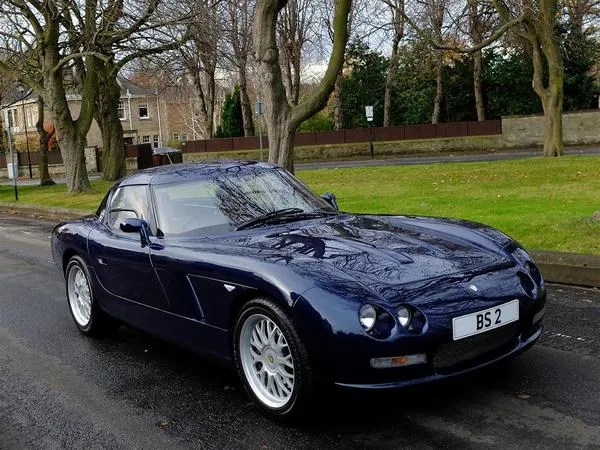
The late 70’s and early 80’s were certainly not known for good design and nowhere was it worse than at Bristol. Starting with the 412, the company’s efforts to modernize the lines failed so spectacularly that fans pretty much gave up on the company, starting its long demise. Cars like the 90’s Blenheim roadster were seen as dated already when they appeared, and it was in a last effort to save the company that Bristol developed the Fighter, built between 2004 and when the company went into administration in 2011 in around a dozen examples (no one knows for sure). It was a pretty extraordinary car, looking like nothing else and powered by Chrysler’s V10 Viper engine, here producing around 500 hp and coupled to a four-speed autobox. Bristol had plans to build around 20 Fighters a year and also to launch a turbo version with twice that power (yes, really!), but that wasn’t to be. Given the low level of interest the Fighter generated, probably due both to the particular design but perhaps even more to the GBP 230′ price tag, no other Bristol car would ever see the light of day.
The Fighter would be Bristol’s last car – not sure about the license plate
Bristol Cars went into administration in 2011 and was then bought by the Swiss Kamkorp group who never managed to bring out any new models so that until the lights were finally turned off in 2020, the company mostly renovated and supplied parts to older Bristol models. In 2016, the Bristol veteran Richard Hackett was one of the founders of a company called SLJ Hackett, today one of the main distributors of older Bristol cars. SLJ offers most Bristol models for sale and with prices starting around GBP 50′, they are more affordable than you may think. So if you want to do what Sir Richard, Tina Turner and Liam Gallagher did, then SLJ Hackett is the company for you. It goes without saying that the driving pleasure will be from the right side only – after all, who would come up with the strange idea of driving on the other side? Unfortunately there’s no place for companies like Bristol in today’s car world and that’s a shame, because it could certainly use a bit more of them!
The Range Rover is the most legendary luxury SUV out there, and it’s now been around for more than 50 years. The brand new model of which deliveries started early this year is however only the fifth generation in the line-up. The original Range Rover was built for all of 24 years, the third generation L322 for 11 years and the L405, the predecessor to the fifth generation of which I have one in the garage, for 10 years without major modifications. You will have noticed that the second generation, the P38, is missing from the above. This is a car that was never really loved, had the worst reputation of them all and had it been possible to stop, would probably never have been launched in the first place. Doesn’t really sound great, does it? This means that the P38 is very much at the bottom of the Range Rover pack in terms of secondary market values (or put differently, it’s dirt cheap), which is something that always intrigues me. This week, we’ll therefore look at the forgotten lord, the P38, to try to figure out if it’s best left to die, or actually something worth considering!
It was certainly not a very confident Rover company that presented the P38 in 1994. Rover had been taken over by BMW the same year in a merger that will not go down in history as the most thought-through, and when the Bavarians came up to the Rover factory in Solihull and saw the new Range project, they were apparently far from impressed. This was the car that was supposed to succeed the Classic that was was already then a legend, and BMW didn’t feel it was even ready to be released. They were however far too late to do anything about it and in the same year, the P38, somewhat half-heartedly, was presented to the world. Production of the original Range actually continued a couple of years in parallel to the new car, and the development of what was to become its successor in 2001, the L322, had already started. Talk about being an unloved child and with a build-time of only seven years, the P38 is (until today) the shortest-lived car in the Range line-up.
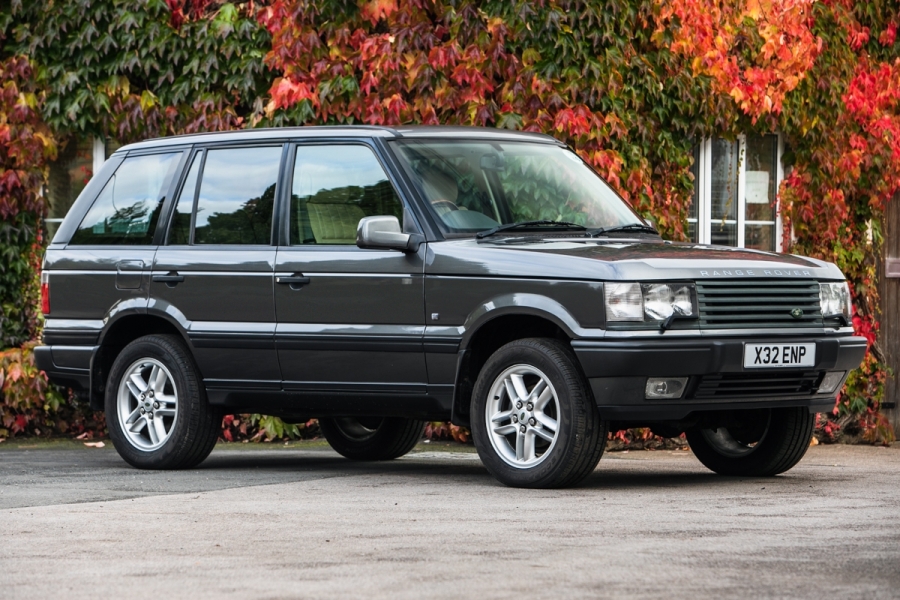
Early P38’s are recognized by yellow turn signals front and back
What is clear just by looking at it is that the design is nothing Rover needed to be ashamed about. What was to become the P38 was developed internally at Rover and the final project was preferred over four other, notably one from Bertone. Rover definitely made the right choice, as the P38 is a good-looking car and unmistakenly a Range Rover. The low waistline and big windows give it a friendly look and have the additional advantage of making it easy to place the car on the road, which to be fair is also helped by the fact that at 4.7 metres length and 1.9 metres width, it’s far smaller than later Ranges. The P38 was available with three engines, two versions of the Rover V8 at 4 and 4.6 litres, and a six-cylinder BMW diesel at 2.5 litres. Of these, the only one you should ever consider is the 4.6 l, as even that only puts out 224 hp and 380 Nm of torque and doesn’t make the Range a fast car. The 2.5 litre diesel delivers a paltry 136 hp, less torque than the V8 and needs a spectacular 17 seconds to make it to 100 km/h. It’s not even very economical doing so. All engines are coupled to a 4-speed automatic in a body-on-frame construction.
As in all later Ranges, the interior of the P38 is a very nice place to be, with a very distinct smell from the leather and other materials used. This was very much intentional as Rover had understood that with the introduction of the P38, these cars would start moving away from the pastures onto the roads, meaning buyers would expect a more luxurious interior. There is thus almost as much leather and wood in one of these as in a modern Range and although comfort is not the same at the same level, the air suspension helps you travel in high comfort. I’ve had the pleasure of doing so several times through the years, and the P38 provides exactly the same commading driving position in a plush chair as later – and more expensive – Ranges do. With an engine that doesn’t encourage anything but soft cruising that’s all you’ll ever do, and the P38 will be an excellent companion. All cars were well equipped by standards at the time, with the HSE being better than the SE, the Autobiography better than the HSE and with special series like the Holland & Holland bringing additional goodies.
A low waist line and large windows give a very airy feel!
So what about the quality and BMW’s feeling that the new car wasn’t ready to be released – has history proved them right? It certainly didn’t take long before the P38 started developing a reputation for bad reliability. This may not have been the case had buyers come from Rover’s traditional crowd, but BMW and other owners who were convinced to spend a lot of money on a new Range were far less understanding than traditional Rover buyers of regularly having to clean oil off their driveway. Having said that, all Ranges have a reputation for bad reliability, including mine which I’ve now had for 18 months and almost 20′ km without a single issue, so you could well imagine there’s a cultural angle here as well and that maybe, the car is better than its reputation. As so often, quality will stand in relation to previous ownership and service history, but it’s clear that the poor reputation has contributed to P38’s loosing value like a stone. There was a time you could have them for literally nothing, and people did, ruining them on the way, meaning the P38 has become rare these days and that prices have therefore started to climb somewhat. It will most probably never develop into a true classic like the RR Classic, but my guess is that values have hit the bottom.
A late 2001 car – cars after 1999 have an improved Bosch engine management system.
So, should you park a P38 in your driveway? I can imagine some good scenarios for doing so, but they’re all based on finding a mechanically sound car, so the regular checks of service history and general condition are very much mandatory. High mileage needs not be an issue if the car has been regularly maintained. During the last three years, the Lucas engine management system was replaced by one from Bosch, generally considered better. Among expensive things to fix, pay attention to the suspension, if it’s harsh or inexistent, that means a problem with the air suspension system which will be expensive to repair. Also check the auto box in Manual and Sport. Otherwise one of the attractions of the P38 over its successor, the L322, is firstly that it looks better, secondly that it weighs almost half a ton less and thirdly, that there’s less (and less complicated) stuff to fix. The P38 remains a very comfortable way to travel and of course, being a Range Rover, an outstanding offroad car, and the few remaining nice examples out there can be had today for less than EUR/USD 10′ with much room for negotiation, which is a true bargain. In the electrified world we’re apparently moving towards, there’s of course a risk is you’ll never get more from it than scrap value when you try to sell it, but what the heck – why not enjoy the ride until then in a car that will always look more expensive than it is!
If competition between car makers has been a trait of the automobile industry for as long as anyone can remember, it’s probably only in Italy that competition between car designers was just as fierce. The two dominant houses in Italian car design are of course Pininfarina and Bertone, both having employed legendary designers through the years who have in turn been responsible for some of the most beautiful car creations to come out of Italy. Usually one of the two big houses would be the main partner for a certain brand, but there was certainly nothing hindering the other one from trying to gain market by various means. Thank God for that because otherwise, the legendary Lancia Stratos would probably never have seen the light of day.
Lancia had historically mostly collaborated with Pininfarina in designing its models, with Bertone eagerly watching from the sidelines. In the late 60’s however, Bertone saw an opportunity as it was obvious that the ageing Lancia Fulvia was up for replacement. Bertone’s gave its legendary designer and our old friend Marcello Gandini, the man behind notably the Lamborghini Miura and Countach, the task of drawing a car that completely broke with the Fulvia and would signal the advent of a new, modern era. So he did, and it was so convincing that the Lancia bosses decided to show the prototype at the Turin Auto Salon in 1970. Gandini was subsequently commissioned with designing the production car that would come to market a couple of years later.
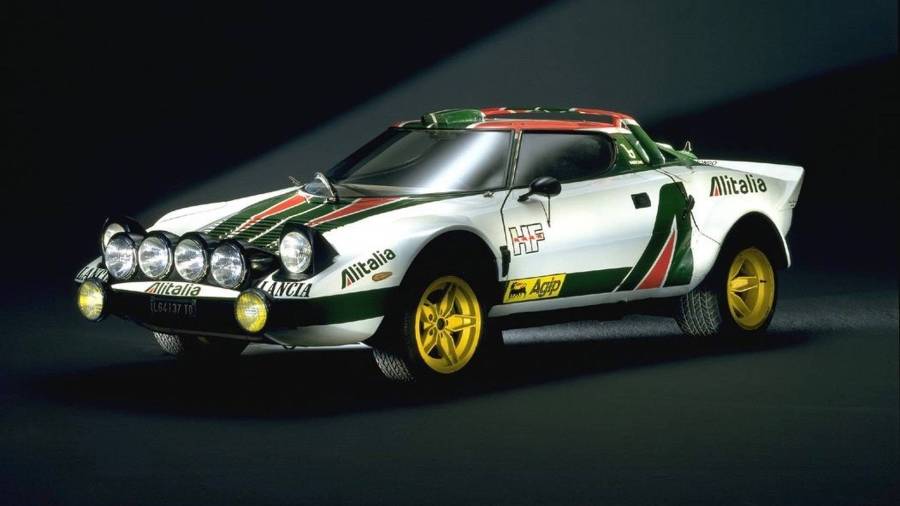
Gandini’s original Stratos prototype was…special!
The Stratos’ predecessor, the Fulvia coupé, had been used on the rally scene in the 60’s with some success, and Lancia saw rally as a way to position the brand as a sporty alternatively notably the the siblings from Fiat. This meant that unlike basically any other rally car at the time (or for that matter, thereafter), the Stratos was developed exclusively with rallying in mind, and not as a civilian car later converted to rally usage. You don’t need to look at the car for long to see this was the case, and also that this was a completely new design language that would follow Gandini notably to the Countach. The ultra short wheelbase of only 2.2 metres carries a body with minimal overhangs but with a big, sweeping front screen giving the driver great visibility. The engine was mid-mounted in the ultra low, rear-wheel drive car, getting in and out of which it is not an exercise suitable for any kind of daily driving. Looking at the Stratos today, it’s surprising how small it really is at 3.7 metres and around 900 kg. Lancia did however have to comply with the rules for any rally car at the time, namely that 500 so called homologation cars for street usage had to be built and sold along side the rally cars themselves.
How most of us remember it – on a clay road in some southern rally!
During the development of the Stratos, Lancia had considered various engines for the car, but the one they really wanted was the 2.4 litre V6 that Ferrari was using in the Dino. After long negotiations, rumour has it that Enzo Ferrari himself agreed to deliver the 500 engines necessary for the homologation of the Stratos. However, after the first 10 engines or so the deliveries suddenly dried up, with Ferrari claiming various production issues. It wasn’t until Lancia threatened to replace the Ferrari engine with another motor that they finally started coming in. Strangely enough, that also coincided with the end of production of the Dino, which Enzo had of course seen as a competitor to the Stratos… In the homologation street cars the engine produced 190 hp, in the rally cars performance was typically between 300-400 hp thanks to a big, old-school turbo. With the car being rear wheel drive, it’s an understatement to see that the Stratos was difficult to drive, but for those who mastered it, it was one hell of a car!
The Stratos premiered in the world rally championships in 1974 and went on to win the title straight away, as it did in 1975 and 1976 as well. It won both the Swedish Rally on snow, and the African rally on clay in the same period. There’s little doubt it would have gone on to win further titles had Lancia let it, but by this time Fiat had taken the somewhat strange decision that the Fiat 131 Abarth, a not very futuristic car that few will remember and that didn’t see much success, would be the rally car (and Fiat thereby the rally brand) in the Torino car family. The last major title the Stratos won was therefore the Monte Carlo Rally in 1977, although private teams continued to race the car and having success doing so after that. Of course Lancia came back on the rally scene a few years later with the Lancia Delta Integrale, that we looked at in an old post from 2015, but that’s another story.
The quite minimalistic interior of the homologation cars
There’s been various initiatives over the years to revive the Stratos, some of which have made it to some of the big car shows, but none of which have so far made it all the way to production. The most promising one was designed by, hold on to your chair now, Pininfarina and not Bertone, although it was, let’s say heavily inspired by the Bertone-designed original. It was built on a Ferrari 430 chassis and was to be built by a company called Manifattura Automobili Torino (MAT). It was shown at the Geneva Auto Salon in 2018, but the project then died off, apparently not because of Covid but rather because of Ferrari vetoing it, unclear why. I included it in my overview of the auto salon back then in a post you can find here.
The Stratos was thus a truly unique car, and to me, one of the coolest cars around to this day. It’s also uniquely small, uniquely focused on rally and if not uniquely, then at least very successful. It’s also a uniquely difficult car to find today should you want one. With 500 built in the early 70’s that’s perhaps no surprise, especially since many of the buyers certainly thought of themselves as hidden rally talents. As I write this in the middle of February, there’s not a single car on the market anywhere in Europe, nor in the US (which is less surprising since the Stratos never made it officially there). The Stratos will thus remain a rally legend for poster walls or these days Youtube, but what a car it was!
In my first post of 2021 with things to wish for in 2021, I mentioned a hope that Japan would again bring car enthusiasts something to cheer about. Unfortunately they didn’t, and I guess that in terms of combustion cars, it will never happen again. What they did do however the year after, in 2022, was to cancel the production of the Nissan GT-R for the European market. The GT-R is a true beast of a car, perhaps the best sports car ever to come out of the land of the rising sun, aunched 15 years ago to take on the the European supercar bunch but none more than the 911 Turbo as we’ll see later. It more than held its own doing so driving-wise, but without the brand but partly also the elegance of at least two of those three (sorry Lambo…). As production will stop globally this year, it’s time to pay tribute to the brute from Japan!
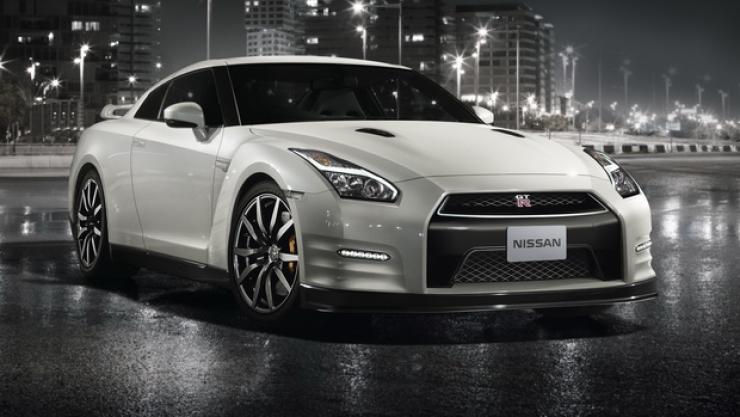
A sleak but clean design that has stayed with the car through the years
Back in 2007 I remember a young colleague as crazy about cars as me, telling me that the then brand new GT-R that had just set a record on the Nürburgring of 7 min 38 secs, quicker than the 911 Turbo at the time. He told me this was proof if it being the best sports car in the world, ahead of anything from Stuttgart or Maranello. I told him that wouldn’t matter much for sales numbers, since anyone buying a Ferrari cared far more about the brand than about lap times of the Nürburgring. It’s probably fair fair to say we were both right – the GT-R was and still is one hell of a sports car, but one that hasn’t come near the sales numbers of Porsche and Ferrari that Nissan was certainly hoping for. Unfortunately for Nissan, it didn’t convert many Ferrari drivers either.
When the once so celebrated Carlos Ghosn became CEO of Nissan in 1999, one of the first things he wanted the company to start planning for was a sports car that would represent the vision he had for the brand. His idea was to build on the heritage of the Nissan Skyline GT-R, the sportiest version of the luxury Skyline coupé, a car that never made it officially to the West and was only available as right-hand drive, but which since then has achieved a true hero’s status and been imported privately many times. The new car would retain the round rear lights from the GT-R and importantly, it should also beat the lap time of the 911 Turbo on the German Nürburgring (commonly also referred to as “the green hell”) that Ghosn had set as benchmark. Work on the GT-R thus started in the early 2000’s and in 2003, Ghosn announced the car would be launched at the Tokyo Motor Show in 2007. Unlike a certain Elon Musk, he kept his word!
Ghosn delivered his baby timely in 2007
The chief engineer of the GT-R was a certain Kazutoshi Mizuno, previously chief engineer of the Skyline GT-R and more known as “Mr. GT-R” well beyond Nissan. He was no doubt a key person in the project, notably convincing the not-easily-convinced Ghosn that the new GT-R had to be built on a completely new platform. The car Mizuno put together was one of the most advanced constructions that had been made at that time, with a body combining steel, aluminum and carbon fibre, an advanced chassis, four-wheel drive, crucial in bringing the power of the 3.8 litre, V6 turbo engine to the tarmac, and a dual-clutch, six-speed box mounted in the back in a transaxle construction. Initially the GT-R had around 470 hp which over the years and the different facelifts increased to up to 100 hp more in the standard version. The engine is however also a favorite among tuners, and it’s not difficult to find GT-R’s with well beyond 700 hp.
The engine of a 2017 GT-R – it looks the piece!
Already in the standard version however the GT-R is an extremely competent car as illustrated by a long list of racing successes in various GT categories. I’ve been lucky enough to experience a few of these over the years, both as a passenger and behind the wheel, and it’s really a car like no other. It has a very muscular, “heavy” appearance, looking bigger than its 1700 kg. Getting behind the wheel feels like stepping into a mix of a spaceship and a video game, with an interior that has what may be the largest amount of buttons on any car, before the large screen infotainment age. It fits the purpose but does so without any frills, fancy materials or much design, which is a bit of a shame. Having said that, and you tend to forget any concerns you may have had the same moment as you turn the key and wake up the lion family under the hood…
The twin-turbocharged 3.8-liter V6 engine produces a growling sound and works in perfect harmony with the six-speed dual clutch box and the razor sharp steering to provide a really pure driving experience. The first version of the GT-R was produced until 2009 is the only one needing more than 3 seconds to 100 km/h (3.2 to be exact), all subsequent cars had more power and made the sprint in less than 3 seconds. Not only that, the torque of at least 600 Nm happily kicks you in the butt whenever you want it to. This is a seriously quick car but not only that, it’s one that outclasses most other cars if you bring it to the track. That may also be the place you want to use your GT-R, given it’s far less practical than the outside may have you think. The back seats are not made for humans and the boot is so small that it barely has enough room for a weekend bag.
Nothing to see here folks, move on…
There’s been a multitude of updates and versions through the years but I’ll limit it to the two most important here. There was a larger facelift in 2016 that on one hand brought more power and an improved gearbox, but also visual changes on the outside an an upgraded interior with better materials. Before that however, the Nismo edition of the GT-R had been introduced in 2013, being built as the most advanced version of the GT-R ever since. Power in the Nismo was increased to 600 hp and it set what was at the time the fastest time ever around the Nürburgring, shaving around 30 seconds off the already very competent time of the standard GT-R!. Both suspension and brakes were improved as well and on the inside, Recaro seats did their best to hold the driver and passenger in place.
If you’re the no frills kind of person that that puts the driving experience ahead of the logo and being seen, then there’s probably no better sports car in the world than the GT-R. And that’s even before we’ve talked price, because at the price point where GT-R’s trade, this IS quite simply the best sports car in the world – full stop. An early car with sub-100′ km is yours for EUR 50-60′, a post-facelift one will cost you EUR 20′-30′ more, which to me is well invested money. It’s only the Nismo cars that add significantly to the budget, trading for EUR 150′ and upwards. This is of course very much less than any comparable car, be it Italian or German, including Nissan’s benchmark, the 911 Turbo. Not only that, the GT-R has all the Japanese quality you could wish for so given a serious history, a high mileage doesn’t have to be problemtic. You should be careful with tuned cars and as said, go for a post-facelift car if you have the budget but from there, you can’t really go wrong. The GT-R is the best car to ever come out of Japan, and chances are it will remain so!
As we start 2023 I thought we should do so with the Audi R8 – a true legend in the sports-supercar segment, one that was mentioned in my post just before Christmas on the best sports car for 130‘, but which in my view deserves its own post. There’s a number of reasons for this: firstly, the production of the oldest supercar in the market has come to an end and the replacement, given it’s electric, will be a completely different car. Secondly, with relatively minor design updates during its long production run, early R8’s still look as modern as they did the first day. Finally, given that long production run, it’s not difficult to find an R8 for far less than the arbitrary 130’ I had set as limit in my other post, which is very good news!
The final version of the R8 before retirement
Audi’s transformation from the very boring brand it had been in the 70’s and 80’s to the far more exciting brand it would then become started on one hand in the rally series in Europe with the success of the Audi Quattro, on the other with the marketing people in Ingolstadt thinking up the slogan “Vorsprung durch Technik”, translating into something like “advantage through technology”, which would become Audi’s signum. The ambition was to establish the brand as a competitor mainly to BMW and Mercedes through technological advances, something that would shape mainly the engineering but also the design of Audi cars over years to come. The R8 when it came out in 2007 was at that point no doubt the clearest expression of that ambition!
Actually, claiming that the R8 only goes back to 2007 is not fully correct. The first R8 is more than 20 years old and was the result of the same management team in Ingolstadt wanting to build further on that racing success Audi had had in the 80’s by developing a car for the 24-hour Le Mans race, given that’s the only European sports car race that gets any attention in the US, a market Audi was very keen on. The original car called R8R was pretty much a failure in this regard as it never did well in the race, but its successor, now called only the R8, would go on to win Le Mans five times and in the first year 2000, claiming all three podium places.
Other than the mid-mounted engine and the overall look, nothing else is really the same…
With that success in the bag, Audi presented a first prototype for a road car already in 2003, which would then developed to the final car that would be introduced in 2007. The similarities between the prototype and the finished car are obvious to see, basically meaning that the R8 design is 20 years old, but looks like it could have been presented yesterday! Sales opened in the autumn of 2006 and the first year’s production was sold out in a few weeks, pretty impressive since the competition among naturally aspirated sports cars at that time was quite fierce. There was notably the brand new Aston Martin Vantage and of course the far less expensive Porsche 911, to name but a couple. The R8 was much more expensive than a 911 and if you asked the folks at Audi also far more of a supercar, however one that could be used everyday. Clearly buyers were convinced!
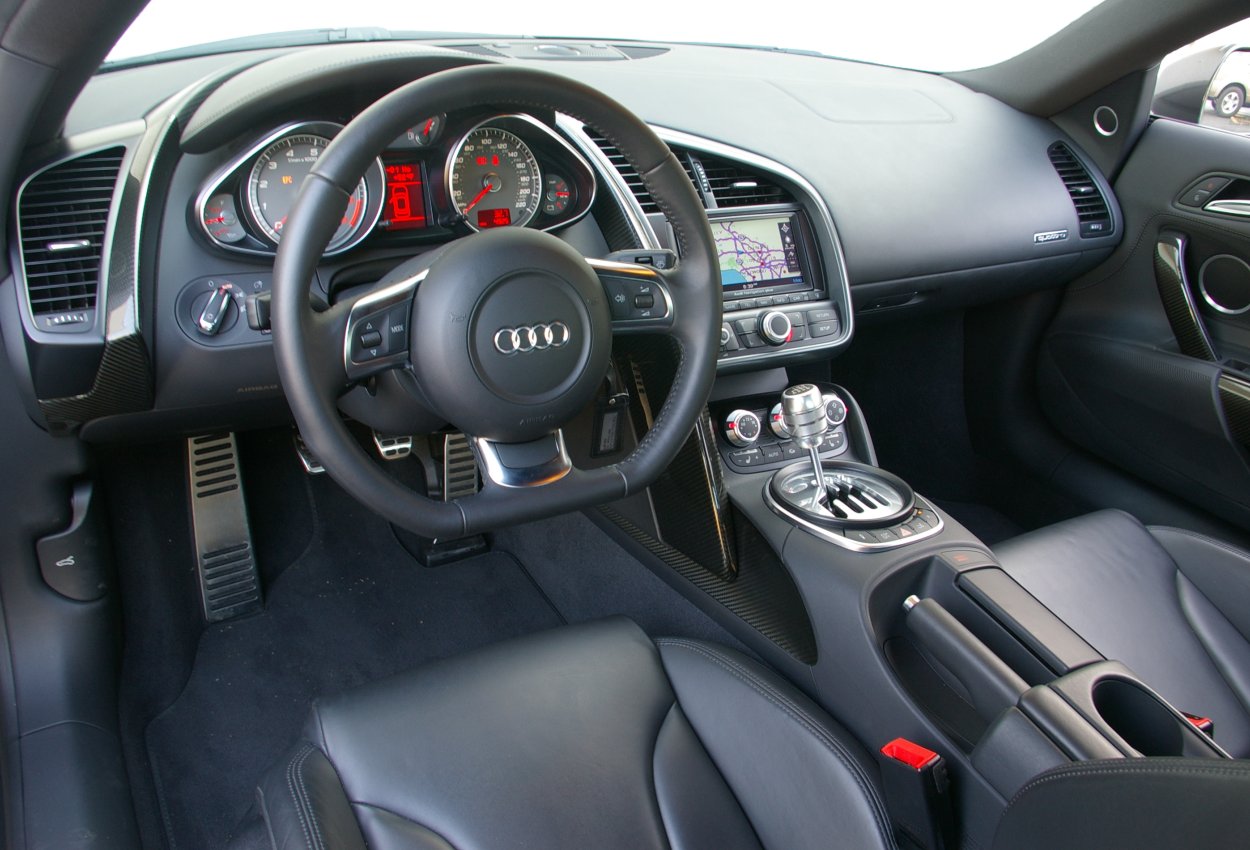
The R8 is a close sibling to the Lamborghini Gallardo with the two cars sharing everything from the aluminium chassis to (later) the V10 engine. At the launch in 2007, the R8 was available with a naturally aspirated, 4.2l V8 that revved all the way to 8′ rpm and produced 420 hp. The sound isn’t like anything out of Sant’Agata, being much more and perhaps a bit too discreet. Still, it’s refreshingly natural! At 1600 kg the car wasn’t a lightweight but the 4.5 seconds it needed to 100 km/h were very respectable 15 years ago. The gearbox was either a six-speed manual in an open gate shift which is the highlight of the rather dull interior which mahy consider the low point of the car, or a semi-automatic called R-tronic, the predecessor of the later S-tronic that would be introduced in 2012. The first series R8 was only available as four-wheel drive, however with a far more 30-70 rear-biased quattro system than was usually the case at Audi.
A functional but maybe slightly boring interior, with the gate shifter being the highlight!
In 2009 the wonderful 5.2l V10 then made it into the R8. Audi’s marketing team liked to introduce it as a Lamborghini engine but this was of course the same engine that had previously been featured in both the S6 and the S8, so its origins were really from Audi. It increased power by another 100hp, thereby bringing the 0-100 time to below 4 seconds. Both engine versions now also became available as convertible and in 2011, the R8 GT came out, limited at 333 coupes and 333 convertibles. The GT was 100kg lighter, 10% more powerful and had various other revised settings making it more of a real GT car. Various other tweaks brought the more powerful V10 Plus in the final year of the first series, before the all new second series was introduced in 2015.
The second iteration of the R8 may have been an all new car but even though it’s far more angular than the rounded lines of its predecessor, there’s no doubting the family heritage. The V8 was now gone, as was the manual gearbox. Depending on year the V10 would produce a little less or a little more than 550 hp and just like for the first series, there would be a 333-example GT series of what was to be the final R8. Unfortunately that last GT looks a bit like the last version of the Countach, in the sense that it has so many wings and skirts (all in carbon of course) that you barely see the brilliant lines of the original design. The second series would also be available as pure rear-wheel drive.
The dry sump engine sits deep and is visible through the transparent hood
Over the full production run since 2007 Audi sold close to 40.000 R8’s, far less than for example a 911 but almost three times more than its sibling, the Gallardo. By Audi measures, there’s no doubt the R8 was a success. Neither the engineers, nor the marketing people at Audi would like the 911 comparison, seeing the R8 as far more of a supercar. Indeed, if there was ever a supercar with everyday usability, this is the one – provided your everyday usage isn’t dependent on carrying lots of stuff around, as space is rather limited, even in the supercar segment. The 911 comparison is however relevant from a servicing perspective, and the Audi people most probably have nothing against that being mentioned. A well maintained car will be much closer to a 911 than anything from Ferrari or Lamborghini in service costs.
If an R8 is your thing, the first decision is whether you prefer the rounded lines of the largely analogue first series or the more angular and much more digital experience the second series gives. Other than the design, the other point to pay attention to is the steering, being hydraulic on the firs series and electronic on the second, and there being no really set opinion on which is best. A first series car will give you the option of the less legendary but more economical V8, but if you go for a pre-2012 car, then definitely go for a manual since the R-tronic is not a pleasant experience and those cars also hold their value far less well.
A 2008 car, to me still the best-looking!
Rather than picking up that 130′ car i wrote about a few weeks ago, I would probably go for the basic version, meaning a first series V8 with a manual gearbox. Those start at around 50/60′ USD/EUR for really nice cars, which is very attractive indeed! The V8 is not as exciting as the V10 and doesn’t sing as much, but it looks just as good through the transparent cover and the extra 30′ a manual V10 costs aren’t worth it if you ask me. I’d try to find a car that had the interior options which were quite useful in making it feel a bit more exclusive, such as the extended leather package and some carbon pieces. Equipped in that way, with a solid service history and in a “non-controversial” color, odds are that such a car will continue to hold its value very well indeed. Of course the GT cars of both the first and second series will do so as well, as will the rear-wheel drive cars of the second series, however at a much higher entry price.
The R8 is a great piece of modern supercar history. It’s probably the most approachable and usable supercar out there, and it’s a great expression of how “Vorsprung durch Technik”, that’s accompanied Audi throughout the years was a combination of technology and design. In its cheapest, first series, manual V8 version, it’s definitely the best iteration of a manual, naturally aspirated, everyday supercar!
If you read this blog on a regular basis (for which I’m eternally grateful!), chances are you also spend some time on the excellent activity referred to as car surfing, i.e. looking on various car website-marketplaces with either something or nothing specific in mind. I certainly do, a bit more than I should according to my better half. In the holiday season, chances are you’ll have more time at your hands than usual for this. So as mentioned in last week’s post where I said that if I had the 400′ to spend on a car, i.e. the money Ferrari’s new Purosangue will cost (at least…), I’d rather by the new Range Rover in full spec and spend the rest on a good sports car. Assuming the spared amount would be more or less 130′ (EUR/USD/CHF, given they all trade more or less at parity), the car surfing question thus became: which sports car would I choose?
That’s of course a very large question so in order to make this somewhat manageable, I set a few parameters. A sports car is here defined as having a roof and not a soft top, and two seats (I’ve allowed for the minimal back seats for very small children or amputated people you find notably in the cars from Zuffenhausen…). In terms of power, 400 hp feels like a good number, and those should come from at least six cylinders. As you’ll see from the selection below, if you’re willing to consider not only new but also well-kept older cars, the selection is pretty wonderful to a degree that I’m thankful this is only a theoretical exercise, because again, what would I choose? Below are six of my own top picks!
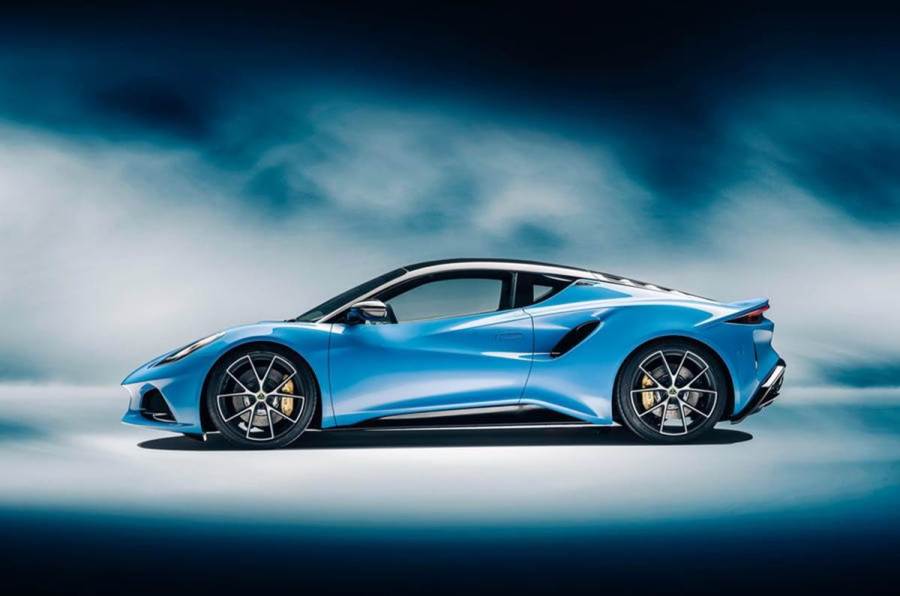
Lotus Emira
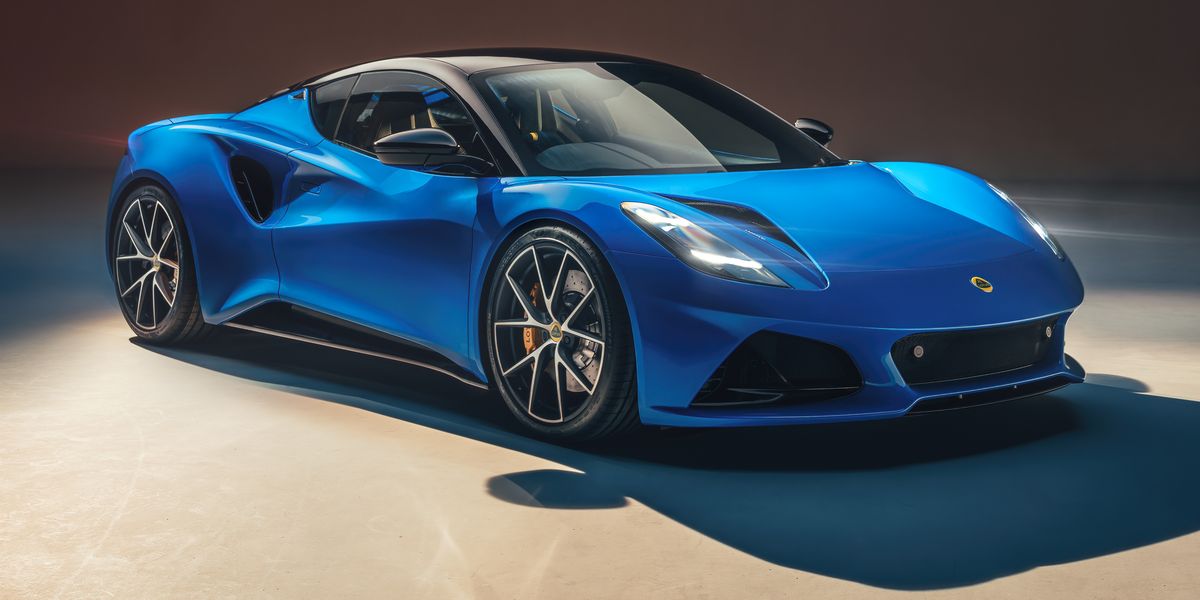
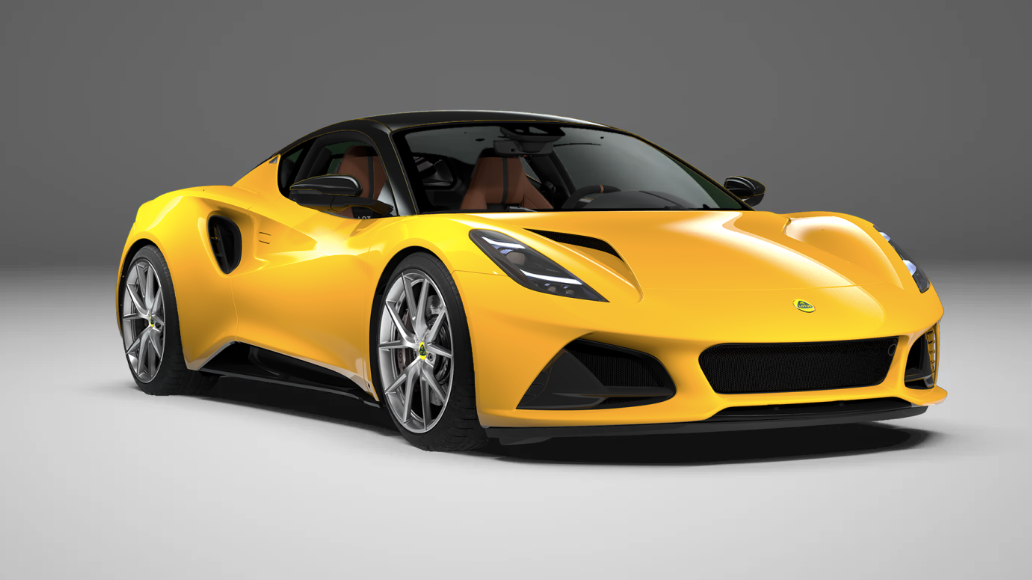
I wrote about the Emira quite recently and called it the best car Lotus has ever built. I stand by that in terms of the full experience, even if it doesn’t dance around corners like an 800 kg Elise would, which after all is pretty normal. That doesn’t change the fact that the Emira is a great car and one made for driving. It looks like a mini-Ferrari (with some hints of the Alpine A110 in the back), has an interior that is vastly superior to anything Lotus has ever built before, has a reliable Toyota V6 engine that sounds good if not at the Maranello level, and in the booth behind the engine and behind the seats, it can store more luggage than two people need. In the Lotus tradition it remains a car more for curvy roads than for long motorway stretches and it doesn’t excel in driving assistance stuff, but then again, it’s a car for driving. And at 1400 kg, it’s still on the lighter side, as a true Lotus should be. For the 130′ it costs as new, it really is a lot of car for the money and it’s actually cheaper as new than its predecessor, the Evora was as new. That’s not something that happens often these days!
Chevrolet Corvette C8
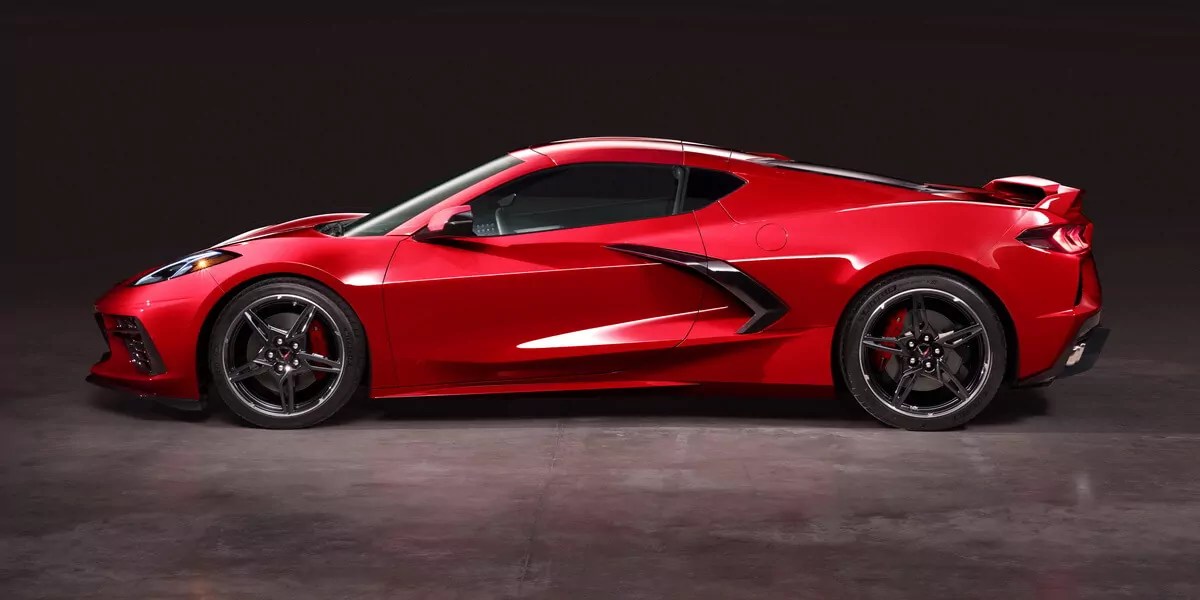
Very far from the Emira in terms of concept is the new Corvette called C8. In spite of having been launched in 2020 you don’t see many in Europe yet, something we can probably blame broken supply lines for. American readers will have seen lots of new Corvettes on the other hand, as I was able to note on our recent trip to Florida. What I also noted was of course how good it looks. I’ve always like the Corvette but the C8 takes its design to a new level, while still retaining the unmistakeable Corvette look. The interior is also said to be of good, if not superb quality and if it wasn’t for the logo in the center of the steering wheel, the car could easily be mistaken for something coming from Italy or Germany. The C8 is obviously also the first Corvette in 65 years with a mid-mounted engine, and that engine is no less than a 6.2 litre, naturally aspirated V8 putting out around 500 hp. Nothing European about that! It’s associated with an 8-speed double-clutch box and interestingly, its weight distribution is about 40-60 as opposed to the typical 50/50 of mid-engined cars. This brings really good handling on track and apparently almost too much comfort on the road. At around 130′ in Europe and even less in the US, the C8 is nothing but a bargain in all regards!
Ferrari 458 Italia
If you’re not set on a new car, then there’s really no way around the Ferrari 458 Italia which is now reaching the 130′ price mark. That’s to say that this is not a collector’s Ferrari, but it remains a significant car in several ways, besides being a great success for Ferrari. Design-wise it was the last model to come from Pininfarina and on the inside, it was the first car with Ferrari’s new dash and interior layout, that would basically be used in every car from Maranello up to the very recent Romas and SF90’s. Engine-wise, the 458 remains naturally-aspirated with the mid-mounted, 566 hp V8 singing out of the three central rear pipes from below the transparent hood. The suspension is great, the front booth is large enough for two and quality-wise, the 458 has a reputation for being very reliable, actually more so than many far more normal cars. You’ll have to fight a bit to find a 458 on the right side of 130′ but when you do, provided history and ownership are right, not much can go wrong! Choose wisely on the options for a good ownership experience (hints are front lift and upgraded speaker system more than carbon applications).
Audi R8
So far we have six and eight naturally aspirated cylinders, so perhaps time to bring 10 into the mix in the form of a real long-runner among supercars. The Audi R8 was introduced as far back as 2007 and although a second series came in 2015 and a face lift in 2019, there are few designs that have stood the test of time better, and touch-ups are indeed limited. The interior has almost seen more changes than the exterior in line with Audi’s general development, and the wonderful 5.2 litre V10 we’re looking at here (the R8 also comes with a perfectly good eight-cylinder engine) has gained some power over the years to now just over 600 hp. Some people will love the fact that this is an Audi with all that it brings in quality, service-friendliness and drivability, also thanks to its four-wheel drive. To others, that makes it a bit too much of a “normal” car for a real supercar, that perhaps looks a bit too much like its smaller brother, the TT. Our budget of 130′ will get you a face-lifted 2015-2016 car, certainly money well spent and perhaps especially so now that the R8 is discontinued and will be replaced by… an electrical model.
McLaren MP4
It’s easy to forget that McLaren Automotive, i.e. the street car company, has only been around since 1992, meaning 30 years. Back then the F1 was introduced, which with a top speed of 385 km/h is still one of the very fastest road cars in the world. Then in 2011 the MP4-12C came out (later only called 12C) as the first in McLaren’s range of, let’s say quite similar-looking cars. That’s not to say it doesn’t look good, but perhaps a little too unspectacular for the supercar it really is? The MP4 is a technological masterpiece which thanks notably to computer-managed suspension with four independent wheels offers unrivaled handling and comfort. Weighing in at only 1300 kg thanks to lots of carbon and composite materials, its 3.8 litre, 600 hp double-turbo V8 makes it very fast indeed, but it is so without a soundtrack in any way comparable to its closes competitor, the 458. That’s the thing with the whole car and also why it will only appeal to some; the MP4 (as all McLaren’s) is still today one of the fastest and most efficient cars around, but it’s so clinically perfect in how it drives that it makes an R8 look like a real rowdy and the 458 like something from another world. Being able to get one at 130′ as you now can is however very attractive indeed. If ever a road car had a real F1 heritage, this is the one!
Porsche 911
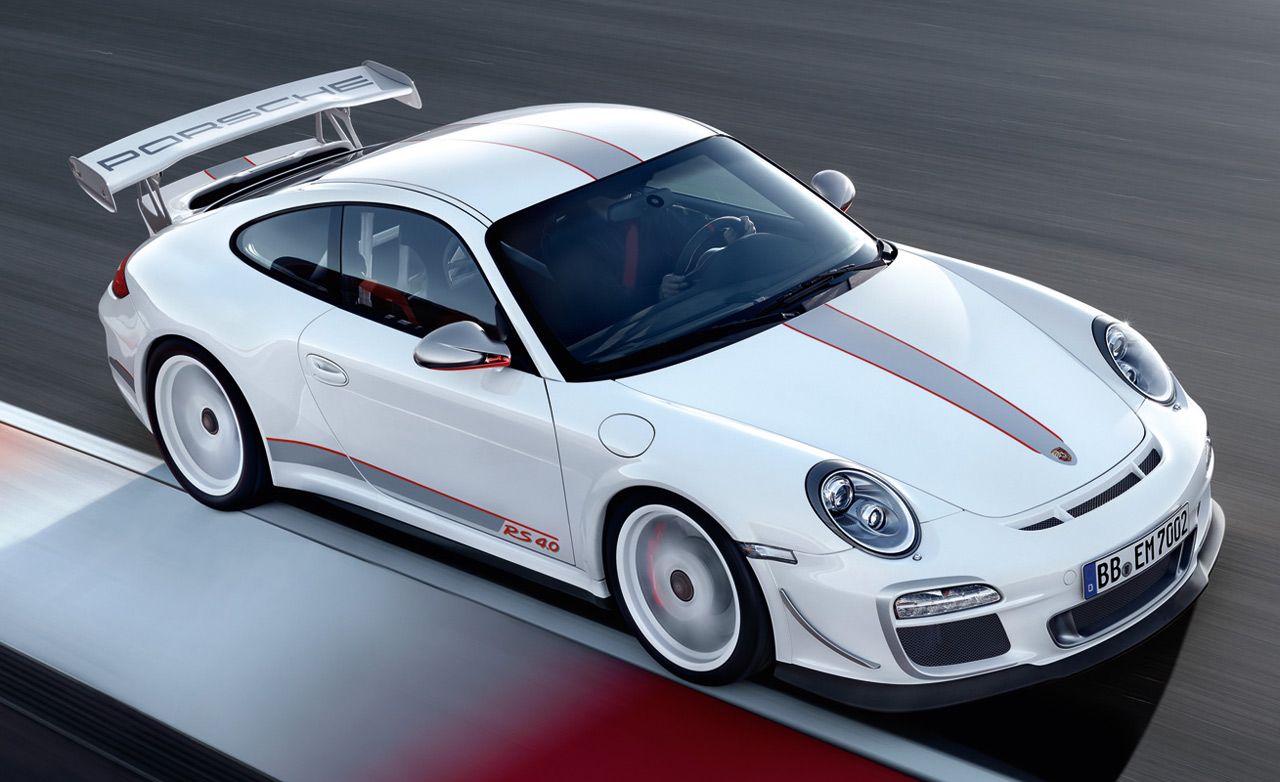
Last but by no means least is the Porsche 911, which at this budget point gives you many different options. 130′ buys you a 2018-2019 4S or GTS with 450 very healthy horsepower, a GT 3 from 2014-2015 with another 26 hp on top of that or if you prefer, a GT3 from around 2010 with the benefit of a manual gearbox and much more of a race car experience. To me all of these beat the more powerful turbo of the above generations, but that’s a matter of preference and otherwise also a very good alternative that qualifies price-wise. Of course you can also get a 911 for less, including some of the great earlier generations, but that would mean going outside my 400 hp power conditions set above. What all 911’s have in common is quite simply being some of the best sports cars every built, that most of us have memories of in various shapes and forms, and which if serviced correctly are very unlikely to bring you any problems whatsoever. The backside of that is of course that as you see one on practically every street corner it may not feel as special as you would want. That doesn’t change anything to the fact that a 911 is always a very compelling proposition!
So there we are – my selection of six sports/supercars around the 130′ mark. Most of them naturally aspirated, which was actually not something I was actively looking for. It’s a really tough choice but seeing you get real supercars as the R8, the MP4 or the 458 for the money, I wouldn’t go for the new Emira and C8 although they’re excellent cars, and neither the 911 as it’s a bit too common for my taste. Of course you would need to drive these three back to back to choose but this is a car surfing exercise and based on that, the 458 takes it in my book. If you’re lucky enough to have the choice in the real world, you’re a lucky person indeed!
Sergio Marchionne is a man all car enthusiasts should be thankful to. The late Fiat/Chrysler/Ferrari boss turned around the Fiat group a bit more than 10 years ago and without him, Fiat and thereby Ferrari may well have gone bankrupt. Marchionne died in 2018 after an intense life full of work and cigarettes but not of more healthy things such as sleep, and when he was asked in 2016 if it wasn’t time for Ferrari to join the increasing number of sports and luxury brands building or planning to build SUV’s. he famously replied that someone would have to shoot him before that happened. Luckily no one did, but perhaps it’s good that Marchionne is no longer around now that Ferrari is presenting its first ever SUV, the Purosangue (pure blood). More than just the latest member in the large group of luxury SUV’s, I would claim the Purosangue is more significant. It’s not only Ferrari’s first SUV, it’s also a car that sets a new benchmark in power, technology and price!
Purposeful front, air inlets above the lights
In order not to offend anyone in Maranello any further we need to define precisely what kind of car the Purosangue is. You see, “SUV” is a term you don’t use anywhere near Ferrari grounds, where they rather speak of the new four-seater GT car, perhaps so that Marchionne doesn’t turn in his grave. It is of course correct given the Purosangue follows on from the GTC4 Lusso, itself the successor to the FF, both also four-seat (although not four-door) GT cars, but still, the Purosangue is far taller than any of these. At around two tons, the weight is pretty impressive given the power train and the size of the car at just under 5 meters, and a good 500 kg less than most competitors.
At 22″ front and 23″ rear, the big wheels help the car look smaller
Unlike most of these competitors, the Purosangue is a true four-seater, with two separate seats in the back and no third seat option. Unlike the GTC4 and FF though, attention has been paid to facilitating access tot he back seats, notably with the back doors being rear-hinged (but for rigidity reasons, preserving the B-pillar), and with enough room for two adults to sit comfortably. Luggage-space seems similar to a mid-sized, hmm, SUV, and the back seats can be folded should you ever come up with the crazy idea to take your Purosangue to Ikea. The car has 23-inch wheels in the back and 22″ in the front, which together with other smart design tricks such as the “floating” wheel arches and the (optional) black carbon roof make the car look smaller than it is, and also quite purposeful. Beautiful? Not sure, but in my view perhaps the best-looking in the super SUV segment.
The most impressive thing with the whole car is of course the power train of this first version (knowing there will most probably be lesser-powered versions that will follow). When others go for hybrid six-cylinders, Ferrari has put its greatest engine of all, the very much naturally aspirated V12 notably used in the 812 in the Purosangue. It sits deep behind the front axle with not much more than the top visible, meaning it’s serviced form underneath. Ahead of it is the two-speed “gearbox” engaging the front wheels should the rear wheels slip. Under normal circumstances, the Purosangue is thus rear-wheel drive. The fabulous engine develops 725 hp, making this is the most powerful SU…. sorry, high and heavy family GT car ever, even stronger than the 707 hp top version of the Aston Martin DBX.
The engine behind the front axle and the front wheel drive unit ahead of it
The suspension is said to be quite revolutionary, although not all details are known yet. Basically the Purosangue reads the road ahead à la magic carpet from Mercedes, but then allows the suspension to actively go into potholes etc. to really smoothen the ride out. The interior looks like any modern Ferrari but with a multi-purpose round little wheel on the central console, over which a number of functions are controlled. Not sure how intuitive and easy to use it is, but it looks cool. The front passenger has his own screen from which all functions can now be controlled. Of course the interior can be tailored in any version and color you want, should nothing in the standard palette be to your liking.
Price-wise the Purosangue isn’t shy at all. When deliveries start early next year it will be at a starting price of around EUR/USD 400′, with lots of room to the upside depending on the interior options mentioned above, but also of course to how much carbon you feel its exterior needs. That puts it 10-20% above the Urus and a good 100′ EUR above a Bentayga (which his hopelessly underpowered at only 550 hp), or an Aston Martin DBX 707, together with the Urus probably the closest competitor. Before you start checking your balance though, you should know that the first two years’ production is sold out before most buyers have even seen the car live.
I won’t bother you with my thoughts on whether the world needs another 700 hp SUV again, but I do think it’s wonderful to see Ferrari put its most famous and still naturally aspirated engine in the Purosangue, and I’m sure they’ll have lots of success with it. A few weeks ago I wrote about how profitable it’s been to be a Ferrari shareholder in the last years (see here if you missed it), and there’s little reason to think that will change now that the line-up has been completed with the car type that makes up about half of Porsche’s profit. As for me, to go back to our friend Sergio Marchionne, I wouldn’t spend 400′ even if I had it, but if indeed someone threatened to shoot me unless I did, I would buy the new Range Rover, which is a true SUV and ia good-looking one as well, and then have more than 100′ left to spend on a real sports car. Because you get a whole lot of interesting sports cars for around 100′, and what that could be is what we’ll look at next week!
Christmas is a time of year full of traditions. There’s the food, the tree, the extremely repetitive Christmas songs, and then of course those Christmas movies. I can think of no other season that you associate with watching the same movie every year, yet that’s what happens at Christmas, and we all have our personal favorites. In our family, Chevy Chase’s hilarious (if you have a rather simple sense of humor) National Lampoon’s Christmas Vacation has a special place. I actually find the first 10 minutes the most fun, when Chevy alias Clark Griswold drives his family out into the wilderness to find the family Christmas tree, and on the way manages to get into a fight with a pick-up and to squeeze his giant station wagon with vinyl wood decorations on the sides between the axels of a big truck.
The movie came out in 1989 and as said, Chevy/Clark is driving a boring station wagon rather than the car that was launched precisely for this kind of family setting and situation (except the part under the truck), featuring the same kind of fake wood decoration. I’m of course talking about the legendary Jeep Grand Wagoneer, a record-breaking SUV in several aspects. The Wagoneer was notably built for 29 years, the third longest of any one generation car in American history. It was also launched in Europe seven years before Land Rover’s first Range Rover, which was of course three-door only for the first years, meaning it’s arguably the grand daddy of all modern luxury SUV’s. I saw the below example in Oslo, Norway earlier this week, perfectly parked in front of a nice hotel entrance, putting its elegant line in the right context. This week, we’ll therefore have a look at this true but increasingly rare SUV legend in its most luxurious version!
It’s difficult to imagine a better city setting for a Grand Wagoneer!
The Wagoneer was produced for so long that its mother company Jeep had time to change owners no less than three times. When production started in 1963 Jeep was part of the Kaiser Jeep Corporation, making the Wagoneer the direct replacement of the Willys Jeep Station Wagon that had been produced since 1946. Seven years later Jeep would be sold to the American Motor Corporation (AMC), and finally in 1987, to Chrysler, where it’s remained until today. As said the Wagoneer was built until 1990, however the Grand Wagoneer version that we’re focusing on here was only introduced in 1984, meaning most of the ones you see were built during the Chrysler years. That’s perhaps less important than the fact that quality-wise, the 1988 to end production years seem to be the best, with a number of improvements both to the interior and the exterior, In terms of engine though, Chrysler continued to use the 5.9 litre (360 cui) V8 developed by AMC, that at around 150 hp wasn’t very powerful in horsepower but all the more in torque, giving the car great towing capacity. It was also a heavy drinker, with average consumption apparently at 11 mpg or around 20 litres per 100 km…
The engine may not be beautiful, but it has all the torque you need!
What’s always enchanted me with the Grand Wagoneer is its looks and of course, it’s wonderful fake wood! Jeep guarantees that not a single tree was chopped to produce the vinyl panels on the exterior, and the same seems to go for the inside. There’s definitely an 80’s chic around the panels but they do add visually to the body, making it look less heavy. By modern standards the Grand Wagoneer was of course less heavy not only in looks, weighing in at around two tons, around half a ton less than a modern, large SUV (in the traditional American way, the Wagoneer was a six-seater). Being the top of the line version the Grand Wagoneer also had a lot of equipment for the time, with stuff like premium speakers, central locking and windows, and even keyless entry on the last model years from 1989. Of course it also had the split tailgate like the Range Rover does, perfect for enjoying a cup of coffee out in the wilderness, or on whichever adventure your Grand Wagoneer has taken you.
A perfect American mix of leather, cloth and vinyl!
Any type of Wagoneer has gotten rare these days and even fewer are in the condition you want them to be. The original Grand Wagoneer additionally suffers from the doubtful long-term quality of fake wood, so I was really lucky to see one in such a good condition as the one in Oslo. The rarity is also seen in prices, with a good version costing at least EUR 40-50.000. Then again, for car that has such presence and literally invites you to take your family or friends out on any adventure you can think of, that really is a bargain. Fuel costs will stay somewhat reasonable given you’ll cruise around at moderate speeds, listening to your cassettes on the premium speakers. There will be some additional costs to pencil in though, unless you already have a pair of used Timberlands, a squared flannel shirt and a leather jacket that has lived as least as long as the Grand Wagoneer in the closet!
It’s a pretty established phenomenon that as we grow older, we tend to look back on our younger days with a feeling that life was both better and simpler then. That it was better is nothing but a myth as any statistic, and I do mean any statistic, will tell you. In terms of simplicity however, it’s a different story. Earlier this week I was sitting at a corporate dinner when the discussion turned to the early gigantic mobile phones at the turn of the 80’s and 90’s. I said something about life being simpler before the mobile phone and to my surprise, all of the far younger than me basically gave up a cheer.
Simplicity is of course something we’ve lost in the car world too. It feels like most new cars today have more chips than bolts (and quite some difficulty sourcing all of them!), and even a lightweight fanatic like Lotus has with the new Emira crossed the line to something more settled and mature for an audience today expecting more comfort, even in a Lotus. Not too long ago, this was very different, which is of course part of the charm of classic cars. So if you’re wishing for a simpler life and perhaps also for a classic set of wheels to put in your garage without having to rob the bank, let’s look at a cheap and simple option that has enchanted car enthusiasts for 60 years. A car that is one of the biggest successes of UK car industry ever, and that has also inspired further more modern legends, such as the Mazda Miata. I’m of course talking about the wonderful Triumph Spitfire!
The Mk1 Triumph Spitfire
The story starts in the UK in the late 50’s, when the UK car industry was cash strapped as always but not yet in the very dire straits it would find itself a few years later. Triumph watched the success Austin Healy was having with the Sprite, a simple roadster with a small engine and an equally small price tag launched in 1958. Triumph had themselves built the TR2 and TR3 since the early 50’s, but realized there was market share to be taken by marketing a cheaper and simpler car, that was still better than the Sprite. The design was commissioned to Giovanni Michelotti, a legendary Italian designer with cars from Maserati to Ferrari under his belt, but also less exotic ones of which notably quite a few for Triumph, including the TR4 and (later) the Stag.
And yet, the car that was to become one of few real successes of the UK car industry almost never happened. In 1960, Triumph was sold to Leyland Motors and in the midst of the merger, the Spitfire which at that time was only a single prototype, was forgotten in the corner of the Triumph factory in Coventry. If not for a Leyland manager poking around and finding the car under the dust, it may never have been. As it happened, not only did it come to be but it did so very quickly, as the first car was presented only 18 months later, in 1962. The name obviously comes from the Spitfire fighter plane from WW2 and it’s unclear to this day how Triumph agreed with Vickers, makers of the Spitfire plane, agreed to use the name – if they ever did.
A Mk III interior – unlike later cars, the instruments are still in the centre
Presented in 1962, The Triumph Spitire 4, where “4” represented the 1.1 litre, four-cylinder engine with 63 hp, was a simple car indeed. It only weighed around 700 kg so even with 63 hp, it had reasonable speed for the time, but the reason it weighed so little was that things we would tend to think of as quite standard even for classic cars, such as carpets and heating, were optional. It also had a very light folding top that should perhaps better have weighed a couple of kilos more, as it was almost impossible to use. Of course, at 63 hp, the Spitfire wasn’t what we would call a sports car today. It needed around 16 seconds to reach 100 km/h, but given you’re basically sitting on the road given how low the car is, that actually feels like plenty. Especially when you notice that the rear end is very lively indeed when the road starts to turn, something that wouldn’t be solved on later Spitfires until the 70’s.
The little modified Mk II Spitfire came in 1965 with now 67 hp. Sales in the US were really picking up and Triumph encouraged owners to race their cars on weekends, advertising any success they would have in the Triumph name. The “race on Sunday, sell on Monday” philosophy led to the Mk III in 1967 now with a larger engine at 1.3 litre, and – horray! – an updated soft top that could actually be closed. By this time you also got carpets in your Spitfire. By 1968, 100.000 Spitfires had been sold of which over half to the US. Two years later Michelotti did a pretty complete re-design for the Mk IV version, including the same rear lights as on the Triumph Stag, and a heater as standard. The final Spitfire 1500 that came in 1974 was the most powerful version there would be at 71 hp, however only outside of the US as there, emission regulations actually made it slower than its predecessors.
The Spitfire 1500 with rear lights form the Stag. Objectively the best Spitfire.
In the mid-70’s, the UK car industry was in full crisis mode and there was no money to further update the Spitfire as would have been required to keep the car competitive in view of increasing competition, notably from Japan. The GBP/USD exchange rate also meant the car became expensive in the US, with sales numbers starting to dip. The Spitfire would be with no further updates done to the car until the end of production in 1980. By then, over 300.000 Spitfires had been built with the last version, the 1500, representing about a third of total sales and no doubt also being the best car.
Even for an ex-TR4 owner like myself, driving a Spitfire as I did a few years ago, is a different experience. It feels like you literally sit on the ground, everything is smaller and trust me, the least of your concerns is a lack of speed, especially as the small four-cylinder produces a wonderful sound! That said, the early cars are perhaps a bit too simple even for those looking for the simple life this post started with. So if a Spitfire sounds like your thing, I would go for a late, 1500 car or if you prefer the earlier design, then for a Mk III. A good car will be yours for around EUR 15-20.000, a small price to pay for a pure driving experience. So leave the mobile phone at home, put on the gloves and go for a drive in a truly simple UK car legend!
Life as a motor journalist can’t be easy. Depending on what you write or say your audience often finds you biased, and if you don’t love the car you’re reporting on, manufacturers won’t like you very much, putting at risk your future access to their cars. An example of the former are my own feelings as someone who reads motor press from different countries. I can’t remember a single sports car test in Germany’s most important car magazine Auto Motor & Sport where a German car didn’t come out on top. And British Evo, the magazine whose tagline this blog takes its name from, had a period about a year ago where there would be a McLaren in every single issue. Literally. You wouldn’t think you could ever tire of McLaren, but Evo at the time proved you wrong.
An example of criticism not going down well with manufacturers also comes from Evo, who at the introduction of the Aston Martin DB9 had the audacity to picture it on the front of the magazine against a title that read “Why the DB9 it fails its toughest test”. The journalists in question were actually summoned up to Aston HQ in Gaydon and basically told they were wrong. It didn’t jeopardise their future access to Aston cars in any way, but they’ve testified to this not being a very pleasant experience…
Not a cover that made people happy at Aston HQ…
The DB9 may have failed the ultimate test in Evo’s eyes, but it was certainly the car that put Aston on the map for a larger public than had previously been the case. As one of the most beautiful modern sports cars ever, it was built for all of twelve years until 2016 with various updates along the way. And just as the DB9 was not an update to the DB7 but very much a new car, the same was true in 2017 when its successor, the DB11, was introduced. And so we’ve finally arrived at this week’s topic. You see, the DB11 is officially a failure, and even Aston will tell you that. Underneath however it’s a pretty good 2+2 GT car, which today is somewhat of a bargain. Let’s look at why it’s worth considering!
Many DB11’s are two-tone to help enhance the design
When it was introduced at the Geneva Auto Show in 2016, the DB11 received a lot of praise for its looks and was seen as a worthy successor to the DB9. Relatively quickly however, it became clear that not everyone was convinced by the design that remains quite decisive to this day. Personally I find the DB11 stunning and far better live than in pictures. Especially the rear sets the car apart from anything else in a positive way and as a 2+2 GT, I find it one of the best looking cars out there. And by the way, 2+2 is exactly what it says, with the rear seats meant for luggage or rather small children.
Turning the key certainly doesn’t make matters worse. Initially the DB11 was offered not with Aston’s 5.9 litre V12 from the DB9, but rather with a new 5.2 litre twin-turbo V12 developed in-house and producing slightly more than 600 hp. A year later Aston used its by now well established relationship with Mercedes-AMG to complement the V12 with the well-known, double-turbo V8 offered in various AMG models. The V8 delivered around 100 hp less than the V12 but with almost the same torque, and with more than 100 kg less weight on the front axle.
Cosy, but also far more spacious than a DB9!
The concept the DB9 and various other Astons up until the DB11 were built around was referred to as VH (Vertical Horizontal), a name that basically doesn’t tell you anything unless you’re an Aston engineer. We won’t dwell on it here but the construction carried with it that both the DB9 and other cars, especially the DBS, were very stiff and not very pleasant on longer rides. Given their character as GT more than sports cars, this wasn’t ideal. The DB11 doesn’t take the VH concept further and is built on a new chassis, bringing far more comfort than its predecessors. It carries over to the cabin which has the right amount of leather for an Aston, meaning a lot, and is generally a nice place to be. Its infotainment unit is the same Mercedes used in the early 2010’s pre-MBUX and is of course hopelessly dated, but it lets you connect your phone and the (optional) B&O stereo more than compensates for it. Driving-wise, most agree there isn’t much to complain about either. The DB11 doesn’t shoot the lights out and isn’t made for throwing round a track, but it does a pretty fabulous job as the GT it was built to be.
The DB11 was introduced as one of Aston’s “make or break” cars. The firm’s CEO at the time was still Andy Palmer and he felt it so important to convince buyers of the car’s qualities, and fundamental quality, that he apparently gave his personal mobile number to the first 1000 of them, telling them to call him should they have an issue. It’s unclear how many did, but what is clear is that it didn’t help much. The DB11 failed pretty spectacularly, to the point where Aston cancelled it after only 18 months of production – at least in its first version. By then, only 4200 cars had been produced. The second version that remains in production to this day is referred to as AMR (Aston Martin Racing) and saw the V12 boosted by another 30 hp. The V8 wasn’t affected by the update and has remained unchanged, but both versions will see a major review in 2023 as part of a general overhaul of Aston’s model line-up.
A far nicer front than on the current Vantage!
DB11’s today start around EUR 100′ for both versions, meaning half or even less than half of their price as new for cars that are two-three years old. I’ve written lately about cars preserving their value in today’s market, but this is clearly not one of them. Until now that is, because we may just have hit the bottom in terms of resale values here. If you like the looks (and how could you not?!?) and are in the market for a 2+2, EUR 100′ for a V8 or V12 Aston is really quite attractive. Between the two I’d go for the V8 given it produces the same torque and drives better given far less weight on the front axle. It’s also an engine that is tried and tested throughout in various AMG cars. There is however a reason to look at the first version of the V12 given only 4200 few were built. When the AMR update was introduced, CEO Andy Palmer referred to the pre-AMR cars as future collectibles. I’m not sure about that, but I’m quite sure that EUR 100′ is a pretty attractive entry ticket for one of those, collectible or not. The DB11 is a fabulous car that you don’t see on every corner, and the downside from here is certainly far more limited!
Turbo. the concept arguably made popular in petrol cars by Swedish Saab in the 70’s, has come such a long way that it doesn’t get much attention anymore. Yet if you want to challenge the US saying “there’s no substitute for cubic inches”, at least in terms of power output there’s no way around the turbo. Its advantages are obvious in allowing a far larger output from a smaller engine than would otherwise be the case, and a smaller engine means lower weight and potentially lower consumption, a bit dependent on how often you rev the turbo. Over time things have gone from one to two or even three turbos in modern engines, engaging at different revs, and the concept of more than one turbo on a petrol engine actually goes back to the late 70’s as well, and was somewhat surprisingly pioneered by none other than Maserati. In fact, most observers agree that had it not been for the Biturbo engine family, Maserati would have gone under there and then – and that would have been a shame!
A first generation Biturbo Spyder
There were two reasons times weren’t rosy at Maserati’s HQ in Modena, Italy, in the mid 70’s: firstly Maserati was owned by Citroën at the time in something that was far from an ideal marriage and secondly, various cars were built in small numbers without standardised production methods. Next to that however, much like other sports car brands at the time, Maserati was not helped by Italian taxation law which heavily penalised engines larger than two litres. This led manufacturers to the same thinking that Saab had up in Sweden, albeit for different reasons, namely to get more power out of a smaller engine. The turbo was the answer, but whereas Saab found one turbo to be sufficient, down in Modena the idea was an engine with two turbos boosting power even further. The project was led by a certain Alejandro de Tomaso, the Argentinian who had run his own car brand in Modena since the 50’s (and whose cars until then had certainly not used turbos but rather cubic inches, but that’s a story for another day…).
A less spectacular rear, but notice the Maserati emblem on the c-pillar!
De Tomaso took over Maserati in 1976 and saw its way back to profitability in cheaper cars through standardised production methods and with sub-two litre engines such as to avoid taxation penalties. The result was on one hand a range of different models over the coming years that we’ll look closer at below, and on the other the six-cylinder Biturbo engine which initially put out 179 hp from only 1996 cm3. That number would later be increased to as much as 245 hp in the early 90’s and siblings to the engine would offer even more power but at larger volume, and were therefore mostly destined for the export market.
The cars Maserati started producing under de Tomaso’s management were comparable to the BMW 3-series of the time in size and came as two-door coupé, convertible/spyder and four-door sedan. At 4.1 metres long and only some 1100 kgs weight, the first generation Biturbo cars that came onto the market from 1982 used carburettors, which combined with the small six-cylinder engine produced a wonderful sound. Initially de Tomaso’s plan seemed to work as sales numbers picked up from around 2000 in 1982 to over 5000 in 1983. By then however, early cars started having pretty important quality and reliability issues, and sales numbers fell regularly over the coming years. Issues were actually so important that Maserati decided to remove the Biturbo reference in car names after 1988, by which time both engines and cars had seen quite an important facelift and had also improved quality-wise.
A late Spyder interior with lots alcantara, leather and wood! Notice the watch…
Be it the two-door coupé, the Spyder or the four-door sedan, what they all have in common are quite an angular design which is far from the the sweeping lines of Italian cars in the 60’s. It’s a matter of taste whether you like it, but the car definitely has more presence than for example a BMW 3-series. And once you open the door, everything changes as you’re greeted by an ocean of leather an alcantara in a cabin that no one on this side of Rolls Royce and Bentley offered at the time, and hardly do today either. The interior could be chosen in different colours and with different mixes of alcantara and leather, and looking at most cars today makes it clear how much better leather stands the test of time than alcantara!
The sharp lines were softened a bit both inside and out with the first facelift in 1987 and perhaps more importantly, the engine was changed to fuel injection. Further improvements over the coming years included the suspension, steering and brakes, and as mentioned, the overall quality improved. In 1991 the two-door Shamal was added to the range with further design changes to other cars as well, generally in the form of more painted plastics in line with what was popular in the 90’s. The 2-litre V6 by now produced up to 245 hp but was only sold in Italy. It was complemented by the larger 2.8 litre engine in other markets, and models in the late 80’s and early 90’s were called 2.24 and 222 (two-door) and 4.24 and 422 (four-door). Next to these the Spyder was still built, featuring the same engines. A couple of years later in 1994, the lights were out for Biturbo engine, although elements of it lived on into later Maserati engines.
The Shamal is hard to find and could only have been built in the 90’s!
It’s a few years since I drove a late 80’s coupé, but it was probably the most Italian driving experience I’ve ever had. As said the car is small, so you sit relatively tight in quite an Italian position, meaning one that requires long arms and short legs, which isn’t really how I’m built. It also made clear that Italians are usually smaller than my 183 cms. it’s not too bad though and when you look closely at the interior, you discover how wonderfully hand-sewn it looks, with uneven stitching here and there which only adds to the charm of the package. It’s a car you can definitely throw around the corners should you want to, but be slightly careful doing so given the engine of course has the same Ketchup-like power delivery as other 80’s turbo engines. Generally though, the car is a pleasure to drive and gives you real 80’s vibes!
The quality issues Maserati ran into with the first series of cars meant values reached rock-bottom on the used car market, and although good cars have started to gain somewhat in value, we’re pretty much still there. This is clearly driven by many cars having been purchased by drivers on a small budget who could buy the cars thanks to the cheap entry ticket, but who have then neglected maintenance or used the car like a hot hatch. Service history is therefore key, as is a thorough inspection of the rust-prone body and the sensible, and today partly irreplaceable interior. Did I mention checking the engine as well? You should, but even if you do it all, a Biturbo will probably not be the problem-free perfect car for those who love German precision. It’s thus important to know yourself in this regard. The best part is of course that you won’t have to spend more than EUR 15-20.000 for really good cars, meaning a bit of investments isn’t all that bad. That’s with the exception of the Shamal though, a car by many considered a the best (and certainly sportiest and most 90’s) of the Biturbos, but which today is very hard to come by, and correspondingly expensive.
The Spyder gives you even more engine sound for the same money!
The four-door Quattroporte is generally slightly cheaper than the coupés and Spyder, and arguably the least attractive in the range. Later cars after 1987 and into the 90’s are quality-wise the best and most powerful. They don’t have the unbeatable sound of the carburettor six-cylinder though, and have also lost some of the angular appearance of the early cars. Both earlier and late cars in good condition are becoming more difficult to find but if you do your research, you will definitely find a Biturbo that provides plenty of pleasure along with a few frustrations, and the value of which can only go one way from here. Should that not be enough, driving it will also make you feel more Italian than anything this side of Modena!
As regular readers have no doubt noticed, I don’t often write about new cars. Enough other people do that, and the fact that most new cars these days are EV’s is certainly also a contributing factor. I’m also no big fan of losing 30% in the first year, although as highlighted recently, that’s something that seems to be changing in these crazy times, at least for some cars. However, when one of the favorite brands among all car enthusiasts brings out a new car with two petrol engine options, and indications are that it’s the best car they’ve ever built, then I do believe it’s worth a few lines. I’m talking about Lotus and the all new Emira, that we’ll look closer at this week!
Beautiful – with Evija and F8 elements all over!
The Hethel-based brand is something like northern Europe’s Alfa Romeo; every time they launch a car we all want them to get it right and in terms of driving pleasure they usually do, but unfortunately the cars just as often are a deception both in quality and comfort, especially since they tend to be a tad too expensive for what they offer, making them an enthusiast, niche product. This is no doubt one of the reasons behind Lotus’s financial difficulties through the years. After a drive in an Exige a few years ago, I mentioned to the dealer that I found it slightly harsh. He just pointed at the Evora saying that in that case, that was the car for me. I had some back problems then, and the time it took me to get into the Evora was exremely unworthy. When I was finally in, what I discovered was a car that was perhaps refined compared to an Exige, but miles away from a Cayman, yet still more expensive. That’s not a winning package. Luckily, having had the opportunity to experience the Emira inside and out recently, I’ll risk it and claim things have very much changed – in a positive way!
The Emira is Colin Chapman’s last Lotus iteration and also the last Lotus with a combustion engine, before the brand goes fully electric under the new Geely ownership. The chassis comes from the Evora but has been heavily reworked and Lotus has developed a new steering rather than buying it from another brand as they’ve done previously. In terms of looks it’s no big surprise that the Emira has clear design elements in common with its sibling, the coming, all-electric supercar Evija. Next to that however, it also looks like a mini Ferrari. More precisely, like a mini F8 Tributo. There are elements on all sides that makes you think of the cars from Maranello in general and the F8 in particular, but the design combines looks with function, with air being led through various channels from front to back in an Evija-like way. The result is absolutely fantastic, and the Emira definitely has a supercar look about it, far from the more toy-like looks of some of its predecessors.
Replae those lights with round ones and the F8 resemblance i clear!
Initially the Emira is offered with two engines: the well-known, supercharged Toyota V6 featured in both the Exige and the Evora, and here putting out 400 hp. It’s coupled to either a manual or an automatic gearbox. The other option is a four-cylinder, turbo-powered Mercedes-AMG engine from the A45s with 360 hp, which is only available with an auto box. That engine actually puts out 61 hp more in the A45s, so AMG tuned it down for Lotus such as not to challenge the V6 as the top engine. It’s a pretty safe bet that with the first facelift in a year or two, the four-pot will have its performance increased… Both engines produce similar speeds at just over 4 seconds to 100 and a top speed over 280 kph but as said, if you want a manual (and many Lotus drivers do!), then the V6 is the only option. And there’s another, very Lotus-typical reason for wanting a manual, namely that the gearing is still fully transparent and visible on the inside under the center console!
The inside is also were the biggest differences to previous Lotuses are to be found, and it’s a bit like night and day. Gone is the rudimentary interiors of earlier Lotuses, replaced by a very nice place to be, still with a clean design that is not overloaded, and offering a good mix of new, digital elements and phyiscal buttons. It also feels very roomy compared to for example an Evora, which is interesting given at 4.4 metres long and 1.95 metres wide, the car isn’t much bigger. The squared (almost) steering wheel and shifter sit exactly where they should, the digital instruments and infotainment screen offer all modern features you could wish for, but have been combined with physical buttons notably for climate and radio controls. Why can’t everyone do that?? With a total weight of only 1400 kg, the Emira is heavier than an Elise or an Exige, but still qualify as lightweight in today’s world, thus staying true to Chapman’s legendary lightweight motto. But for 5 kgs, the weight is actually on par with a Porsche Cayman.
The interior has nothing to do with previous Lotuses!
Next to the manual box, another reason to opt for the Toyota V6 is a great sound through the Emira’s exhaust. First tests indicate that the car drives like a Lotus should, diving into corners, perfectly controllable over the steering, well-balanced and very happy to wag its tale and drift as much as you want, should you want to. There are no active elements in the suspension, Lotus has rather set up the car as they believe it should be set up and offer you the choice of two versions, a sportier one and a more comfort-focused one. To go with that are two different 20-inch tires that have been specifically developed for the Emira (something that was actually last done for something as exclusive as the AMG GT Black Series!), one sportier than the other, and inside them are really big disc brakes that should have no problem bringing the 1400 kg to a halt.
Launch cars are available in a First Edition with the V6 and with a driving package, special wheels and various other visible elements highlighting it is precisely that, i.e. the First Edition. The initial batch of V6 cars have been sold out in most markets, although most haven’t made it to the road yet. If I were to order a car in Switzerland today, I could chose between the V6 and the AMG engine, and Lotus indicates delivery in about a year for both. That may be better than some other cars, but it’s still a long time! Prices are not fully clear but are somewhere around EUR 80-90.000 for the V6 version and about EUR 10.000 less for the four-cylinder. All cars are well equipped with few options. Considering that and that this is a mid-engined, two-seater which at 1400 kg offers 400 hp, the Emira very much looks like a supercar for sports car money. And when you add to that the interior quality, comfort and practicality it also offers, it starts sounding not only attractive, but actually pretty irresistible, especially when you know that with a Toyota or an AMG engine, servicing it won’t ruin you either.
I’ve yet to see a colour that doesn’t fit the car!
Should you get this instead of a Cayman or for that matter, an F8? As always, that depends on who you are. Even though the Emira is miles ahead of previous Lotuses, if you’re looking for perfection, then the Cayman is probably the way to go. And if you really want the full drama, looks and sound from Maranello, well then an F8 is the car to get. But if you’re on a smaller budget, you enjoy special things that aren’t seen on every corner, you find it has enough supercar looks and feels special enough, well then the Emira could be the car for you. Personally I would be in that corner, and buying the last petrol car that will ever come out of Hethel also feels quite special! In terms of which one to get however, Lotus hasn’t made it easy. I like the V6 but by the sounds of it, the AMG four-pot could be a real peach. What settles it for me though is that to me, a Lotus needs to be a manual, especially when it lets you look into the gearing mechanism. I’ll take the V6 please!
Sometimes funny things happen in the car market where you least expect them to, as is currently the case with one of the greatest cars of them all – none less than the tremendous Ferrari SF90. The somewhat unexpected situation I’m referring to is that there’s unusually many of them for sale. This is unusual both as the SF90 is very much still a new car (although you can’t order a new one anymore), but also since it’s rare to see any kind of supercar at this level being offered in current numbers. This doesn’t mean that they’ve dropped massively in price, but of course a large supply tends to reduce the price in the long run (and vice versa, as the energy market is reminding us of). So what’s going on? Have so many fallen out of love with one of the greatest supercars of all time, and in that case why? And what is the Ferrari SF90 really about? That’s what we’ll look at this week.
New design elements were introduced on the SF90 that in my eyes look great!
Presented in 2019 and boasting a total of 1000 hp of which 220 are electric, the SF90 name is a tribute to the 90 years of the Ferrari racing team. The extreme creation is however not the first super-Ferrari that uses hybrid technology – that was the LaFerrari, although that was a simpler, non-chargeable hybrid system and total power output was “only” 950 hp. The SF90 is a plug-in hybrid with two tank caps on the aisles just like on the F40, it’s just that in one of them, nothing but a cable should go in. Design wise the SF90 goes its own way, which is not to everyone’s taste. The headlights are different in shape to all other cars from Maranello and the square rear lights will probably have some Ferraristi rub their eyes. Whatever the form of the lights though, in terms of speed there’s little reason for concern. The SF90 hits 100 km/h in 2.5 seconds and 200 km/h in 6.7 seconds, and then goes on all the way to 340 km/h. That’s the take-off speed of an Airbus passenger plane… In terms of acceleration it’s even more impressive when you consider that at around 1600 kg, the SF90 is around 200 kg heavier than LaFerrari was, and still manages to be faster.
The rear’s design is less clear, and squared rear lights are a Ferrari first!
The secret of course lies in the engine package. Firstly the combustion, 4-litre, twin turbo V8, putting out 195 hp per litre and being buried so deep in the car that the cylinder heads barely reach the middle of the rear wheels. This is unlike most Ferraris where the engine sits right under the bonnet, but of course does wonders to how the car handles. Complementing this tremendous machine are a total of three electrical motors, one centrally placed and the other two close to the front wheels, adding up to another 220 hp. The motors would be capable of more than twice that power, but the relatively small 8 KwH battery sets the limit. It’s also responsible for the SF90 not doing more than a max of 25 km in electrical mode, then again that’s probably not your main concern when you develop a new Ferrari supercar. It doesn’t change the fact though that the SF90 is the first Ferrari that can be driven fully electrically and thereby silently, which is quite useful when you want to sneak out of the neighborhood early in the morning!
No Ferrari engine has been located lower than the double-turbo, four-litre V8!
The aerodynamic features of the car are too many to go into in any greater detail, but at a speed of 250 km/h they add almost 400 kg of additional downforce, a pretty impressive number. And of course, the four engines in different places help the car in the area of dynamics. It basically gives the car an informal four-wheel drive system, hereby making it the first 8-cylinder Ferrari driving on more than two wheels. On the inside you sit low in the driver seat and look out over a total of 9 digital displays, the largest of which is almost Tesla-esque in size and is complemented by quite an advanced head-up display above it (also a first for Ferrari). Luckily the manettino is still there, helping you switch between driving programs.
A lot of screens, that sometimes work in an Italian way…
There’s thus no doubt that the SF90 is quite a compelling package and a modern supercar in the true sense of the word – so what’s with all the cars in the market? It’s indeed quite odd, but as I write this there are 105 SF90’s for sale in Germany, and as many as 22 in small Switzerland. No other comparable supercar is close to those numbers. Contrary to the LaFerrari of which only 500 coupes were built, production of the SF90 wasn’t limited, although it’s gone out of production now, and there’s was never any conditions tied to buying one, such as owning other Ferraris. Price-wise, having initially climbed to about 20% above the price as new, cars have now come back to roughly the new price between EUR 500-600’ with as said many cars hitting the market.
My guess is that one reason for the number of cars in the market is exactly that, I.e. that the SF90 could be bought by anyone, and a number of cars probably were in the good economic years we now have behind us, during which it was produced. With the benefit of hindsight many may then have changed their mind, so what’s been going on is a kind of cleansing of the market. Where it goes from here is probably anyone’s guess. In the coming five years the car can certainly lose 20% or EUR 100’, or on the other hand start appreciating, notably now that production has stopped. Given we are after all talking about a 1000 hp Ferrari, I’d put my chips on the latter scenario. As always though, if your considering one, don’t by an SF90 to speculate. Buy it to enjoy what is one of the greatest supercars ever built, and enjoy it all you can!
If you don’t want run the risk of serious depression, you need to be selective when watching the news these days. Between the war in Ukraine, rampant inflation, lock-downs in China and other de-globalization effects (and in addition to that a full energy crisis in Europe), it’s not a wild guess that the coming years may well be more difficult than the last ones. Is it maybe time to downscale, and reduce the number of cars in the garage? Thinking about it, I started playing with the idea that you would have to stick to one car and one car only for the rest of your life. What would you choose? I realize many would probably answer with an EV these days, but for this exercise, let’s forget about those and stick to the good old combustion ones. A sports car would be nice but not really in line with down-sizing, and also not very practical. Coupes are nice to drive but not very good for your present or future kids and all their stuff. SUV’s is obviously the way most of us have gone in the last years, but they’re not really a thrill to drive, unnecessarily heavy, and loading them is quite tiresome given the height.
If you think about it, I’m sure you’ll reach the same conclusion as me. The one car that will serve you well for the rest of your life is – drumroll – a German power station wagon and more precisely, an Audi RS6 Avant or a Mercedes-Benz E63 AMG. They will carry all your children and their gear when they’re young, and all the furniture when you’re re-designing your house after they moved out. Their four-wheel drive systems will ensure you reach your favorite winter destination while beating most supercars (at least those a few years old) on the highway. But they can also take your stepmother to the grocery store without her noticing anything special, and she’ll be able to load the groceries herself in the back. The RS6 and E63 are thus pretty unbeatable and have obviously been head to head competitors for many years.
Purposeful and muscular with tremendous presence!
Regular readers of this blog might rightfully be a bit surprised at this point for two reasons: firstly the fact that up until three years ago I owned an E63 so why on earth did I sell it? And secondly, wasn’t I the one who complained about how bad the (then) new E-class was? You’d be right on both points and I’m not sure my defence will convince you, but in terms of my E63, if there’s one car I wish I hadn’t sold it’s indeed that one and if I had a second chance, I might well have decided differently. Trading it in for an XC90 was perhaps sensible, but if so, proving how boring sensible can be.
On the second point it’s indeed true that I’m still far from convinced by the current E-class but luckily, a downsizing budget is more compatible with a somewhat older car, which in this case would mean the Merc (W212) E63 AMG and the Audi (C7) RS6 Avant, built from 2013 until 2016 and 2018 respectively (meaning for Merc, the face-lifted version of the W212). These were the last not-fully digital versions and they can now be had at between 1/3 and 1/4 of their price as new, meaning around EUR 50-60.000. For what is arguably the world’s greatest car concept, that’s no less than a tremendous bargain and one that is hard to resist, whatever the world does next!
An elegant line, appreciated by those “who know”…
As a short background, the W212 MB E63 AMG in its face-lifted version was introduced in 2013 and unlike its predecessor, it had four-wheel drive as standard, which is very useful in getting the power from the 5.5 litre, double-turbo V8 with 557 hp in the regular version, or 585 hp in the “S” version, to the tarmac. The additional power was more noticeable in the torque which increased from 720 Nm to 800 Nm. The corresponding C7 RS6 was built between 2013 and 2018 and was the third version of the RS. Its 4-litre, double-turbo V8 produced 560 hp as standard or 605 hp in the version called “Performance” in most European markets, with corresponding torque numbers of 700/750 Nm. It goes without saying that it also came with four-wheel drive as standard – how could it be any different from the home of Quattro?
The engines and drive trains are thus very similar, as are acceleration and top speed numbers with drag races normally ending slightly in favor of the Merc. The difference is however negligible, but it’s far more common that Audis have been tuned to even more power than E63’s, and it’s not uncommon to see RS6’s with over 700 hp. What is more surprising given Merc’s reputation is that the E63 is the hooligan of the two, very happy to drift as much as you desire but only if you so desire. This is very different to Audi’s more controlled behavior – it drives like it’s on rails whether you want it or not. Then again, if you’ve tuned it beyond 700 hp, that’s perhaps a good thing…
A fault-free interior – perhaps slightly dull?
In terms of styling this is of course a matter of personal taste, but I think most people would agree on the Audi having more presence than the Merc which is more of a sleeper. I would also say that the Audi looks sportier, the Merc more elegant. The same is carried over to the interior where most would probably agree on Audi’s being more modern, which of course has to do with the W212 having been introduced already in 2009 and the face-lifted version taking over most of the original car’s interior in 2013.
In terms of quality and feel however, the Merc has a solidity to it which I find difficult to replicate (and which the current E-class is light years away from). It very much leaves you with the impression of being the last “real” E-class. The E63 is also the roomier car, both cabin- and booth-wise, with up to 200 litres more space in total. If you still rely on onboard infotainment you’ll prefer Audi’s larger screen and more modern system, and it’s also far easier to find an RS6 with the B&O sound system. Mercedes also offers that as an option, but it’s far less common. That’s a shame, since it’s a fantastic system, far superior to the cheaper systems in both cars.
An ageing interior, but ageing well!
If you’re still with me and haven’t made up your mind just yet, there’s two other things to note before you do so: firstly, the RS6 is much more often to be seen than the E63. The latter is quite rare and content with being only noticed by those “who know”. If you don’t want to see the same car on every street corner, or indeed if you want to be noticed less than you are in an RS6, that’s worth considering. Secondly, comparable RS6’s are generally more expensive than E63’s by somewhere between EUR 10-20.000. Good sub-100.000 kms E63’s will start around EUR 50.000, corresponding RS6’s at around EUR 60.000.
Whichever one you choose, do so carefully. A 700 hp RS6 with unclear history and imported from Germany is not necessarily the one you want, neither the car that rides on 23-inch wheels with nothing between rubber and the wheelarch. This is far more common with RS6’s than with E63’s, so beware. As always, original cars from countries with high fines for speeding, and elderly owner and a complete service history are the best and worth a few thousand more. Think about the equipment that is important to you and although this may make the search longer, don’t compromise but rather wait until the right car comes along, because it will. And if that happens to be a bright red RS6, who cares? Firstly it’s one of the few cars in this class that looks good in red, secondly you’ll probably never want to sell it anyway and thirdly, if you do, the secondary value will take much less of a hit than if it had been a new car 3-4 times more expensive. As for myself, if downsizing really kicks in and my beloved cars had to go to focus on one, then I would buy an E63 again. But just to make sure, I would test drive that RS6 once more before doing so!
A few weeks ago I was fortunate enough to spot a number of spectacular cars within a few minutes and meters in downtown Zurich, and made a post about it that you can find here if you missed it. One of those was in my eyes far above the rest in both elegance and rarity. To me, the legendary Mercedes-Benz 280 SE 3.5 Cabriolet is one of the most elegant cars ever built and as I said in my post, it certainly deserves a bit more attention than sharing a post with a number of other more “everyday” cars (that’s perhaps stretching it, but at least far more common). This week therefore, we’ll take a closer look at the car that is not only beautiful and incredibly elegant, but also historic in several ways!
The beautiful 280 SE 3.5 Cabriolet
The 280 SE (as I’ll call it from here on, given that saves loads of time writing…) is part of the W111/W112 range, the roots of which go back all the way to 1959 and which are today known as forerunners to what would later become the S-class. The W111/W112 (the difference being that the latter was a more luxurious version with notably air suspension and a more luxurious interior) was mostly sold as a four-door sedan, which became known as the “Heckflossen”-Mercedes (tail fin Merc) due to the shape of the rear “wings”. However a station wagon, a coupé and a convertible were also built in smaller numbers, all based on the same, non-modified platform.
The body parts were different though and most of these were produced by hand, as many other cars at the time. The sedan wasn’t however, and this contributed to making the other versions prohibitively expensive in comparison. In spite of this and the resulting small production run, they are important as they are the last Mercedes cars that were in essence built by hand.
The regular w111, also referred to as “Heckflossen” (tail fin)
In the first half of the 60’s, the coupé and convertible had the designation 220 SE and were powered by a 2.2 litre, six-cylinder engine putting out a relatively modest 120 hp. Subsequent versions called the 250 SE, the 280 SE and the 300 SE (the most luxurious version, part of the W112 range) pushed that all the way to 170 hp, but it was in 1969 that things really changed, as that was the year the 280 SE got the brand new, 3.5 litre V8 engine internally called M116 with 200 hp, the first Mercedes engine post-WW2 that was larger than three litres.
It came together with a modest facelift as the W111 was starting to age, notably including a flatter radiator grille and different rear lights. The new grille’s shape made the car known in Germany under the name “Flachkühler”, translating into “flat radiator”. Contrary to what is often believed it thus had nothing to do with making more room for the new engine, but was rather purely a styling measure. The price issue had been solved somewhat at least vs the coupé, as the convertible was only 10% more expensive towards the end of production. That is slightly different today, as we’ll see below.
Not the most beautiful engine, but the 3.5 litre V8 it does its job!
The 280 SE comes from a time when Mercedes was shaking off the old post-war heritage and started developing more modern cars to take the brand into the future. Car building itself was however still traditional, panels were still in thick metal and weight considerations weren’t a major concern, neither on the outside, nor on the inside. What looks like wood is indeed wood, and of the finest quality, and quite a few cows must have lost their lives when the interior was sown.
The doors are heavy and make the right sound when you close them and the leather-covered dash has another cow or two on its conscience. The engine is said to have power at all revs and the 280 SE was good for 210 km/h at the time, although most people would probably not think of going anywhere near that today. This very luxurious convertible was hence seen as the 300 SE’s successor, but it was actually part of the W111 range and most notably, had conventional rather than air suspension.
They don’t make car interiors like that anymore!
The 280 SE 3.5 Cabriolet was built 1232 times between 1969-1971, not a lot when you consider the total production run of the W111/W112 of around 400.000 cars. It would be the last four-seater convertible from Mercedes for more than 20 years until the far less special A124 / E-class convertible in the early 90’s. At the time of the launch it cost 35.000 D-mark, no doubt a lot of money but by far not as much as today’s value of around EUR 350.000 – 500.000 for perfect cars, most of which have of course been renovated.
There’s not many around and it’s probably easier to find one in the US than in Europe, as that’s where most of them were sold. That’s certainly not cheap, then again 280 SE 3.5 Cabriolet has a solid place in automotive history and is perhaps the most elegant Mercedes-Benz ever built. There’s really no reason why it should be cheap!