Digital driving!

When you write about cars every week and spend a fair amount of time in between thinking about them (which is certainly my case, and given you’re a reader of this blog, may also be yours), it’s sometimes easy to forget the somewhat bigger picture and general trends in the automobile industry. Right now, that bigger picture is changing quite a bit in a variety of ways that will hopefully make our beloved cars better going forward. This week we’ll be looking at some of the major areas of development in this regard and take the two cars that got me thinking about this as examples.

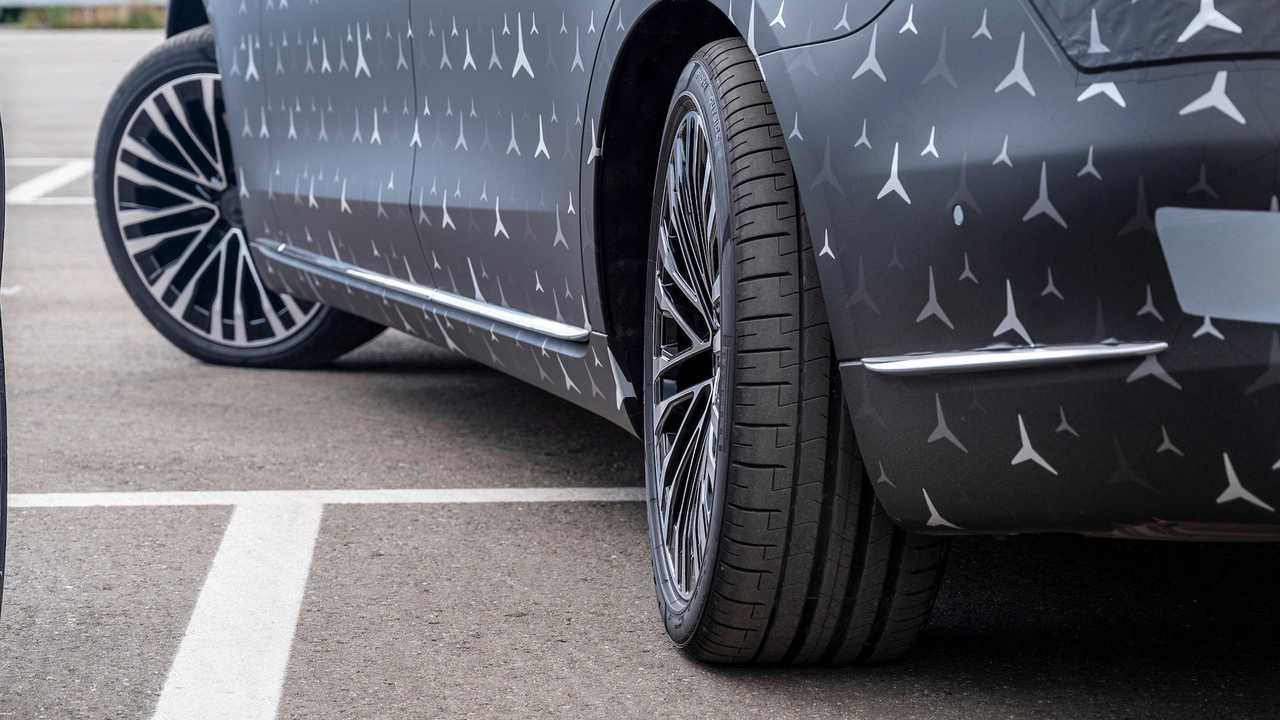
On one hand that’s the grand daddy of luxury limousines in its newest iteration: the Mercedes S-class. It can already be ordered and will be seen on our streets soon. Under a relatively conservatively-styled body, this is a car that takes the luxury automobile concept to a whole new level in terms of technology, as we’ll see further below.

Small exterior changes, quite a revolution underneath

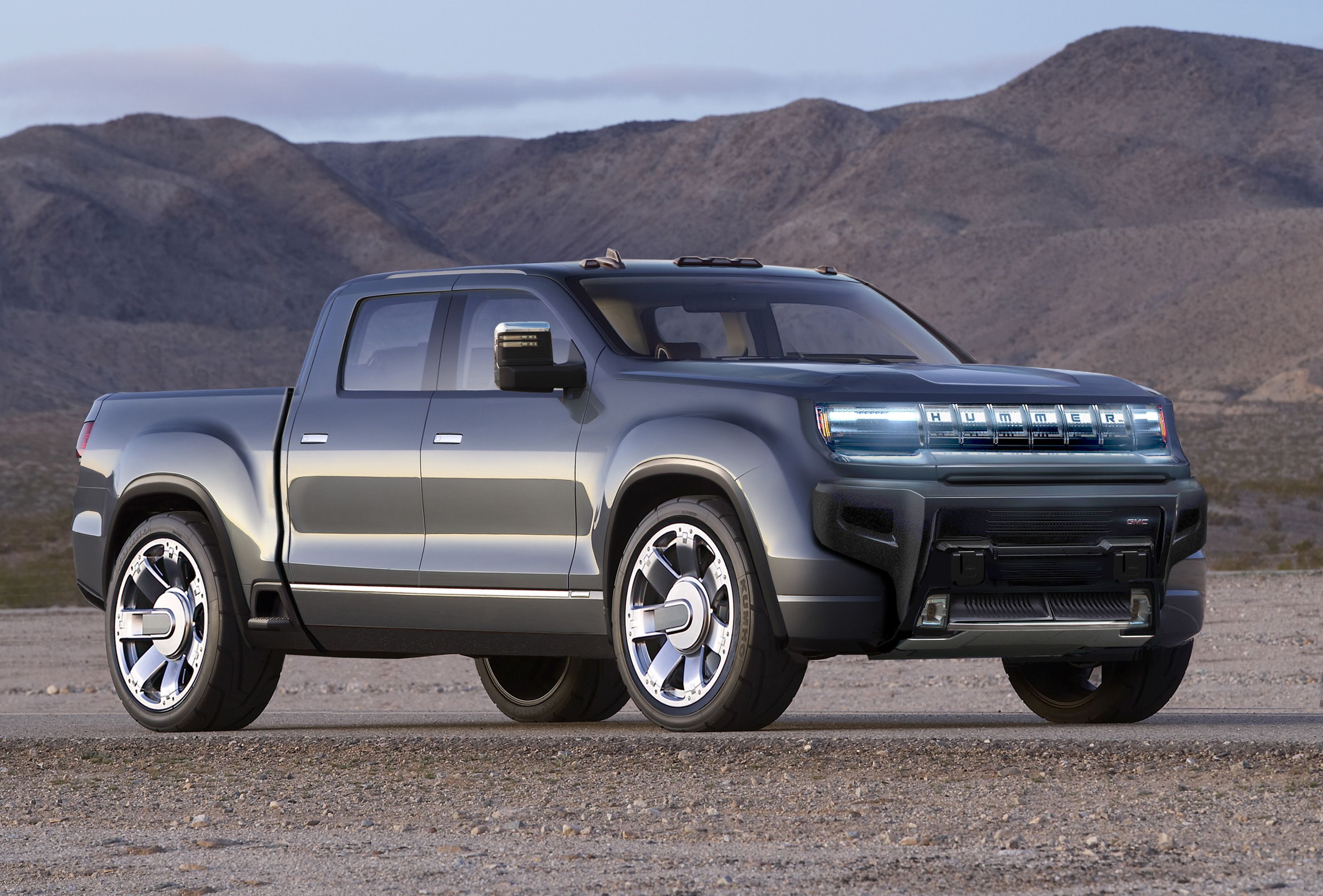
Vastly different to the S-class is the new, all-electric Hummer EV. That’s right, an electric Hummer truck, set to come to market late in 2021. Obviously the truck segment (or pick-ups as we like to call them in Europe) isn’t a big thing on this side of the Atlantic, but it’s the largest market segment in the US where over 3 million new trucks were sold in 2019. None of those were obviously electric, and at present electric cars have less than a 2% overall market share in the US, but that’s precisely what makes it interesting.

Coming to market in 2021, the first electrical truck will be a Hummer!

The Hummer EV along with Tesla’s Cybertruck and other electrical trucks in planning both from Ford and smaller, relatively unknown brands, bring electrification to the largest car segment in the US. Trucks are not much of a thrill to drive today, but when the Hummer and Cybertruck hit us with their more than 1000 hp and 3 seconds to 100 km/h, that is set to improve dramatically. A truck is not without advantages, notably the space for gear they offer, their towing ability etc. That also means there’s lots of room for battery packs, and the Hummer is said to have a range of 350 miles, the Cybertruck of around 500 miles. I could go on, but you get the message. If electrification is to take off in the US anytime soon, this is the segment where it could well happen. And since many truck drivers still think only golf carts can be electric, it’s significant that it’s Hummer, the most macho brand of them all, that leads the way.

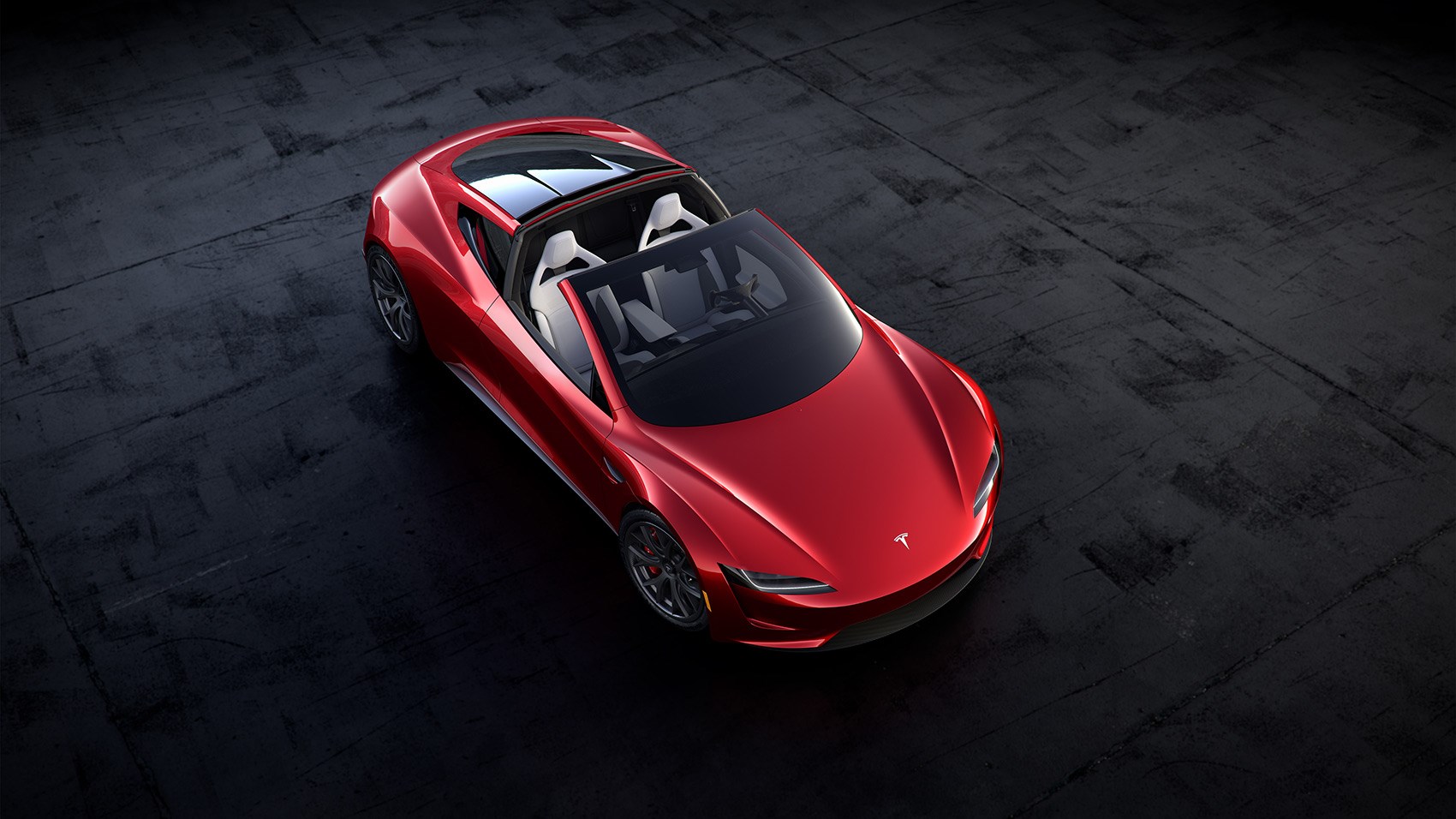
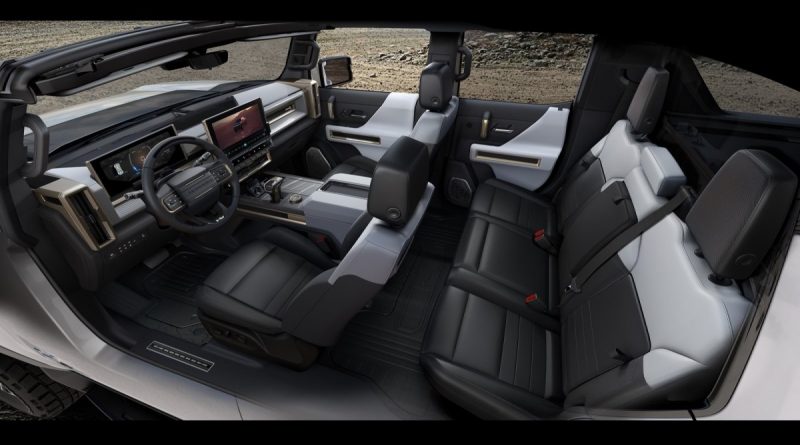
The interior is apparently fully vegan, the roof can be removed and stored in the frunk.

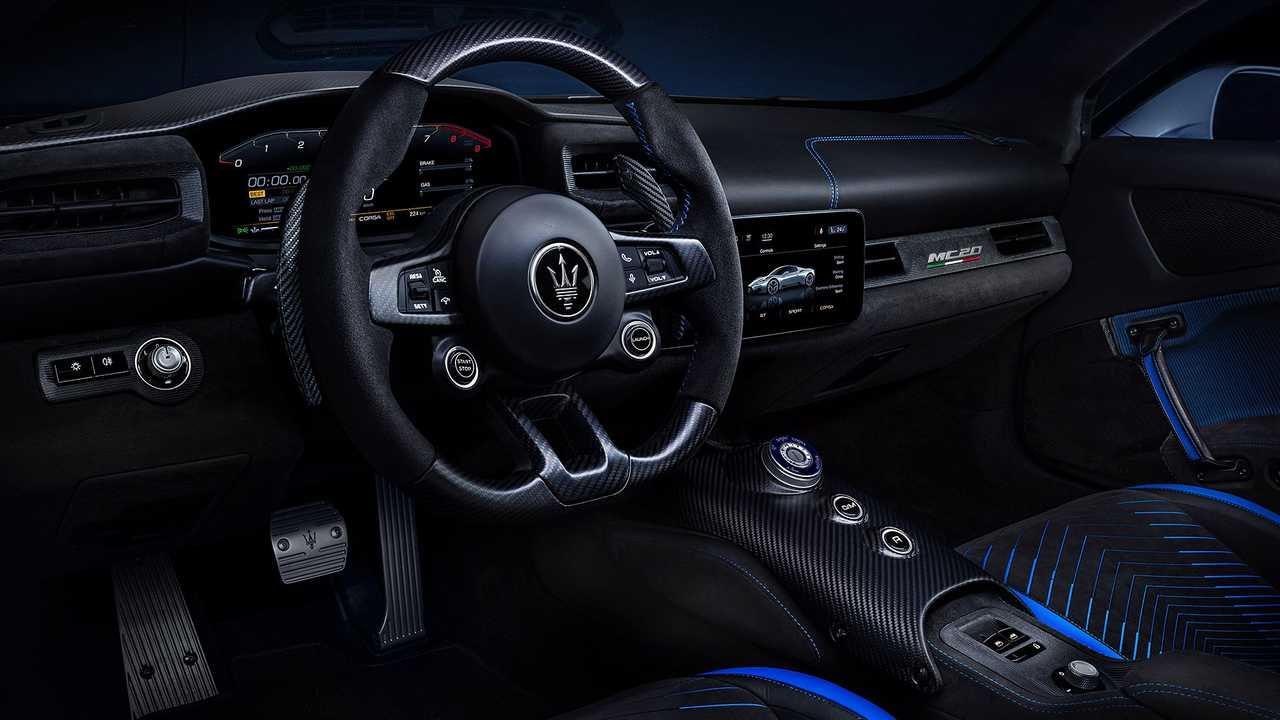
Moving beyond the increasingly electrified engines, let’s have a look at what the new S-class offers in terms of both interior comfort and technology. Starting with the dashboard, it has the same screen-based interior as we’re increasingly seeing in many cars and where Tesla is no longer very special in this regard. Gauge clusters are long gone and the S-class now has a 3-dimensional screen, meaning you see your instruments “in depth”. Mercedes also deals with the fingerprint problem with a new voice command system said to be so good that you practically don’t need to touch anything to access most functions. This is clearly something that will come in other cars before long. It’s probably a good thing, but it supposes you’re willing to have a dialogue with your car. Oh, and I almost forgot: the new Burmester 3-D sound system reflects bass tones through movements in your seat. That’s perhaps not something we’ll see in a Skoda Octavia next year…

Less than 10 years ago, this is very far from what an S-class would look like…

Next to the increasingly communicative interior there are nowadays cameras all around, and no doubt they will continue to make inroads into the whole driving experience in the coming years. There’s the practical usage which allows us to replace our rear-view mirrors (both centre and door-mounted) with an always fully visible camera picture. There’s the cameras inside the car that recognize you and automatically sets the car to your profile, as the new S-class does. There’s of course the cameras assisting navigation with augmented reality, meaning you can basically drive looking at the screen in front of you rather than out the window, and that if you still manage to get lost, you should probably consider the train instead. There’s various other features such as 3-D screens and augmented reality head-up displays, both featured in the S-class, and there’s of course the surround cameras which let you admire your car from outside whilst sitting in it. The Hummer EV takes that concept even further with cameras under the car to assist the off-road driving. So cameras all over, enhancing both the comfort and the safety. Some of them will become mandatory, others will remain more nice to have, but we will definitely see even more of them.

The main difficulty will probably be keeping an eye on it all…

Linked to cameras and safety are also the constantly evolving self-driving and self-parking systems. Increasingly these now reach a level where car technology is ahead of legislation in a number of markets and the full self-driving features of cars like the S-class, Teslas and others may not be used in full. There’s still a big question mark around when that will be the case, also since anything other than European harmonization in this regard would be very hard to manage. Be careful what you wish for though as there is a serious danger that when the legislator catches up, that’s also when big brother will take full control of your car – and speed.

The last and to me quite surprising new development worth mentioning is one that has come with increasingly advanced suspension technologies. Many will have seen the “dancing GLE” by now, which thanks to its independent wheels and active suspension can perform a dance with each wheel moving independently. More relevant is no doubt that these systems also give SUV’s and trucks like the Hummer vastly increased terrain capabilities by allowing for individual control of each wheel.

With increasingly congested cities, a few degrees make a big difference!

Interestingly, this theme of 4-wheel steering is also picked up by the S-class, which allows a rear axle steering angle of up to 10 degrees against the front wheels up to a speed of 60 km/h, and above it steering in the same direction as the front wheels such as to increase stability. Mercedes claims this notably cuts a car’s turning circle by on average 2 metres and gives the new S-class a smaller circle than a regular A-class. Some of you may remember the 90’s Honda Prelude that introduced 4WS in a mass-produced car. The concept never took off then, and it was obviously a far less advanced technology than what we have today. This time it could be a different story, especially in the segments of bigger sedans, hatchbacks and SUV’s.

So there we are: increasingly electrified and camera-equipped cars that we interact with differently, probably also verbally, and that almost unassisted take us first where we want to go, and then also into that tight parking space. The electrification trend runs in parallel to this and will in increasingly be seen in trucks and other cars, both as full EV’s like the Hummer but also as various hybrid systems, of which the S-class features some. It’s amazing to see how quickly technology has developed in just the last 5-10 years, and it’s fascinating to think of where we may be in another 10!

The Wright brothers patented the first flying car in 1841 – perhaps the time has come?

F1 update: Lewis the Legend!

With four races left to go after today’s, it’s time to do a quick pit stop and look at what we’ve seen and can still expect to see in this year’s F1 season.

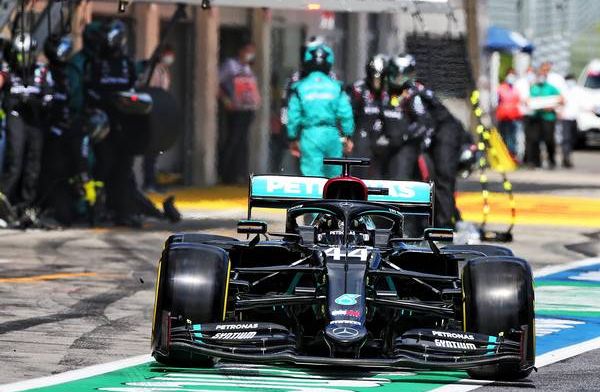
To start with the most deserving, a week ago Lewis Hamilton became truly legendary in beating Michael Schumacher’s record of F1 race wins. After today, Lewis now totals an incredible 93 wins, 9 of which so far this season. He also equals Schumacher’s record for the most wins with the same team (72), and today’s Hamilton-Bottas double means Mercedes clinched their 7th constructor world title. Lewis is Formula 1’s uncontested number 1, obviously helped by driving the car that is still relatively far ahead of the competition.

It’s good to be the king!

If Lewis is already the de facto world champion, it’s far more contested who will finish second and third – and who won’t. Valtteri Bottas is probably the ideal second driver with Mercedes eyes. He’s loyal to the team and occasionally manages to challenge Lewis, and so far this year has won two races. The question is however rather if what Max Verstappen (Red Bull) and Charles Leclerc (Ferrari) manage to achieve in inferior cars isn’t more impressive. Even though Ferrari is improving and Charles’s results is the only thing that may save Mattia Binotto’s job as team head, they are still far from Mercedes and Charles’s driving is the only thing making Ferrari look slightly better than the mid-field teams. Max on the other hand does a very good job of scoring podium finishes, including one race win this year, and is still in competition with Valtteri for second place in the championship. Red Bull and Max is also the only constellation that occasionally has managed to challenge Mercedes this season.

A good summary of Ferrari’s season so far…

Charles and Max’s relative success also make it very clear that driving skills still count and that it’s not all about the car. The last two races in Portugal and Italy were a good illustration of how far behind Leclerc Sebastian Vettel currently is, in spite of Ferrari confirming both drive identical cars. Seb had officially doubted this but also admitted that Charles is currently in another league. There is probably little hope of things improving before Seb leaves Ferrari for Racing Point / Aston Martin at the end of the season, and you have to wonder whether Racing Point don’t ask themselves whether switching Perez for Vettel was a wise move. I guess time will tell.

There’s equally little hope of Alex Albon retaining his seat in Red Bull. His oddds improved slightly last week when Pierre Gasly confirmed he’s staying with Red Bull’s little brother Alpha Tauri next year. This beats me as Alpha Tauri is Red Bull’s farm team and Pierre’s stellar performance this season with notably one race win stands in stark contrast to Albon’s total lack of results. Today in Italy, Albon then put what is probably the last nail in his coffin himself, when after a mediocre race he completely messed up the restart after the safety car phase with 7 laps to go, managing to lose the car and end up last. Before Portugal, team boss Christian Horner last had given Albon two races to start performing. The fact that he couldn’t and hasn’t been able to all season most probably means we’ll see another second driver at Red Bull next year.

“How the hell can Max be so fast??”

Behind Mercedes and the best half of Red Bull and Ferrari, the mid field is as competitive as ever with Racing Point, McLaren, Renault and Alpha Tauri all very close, and even Alfa Romeo Racing (ex Sauber) managing to pick up points here and there. Although he’s leaving at the end of the season, Daniel Ricciardo certainly doesn’t lack motivation and looks to be finishing his short spell with the Renault team in style, something that may have been really important when Renault decided to stay committed to F1. The team won’t have much time to regret Ricciardo though, as they will instead need to focus on Fernando Alonso returning to the team he won his two world titles with . With an improving car, it will be very interesting to see what an experienced driver like Alonso will be able to achieve.

Will Alonso be able to recreate the magic?

At the back of the field the most interesting is certainly the discussions around Williams, its new owners (the US investment company Dorilton), and whether George Russell will stay on as driver (apparently Nicolas Latifi has enough financial backing to be certain of his seat). Russell has done a fantastic season given what could be expected, notably reaching qualifying P2 on eight occasions (I know, but we’re talking about Williams here!) and also refers to the fact that he has a contract covering 2021. Then again so did Sergio Perez at Racing Point and that didn’t stop the team from firing him and hire Vettel instead. Perez is still looking for a new seat, and it’s not impossible that he kicks Russell out of Williams. Or maybe Perez could be the one replacing Albon at Red Bull?

The UK seems to have a promising successor to Lewis!

As for Haas, last years’ rock’n’roll team notably thanks to the Netflix documentary “Formula 1 – drive to survive” (watch it if you haven’t!) and the charismatic team boss Günther Steiner with his unique version of German English, it’s been a sad season. The team is nowhere to be seen and not even Steiner’s swearing seem to help anymore. Magnussen and Grosjean are both leaving the team next season, Gene Haas is however said to be committed to another season, so Haas will line up two new drivers in 2021. The rumours have it that one of those may be Michael Schumacher’s son Nic… It also means that both Magnussen and Grosjean could be competing for that second seat at Red Bull, both bringing as much experience as Perez.

With four races to go after today there’s thus still some excitement left, however rather off the track given we already know that Lewis will with very high certainty clinch his well-deserved seventh driver’s title soon, with a new record in the number of race wins! Just a small point though – Lewis doesn’t have a contract for next year, which is slightly strange given how late in the season we are. Most probably he’ll re-sign with Mercedes in the coming weeks, because he wouldn’t be retiring now that he’s beaten most records, would he?

Four is more than two!

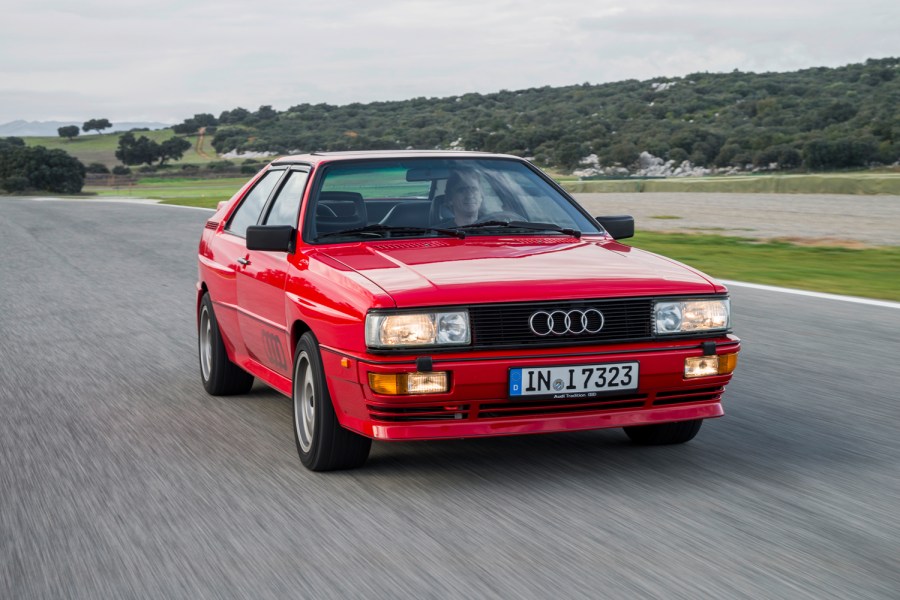
quattro (always with a lower-case “q” ). It’s difficult to find a word that has meant more to a carmaker than quattro to Audi. But the quattro concept goes beyond Audi and was to re-define the car world from the early 80’s until four-wheel drive became a common feature in all types of cars. So with the days getting shorter and the roads more slippery, and the original Audi quattro (Ur-quattro, as the Germans would say) celebrating its 40th birthday this year, let’s have a closer look at it, its brilliance as a rally car, and also at the genius of the late legend Ferdinand Piëch, without whom the quattro wouldn’t have happened.

The Audi quattro was truly innovative at the time, including the boxed arches!

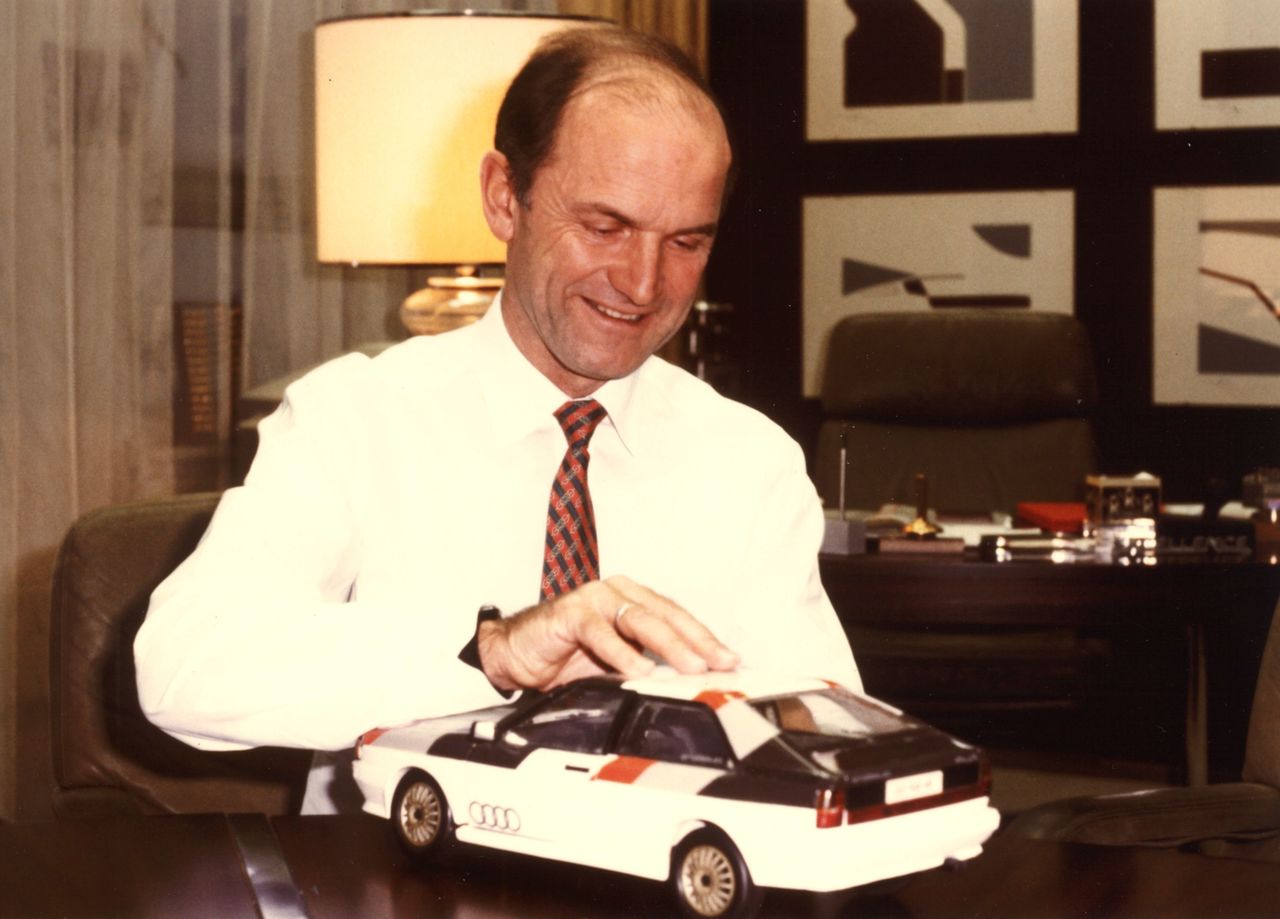
To get some perspective we have to wind the clock back to the late 70’s. This wasn’t a very exciting period in the car world in general, and four-wheel drive was at the time something you only found in traditional utility cars like Land Rovers and G-wagons. In Ingolstadt, a bunch of talented Audi engineers under the leadership of Ferdinand Piëch had however started thinking about the possibilities of using four-wheel drive in normal passenger cars, thanks to a room-saving, innovative new differential system.

In parallel there was also talk in the rally world of allowing four-wheel drive on rally cars, which until then had been forbidden. As the visionary he was, Piëch saw the opportunity of developing a new, four-wheel drive sports car and enter it in the world rally championship such as to provide a unique marketing window. This was the first true example of what would become Audi’s long-lived slogan “Vorsprung durch Technik” (something like “head start through technology”). The quattro was introduced at the Geneva Motor Show in 1980 and given the rally rules had been re-written in 1979 to allow for four-wheel drive, the timing was perfect.

Not the most pleasant man – but Ferdinand Piëch was both an amazing engineer and marketeer!

Given the Audi quattro was a new concept when it was introduced, Audi weren’t really sure of the demand and modestly estimated it at a few hundred cars. They would be wrong by about 11.000, which was the total number of original Audi quattro’s built between 1980 and 1991! Using the Audi 80 chassis, the quattro also inherited the five-cylinder engine that had so far powered the Audi 100 and 200 (with turbo in the latter). The engine was an engineering tour de force in itself, born out of the need for a smoother engine than a four-cylinder, but in Audi’s case with too little room to fit a front-mounted, longitudinal six-cylinder engine, given the gearbox was placed right behind the engine.

The solution was one of the first mass-produced five-cylinder engines that would come to define Audi over many years almost as much as the quattro concept, and that was said to combine the smoothness of a six-cylinder with the fuel consumption of a four-pot. The first part is true, and it can be added that it does so with a very distinctive sound. The part on the fuel consumption is very much dependent on the driver… In the quattro, the turbo-boosted engine produced 200 hp in the 10-valve version until 1988, which was increased to 220 hp in the 20-valve version for the last three production years.

The radiator had to be placed to the right of the engine, with the turbo to the left.

When you look at the quattro today, the “Vorsprung durch Technik” motto (sorry, sticking to the German version as the translation doesn’t sound as good…) quickly comes to mind. Not that the car is ugly, but it’s certainly not a design masterpiece (then again, neither was the Lancia Delta, the Renault Turbo 2 or other somewhat similar cars from the period). It does however look very purposeful, notably with the the lovely boxed arches that many years later would also come on cars like the Lancia Delta but were very much a first in the early 80’s. They also helped distinguish the quattro from the “standard”, 136 hp Audi Coupé. The interior has that lovely 80’s feel of hard plastic but offers lots of room for four and their luggage, meaning the quattro is a real all-rounder.

The single headlights came in 1982, only early cars have four separate headlights.

When you get behind the wheel, as in most 80’s cars you’re struck not only by the cheap plastic but also by the large windows and the excellent visibility. 200 hp is of course not a lot today, but then again the quattro weighed in at just under 1300 kgs and the turbo character means the car feels rather quick even by today’s standards, helped by an excellent, tight gearbox and, by 80’s standards, precise steering. It also feels solid, obviously not like a modern Audi but more so than many other cars from the period. It’s let down slightly by the breaks that feel soft and not very confidence-inspiring. All in all though, this is a car you can live very well with, knowing that as soon as a twisty back road opens up, the car is ready and will not let you down.

The 80’s won’t be remembered for the interior quality….

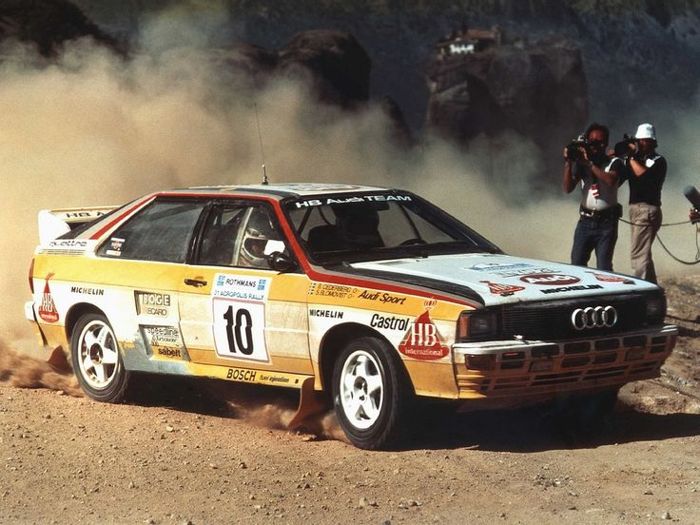
As was so often the case, Ferdinand Piëch had been right about entering Audi in the world rally championship and in the early 80’s the quattro became a true rally legend with a total of 23 race wins and four world championships until 1986, thanks to legendary drivers such as Hannu Mikkola, Stig Blomquist, Michèle Mouton and of course Walter Röhrl. However, once other brands caught up, the quattro was soon a victim of the less-then-ideal weight distribution that five-cylinder engine pushed all the way to the front of the car caused. Audi stood no chance against the mid-engine competition from 1986 and onwards, but that’s a different story.

The quattro was far more successful than he Sport quattro in rallyes

Interestingly, afraid that the “standard” quattro would be too big and heavy for the new Group B class, Audi presented the Sport Quattro in 1983, a 32 cm shortened group B car of which 164 homologation cars were built for road usage. However the Sport quattro was said to be more difficult to handle and never became as successful on the rally scene as the “standard” quattro. At around 200.000 DM the road version of the Sport quattro was Germany’s most expensive car in 1983, twice as expensive as a 911 Turbo. Today, Sport quattros don’t change owners very often but when they do, it’s at around EUR 500.000.

32 cm less overall length gave the Sport strange proportions, but it remained a very capable rally car!

Should you wish to make the original quattro yours, the good news is that you can take off a zero of the Sport quattro price, as good “standard” quattros trade at around EUR 50.000 today. The 20 valve version from 1989 and onwards cost more but are hardly worth it. Ten years ago both could be had for less than half, but even today a good car, meaning one with a known history and a “tight” driving feel still remains a stable investment – and how could it be different, after all it’s an Audi!

PS. In a class that existed only between 1982 and 1986, the group B rally cars were some of the wildest and most powerful in history. Click the link below for a reminder of what it was like deep down in the Finnish forests, when a 550 hp Sport quattro flew by: https://www.youtube.com/watch?v=cDRkHXMHqFo

We hope you like this blog – please help us keep it interesting by subscribing!

When the going gets tough…

This week we’ll explore three truly unique cars. Unique in the number of years they’ve been built. Unique in being able to take you practically anywhere cars can be imagined to go. They could also be claimed to be uniquely basic, and actually uniquely bad for many quite normal driving conditions. And for two of them, they’re also uniquely cheap. But finally, and perhaps most importantly, I would claim they’re unique in having a soul and a cult factor that only very few automobiles ever reach, an that really has nothing to do with the budget.

We’ll start by going to Tuscany where we enjoyed a few days off a couple of weeks ago, notably visiting friends that have a house down there. As so many houses in the Chianti region it’s a bit isolated and lies at the end of an unpaved road, that can at best be described as rather rudimentary. Slightly more than 2 metres wide, with a hill on one side and relatively little on the other, and in addition it had been raining quite a lot the days before we came down. Luckily it wasn’t my “new” 650 we had taken for the trip but rather the family XC90, so I was quite relaxed about the whole thing – until I first realized that the car was almost as wide as the road, and then the wheels started spinning. You see, our modern, fancy SUV’s are technically more than capable of mastering far more than a muddy road, but not with the low profile tires they’re typically equipped with. They’re also quite simply too big for many off-road situations, not to speak of all the nicely painted body parts that could be damaged in the process. Eventually we made it both there and back, and no, I’m not going to claim it was very dramatic, but it gave me reason to think about the 4×4-driving aspect of the thrill of driving, and cars really adapted for a bit rougher conditions.

If it gets too muddy, just switch the tires!

If you look around in Tuscany the car you see more than any other is the good old first generation Fiat Panda, many in the higher-riding 4×4 version. This is obviously not a coincidence. Next to switchable all-wheel drive, some other features that make up a good terrain cars include a short wheel base, short overhangs and good clearance. That’s the Panda 4×4 for you, adding the further advantage of a low weight of only 850 kg, meaning it doesn’t need a massive engine (and that’s good since the power output is around 50 hp). This makes it a perfect car in a hilly region with many narrow roads such as Chianti. Somehow there’s always enough room for a Panda!

Not much that can break here!

The first generation Panda was built for all of 23 years between 1980 and 2003, with two minor facelifts, although emission regulations prevented it from being sold in Europe after 1996. The four-wheel drive version came in 1983 and was built by Puch in Austria. Its interior (very similar to the standard Panda) redefines the word basic, with hard plastic, exposed metal and chairs that look like they’ve been stolen from a camping site. But who cares? Definitely not the people down in Chianti, and not those of us taken aback by the charm of the capable little fellow, something the modern Panda will never get close to. In addition this is really a car on a budget, as EUR 3.000-4.000 will get you plenty of Panda (and no, you don’t need a mint condition car for the usage you should be planning for it), and insurance, tax and fuel consumption will all be so low you’ll hardly notice them. If you can, try to get one with the large canvas sunroof!

Change of scenery: In the early 90’s I spent a couple of years in Moscow, in the transition between the old Soviet Union and the new Russia (that at the time, many hoped would turn out differently than it did…). If you were a real high-flyer in the Soviet era, one of the cool cars to be had was the Lada Niva. The car never really made it in the West, deservedly so as the general quality was extremely poor, but boy was it a capable off-road car. Again, much the same concept: it’s larger than a Panda but still a small car with a short wheel base, low weight, and even more capable, bigger tires. Built since 1976, the Niva (or 4×4 as it’s called today) is still being manufactured and is practically unchanged since the beginning – that’s enough to give it a huge cult factor, and also makes it the car still in production that has been so the longest, since production of the true record holder, the Land Rover Defender, ceased in 2016.

70’s Niva commercial – happy faces all around!

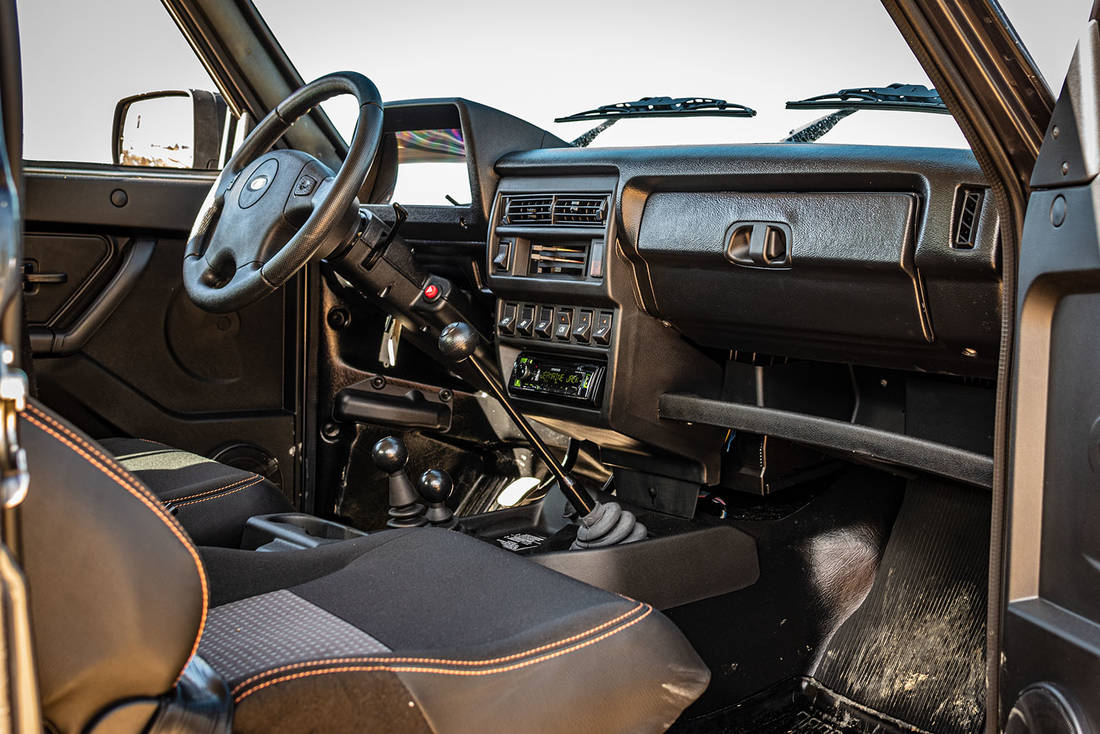
I had a few interesting rides in different Nivas during my time in the wild East, most often with the omnipresent smell of petrol competing with the vodka smell in the driver’s breath. Comfort-wise it’s a catastrophy with uncomfortable seats, terrible suspension, a useless heating system (big problem in the Russian winter!) and the list goes on. But when you turn off the road towards a muddy hill or a forest track, everything changes. Permanent all-wheel drive and switchable differential lock, along with the short wheelbase and low gears make it practically unstoppable. The model year isn’t important since not much has happened anyway, and 3.000-4.000 EUR is plenty of budget in Niva land.

A high-tech Soviet interior

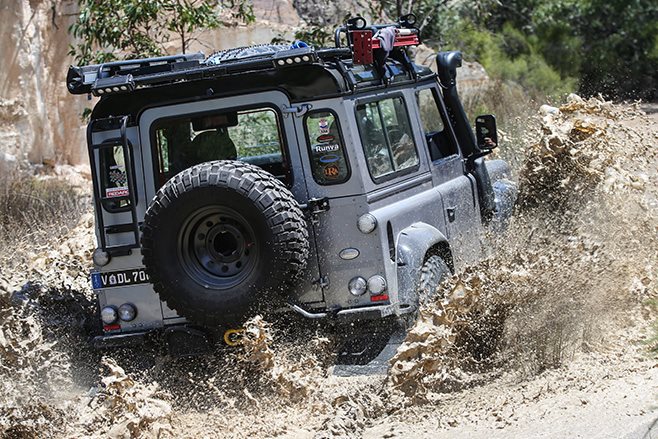
Speaking of the Defender, you can of course not write about long serving cult 4×4’s with true soul without mentioning it, although budget-wise, it puts us in another league. The Defender has a strange appeal across generations: when my son was about five and I took him to the Zurich auto show, the “Africa car” was the only one he was interested in, and when a few years later I borrowed one over a weekend from a friend, pretty much the last thing I was expecting was my wife to say “this is a pretty cool car”. But the Defender is as unique as it is bad in terms of comfort, seating position, noise level etc.

No other car appeals as much to your cave man instincts…

So much has been said and written of it over the many decades it was built (from 1948 to 2016, and I doubt that’s a record the Niva will break!), that not much is left, and there’s not enough room here to go through all the different models. The Defender is a hugely capable terrain car, especially in the 90″ body given the shorter wheelbase, which also looks cooler. They model year is not very important and a car with little terrain usage is obviously to be preferred. Surprisingly enough there’s quite a lot of these, since be it in London or Zurich or elsewhere, for some strange reason this is a car that competes with 911’s as preferred commuting vehicle…

Around EUR 20.000 is where the Defender fun starts, with modern versions or those equipped with high-duty features or camping tents going up to far, far more, making it one of the cars with the least/best depreciation. It’s also been claimed to be the most environmentally-friendly, as no other car averages as many life years as the Defender!

Thie above original Defender from the James Bond “Spectre” movie is currently for sale in Switzerland – for CHF 85.000. Details on request.

So there you go: a charming Italian, a crude Russian and a posh Englishman. All of them a heap of driving fun in their right element, be it in Chianti, Russia or the Scottish highland, and useless in pretty much all other conditions. Why would you buy one unless your house is at the end of a muddy road? Maybe your dream house will one day be just that, and knowing it can easily be handled with the right vehicle puts yo in a better position for the price negotiation. Or maybe, just for the feeling of knowing that if you had to cross the jungle, you could!

The gentleman’s GT

Two weeks ago I wrote about Lotus, based on my friend Erik’s experience (if you missed it, you can read it here). Today we’ll look closer at a car that weighs more than any two Lotuses in combination and is thus very from the lightweight motto, but on the other hand offers one of the best combinations of power and comfort that can be had in the world, and where very nice pre-owned cars can today be had for less than a family hatchback: the Bentley Continental GT.

Before going into the history and details, let that sink in a bit. We’re talking about a Bentley, one of those brands with a special magic to the name. Not as exclusive, but also not as old-fashion as a Rolls. Not as extravagant (by a few miles) as a Lambo or a Ferrari. A Bentley is, and has always been, the gentleman’s sports car, and a car where a combination of power and comfort has always taken centre stage. Given the bargain prices the first generation of Continental GT’s are today trading at, let’s look a bit closer at whether that makes it something for which you should find space in your garage sooner rather than later.

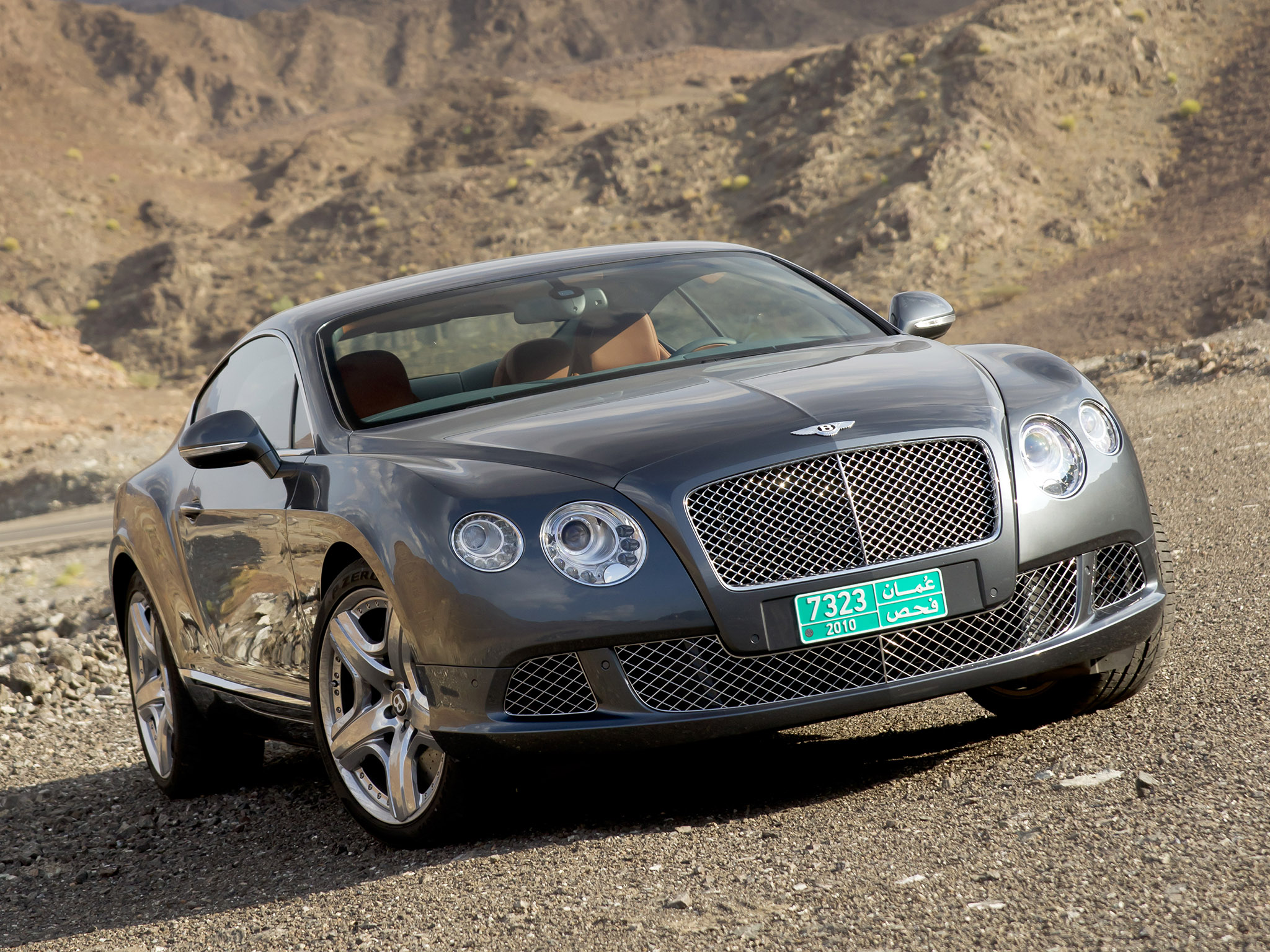
The Continental GT saw the light of day in 2004 and was the first car to be developed under VW’s ownership of Bentley. Evil tongues would claim it’s an Audi or even a VW Phaeton on steroids, given these are cars with which the Crewe-built GT shared essential parts like the chassis, the 6-speed gearbox, the air suspension and the engine, although in the Continental, two turbos bring the power to 560 hp in the base version. To me that would be missing the point though. In our modern era, brands such as Bentley can’t survive without some reliance on larger brands, and these to my mind do not take anything away from the attractiveness of the package – if anything they add to it, given higher reliability than older Bentleys used to offer. Another feature the Continental GT shares with its VW siblings is the standard four-wheel drive that on one hand helps get the power onto the tarmac, but also make the car more than just a summer GT – should you want it to.

The double-turbo W12 was the only engine option for the first generation of the Continental GT, built until 2011, that we’ll focus on here. In 2007 a 35 kg lighter Speed version was however added and a couple of years later Bentley brought a Supersports version with 630 hp and as much as 120 kgs less weight, achieved notably by removing the back seats. And of course, from 2006 on there was a convertible version alongside the GT. The second generation, built from 2011, saw a decent face-lift and added the “budget” 4-litre V8 version to the line-up. Finally the heavily reworked third generation came out last year, but that’s another story.

The first generation Continental GT is an impressive car, and one that has aged very gracefully. As so often, the lines of the coupé are more harmonious than those of the convertible, and you needn’t do more than open the door to realize that this is something truly special. The interior oozes of a British gentleman’s club, you’ll look in vain for plastic parts (except, admittedly, for some rather cheap looking buttons on the centre console around the antiquated satnav, and on the steering wheel), every piece that looks like metal is just that, and the number of cows that had to leave the green pastures to be reborn as a Continental GT interior would make even meat-lovers blush. Bentley has always offered a multitude of interior colour combinations, and these are finished to the last detail. If the interior is, say tan, then every little piece of it will be finished in tan – including the seat belts and their holders.

The engine comes to life in a very different way than other cars of comparable power output, that is to say very discreetly. The steering is very light, and although improving a bit at speed, this is not a car where you really feel the road, which is also to say that the air suspension is sublime, as is the general noise level. If not earlier, it’s clear by now why this is a car weighing in at around 2400 kgs. Having said that, the GT handles better than could be expected and lets you forget some of that weight. Power is plentiful in any gear, the engine has a very pleasant bass tone when it’s pushed, something the car doesn’t mind, although not inviting it either. The 90-litre tank will mean you’ll have to stretch your legs and refill every 500 kms, something safety experts will tell you you should do anyway – arguably though, those experts have never travelled in a Continental GT.

It’s easy to see why the Continental GT looks like an interesting option. Next to the comfort and surprisingly good driving experience, the massive depreciation to something like 1/5 of the price as new, combined with the fact that the first owner quite often was an older gentleman not really into track days, clearly speak for the GT. The fact that the car is built around a VW and Audi engine and chassis is also rather positive, although it doesn’t mean that you can take it to your local VW repair shop – they wouldn’t know what to do with it. That brings us to the only real downside with the car, being the massive servicing costs. I won’t go into any detail but assuming they’re on Ferrari level is a good start.

Some owners’ illimited budgets means good bargains can be had on “exotic” colours…

When I was a little boy back in… well, a while ago, I remember my father telling me there was no official power output number for Rolls-Royces more than to say it was sufficient. Another similar tall tale is around the cost and maintenance of RR’s and Bentleys, saying that if you need to ask, you can’t afford it. If you can afford it though, a nice pre-owned Continental GT should make you a very happy person. Maintenance history (and budget!) is key, elderly pre-owners are to be preferred, and the somewhat more powerful and more focused GT Speed is slightly better than the ordinary GT. You’ll be able to find both from 2008-2009 for around EUR 40.000-50.000, adding EUR 5.000-10.000 should you prefer a convertible. The fact that early ’04 and ’05 cars don’t trade much lower indicates prices are bottoming out. Given more than 66.000 GT’s have been built so far (more than any Bentley in history), this is not to say prices will start to rise tomorrow, but I also remember learning something else in my youth, and that was not to wait until tomorrow to enjoy something that can be enjoyed today. In the context of the Continental GT, that feels like very good advice!

We hope you like this blog – please help us keep it interesting by subscribing!

A pit stop in Maranello!

This week the pictures will do most of the talking as we’re currently enjoying the last warm days of the year in lovely Tuscany. On the way here though, we did make a pit stop in Maranello and spent a few hours at the Ferrari museum, where you can admire a large amount of mostly red Ferrari beauties from different time periods and read up on your Ferrari knowledge.

Should you be in the region a visit is highly recommended, but be aware there is also a second museum a few kilometres away in Modena. I haven’t been there but have understood it’s smaller and more focused on the life of Enzo Ferrari than the cars (and especially the racing cars, which is the focus in Maranello). You can also buy combined tickets for both museums, but be aware that in Covid times, all tickets must be bought online in advance.

At the end of your visit you have the opportunity to try out your own skills in one of three F1 driving simulators. The feeling of slipping into the very tight space and gripping the wheel is a special one, simulator or not, and at least I didn’t feel the urge to be in the real thing. There is however also the opportunity to test drive various “standard” Ferraris both on nearby streets and the nearby Fiorano track, from various providers in immediate vicinity to the museum. Should you want to try that, make sure you have enough reserve on your card both for the rental itself, and for the carabinieri who could be seen in large numbers on surrounding roads…

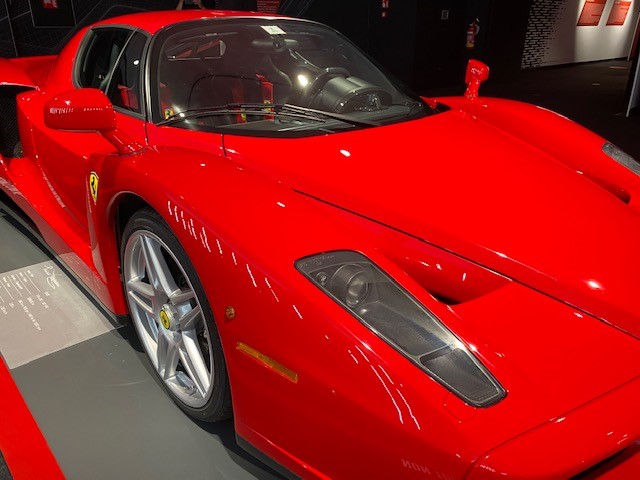
In one of the “non-race” rooms, the Enzo sits next to a LaFerrari – difficult choice!
Ferrari’s long Le Mans tradition also receives the attention it deserves.
The F1 room well illustrates the increasing complexity of especially the aerodynamics on the F1 cars through the decades
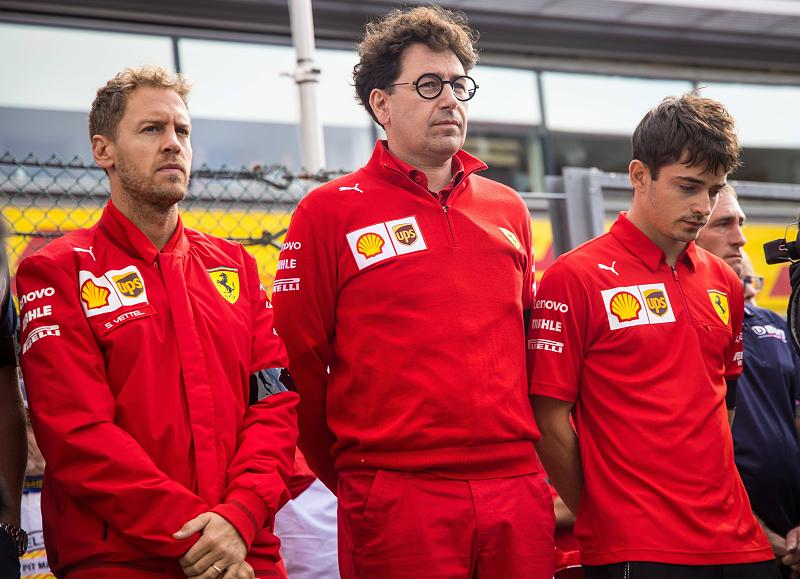
Indeed – Forza Seb & Charles for the end of the last season together!

3 x Lotus in 1 week!

This week will be all about Colin Chapman’s lovely, lightweight cars from Hethel and his motto “adding power makes you faster on the straights. Subtracting weight makes you faster everywhere”. We are of course talking about Lotus and more precisely about a nice selection of one Elise and two Exiges. You see, writing interesting pieces on this blog every week isn’t always easy, and finding time for great test drives even less. The blessing then comes in the form of other petrol head friends who are kind enough to share their experiences!

This week I’d therefore like to thank my friend Erik, a fellow Swede and car enthusiast who currently studies here in Zurich, and who over the previous two weekends had the pleasure of driving two different Exiges and an Elise. Before going into his very interesting experience though, a few words on the two models for those less familiar with the Lotus line-up.

One happy Swede!

The Lotus Elise saw the light of day in 1995 and has since been built in three series: the S1 until 2000, the S2 until 2010 and the S3 ever since. An untrained eye would be forgiven for not immediately seeing the difference between them, although the S1 is a bit more frog-like than the others. The Elise has always been about a maximum of driving pleasure for a minimum of weight, and things normal in other cars like carpets, A/C etc. are not standard in the Elise world. It’s notably famous for its aluminium chassis, weighing only around 65 kgs! With engines delivering between 136-220 hp (Cup and other special versions being more powerful) and a total car weight of only 800-1000 kgs depending on version, power output has never been an issue, although the engine character can still be, as we’ll see further below.

The Elise S2

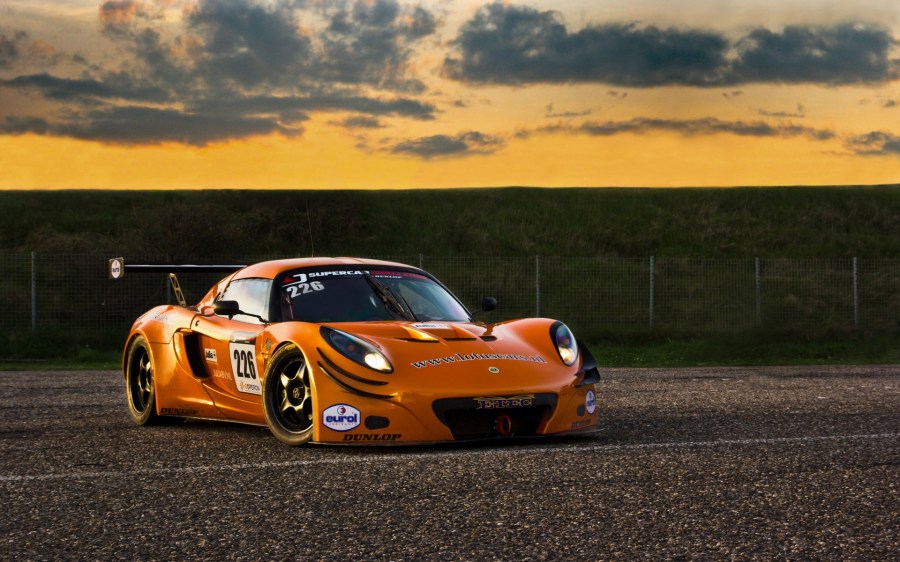
The Lotus Exige was developed with the Elise as basis, originally as a race car but unlike the Elise as a hatchback. It was intended to be a more mature car than the Elise and other differences include a sportier body with wider fenders and track, allowing for larger wheels, and larger front and rear spoilers. Launched in 2000, the S1 was only built during two years and the story of the Exige really starts with the S2 in 2004, built with the same 192 hp Toyota engine as the Elise as basis. The S3, where deliveries were delayed a couple of years and only started in 2013 after Lotus had survived yet another financial crisis, was a heavily modified car with a new chassis and importantly, a 3.5 litre, V6 compressor engine developing 350 hp. As with the Elise, the Exige was also built as Lotus’s own “Cup” and other more powerful versions.

The Exige S2

Coming back to my friend Erik’s experience, the first car he got to test was an Exige S2 from 2005 with the 192 hp, 1.8 litre Toyota engine. Being young and agile he got into the car without too much difficulty, something that shouldn’t be underestimated for the somewhat elder among us. Once inside though, there is enough room for both young and old. The unassisted steering is surprisingly light at low speed and the radio is better left turned off, given the sound is nowhere near where it should be – it’s far better to listen to the engine instead! With the soft roof off, my friend took off towards some nice alpine roads, earning some sympathetic looks from cyclists on the way (which I can tell you isn’t always the case!), a good testament to the friendly design of the little car.

This is of course the kind of roads the car is made for, and the description of it as a go-cart on steroids nails it pretty well. The chassis is extremely well balanced, the steering, gradually heavier as the speed increases, is among the most precise in the industry, and the grip, even without any form of electronical helps, is tremendous. The gearbox is less precise than it could be, something that has often been commented on, and although 192 hp for a ton of car sounds plentiful on paper, the engine does require a lot of revs to come into its full right around the 6.000 mark, which is of course a bit limiting in daily usage.

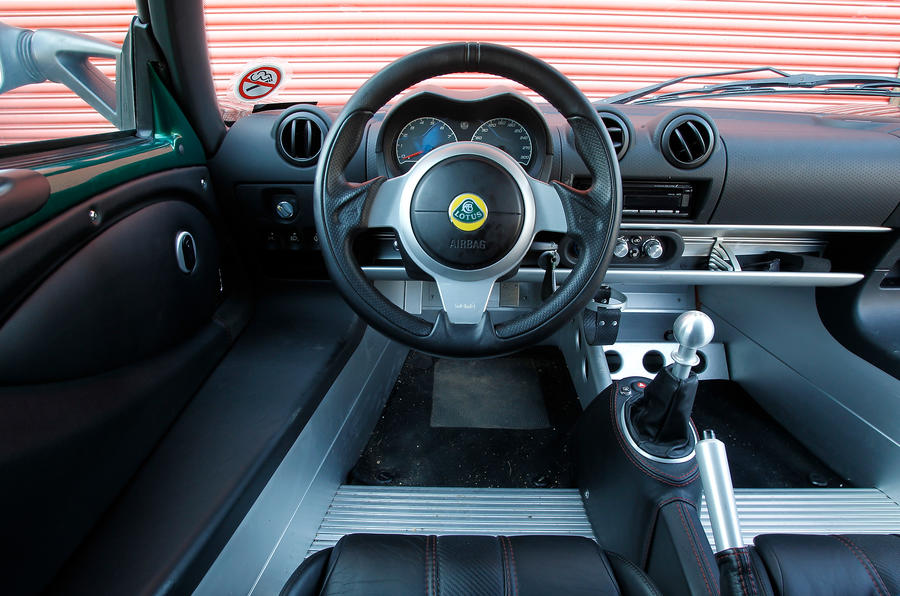
The definition of a minimalistic interior!

In terms of quality, the Toyota-built engine is however the least of your worries. The fact that the car is quite loud and that you hear squeaks an scrambling from various parts is so to say part of the package, as is the limited comfort. The passenger seat can’t be moved at all, the driver seat to a limited extent. The cabin is obviously reduced to a minimum, true to the lightweight philosophy, so if you’re looking for anything but a driver-focused experience, look elsewhere.

Second in line in my friend’s Lotus weekend was the car he would later describe as hands down the most fun car he’s ever driven – an Exige 350 Sport (S3) from 2016. The difference to the 11 years older S2 Exige was in his words striking. As noted above, the S3 was heavily re-worked and is a much more refined car, the scrambling parts are gone, thereby leaving more room for the wonderful engine sound. There is a constant mix of gurgling, pops and bangs going on from the rear part of the car, enough to put a big smile on any petrol head’s face.

An even happier Swede!

The S3 Exige is around 200 kgs heavier than the S2 and also rides on wider tires, both contributing to the (still unassisted) steering being very heavy at low speeds. It’s also very communicative, as motor journalists love to put it. “Feeling” the road is obviously an important feature of any true sports car, but one should be aware that this also means feeling every single imperfection of the road every time you take it out, and also experiencing the occasional sideways jump, as a tire catches a track in the road (I should probably add here that roads are pretty good in Switzerland…).

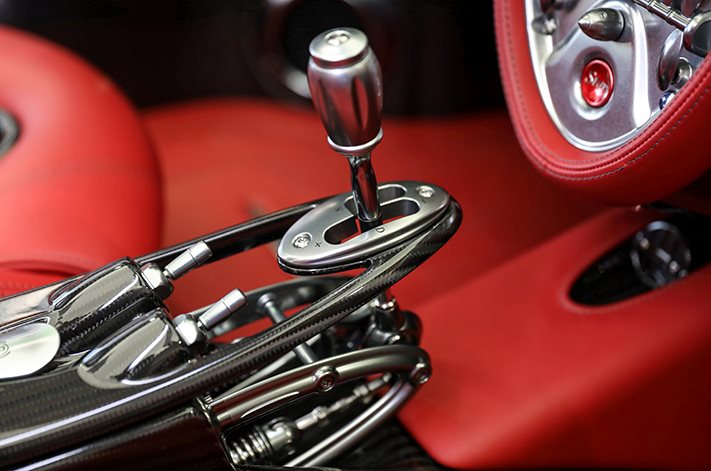
The 350 hp the compressor engine puts out gives the S3 a phenomenal acceleration. This is combined with very confidence-inspiring breaks, much more so than on the older car. The gearbox is still not the best on the market but it does excel in the way it looks – very similar to a Pagani Huayra or Spyker c8!

Finally a week later when his adrenaline had returned to normal levels, Erik also drove an Elise SC RGB from 2011. RGB stands for Roger Becker, a phenomenal chassis engineer that spent 44 years of his life working for Lotus before retiring in 2010. When he did, Lotus developed special editions of both the Elise and Exige with Roger’s choice of options as a tribute. The RGB Elise has the 1.8 litre engine, however with the S3 front. The car in question had additionally been worked on a bit such as to put out an extra 20 hp, bringing it to a total of 240 hp.

As you may suspect, Erik’s experience of the Elise falls between the two Exiges. The car is much more responsive than the older Exige without compressor, although not as manoeuvreable at lower speeds. The driving experience is very similar to the later Exige, however with a fair amount of squeaks and scrambling, so quality-wise more on the level of the older Exige.

The Elise Roger Becker Edition

If I allow myself to summarize Erik’s experiences with my own an those of other friends, it’s clear that any Lotus (and I would include the Evora in that, although Lotus fans tend to see it as a GT car) is among the purest and best driving experiences you will find, and a great proof that from a driving perspective, low weight is more important than high power. At the same time, the lightweight concept makes it quite a raw experience that only comes fully into its own right on a race track and country or mountain roads, provided you know there are no cameras around. The Exige is more mature than the Elise and arguably the better car, although an Elise with the right engine is of course highly enjoyable and the difference shouldn’t be overstated (again, if you’re looking for comfort, look elsewhere). The 192 hp of the base engine may be enough on paper, but the high revs it requires means the compressor engines are a much better proposition. Finally, quality: it is what it is, and as Lotus owners know, its mostly not a problem free experience. That being said, the list of things that can break is shorter than in most other cars, the engine is usually not one of them, and servicing costs as well as tax treatment in most countries are quite low.

If an Elise or an Exige sounds like the thing for you, as you would suspect the price points of the above cars differ quite a lot. A 10-year old basic, 192 hp S2 Exige is yours for around EUR 30-35.000, whereas the a 10 years younger, S3 350 hp version will set you back from EUR 50.000 and upwards. There are few RGB Elises around, but otherwise a 10-year old basic S2 192 hp one will cost you around EUR 20.000 and you’ll need to add around 10.000 for the more powerful ones. In other words these cars hold their value really well, which combined with low ownership costs make them a more attractive proposition than most other great “driver’s” cars.

For a company that has had more lives than a cat, it’s nice to see that Lotus’s future now looks to be somewhat secured. Next to the bonkers, GBP 1.7m, 2.000 hp electrical Evija, Lotus has an ambitious agenda of new cars in different segments over the coming years, with notably an all new model for 2021. Fingers crossed that they get there, because from a pure driving experience perspective, the world would be a much poorer place without Lotus!

The £1.7m, 2000 hp, all electric Evija

We hope you like this blog – please help us keep it interesting by subscribing!

The Bavarian long-runner!

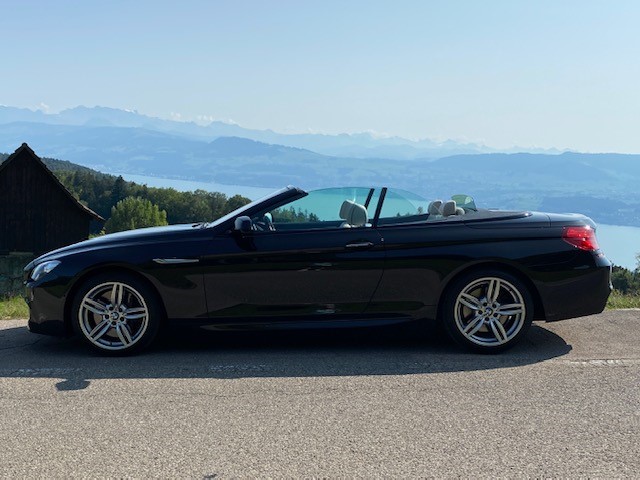
A first week with the 650i is now behind me (if you missed the story from last week you can read it here), and thankfully the weather Gods were kind enough to let the sun shine from a blue sky everyday, meaning I’ve been able to enjoy the car as it should be, with the roof down. Impressions so far are very positive and having now experienced a bit more of the quality, comfort and power train of the 650i, my unofficial rating of it as the most mispriced used car in the market is confirmed – not that I’m complaining!

Therefore, feeling a bit Bavarian this week (and thus sad to hear earlier in the week that this year’s Oktoberfest is cancelled), I thought we’d have a look at last time BMW had a 6-series, back in the 70’s-80’s. The first 6-series indeed still has a lot going for it, as is proven notably by the fact that its 13-year production run is the longest of any BMW model!

The 6-series was introduced at the Geneva Motor Show in 1976 and was produced with relatively minor updates until 1989 to a total of over 85.000 cars. The E24 as it’s called internally replaced the E9, and although it mostly resembles the 7-series that followed a year later in 1977, it was built on the smaller, 5-series chassis, as a true four-seat GT car, that over the 13 years of production was only ever available with 6-cylinder engines.

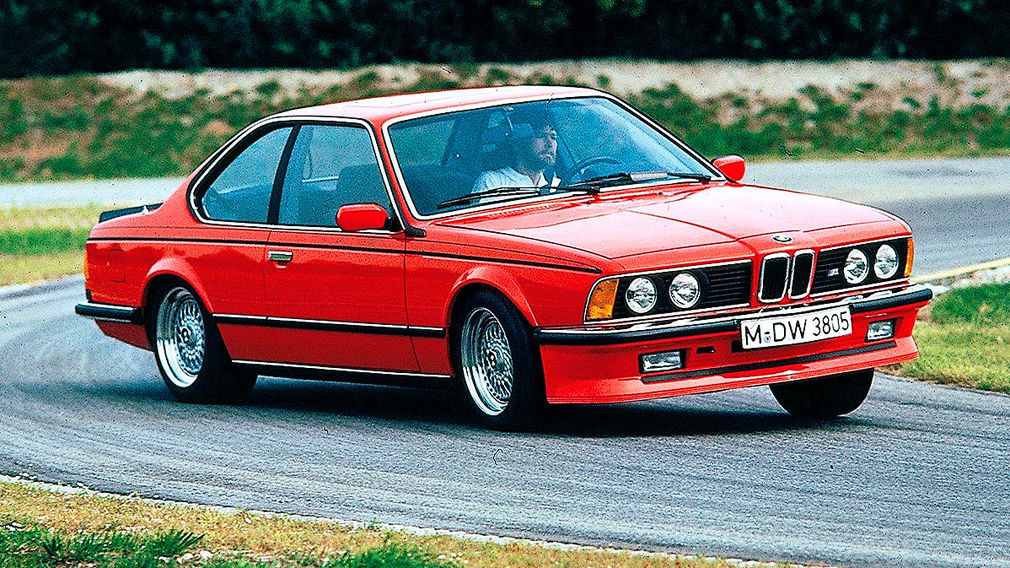
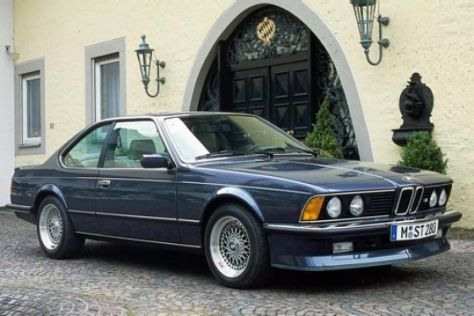
The original line-up included the 630cs and the 633csi, complemented in 1978 by the 218hp, top of the line sport version 635csi that I’ll focus on here since it’s the car to have in the range. The 635csi was easily distinguishable already in the first generation through its front and rear spoilers and ultra-cool, 80’s-style BBS wheels.

Some of the best looking wheels in the last 40 years!

The first (and only) major model update in 1982 was important as the chassis was more or less replaced by that of the second 5-series, giving the whole car far more rigidity and stability in combination with lower weight. From 1982 ABS breaks came as standard on the 635csi, and on the inside, the equally-sized speed and rpm gauges so typical for BMW had now found their place in the gauge cluster. Various other cosmetic touches contributed to give the car a more modern look. Oh, and I almost forgot that the pre-infotainment check control, that allowed the driver to test various functions in the car, was now automatic and didn’t have to be activated by pushing a button. There was also the optional board computer that let the driver check the outside temperature, the average consumption and the total distance driven. That was advanced stuff back in the early 80’s!

Check control far left, board computer far right – this owner was king of the hill in 1982!

In 1984 BMW introduced the top-of-the-line M635csi with a re-worked version of the M1 engine, with four valves per cylinder and dual overhead camshafts (DOHC). The M-version produced 286hp and from 1986 260hp with catalyst, and was only available as manual (by then, catalytic cleaning meant the regular 635csi was down to 185hp).

In 1987, a second and last facelift mostly consisting in various chrome pieces being replaced by black metal and plastic, helped the by now quite old 6-series live for another two years. The last car was produced in April 1989 and the 6-series was replaced only a few months later by the the 8-series and the 12-cylinder 850i, but that’s another story (that I’ve written about here should you want to read it).

M635csi – 30mm lower, larger front spoiler

The clean lines of the 6-series are purest in the simpler versions, but to me the 635csi has always been the one to have. That is except for the M-version of course, but at the EUR 60.000 and upwards good M-cars cost today, they are at roughly double the price of the standard 635csi, which given the car’s age in my view delivers sufficient power and driving pleasure. And driving pleasure there is, in a very 80’s style; I drove a 185hp, 635csi recently, briefly considering it as I was selling my Triumph. No doubt it’s a car that works perfectly as both a daily driver and a GT car for longer trips. The steering is surprisingly good, the manual gearbox is distinct, although with long throws, and the breaks work just fine. The six-cylinder has a nice tone to it and you’re left with the feeling that the only thing missing is an old Modern Talking cassette in the standard Becker cassette radio!

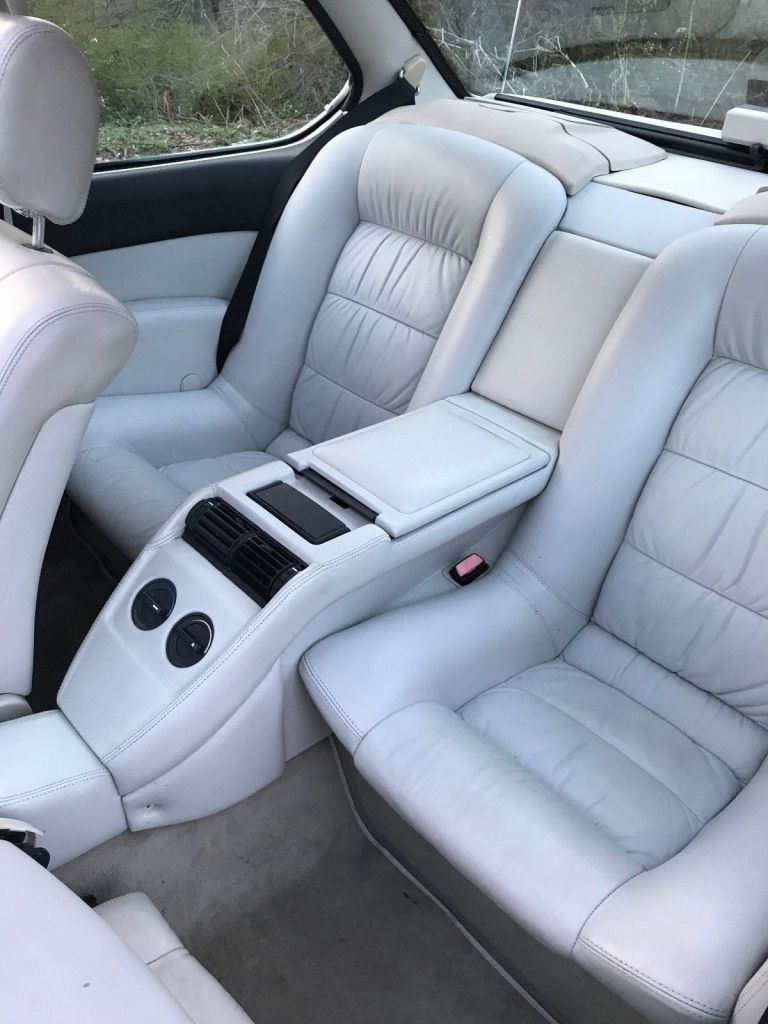
A late 635 with a custom center piece – the coolest back seats ever!

Although it was produced in a total of more than 85.000 cars, the original 6-series is becoming increasingly rare, and if you ask me it’s no doubt one of the best cars coming out of the 80’s. Its combination of good looks, great engine and practicality make it a very usable youngtimer at a still attractive price. I would opt for a manual 635 from after 1982, paying more attention to the car’s history and condition than the exact model year. Go through all the usual checks and in terms of equipment, make sure you get the original BBS wheels, a nice leather interior and a Becker cassette radio, and you should still be on the right side of EUR 30.000. The only thing left before hitting the road will then be trying to remember in which box you stuck those 80’s cassettes many years ago…

We hope you like this blog – please help us keep it interesting by subscribing!

Goodbye TR4, hello BMW!

This has been a big week for me as a long thought-about change in my modest car stable finally happened. I’ve been thinking of replacing my Triumph TR4 that’s been with me for close to ten years (and thereby by far the car I’ve owned the longest!) since it didn’t really fit the bill any longer and spent far too much time in the garage.

Thanks for everything old chap!

In my post about oldtimers guaranteed to increase in value (see here if you missed it), I made the point of thinking through the purchase well in terms of how much you will be able to use the car, as you otherwise risk ending up in my situation. I wouldn’t claim that I thought through the purchase along those lines ten years ago, but it’s also true that needs change and in my specific case, this has meant the kids now being grown up and my wife and I dbeing in the phase of life where we can drive down to Tuscany or southern France over a long weekend. You don’t do that in a TR4 from -65.

They may look good but you don’t want to spend 100’s of kilometres in them…

It took a while to find a buyer, but I finally sold the Triumph at a reasonable price which was around 20% more than what I paid for it ten years ago. In parallel, the brief for what was to replace it was beginning to take shape. I imagined a GT car that could seat four but was really made for two, preferably a convertible, modern enough for the weekend escapes mentioned above, with enough power and sound to put a smile on my face and with enough luggage space to handle the surprising number of things my better half thinks are necessary for a few days.

I thought long and hard about both a 996 Turbo and a 997.2 4S, but they neither transport four, nor have enough luggage space. I met a perfect gentleman with a perfect XJS V12, but again, the back seats don’t work and there was a risk I would always have been nervous about that V12. A few other, classic candidates were also considered but then it got complicated, also because of the increase in value many classics or future classics have seen these last years. So maybe it was time to think about something newer, something where the second-hand value is a true disaster, and the value for money is truly spectacular. I guess it also gives some credibility to what we write on this blog to know that we follow our recommendations… (see here). Anyway, that’s how yesterday a BMW 650i convertible ended up in my garage!

A big Bavarian just moved in!

My new car has had one owner since new in 2013 and over the 57.000 kms he has driven it, he must have spent at least as much time cleaning, polishing and speaking kindly to it, because the car is truly in mint condition. Importantly, being a 2013 model, it has the improved V8, double-turbo 450 hp engine, which hasn’t had the problems that were quite common with the previous 408 hp version. As mentioned in my post I’ve always liked the design, which i think is truly beautiful both with the top and without it, and i liked the color combination (the so called citrin black, which is a softer, brown-black color, with the white interior) and the equipment which is quite complete. Rounding it off were good summer and winter tires on alloy wheels and a one-year complete warranty. And for all this, I paid exactly 20% of the price new price of CHF 180.000 in 2013, or if you will, a couple of thousand more than I got for my TR4.

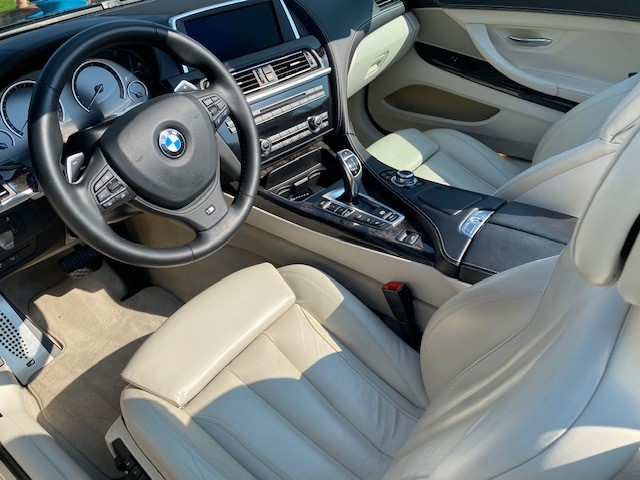
Those are seats I look forward to spending time in!

That’s how I left the classic car scene for now, but honestly I don’t see it as very dramatic. I will always have a heart for beautiful automobiles but as long as both time and space are limited, it’s about that brief and usability. And to be perfectly frank, something else is worth considering as well: things were not better before, which also includes cars, and for the kind of usage we plan, it actually feels quite re-comforting to have a modern car. Yeah, I know, I’ve grown old…

The 650 is not a future classic and not a car that will increase in value (although the downside at that starting point and with free maintenance until 2023 is rather limited!), but it’s a great car that perfectly fits our current needs and can of course be used as my summer daily driver. The first 70-80 kms have been great. Being too big and too heavy, the 650 is not a sports car, yet it sticks to the road in a very capable way, with just enough of the V8 bass tones coming through on acceleration. The kids had enough room in the back seat with minor adjustments to my ideal driving position, and luggage space is sufficient. So far I love it and really look forward to a couple of those trips a bit later this autumn!

Vettel stays in F1

As was announced on Thursday, Sebastian Vettel has signed with Racing Point / Aston Martin (the team will be renamed next year) and will replace Sergio Perez as second (first?) driver alongside Lance Stroll in 2021. Vettel thus grabbed the last straw available to stay in F1 in a somewhat competitive team and proved this blog writer wrong. In my defence though, this wasn’t really an opening since Perez had a contract for 2021 and beyond, and had received no signals indicating the team wouldn’t respect it until he got a call from Lawrence Stroll on Wednesday…

You have to believe that Seb is still motivated and has the fire to go to a team that through Stroll has plenty of money and will no doubt be more entrepreneurial and open to Vettel’s inputs than Ferrari was in the last years. As for their chances, I still believe they are a couple of years away from more than occasionally climbing the podium, but I’d welcome Vettel proving me wrong again. It would certainly be nice to see him end is career on a podium rather than next to the track!

When you’re wrong I’ve learned to double down, so here goes: if things don’t turn around at Ferrari until the end of the season, I think Mattia Binotto will not return as team principal in 2021. There you go – let’s see if he proves me wrong as well…

Mid-season F1 update

With half of the strangest Formula 1 season in memory being completed, it’s time for a short update on where things stand. The strangeness obviously comes from the fact that all races are run without audience and that every driver has apparently been threatened with both this and that unless he puts on a mask the second he steps out of his car. I have no problem with masks, but given everyone in the F1 circus is tested on a regular basis, couldn’t they let the guys breathe some fresh air for a few seconds first?

Not sure this is advisable mask usage…

In terms of racing, the more things stay the same, the more they change. What is unchanged is obviously the Mercedes dominance, and within the team, Hamilton’s dominance over Bottas. Mercedes has won six of the seven races so far this season (the exception being the UK GP which Verstappen won) and of the six, Hamilton has won five. The team seems to be in good harmony and it’s very difficult to see another outcome than Mercedes clinching both the driver and constructor titles this year.

Bottas will have to fight for his second place in the rankings though, being threatened by Verstappen and Red Bull, the clear runner-up behind Mercedes. Verstappen has been on five podiums this year, three times as second and twice as third. The second Red Bull driver Alex Albon is nowhere to be seen, and half-way into the season when he was supposed to start delivering, he has been very far from doing so until now. Red Bull and Christian Horner aren’t really known for their patience, so the question is how long Albon has unless things start to happen soon.

A fairly typical race order this season

The team missing from every podium but two this year (Leclerc finishing second in the first race in Austria, and third in the UK) is obviously Ferrari, which increasingly looks like a team in complete disarray. Next to Vettel’s more or less consistent underperformance, Leclerc is now also dropping back, with the latest race in Spa being a complete low point. Vettel and Leclerc finished 12th and 13th after Vettel proved unable to overtake Räikkönen (Alfa Romeo Racing) in the last laps… Ferrari has lost the speed and if that wasn’t enough, team spirits seem to be at an all-time low. A nice example was when during the last race in Spa, Leclerc enquired about the pit strategy over the intercom and was told “we’ll explain it to you later”. Team principal Mattia Binotto is trying to buy himself some time by talking of until 2024 before the team recovers, but I’ll eat a face mask if Binotto is still team principal in 2024 if things don’t improve before then.

Not a happy bunch this year – but where are the masks?!?

On the positive side, it’s interesting to see how some of the middle-of-the-field teams are making progress, none more than McLaren and Lando Norris who so far this season is clearly ahead of the more experienced Carlos Sainz Jr., having so far scored as many points as Charles Leclerc. As we know Sainz is switching seats with Daniel Ricciardo at Renault at the end of the season, so again, motivation may play a role here. Renault is also clearly improving, as is Racing Point and especially Lance Stroll who has really started to deliver. No doubt that makes majority owner and Lance’s father Lawrence Stroll happy, and it also bodes well for the team’s rebirth under the name Aston Martin next season.

In the back of the field, the biggest news is no doubt that the Williams saga is coming to an end after 40 years. The team has been sold to the US private equity firm Dorilton Capital for GBP 136m and Frank William’s daughter Claire will step down as team principal after the Italian GP this weekend. It’s unclear who will take over her role or what the new owners will bring, or even if they retain the Williams name. After 40 years the Williams era comes to an end, and we should all remember the team in happier days!

With Williams (here in 2012, Frank to the right), F1 looses a legendary name!

Finally, Sebastian Vettel still doesn’t have a seat for next season and it looks increasingly probable that he will leave F1. The only possible remaining option that is being rumoured is Vettel joining Racing Point/Aston Martin, but speaking against that is obviously the fact that with Sergio Perez and Lance Stroll, the team has already signed up two drivers. I for one also doubt that Vettel would be motivated enough to join a team that although making progress, is still most probably a few years away from any podiums.

Update after Monza:

By the time you read this the Italian GP at Monza has taken place over the weekend and was to become the most dramatic one this season,with the most unexpected result. Having said that, nothing in the outcome changes the general assessment above. For the first time this year no Mercedes was on the podium, Hamilton having been penalized by a 10-second start and stop penalty that cost him the race, and Bottas being caught in traffic after a bad start, again proving the difficulty in overtaking at Monza. Both Ferraris crashed out in the first half of the race, having both qualified outside the top ten (and Vettel not even making it to Q2). Pierre Gasly in the AlphaTauri won his first F1 race ever, a great revenge for the talented Gasly who lost his seat at Red Bull to a certain Alex Albon and was degraded to AlphaTauri (previously Toro Rosso). Albon in the far superior Red Bull this time finished 15th, and Verstappen didn’t finish the race. Christian Horner has had better weekends and just maybe starts regretting letting Gasly go – as he should.

Pierre Gasly’s first, but probably not last F1 victory!

L’unica Cinquecento!

I saw a Lancia Y10 the other day, which doesn’t happen very often. Arguably it’s not something a person not contaminated with the very sticky automobile virus would notice or find interesting. To those of us that are heavily infected, there are however few cars that aren’t of some interest, and the Y10 is a bit quirky in the sense that it was the first real (although a bit halfhearted) attempt to build a luxurious, small city car, with its alcantara or leather-dressed seats and dashboard.

Let’s just say they spent more time on the interior design…

Speaking of virus, there is another one out there that doesn’t seem to be going away anytime soon. I wrote back in May (see here) that I thought Covid would lead to a comeback of the car as preferred means of safe transportation, which has definitely been the case both during the summer and as business now resumes. Given the congestion of major cities that is now back after the empty streets in summer and after that, during the lock downs, I wonder if the trend will continue towards more comfortable small cars for short, mostly work-related transport? These would most probably be electric (which arguably would have been the logical route for electrical cars to take in the first place). You’ll tell me that’s nothing new and mention cars like the the BMW i3, the Zoé or other small hybrids. I’m however thinking of on one hand far more comfortable and a bit luxurious creations, and on the other even smaller cars, towards that 3-metre segment the Y10 represented.

Aston Martin did actually try with the Cygnet, but at another, wrong time.

Time will tell but whilst thinking of small cars, this week we’ll pay tribute to a legendary Italian creation that over 2.5 metres meant a lot not only for Italy, but actually for all of Europe: the original Fiat 500!

The 500, or Cinquecento in Italian, was launched in 1957 and thus in the same period as the Citroën DS that I wrote about a few weeks ago (see here). Much like in France, life was looking up in Italy and the post-war, economic boom was in full swing. Fiat was convinced there would be strong demand for a small, cheap car that everyone could afford. There was also a bit of urgency since the preceding Fiat 500 Topolino was by now a 20-year old, pre-war model.

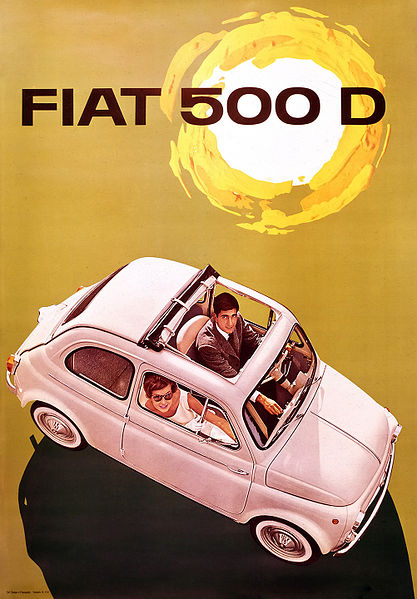
In 1957, the sun was shining on Italy again!

Dante Giacosa was given the mission of designing the Cinquecento, and what a success his design proved to be! Over a total length of only 2.5 metres, the 500 still managed to accommodate four people (at least 1950-sized ones…) and through its limited size it was immensely practical on the small cobble streets of Italian villages. Having said that, the very first Cinquecentos were actually very basic two-seater cars with a 480 cc, 2-cylinder, rear-mounted, air-cooled engine developing a massive 13 hp. Derived from the Topolino, it gave the car a top speed of 85 km/h. The two-seat configuration did however not produce the sales numbers Fiat had expected, and the initial version was replaced by a four-seated car with an updated engine and all of 15 hp(!) the same year. This new Normale version was to become the basis for various models all the way through 1975, i.e. for almost 20 years.

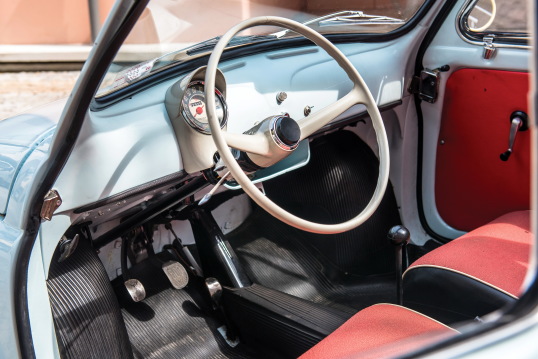
The original interior wasn’t a source of much confusion!

Among these special versions, the Sport with 21.5hp built from 1958 to 1960 should be mentioned, as should the 10 cm longer Giardiniera estate, built from 1960 to 1968. Other modifications to the 500 through the years included more power, but were otherwise mostly cosmetic and equipment-related. An important but for many, sad development was the replacement of the rear-hinged, “suicide” doors by conventional doors in 1968. Rumour has it that the replacement was frowned upon by mostly men, as the traditional doors didn’t offer the same view of women’s legs as these got in and out of the car…

An estate with the standard canvas roof and rear-hinged, “suicide” doors

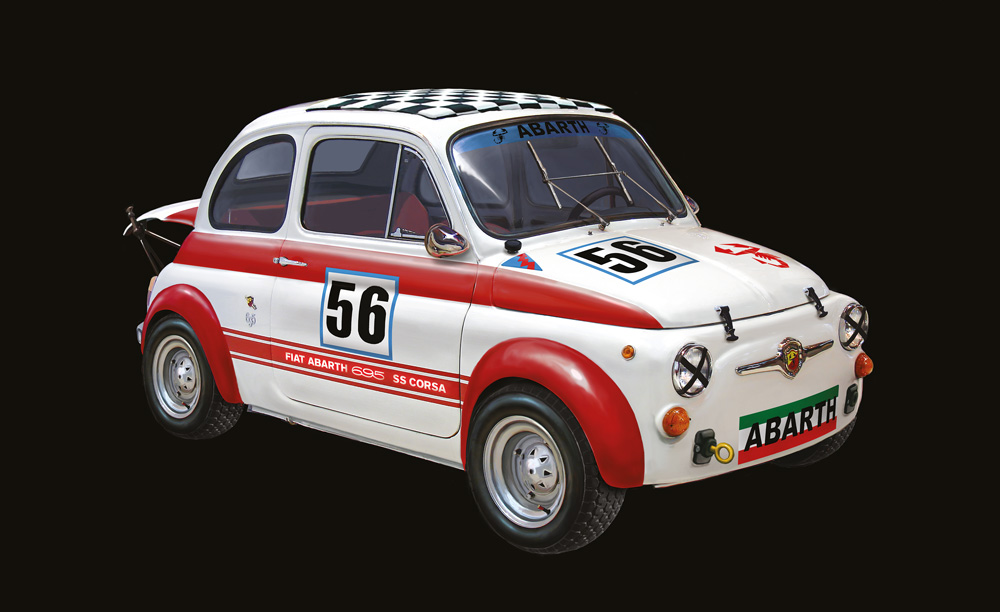
Various performance versions were designed with the 500 as basis, and the ones coming out of the (in modern language) tuning shop Abarth are the most well-known ones. This is especially true for the Abarth 695 SS, launched in 1966 and distinguishable by various stripes and Abarth logos, its flared arches and perhaps most notably, the fact that it’s best driven with the (rear) engine hood open for additional cooling. Various improvements to the engine almost doubled the power output over the standard car to 38 hp and the top speed to 140 km/h, accompanied by a sound that would make you think there’s a zero missing both in the hp number and speed! The SS was built until 1971 and very few remain today.

Chess-board roof , red stripes and open hood – signs of a true Abarth!

Seeing a 500 these days actually happen more often than seeing an Y10, and it’s definitely a sight (and sound!) that always puts a small on your face. The air-cooled tone is unmistakable, how sympathetic the car looks impresses as much as how small it is, and quite often, the shape of a somewhat larger driver in 2020 than in the 60’s looks a bit comical, with the side window rolled down as much for fresh air as for additional room. And should you be lucky enough to see an Abarth, you will know long before you actually see it as the sound precedes it!

The Cinquecento’s importance cannot be overstated as without being technologically advanced in any way, it’s the car that put Italy on wheels, that I bet our Italian readers have driven or been riding in many times, and that actually was a success in many other European countries, with versions built also by other manufacturers, notably Puch in Austria. When it was replaced by the 126 in 1975, that also meant a more conventional car age would start. Rear-mounted engines had notably been popular in the late 1950’s but now increasingly moved up front.

“No thanks, we’ll take the boat instead…”

A new mini car in the age of Covid would most probably never attain the legendary status of the original 500, but the 500 should definitely be a source of inspiration. My son is very much of the same opinion and when he gets his driving license next year, he has the idea of finding a cheap 500 and converting it to electrical drive. Maybe he’s on to something, but I would still go for the original, air-cooled version, notably for the sound. Both him and I should hurry up though, as values for 500’s are on the rise. Today you can expect to pay at least EUR 15.000 for a nice example, with early models with rear-hinged doors and of course Abarth cars being sold for as much as EUR 45-50.000. That’s indeed a lot but then again, there is no better proof that there is indeed a good substitute for cubic inches!

I hope you like this blog – please help us keep it interesting by subscribing!

Classic cars as investments

In the last ten years, interest rates in the developed world have been close to nil across the board, and you need to look no further for an explanation to why various kinds of real assets have seen steep increases in price. Cars are definitely part of that group, although it’s unfortunately not the family Volvo that has become a good investment, but rather classic cars and selected sports cars.

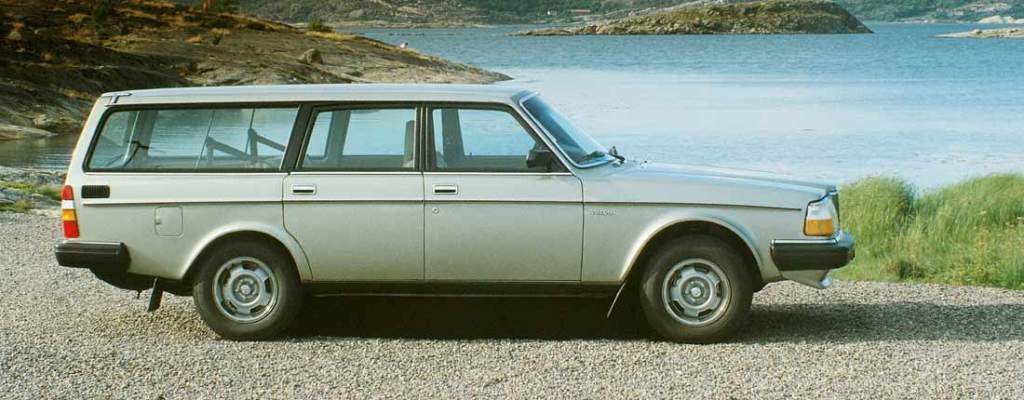
Irrespective of the statement above, the Volvo 240 has actually started to appreciate in value…

If you read this blog, chances are you also read other car blogs or follow some car Youtube channels (perhaps even one or several on my favourite list that you can see here). You don’t need to look far to find someone that describes a classic car such as the Jaguar XJ-S that I wrote about last week (see here) as “a good investment” or something that will “most definitely increase in value”. Personally my stomach turns at such unsubstantiated, general statements, but let’s look into whether there’s any truth to them.

In 2015 we launched the new sub-section “The Thrill of Owning” on this blog. We did so seeing the price evolution many enthusiast cars were starting to take, and I wrote about some cars I believed (without guarantee!) would increase in value over the coming years, adding an economic upside to the ownership experience. The first 5 cars I picked were the Lancia Delta Evo, the Honda NSX, the BMW Z4M, the Porsche 996 and the Ferrari 550. Looking back now five years later, it’s clear that had you bought an NSX, a Delta or a 550 in 2015 that you would sell today, you would get substantially more than you initially paid – the first two have basically doubled in price. For the Z4 and the 996, the evolution has been less steep but still in the right direction. Buying and selling is one thing though. Owning is another that should not be forgotten.

An Evo has basically doubled in value in five years, but is far from cheap to own.

Since close to ten years I’m the owner of a Triumph TR4 from 1965, a car that has brought me great joy and that I’ve been extremely lucky with. It hasn’t left me standing a single time and has generally been close to as problem free as a classic car can be. Nevertheless, and even if I haven’t driven thousands of kilometres per year, it still needs regular servicing and old parts will wear out and need replacing. Also, not to forget on a classic car is that the engine will typically need more adjustments than a modern one. In ten years I have thus had it thoroughly serviced and revised three times, redone the breaks once, and replaced more regular wear and tear parts such as the battery, tires etc. in between. A rough estimate is that the car has cost me around EUR 12-13.000 in servicing and parts costs over my years of ownership. To that should be added tax, registration, garage etc., but given how different those costs are depending on your circumstances and country, we’ll leave them aside for this exercise. You shouldn’t though, when you budget your ownership!

My TR4 is living proof that not all English cars fall to pieces!

Had I instead bought that Delta Evo in 2015 my costs would most probably not have been lower, as the Deltas are known as cars needing lots of love an attention. That said, the economic upside would definitely have been higher. On a higher level for the 550 as well, at least with the right car. The bullet-proof NSX may have been cheaper to own, had I been lucky. But again, all this will depend on the particular car you buy, its history, condition – and luck. This is why a statement such as something “definitely increasing in value” is quite simply not true. Firstly, it’s very difficult to say which models will increase in value (although if you know your stuff, I agree you can have a pretty good idea). Secondly, it’s all about the condition of the individual car.

Has my Triumph been a good investment? Price-wise it’s worth around CHF 10.000 (30%) more today than I bought it for, thus covering a fair part of my running costs. In my particular case living in Switzerland where owning and running an oldtimer is cheap, I’ve nevertheless had to rent a garage for the ten years I’ve had it and I’ve certainly not covered the costs for that. It should also be noted that a TR4 is quite a basic oldtimer, with an extremely robust, 4-cylinder engine. Friends of mine who own E-Types, Aston Martin V8’s and other, more advanced cars, will give you a number considerably higher than mine, even though most of them are more capable in a garage than I am and thus do a lot themselves.

The original V8 Vantage – a beauty when it works, a nightmare when it doesn’t…

That’s the economic side of it. On the emotional side, there is no doubt that it’s been a good investment and has brought me much joy and great memories. And that is really the point of all this. Don’t buy a classic car purely as an investment, but also as something to love, drive and enjoy! There will never be any guarantee that an XJS or any other car will be worth more 5 years from now and if you buy the wrong car, you will most certainly not make any money. Arguably it will also reduce the pleasure of ownership, but if this is the car you’ve been dreaming of since you were young, believe me, you will forgive a lot!

Unlike a painting, a car is made for driving. Be thorough in your checks, but also buy with your heart in the sense of loving what you buy, enjoying it, and not to be forgotten, knowing that you will be able to use whatever your dream car is on a regular basis. Good luck!
I hope you like this blog – please help us keep it interesting by subscribing!

The irresistible big cat!

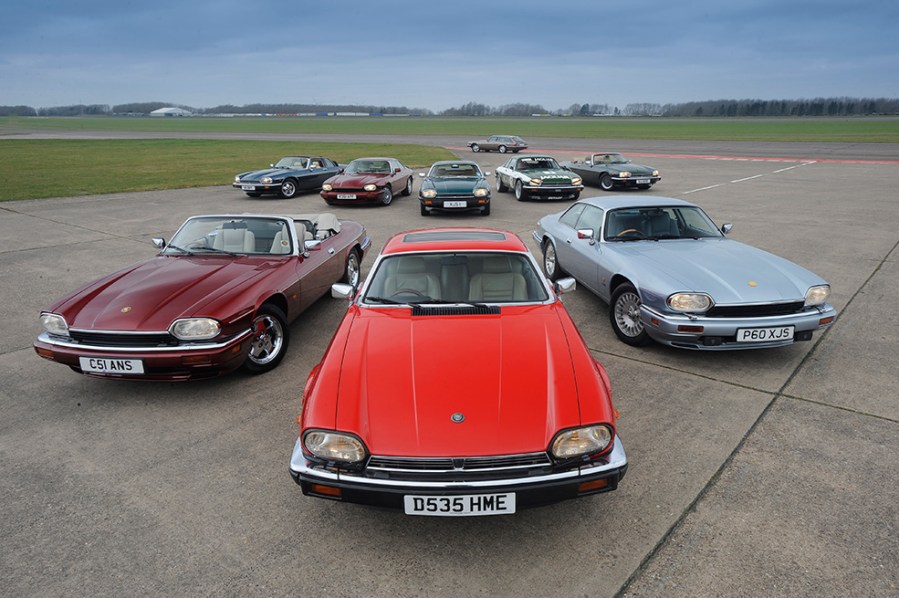
If last week was all about Italianità in all its simplicity with the lovely Alfa Romeo Spider (if you missed the post you can find it here), this week we’ll turn things around a bit and talk about an undisputed future classic, but also a car that complicates things quite a bit in comparison, and replaces pasta al dente under the Tuscan sun with rainy skies, tweet jackets and lush, green country roads: The Jaguar XJ-S (or as it was written in the last years of production, the XJS).

Long time readers of this blog may remember that I wrote a piece about the XJS back in 2016 (read it here), however that was more around its mechanical 12-cylinder engine than the car itself. Given that and also that quite interestingly, and in stark contrast to many other future classics, not much has happened on the price front in the last four years, I felt a fuller description of this true icon of English car manufacturing was called for. Still to this day, the XJS remains something of a bargain – at least in purchase price. That will most probably change in the future.

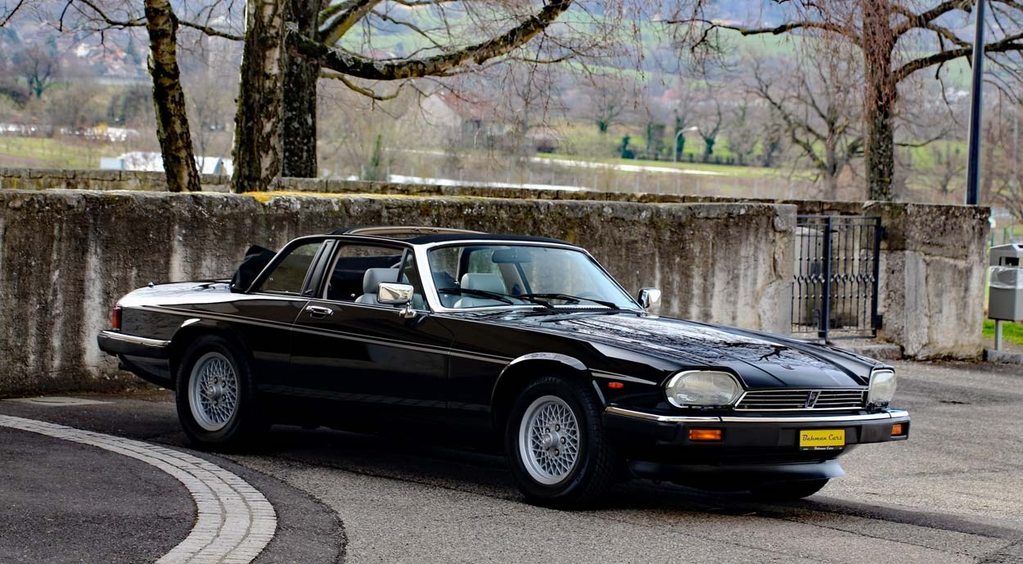
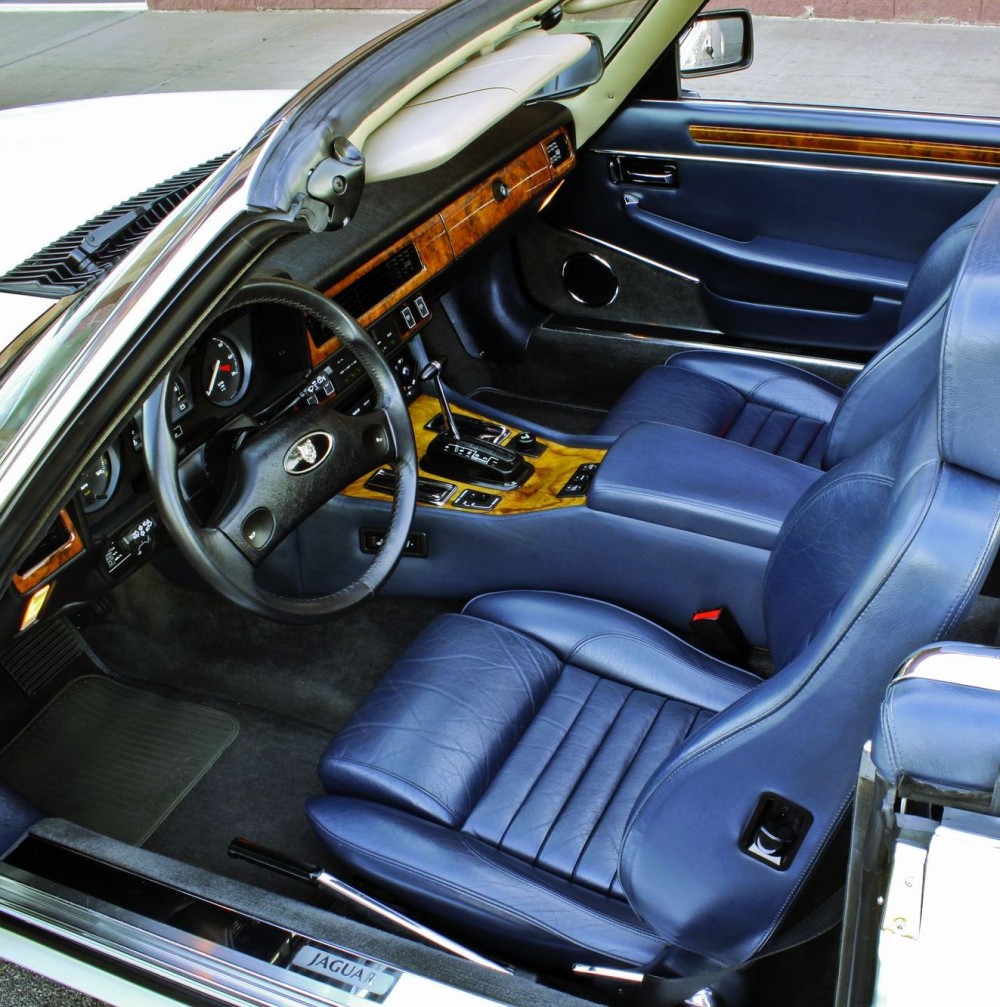
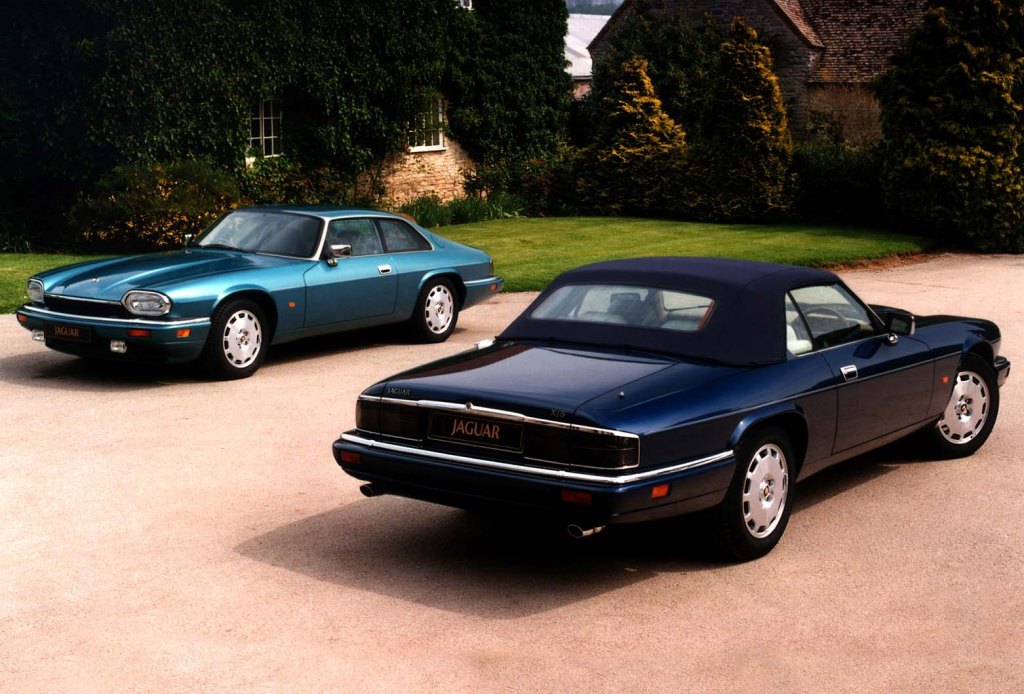
The XJS was launched in 1975 and produced all the way through 1996, in three distinct series. For a combination of factors, it was far from a resounding success at launch. Firstly, although recognized as rather good-looking, it did succeed the E-Type, one of the greatest designs of all time, which wasn’t to its favor. Secondly it was also a bit misunderstood, as Jaguar never intended the XJS to be a replacement of the E-Type. Instead they were aiming to produce a GT car, comparable to the later Mercedes CL or similar. In that they succeeded, but it took a while for the market to recognize it. Thirdly Jaguar ran into stupid difficulties in some markets such as Germany, where the buttresses behind the windows were deemed to restrict the rear view, and German authorities refused to grant the XJ-S type approval, meaning individual owners had to obtain individual road approvals for their cars – not something that boosted sales numbers… Finally, although there were other 12-cylinder cars in the market at the time, the XJS launched in the wake of the oil crisis and as you will suspect, fuel consumption has never been its strong point…

The rear buttresses (the triangular shapes on the sides of the boot) caused major issues for German clients

So after a difficult launch, the first series was built between 1975-1981 in around 15.000 units and was only available with the 5.3 litre, V12 engine. In the first year the manual gearbox from the E-Type was actually available as an alternative, but that was soon scrapped for the 3-speed, automatic box. The engine developed around 270 hp and made the XJ-S comparable to other V12 cars from Ferrari and Lamborghini at the time.

The second series ran for 10 years until 1991, and now a number of things happened. Next to the coupe, in 1983 a targa convertible was introduced, based on speculation at the time that the US would ban full convertibles for fear of roll-over accidents. That luckily never happened, and Jaguar subsequently replaced the targa with a full convertible in 1988, which contrary to the former became a great success. That of course makes the targa a rare and quite interesting find today, since no more than 5.000 cars were produced in total.

A targa convertible currently for sale in Switzerland

In 1983, the 12-cylinder was also complemented with a 3.6 litre straight six engine that was only available with a manual transmission until 1987. It produced around 230 hp as compared to the 265 hp of the V12, obviously with considerably less torque but also less fuel consumption. Importantly, in 1987 the much outdated, 3-speed automatic was replaced by a more modern, 4-speed ZF one.

By the time of the third series that started in 1991 and ran until the end of production in 1996, Jaguar had been taken over by Ford and was part of Ford’s so-called Premier Auto Group. A number of changes were done to the XJS, both in terms of design (front and rear bumbers and lights, slight changes to the windows and famous buttresses etc.) and engines. The 5.3 litre V12 was increased to 6 litres and around 300 hp, and the straight six was replaced by a 4 litre version.

Irrespective of engine choice, the beautiful interior remains the same

Irrespective of age, there are few cars that have the same level of road presence as an XJS in a very British, understated way, very far from the screaming lines of a Lamborghini. By today’s standard it’s also a much smaller-looking car than it was initially, and its smooth lines obviously only add to the attraction. Driving it is a very similar experience. The 300 hp of the final V12 version that I’ve had the pleasure of trying are enough to make the cat roar should it have to, and steering and body roll are actually much better controlled than could be expected. Where the XJS excels still to this day is however in the smooth gliding department. It’s a comfortable cruiser, very quiet even by modern standards, and with a giant booth that will easily accommodate luggage for two. That’s also to say that the rear seats in the coupe and some convertible versions (the other ones being strict two-seaters) are not meant for humans with legs.

Whether to opt for the most common, 5.3 litre V12 version or rather one of the straight sixes is obviously a decision that can have quite wide-ranging, economic implications. There is no doubt that the V12 is the engine that suits the car best, but you could also argue that the straight six has enough power and is obviously much cheaper to own. Whichever engine you go for, a complete service history is critical – do not take any chances here! The 6-litre V12 from the Ford era has a better reputation for reliability than the previous 5-3 litre version, although both engines are actually quite solid if serviced correctly.

The convertible is generally not more expensive than the coupe

Coming back to the price mentioned initially, a good XJS can still be had for EUR 15.000-20.000, with top cars rarely going beyond EUR 30.000. That’s probably the cheapest V12 you can buy and gives the car a clear upward potential price-wise. As I will come back to in next week’s post however, one reason for the low prices is as so often the far higher running costs, where the V12 is a prime example. But as long as you’re aware of that and find the right car, there are very few cars that provide a similar experience. I would recommend a post-1987 car such as to benefit from the 4-speed automatic box, and if you like the styling of the third series and want a V12, then preferably a post-1991 car. The (full) convertible is the ultimate glider, but the lines come through better in the coupe. It’s really a matter of choice as the convertibles are not more expensive than the coupes. Finally, the targa convertible is the hardest to find but should be most interesting from a value preservation perspective, even though it’s also the most expensive model today.

Find the right car, put on your tweet jacket, make sure there’s fuel in the tank and double-check whether you did start the engine, given how silent it is – silent enough for your passenger to hear you whistling “Rule Britannia” as you set out on your roadtrip!

Italianità at its best!

We spent a wonderful week in northern Italy in late July, something I warmly recommend to anyone having some unplanned vacation time left this year. Enjoying the beauty of cities like Venice, Bologna and Florence without the crowds is a fantastic experience, and as long as we return to some kind of normality before hotels and restaurants go bust, my impression is also that the local population in a tourist hot spot like Venice enjoy the “break”. So go if you can and enjoy the quality of life and the beauty of the country, you won’t regret it!

If you do so, what you shouldn’t expect is however coming back with lots of pictures of old Fiat 500’s or some vintage models from nearby Maranello or Sant’Agata. At least in northern Italy the automotive scene has moved on and become as bor… dominated by the large, mostly German brands (preferably in grey or black) as in other countries. For us, it took until the last day with only a few kilometres left to the Swiss border until we spotted a beautiful example of a true legend of Italian car manufacturing, and with a total production time of 28 years, likewise the modern car with the longest production I can think of: the Alfa Romeo Spider.

A Spider Series 1 from 1966, the first year of production.

The Spider saw the light in 1966 as a two-seated roadster with rear-wheel drive. Launched at the Geneva Motor Show the same year, it was a direct successor to the Giulia Spider and was in its first version produced until 1969 with a 109 hp, 1.6 litre, twin cam four-cylinder engine. From the beginning the car was equipped with a five-speed gearbox and disc brakes on all four wheels, something that was far from being the case on all cars at the time, even more expensive ones. Speaking of price, a new Spider was at the time around the same as a Jaguar E-Type, something that is definitely no longer the case!

Only the first series enjoyed the beautiful, rounded rear

In 1968 a slightly larger, 1750cc engine replaced the 1.6 litre in the version called the 1750 Spider Veloce, and a smaller, 1300 cc engine developing 88 hp was introduced in the Spider 1300 Junior. The smaller engine was replaced by a larger, 1600 cc four-pot in 1977, while the 1750 engine was increased to 2 litres in 1971. Whilst being further improved through the years with its power increasing to 128 hp at most, the two engines would equip the Spider until the end of production in 1993.

The Series 2 from the 70’s, the shape that basically stayed the same until 1993.

In spite of continued refinements through the years, you could still argue that the main differences between the four series are mostly cosmetic. From the lean lines of the first two series, over the spoiler-and-skirts third series of the 80’s to the surprisingly clean-looking, last series, the Spider evolved with time and managed to keep a classic look, never getting too old. To me, the first and last series are the best looking ones.

The fourth series, produced between 1990-1993..

The Spider was a light car, but even with a kerb weight of at most 1100 kg in the fourth series, it’s clear that 128 hp doesn’t make it a race car. Then again, that was never the intention. The Spider is a cruiser from the mechanical car age, with no driving aids but with lots of road presence. The first thing everyone will notice next to the large, wooden steering wheel that equips most cars, is the gear lever that is basically mounted on the dashboard in an angle that you do however get used to pretty quickly. The chassis does not excel in rigidity to put it mildly, meaning a squeak here and there will always mix with the nice sound from the four-pot. Taken together, you will never wish for more power but rather quickly settle in to the cruising-type of drive the Spider was built for, and excels at!

The only car with the gear lever on the dashboard!

When production ended in 1993, a total of 124.000 Spiders had been produced, of which a fair number have survived until today. Prices have started to move upwards, especially for the first series where nice cars now cost from EUR 40.000. My guess is that especially the later series that today can still be had for EUR 20.000 or even less for nice examples, still have further to go. Also, unlike something like the E-Type, a Spider with its uncomplicated mechanics is cheap to maintain, making it something of an ideal classic for country roads in Tuscany or elsewhere, but wherever you are, always with enough Italianità!

When AMG means business

AMG. One of the most famous abbreviations in motorsport, and obviously to Mercedes what the M cars are to BMW. The three letters stand for the first letters in the two founders’ names, Aufrecht & Melcher, with the addition of the G for Großaspach, the German town where Mr. Aufrecht was born and where AMG was founded in 1967 as a tuner of Mercedes cars.

The firm moved to Affalterbach in the 70’s and following an increasingly close collaboration with Mercedes-Benz over the years, Mercedes became AMG’s majority shareholder in 1999. No doubt the addition of AMG has greatly helped improve Mercedes’s image, but that has however come at a price, namely an inflation not far from Venezuela’s in terms of how AMG badges are applied to all product lines and most cars in the Mercedes line-up. For obvious reasons that’s not to everyone’s taste. Fortunately though, there is a very good remedy, one that will celebrate its 15-year anniversary next year: the AMG Black Series cars.

It was the newly created performance studio of AMG that in 2006 set out to start producing very limited numbers of more focused versions of some cars in the existing Mercedes line-up, under the name Black Series. The cars were thoroughly re-worked, including performance increases but also chassis changes and improvements to suspension systems (typically adjustable) and brakes. Weight reduction was also high on the list, notably by an extensive use of carbon fibre. What wasn’t reduced was the price, as Black Series cars were typically at least 40% more expensive than regular AMG models. 5 different Black Series models have been built so far that I’ve summarized below.

SLK AMG 55 Black Series

Launched in 2006, the SLK started the Black Series range and early on made clear that a Black Series is not a convertible, as it was changed to having a fixed (carbon) roof. Power was up 40 hp to 400 hp, weight was reduced around 50 kg to around 1500 kg, suspension was stiffened, the chassis was widened and brakes were re-enforced. Around 120 SLK 55 Black Series were built all in all, the smallest production number of all Black Series cars so far.

CLK 63 AMG Black Series

The CLK followed a year later and became the first car to use the well-known 6.2 litre V8 engine that has equipped three of the five models so far, here developing 500 hp. The track was much wider than on the standard car, meaning both the body and tires increased as well. No doubt the Black Series took some inspiration from the DTM version of the CLK at the time. 700 CLK Black Series were built until 2008.

SL 65 AMG Black Series

The monstrous SL 65 Black Series followed in 2008 and was actually built by the independent race engineering firm HWA Engineering in collaboration with AMG. The SL 65 has an extravagant design were basically only the doors were retained from the original car. Like the SLK, it also got a fixed roof. It’s also the only car in the Black Series line-up to use the 6-litre V12, here developing 670 hp. 350 cars were built all in all.

C63 AMG Coupé Black Series

Less spectacular but arguably more efficient was the C63 Coupé launched in 2011. The 6.2 litre V8 was back, now developing 507 hp, the track was widened, the suspension was reworked, and if the changes weren’t enough, further track packages could be added on top. 800 C 63 Black Series were built in total, the most of any Black Series so far.

SLS AMG Black Series

Finally the SLS AMG Black Series was launched in 2013. The 6.2 litre V8 now delivered 631 hp and weight was down by around 70 kg compared to the standard version, mostly through extensive usage of carbon fibre. Only 350 of the SLS Black Series were built and although it’s not easy to add to the drama of the standard SLS, the Black Series does a good job of trying!

Black Series cars are no weekend cruisers but rather the most track-focused cars in the AMG line-up. The earlier cars were a bit hampered by having to resort to the standard AMG automatic transmission with no manual version available. The double-clutch box introduced on the SLS in 2013 solves the issue, but I can’t help thinking that a stick shift would have been a nice alternative on the early cars.

A Black Series car would be an alternative to the more hard core versions of other Porsches, Ferraris or Lambos. Thanks to the very limited production numbers they hold their value well, and in some cases such as the SLS, prices have risen quite steeply since new. The SLK 55, CLK 63 and C 63 are the cheaper cars, with the SLK 55 starting at just under EUR 100.000 and the CLK and C 63 between EUR 100.000 and EUR 150.000. The SL 65 starts at around EUR 250.000 with the SLS coming in between EUR 500.000 – EUR 700.000.

There is a lot of activity at the AMG performance studio right now, as it’s become official that the AMG GT Coupé will be the next and sixth Black Series model. The car has just been presented and Shmee, one of the Youtubers I follow (as mentioned in my post a few weeks ago that you can read here), just did a very detailed walk through of the new car, so I’ll let him do the honours – enjoy!

13 Fords for 1 Tesla

So it’s time to talk about Tesla. Again. I did so addressing its shaky finances in 2019, and I wrote about a first glance of the Model 3 in Q4 2018. As in 2019, the reason this time is mainly financial. This is obviously a car blog, not a financial one, but then again, under all the bells and whistles, Tesla is a car company. And in that sense, when its stock price values it at $300bn or 13 times Ford as it did earlier in July at a stock price of around $1750 per share, you should notice (it’s come back to $1417 at the time of writing, so we’re probably down to something like 11-12 times Ford now). The first reflex is of course to think something major has happened, but that’s not the case. Tesla’s more than tripled stock price since it dip under $400 earlier this year could be called the definition of momentum for future financial text books. Congratulations to all that were part of the ride. I wasn’t.

I’ll happily spare you all the explanations of why the stock has rallied and in any case, the stock price is a poor reflection of a company’s quality. You could probably argue that it’s especially poor in the case of Tesla. Not that things haven’t improved for the California-based car maker. They just turned in their fourth quarterly profit in a row, including $104m in the very lacklustre second quarter 2020. That said, on one hand profits are rather modest and on the other they’re always a bit clouded, including various subsidies and tax breaks. But the trend looks positive, better than in the poor scale of the diagram below.

Courtesy of theverge.com

Tesla is also delivering more cars. Elon Musk has set his target at 500.000 cars in 2020 which doesn’t seem fully unrealistic as Tesla has delivered more than 100.000 cars per quarter in the last quarters. It’s not all rosy though, as the Model 3 now makes up over 80% of all deliveries. Total deliveries of Models S and X have fallen from 28.000 in Q4 -17 to 12.000 in Q1 -20, i.e. less than 10% of all deliveries. This basically means that going forward (and until the cyber truck, that however looks to be a few years away), Tesla profits are riding on the Model 3 and the new Model Y.

There are however problems as well. Quite a lot of them. One is the EV market in total which both in Europe and the US is growing but is still very small. In Europe’s leading car market Germany, EV’s now make up around 3.7% of new car sales. In the US where EV’s is basically synonymous with Tesla, the share is below 3% in all states but California and Washington DC. In most of them, it’s below 1%.

Source: https://evadoption.com/

Another problem for Tesla is that the big car brands have woken up and as the EV market grows, competition will only intensify. Were the big guys late to the game, as is so often claimed? Not sure if you look at the above stats of the total EV market. They’re anyway here now and you can already see the effects in Germany where Tesla’s trend is negative since a while back. 4367 Model 3’s were sold in the first six months of 2020, but VW and Renault sold more than 7.000 each of the E-Golf and the Zoe, and the Model 3 will probably also be overtaken by the VW E-Up and the Audi E-tron still this year. An E-Golf or a Zoe are not comparable to the Model 3, but neither is an E-tron – in the other direction. The EV mass market will no doubt be in Zoe land, but the premium market will increasingly move from Tesla towards Audi, Mercedes and other large brands. This is not a big surprise. Tesla was never a premium product in quality – only in pricing.

The Model Y – the latest interpretation of basically the same concept.

This brings us back to the stock price, because of course, Tesla doesn’t need to dominate the world. It’s already turning a small profit on the current production of around 400.000 cars per year, and if it can increase that by a few ‘000s, it would look pretty good. That would however also be necessary for coming necessary capital expenditure. In any case, it’s not enough to put a value on the company at 13 times Ford, who by the way sold 1.13 million cars worldwide in Q1 -20, a 20% drop on the previous quarter.

I have no clue where Tesla’s stock price is going next, but personally I stay away from emotionally driven companies, and this is a prime one in that regard. It may be useful to remember that in the dot.com boom and bust 20 years ago, a young online retailer called Amazon lost 94% of its share value before it turned things around and moved to dominate the world. That’s not something Tesla will ever repeat, but irrespective of the stock price, I wish Tesla all the best and think it’s amazing what they’ve managed to achieve. My guess is however that when we look back at this in five years, if Tesla is still around, it will be selling almost all its cars in the US where the EV market share will still be in single-digit territory.

Two great visionaries, but at least with Tesla, Elon won’t overtake Jeff.

The Goddess in the 1950’s

It’s vacation time! But this year being like no other, for many of us it has made changing plans or holiday habits. Most won’t fly far, we cannot visit certain countries and generally, many feel an unease for the hole concept of travelling. In our case it will mean spending our well-deserved weeks close to home, or rather within driving distance. A bit like it was back when our parents were young in the 50’s and 60’s. So this week, whether you’re at home or not, let’s take a trip down memory lane back in time, more precisely to France in 1955. Because there and then, “la révolution” was about to hit the car world!

First though, let’s picture what Europe was like in 1955. The war was over since 10 years and the worst memories had faded somewhat. The economy was strong as Europe was rebuilding – in fact we were already 10 years into the 30-year expansion period that lasted until the mid-70’s and in France was referred to as the “30 glorieuses”, the 30 glorious years. There were plenty of jobs, things were looking up – maybe peace would last this time and Europe had a bright future?

Paris in 1955 – color returning to a city still showing the scars of war.

With a bit more money in their pockets, people started going on holidays. In France, the first motorway construction projects had just started, but “la route des vacances”, the holiday road, was still the Nationale 7 that ran for almost 1000 kms from Paris to Menton on the Côte d’Azur, just next to the Italian border. This is the road most holiday makers took in cars that were a mix of pre-war models and some early 50’s models. Many were French, and many were Citroëns, at the time the second largest French brand behind Renault but just ahead of Peugeot, with Simca in fourth place. Citroëns at the time were mostly the famous 2CV and the Traction Avant. But in 1955, Citroën introduced the car that would leave a mark for many decades to come – the DS.

A “Déesse” from 1957 – like nothing seen before!

Citroën at the time were not only innovative when it came to building cars but also in naming them. Pronouncing DS in French can be transcribed as “Déesse”, meaning Goddess. The DS would have many nicknames through the years, but notably in Germany it was most known as the German translation of the word – “Göttin”.

When the Salon de l’Auto opened its doors in October 1955 the car got more attention than anyone could have hoped for, and by the time it closed its doors, Citroën had taken 12.000 orders for the new car, almost equivalent to half the brand’s total annual production at the time! This was obviously a great success and the start of the DS story, that was to last no less than 20 years with more than 1.3 million cars sold in total. What was it then that was so exciting about this car, and that gave it such a long life?

Let’s start with the design. In 1955 cars didn’t look like the DS. If you don’t believe me, have a look at the above selection, all cars from the same era. In comparison, the DS was modern, daring and futuristic. The front axle was 20mm wider than the rear, giving the car a droplet form. The roof-mounted, rear turn lights looked like small turbine engines. The sloaping front was a clear break with other cars at the time. And when other cars still had flat windscreens, the DS’s was arched in a way that was hugely complicated to produce. Given the the car also offered generous interior space (for the time), it quickly became General de Gaulle’s official presidential car.

A design study of the original DS

There was also the technology and innovations that were at a level to make a 1950’s Elon Musk blush. From the start the car offered hydraulic, assisted steering (a first on mass-produced cars) and hydraulic front disc brakes. The steering wheel, originally a model from 1904, was constructed such as not to pierce the driver’s torso in case of accident. The wheels had a single, central bolt until 1966. During the car’s life a number of other technological features were added, most notably the turning headlights in 1967, that turned in the same direction as the steering wheel. Other car brands needed more than 30 years to come up with a similar solution!

Then again, this was a French car, meaning all ideas weren’t necessarily logical to the non-French. Putting the spare wheel under the front hood in front of the radiator was smart, the fact that you needed to remove the rear side body part to change a back wheel less so. And in spite of thousands of tests having been performed, it took Citroën a few years to find the right liquid to circulate through what the car has become most famous for – its hydraulic system and hydraulic suspension.

A DS suspension sphere, at the core of a suspension system that was revolutionary.

Citroën had actually launched its hydraulic suspension system already in 1952 on the Traction Avant, but it wouldn’t become famous until the DS. To provide a simplified explanation, where a normal car has springs and dampers, a DS has spheres filled with gas in one half and hydraulic fluid in the other. Given gas compresses but fluid doesn’t, gas takes the role of a spring and the fluid of a damper. The system was often accused of being complicated and a nightmare for later owners, but provided it doesn’t leak and is being regularly maintained, it basically relies on the laws of physics who work as well today as in 1955.

The hydraulic suspension gave the car a ride quality that was sensational for the time, and still today is a fascinating experience. A DS literally floats over the road, so much so that some people feel seasick when riding in one. Further advantages with the system are notably that you can raise and lower the car, and Citroen’s innovative marketing people were also happy to show how the car could ride on three wheels in case… you had forgotten the fourth one. In 1962 a very capable driver actually managed to save President de Gaulle’s life, escaping from an attack on him at high speed down a bad road – with two flat tyres. Perhaps even more suprising to most is that the DS during 15 years proved a very capable rally car, winning a number of classical rally races such as Monte-Carlo, Marocco and the Thousand Lakes up in Finland.

Should you not have four wheels, three will do the trick!
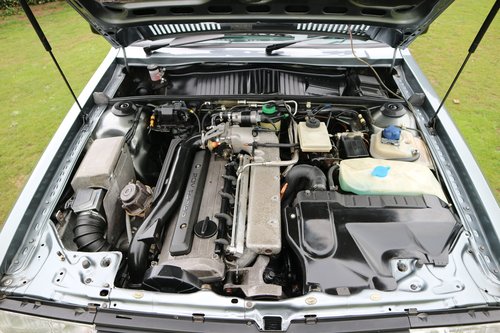
The DS was built at a high technological level for the time, and a couple of years after it had been introduced, the mechanically far simpler and thereby cheaper ID model was produced in parallel. ID cars had vinyl roofs, a different dashboard, less equipment but above all, a simpler hydraulic system, not including for example the hydraulic steering. They did however retain the same suspension system.

A DS provides a peaceful, floating driving experience. Power evolved through the years from initially 75 hp with the old Traction Avant engine during the first years, to 130 hp for the later years, adequate but not more. The steering is a strange experience with no natural feel whatsoever and requiring very little effort. Much has also been said about the breaking as the DS doesn’t have a conventional brake pedal but rather a sort of mushroom-like rubber button sitting on the floor. Every person driving a DS for the first time will apply too much breaking pressure as you really only need to touch the mushroom lightly for the car to stop.

The black round thing on the floor is the break “mushroom”. The non-intrusive steering wheel was originally designed in 1904.

In the 1970’s the DS started to age and even more importantly, the way it was built was no longer at a modern standard. Citroën was losing money on every car and had run into great financial difficulties in the early 70’s, so that Peugeot had stepped in as owner. This meant the end of the DS that was to be replaced by the no-less futuristic CX – but that’s a different story.

Should you wish to have a bit of French history in your garage you would have been able to pick up a nice DS for EUR 10-15.000 no longer than 10 years ago. Today you won’t find a good one below EUR 30.000, with no real difference between model years or even the ID/DS models as the condition is far more important. Should you want to go for the beautiful convertible model, of which only some 1300 were built by Henri Chapron, it will set you back quite a bit more, currently around EUR 200.000. Whatever you choose, why not take it for a ride this summer? Maybe even to France? Parts of the Nationale 7 are still there and I’m sure the sun will be shining as you gently float towards the south!

The forgotten ones

In the last weeks I’ve published posts about Porsches, Aston Martins and Alpines. All fantastic cars, but also cars that you – more or less frequently – see on the streets. There is nothing wrong with that, and you could argue that a car that is never seen is probably not worth seeing. Yet, precisely that is the point for some of us. Having a car that is unique. That makes people point fingers, ask what it is, even give a thumbs up (when did that happen to a 911 driver the last time?). And contrary to what you may think, there are indeed cars that for various reasons never reached high production numbers but are still very much worth considering!
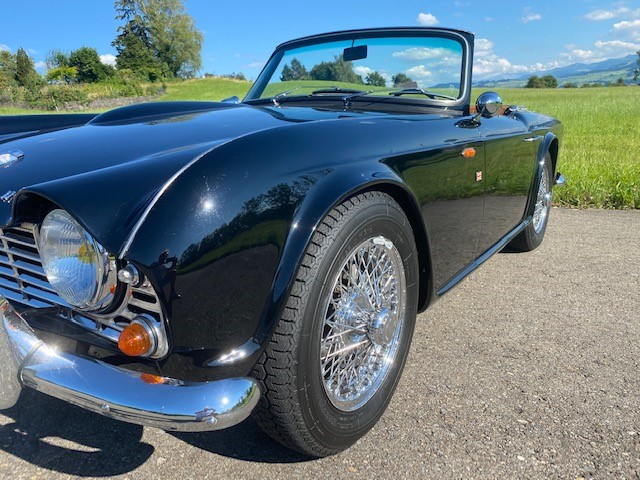
If you’re part of the club of those loving the unknown, here are three great but rare sports cars that definitely deserve a place in the dream garage, and perhaps even the real garage one day. We’ll go from my own assessment of most known to least known and at the end, some general thoughts on small scale productions and their often visionary founders.

Wiesmann

The story of the German manufacturer of BMW-powered roadsters and coupés starts in 1988 when brothers Martin and Friedrich (forming the MF in the model names) went from producing hardtops to cars. They had a vision of building a beautiful and luxurious but mechanically rather traditional roadster, and so they did. The Wiesmann design is timeless and features a (very!) leather-rich, beautifully crafted interior. Attention was also given to keeping the weight low, with Wiesmanns weighing in at between 1100-1300 kg. Last but not least, getting access to BMW engines meant that the cars were equipped with some of the best 6, 8 and 10-cylinder engines in the world!

The first Wiesmann to see the light of day was the MF3, powered by the brilliant 343 hp strong, straight-six from the BMW M3 (E46). The design later models remained more or less the same and it’s difficult to say anything negative about it!

Note all instruments being centered.

The MF4 coupé presented in 2003 was Wiesmann’s first coupé, now powered by BMW V8’s. The MF4 roadster followed in 2009 before the last model MF5 saw the light, also available as coupé and roadster. The MF5 featured the BMW 10-cylinder from the late 00’s M5 and M6, developing first 507hp and later in the twin-turbo version 555hp. The MF5 was sold in parallel to the MF4.

My only experience with Wiesmann goes back a few years when I was passenger in an MF3. It was a true, hardcore roadster experience with a brilliant engine roar, but also lots of other mechanical sounds. There were no squeaks or rattles though, even though the car was a few years old, and the owner also said he had practically had no issues at all with the car that he had owned since new.

Wiesmann increasingly ran into financial difficulties in the 10’s and went bankrupt in 2014 after a failed rescue attempt. About 1600 cars had been produced when the lights went out, and finding one today is actually easier than you could expect. At the time of writing there are about 80 cars available in Germany, by far the largest market. Prices depend on version and engine but are generally between EUR 120.000-EUR 250.000, meaning quite close to their price as new. With a weight of 1100-1200 kg, my choice would be the MF3 with the 343hp six-cylinder from the E46. Power is plentiful, the engine is lighter and you’ll be towards the lower end of the price range.

Artega

Usually, car brands are born out of more or less eccentric engineers or designers with rather empty pockets, who manage to convince someone with somewhat deeper pockets to finance the initial stage. Not so Artega which was born as a project of the very established German car supply firm paragon AG, at the time an established supplier of auto electronics to all major German car brands. Feeling he knew a thing or two about the car industry in which he had worked for 25 years, and that he could do things better, paragon CEO Klaus D Frers set out on the project that was to become Artega GT, a light, mid-engined sports car built on Volkswagen technology, initially intended only as a showcase for the company but later making it into production.

The Artega was designed by Henrik Fisker, known from beauties such as the BMW Z8, the Aston Martin DB9 an obviously his own Fisker Karma. The whole development process was advised by a number of German car gurus and car professors, the likes of whom you only find in the land of free speed. The car was finally presented at the Geneva Car Salon in 2007 and received wide praise from the motoring press, being referred to by some as “the Porsche killer”. An innovative construction with an aluminium space frame and other light-weight materials helped keeping the weight down to 1285 kg, an easy match for the 300 hp VW V6 engine and the DSG gearbox.

Inspired by the DB9 and a car from which the Alfa 4C seems to have got some inspiration!

Various tests of the Artega speak of a very accomplished sports car that was for example still quicker around Hockenheim than a Porsche Cayman in 2013, four years after its market introduction. it is however a small (4m long) and low (1.12 m high) car, so large drivers may have problems finding a good position. Obviously also, the selling point of being a technology showcase ten years ago feels a bit different a decade later.

Neither the position, nor the angle of the satnav screen are ideal…

153 Artegas were produced between 2009 and 2012 when the company went bankrupt. Reasons are a bit unclear but if you are to believe CEO Frers, the Mexican financiers he had manged to pull in didn’t understand the car business, an almost-made deal with a Chinese group never came through, and there were disagreements within the company where some wanted to make Artega a European Tesla and switch to electrical power.

Given the low production number, it’s surprising how relatively easy it is to find one that will be yours for around EUR 50.000-70.000 – not bad for a very capable sports car relying on both the knowledge of VW and a leading automotive supplier, and that you are guaranteed never to see in the supermarket parking lot!

MVS Venturi

The Venturi story starts in 1983 when engineer Claude Poiraud and designer Gérard Godfroy come up with the somewhat crazy idea of launching their own sports car brand. Having found some money, they manage to present a full-scale, mid-engined mock-up at the car salon in Paris in 1984. In the following years, production starts under the company name MVS (Manufacture de Voiture de Sport) which literally translates to Sports Car Manufacturer…

A few hundred cars are produced between 1987-1990, mostly equipped with the PRV V6 engine from Renault. The cars are very much hand-made with a luxurious interior according to the taste of the time. The handling and driving experience are said to be brilliant, weight distribution with the engine in the middle is next to perfect, and the body, very much reminiscent of the Ferrari F355, is maybe a bit anonymous but has aged quite well until today, although the 80’s lines are clear for all to see.

Notice the very after-market cassette radio!

Sales never take off though, with no more than 200-300 cars produced until 1990 when new ownership and capital lead to the Venturi Atlantique, the most accomplished car that will be built in various models until the company’s bankruptcy in 2000. The shape is still that of the original Venturi, but in the 400 hp Atlantique 400 GT race version, this was actually the world’s first car with carbon brakes, on par with Ferrari and other sports cars in terms of power, and generally highly praised by motor journalists as one of the best drives on the market in the 90’s. It’s also the most powerful sports car built in France to this day!

The Venturi Atlantique 400 GT

When Venturi threw in the towel in 2000 it had sold less than 700 cars in the 13 years of production. And unlike the other cars presented here, finding a Venturi of any type today is hard work – a quick check before writing this post indicates there’s less than 10 available in Europe (including a bit surprisingly 3-4 in the UK). Based on this very small sample, prices at around EUR 40.000-50.000 seem quite reasonable for car that not only is a great drive but that also will make you truly unique on the road, knowing you’re driving a bit of automotive history from La Grande Nation!

Conclusion

Is buying a car produced in such small numbers as the three described here synonymous with economic ruin? Not necessarily. These three examples all rely on technique from large manufacturers (in order BMW, VW and Renault), so mechanically they don’t present too much of an issue. The bodywork is obviously a different story – here it may well be impossible to find old parts, meaning repairing collision damage could been having to produce new parts…

The examples also illustrate that as could be expected, financing is the hardest nut to crack for the visionary creators. Wiesmann, Artega and Venturi all struggled with somewhat unclear financing from parties not always aligned or serious, and when these then run out of cash or bow out, bankruptcy comes quickly. The main problem is obviously that going to see your bank and asking for a loan to start a new car company has never been easy – neither in the 80’s, nor today.

What these cars also illustrate is the at the same time creative and traditional thinking of their founders. Traditional in their conception of a true sports car as light-weight and rear-wheel drive, focusing on driving pleasure, creative in their usage of modern materials to get there. It’s indeed a shame that with the possible exception of Lotus and Alpine, all large manufacturers today seem to move in a different direction.

Finally if all goes well, all three brands presented here may re-appear in the coming years. The rights to Venturi have been bought by a Monegasque millionaire who wants to produce an electric super car. Artega presented the Scalo at the IAA in 2015, basically an electric version of the GT but only build on order, so not really a mass production item. Finally Wiesmann are planning a comeback still this year with Project Gecko, a rather traditional roadster said to resemble the MF5 and equipped with a BMW 4.4 litre V8. Nothing wrong with that either. Sounds good to me!

The Gecko – will it see the light of day still this year?

Will AMG save A(ston) M(artin)?

If Aston Martin were a cat, it would slowly but surely run out of lives. The car maker that has spoiled us with some of the most beautiful sports cars through history has declared bankruptcy no less than seven times. In 2018, an IPO was supposed to solve its financial problems but in the two years since, Aston has missed more earnings estimates than its had bankruptcies, leading to a stock price declining by 90%, The Gaydon-based company lost GBP 104m in 2019 and a further GBP 120m in Q1 2020, and now has total debt of around GBP 1bn. But as has emerged over the last weeks, there may be hope for Aston – yet again.

Not a very successful IPO…

That hope has three names. The first is Tobias Moers, the long-time and very successful AMG boss that will take over the helm at Aston after Andy Palmer’s five-year reign. Moers is credited with having taken AMG from a tuner among many to a very profitable division of Daimler, even if it’s been at the cost of some AMG brand dilution. That is also something Aston and Andy Palmer know something about, as under Palmer’s reign, the Aston symbol has through licensing deals appeared on everything from clothes to boats. To his credit is having kept Aston’s outgoing models running longer than anyone thought, but also having launched three new cars in as many years – the new Vantage, the DB11 and the DBS.

Moers has a reputation of being a real petrol head – and a man many are afraid of…

The second name that bodes well for Aston is its new shareholder and financier Lawrence Stroll, who has already injected GBP 540m in the company for a controlling stake. Stroll’s F1 team Racing Point will be renamed Aston Martin next year, it is Stroll who appointed Moers, no doubt also with the thought of developing the existing collaboration with Mercedes further, and Stroll certainly has a role in getting Aston’s other new major shareholder aboard, Mercedes F1 boss Toto Wolff. So for the future of F1 it looks quite solid – but what about the road cars?

It’s not just the colour that is debatable…

The volume car in the current line-up is of course the Vantage. The problem is that it doesn’t sell very well. Its looks have been debated and whatever you think of it, no one thinks it looks better than the car it replaces. That shows in the sales numbers and puts even more importance on the new DBX SUV being a success. It seems to be a car that has a lot going for it and it’s certainly in a segment that is growing strongly, so time will tell. Most people – me excluded – also seem to think it looks quite good, which would be a first among luxury SUV’s (see my thoughts on that topic here).

There is some irony in that just as was the case with Porsche 15 years ago, if Aston is to be saved, it’s by an SUV …

Can Moers as Aston’s new boss, Stroll as its new shareholder and an intensified collaboration with Mercedes, for example in Mercedes using Aston’s newly developed V6 engine, save Aston Martin, and is it then time to buy the stock? This isn’t the place for stock tips but the downside is obviously limited, and what should also be said is that neither Mercedes nor Lawrence Stroll have become successful by losing money, so there is indeed hope. Time will tell.

In other news it should be noted that a very strange F1 season started on Sunday with the Austrian GP. Face masks everywhere, obviously no audience, and overall quite a strange feeling. The race itself was also strange, with Bottas (Mercedes) winning ahead of Leclerc (Ferrari) and Lando Norris (McLaren), no doubt the surprise of the day but the result of no less than 9 cars retiring, and Hamilton (Mercedes) being penalized for having put Albon (Red Bull) in the sand. You would think the teams would have had enough time in the last months to solve really all technical issues, but apparently that’s not the case… Sebastian Vettel (Ferrari) started outside of the top 10 and spun himself to the very end of the field after half the race, before finishing in 10th place. As we learnt last week Ferrari didn’t even offer him a contract for 2021 and as per the time of writing, no one else has either. I stand by my assessment from earlier this year (see here) that Vettel will leave F1 after the season.

The silver arrows are black this year, but can be expected to be at the front of the field.