Racing back on the menu in the Bahrain GP!

Fears that the excitement in F1 was gone forever after the sleeper we witnessed in Malaysia a week ago were firmly put aside in today’s race in Bahrain, with a wide margin the most exciting one so far this season! The excitement didn’t come from other teams having gotten closer to breaking Mercedes’ dominance – actually the contrary. But the various teams seem to have realized that there was a clear risk of the interest in the sport dying off if something wasn’t done, something that led to a healthy absence of team orders. Racing was on the menu, whether it was between Hamilton and Rosberg (Mercedes), Ricciardo and Vettel (Red Bull) or Massa and Bottas (Williams). And boy, did they take it seriously!

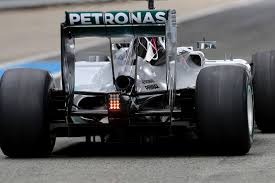
images                                                                 So far this season, this is a sight the other teams have had to get used to…

If you missed the race, make sure you watch it afterwards, you won’t regret it. Rather than a summary, below just a few points to summarize some of the key takeaways.

  • The Mercedes team’s dominance this season is breathtaking. In the first 40 laps of the race, both Mercedes cars took a 40-second lead over the rest of the pack. Even more impressive, with ten laps remaining after the safety car phase, in 3 laps, they went into a 10-second lead. It seems doubtful whether any team will be able to challenge Mercedes this season, but obviously there is still a long way to go.
  • The safety car phase between lap 42 and 47, caused by Pastor Maldonado (yes, him again) driving straight into the side of Esteban Gutierrez who did a vertical 360 degrees spin in the air, thankfully without getting hurt, led to none of the teams having to think about fuel consumption. All teams therefore went to full power in the last ten laps, something that on one hand reconfirmed Mercedes dominance, on the other however showed Red Bull far closer to the top than they had been so far in the race. Red Bull’s main issue therefore seems to be one of power and fuel mix, something they should be able to get to grips with during the season, one may assume.  As for Pastor Maldonado, he gained a 10-second stop-and-go penalty, a 5-position grid penalty in the upcoming race in China and a 3 championship point penalty. A suspension for the rest of the season would be better, and safer, for all!
  • Force India and Williams reconfirmed their position as the principal challengers outside of the top teams for the season, led by Sergio Perez finishing third and thereby securing the second podium for Force India.
  • After his podium position in the first race of the season in Australia from which he was later disqualified, Daniel Ricciardo again showed that at least in his eyes, Sebastian Vettel is by no means the number one driver in the Red Bull team, pushing him very close to the limit in some great takeover scenes after the safety car phase. Ricciardo finished fourth, Vettel sixth, and it does seem that slowly but surely, Red Bull are getting there.
  • Last but not least, after some hairy scenes between Hamilton and Rosberg (Mercedes)  earlier in the race that didn’t lead to a single word from the team over the radio, Mercedes couldn’t help themselves making it clear to both drivers during the safety car phase that the first priority was to get both cars across the finish line. Rosberg said ok, Hamilton didn’t comment, and the moment Bernd Mayländer parked the SLS AMG safety car in the garage, the both caught sudden amnesia and showed us some of the best racing scenes in quite some time!

If Bahrain is a sign of things to come, in spite of Mercedes dominance, we are in for an exciting season!

40 years evolution in the car industry

The enclosed picture, courtesy of Swiss business bi-weekly Finanz & Wirtschaft and German car magazine Auto, Motor und Sport, is an interesting illustration not only of Mercedes-Benz evolution over the last 40 years, but also of the car industry as a whole (for the Swedish audience by the way, it also provides a good example of why Saab post-GM never stood a real chance of survival, being a mass-market producer).

G_S2_CB_MercedesSortiment-950x645

In 1974, Mercedes was present in three segments; luxury cars with the S-class and the 600, mid-sized cars with the 8 sedan and coupé, and sports cars with the W107 SL and SLC. 40 years later and very much like the other brands that dominate today’s mass car industry, the three segments have become seven, with a far larger number of cars in each segment. And where there was previously not a segment/model, one has been invented (think shooting breaks and grand coupés, to name but a couple). 40 years ago, Mercedes built 6 different models, today it’s 25.

Obviously this is the result of quite an amazing production development in terms of common parts and platforms, but also of far-reaching but often little-known collaborations between brands on different levels. However, what has fundamentally not changed over these 40 years is the usage of petrol and diesel engines under the hood, although these have obviously been heavily developed and refined. When we look at the same picture in 40 years, when we’re gray and old, is that perhaps the big change we will see? What are your thoughts? Comments are as always welcome!

Petrolheads

Today we are coming out as a petrolheads!

I started this car blog  in 2012 and I have been writing about cars anonymously since then. Last year I was joined by fellow blogger Christoffer.

On the About page of the blog, there is now a short description of Christoffer and myself.
You might learn a few thing about us that you didn’t know…!!!

/sven

Ferrari California T – World Première – the turbo is back!

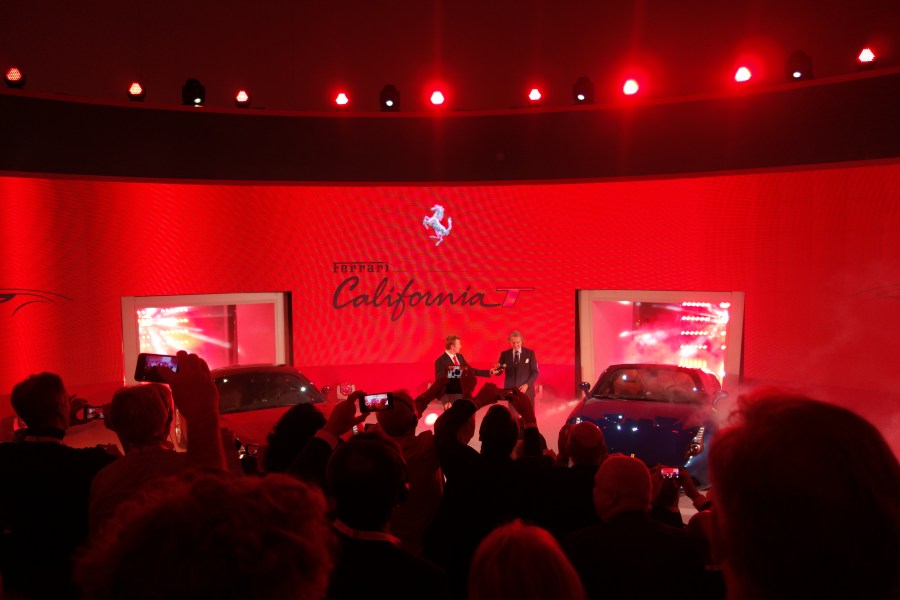
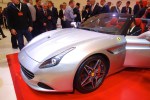
I had the privilege to attend the world première of the new Ferrari California T at the Museo Casa Enzo Ferrari in Modena in February.

Ferrari California T

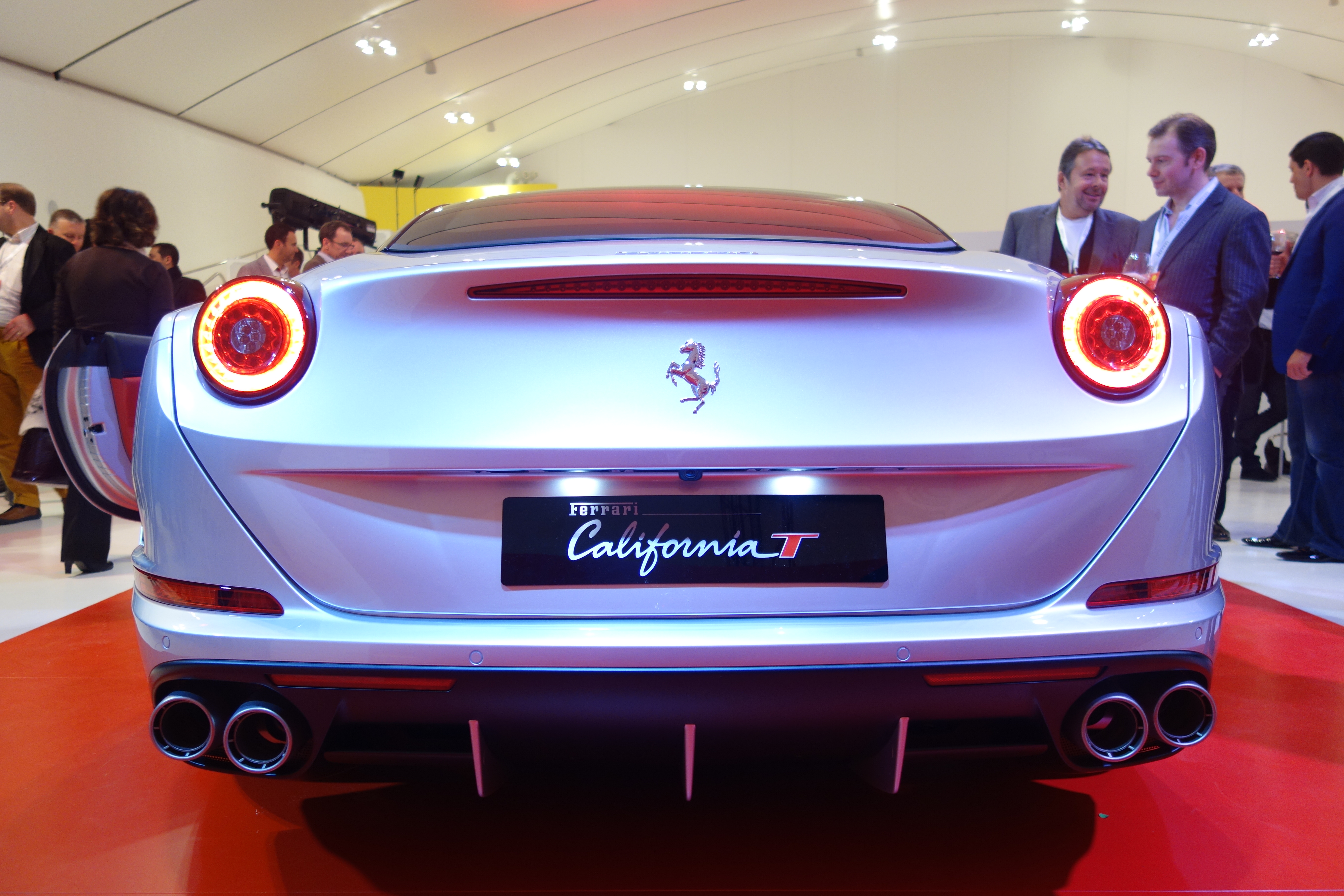
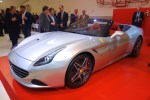
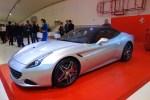
The front is all new and inspired by the Ferrari F12 and FF. It is much sportier and I have to say it looks much better than the original California (which I had the privilege to own). The back of the car, exhausts, diffuser etc. also looks better and sportier. The shape of its flanks is inspired by the classic Ferrari 250 Testa Rossa; not bad at all… It also has some resemblance to the beautiful (moderon) Alfa Romeo 8C.

Ferrari California T

Ferrari California T

The rear has been improved and is now lower and better looking.

The interior has been overhauled as well and is more in line with the other Ferrari models (458, FF and F12). The seats are thinner and thus provide more space in the back.

Technical highlights
The big news is the use of a turbocharger in a Ferrari. The last Ferrari with at turbo was the Ferrari F40, more than 20 years ago!

The specs are amazing; remember this is the “entry-level” Ferrari… (original California in brackets):

  • Power: 560 HP (460 HP)
  • Acceleration 0-100 km/h: 3.6 s (3.9 s)
  • Top speed 316 km/h (310 km/h)

Power is really up. To put this into perspective: it has 10 HP less than the 458, more power than any Lamborghini Diablo, only 20 HP less than the original Lamborghini Murcielago or 45 HP more than the Ferrari 575M V12.

Ferrari states, with a lot of emphasis, that there is no turbo lag and that the California T sounds like a proper Ferrari. Let’s wait and see…

Summarising it looks better and more athletic than the original California and it has the power to match it.

For those he want the tech details; the presentation:

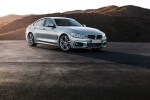
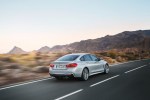
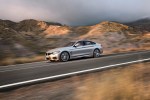
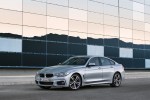
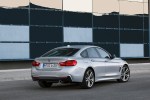
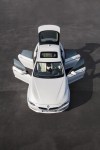
Picture Gallery: BMW 4-series Gran Coupé

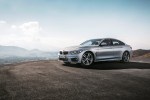
The 4-series Gran Coupé is really beautiful, specially with the optional M Sport Package, as seen in the picture gallery below. I saw it in the flesh at the Geneva Motor Show and liked it a lot.

For those who don’t follow BMW:s new, intricate numbering system:

  • The 3-series is build as a 4-door Saloon, a 5-door Touring or a 5-door GT (the latter is a BIG hatchback).
  • The 4-series is essentially the same car, but it is build as a 2-door Coupé, a 2-door Convertible or a 5-door “Gran Coupé”, i.e. an elegant 5-door hatchback with coupé-like roofline (think: Audi A5 Sportback)

Chaos as the F1 season kicks off in Melbourne

It was not as much the driving as what happened around it that led to a chaotic start of the F1 season in Melbourne yesterday. As the pre-season results had led us to believe reliability was indeed the major issue, with especially the Renault teams far from ready from a technical standpoint. For the first time ever in F1, several drivers including Swedish Marcus Ericsson had to retire before anything broke but to save their engines… As for the engine sound in 2014, we’ll be diplomatic and let everyone form their own opinion…

When the chequered flag dropped Nico Rosberg on Mercedes had won the race, in the season where his car carries the same number (6) as his father Keke had when he became world champion 32 years ago, in 1982. At this point, it also seemed that Red Bull had saved the day with Daniel Ricciardo finishing second, the first podium for an Australian ever in Melbourne. A short while later however, Red Bull and Ricciardo were disqualified because of too high fuel pressure in the engine, and Kevin Magnussen on McLaren who finished third was all of a sudden second and the most successful rookie since Jacques Villeneuve in 1996. Jenson Button on McLaren was the new third, and both McLaren’s and Mercedes day was hence close to perfect, as Valtteri Bottas on Mercedes was fifth after Fernando Alonso on Ferrari, the only car with a non-Mercedes engine in the top 5.

Mercedes is hence off to a good season start, and Red Bull to an awful one as Sebastian Vettel had been forced to park his car on the seventh lap. As mentioned previously on this blog, it’s quite possible that after a dreadful 2013, Williams emerges as the surprise of the season 2014. For Ferrari, finishing fourth and seventh, it was not too bad, but Alonso still made the comment that the car was only ready to about 60%. If he is right, there’s hopefully a lot of race excitement as opposed to technical and regulatory mishaps to look forward to as the teams move on to Malaysia in two weeks!


Geneva Motor Show 2014 – report

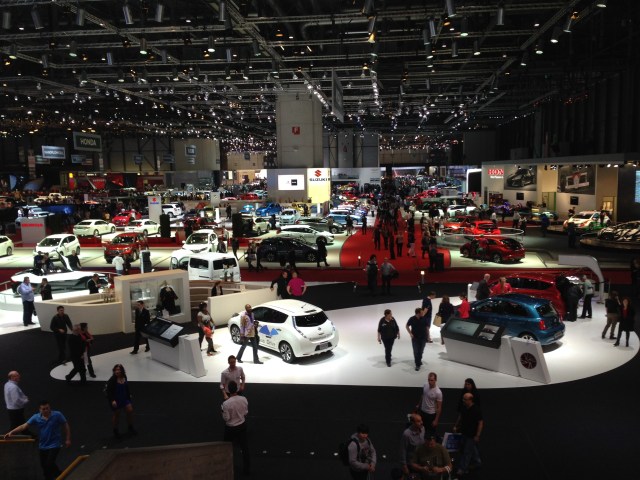
Thanks to a last minute reschedule of flights I was able to make it to the Geneva Motor Show this year. I was only able to spend about an hour visiting the Motor Show, so what follows is a short summary with a somewhat limited photo gallery (taken with my iPhone).

Porsche
The Porsche 991 Targa is as beautiful in the flesh as in the pictures and I was lucky enough to see the roof mechanism in action. Amazing…

There were a couple of Macans in the stand, but both where in an awful dark brown metallic colour. The car looks good though, better than it’s bigger brother the Cayenne and better than the Audi Q5, with which the Macan partly shares the underlying platform.

IMG_1169

I tried the back seat of the Macan. Nice but marginally less spacious than my current BMW X3. The luggage space is smaller than the X3 as well.

Nice car though; I’m Thinking about selling the X3 and getting the Macan (or the Maserati Ghibli, see below).

BMW
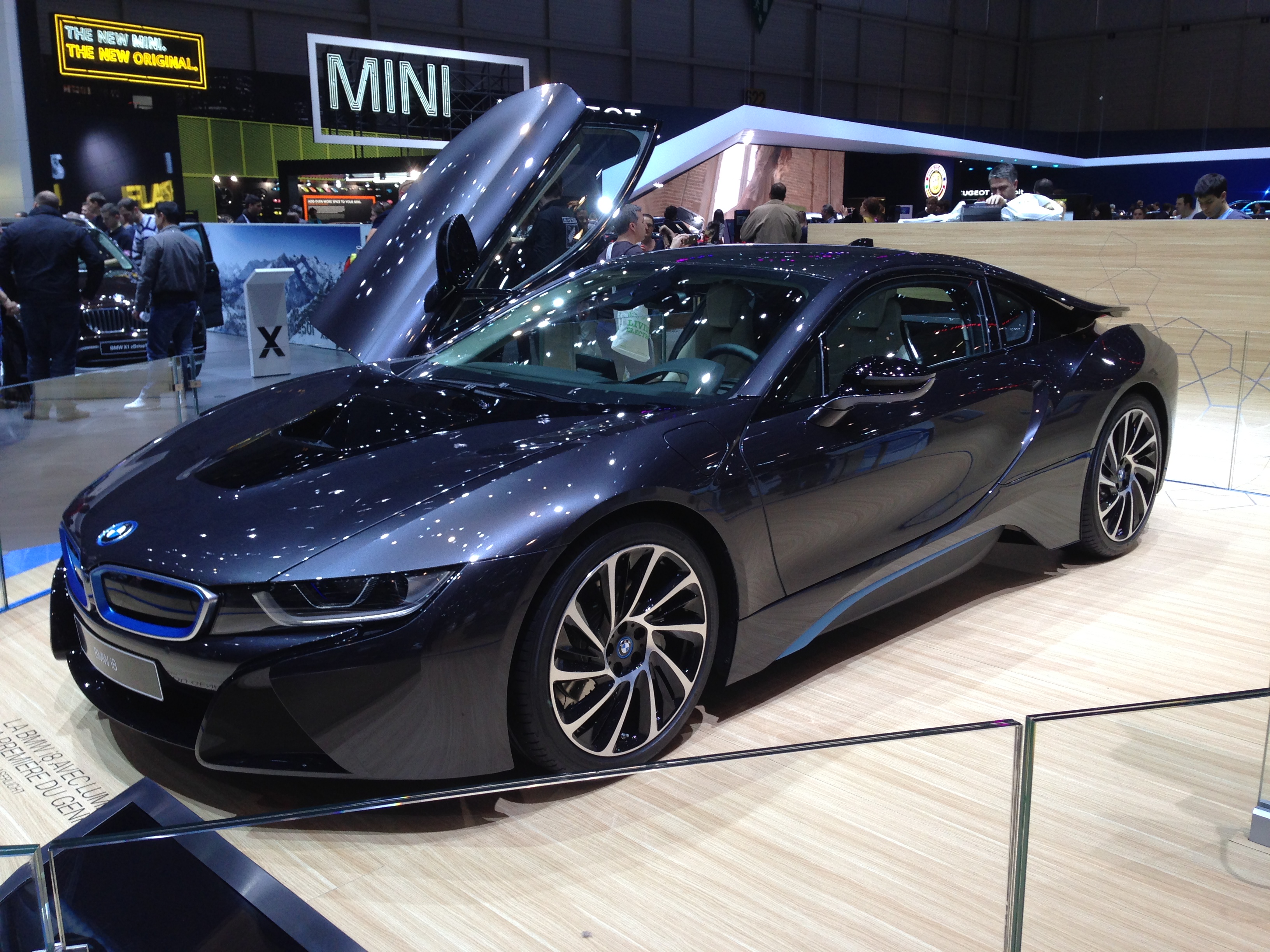
Looking at pictures, I have not been convinced about the styling of BMW’s electric sports car, the i8, but in the flesh it is absolutely stunning. In the dark grey colour exhibited on the stand it was very desirable. Maybe the most desirable sports car in Geneva; I didn’t see that one coming.

IMG_1158

The BMW 4-series Gran Coupé looks really good. I have also posted a large gallery of photos. Looking at this car, I wonder whether they will sell any 3-series Saloon…

IMG_1159

For those who don’t follow BMW:s new, intricate numbering system:

  • The 3-series is build as a 4-door Saloon, a 5-door Touring or a 5-door GT (the latter is a BIG hatchback).
  • The 4-series is essentially the same car, but it is build as a 2-door Coupé, a 2-door Convertible or a 5-door “Gran Coupé”, i.e. an elegant 5-door hatchback with coupé-like roofline (think: Audi A5 Sportback)

Tesla
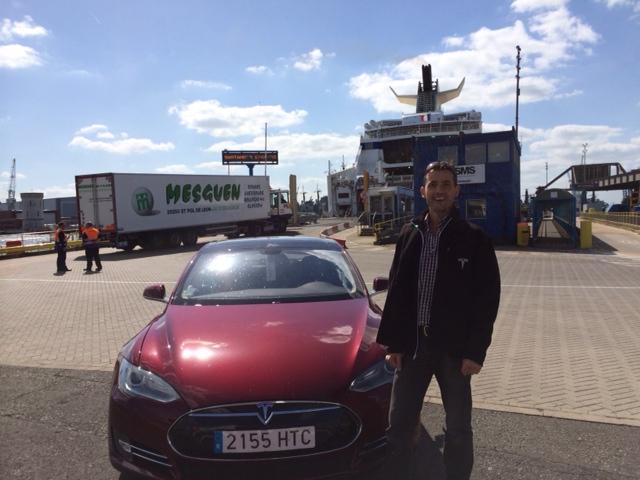
The Model S is great. I liked it even more than I thought I would. Ergonomics are very good; the big centre touchscreen display is really easy to use. It  feels like “Car 2.0” or like the first iPhone. The future is here today…

It’s electric, it’s pretty, it’s practical (seats 5 or 7, huge boot) and it’s fast. What’s not to like? Maybe the interior doesn’t have the premium feel of the best german competitors…

Please read my fellow blogger’s excellent test drive report of the Tesla.

Ferrari
The new California T looks better than the original California (which I had the privilege to own during two years). I attented the launch of the California T a couple of weeks ago in Modena and will write a separate report on the car and the event. Stay tuned.

Maserati
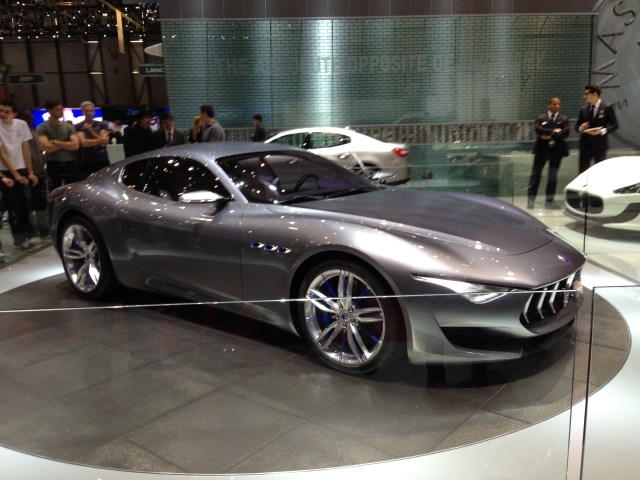
The Alfieri concept car is very beautiful. Hopefully Maserati’s upcoming sports car (smaller than the GranTurismo), will look similar to this concept. Sorry about the poor picture.
IMG_1166

The Maserati Ghibli is a really nice entrant in the medium/high end saloon market, competing with the upmarket 6-cylinder versions of the BMW 5-series, Mercedes E-Klasse (and CLS) as well as the Audi A6. The blue car on the stand was highly desirable. I’m considering buying one, seriously.

IMG_1164

Jaguar
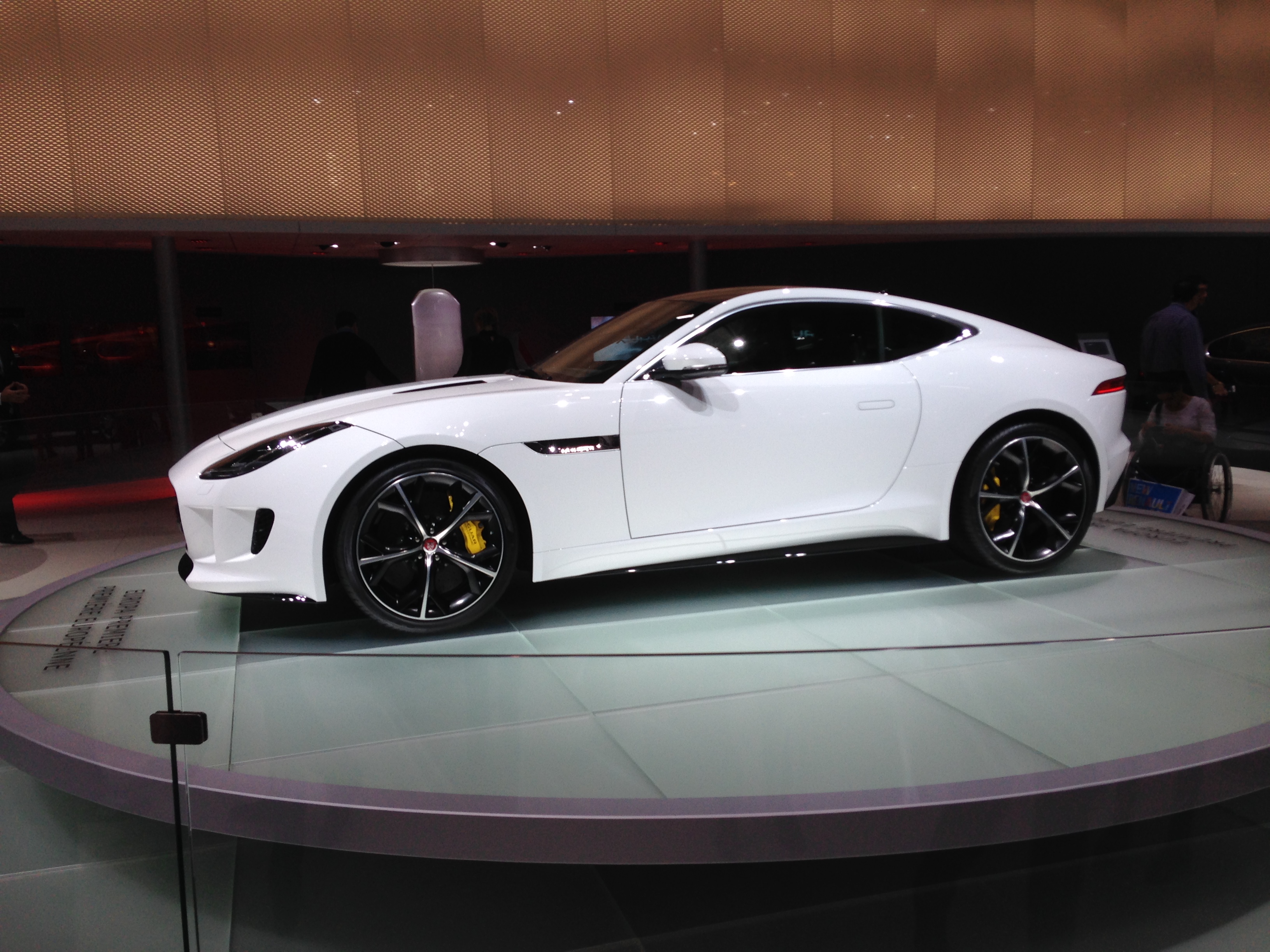
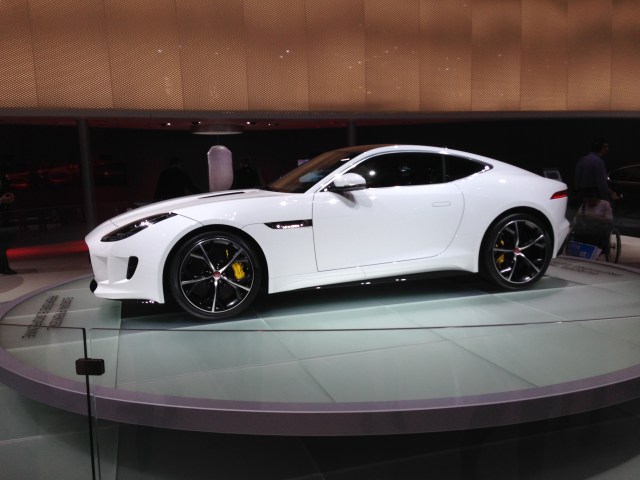
Could they build a car even more beautiful then the F-TYPE Convertible? Yes! The F-TYPE Coupé is absolutely stunning. On looks alone, this car is the Motor Show’s star:
IMG_1161

But the Convertible stills looks very good…

IMG_1163

Alfa Romeo
Alfa showed an open version of the 4C, the 4C Spyder. Nice design, in a Louts Elise kind of way, with added carbon fibre.

Audi
The new TT looks very similar to its predecesor. It’s nice but…yawn…

Lamborghini
The new Huracan is a stunner in the flesh, although a bit extreme for my taste. How did I not manage to take a proper picture?

Mercedes
S-Klasse Coupé
: considering the huge size of the car it is remarkably good looking…

IMG_1156

Short Summary
The BMW i8 and Tesla Model S surprised me, in a very positive way. The F-TYPE Coupé was a stunner.
Geneva Motor Show

Final testing session in Bahrain brings more of the same

The third and final F1 testing session in Bahrain over the weekend looked much like the previous two, with the Mercedes star shining relatively brightly upfront, Ferrari’s Cavallino Rampante finding at least three of its shoes, and Renault continuing to hit more troubles at the same speed as old ones are solved. Given the free training for the season’s first F1 race in Australia starts in ten days, there is no doubt lights will be on late over the coming weeks, both in the Renault and Red Bull factories.

d13bra1509

Little did they know at the end of last season, all the challenges they would face in 2014!

Lewis Hamilton led the time sheets after the last day of training in Bahrain and over the 12 official training days that have now taken place, the MB powered teams have accumulated a total of almost 18000 kms. In spite of this, not even MB and especially the Mercedes AMG Petronas team have managed to solve all issues, but they are clearly in what looks like pole position before the season start. Interesting to see is also that Mercedes-powered Williams has done very well in pre-season training and could emerge as something of a dark horse, especially with the very experienced Felipe Massa as one of the two drivers (the other one being Valtteri Bottas). Mercedes-powered Force India has also done very well both in Jerez and Bahrain.

For Ferrari it has been a mixed bag but ever so slowly, it looks like the team is getting there. Both Kimi Räikkönen and Fernando Alonso have struggled with reliability issues in all training sessions, but talk quite confidently about the potential still to be unlocked from the F14T. Whether that happens in time for Australia or later in the season remains to be seen.

Finally (an order that also corresponds to all the training sessions) all Renault-powered teams and especially Red Bull continue to struggle big time. RB managed a decent 77 laps  on the final day in Bahrain but overall in the pre-season training sessions they only leave Marussia and Lotus behind them in terms of number of laps completed (and Lotus didn’t even participate in Jerez). The discussion is now on who is most to blame, Red Bull or Renault, but given that all Renault-powered teams have similar issues, clearly a lot of the blame is found with the French manufacturer. Red Bull say they have identified the issues and hope to have fixes in place for Australia, and other drivers speak respectfully about the “potential” of the RB10 (probably mostly to take the pressure off themselves…). Unlocking that potential in ten days time would seem completely unrealistic for any other team than the 4-time world champions, and must be doubted even for them. What seems certain is that it will be an exciting season start down under in the middle of March!


Mercedes continues to dominate second pre-season testing in Bahrain

The second pre-season training session in Bahrain on February 19-22 brought roughly the outcome as the first testing days in Jerez early February days. Mercedes continues to dominate the field, with Nico Rosberg setting the best time on the last training day over 1.5 seconds ahead of second placed Jenson Button (Mc Laren), and Mercedes by far completing the most laps over the three days. Ferrari did manage a net improvment compared to Jerez with Kimi Räikkönen setting the third time and the team managing far more laps than the first time around.

As for the Renault teams, it continues to be a mixed bag at best. Again (and again surprisingly), Caterham did quite well and has so far managed most laps of any Renault team in 2014, boding well for Swedish rookie Marcus Ericsson. As for Red Bull there seems to be no end to the problems, although Daniel Ricciardo managed the 7th best time during the last day. There are however still lots of issues it seems, both in software and mechanically, with reliability currently being close to zero.  Red Bull thus have high hopes for the last pre-season training session, again taking place in Bahrain over the next weekend. Whether the world champions will be ready in time for the start of what looks like a highly interesting season is no doubt the big question!

ad-10052009-1

How much energy will be in it at the start of the season?

Jerez 2014 – French frustration, German satisfaction

The 2014 F1 season’s first testing week in Jerez had been much anticipated given the number of changes to the cars and the power units for the new season. And in terms of action, it certainly didn’t disappoint. The potential reliability issues we brought up when describing the rule changes for the new season (see here) hit especially the Renault power units with a vengeance, and none more than Red Bull. Engine cooling was the big issue, and RBR’s new car RB10 therefore spent most time off the track whilst rivals were collecting both laps and experience. At the end of the week, the three Renault teams had managed 151 laps, however of these RBR only managed 21. In contrast, the four Mercedes teams completed 875 laps and the three Ferrari teams 444.

F1-2014-Red-Bull-RB10-Vettel-Formel-1-Rennwagen-06
You can leave the cover on, boys...

Too much should not be read in to the season’s first testing week, especially not to lap times, but it is fair to say that RBR has a lot of work to do before, and a lot to prove during the next testing week in Bahrain on February 19-22.

Judging by the drivers’ comments there was a lot of satisfaction with the new cars. The torque provided by the new engines make them feel very powerful and the new 8-speed gearbox along with thew new breaking system also contribute to making the experience different. Finally the number of buttons on the new steering wheel will take some getting used to, and the wheel was by many likened more to a smart phone.

steering-inline3
Right, let’s see, was it the red one or, eerrr, the green, or…

Jerez was Swedish F1 rookie Marcus Ericsson’s first showing for Caterham, and at least Caterham was the Renault-powered team that managed most laps. It was however another Scandinavian who stole the attention; Mc Laren’s Danish rookie Kevin Magnussen clocked the fastest lap of the week!

Ferrari quickest on first day of F1 testing in Jerez

Räikkönen in the Ferrari F14-T was quickest on the first day of pre-season testing on tuesday.

Ferrari F14-T

Only eight cars set times in a session where some teams didn’t run at all and other teams had serious reliability problems. Lewis Hamilton crashed due to a front wing failure.

Unofficial Tuesday test times from Jerez:
1. Kimi Raikkonen, Ferrari, 1m 27.104s, 31 laps
2. Lewis Hamilton, Mercedes , 1m 27.820s, 18 laps
3. Valtteri Bottas, Williams, 1m 30.082s, 7 laps
4. Sergio Perez, Force India, 1m 33.161s, 11 laps
5. Jean-Eric Vergne, Toro Rosso, 1m 36.530s, 15 laps
6. Esteban Gutierrez, Sauber, 1m 42.257s, 7 laps
7. Sebastian Vettel , Red Bull, No time, 3 laps
8. Marcus Ericsson, Caterham, No time, 1 lap

F1 in 2014 – overview of all the changes for the new season

Had someone claimed 10 years ago that in 2014, F1 cars would be powered by 1.6 l engines delivering over 600 bhp, he would most certainly have been laughed at. And yet that is precisely what has happened, one one hand testifying to the extraordinary technical progress F1 has gone through in the last decade, on the other to how difficult it is to predict the future. However it is not only the engines that will change in 2014. In fact the coming season will see the most fundamental changes to the sport since it all started, and for that reason we felt it could be useful to give you an overview of the most important areas affected, along with some thoughts on how that could influence the outcome of the 2014 championships – knowing, as mentioned, that predicting the future is difficult indeed…

1283
They may have been less safe, but no doubt F1 cars looked better 10 years ago, in 2004…

Engine: all cars will be powered by a 1.6 litre, turbo-charged V6 engine, supported by an ERS system which replaces last year’s KERS and gives about twice the power of the latter. Max rev’s are limited to 15.000 rpm. The ERS system is highly complex and consists of two motors/generators, one linked to the engine, the other to the turbo. Not only will the power be higher, it will also be available for longer (in numbers 120 Kw during 33 seconds as opposed to the 60 Kw during 6.6 seconds given by KERS last year). The minimum weight of the whole unit is set at 145 kg. Max fuel for a race is set at 100 kg, a reduction of 40 kg versus last year.

Gearbox: made out of carbon, the ratios of the 8-speed gearbox may only be changed once during the season.

Chassis: no one has missed the more or less catastrophic look of the noses on the new cars. The reason for this design nightmare is new regulation, aimed at preventing cars from lifting off when hitting another car from behind. This is however only one of a number of chassis and body changes for 2014, mostly aimed at reducing traction and hereby lowering the cars’ cornering speed. The front wing may thus not be larger than 165 cm (-15 cm vs last year) and the whole lower part of the rear wing has been removed. The exhaust must now be mounted centrally in the back, the sideways mounted exhausts that helped aerodynamics are no longer allowed. The opening of the rear wing has been somewhat increased, helping the DRS effect. Finally the side boxes will look a bit different as the cooling system has increased in size, driven by the larger cooling need of the highly complex engine.

Weight: minimum weight has been increased by 49 kg to 691 kg, still however posing a big challenge to the teams as it only partly compensates for the increased weight of all the new components described above.

f1-sideview-inline
Fitting the engine with all its components into the new cars – not an easy task!

It is fair to say that the engineers have thus had a number of nuts to solve in order to fit everything into the new cars and try to meet (and optimize the outcome of) the new regulation. How well they succeed remains to be confirmed as the new season starts. Development costs money so it is probably fair to say that as always, the bigger teams, and especially the factory teams, have an advantage on paper. It is however easy to imagine that with all the complexity added, reliability will again be on the agenda, possibly along with fuel consumption. Clearly the new engines consume less, but we could well have more “excitement” towards the end of races when some drivers start to run out of fuel.

On a technical level, it seems therefore that the F1 circus will prove the Amis wrong: there is indeed a substitute for cubic inches. One question will however remain unanswered until March 16, when the season kicks off in Melbourne, and that is what 20 cars powered by 1.6 l turbo engines sound like, and whether acoustically you will still recognize this as F1 or rather think you are watching the Renault Clio cup. Let’s cross fingers and hope for the best…

Sauber C33 Ferrari – best-looking 2014 car so far!

Swiss Formula 1 team Sauber yesterday presented their 2014 car C33, if you ask me by quite some margin the best looking car of the models we have seen so far and with a remarkably ordinary nose! In spite of severe financial worries last year, Sauber has apparently managed to finance the new season mostly through its driver line-up where both the test drivers Sergei Sirotkin (RUS) and Giedo van der Garde (NL) as well as the regular driver Esteban Gutierrez (MX) have brought sponsor money. The only driver who hasn’t bought his way in, to put is somewhat harshly, is the second ordinary driver Adrian Sutil (GER).

ebf90df55aUnknown-1

Marcus Ericsson first Swede in F1 in 23 years!

Not since Stefan “Lill-Lövis” Johansson left the F1 circus in 1991 has there been a Swede that has made it beyond the test driver status in F1 (that was by the way Björn Wirdheim who test drove for Jaguar a few years ago). That will change in 2014 when Swedish 23-year old Marcus Ericsson will take one seat in the Caterham team, the other one going to Kamui Kobayashi, ex-Sauber. Ericsson finished sixth last year in the GP2 series, but apparently still managed to show he has talent. Given Caterham finished last in the team ranking last year it will definitely not be an easy ride, not even within the team as Kobayashi obviously has much more experience, but at least he gets a chance and it bodes well for both the interest and coverage of F1 in Sweden!

Unknown

Porsche 911 Targa (991) – first pictures!

Boy, does the new 991 Targa look good!!!

The new design is much closer to the original Targa from the 70s, as opposed to the glass-roofed 996 and 997 Targa.

Apparently it will be available only with 4WD (Targa4 and Targa4S models) as it is based on the wide body 4WD Carrera cabriolet.

How the Targa roof can fold automatically is hard to understand, but we will know more this afternoon after Porsche’s press conference in Detroit at 17:45 CET.