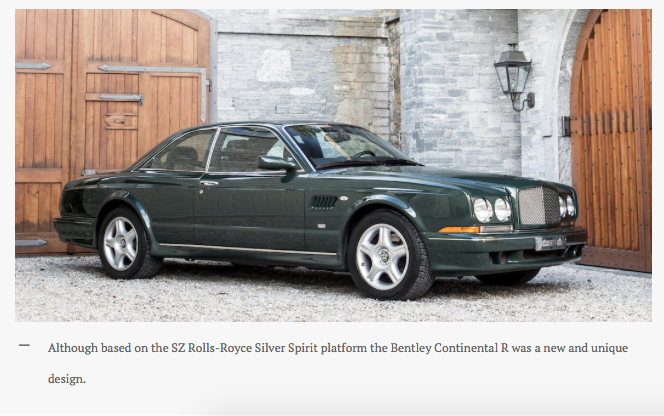
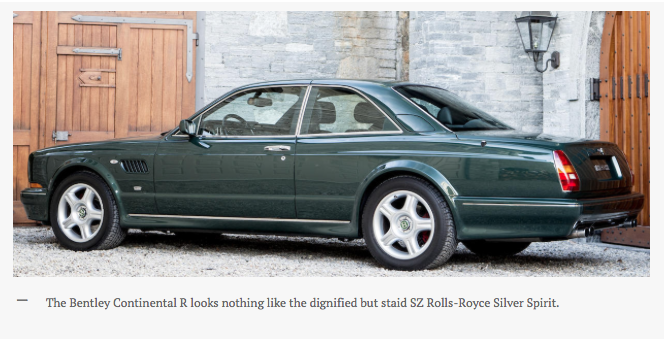
A very special Bentley Continental for the dream garage!

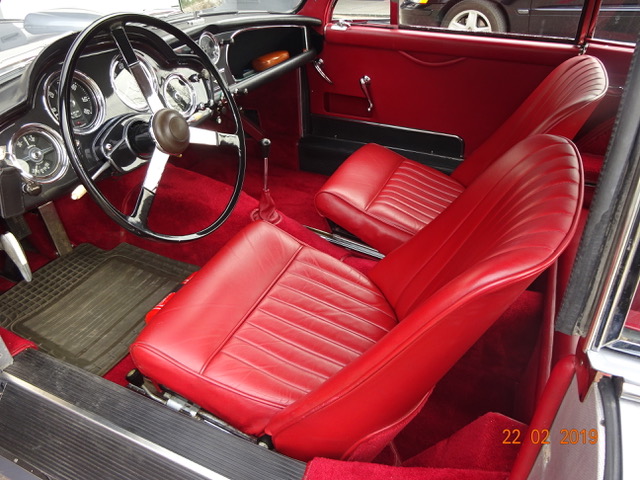
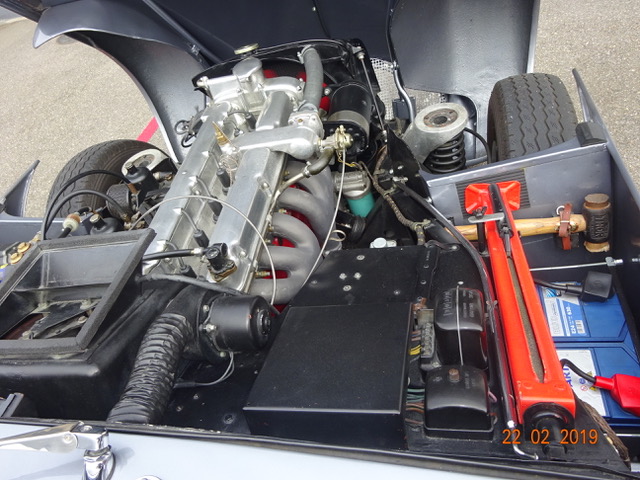
We’re happy to offer a very special Bentley Continental R Le Mans Coupé from 2001 for this latest dream garage post.

This version was only manufactured in a series of 50 cars and this is the last one delivered to Europe. It has 148.000 kms on the clock since new, with two previous owners and a full Bentley service history. It has lived in Switzerland and the Netherlands and is currently on Swiss papers.

Asking price for the car is EUR 110.000 but as always, offers are welcome. For those interested in more history on the R Le Mans Coupé, please see further below and contact me in case of interest.
Bentley returned to Le Mans in 2001 after having been absent from the
famous race since the 30s. To celebrate the new campaign, the classic
brand introduced limited edition ‘Le Mans’ versions of the existing
Continental R and T models.

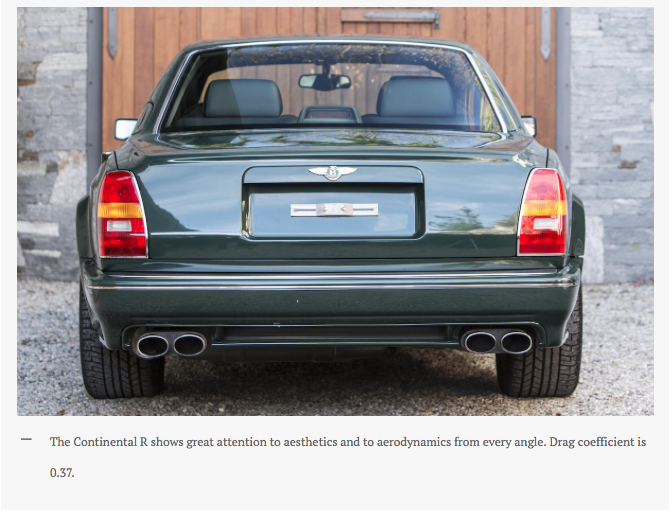
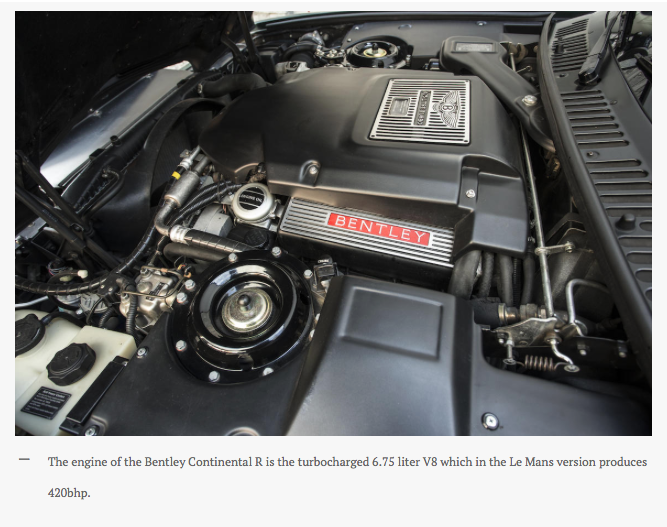
The Continental R was styled with assistance from Automotive Design, with computer aids and extensive wind tunnel testing to create its ultra streamlined shape. The result still looked every bit a Bentley, albeit one restated for the 90s. The gearbox was a new, 4-speed automatic with an overdrive function, but the main interest was of course in the engine and performance. For the exclusive ‘Le Mans’ variants, the 420bhp engine of the Continental T was adopted together with a plethora of special features. The latter included flared wheel arches; green badges to the radiator, wheels and boot; 18″ five-spoke alloy wheels; sports bumper package; four-pipe exhaust outlets; and ‘Le Mans’ wing badges.

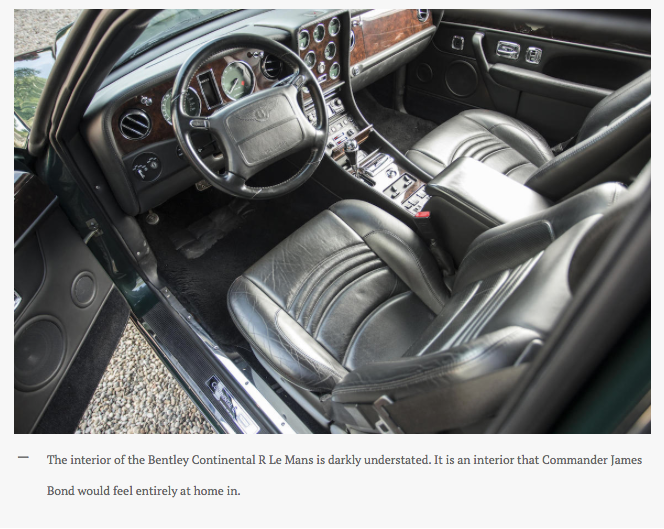
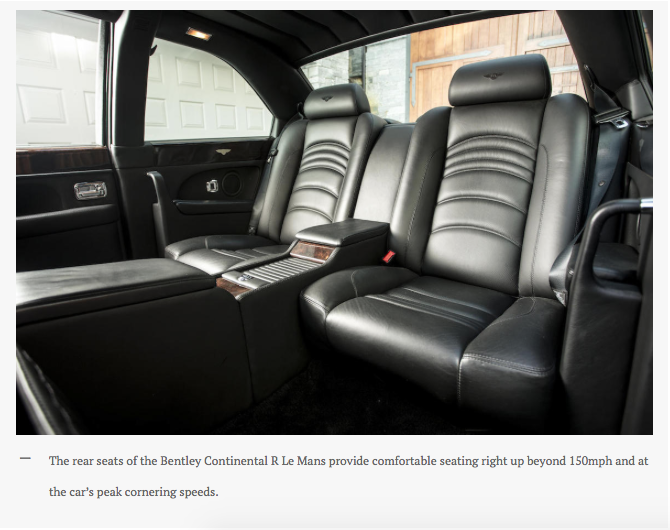
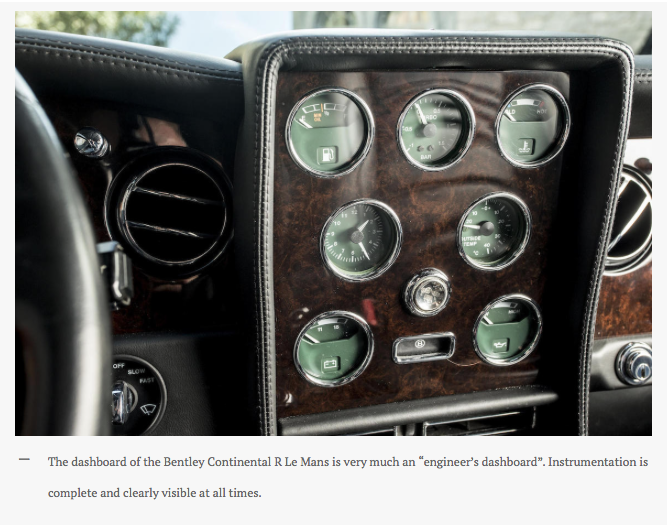
Interior upgrades consisted of drilled control pedals; pushbutton starter; sports seats with ‘Bentley’ headrest logos; stacked central instrumentation cluster with chrome bezels and green dials; dark walnut veneer with embossed Bentley badges; ‘Le Mans Series’ logo to the centre console; and a racing-style gear knob finished in chrome and leather. 

Update on the infotainment confusion

You may have read my post early February on a certain confusion in the roll-out of new infotainment systems in Ingolstadt (Audi) and Stuttgart (MB) that you can otherwise find here.

Having recently spoken to Mercedes, they were able to shed at least a bit of light as to the roll-out of the Mercedes’ MBUX system;

  • The new A- and B-class, as well as the updated GLC and as previously mentioned the new GLE all have the new MBUX, enabling voice- and touch-control.
  • Neither the C- and E-class, nor the brand new G-class have it at this point (although the screens look the same).
  • For the E-class, the official timeline is that it will not get it until the spring of 2020 in connection with a first facelift.

Designer Freedom?

As regulation continues to dictate how cars look mainly for “safety” reasons, this leaves less room for designers to design their dream car.  Also, as automotive designers move around, either within the holding companies or change firms, one can clearly see the design language represented in various cars, as they change company.  One such example is Marc Lichte, who currently heads up the design at Audi.  His long straight lines can clearly be seen in VW, where he was responsible for the exterior, into the current Audi line up.

Audi
Volkswagen

One can also see his mark in the new Audi A6, where his hard, long lines are evident making the car more masculine, longer and defined.  

Clearly one can see the inspiration of Audi motorsport, which the haunched wheel arches – a throwback to the Audi Ur Quattro, which dominated the rally scene in the 1980’s.

Audi A6
Audi A6

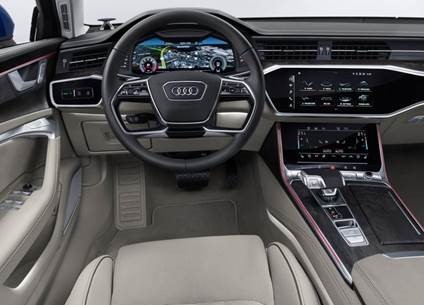
On the interior, his passion for Porsche can also be seen.  The double lines of the Porsches of old, can clearly be seen in the interior as well. Even the steering wheel is similar.

Audi A6 Interior
Porsche 993 Interior

But are cues from the past the way forward?  Should car companies follow history and previous design cues of the past, or like Jaguar, throw away history and focus on the future?

New XJ
Old XJ

What do you think?  Let me know in the comments below.

A Magnum double

We’re starting off our new category The Dream Garage, featuring exclusive cars for sale through our network, with a Magnum double. If like me you grew up with the TV-series, and if like me you were uncertain whether the car he was driving was a 308 or a 328, here you go – one of each, albeit in different colors.

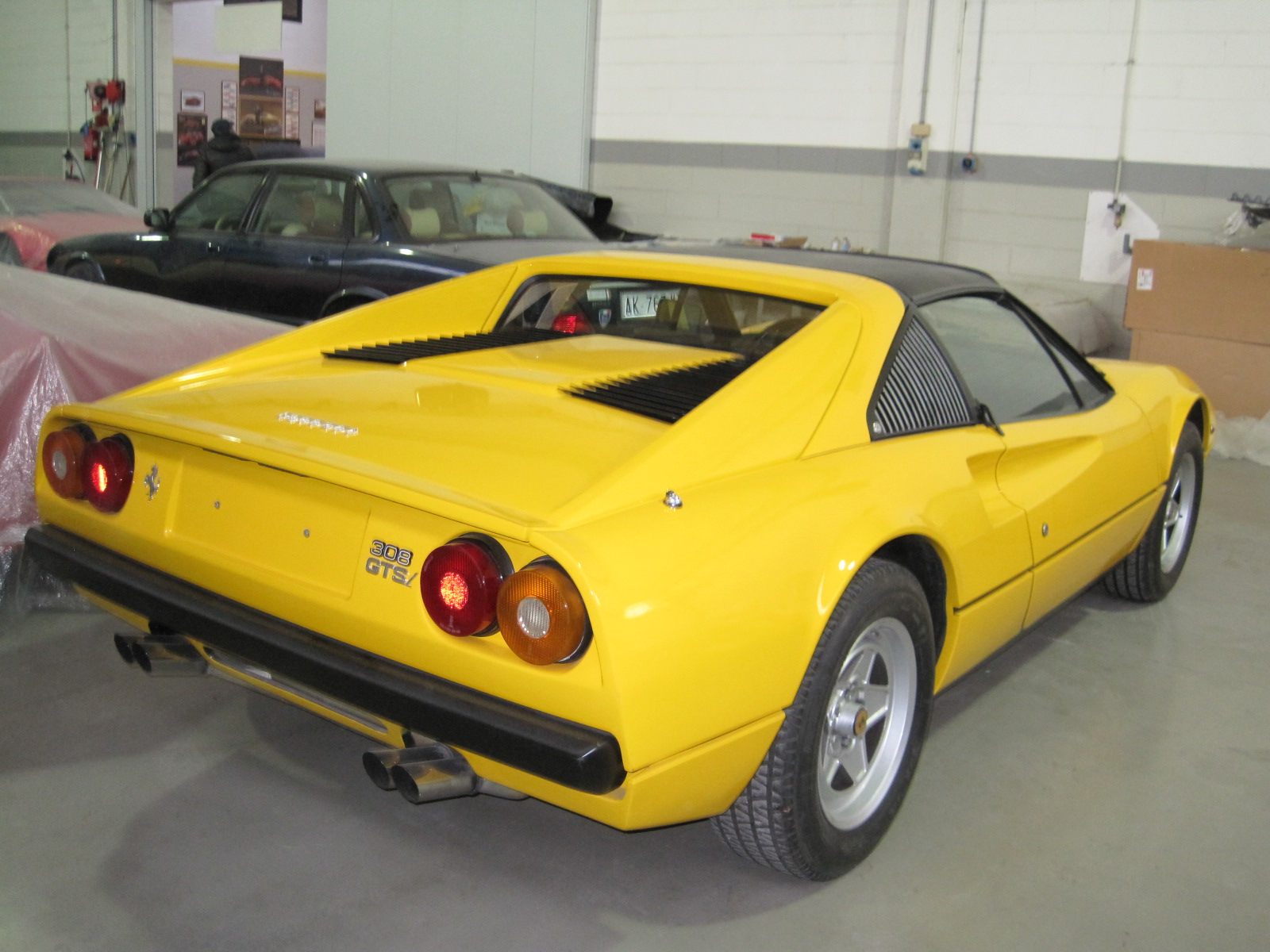
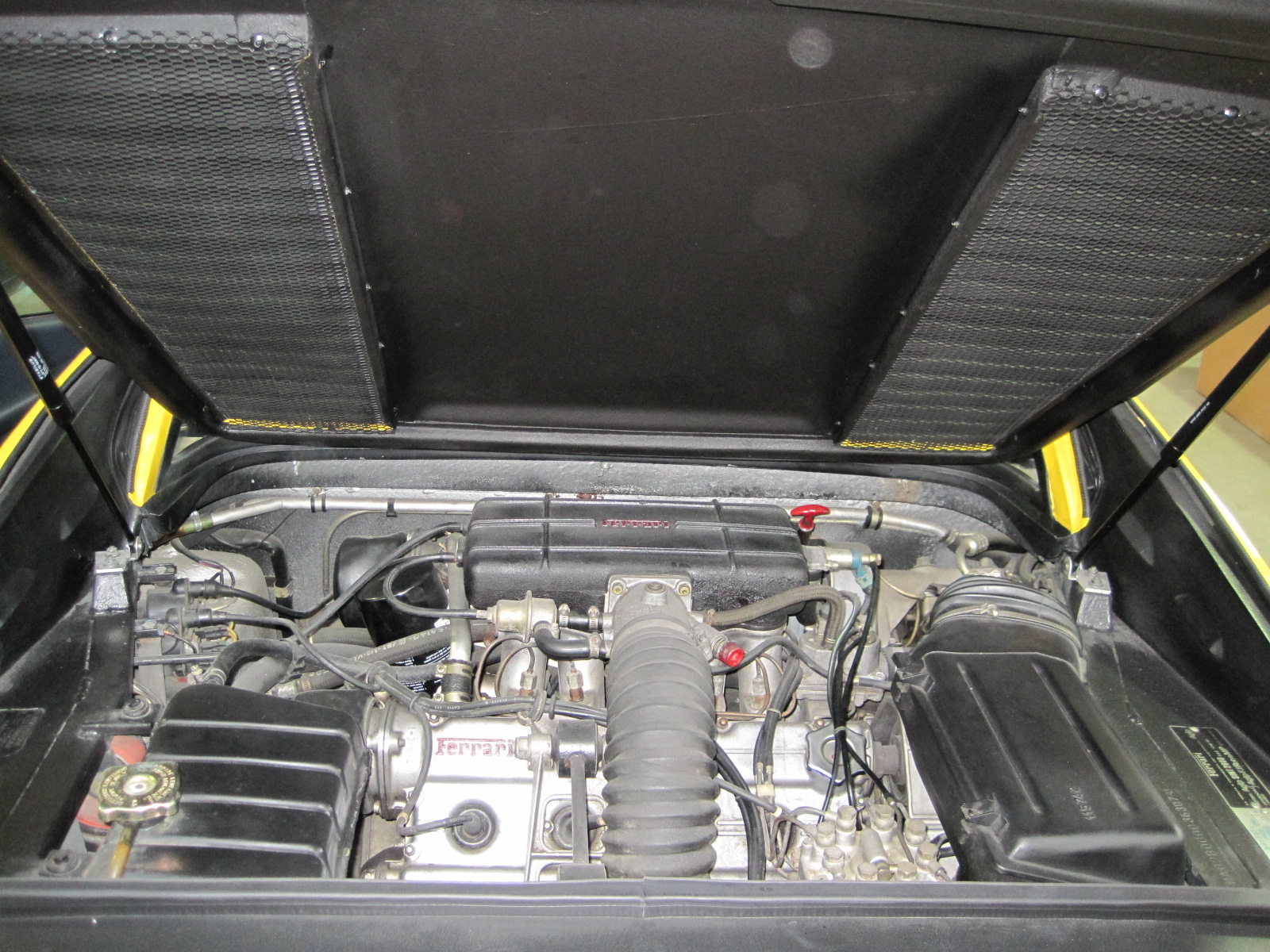
Starting from the beginning, the below yellow beauty, the 1981 308 GTS comes with only 62.000 km and a Ferrari certificate. It has a complete history and only one previous owner. It’s a garage-kept car with no accidents for which the owner is asking EUR 88.000, with offers welcome. The car is currently located in Italy.

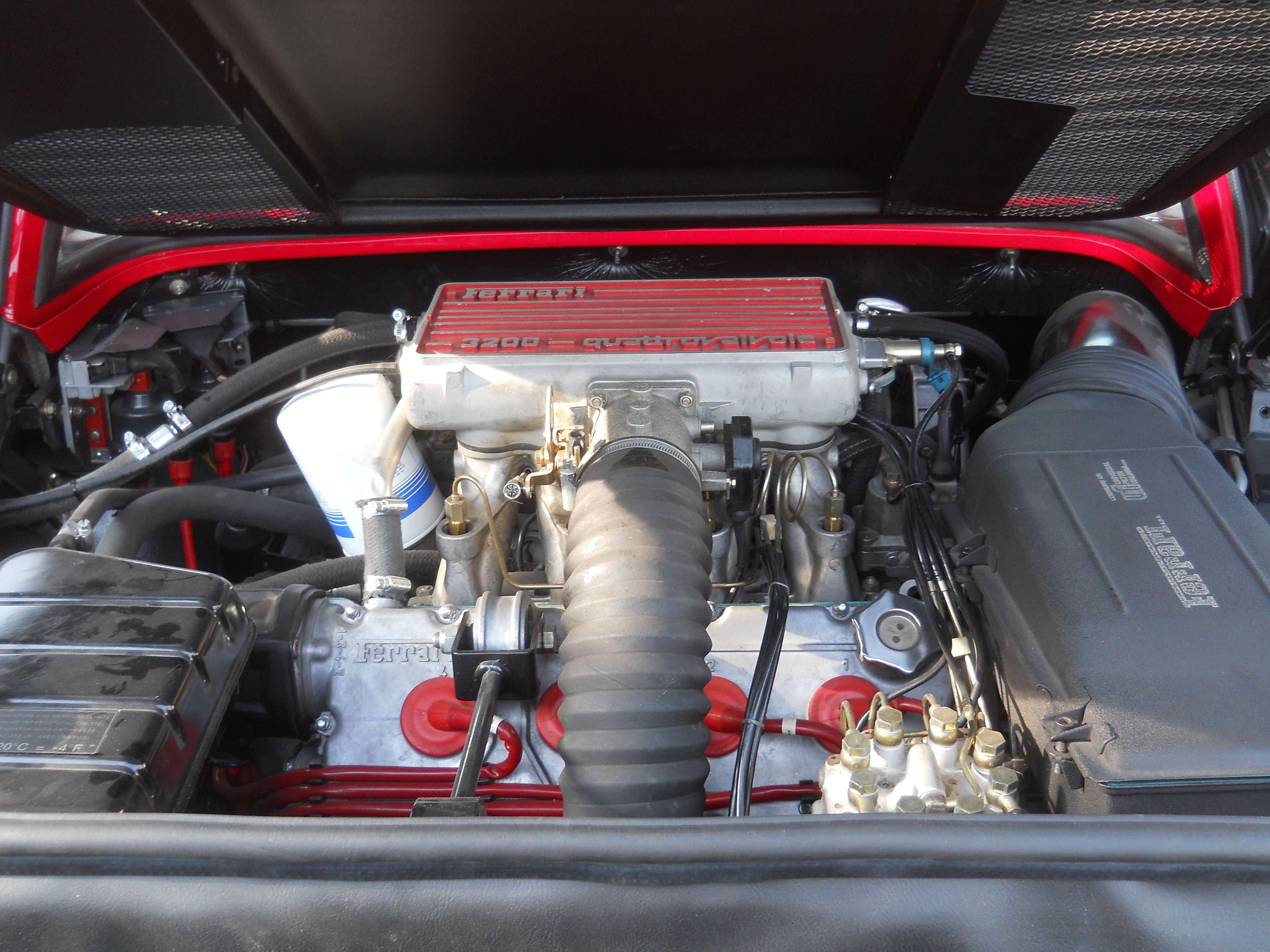
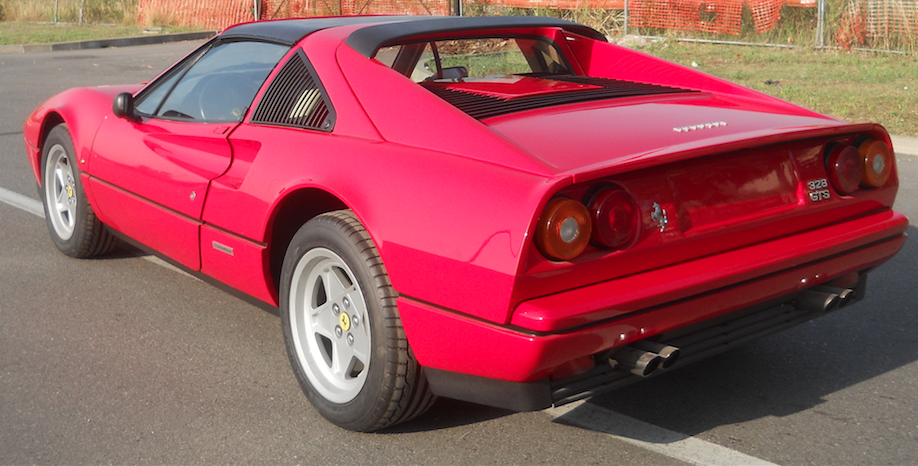
Second in line is a beautiful 328 GTS from 1985. Also a one owner car with full history, this 328 has only 22.105 km on the clock and is in corresponding condition. It also has a Ferrari certificate and is located in Italy, garage-kept with no accidents, the owner is asking EUR 95.000 for the car, again with offers welcome. A very competitive price in view of the kms and the market!

For further information on any of these cars, don’t hesitate to contact me.

Introducing The Dream Garage

We are happy to introduce our new heading The Dream Garage, under which with the help of some specialists in our network, we will regularly be posting a selection of very special cars for sale. Very special in this sense means highly exclusive, highly sporty, highly interesting from their background, or in the best cases, a combination of these.

Cars typically have in common the owner’s wish for anonymity, and you will therefore usually not find them advertised anywhere else on the web. For the same reason, pictures will in some cases be general ones rather than of the specific car, if so wished by the owner. All cars posted under The Dream Garage heading are however for sale, with most of them based in the EU or Switzerland, and further information can be obtained by contacting me.

Whether you Dream Garage remains a dream or transforms into reality, we hope you enjoy the reading. Look out for the first cars that will be posted later this week!

The German Autobahn – mythical, or a myth?

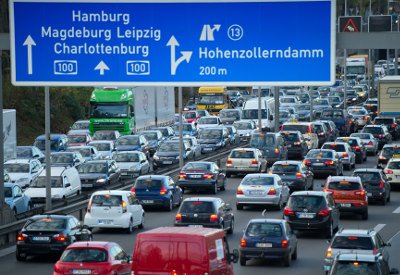
A driver’s dream – but an increasingly rare sight.

You thought the Nazis came up with the idea for the German Autobahn system, and that it’s still today a paradise of free speed? Sorry, but the first of those claims is a myth, and the second is partly true at best.

Construction of the first German motorways was actually initiated in the 20’s under the Weimar Republic, but it progressed slowly, meaning that the first stretch between Cologne and Bonn was not inaugurated until 1932. When the Nazis came to power the year after, they swiftly re-classified this first stretch to a Landstrasse (country road), such as to be able to argue that they built the first Autobahn.

As for the free speed, this is little news to those who regularly travel to Europe, but I recently found some interesting official stats. According to these around 30% of German motorways have a permanent speed limit, especially around large cities and in the Ruhr area. Adding temporary limits and above all roadworks, of which there are a lot at any time of year, this number rises to around 50%. If you then add all the regular congestion, traffic jams and sheer number of cars in this heavily motorized country of 80 million, you find yourself at a much higher percentage.

No free speed today…

The unlimited German Autobahns are thus not a myth, but if you really want to enjoy them, you’d better do so late at night or early in the morning on an empty stretch somewhere deep in Bavaria. And preferably do so in the coming two years, since it has been decided to introduce a German motorway fee for foreign cars from 2021!

Petrol- or Mobility- Head

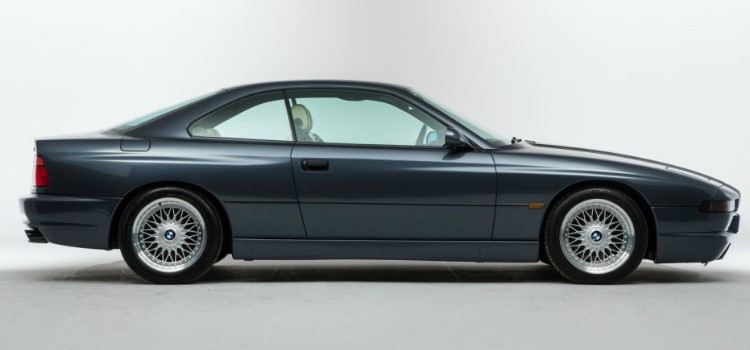
The other day I saw the new BMW 850M on the street, which I thought was interesting at best. The lines, creases and folds make it a good looking and aggressive car but, sadly, I must admit it did not get me that excited. Adrian van Hooydonk, head of design at BWM said “The 8 opens a new chapter in BMW’s design language.” But what about the heritage? I remember back when the (old) 8 series came out in the early 1990s…. From a design point of view, it was an evolution of the 635CSI and the pillar-less windows still make it extremely cool looking, even by today’s standards. It seems the new car is just an aggressive wrapping of metal around current (and future) legislation? Change the badge and it can be anything…. Kia? Toyota? Cherry Automotive?

BMW 850M

Enough about design, what about the engineering aspect?  Ah yes, a hand-me-down 4.4L twin turbo V8 that is used in most of the sporty BMW models…. The original 850 had a naturally aspirated V12 …. Did you read that correctly?  A VEE TWELVE!  An engine bespoke to the flagship model.  The 4.4L TT V8 is powerful and I am sure the new BMW will be quick.  And I am also sure that it will be filled with tech such as autonomous driving aids, connectivity, and interior lighting that can reflect your current mood.…. But I do not care about that.  That sounds more like an IT geek’s wet dream than that of a petrol head. 

BMW 850 CSI

I am not having a go specifically at BMW, as most major car makers today think efficiency, economies of scale and profits, but it struck me for the first time: is a modern petrol head a mobility head? Do they care more about the mobility and tech than the engineering?  Is it only horsepower and 0-100 times and aggressive lines that make a car cool?  As amazing as the new BMW 8 series is, I cannot help feeling that this will be the dream of the IT department rather than someone who is really into cars, engineering and driving.  Am I wrong? Old? Outdated?

I would much rather have an 850 CSI with a V12 up front, manual transmission and rear wheel drive!

Introducing our new contributing writer Magnus!

Please meet Magnus Nilssen, our new contributing writer, a real petrol head and a fellow Zurich resident. Going forward, Magnus will be contributing articles on various driving-related topics. Knowing he had until recently owned a 911 (996) 4S that he chose to sell for family reasons was a serious initial reason for suspicion, but when he sent me the below pic I concluded there’s still hope. Sven and I warmly welcome him on the blog! In his own words:

I spent my youth following my father around Europe living in Sweden, Czechoslovakia, Norway, the Soviet Union, Germany and the UK before settling in Switzerland in 2012. 

My father was passionate about racing.  Holidays (and birthdays) were spent watching races, visiting racing teams or looking at race tracks.  He even built his own race car with some friends in the 1990s.  This had not gone unaffected on a young boy and I carry on his interest!

Infotainment confusion

There was a time when an infotainment system was something you ticked in the options list when ordering your car without thinking much about it. Whether it was called iDrive (BMW), Comand (MB) or something else, systems were rather similar – and rather limited in their capabilities.

This all changed with Tesla’s giant screen and new standard for in-car entertainment, and it has kept (and will keep) changing ever since. At the same time, manufacturers’ understandable wish to bring the latest to market has also created different standards between brands, but actually also between similar models of the same manufacturer, that you’d better be aware of;

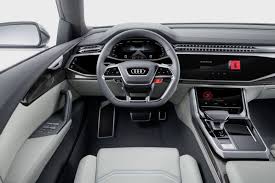
  • Buy a new Audi Q8 (left) and you’ll get two very fancy touch screens on the center console, handling almost all in-car functions at the price of a lot of fatty fingerprints. Buy a new Q7 (right) and you will still get the old-looking navigation screen on the dashboard, and traditional controls for seat heating and ventilation. It’s not a wild guess that the A7 will get the dual screens in the next facelift, but it’s not yet the case.

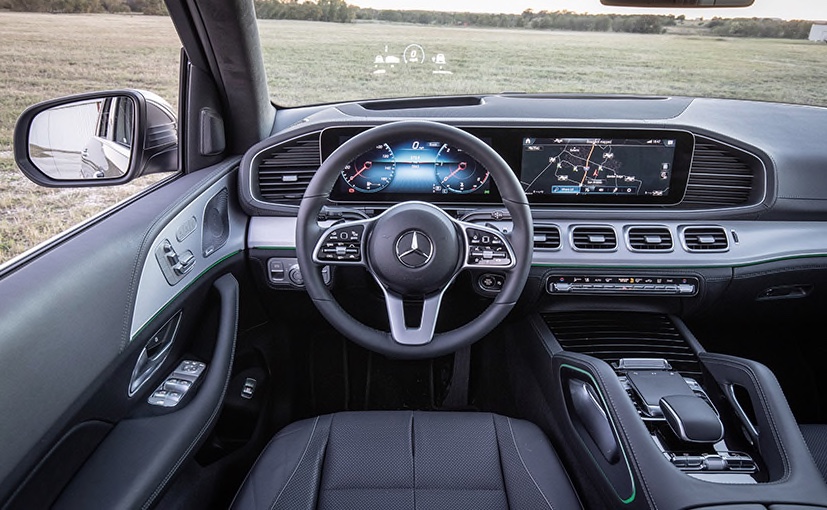
  • In Stuttgart it’s even more confusing: buy the brand new Mercedes GLE (left) and you will get the new, double 12-inch screens with touchscreen functionality through the MBUX software. Buy the new E-class (right) and the screens will look exactly the same but will not yet have MBUX and thus no touch functionality.

Speaking of MBUX (and the latest BMW iDrive), this latest update also gives you the option to talk to your car, starting with the catchy phrase “Hey Mercedes/BMW”. I’ll let you judge for yourself if that’s a drawback or not…

So in other words, if you’re in the market for a new or recent pre-owned car, this has implications. As a seller in 3-4 years of your 2018 Q7, you’ll most probably be punished financially for having a car with that old-looking, single screen. But as a buyer, you will have a great negotiating position already today if you prefer physical, non-fatty buttons that you can locate with your fingers without looking away from the road, and you buy a car for driving rather than talking to it.

When your regular SUV isn’t enough

The production of the Land Rover Defender ceased in 2016 after more than 2 million units produced since 1948. Late last year, the Mercedes G-Wagon was replaced by a completely new car, that however to 98% looks exactly like its predecessor. What these two cars have in common, next to not being produced anymore, is that in spite of their looks and capabilities, 9 out of 10 of them never saw a tougher terrain than the shopping mile in cities like Zurich, Milan or Munich.

There are however those who made heavier use of their G-Wagon, or simply felt a need to float even higher above the common mortals. It was for those that Mercedes developed the G500 4×4, that became the crowning of the G-Wagon career. Powered by the same AMG V8 biturbo as the G63, it was arguably more stable at high speed than the original G, the road behaviour of which was somewhat similar to a cruise ship, with a comparable turning circle. The credibility of the 4×4 is however somewhat compromised by the many carbon parts, basically all the black parts in the pictures, that no sensible person would like to damage or even scratch. So perhaps the best place for the 4×4 is the same as for the regular G or the Defender: on a shopping mile in a European city.

We didn’t post this under The Thrill of Owning heading, but this is a car that could be yours for around EUR 200.000, and that should arguably hold its value quite well, as all G-Wagons do, especially with the new model now out…

Mercedes_g-klasse_hoch2_4.jpg

May Santa bring you a McLaren!

Arguably as a petrol head you’re quite spoiled living in Switzerland, whether in Zurich or Geneva. But even here you don’t see a McLaren everyday, and you certainly do not see two 720’s, in the same colour, parked next to each other in a street in Geneva, all that often!

Merry Xmas to all our readers, may 2019 be your best driving year ever!

McLaren

Tesla Model 3 – yes, it does exist!

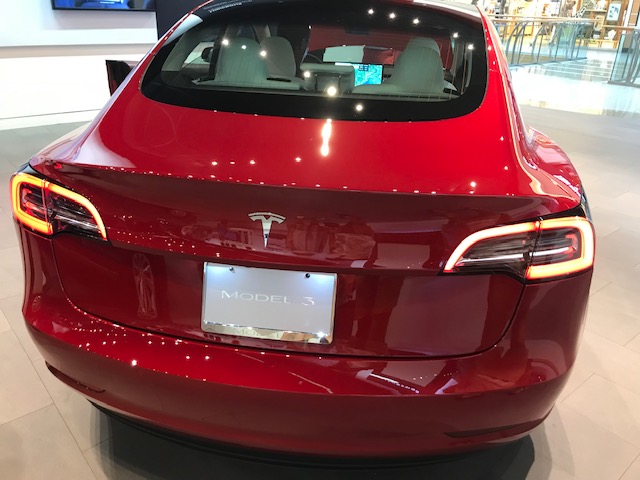
Having spent the last weeks in the US, I’ve seen quite a few of the long-awaited, long-delayed Tesla Model 3, that is now finally being produced and delivered (with delivery times in the US as low as 4 weeks), but still has to make it to Europe. If you haven’t seen it, it’s quite a good-looking car, probably the best looking in the Tesla line-up. The side and rear are similar to a (smaller) Model S, the front has a bit of Panamera over it.

Model 3 front
Same two luggage spaces as on the Model S, both a bit smaller in size. 

The interior however if very different, I guess you could say more futuristic, but as in the S and X characterized by the giant screen that in the Model 3 is however not integrated to the dashboard but rather stands out of it like a big laptop screen. Feels a bit cheap and the interior is in general a bit simpler than in the S and X.

Model 3 screen
This is the only screen in the dashboard, which is basically free of buttons and switches as well. 

So far only the top version has been introduced to the market and for some unclear reason, Tesla won’t divulge the KwH of the electric engine, only talking about the range of over 300 miles (460+ kms). That would mean that it’s the 90 or 100 KwH engine, and it’s difficult to see why that would be a secret, given it isn’t for the other models. Towards the end of the year, a cheaper version with a smaller engine and a range around 250 miles (400 kms) will be introduced at a cost in the US of around USD 35.000. The top version as shown in the pictures costs around USD 50.000 in the US and both versions should make it to Europe in 2019.

Model 3 rear

The price will probably decide on whether it becomes a success in Europe or not. As always it’s a bit difficult to pinpoint the competition – it’s difficult to imagine someone choosing between a Model 3 and a Prius. You do however get a lot of fun cars for around EUR 40-45.000, so Tesla would probably need to keep the price pretty much in line with the US. The recent introduction of the Jaguar I-Pace and the coming Audi E-tron and MB EQC also illustrate how the big guys are gearing up. Although not in direct competition to the Model 3, it will clearly be far less smooth sailing for Tesla going forward, whether as a private or a public company…

British Car Meeting 2018

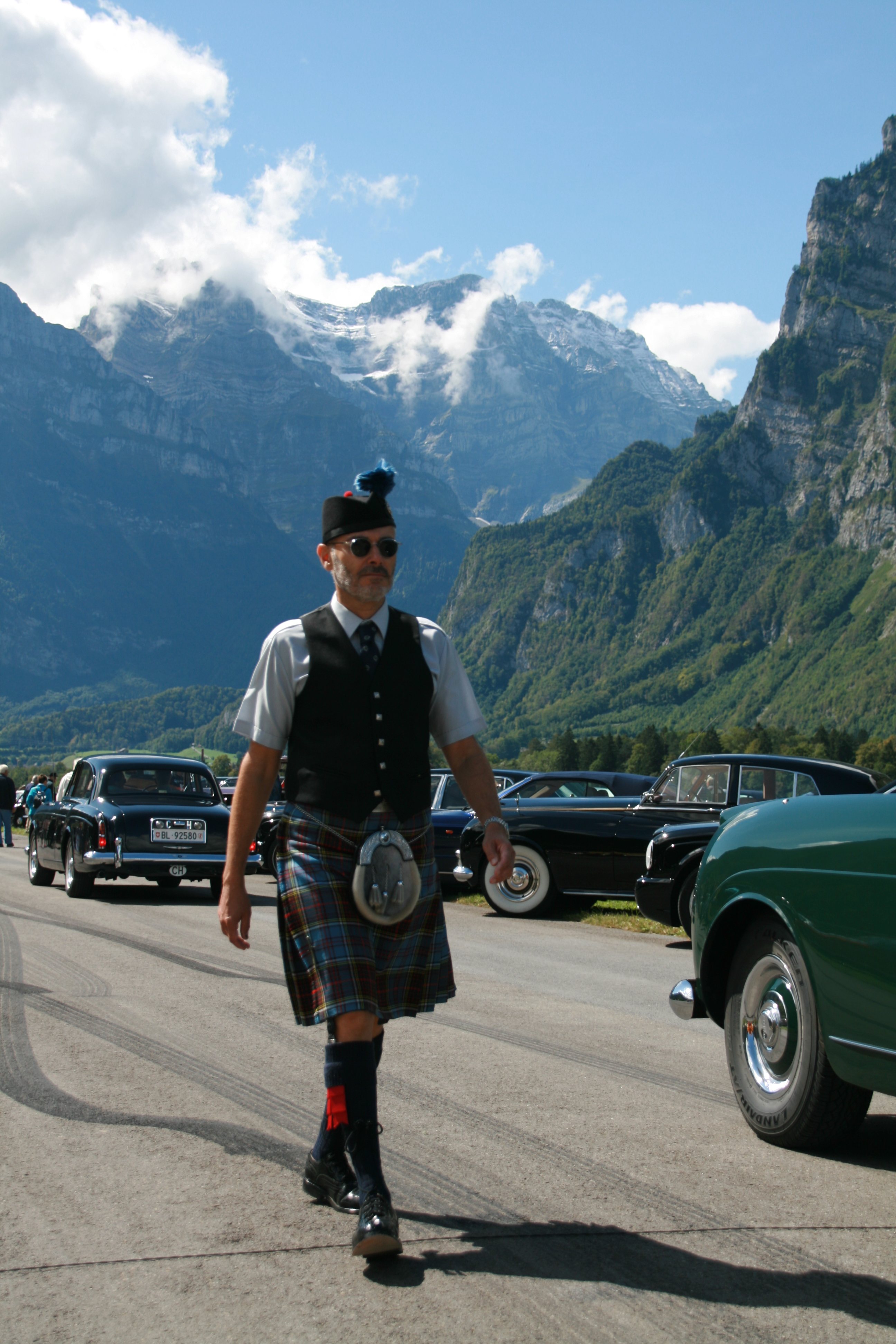
I had the pleasure of attending the British Car Meeting on the Swiss countryside today, an annual gathering where some 1300 British cars of all ages gather to admire each other and be admired by others. A few picks of some of today’s participants. Scroll over the pictures to see the caption.

IMG_7872
Against a very Swiss background, some 1300 British cars gather each year in Mollis, canton of Glarus

IMG_7881
This gentleman subsequently found his bagpipe and entertained the crowds…

The dream garage

Last Saturday was as so often great for some Zurich car spotting and the mental game “my dream garage”, as illustrated by the below pictures.

I find these two a close call given the Bentley offers the topless option and I’m still not fully convinced by the DB11’s looks. The Continental does have a timelessness to it and ages rather well!

Bentley II

Bentley I

The below, this time from Geneva last week, is a no-brainer, at least for a lover of classic cars like myself, especially in that lovely 70’s yellow!

Porsches


When battery power is not enough

The business press has given a lot of attention lately to Elon Musk’s plans for the future financing of Tesla, however without really looking at the one factor that is critical for the bottom line, as for any car company: the trend in cars sold. And if the Hong Kong market, which boasted the highest number of Tesla cars per capita in 2016 is anything to go by, the trend is not good.

Regular readers of this blog may remember my video post from a business trip in Hong Kong in March 2017, that you can otherwise view here. Little did I know at the time that a month after that video was made, things would take a dramatic turn for the worse in terms of Tesla sales.  In the record month of March 2017, almost 3000 Teslas were registered in Hong Kong, before the bottom went out of the market in April with only 32 (!) cars being registered in the territory for the remainder of 2017, and with numbers continuing to drop so far in 2018.

BF-AS184_TESLAH_16U_20170709185104What Hong Kong residents knew back in March of last year, and I didn’t, was that the HK government was about to abolish the heavy subsidy on Teslas to the benefit of more ordinary, electric cars. Hong Kong is not the first market where removal of subsidies has had a dramatic effect on Tesla sales, Denmark is another. To make things worse, Hong Kong residents conscious of the environment should probably be happy about the drop, as research from Bernstein from 2016 has shown that electricity generation in Hong Kong is so dirty that a Tesla will throughout its lifetime be responsible for 1/5 more CO2 emissions than an equivalent petrol car.

The removal of the tax subsidy made Teslas massively more expensive in the local market, but not more so than a BMW, MB or Audi, all of which continue to sell significantly more cars than Tesla. As everyone who has driven a Tesla knows, it’s a fascinating car, but if you remove the engine, it is no match for the traditional luxury brands. This is what the statistics from Hong Kong prove, and it thus seems clear that the most critical factor for Elon Musk’s financing plans and Tesla’s future is government subsidies – or in other words, politics.

Kia stings the auto hierarchy

You may have heard about Kia’s first ever performance car lately, the Kia Stinger GT, given how much it has been talked about – and praised. Especially in the top GT version the Stinger is quite good-looking, drives well and is equipped with a twin-turbo, 370 hp six-cylinder, ensuring it delivers in terms of performance as well. That’s all great, but not even Kia expects the Stinger GT to sell in the tens of thousands, mostly given it’s a four-door sedan – and that it’s a Kia.

Kia Stinger exterior

Kia Stinger interior
A very nice place to be!

This last point is where it gets interesting. Because it’s neither for the engine, nor the looks or the road manners that the GT has received most praise – it’s for the interior, which I had the opportunity to explore myself recently. I can only confirm what has been said by others: if you didn’t know what car you’re in, I guarantee that you would guess on something firmly in the high-end segment. From the leather dashboard over the metal applications to the equipment and the quality of the seats, there is nothing that would make you think you’re sitting in a Kia, except for the logo on the steering wheel.

If you had taken a 400hp engine and put it in a Hyundai, Kia or Skoda five years ago, it would still not have made it a serious contender in the high-end segment, too big were the differences in ride and interior quality. But now we have come to the stage where technological and production progress is such that a brand such as Kia can deliver a car that looks good, drives well and is fully specced, but still at least EUR 20.000 cheaper than any comparable Audi, BMW or Mercedes-Benz.

What’s the value of a brand? I believe we’ll find out over the next few years, but the just got a whole lot tougher for the traditional premium brands!

Kia Soul
A 2010 Kia Soul – let’s just say we’ve come a long way since!

Marcus Ericsson and Sauber score again!

Marcus Bahrain

Today’s GP in Bahrain was entertaining, as is almost always the case Bahrain, but especially so for Swiss and Swedish F1 fans, as Marcus Ericsson finished 9th, scoring two points for his Swiss Sauber team. Even better, he did not do so because of a mass crash, but rather as the Sauber car with its new partner Ferrari (in Alfa Romeo disguise) is actually becoming increasingly competitive, and at least on this circuit managed to keep the pace of the middle field of teams. This bodes well for the future. Before today, Marcus had a stint of 49 races without scoring a point (since Monza in 2015), hopefully it won’t take another 49 for him to score again!

The race was won by Vettel (but the way his 49th win by a funny coincidence) ahead of Bottas (who would probably have won had the race lasted another couple of laps) and Lewis Hamilton, who had started 9th due to a replaced gearbox.

Glimpses from the Geneva Motor Show

If you happen to be close to Geneva, there is still time to visit the 88th Motor Show, that takes place until 18 March. I was able to spend a few hours there this week and observe, next to the usual glamour, two main trends.

The first one is obviously electrical cars, and when you see the sheer  number of hybrid and electrical cars currently available or in planning in one place, it is hard to imagine that some other alternative fuel would have a chance to compete with electric – the race is probably already run, also in terms of supplying the necessary infrastructure.

The second trend, a bit more unexpected, is – well, flying cars. A number of brands present different types of cars with wings, or more drone-like flying arrangements like the Audi pictured below, the idea of which is for the car both to be able to cruise down a road but then take to the air when the road stops or becomes congested. You can’t help wonder how we will look back on this in 15 years from now…

IMG_2174
The Audi Flying Drone (no, that’s not the official name). Will our grand children say “gee, look at how big the wings were then”, or rather “they were really crazy back in the -10’s”?

Next to electrical cars and flying drones, there was however still enough of the old school cubic inches and horsepower around for me to provide some main highlights below.

IMG_2168
The BMW X7 is a beautiful study of what a larger, future X5 could look like. No production date has been set, and it’s a bit surprising how late BMW thinks about joining the party, considering competitors such as the Audi Q7 and MB GL/GLS have been around since long.

IMG_2172
Polestar had their stand next to the (large) Volvo stand, in perhaps the best location of the whole show – well done. Polestar 1 (set to go into production in 2019) looks nice from the front and the side, but the back is as ugly as the new S90 and does not look very premium on the inside. 

IMG_2165
No, this is not a second Polestar1 but rather the AMG GT63, a four-door, four-seat, coupe-like GT car. When you look closer it looks far more aggressive and exclusive than the Polestar. Now if anyone really missed it until it existed, that’s another question. 

IMG_2175
With obviously all the supercar brands being present, I’ll let the Chiron represent them all. No doubt the reddest car at this year’s show!

IMG_2170
If you feel these lines reminds you of something from your youth, you’re right. This is the new Stratos, a tribute to the original Lancia Stratos and showed as a concept already in 2010, but now about to go into production. It is designed by Pininfarina and will be manufactured by Manifattura Automobili Torino (MAT). Based on a Ferrari F430 chassis, the engine develops over 500 hp for kerb weight under 1300 kg. 

IMG_2173
Last but not least, my favorite from this year’s show, the Ruf SCR. The latest incarnation of this 40-year old name is what first looks like a classic 911 (964), but is a fully modern car with a body in carbon fibre and a 4-litre naturally aspirated six-cylinder engine, developing over 500 hp. The price is as high as the car is beautiful!

A year with the E63 AMG

It was in late November -16 that I picked up my then 18-month old E63 AMG Station Wagon (leading to some early impressions that if you missed them, you can read here), so it’s been a bit more than a year and roughly 20.000 kms between then and now – and what a pleasure it has been! Looking back at my past car buying history, they tend to come and go at quite regular (and short!) intervals, but at least for now I haven’t a single time entertained the thought of switching – it’s just too good.

mb-e63
…where it all started…

Starting at the heart of the matter, the engine is quite simply superb. Power is just everywhere, delivery is instantaneous and never-ending, and the sound still gives me goose bumps every time. It’s been rumored that most of these engines deliver more than the 558 hp on paper. I have no clue whether that is true but if someone told me there was another 100 hp under the bonnet I would believe them straight away. I’m actually thinking of getting it measured at some point.

At the same time it’s as smooth and practical as any Merc for the local shopping round, or transporting empty boxes from my wife’s shop to the recycling station. Consumption is highly reasonable; sure, it’s no Prius, but we did 1000 kms through Germany last summer at speeds that would make you lose your permit in every other part of the world, and came down with 14 litres / 100 kms. In normal driving it’ll come down to 10-11 litres which really isn’t much to complain about.

In the first post I mentioned the Speedshift gearbox as a positive surprise, and it still is. It’s so much better than MB’s regular box, up-shifting instantaneously with a thumping sound in Sport and Sport+ Mode, whilst also downshifting highly effectively and always timely. Well done AMG! The same goes for the light-footedness chassis and the perfectly weighted steering.

So what’s on the downside? Well, actually nothing at all (this is the point where I’m actively forgetting a decent amount of speeding tickets through the year…). There is also this saying that a model is never as good as just before it ceases to be produced, and I tend to believe that. Sure, the new model is out (with the same V8 Biturbo engine, and not a V6 as I had claimed, based on false rumors), and it delivers a bit more than 600 hp, but the design still needs to grow on me – and prices on the next-to-new market need to come down, so for now I see little need to change. In fact I find myself surfing around various tuning sites in my spare time, something I haven’t done in many years. A power upgrade doesn’t really feel necessary, but the suspension could be lowered a bit… And maybe that dash-controlled exhaust would be cool… and…. So as you can see, the mid-life crisis is all over, but boy is it fun!

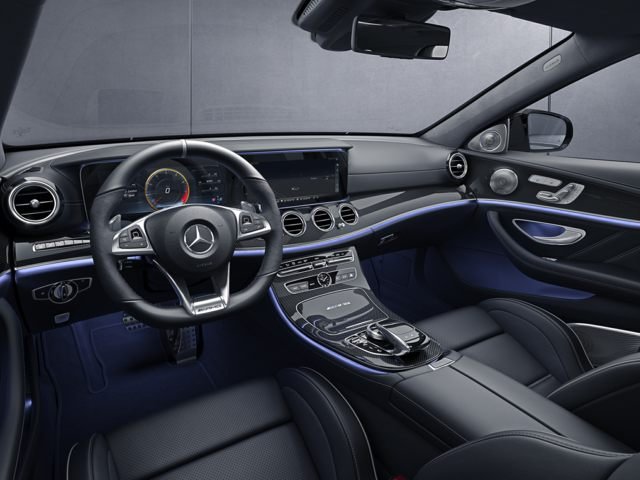
w213 e63
The new model is nice, but perhaps a little too discreet?