Bizzarini’s Back!

It was early 2021 as I walked down the street in a Covid-empty city of Zurich, when I stumbled upon a car that I couldn’t identify. As you would hopefully expect from someone writing a car blog, that doesn’t happen too often. It turned out that I was standing in front of a Bizzarrini, an exotic Italian supercar from the 60’s, developed by Giotto Bizzarrini, one of the greatest car engineers the world has seen. That led to the post on his remarkable career from early 2021 which serves as a good background to today’s update.

As a sign that all is not lost on the car front and that sensible things are still happening, notably in Italy where the recent Ferrari Luce could lead you to believe otherwise, Bizzarrini is back. At the Goodwood festival of speed in the UK a few weeks ago, the brand showed their new car, based on the original Bizzarrini 5300 from the 60’s, and also talked about plans for the future.

It should be noted that there’s already been one try at reviving the Bizzarrini brand. That was in the late 90’s and early 00’s, but in spite of good intentions, there wasn’t enough backing to make it into production. There were several tries at different car models and the most interesting was no doubt the Bizzarrini Kjara, based on an original Bizzarrini concept. It combined an internal combustion engine with electric drive, years before hybrids became fashionable. It remained a one-off concept, but serves as a good reminder of the genius of the man who only passed away three years ago, 96 years old.
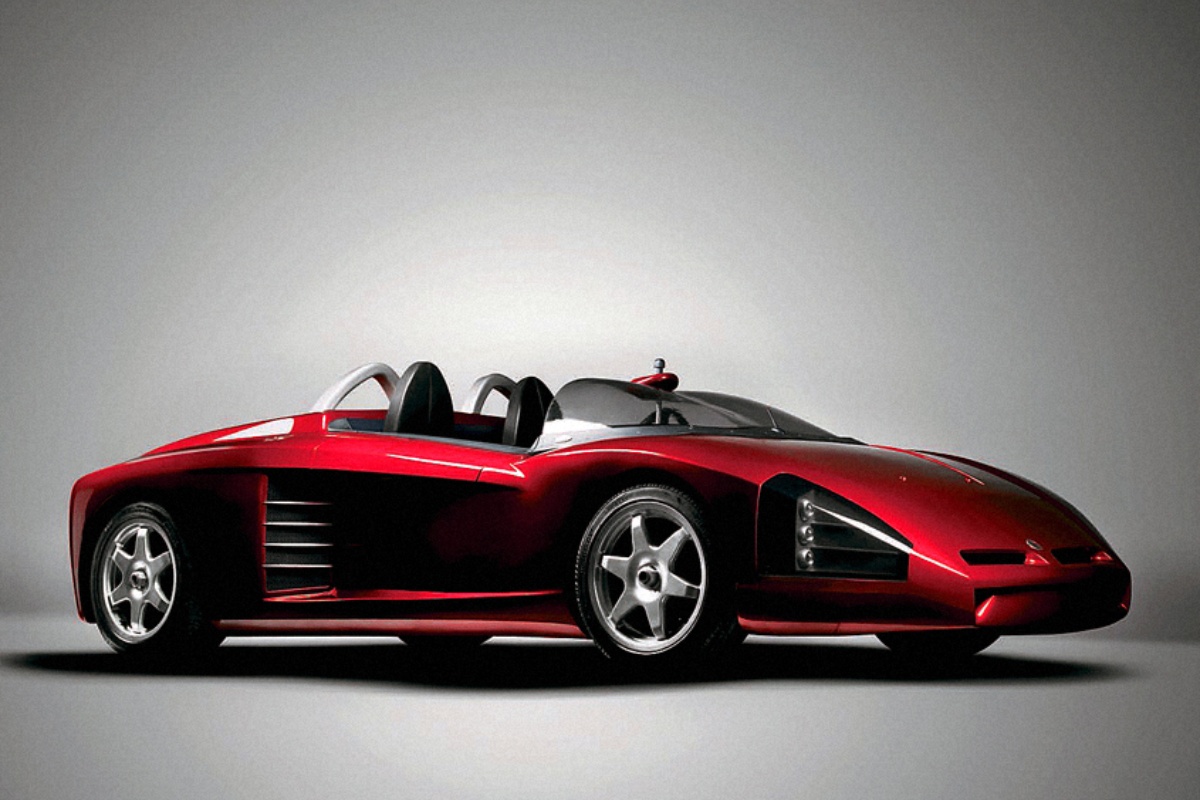
The Kjara was arguably more innovative than beautiful…

The current attempt at a Bizzarrini revival started in 2020 and seems rather well funded, also benefiting from a clear strategy. It evolves around the resurrection of the track car 5300 GT Corsa and the road legal 5300 Aperta Lusso that we’ll focus on here. Both these are produced in (very) limited series but will in 2027 be complemented by the Giotto, a modern supercar promising to set new standards in performance and usability.

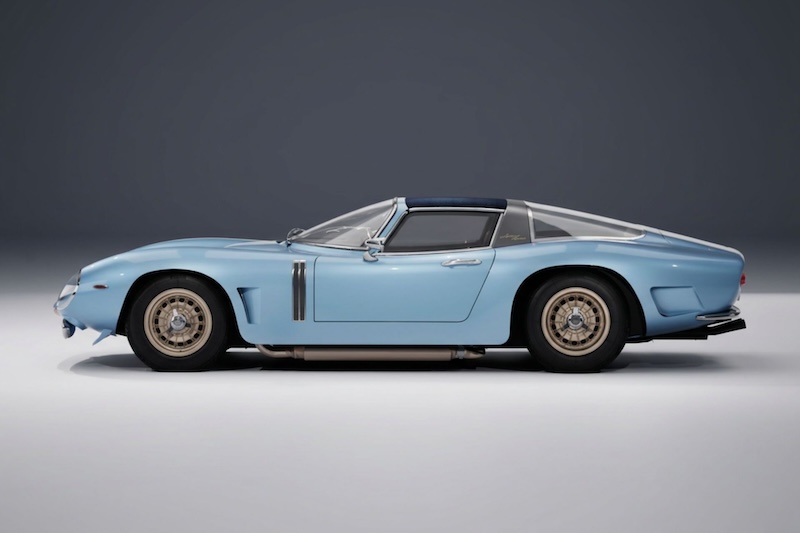
The 5300 Aperta is based on a targa version of the Bizzarrini from the 60’s that never made it beyond paper sketches. In fact it was originally intended for the Iso Grifo, another small Italian brand form the 60’s. The revived design is close to the original Bizzarrini with minor adaptations and then the glass bulb of the targa top, giving the design even more elegance than the original. With a body entirely in carbon fibre, the new 5300 is low and wide, with a hungry front and a rear with four, undisguised real pipes. It looks fantastic.
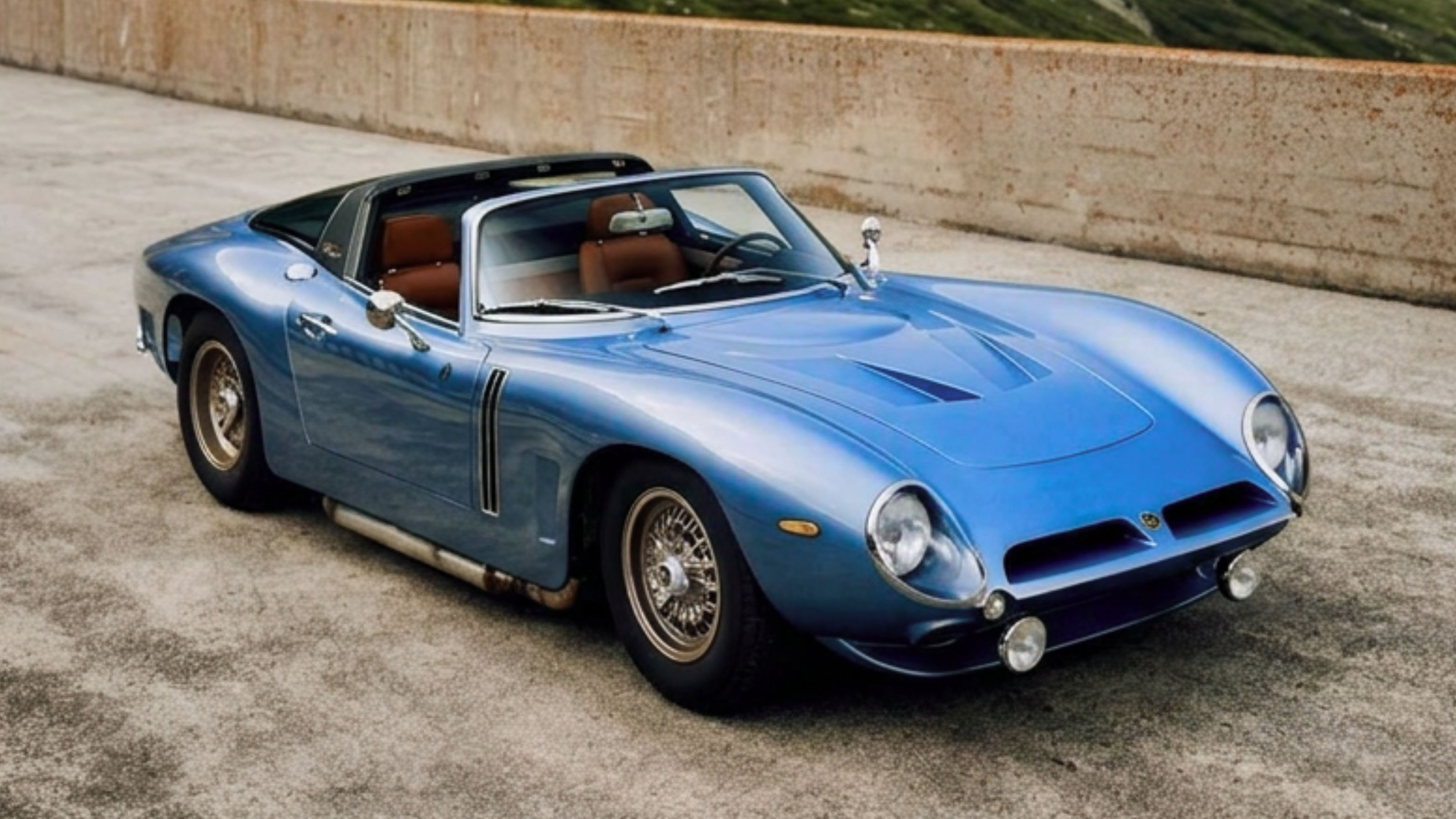
You’d be forgiven for thinking you’re looking at a 60’s car!

The new 5300 respects Bizzarrini’s engineering thinking, notably in terms of weight distribution. As in the original car, the engine sits as far back as possible under the long hood, behind the front axle, and it’s tilted depending on whether the car is right- or left-hand drive such as to always give the car a perfect weight distribution. The engine itself is still a small-block V8 but has been fully modernized, with the wonderful Weber carburetors replaced by fuel injection – however in a design that still looks ass the original. It’s said to produce in excess of 400 hp.

The idea has been to preserve the analogue feel of the car but still have it meet modern standards. In that spirit, brake performance has been improved by working around a concept with larger disks, rather than fitting a hydro-assisted system. The five-speed Tremec box is also said to convey a mechanical feel, and the suspension is traditional springs. And so it goes on.

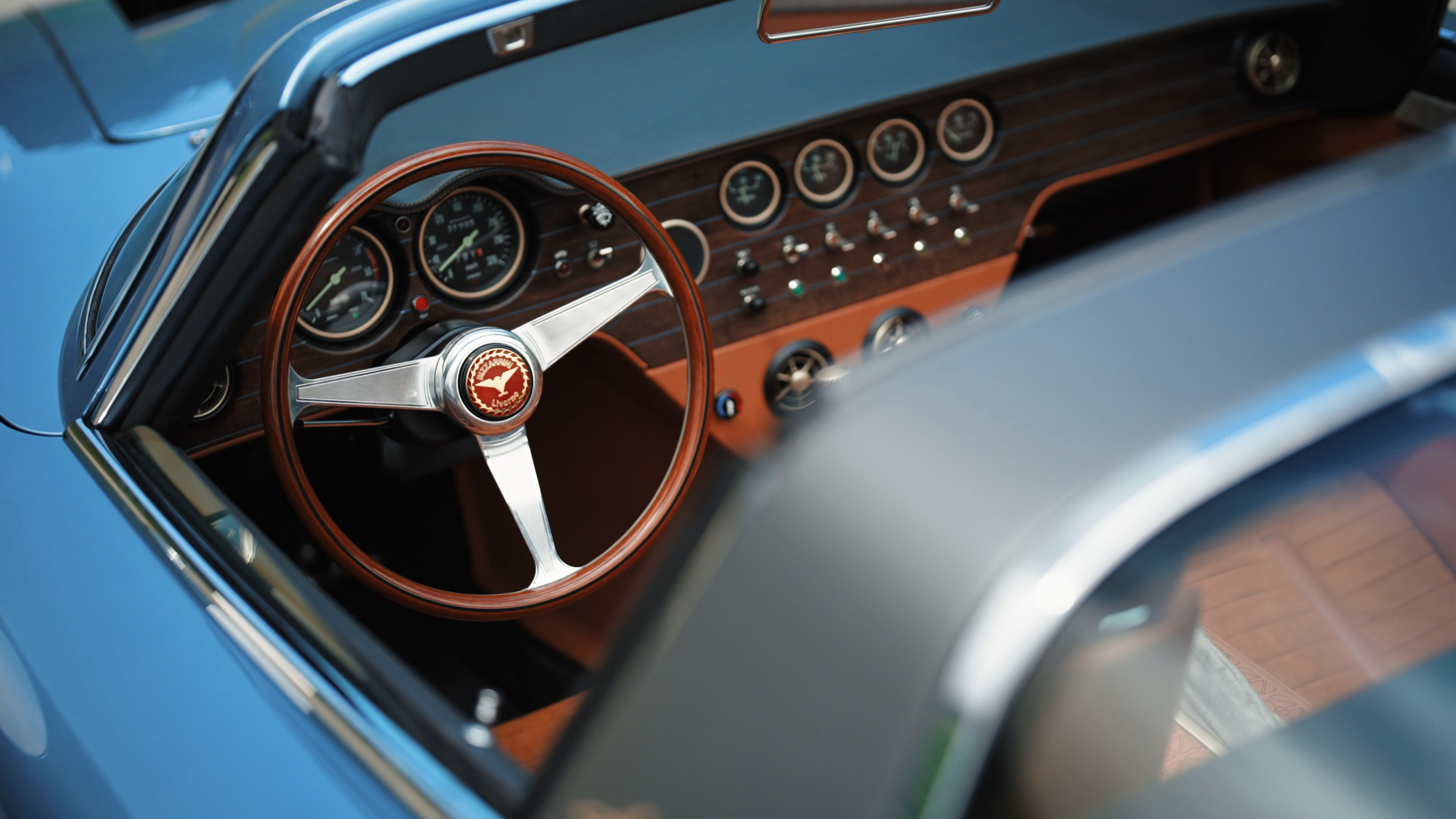
Luxury is not a big infotainment screen!

10 Apertas have been built, all individually made to the lucky owners’ specification, with interiors featuring solid wood on the dash and textiles from the Italian textile designer Ermenegildo Zegna. The V8 is said to give the car a top speed of 280 km/h, which given the fact that you’re sitting no more than 30 cm above the road is no doubt enough.

If the revival project holds and timelins are kept, the 5300 will then be complemented by the Giotto, a V12-powered supercar planned for 2027. Designed by Giorgetto and Fabrizio Giugiaro, the father-and-son team where Giorgetto was also involved in the original Bizzarrini design in the 60’s, the car is said to feature a 6,626cc Cosworth V12. This is a tribute to Bizzarrini’s design of the original Lamborghini V12, as described in my post from 2021, but also to Giotto Bizzarrini’s birth date: June 6, 1926.
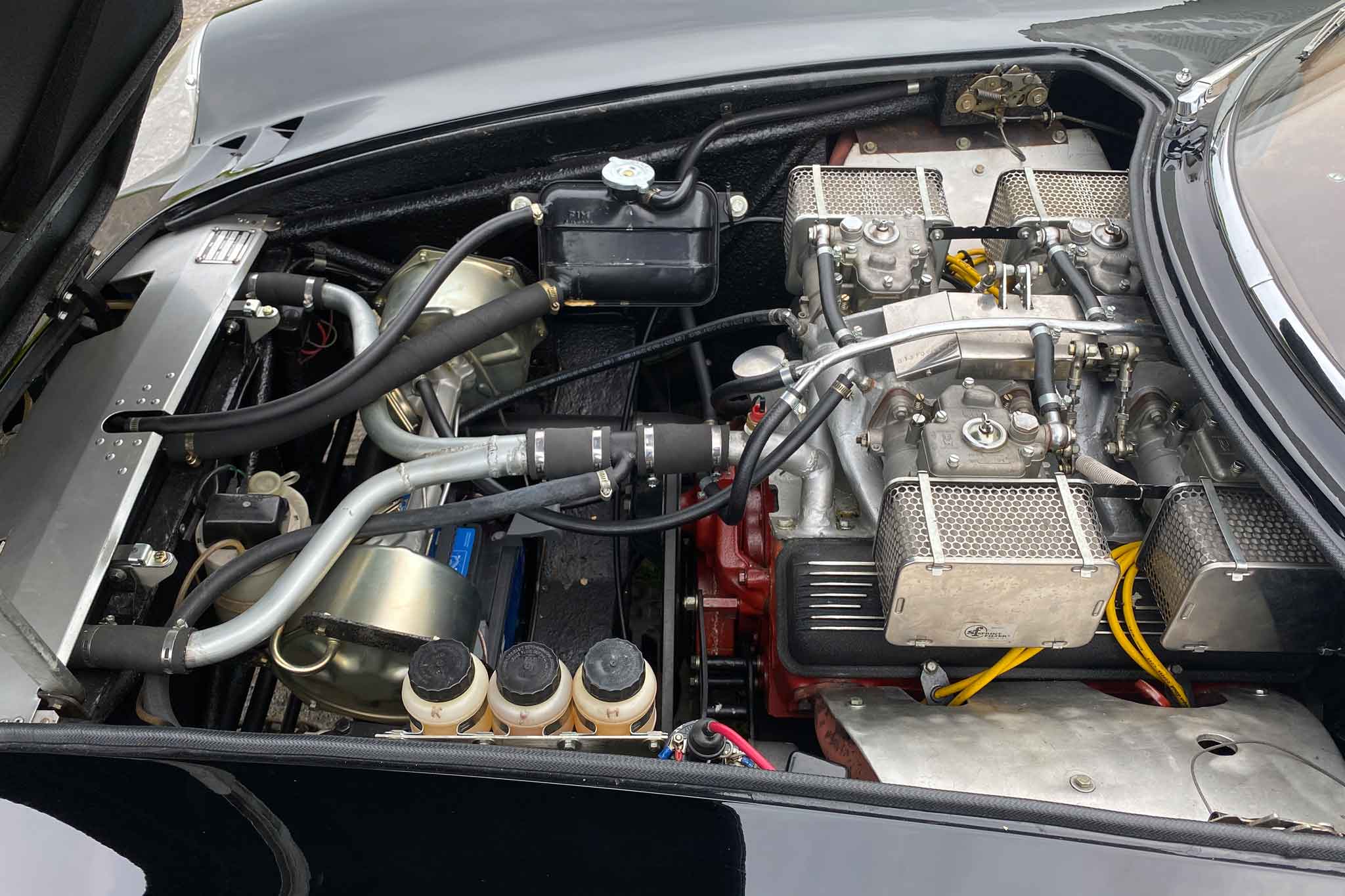
Never has an injection system looked so much like carburetors!

Bizzarrini is today owned by Rezam Al Roumi, a Kuwaiti businessman who’s previously been engaged with Aston Martin, notably as chairman, so clearly with some solid car credentials. His intention is to return Bizzarrini to its rightful place in the luxury car segment. It would be great if he succeeds, but with all respect for the Giotto, it would be even greater if he decides that a run of only 10 examples of one of the most beautiful cars ever is clearly not enough!

Street finds: the great Bizzarrini!

A great thing with writing this blog is that whereas in some weeks I know well in advance what to write about, in others I don’t have a clue. This is a bit of a thrill since inspiration (at least so far) then comes somehow, but very rarely does it do so in such an inspired way as this week!

Taking a lunch walk on Tuesday in the currently locked-down and therefore half empty city of Zurich, I turned a corner and saw something low and red that looked very much like a 60’s Ferrari but was… something else. A model name I didn’t recognize, and a logo that said Bizzarrini.

I know we have some really knowledgeable readers here and as those of you familiar with Bizzarrini will know, seeing one doesn’t happen every day; nor every week, month or year! I had never seen a Bizzarrini before which is perhaps not very surprising, given the whole production of Bizzarrini automobiles in the 60’s amounted to a few dozen cars (more on that below).

The 5300 GT I had in front of me looked spectacular, and when doing some research around Giotto Bizzarrini and his brand, a wonderful story of great engineering in a bygone era combined with the temper of several protagonists, including a certain Enzo Ferrari emerged. So this week will be about Giotto Bizzarrini and his cars, from the age when cars were sketched with a ruler and built with sweat rather than computers!

What I couldn’t identify straight away – a Bizzarrini GT 5300 Strada!

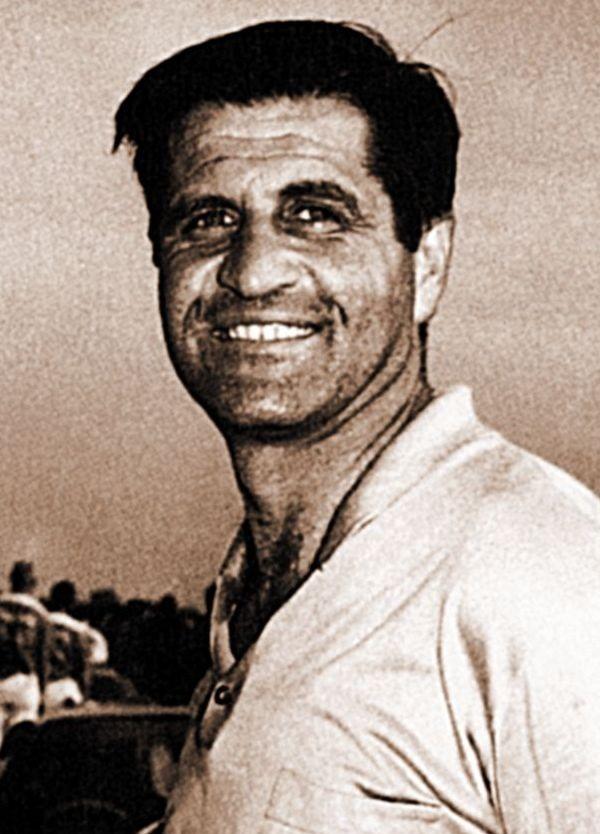
Giotto Bizzarrini was born in 1926 close to the port city of Livorno near Pisa in Italy, and as a young engineer started working for Alfa Romeo where he quickly made a name for himself as a very promising and talented engineer with a special love for racing cars. He was in fact so promising that the great Enzo Ferrari became aware of him and quickly recruited him, so from 1958, Giotto worked at Ferrari where he led the development of several Ferrari GT cars, notably the legendary 250 GTO.

No doubt that Giotto had his career cut out for him at Ferrari had it not been for Enzo’s strong personality, Latin temper – and love for his wife Laura. Laura was not as loved by other key Ferrari employees, especially on the sales side where Ferrari’s sales manager Girolamo Gardini was getting very tired of Laura messing up his sales plans by always requesting special deliveries of race cars for personal contacts and friends.

Betting on his long and successful background at the firm, Gandini together with a group of other senior executives, including Bizzarrini, one day walked into Enzo’s office and basically told him “it’s her or us”, confident Enzo would see the logic. He didn’t. Laura stayed and Enzo fired the senior executives (consisting of most of the race team at Ferrari) in what was referred to as the Palace Revolt or the Great Walkout. You’d better know what you’re doing before you mess with the boss’s wife, especially if that boss is (or rather was) Enzo Ferrari!

The Ferrari 250 GTO – 36 built, all of them still in existance, changing hands at USD 50-75m…

Giotto Bizzarrini was especially passionate about engines and before the Palace Coup had started a department within Ferrari where engines were tested and notably the Testa Rossa 3-litre engine was developed. When he left Ferrari, Giotto went on to found a company named ATS with the ambition to build a Formula 1 car (which he never did), before founding his next company called Società Autostar as a freelance design house (chassis and engines) in Livorno.

One of his first clients was a a certain Ferruccio Lamborghini who was set on building a V12 engine and much like Bizzarrini, wasn’t best friends with Enzo. Bizzarrini took on the project and thus built Lamborghini’s first V12, with an architecture that was far ahead of what Ferrari was producing at the time and so powerful it had to be tuned down from its original 375 hp for street usage.

This is in other words how Lamborghini’s first V12 came about, and you have to believe Giotto wasn’t too displeased to indirectly get back at Enzo…

The first Lambo V12 – Bizzarrini to the far left

Autostar under Bizzarrini also worked on a number of other cars, notably for Iso, another small Italian automaker from the 60’s, including the Iso Rivolta and Grifo, especially the race version of the Grifo called A3/C. For these, as well as for the later cars in the Bizzarrini name, he would however not be using that Lambo V12 but rather the small block Chevy V8 from the Corvette.

Throughout his career he had developed a love for the larger volume, US engines, and even tried (unsuccessfully) to convince Ferrari to build a larger volume engine. A year later Giotto ended the collaboration with Iso, took the A3/C with him and fulfilled his dream by starting Automobili Bizzarrini Spa, where the A3/C was to become the first Bizzarrini car under the name GT 5300.

The GT 5300 was produced both in a Corsa (race) and a Strada (street) version, with a power output from the Chevy small block of between 350-400 hp. The car was front-mid-engined with the engine sitting behing the front axle, probably sharing quite a lot of heat with the passengers but above all, producing a sound out of this world…

The body was a combination of aluminium and fibre glass, the rear axle was independent and brakes were inboard i.e. mounted on the axles such as to remove weight from the wheels, as notably on the Citroën SM. The box was a Chevy four-speed manual. Giotto raced the Corsa version himself notably in Le Mans, and it’s hard to believe today when you learn that doing so, he drove the car himself from Livorno to Le Mans, won his class and then drove back home!

The rear is the part most will have seen of the 5300 GT, and it’s a good-looking one!

Unfortunately, although there’s no doubt about his capabilities as an engineer, car designer or for that matter driver, Giotto Bizzarrini wasn’t very talented as a businessman. The race career never really took off, notably since Giotto didn’t have enough money to homologate the GT 5300 Corsa. Even worse, the whole company was permanently under-capitalized, the GT 5300 never became a success, and after the bankruptcy filing of the company in 1969, Giotto even admitted that he had not keep track of how many cars had been built.

This is still a debated topic today. It’s clear that the GT 5300 Strada was the most popular car with presumably 50-75 cars produced. The Corsa version is estimated to have been built no more than 10 times, thus making it three times rarer than a GTO, and the following and last race car, the P 538, was only built a few times.

So the total production of Bizzarrini during five years was probably no more than 100 cars. Those still in existance mostly sit in car museums (if you happen to be in LA, the Peterson Automobile Museum is said to have one) or personal collections, so I was indeed a lucky guy to see one parked in the street with the window half-opened!

Giotto passed away in 2023, at the age of 96. He will no doubt have been quite surprised to see the prices his cars fetch on the few occasions they change owners. A Bizzarrini would have been a great investment around 20 years ago when they traded for somewhere around USD 100.000. Today you need to add a zero to that.

But that’s of course not what makes the story special. Rather, it’s the story of a man who today counts as one of the gratest racing engineers ever, not only in Italy but globally, who developed Lamborghini’s first ever V12 and,who could probably have helped Ferrari became even more successful as a racing team, had Enzo had his wife and temper under control!