
Don’t know about you, but I use ChatGPT more by the day and find it incredibly useful. Earlier this week, I asked it to define downsizing, and it gave me a paragraph on the meaning in the corporate world that ended with the following: “(…) it can also be applied to (…) personal situations where individuals reduce their lifestyle or expenses”. That doesn’t sound like a very exciting topic, but on a larger scale, at least in terms of lifestyle, it’s obviously what the car world is about in general these days. And since recently, it’s part of my own car world as well.
June as been an eventful month for my wife and I, as we’ve realized a long-term dream of buying a place in southern France. This has meant spending more time than usual in that very nice corner of the world, and obviously also that we will do so even more going forward. And that has in turn highlighted how our wonderful, lovely, comfy travel companion, the Range L405, is completely malplacé in French villages and on narrow mountain roads. It’s of course also true that although the 5-liter V8 is not as thirsty as you would think, 12-13 liters per 100 km (18-20 MPG US) is quite a lot when you start adding up the 650 km between Zurich and Nice, as we will be doing.
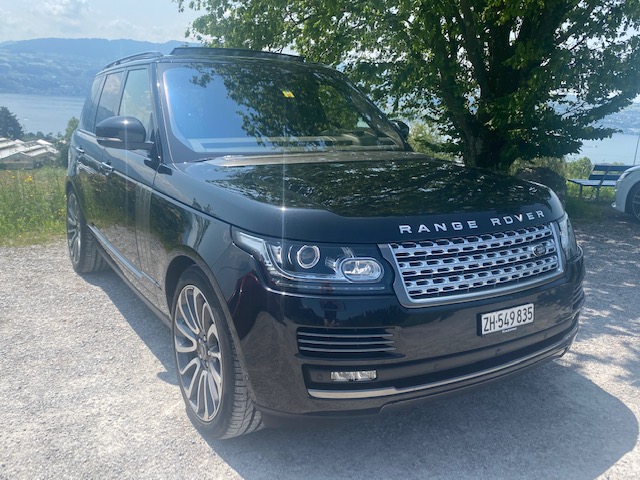
Therefore, downsizing is on the order of the day. The Range will need to go and be replaced by something smaller and ideally also more economical. Earlier this week I therefore put it up for sale and then I set out to test some possible candidates in the category “sensible and smaller”. I would think that should be possible while still preserving a bit of style and fun, right?
Until not too long ago, if you lived in Europe and wanted to save on fuel costs, the default choice was a diesel. One of the best modern diesel engines around is BMW’s 3-liter 6-cylinder, offered notably in the 3-series. Given that’s quite a neat car in general and now that the kids are grown up, large enough for our needs, I decided to check it out, in the form of a 2020 BMW 330d.

However as we all know, since a few years back, saving fuel increasingly goes over hybrid solutions, with a mild or plug-in electrical engine complementing a petrol or diesel combustion one. Volvo here offers the so called T8e, combining their 2-liter, 4-cylinder petrol engine with an electrical engine on the rear axle. It’s offered across the model range but notably in the very good-looking Volvo V60, which roughly matches the 3-series in size. A V60 from 2021, pre-owned by a Volvo garage and noticeably more expensive than the Beamer, became my second choice in this week’s selection. My objectives were thus to find out not only which one is the best car, but also if they’re viable candidates for us, and finally which way of achieving efficiency is actually superior.

In the 330d, BMW’s diesel gives you 265 hp and 580 Nm of torque. For a family car weighing in at around 1800 kg that’s more than enough and will take you to 100 km/h in about 5.5 seconds. For a diesel the engine is also really smooth without a limited but still noticeable lag when you put your foot down and as always with modern diesels, the torque is impressive. That said, there’s no hiding it runs on diesel oil, and you can hardly call the engine sound sporty.
Handling-wise with a perfect weight distribution and especially in the M-Sport version I drove, to quote Julia Roberts, it really corners like it’s on rails (probably far more than the Lotus Esprit she drove in Pretty Woman!). The interior is solid, noise isolation is good, the quality feel is of course high, although the amount of plastic used in the interior is frankly both surprising and disappointing. In summary, it’s a perfectly good car, but is it fun? Na.

Volvo’s four-pot puts out around 310 hp, with the electric engine adding another 90 hp to that. In electric-only mode the V60 has around 40-50 km of range, but both engines also work together for more efficiency, and the electric engine will charge on the combustion engine’s excess energy and through recuperation. Typically though, you would charge the 12 KwH battery at night on a wall socket where depending on charging speed, it will take you a few hours. As other hybrids it doesn’t have a fast charge function so if you stop for lunch along the highway, don’t bother trying to find a charging spot to plug it in as it won’t really make a difference.
Long-term readers of the blog may remember that I had a Volvo XC90 a few years ago, albeit a T6 and not the hybrid T8. The XC90 has been a great success for Volvo and it’s easy to see why, but as my year of ownership showed me at least, it’s not an enthusiast car. Among its two main drawbacks are the pretty awful 4-C air suspension (Volvo should ask Landrover how to do a proper air suspension…) and the clearly undersized brakes. What made me still willing to consider the V60, apart from its looks, was the fact that this was the Polestar version, where the Swedish racing part supplier Öhlins has provided both new suspension and brakes – surely that, as well as the fact that this is a smaller car, must make a difference?
It does and from what I’ve read, this goes for the standard V60 as well, although to a lesser and more under-steered degree. With the Öhlins parts the V60 handles almost on the level of the BMW and although firm, its suspension is far better than the standard package. The main reason it’s not fully on par with the BMW though is clearly its weight, as in the T8e hybrid version, the V60 weighs in at 2130 kg. That’s more than 300 kg more than the 330d, and although Öhlins/Polestar have done their best to hide the kilos, you still feel them. The V60 T8 is certainly not a light-footed car.

Apart from the weight, the hybrid solution is a rather pleasant one. You start off in electric mode, clearly indicated in the gauge cluster that also tells you when you move out of it. Whether you want it or not, that motivates you to try to keep it in electric mode, which is obviously also the idea. If you floor it, there’s a small hesitation before both engines put their 400 hp down to all four wheels, producing a similar speed to 100 km/h as the BMW, and a similar torque.
As for the rest, the interior is like any Volvo, meaning good-looking but where the perceived luxury is razor-thin. The car I drove only had 20.000 km on the clock, yet the driver seat already had clear wear marks on the door side (I’ll stop the comparisons now, but just noting that my Range has 100.000 km more and the seat looks like new…). It’s all intuitive though and feels modern, but there’s far more road noise than in the BMW, meaning you don’t actually hear when you’re in electric mode, which is a bit disappointing. Just like the BMW, The V60 is a perfectly good car, although not quite as good in quality and handling as the BMW. It is however about as exciting, meaning not at all.
Trying to sum these two test drives up, the first thing I’ll note is how spoiled I apparently am, coming out of a Range Rover. That said, you may have read my test of an Audi RS4 B8 back in March, a 10-year old car that feels rock solid in comparison to these two. The V60 isn’t a car for me, but I would be willing to give the right 3-series, meaning a better equipped one, a second chance. And I would take the B8 RS4 ahead of both any day but then again, that wonderful 4.2 liter V8 doesn’t fit the efficiency requirement…

In terms of the two technologies however, these highlight what a bizarre world we live in. I looked the Volvo salesman in the eye and asked him how much the V60 would consume on a long trip, when the battery is depleted and the hybrid thus less useful. Adding a margin to his almost honest answer would put it at around 8 liters per 100 km (29 US MPG).
That’s around 2 liters more than the BMW (or any comparable) diesel which gives you as much comfort, is 300 kg lighter, and has far less complication, thus being cheaper to produce. And yet, although a modern diesel is as clean as a petrol engine, governments in almost all countries actively try to suppress them in favor of hybrid solutions. A small note to the US readers here to say I realize this is an issue you don’t really have, but it’s the reality for us in Europe.

If you do a lot of short distance drives and less long ones, then, and only then, a hybrid can be a good solution as you will be doing most of them on electric power. If however like for me, your reality is the reverse, i.e. more longer drives than short ones, then efficiency-wise, nothing beats a diesel. Then again, an efficient modern petrol engine doesn’t necessarily consume much more than a diesel and has both a nicer character sound. After all, maybe I don’t need to overdo it on the savings front…
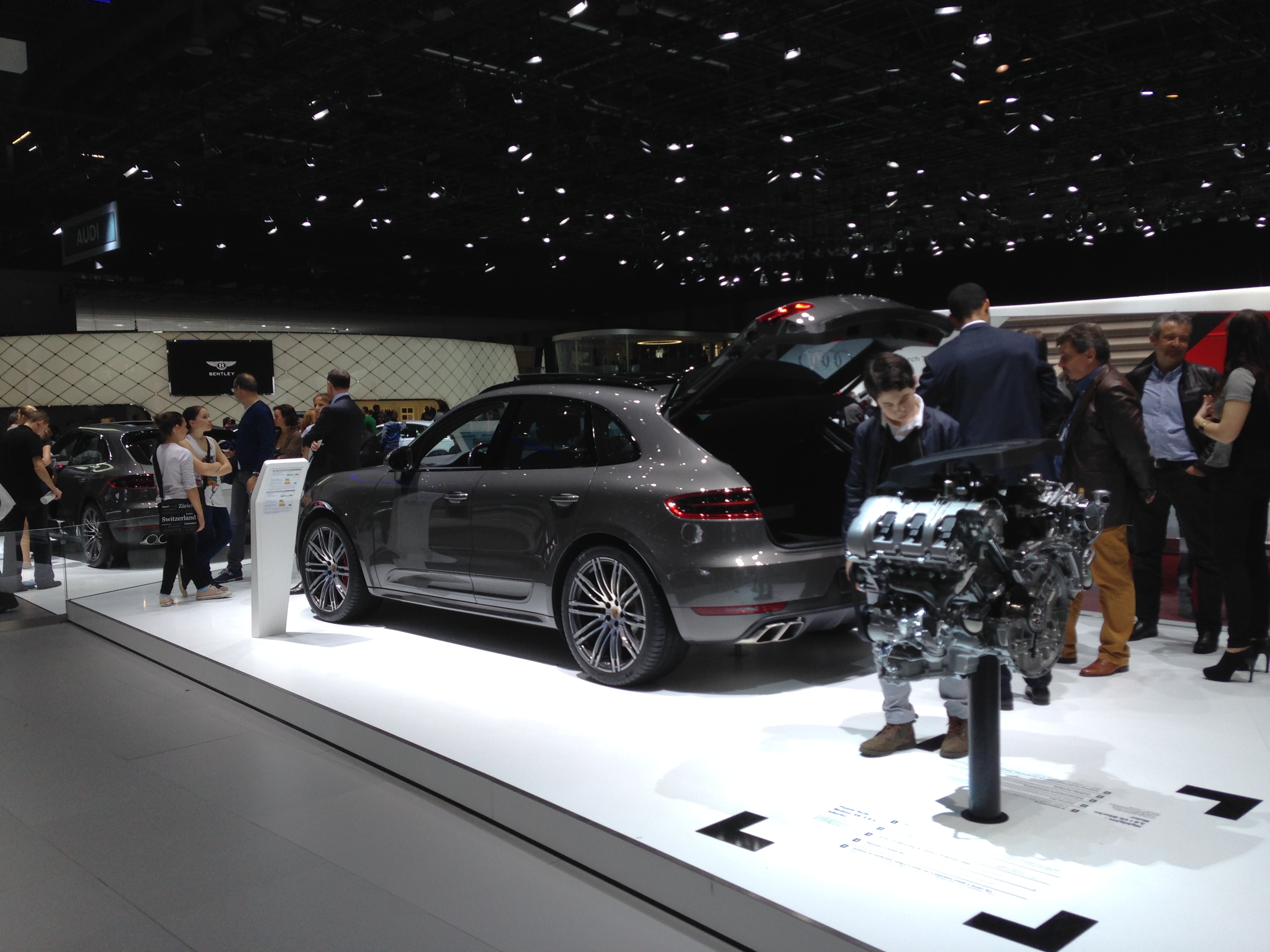
That’s also to say that I have no idea what car I will buy next, and the search will go on over the coming weeks. I probably won’t try more hybrids, but I’ll definitely include some petrols. My fellow blogger Sven feels that a Porsche Macan is really what I need, and that sounds like a reasonably appealing idea. Should you have other suggestions, please don’t be shy and post them in the comments below. I’m not ready to accept just yet that downsizing has to be boring!






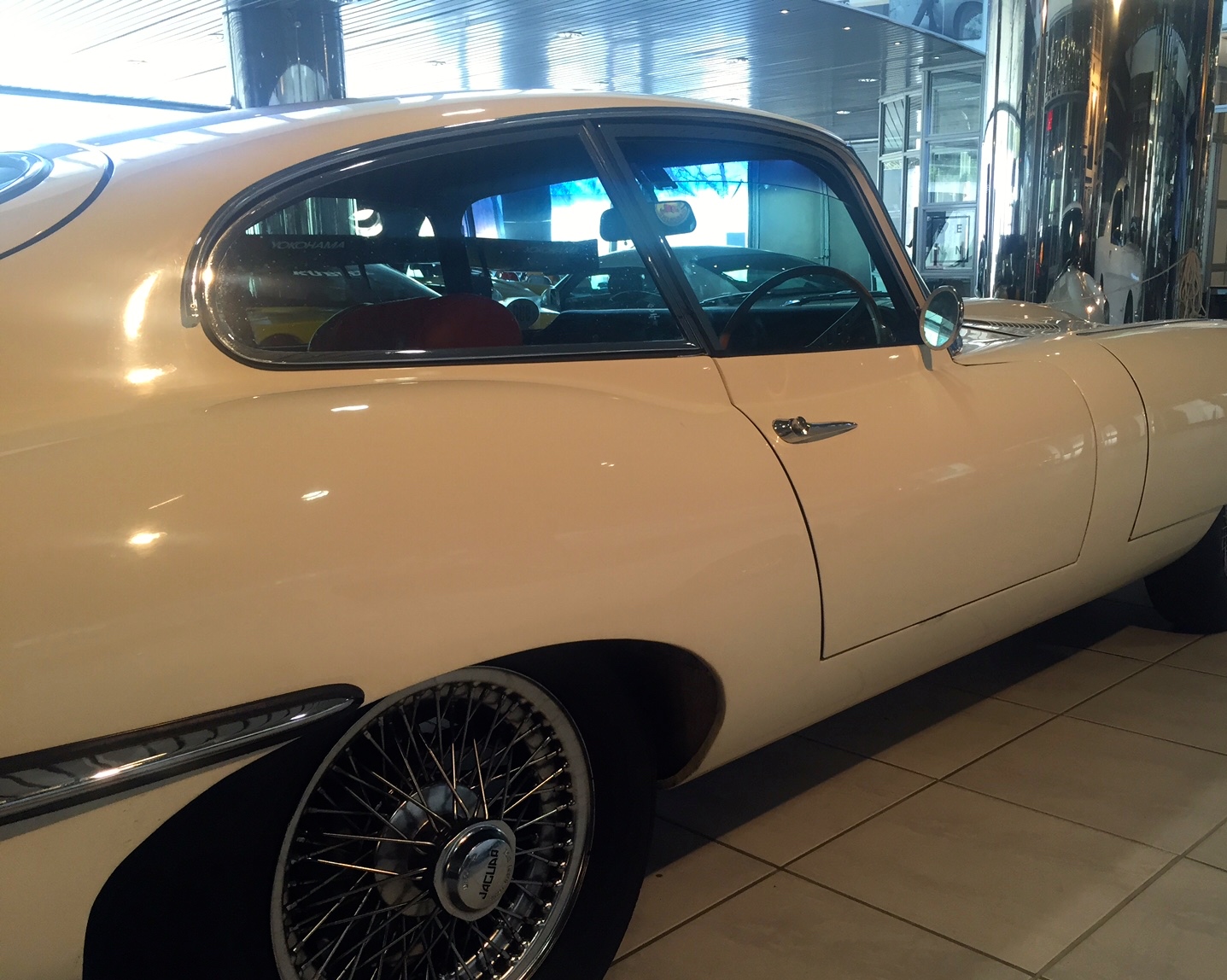
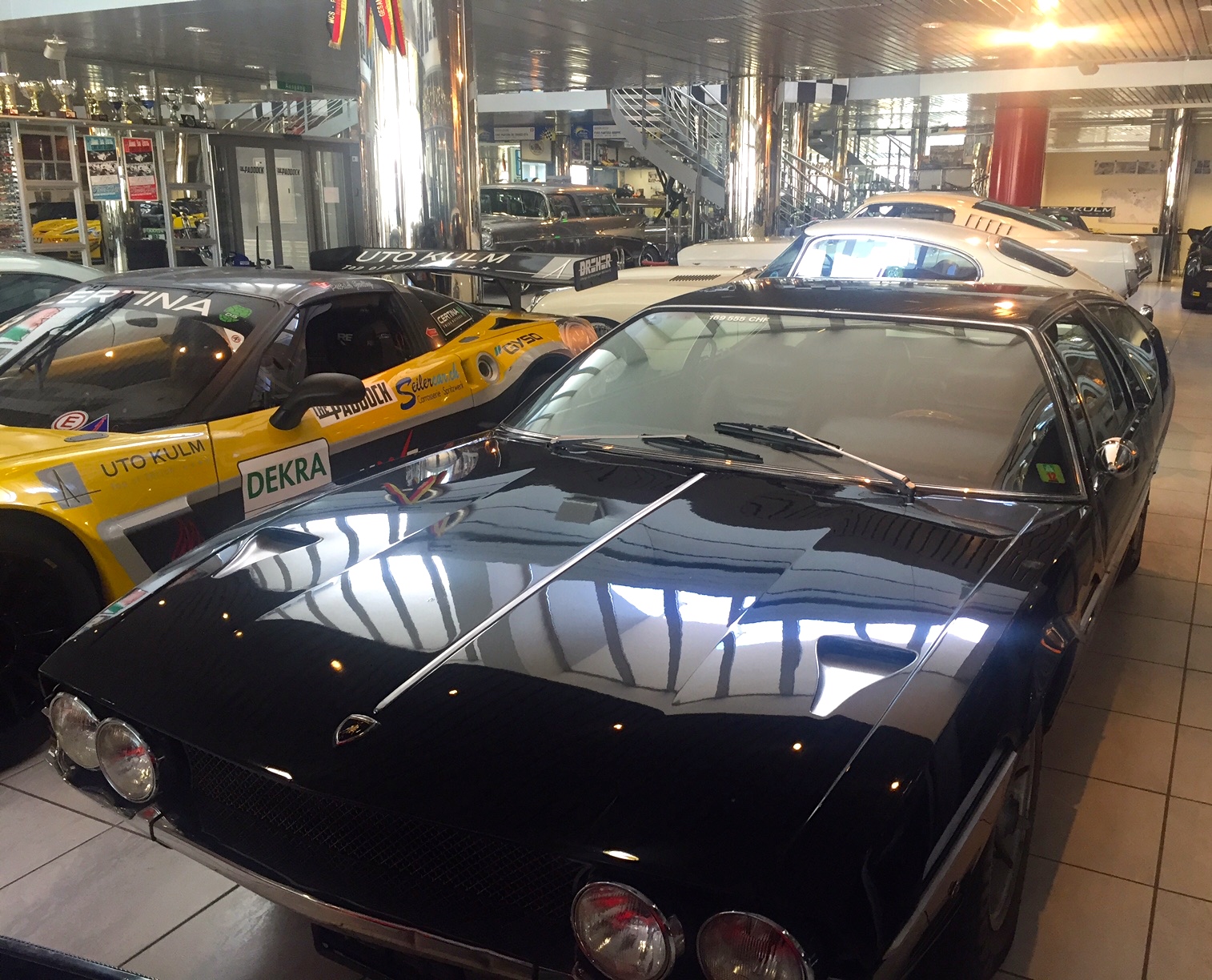 showroom with exactly the right pit lane smell, featuring a selection of the cars in The Classic Car Fund (TCCF). This is also the HQ of the TCCF and where Filippo has his office. Italian and from Modena (where else?) by birth, he is a true European nowadays based in Switzerland where next to running a family office business he set up the TCCF five years ago, driven both by a passion for cars and for uncorrelated assets.
 classes, including things such as art, wines and gold. This is partly driven by the falling interest rates since the financial crisis, but also by baby boomers becoming solvent and realizing their childhood dreams and emerging market buyers that were not there a decade ago. “The Chinese have so far only been able to own classic cars abroad,” Filippo explains, “but that is about to change and that will create even greater demand in the future”.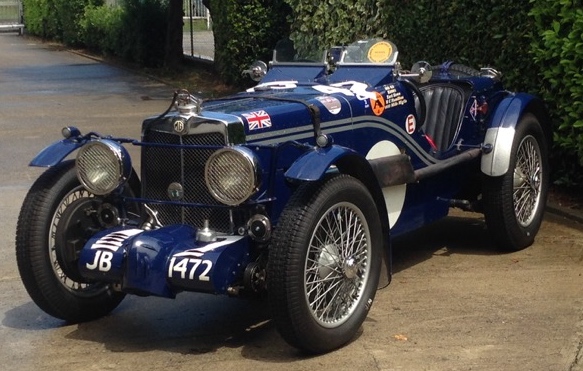
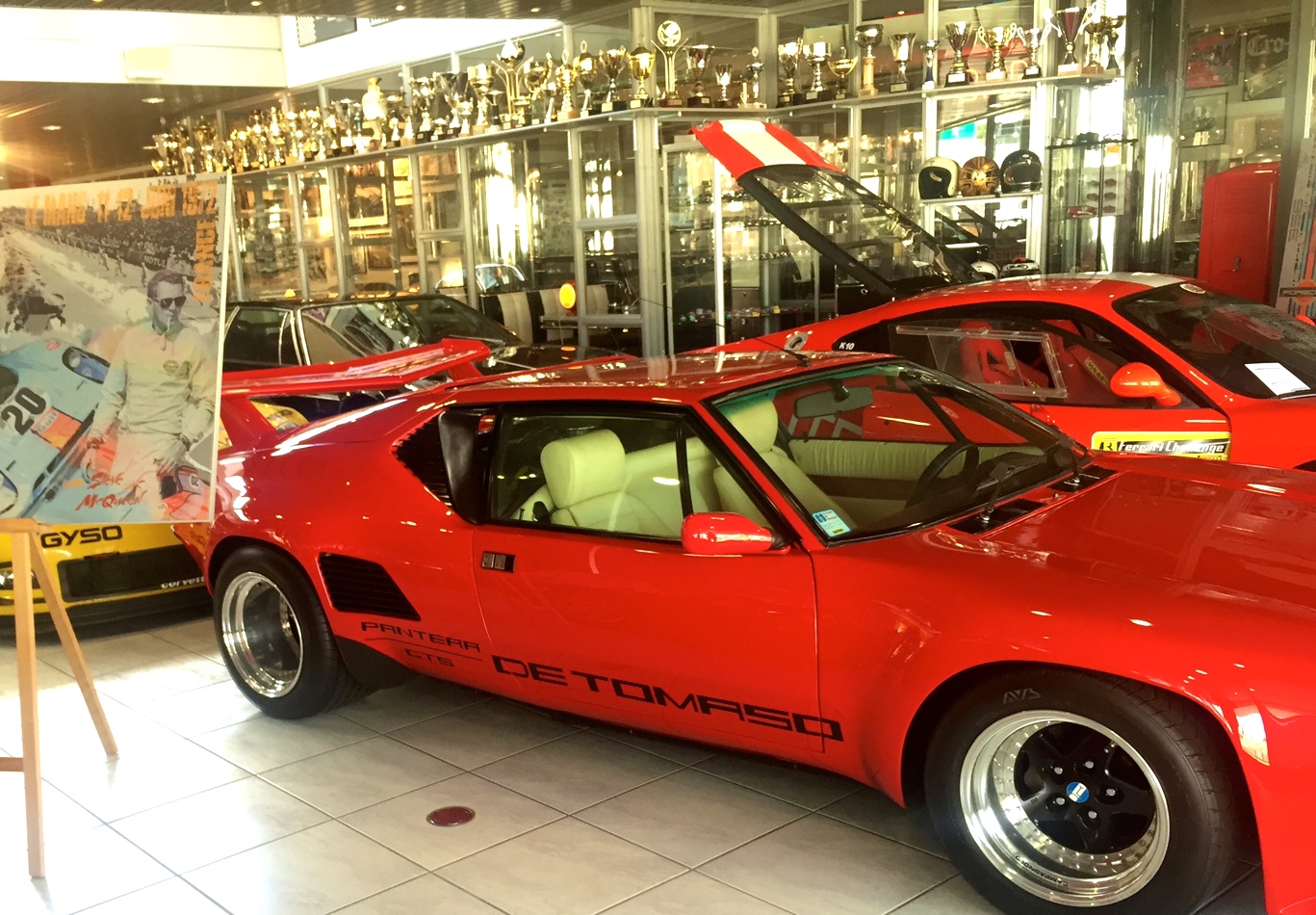 Switzerland and Italy, and employs mechanics to keep them in shape. Two additional features of the fund further strengthens the link with private collections: subscriptions are permitted in kind, meaning that you can buy into the fund through a car or a car collection, following an evaluation by an independent expert. Ownership passes to the fund but the original owner receives a buyback guarantee at the same price up to two years from the point of purchase. Also, and perhaps of more interest for most, against a small fee, fund investors may borrow and drive the cars in the fund over a day or a weekend. Filippo smiles and says “take the Testarossa in the showroom down to St. Moritz over a weekend. If anyone asks you can truthfully say it’s your car, as it is part of the fund you are an owner of”.













































 The Thrill of Driving