The Ferrari-kicker from the land of the rising sun

1989. A year when the authors of this blog got their driving licenses, Milli Vanilli topped the charts (without singing, as we learned later) and Don Johnson drove his (fake) Ferrari 365 GTB/4 (Daytona) in the last season of Miami Vice. In the real world Porsche and Ferrari dominated the sportscar scene, Porsche obviously with the still air cooled 911, Ferrari with the brand new 348, successor to the classical 328. Honda was a brand among many building family cars, although these were among the most reliable in the world. But even though they had the small go-cart like CRX in the line-up, it was not a brand anyone associated with supercars.

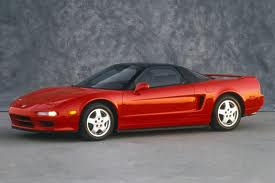
And then, out of nowhere, came the Honda NSX (Acura NSX in the US). A car with precisely the 348 as explicit target, but with in comparison unbeatable everyday usability. A car that from every angle looked absolutely stunning. admittedly with some inspiration from the same 348. And a car that Ayrton Senna at the zenith of his career had actively helped develop, along with a small team of Honda’s most senior engineers and car-builders. Finally a car that became a showcase for Honda’s technical developments at the time.

imagesG4W43SV2Sports-Modulo-Honda-NSX-2[1]

Development and Design

Development on the NSX – New Sportscar eXperimental – had started already in 1984 but as it became clear that the Ferrari 348 would succeed the 328 at the same time as the NSX would launch, the initial ideas of a small, 2 litre V6 engine were abandoned in favour of a more powerful mid-mounted 3 litre engine. The car’s design was fully Japanese, with the bodywork and especially the cabin being inspired by the F16 fighter plane, with the objective of giving the driver a similar visibility as in an F16 from inside. Whether that is true I unfortunately cannot tell you, as my experience of fighter planes is slightly limited, but it was a shame that Honda did not take more inspiration of the F16 or for that matter the 348 to build a slightly more exciting interior, which as it was turned out a bit too close to those Honda family sedans.

The NSX was a showcase of new technologies. Firstly the aluminium monocoque body that saved some 200 kg weight over a standard body. To that came aluminium suspension, electrical power steering and Honda’s VTEC technology, allowing the engine to rev up to 8000 rpm’s with a gorgeous sound. The engine produced 270 bhp until 1997 and 290 thereafter, little by today’s standards but very competitive at the time.

imgresAnd then came Senna, who was very involved in the chassis settings of the car, testing it extensively on various racetracks both in Europe and Asia, and who himself owned three NSXs – at the same time.

Versions

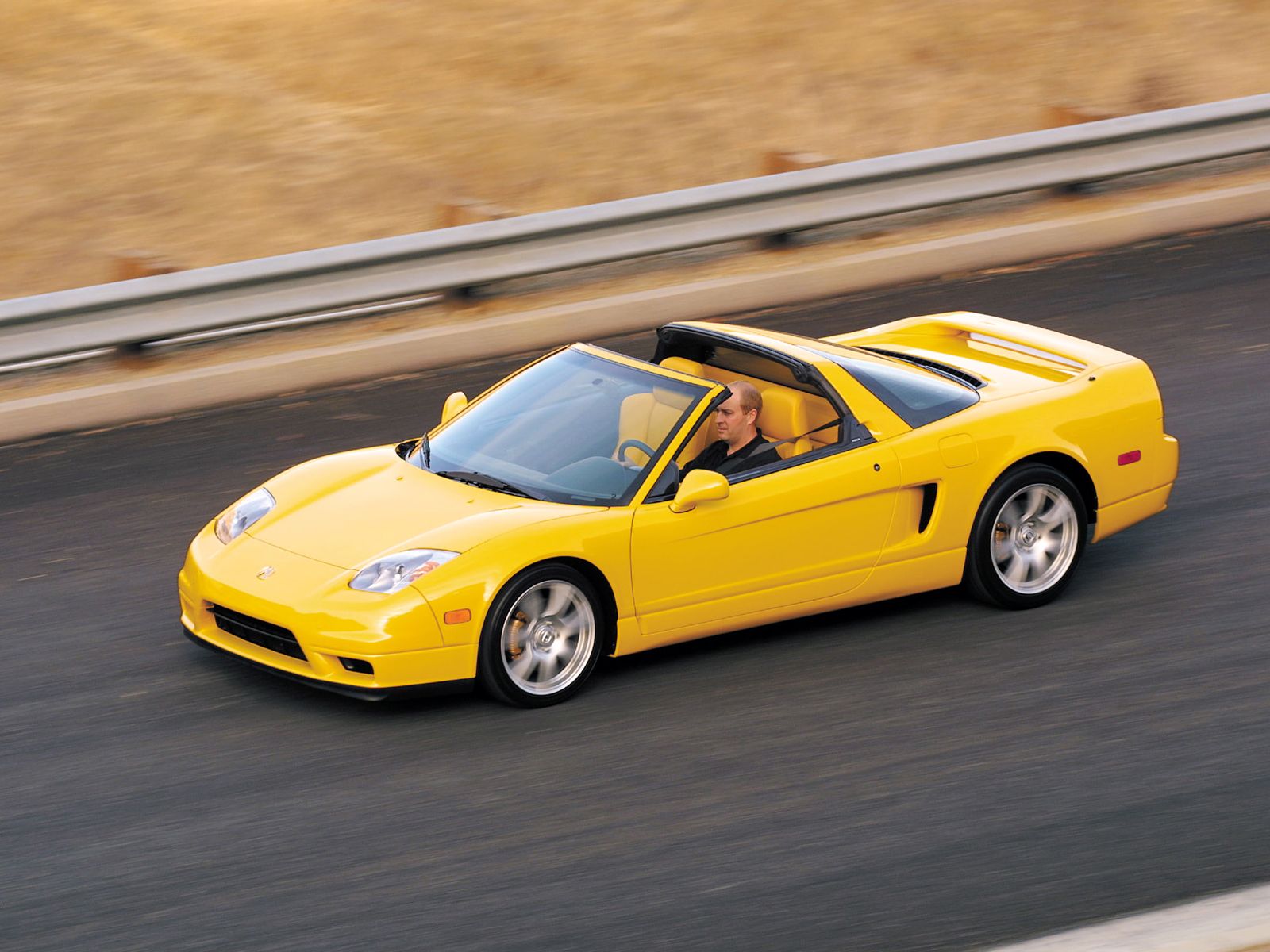
The NSX was produced with very few modifications for a very impressive 15 years, from 1990 until 2005. In total around 18.000 cars were built. Outside of Japan there was only one engine version, available with a 4-gear automatic transmission (the US was an important market after all) or a 5-gear manual (6-gear on later models). In 1995 a targa version was introduced, becoming the only version sold in the US whilst it was available alongside the coupé in Europe. In 2002, the pop-up headlamps were replaced with conventional xenon headlamps.

2003 Acura NSX.
2003 Acura NSX.

In Japan the NSX was available in a number of more powerful and lighter versions, but given these cars were never exported and are all left-hand drive, but for a few that were privately imported to the UK, they never made it to Europe.

Driving

Unfortunately I have not (yet!) had the opportunity to drive an NSX. But sitting in one as I did not long ago is quite an experience. The seats are superb, the sitting position is low, visibility is indeed what you could imagine from a plane, and steering wheel and gearshift, although as said looking a bit boring, are perfectly positioned. Apart from those short observations we unfortunately have to rely on external test drives and with very few exceptions, all of these, both then and now, were very positive. The NSX handles like a true supercar from the time, with excellent balance and a chassis and suspension rigid enough to enable very good track times (thank Senna for that!). At its limit the mid-mounted engine cam apparently lead to sudden oversteer, but you would really need a race track to notice.

NSX InteriorUnfortunately a slightly boring interior, compared to the rest!

Owning

The NSX is a Honda, which is really not bad when it comes to owning one. Servicing is marginally more expensive than for a standard Honda but cost-wise has nothing to do with anything from Maranello. Insurance is quite cheap as well, and reliability is superb. But above all, Honda made a point of making a car that was as good as the 348 but easy enough to be used as an everyday car and as per reports, that is precisely the case. In other words a perfectly sensible choice as second car (or third, or fourth…)!

Which one?

Tthe first problem you run into when deciding on an NSX is to find one. The offer is very limited indeed, and finding a later version (after 1995-1996) is practically impossible. Currently there are around 10 cars available in Germany and about as many in Switzerland. In Sweden there is right now only one car on the market.

Clearly you will want to go for the manual version, as a 4-gear automatic can never do the car justice. In terms of colour, chances are you will have to settle on red or possibly black, anything else is very hard to find. There is currently no targa model on the market in the countries mentioned, but even if you find one it is not necessarily the version to go for, as the targa construction added weight to the nimble NSX and also reduced the much-praised chassis rigidity. Finally, apart from a Momo steering wheel that some cars have fitted along with larger wheels (which do the car justice!), don’t go for a transformed one with body kit or gullwing doors, those are neither good for resale value, nor for your image.

If you find the right car, the odds are that its owner has treated it well and remedied the very few shortcomings of the original construction, but if not these are anyway not costly (they notably include electrical windows getting very slow with age, and some engine bearings).

Interestingly, although steadily rising, NSX prices have not really taken off yet. You can find a good car for around 40′ EUR / 40′ CHF with less than 100.000 kms, a price that given the scarcity of cars can be expected to remain very steady if not increase over coming years.

So what more could you ask for? A supercar from the swinging 80’s, designed after an F16, developed by Ayrton Senna, free of problems and marginally more expensive than an Accord to service? Sign me up!

acura-nsx-honda-acura-honda-2652623-480x320[1]

The greatest Porsche bargain of all times!

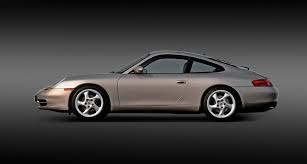
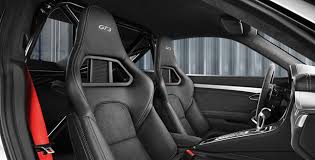
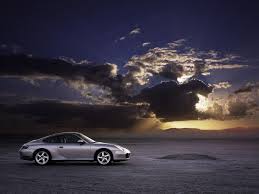
imagesOur new heading The Thrill of Owning is about cars that are not only a thrill to drive, either because they are very good value, or because their future value can be expected to hold up very well, alternatively even rise. One car that firmly ranges in the first of those categories is the Porsche 996, produced between 1997 and 2006 as the successor of the fabulous 993. Looking at the classifieds in different countries today, early rear-wheel drive 996 Carreras with less than 100.000 kms on the clock can be had for around 20.000 CHF/EUR. As anyone who has driven a 996 knows, that is a true steal and there is clear reason to believe they will never be cheaper!

History

Most readers of this blog will be familiar with the 996 so we’ll keep it short. The new model was the 993’s successor but and in many aspects a new car – larger, roomier, more comfortable and far more practical than the old one. It was also Porsche’s first water-cooled, six-cylinder boxer engine, something that didn’t go down well with the 911 purists. For slightly more flexible owners, it did present several advantages (notably that of cheaper servicing) but more importantly, it was something that had become necessary as certain technological developments and new emission regulations were not compatible with the air-cooled boxer.
images

The other thing that didn’t go down well with the purists were the headlights. The Boxster had been launched one year earlier and some cost-saving genius in the marketing department came up with the not-so brilliant idea of fitting headlights in the same layout as on the Boxster to the 996. This is something that has haunted the car ever since and is today given as the main reason for the poor secondary value. We agree – the headlights are not pretty and especially on the Mk1 version until 2002 they are downright ugly. But we are talking about a pair of headlights, and as long as they light up the road in front of you when you are driving, that is about as much thought as you should given them.

Versions

imgresimages

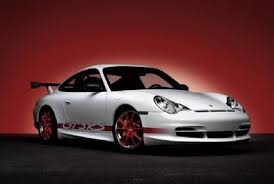
The 996 was available as coupé (Carrera) and convertible in 2- and 4-wheel drive versions. Standard output was 300 hp (320 hp from 2002). The four-wheel drive Turbo (above right) was launched in -00 with 420 hp, increasing to 450 hp in the Turbo S from -05, as coupé or a very fast hair dryer. Further versions included the more hardcore, rear-wheel drive GT3 (above left) and subsequent GT 2 with up to 483 hp.

Owning

images

As some of you know, my fellow blogger Sven is a 911 aficionado, having owned both a Mk2 996 Carrera (with performance kit, as he is keen to point out…) and a Mk1  GT3 Clubsport (pictured right). He loved them both and praises the practicality of the “standard” 996 that he used as an everyday car. This is not something that is recommended with the hardcore driving machine GT3 CS, of it is becoming increasingly difficult to find a low-mileage one in good condition.

Which one to get?

The real bargains are the low-mileage Mk1 996’s, that even well-equipped will be yours from around 18-20′ CHF/EUR with less than 100′ kms. Many 911 drivers praise the 2-wheel drive version as a bit more agile than the 4-wheel drive, so if you have money to spare, rather put it on a cabrio if that is your thing, or on a Mk2 version, which both start at around 25′ CHF/EUR. Whether to go for the 6-gear manual or tiptronic is a matter of taste but the manual difficult to fault.

Looking at Turbos and GT3’s, they both start at around 45-50′ CHF/EUR, again for sub-100′ kms cars, and come roughly at the same price even if the cars are radically different – whereas the Turbo is comparable to the standard 996 in practicality, the GT3, standard or CS, is a pure driving machine. In terms of future value the GT3 is probably the way to go, especially the GT3 CS (if you can find one, that is…).

images

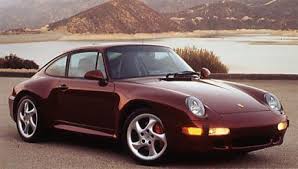
To put these prices somewhat in perspective, a comparable 993 (i.e. the previous, last air-cooled version, pictured left) in standard version costs about 3 times more than a standard 996, starting at 60′ CHF/EUR. The 993 is a fabulous car, but it is not 3 times better than a 996.

images

Whether the early 996’s will also start to see their value raise is difficult to say, notably given the quite large number of cars produced. But there is clearly reason to believe they will never be cheaper than today. In terms of driving and value for money, you could argue it is one of the best deals on the market, and one that is very hard to resist!

One day in Tesla-land

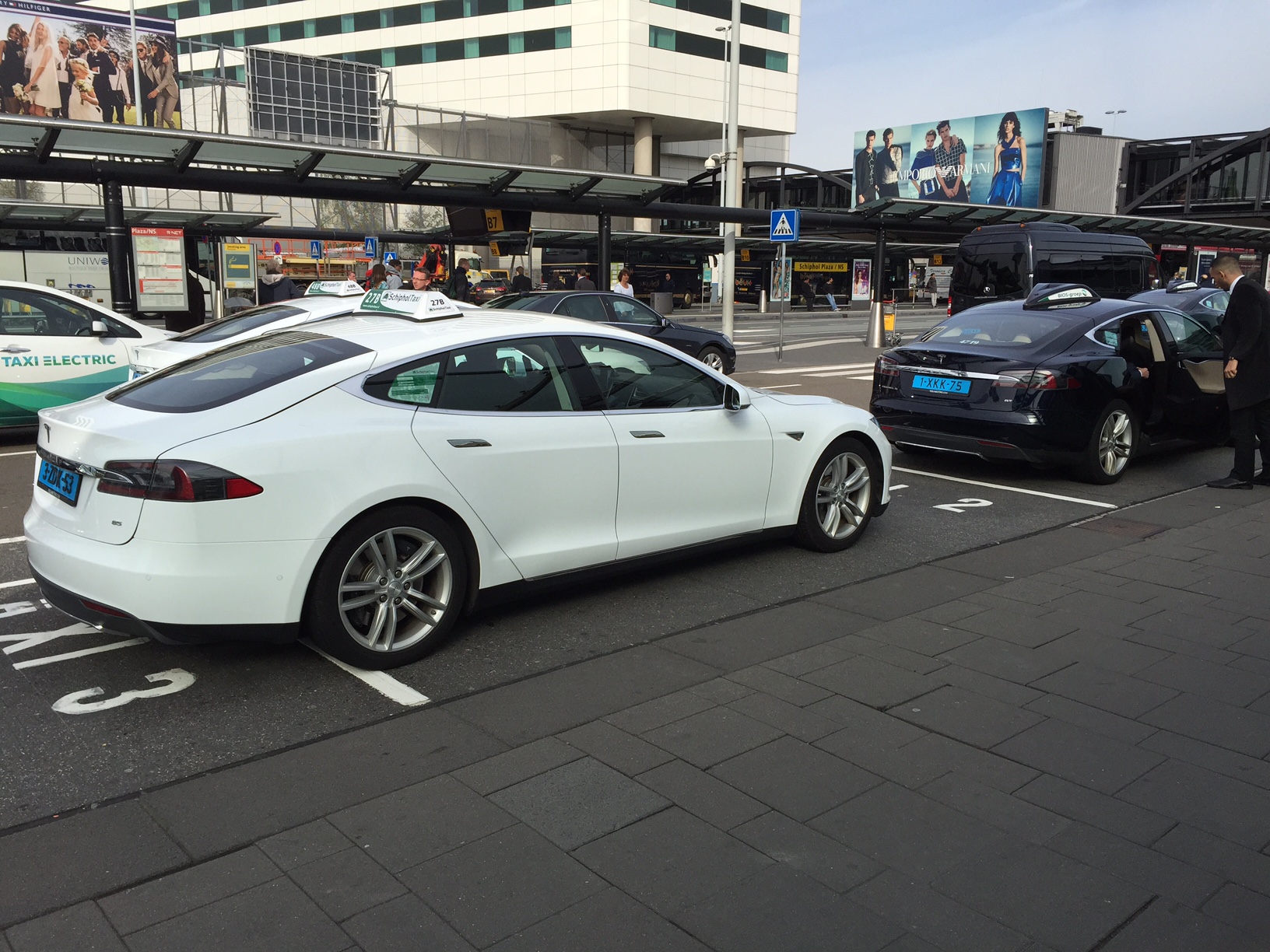
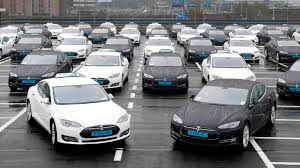
It’s been almost a year since I last visited Amsterdam and Holland, one of my favorite business destinations, and not much was different as I walked through the airport heading for the taxi line earlier this week. But then it became clear how quickly things can change. Whereas a year ago I can’t remember seeing a single Tesla, either as a taxi or in general, today it is practically the only taxi car you see. As was explained to me this is partly an airport phenomenon since the airport makes a thing of having clean taxis, but nevertheless the speed of change is impressive. Getting into the back seat of one for a 50 km journey to Utrecht gave me the opportunity to explore this further in discussion with a very talkative taxi driver, and obviously to talk about the Tesla in general with someone who had driven it on a daily basis for almost a year.

TeslaTesla parking

As was explained to me, a Tesla is a very good deal for Dutch taxi companies. Through various discounts they get the P85 (i.e. the larger engine but not the trimmed P85+ version) for roughly EUR 50.000, around half the official price. No taxes apply to electric taxi cars and “re-fueling” is of course free. The driver was also very happy with the car. He hadn’t experienced any problems and said the GPS / entertainment system with its giant screen is highly addictive, something I’ve experienced from personal experience. So in other words, my previous impressions were confirmed and it’s all thumbs up?

Unfortunately not completely. There is a downside which, little surprise, starts with the range. The driver tells me he does get out 360-380 kms on a full charge, very respectable and not far away from Tesla’s claim. However this is Holland, a country with strict speed limits and even stricter controls (they’ve actually come up with a new one which is very difficult to fault: they measure the time it takes you to travel between two points…), so speed rarely exceeds 100 km/h. When you start going faster, the range starts dropping fast, especially above 130 km/h.

Secondly, there is the issue of superchargers: there are currently four stations in Holland, less than in Germany but probably objectively sufficient given the size of the country. However, the subsidies that not only taxi drivers enjoy on electrical cars mean there is not only a lot of Teslas but of electric cars in general. Tesla graciously let owners of other electrical cars use the superchargers against a small fee (in all countries, not just in Holland) but they anyway remain very attractive for owners of other brands given the short charging time. And even if Teslas have priority at the stations, this quite often means that the superchargers are not free. A full charge takes 40 minutes (or 20 minutes for 80%), but obviously if there are two cars in front of you, the pit stop quickly extends to 2 hours – quite annoying on a longer trip. This problem is obviously one Tesla owners risk seeing in other countries as well, and it’s probably only a question of time before Tesla restricts the superstation usage to Tesla owners. Until then however, it is something anyone thinking about a Tesla should bear in mind.

The third and final point actually relates to the build quality. As readers of this blog know I’ve driven a Tesla twice, but when you are behind the wheel you have so much else to focus on that you don’t pay as much attention to the small things as you do when you sit in the back seat. The first thing you note is how short the seat is, and how limited the head space is. Calling a Tesla a 2+2 car is exaggerated but it is not really comfortable if you are over say 1.75m. It also feels like there is a lot of plastic around you which is not of a quality comparable to the German brands. Door panels, backside of seats and various pieces around your feet do not give a very good impression. Finally, and most disappointing of all, the noise level is high even on ultra-smooth Dutch motorways, obviously an even bigger disappointment considering this is an electrical car. The wind and road noise already around 100 km/h by far exceeds any other premium brand in the same price class.

My first passenger trip in a Tesla thus became a bit of a wake-up call. No doubt, the Tesla Model S is an impressive effort from a company no one knew five years ago, and it remains a real thrill to drive. Furthermore, depending on where you live, ownership costs are typically very attractive, making the total costs very competitive even with quite a high purchase price. If you rarely go on longer drives and have small children, go for it. If you regularly travel longer distances, you should at least be aware of the limitations in range and comfort.

Senna – the movie

If you haven’t done so yet (and I fully realize I may be close to the last petrol head in the world here), I can strongly recommend the movie “Senna” about the life and career of the greatest F1 driver of all times, from the early beginnings over his great successes and rivalry with Alain Prost until the bloody weekend at Imola in 1994 that cost him his life. You can access the movie on Youtube over the link below. A large part covers what I would call the golden age of F1, i.e. the last years of the truly mechanical era from 1988-1991.

To quote the great man: “if you see an opening and don’t go for it, your not a racing driver. If you’re happy with 2nd, 3rd or 4th place, you’re not a racing driver”. That’s how he saw it, and that’s how he drove – and it’s maybe something some of today’s driver should take note of.

Ayrton Senna will come back on this blog soon on another topic and in another section – so stay tuned!

Lancia Rally Heaven

As a small addition to my recent Thrill of Owning post on the Lancia Delta Integrale where I briefly mentioned Lancia’s rally tradition, I feel I have to share this 16-minute video with you as it basically sums that up, featuring a very lucky Chris Harris (motor journalist and a hot contender for the title “the guy with the best job in the world”) on the passenger seat with Markku Alén, Juha Kankkunen and Paolo Andreucci behind the wheels. If you have the least bit of petrol in your blood, this risks compromising your work afternoon quite heavily…

Next to the driving and the sounds, these rally legends’ not-so-legendary English is also highly entertaining, as is Paolo Andreucci’s intensive tongue work whilst driving the Lancia 037, the brand’s last rear-wheel drive rally car that clinched the world title in 1983.

Enjoy – and Happy Easter!

The Thrill of Owning presents: Lancia Delta HF Integrale

Welcome to the Thrill of Owning, the new heading on our blog that at regular intervals (ideally once a month, but please don’t hold us too strictly to it…) will present cars that are not only a thrill to drive but also somewhat of a thrill to own, in the sense that their value has not yet shot through the rough and will not be halved in the coming years. Rather we try to present cars that have yet to take off and in the best of cases, may start to gain in value over time. The main reason for considering them should however be the same reason as reading this blog – that they are a thrill to drive!

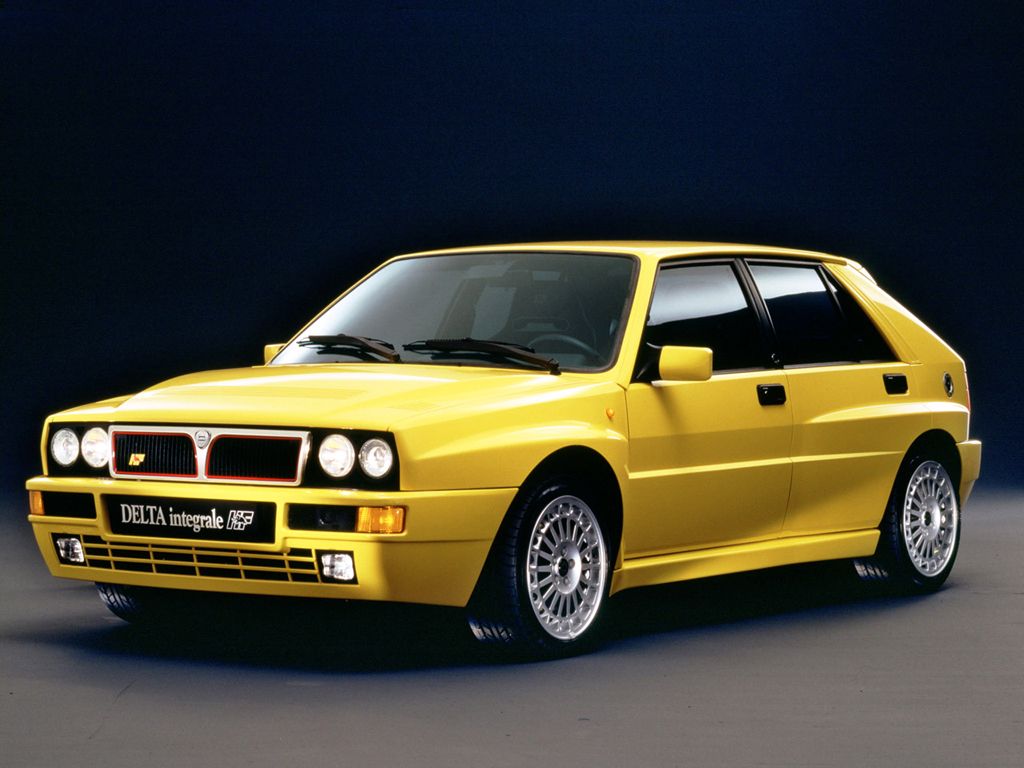
Obviously you need to kick of a new section in style, and we do so with a car that no one with the slightest motoring interest born in the late 60’s or 70’s can have missed: the legendary Lancia Delta Integrale. Not because it’s pretty. Not because it, magically, has better build quality than any other Italian car from the 80’s. No – quite simply for the reason best expressed by Evo, the bible of this blog: driving-wise, it’s “one of the finest cars ever built”. And as if that was not enough, the last versions of the Integrale were even called just that – EVO (short for Evoluzione).

images

History
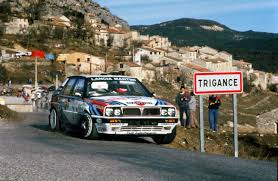
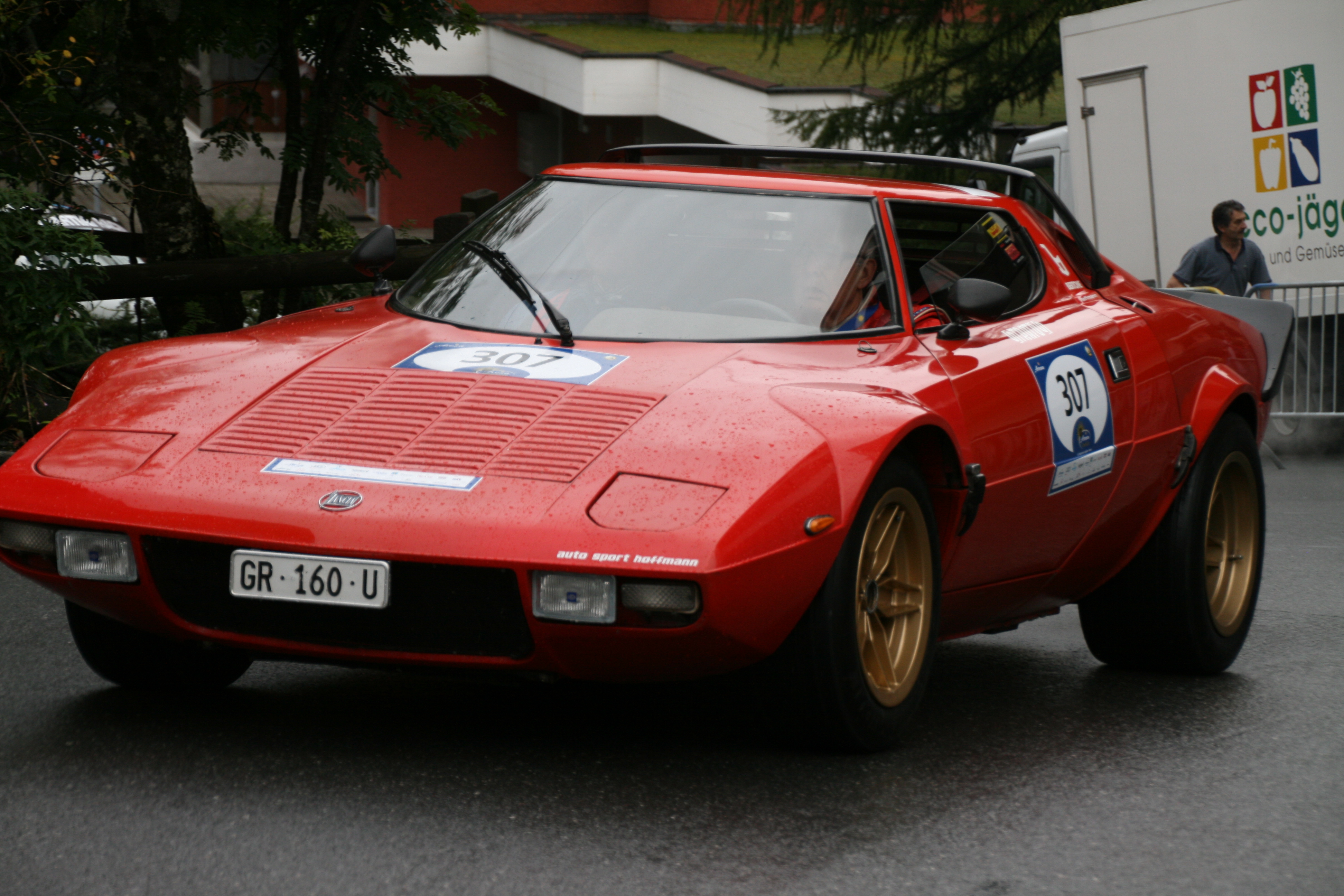
The Integrale dates back to the family hatchback Lancia Delta, launched in 1979. Lancia had been established on the rally scene since the 50’s and was at the time racing the legendary Stratos (that is one car that price-wise has already shot through the roof!) and Beta. The launch of the Audi Quattro in -81 however changed the rules of the game, demonstrating the enormous advantages of four-wheel drive. Both the Stratos and Beta were rear-wheel drive cars, as was the 037, which was based on components of the other two but still managed to clinch the world title in 1983. That was however an exception as it had become clear that Lancia needed a 4wd car to remain competitive on the rally scene. The solution was brought by the Delta that Abarth helped fit a 4-wheel drive system on. The Integrale had thus been launched and it went straight on to win the world championship the first year it took part in 1987, and then continued doing so the five following years until 1992, mostly with Juha Kankkunen behind the wheel.

images-1
Not your typical rally car…

The body of the Delta Integrale started getting fatter already in 1988 to accommodate 4-wheel drive, larger wheels and more advanced suspension components than on the original Delta, and it grew even further in 1991 with the launch of the EVO-series. Production stopped in January 1994 and still today, with six consecutive world rally titles between 1987 and 1992, it is the most successful rally car in history.

Engine – chassis – body
All Integrales share the same 4-cylinder, 1995 cm3 turbo engine that in street versions produced between 185 and 215 hp depending on turbo pressure, with a classical, 80s ketchup-bottle like delay in power delivery. Torque for all cars was slightly above 300 Nm. All versions were 4-wheel drive with a 47/53 front/rear split, contributing to their incredible balance.

lancia__delta_hf_integrale_evo_2__1994_3_lgw
A well-filled engine room – the stabilizing bar only came with the late Evo models

When you stand in front of an Integrale it becomes clear how small it is, compared to modern cars – only 3.90 metres long. At the same time it’s probably the most practical rally car that was ever built, with four doors and a very decent boot. Driving it softly you may even be able to fool your better half into thinking you have bought a normal hatchback, although you may struggle to explain why you went for a not-so-pretty 80’s model… The chassis and suspension saw a constant evolution over the cars lifetime and chassis-wise it is clear that the Evo models are the most advanced. All Integrales are however very well balanced and will cover all the daily needs of middle-aged men with rally memories from their youth.

delta-hf-integrale-evo-2-2
3.90 metres of pure driving pleasure!

The first Integrale in 1987 was 8v, and that engine was produced until 1991 although the 16v was launched already in 1989. This was linked to the introduction of catalyzers at this time, which the 16v version didn’t receive until 1993. The 16v engine is slightly more powerful, developing between 200 and 215 hp depending on year of production, whereas the 8v produced 177 – 185 hp. Torque was however roughly the same in all versions.

On looks, the two Evo versions (Evo 1 (1991-1992 and Evo 2 (1993-1994) are as good a tribute to the 80’s as you will find, and if you are less into the large shoulders and rolled-up sleeves, you may prefer the earlier Integrale versions.

images-3maxresdefault        A rally and a civil Evo on the roads they are made for!

To drive
A few years back I had the opportunity to drive a 16v Integrale Evo 1, unfortunately not for as long as I would have liked to. It was not clear to me at the time what classic this car was about to become, but to this day I remember how incredibly well-balanced it felt and how the power delivery was vastly different from other high-pressure turbo cars I had then experienced (including my father’s Saab 900 Turbo 16v Aero, where you could easily loose the rear of in third gear if there was a bit of gravel on the road)… This was a car that really made you fell like Juha Kankkunen in those fabulous Recaro seats and with one of the most direct stearings I have experienced. As for the rest, in terms of build quality it was pretty much the same feeling as in an 80’s Fiat, but what did I care?

773659637088397123
Fabulous Recaro seats, and an equally fabulous Momo steering wheel!

Which one?
Given the large similarities between the models (even though the Evos 1 and 2 were more technically advanced, especially suspension-wise), the critical point is really to find a good – and original – one. This is at heart a rally car and many have been driven as such, so the challenge is to find one with low mileage, in good shape and ideally with an engine that has not been modified or if so, then only by someone who knows what he’s doing.

The best part is yet to come: even a very good Integrale or Evo will not ruin you, neither in price, nor in maintenance given its relative simplicity. Expect to pay between 20.000 – 30.000 EUR for a good to top Integrale and slightly more for an Evo. The offer is clearly limited, but there are quite a few cars in Germany in decent condition and around half a dozen in Switzerland. An insider’s tip can also be to try and find a car re-imported from Japan, for the simple reason that they have mostly been driven carefully (and by the way, all Integrales were left-hand drive). In terms of equipment there really wasn’t much on the list and that will certainly not be the main concern in buying this car. Some Integrales are fitted with leather (Recaro) seats as an option to the alcantara ones, but the latter are actually to prefer, giving better grip. The optional air condition can be nice if it still cools, but otherwise opening the window is a perfectly good option – it won’t really affect the noise level…

The German Auto Bild Klassik price catalogue, that we use as benchmark for this section, has the Integrales in the same price ranges given above. Price evolution has so far been limited but the trend is clearly pointing upwards. There is good reason to think it will continue to do so, but the biggest smile will be put on your face by driving one of these babies and remember was it was like when the driver, not the ESP, was actually in charge!

For further Integrale impressions I recommend the following clips, featuring first Juha Kankkunen gives driving lessons on an Integrale in 1992 (imagine the crowed standing as close to the cars today!), and then Evo founder Harry Metcalfe showing and driving his fabulous Integrale Evo II.

Have you owned or driven an Integrale? Have you thought about getting one? Do please let us know over the comments field!

F1 season start 2015 – all you need to know!

As one of the most reliable and best signs of the coming spring, the F1 season 2015 kicks off on 15 March in Melbourne, Australia. So what’s new and what’s to expect in F1 2015?

Starting on the mechanical side, none of the rather small changes for the 2015 season come even close to the radical change that took place in 2014. Unfortunately that probably means that the engine sound will tend to be the same as in 2014 as well. Chassis have also largely remained similar except for some added protection around the driver’s head following Jules Bianchi’s dreadful accident at the end of the 2014 season.

On the regulatory side, many will be pleased to note that the double points rule for the last race of the season will no longer be applied. We will also see the introduction in some  yellow flag phases of something called the virtual safety car, and this year in qualifying, 5 cars will be eliminated in Q1 and Q2 respectively, leaving 10 of the total 20 cars allowed for qualifying to Q 3.

dcd1521fe117dcd1521fe60

Button on McLaren and Hamilton on a very similar looking 2015 Mercedes – why change a good thing?

So what’s with the teams? That remains to be seen although pre-season testing gives reason to think that at least the start of the season will be as dominated by Mercedes as last season was. The MB driver line-up is unchanged with Lewis Hamilton and Nico Rosberg, and both have done very well in testing. Behind Mercedes we will of course find the usual suspects, including Ferrari that by hiring Sebastian Vettel were behind the biggest transfer of the season (Kimi Räikkönen has kept the second seat), Red Bull with last season’s big surprise Daniel Ricciardo who will be joined by the upgraded ex-Toro Rosso driver Daniil Kwjat, and McLaren that has welcomed Fernando Alonso and kept Jenson Button. Looking at budgets it is also these teams that lead the pack, from the largest (Red Bull / EUR 425m) to the smallest (McLaren / EUR 230m).

dcd1521fe159dcd1519fe238

Vettel trying out his new car, and Ricciardo doing the same in a heavily masked Red Bull

Other teams this season include the middle pack with Lotus (Grosjean/Maldonado, EUR 160m) and Williams (Massa/Bottas, EUR 150m) and the ones that at least on paper will struggle to keep up: Sauber that have hired Swedish Marcus Ericsson alongside Brazilian Felipe Nasr (EUR 85m), Toro Rosso (Verstappen/Sainz jr., EUR 80m) and Force India (Perez/Hulkenberg, EUR 75m). Oh yes, and Marussia, who against all expectations are somehow still there but have yet to present a car but say they will run with an adapted -14 car in Melbourne and present the -15 car later this season. Pozjivem uvidim, as the Russians would say (those who live will see).

dcd1527fe276dcd1527fe467dcd1528fe134

From top left: Hulkenberg (Force India), Verstappen (Toro Rosso) and Marcus Ericsson on Sauber, that kindly even adapted the color of the car to him!

Will the Mercedes dominance continue in 2015? Will Sebastian Vettel adapt as well to life with Ferrari as Schumi did (albeit after a few years)? Which of the smaller teams will surprise on the upside? All those questions and many more will seek to be answered in the 2015 season starting next weekend!

Geneva Salon de l’Auto opens tomorrow!

The 85th Salon International de l’Auto starts tomorrow in Geneva (or rather doesn’t, since this classical show has now been renamed the “Geneva International Motorshow” – who came up with that idea??). As usual the show will feature a number of more or less fantastic automobiles but will equally see the premieres of a number of important models for the years to come. Those that feel most relevant to this blog include the Ferrari 488 GTB, the magnificent Porsche Cayman GT4 that Sven has already written about on this blog, the brutal Koenigsegg Agera RS and the very promising Lotus Evora 400.

For a complete overview of premieres at the Salon (sorry, Motorshow), pass by Geneva in the coming ten days or check the official website under

http://www.salon-auto.ch/en/premieres/?type=6198&page=3

The Thrill of Driving launches the Thrill of Owning!

As a reader of this blog it’s probably safe to assume that much like Sven and me, you are something of a petrolhead. Should that indeed be the case, chances are also that you have discovered that this common hobby of ours is oh so fun, but can also be oh so costly after running costs and especially depreciation haven taken their toll. But does that have to be?

With the introduction of our new section The Thrill of Owning, we wish to present a selection of fun to drive cars that may cost money to run, but should be quite safe in terms of depreciation – or even showing some nice appreciation over the coming years.

Now anyone who has seen a car auction the last years in our world of zero interest and hype for real assets knows that certain automobiles have reached truly mind-boggling levels. These are not the type of cars this section will be dedicated to.  Fortunately however, there are lot of beautifully fun cars out there that can still be yours for reasonable money, quite often to be found in the young timer decades of the 80’s and 90’s. And even though we believe these will hold their value well over the coming years, there is absolutely no guarantee they will make you rich – other than in driving experience!

Our ambition is to present around one car per month, including some history, why we believe it fits this section, a couple of objects from the classifieds and in as many cases as possible, a recent test drive to support it. We hope these posts can lead to interesting discussions as well as stories of previous experiences, so stay tuned!


Mercedes-Benz GL 350 – the thrill of…..riding

Those of you who read my last post during the Christmas break know I decided to change family cars just before the holiday season (if anyone against all odds had better things to do and missed this historical piece of literature, you can find it here). The decision not to upgrade my old w212 E-Class to the new, face-lifted E400 was primarily driven by a feeling that it would be same same but not too different, which for the money involved didn’t feel very rewarding. Another slight concern was the character of the new engine, which with its double-turbo setup invites to a slightly too racy driving style for a family car (well, depending on the driver I guess….). Finally, the need for space in a family with two children and two dogs who regularly travel through Europe haven’t changed. So what to do?

images Unknown

A revolution looks different…

Given my by now ten years satisfaction with various cars of the Stuttgart brand, the most natural was to first think of alternatives within the MB range. And actually the search never went much further. When you build a house, you rather build a room too much than one too little. Using the same waterproof logic, I opted for the top of the range in size terms that they build in Stuttg, sorry, Alabama – the Mercedes Benz GL 350.

2014_Mercedes-Benz_GL550_1073633

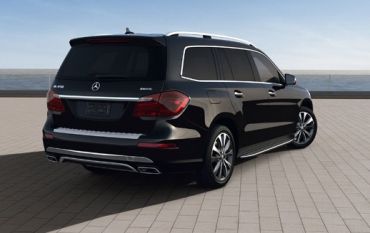
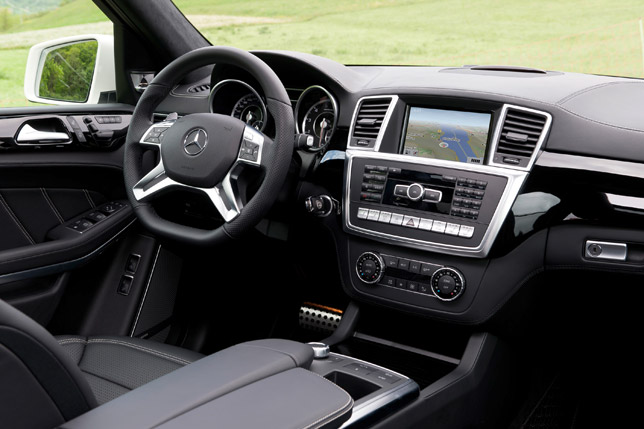
It should be said right away that the GL 350 doesn’t really fit on this blog given it is obviously quite far from the notion of thrill of driving. But it is very close to perfection in another thrill – that of riding. The comfort of everything in this 5.12-metre car, from the chairs and noise level to the chassis and air suspension is simply fabulous, especially considering the 2.4 ton weight and the amount of people and luggage the giant luggage compartment will swallow. The 3-litre diesel engine producing 258 bhp but more importantly 620 Nm from very low revs fits the car perfectly, as does the 7G automatic that has been criticized in other models for being slow (no need for more speedy gear changes in the GL). When tested by a Swedish car magazine, the conclusion was that a ride in the GL never becomes stressful, which is actually a good way of summing it up. It does however become an enjoyable travel experience very quickly!

Picking up the GL just before the Christmas break, our virgin ride took us from Zurich to Sweden’s west coast, a drive of 1600 km that we did in 15 hours and in ultimate comfort and with a diesel consumption that rarely exceeded 10 l / 100 kms. In the many we have done this exercise, never has a drive been more comfortable! And should you need to transport your friends, cousins or step parents somewhere, having those third row seats that by pushing a button flip out of the floor is really quite handy.

2013-Mercedes-Benz-GL-63-AMG-MEDIUM-Interior

A very comfortable space to spend many hours!

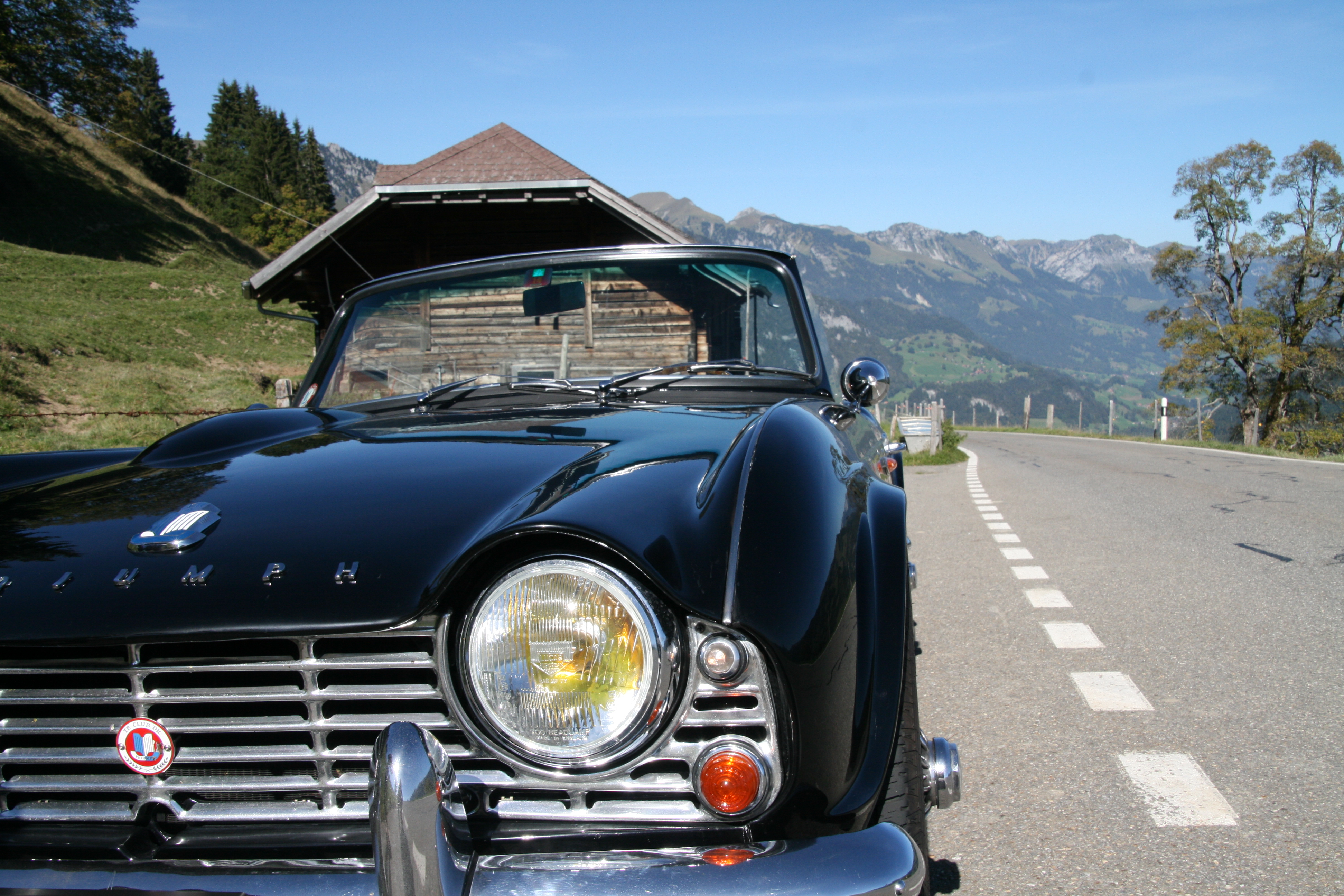
So all well in the end? Well yes, so far I am more than happy with my decision. The thrill of driving will in future be fulfilled by my TR4, a job it does very well, the thrill of riding will be perfectly satisfied by the GL. There was though that small thing the salesman mentioned to me when picking up the car: that there is a very good tuning solution from Brabus that ups the performance and especially the torque to over 700 Nm. It is not very expensive and if you talk nicely to your MB garage, they will also look between their fingers in terms of not letting it affect the guarantee (tuning the engine otherwise typically means you lose your guarantee coverage). Not that you strictly need it, but as we all know (and especially those of us who have taken a test drive in a Tesla), torque is kind of addictive… Should I go down that route, the experiences of it will of course be posted on the blog. In the meantime, if you need (a lot!) of luggage space and look for a highly practical and sublimely comfortable travel companion, look no further!

Test drive MB E400 4Matic Station Wagon

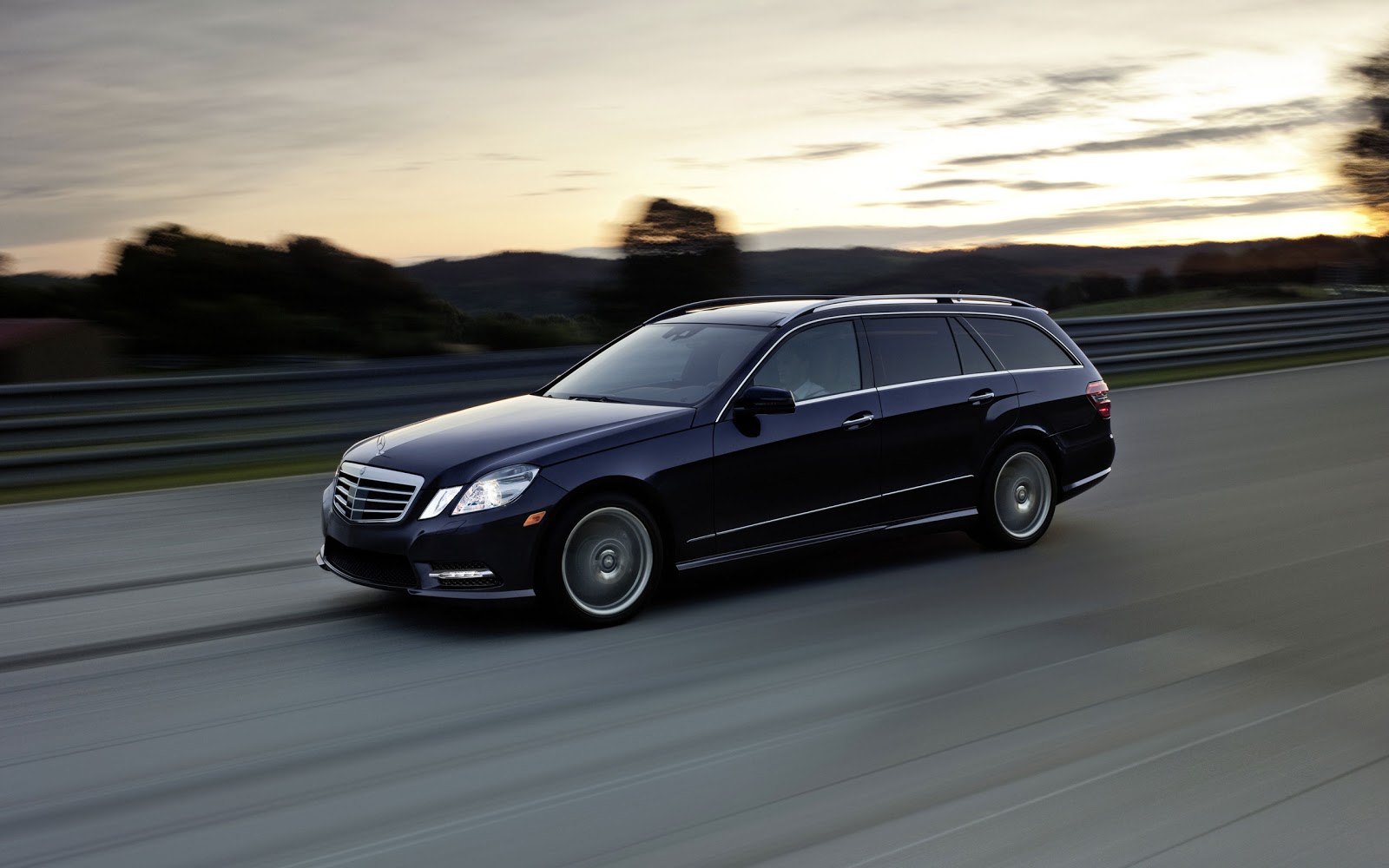
In 2010 I bought my current E350 Break (W212) from an MB dealership in Lucerne, Switzerland, specialized in importing so called “Direktionsfahreuge” (i.e. cars used to ship around more or less important VIP’s on German Autobahns), directly from the MB factory in Stuttgart, and then selling them for very competitive prices in Switzerland. My car, an E350 4-matic Station Wagon, was basically as fully equipped as a car can get and I bought it six months old with around 20.000 kms on the meter, in mint condition and fully guaranteed at almost half the price. That’s the kind of car deals I like and the MB has well deserved the star on its bonnet, taking us around Europe for four years and 90.000 kms without a single problem – by far the best car I have ever owned. As the clock recently passed 110.000 kms however, the thought that it was perhaps time for a change has haunted me since the beginning of December – and as you probably know as a reader of this blog, once that feeling sets in, you won’t get rid of it until something new stands in your garage…

2013-E-Class-Wagon-Mercedes Benz -AMG-Exterior-front-side-view-black

You were, and you still are, a really great car!

As a strong believer in the saying that you should not change a winning team, and given neither an Audi A6 nor a BMW 5-series are real-life options when you regularly ship around two children, two dogs and a wife who, given her small size, carries around amazing amounts of luggage, the first choice was obviously to have a look at the “new” E-class, i.e. the face-lifted model presented last year with minor visible cosmetic changes but more than 1100 parts updated on the inside. The corresponding petrol version is now called the E400 and like in many other cases, says absolutely nothing about the engine, in this case a 3-litre V6 double-turbo petrol engine (if the boring number combinations have no meaning anyway, why not get rid of them completely?).

“My” test car came in a very trendy pearl white, a colour that looks spectacular on this car as long as you opt for the glass panorama roof (which is black) and the 19-inch AMG wheels. If you don’t, you buy yourself a very expensive station wagon looking like a delivery car. Obviously, having driven the old model for the last four years, most things on the inside fell familiar, although MB has made another step forward in build quality – the car feels very premium indeed in everything from the (optional) Arctico-trimmed dashboard, the analogue watch, the (optional) Nappa leather and the (optional) alcantara inner roof. And as that tells you, there is no change in the policy around the (very long) options’ list…

2014-mercedes-benz-e63-amg-s-wagon-0

If you go for white, then big wheels and a panoramic roof should be high on the list!

Much has been said about especially BMW’s advances in infotainment systems, and it is true that MB is not up to the standard set by especially BMW and to a lesser extent Audi in terms of the size of the screen or the number of functions on offer. I would however argue that you should be clear on what is important to you. If it’s the size o the screen, then definitely go for Munich or Ingolstadt. If you need to call someone whilst in Germany to ask where the nearest movie theatre is, then BMW’s (optional, subscription-based) concierge service is the one to go for. If on the other hand you order a built-in navigation system for the sake of navigating, being able to store your music on a +/- 20 GB large hard disk and connecting your phone and stream music via bluetooth, then be aware that all systems nowadays have web-based navigation and are quite comparable.

Replacing a 3.5 litre six-cylinder engine producing 272 bhp without turbo with a 3-litre, six-cylinder engine producing 61 bhp more thanks to a double turbo system obviously changes the driving experience quite a bit. The turbo trend that has caught most manufacturers is driven on one hand by emission rules, as it allows cars to meet the absurd EU emission criteria better than a large engine would, on the other hand by tax rules in many European countries that tend to penalize engine size rather than power output, something that with today’s technology doesn’t make much sense either. The E400 thus feels much more lively than the old car with typical turbo torque available from low revs but without any delay in power delivery. Considering it is a 5-metre family station wagon weighing close to 2 tons, its sub-7 seconds time to 100 km/h is very respectable, as does the torque available over a much larger span than a diesel engine.

The multiple changes to the chassis on the updated model have also done small wonders to the car’s perceived agility. My old car was always stable, always reliable and always safe. Throwing it around corners on alpine roads as Switzerland invites you to was clearly doable and the car played along, but doing so it didn’t feel very enthusiastic or responsive. Here, the new E-class is completely different. It feels about half a ton lighter (it isn’t) and is much more dynamic in the way it handles and responds. The engine’s torque makes it feel like a perfect fit, and the 7G gearbox, whilst not able to compete with double-clutch systems, is still clearly up to the job as you hardly notice it working.The steering feels more agile too, without the exaggeration produced by some of today’s electronic systems.

In sum the E-class remains a very, very capable family station wagon and the facelift has done a lot of good to an already very good car. If you don’t insist on buying brand new, around 90.000 CHF (or a similar amount in most European countries) will get you a well equipped, six-month old demo car, that provided you get the right options can be warmly recommended. Should you wish to order new, you will end up somewhere between 110.000-120.000 CHF. A brand new model is due for late 2016, but that is still a long time and many miles away… Should you get the diesel instead? Not really. The torque the E400 provides feels every bit as good as in the E350 (diesel), is more accessible and still achieves 8-9 litres per 100 kms. It also makes the car much more fun to drive.

So did I buy one? Actually… no. Having driven the old model for four years, in spite of all the changes, it still felt a bit too much to the same car for a lot of money in between. In the end I went for a completely different concept, more on that later…

World champion title will be decided this weekend in Abu Dhabi!

The final GP of the 2014 season takes place this Sunday in Abu Dhabi, and as many of you know the world champion title has not yet been decided. Lewis Hamilton holds a 17 point lead over his team “mate” Nico Rosberg (334 against 317) which would under normal circumstances be quite a safe margin. However for the first time the last race of the season will count double, meaning the winner goes home with 50 rather than the usual 25 ponits. This means that if Nico wins and Lewis finishes third or worse, Nico takes the title. Under any other scenario, Lewis does. Given the story this year has usually been Mercedes 1st and 2nd Lewis is certainly still the favourite, but it obviously ain’t over ’til it’s over.

The idea with double points has not gone down well with everyone, but it has at least ensured excitement up to the last race – which was probably the (only) point.

Good news for Marcus Ericsson as Mercedes wins another double in Austin

It was more of the same at the US GP in Austin yesterday, as Mercedes won their 8th double of the season and are now only one double away from equalizing the record set back in the days (1988 to be exact) by Ayrton Senna and Alain Prost for McLaren. As so often however it was Lewis Hamilton that had a bit more to give and now has a 24 point lead with three races left. Ricciardo finished third on Red Bull, again beating Vettel who came in 7th having started last, and spent most of the race complaining about the car to the pits. It definitely looks like he has mentally already left for Maranello!

Caterham and Marussia didn’t participate in the US (it seems the cash ran out), but last week still brought good news for Swedish Marcus Ericsson (currently on Caterham) who has secured a seat with Swiss Sauber for next season. Not that Sauber has made anyone happy this year either (it shares last place among the teams with Caterham…) but it’s one of F1’s oldest teams with lots of tradition, and the fact that they go for Ericsson and not a driver bringing lots of money also seems to indicate that financing for 2015 has been secured. Sauber is also known as an excellent team for young drivers to develop in (none more famous than Schumi of course), so fingers crossed for Marcus!

originalCheer up Marcus, things can only get better!

Mr Ferrari says arrividerci

A couple of weeks ago it became clear that Luca Cordero di Montezemolo, president of Ferrari since 1991, had lost the power battle against his boss and arch rival Sergio Marchionne, CEO of Fiat Chrysler Automobiles, and will leave the company.

Montezemolo was hired by Enzo Ferrari as his PA in 1973, 41 years ago (!) and could well be described as the last Ferrari man of the old school and also the man that since 1991 led the company from close to bankruptcy through ist commercially most successful period in history. In his 23 years as CEO, Ferrari launched 19 new models and became F1 world champion six times under the F1 leadership of Jean Todt, Montezemolo’s most successful hire. He developed new businesses for Ferrari including personalized cars and Corse Clienti, where old racing cars were sold to (very wealthy!) clients. He was key to re-shaping Ferrari into the company it is today.

The lack of success in F1 since 2007 did however increasingly become a burden for Montezemolo and a good excuse for Marchionne to push him out. Marchionne already started the process a while ago when recruiting Marco Mattiacci as new F1 boss, who at the time claimed never having seen an F1 race and was as far from Montezemolo’s style as you can get.

Montezemolo leaves a very big pair (no doubt hand-sewn) Italian leather shoes to fill, as he himself moves on to try to achieve the same wonders with another Italian company close to bankruptcy – Alitalia. Ciao Luca, we wish you the best of luck, it seems you may need it…

TR4 trip through picturesque Switzerland

IMG_6231IMG_6227

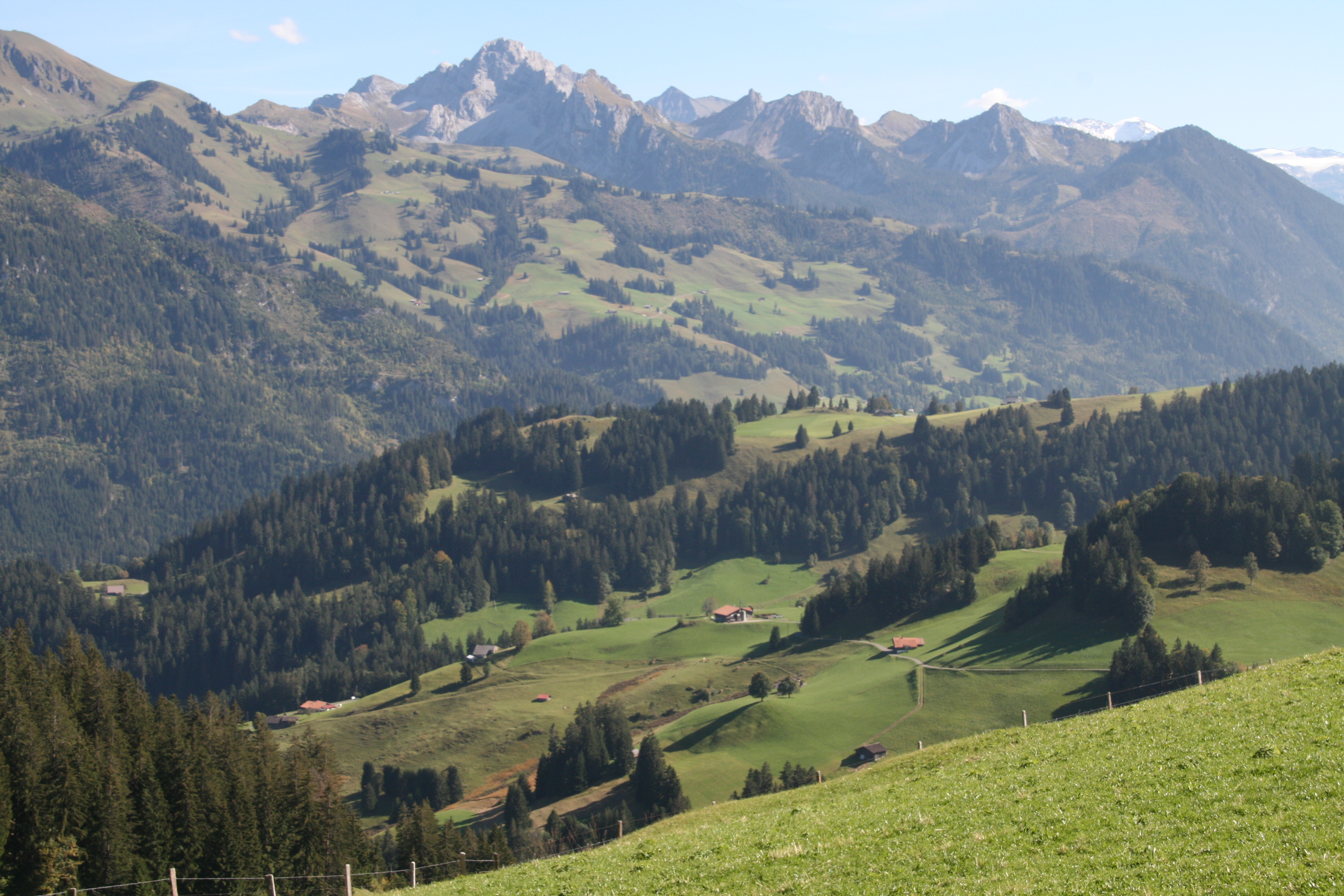
With the weather forecast promising summer-like temperatures, my wife and I took my TR4 for a rather long trip to Lausanne (280 kms one way) this weekend. Naturally we opted for a route more interesting than the motorway over Bern. On the way there the journey took us over Lucerne, Interlaken and over the Jaunpass at 1509 meters through the Gruyère region, before reaching Lake Geneva at Vevey, close to the beautiful city of Lausanne.  On the way back we chose another less spectacular but still beautiful route that led us over Murten, Bern, through the Emmental and then again over Lucerne.

IMG_6230 IMG_6247

The TR4 performed to perfection the whole way, not hesitating a second even when climbing the Jaunpass, with a 900 meter elevation and up to 12% steep (it was rather the somewhat fading brakes that provided more excitement on the way down…). The old lady’s 2 litre Ferguson engine clearly proved why it was such a popular tractor engine, with a torque powerful enough to take the car up most hills in third which is helpful, given the gearbox is not really a DSG and tends to protest quite loudly against any form of rapid gearchange. I’m therefore happy to say that now that the time has come to plan for the winter storage, no mechanical tasks are on the program over the winter break, just a few minor cosmetic ones. Who said English cars were of bad quality??!?

IMG_6209 IMG_6226

Arosa Classic Car 2014

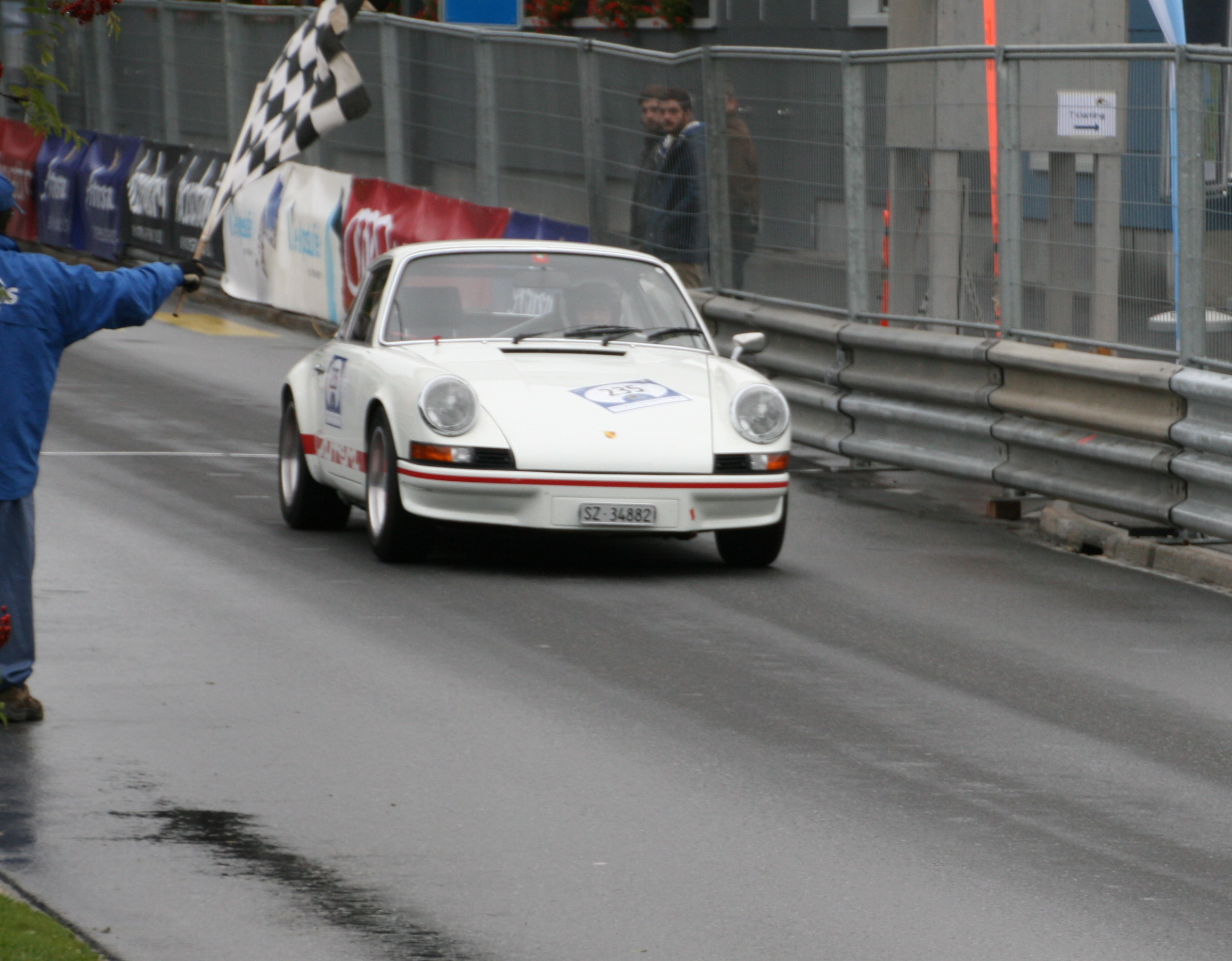
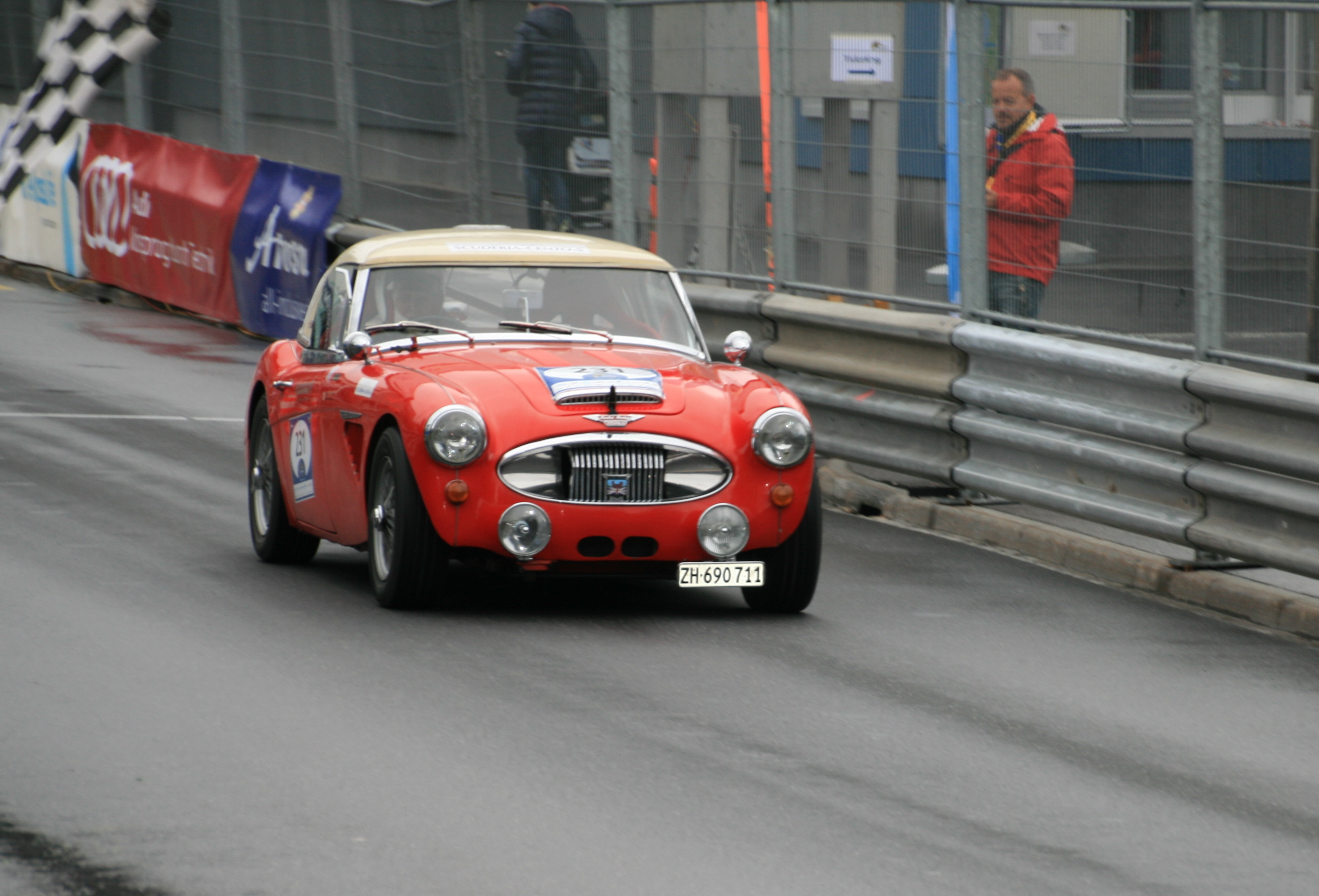
Attending the Tesla event in Arosa yesterday also gave me the occasion to catch a glimpse of the training day of the legendary Arosa Classic Car race, taking place every year at the beginning of September on the last 7.8 kms of the road from Chur to Arosa. The whole road is legendary by itself, as on a total distance of 31 kms and a height difference of 1280 meters, there a total of 360 (!) turns. On the last 7.8 kms used for the race, the cars climb around 420 meters with 76 turns. Challenging enough in good conditions, but as mentioned yesterday, the temperature this weekend up in Arosa is expected at around 5 degrees with rain…

The race is open for cars built betwen 1905 and 1986 or 1990 in the case of group C rally cars, of which there are plenty. it is a very fine selection of oldtimers and old rally cars (including the odd formula car) that take part, typically modified to race configuration, with special emphasis given to the engines judging by the sound. Below a few picks from yesterday and clicking here allows you to experience the race from onboad a MB 300 SL Gullwing, including drifts. A very fine automobile worth around EUR 1.5m in standard configuration…

IMG_6204 IMG_6203 IMG_6198 IMG_6194 IMG_6188 IMG_6205

Tesla Model S – still running at full power?

ac9fc49f0a0d028a018ed2844d2d3a56aca931e60a0d028a018ed284b3f301b4

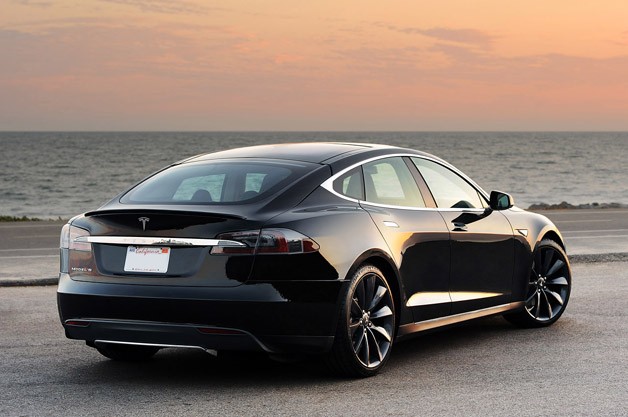
Regular readers of this blog may remember my very positive report from January after having driven the Tesla Model S the first time (click here). 9 months have passed and I was today invited to a test event Tesla had organized in the Swiss alpine resort Arosa, giving me the opportunity to drive the car again and confirm impressions and obviously also get an update on Tesla’s progress.

September is normally still summer in Switzerland and having enjoyed temperatures around 20-25 degrees the last weeks, little did I think of some rain in the weather report. But climbing to Arosa at 1800 metres, at 5 degrees the rain was close to turning into snow, and the surrounding mountains were all white. Bringing 427 bhp and 600 Nm onto the ground in a rear wheel drive car running on 21-inch 265′ summer tyres under such circumstances and on alpine roads would be… interesting. Would the car’s low center of gravity compensate for the dreadful outside conditions, or in other words, compensate for the absence of four-wheel drive?

Firstly a few lines on the car itself. Nothing much has changed in nine months other than the order books running at full steam, not only in Switzerland. Tesla is well ahead of sales predictions all over Europe and have in this country sold 800 cars of which 500 have been delivered (delivery times are currently at around 4-5 months). As the car is still basically new no face lift is planned yet, but some improvements to the interior have been made. We are here talking about small things such as a partly-covered alcantara dashboard, improved material quality especially in the boot (one of my critical points from the first report) and some new functions and buttons. Overall, the car feels exactly as premium and solid as it did when I first saw it and is clearly on par with the Mercs, BMW’s and Audis of this world.

The test car was the top version of the Model S called P85 Performance +. Besides plenty of torque and bhp it also features an improved chassis, suspension and brakes and a sportier setting of the air suspension. Too stiff for alpine roads of bad quality? Taking the wheel the first impression is that of a very tight car that in spite of its size and weight is very precise and easy to handle. Weight repartition (48/52) feels well balanced, the suspension does a brilliant job and whilst the steering may not appeal to those wishing for a mechanical feel, the three adjustments (sport-normal-comfort) bring a real added value, with the sport setting being perfect for these roads and fast driving, whilst it would be too burdensome for the city, for which the comfort setting is ideal.

Challenging the car a bit it responds really well and again, it does not feel heavier than a traditional car (even though it is!). However, the fact that the torque is plentiful and available at each moment takes some getting used to, especially on mountain roads. Things are also slightly complicated by the fact that you cannot let yourself be guided by the engine noise. Attacking a corner slightly too aggressively I suddenly felt the rear break out a little surprisingly, but it is brought in very effectively and surprisingly smoothly by the (standard) ESP half a second later. Clearly not a car for drifting – unless you turn off the ESP, that is. Doing that and given enough space, you could probably do wonder with this car, especially when you learn to handle the power! My very competent Tesla co-driver mentioned Tesla is working on 4-wheel drive as an option but also said that for normal “ski weekend” use, the low center of gravity basically means 4-wheel drive is not required. And frankly, driving a 4WD myself, I do think it would ruin the car a bit and would personally not hesitate to buy the standard version.

The company Tesla is doing really well and importantly, keeping its promises. The supercharging stations are being deployed across Europe according to plan and will until the end of this year allow you to travel from Zurich to Norway using only superchargers (which are by the way free during the car’s lifetime). Tesla’s SUV Model X pictured below will probably be available towards the end of 2015, and plans are then to introduce a small car as a competitor to BMW’s i3 by 2017. It does indeed seem Tesla is here to stay, and the Model S has lost nothing of its attractiveness as an exciting, fun and competitively-priced alternative to traditional (German) competitors!

280px-Tesla_Model_X_Geneva_2012_trimmed

Tesla Model X prototype, available from 2015

Volvo unveils new XC90!

Today is an important day for Sweden’s pride as the company unveils what is probably its most important car ever, the new XC90. It’s also the first car that completely cuts the ties with the Ford heritage.

nya-volvo-xc90-2015-003-778x800nya-volvo-xc90-2015-008-980x654

As the pictures (source Teknikens Värld, http://www.teknikensvarld.se) show, the design is… well, let’s say especially the front will take some getting used to. The interior is beautiful though but if Tesla haven’t messed up on the patents, Volvo might have a legal battle on their hands in view of the control panel’s STRONG resemblance to the Tesla Model S, both in form and functionality…

images

The drivetrains will only consist of 4-cylinder engines which is obviously a big bet in view of the very important US and Chinese markets. The top version called T8 Twin Engine combines a 300 bhp petrol engine with an 80 bhp electrical one, driving the rear axle.

Production of a first series will start later this fall before mass production starts next year. So if you want to drive your kids around in Sweden’s premier school carrier, it’s time to get your orders in!

More info (in Swedish) and pictures of the car can be found on http://www.teknikensvarld.se

British GP at Silverstone – or the day Felipe saved Kimi’s life!

There are different types of excitement in the sport we all love so much, but the kind of excitement we got yesterday in the first lap of the British GP at Silverstone is one we could definitely do without.

Kimi Räikkönen’s Ferrari came out a bit wide onto the Wellington straight after the start on the first lap, and he lost control of the car when it crossed back onto the tarmac. The car went into a spin, hit a wall on the right side of the track and was then thrown back onto the track just as the last cars on the grid came through. After a catastrophic start Felipe Massa came almost last onto the straight and saw Kimi’s car practically being thrown at him, just a few metres in front. Through experience, amazing reflexes and presence of mind, he hit the brakes and steered right, voluntarily causing the car to spin and thereby making sure only the tail hit Kimi’s car rather than driving straight into the side of him, as would otherwise have been the case. Whether he saved Kim’s life or just saved him from being badly injured doesn’t really matter, it was in any case a move that is worth high praise!

4,w=650,c=0.bild

When the race really got going an hour later, all looked pretty much the same as always this season, with Rosberg leading before Hamilton, but then Nico’s gearbox broke down in the 28th lap and Lewis took over the lead, holding onto it until the end. As a small consolation to Williams, having lost Massa’s car in the incident in the first lap, his teammate Valtterri Bottas finished second before Daniel Ricciardo on Red Bull in third. In the championship this means Nico’s lead over Lewis is now only 4 pts before the German GP at Hockenheim gets underway on 20 July!